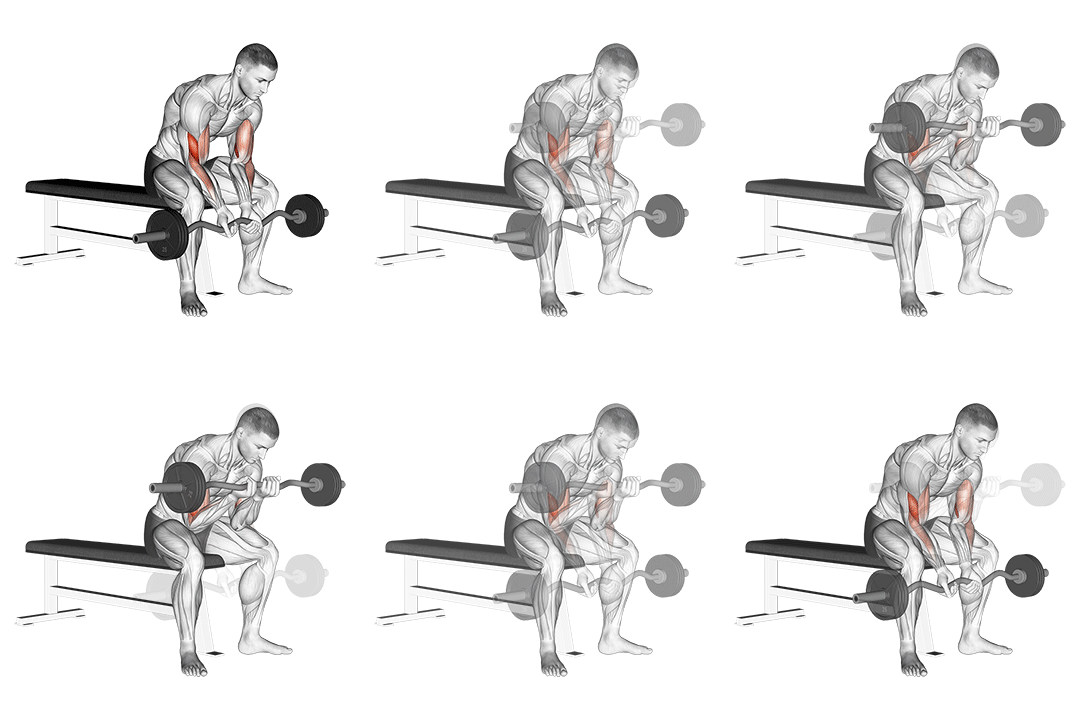
EZ Barbell Close Grip Preacher Curl vs EZ Barbell Reverse Grip Preacher Curl

Compare target muscles, equipment, difficulty, movement type, and secondary muscles for EZ Barbell Close Grip Preacher Curl and EZ Barbell Reverse Grip Preacher Curl.

Change comparison Share

Get comparison link

Select the link and use your device's Copy command.

Comparison overview

AI-generated
Ez Barbell Close Grip Preacher Curl vs Ez Barbell Reverse Grip Preacher Curl — which one should you use for bigger biceps and stronger forearms? You’ll get clear, actionable guidance comparing muscle activation, biomechanics, equipment needs, difficulty, and programming. I’ll show exact technique cues (hand placement, bench angle, tempo), give rep-range recommendations (hypertrophy and strength), and tell you which exercise fits common goals so you can pick the right movement and progress safely.

Exercise Comparison

Exercise A
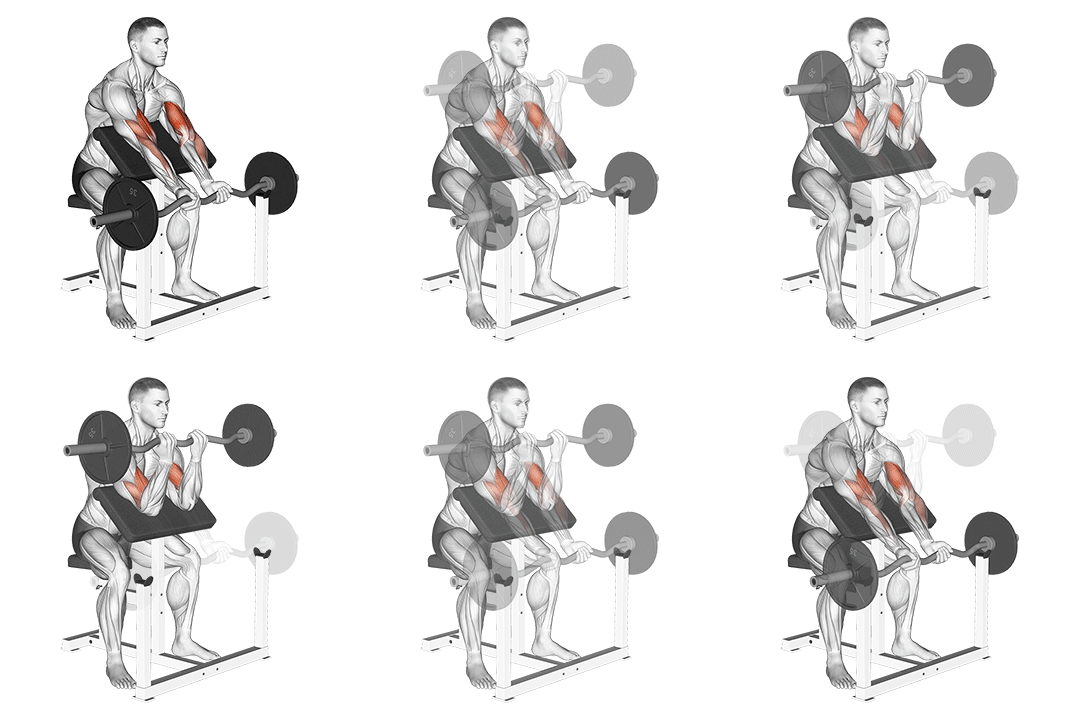
EZ Barbell Close Grip Preacher Curl demonstration

EZ Barbell Close Grip Preacher Curl
Target Biceps
Equipment Ez-barbell
Body Part Upper-arms
Difficulty Beginner
Movement Isolation
Secondary Muscles
Forearms
VS
Exercise B
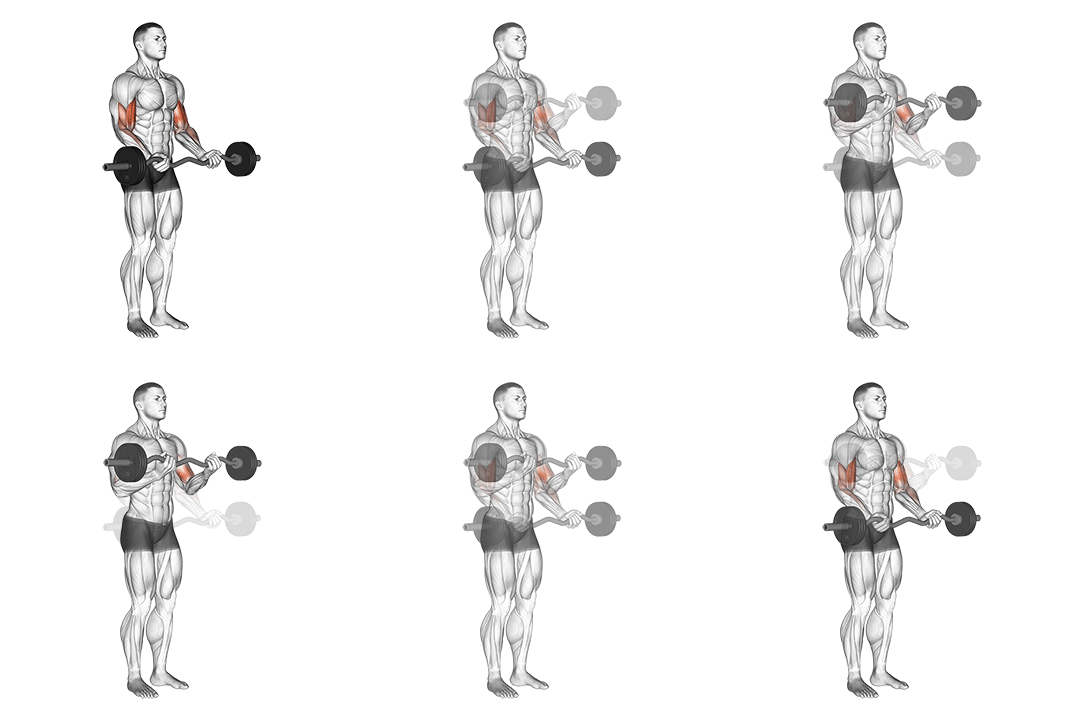
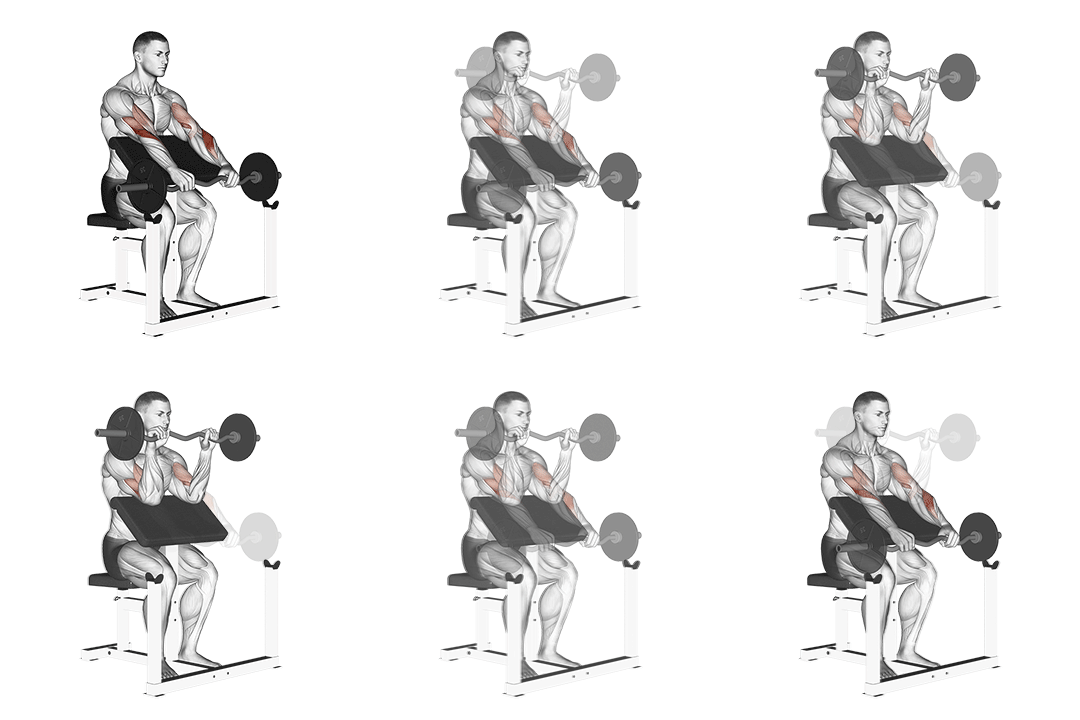
EZ Barbell Reverse Grip Preacher Curl demonstration

EZ Barbell Reverse Grip Preacher Curl

Target Biceps
Equipment Ez-barbell
Body Part Upper-arms
Difficulty Intermediate
Movement Isolation
Secondary Muscles
Forearms

Head-to-Head Comparison

Different values are marked. These are catalogue attributes, not performance scores.

Muscles used

Listed target and secondary muscles, shown on the body. Locations, not activation or strength scores.

  • Target
  • Secondary
  • Not highlighted

EZ Barbell Close Grip Preacher Curl
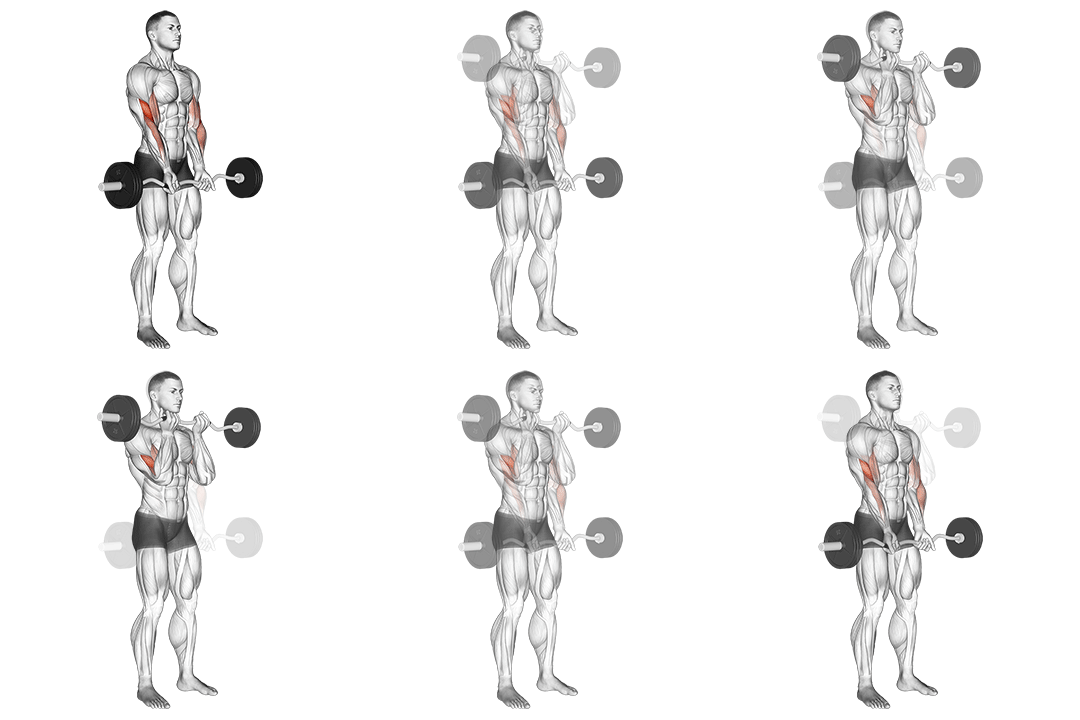
Front
EZ Barbell Close Grip Preacher Curl: front muscle locationsSolid: listed target. Striped: listed secondary. Grey: not highlighted. Locations, not activation or strength scores. See the muscle names below.
Back
EZ Barbell Close Grip Preacher Curl: back muscle locationsSolid: listed target. Striped: listed secondary. Grey: not highlighted. Locations, not activation or strength scores. See the muscle names below.
Target
Biceps
Secondary
Forearms

EZ Barbell Reverse Grip Preacher Curl

Front
EZ Barbell Reverse Grip Preacher Curl: front muscle locationsSolid: listed target. Striped: listed secondary. Grey: not highlighted. Locations, not activation or strength scores. See the muscle names below.
Back
EZ Barbell Reverse Grip Preacher Curl: back muscle locationsSolid: listed target. Striped: listed secondary. Grey: not highlighted. Locations, not activation or strength scores. See the muscle names below.
Target
Biceps
Secondary
Forearms

Grey does not mean a muscle is unused. The diagrams show only the mapped catalogue labels.

Attribute EZ Barbell Close Grip Preacher Curl EZ Barbell Reverse Grip Preacher Curl
Target Muscle
Biceps
Biceps
Body Part
Upper-arms
Upper-arms
Equipment
Ez-barbell
Ez-barbell
Difficulty Different
Beginner
Intermediate
Movement Type
Isolation
Isolation
Secondary Muscles
Forearms
Forearms

Visual Comparison

An illustrative 1–10 profile derived from catalog difficulty, equipment, and listed-muscle fields—not measured performance or muscle activation.

Key Differences

  • Difficulty levels differ: EZ Barbell Close Grip Preacher Curl is beginner, while EZ Barbell Reverse Grip Preacher Curl is intermediate.
  • Both exercises target the Biceps using Ez-barbell. The catalogue does not establish which exercise is better for an individual goal.

Muscle comparison

Shared target muscles

Both exercises isolate elbow flexion and primarily load the biceps brachii on a preacher bench. Because the shoulder is flexed against the pad (~20–45° forward), both variations bias the biceps short head more than the long head. The close-grip (supinated or slightly supinated) places the biceps braid in a stronger line of pull for peak contraction, so peak biceps activation tends to be slightly higher with the close-grip variation.

Secondary muscle differences

The reverse-grip shifts force vectors toward the brachioradialis and forearm wrist flexors due to pronation, increasing forearm activation by roughly 15–30% compared with the supinated close grip. The close-grip version still recruits forearms, but less so — it emphasizes biceps peak and the short head. Reverse grip also reduces mechanical advantage for the biceps, so external load often must be reduced by ~10–20%.

Muscle involvement analysis

During the concentric phase the close-grip creates a more favorable length–tension position for the biceps at 30–90° elbow flexion, producing higher biceps torque. The reverse-grip shifts the force vector toward the forearm, increasing brachialis and brachioradialis contribution across the full ROM. Eccentric control (2–4 sec) is crucial in both: the close-grip maintains high biceps tension on the eccentric, while the reverse-grip keeps higher forearm tension throughout.

Equipment and setup

EZ Barbell Close Grip Preacher Curl: setup

Ez-barbell, preacher bench (or inclined pad), collars and 10–25 lb plates depending on strength; wrist should be supinated or slightly neutral.

EZ Barbell Reverse Grip Preacher Curl: setup

Same setup: Ez-barbell and preacher bench. You may need lighter plates or spotter assistance because pronated grip typically reduces the load you can handle safely.

Access and practicality

Ez Barbell Close Grip Preacher Curl — it’s more accessible because the supinated grip is easier on the wrists, lets beginners use full ROM more comfortably, and allows faster progressive loading.

Learning and progression

Learning the movements

Ez Barbell Close Grip Preacher Curl is easier to learn: simple supinated grip, stable pad support, and predictable elbow path make form quick to pick up for beginners. Reverse grip requires safe pronated wrist positioning and better forearm strength.

Progression considerations

Reverse grip offers strong carryover to grip and forearm strength and can be progressed with heavier loads or slow eccentrics, but close-grip offers cleaner, steadier progressive overload for biceps hypertrophy (add 2.5–10% load increments, or add sets/reps in 6–12 rep ranges).

Limitations and precautions

Reverse-grip has higher wrist and distal biceps tendon stress when overloaded — injury risk is moderate for intermediate lifters. Close-grip has lower acute injury risk if you use controlled tempo (2–3 sec eccentric, 1 sec concentric) and avoid excessive load.

Pros & Cons

EZ Barbell Close Grip Preacher Curl

+ Pros

  • Strong biceps peak activation and short-head emphasis
  • Lower wrist strain — easier for beginners
  • Cleaner progressive overload for hypertrophy (6–12 reps)
  • Stable elbow tracking on preacher pad reduces momentum

Cons

  • Less forearm and brachioradialis recruitment
  • Can under-load the long head of the biceps due to shoulder flexion
  • Plateau risk if you only use this one variation

EZ Barbell Reverse Grip Preacher Curl

+ Pros

  • Greater brachioradialis and forearm activation — improves grip strength
  • Provides a different force vector to circumvent plateaus
  • Useful for balanced upper-arm development when combined with supinated curls
  • Challenging eccentric control can enhance tendon capacity

Cons

  • Higher wrist and tendon stress—needs good wrist mobility
  • Usually requires lower load (10–20% less) than supinated close grip
  • Technically harder for beginners to nail consistent form

When Each Exercise Wins

1
For muscle hypertrophy: Ez Barbell Close Grip Preacher Curl

The supinated close grip produces a stronger biceps line of pull and higher peak biceps activation. Use 6–12 reps, 3–4 sets, 2–4 sec eccentrics to maximize short-head hypertrophy.

2
For strength gains: Ez Barbell Close Grip Preacher Curl

Close-grip lets you progressively add load more reliably and trains raw elbow flexor strength with cleaner mechanics. Pair lower-rep (4–6) cycles with heavier loads and controlled tempo.

3
For beginners: Ez Barbell Close Grip Preacher Curl

It’s easier to learn, gentler on the wrists, and enforces a simple elbow path on the preacher pad so you can focus on mind–muscle connection and tempo.

4
For home workouts: Ez Barbell Close Grip Preacher Curl

Most home setups can support the supinated close-grip safely with modest weights; reverse grip demands stronger forearms and better wrist mobility that many beginners lack at home.

Frequently Asked Questions

Can I do both Ez Barbell Close Grip Preacher Curl and Ez Barbell Reverse Grip Preacher Curl in the same workout?

Yes — pairing them back-to-back can target biceps from slightly different vectors. Do the close-grip first for heavier biceps work (3–4 sets of 6–10), then 2–3 lighter sets of reverse-grip (8–12 reps) to tax forearms and finish the arm session.

Which exercise is better for beginners?

The Ez Barbell Close Grip Preacher Curl is better for beginners because it minimizes wrist stress and enforces a simple elbow path on the preacher pad. Start with 2–3 sets of 8–12 reps and focus on tempo and full range of motion.

How do the muscle activation patterns differ?

Close-grip (supinated) concentrates tension on the biceps short head and produces higher biceps torque at mid-range elbow angles; reverse-grip shifts force toward the brachioradialis and forearm flexors, lowering biceps torque but increasing forearm activation across the ROM.

Can Ez Barbell Reverse Grip Preacher Curl replace Ez Barbell Close Grip Preacher Curl?

Not entirely — reverse-grip is a valuable accessory for forearm and brachialis development but usually cannot match the biceps peak activation or progressive overload ease of the close-grip. Use it as a supplement rather than a full replacement unless your goal is forearm-dominant strength.

Comparison Summary

Choose the Ez Barbell Close Grip Preacher Curl if your priority is biceps hypertrophy, straightforward progression, and minimal wrist strain — aim for 6–12 reps, 3–4 sets, and slow eccentrics (2–4 sec). Use the Ez Barbell Reverse Grip Preacher Curl when you want to build forearm and brachioradialis strength, break through plateaus, or improve grip; reduce load by ~10–20% and focus on wrist alignment and controlled tempo. For most trainees, the close-grip should be the staple and reverse-grip a periodic accessory to round out upper-arm development.

Exercise instructions

Steps from the exercise catalogue. Read the full sequence before starting.

EZ Barbell Close Grip Preacher Curl

  1. Sit on a preacher curl bench and place your upper arms on the pad, gripping the ez barbell with an underhand grip.
  2. Rest your triceps on the pad and fully extend your arms, keeping your back straight.
  3. Slowly curl the barbell towards your shoulders, contracting your biceps.
Read remaining steps for EZ Barbell Close Grip Preacher Curl
  1. Pause for a moment at the top, squeezing your biceps.
  2. Lower the barbell back to the starting position, fully extending your arms.
  3. Repeat for the desired number of repetitions.

EZ Barbell Reverse Grip Preacher Curl

  1. Sit on a preacher bench with your chest against the pad and your feet flat on the floor.
  2. Grasp the ez barbell with an underhand grip, hands shoulder-width apart.
  3. Rest your upper arms on the pad, allowing your forearms to hang down.
Read remaining steps for EZ Barbell Reverse Grip Preacher Curl
  1. Keeping your upper arms stationary, exhale and curl the barbell up towards your shoulders.
  2. Pause for a moment at the top, then inhale and slowly lower the barbell back down to the starting position.
  3. Repeat for the desired number of repetitions.

Also Compare

Compare another pair

Choose two exercises to see their differences side by side.

Compare Exercises