

Good Morning vs Power Clean: Complete Comparison Guide
Good Morning vs Power Clean — you’re comparing two barbell staples that both hit the hamstrings but ask very different jobs from your body. This guide helps you choose by breaking down primary and secondary muscle activation, equipment needs, learning curve, injury risk, and programming tips. You’ll get specific technique cues (hip-hinge angles, trunk position, rep ranges), biomechanical reasoning (length-tension, force vectors, rate of force development), and clear recommendations for hypertrophy, strength, beginners, and home workouts so you can pick the right lift for your goals.
Exercise Comparison
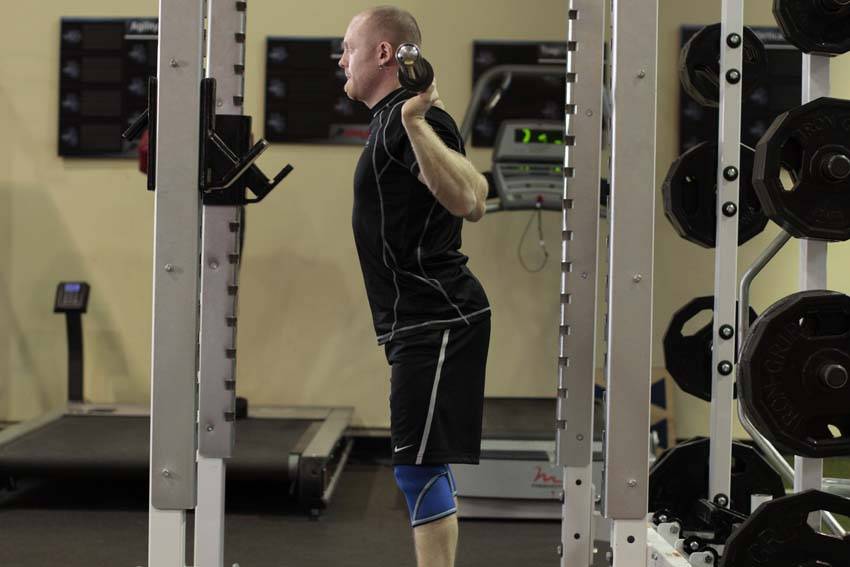
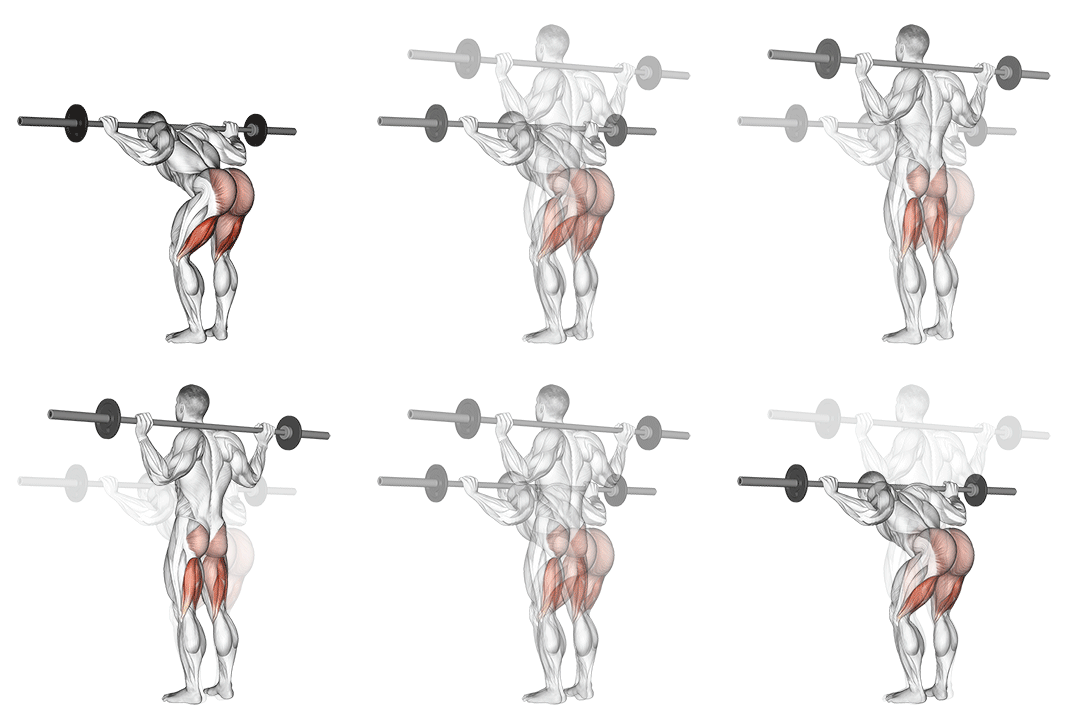
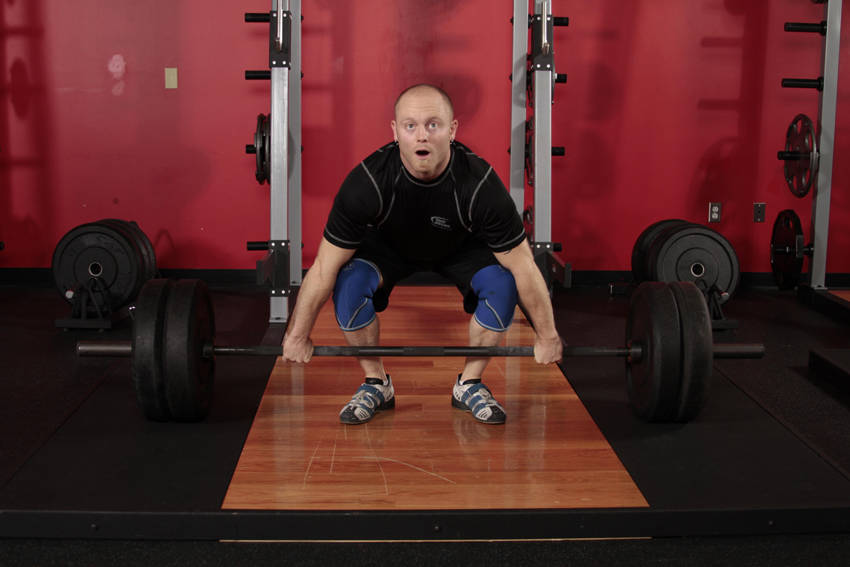
Good Morning
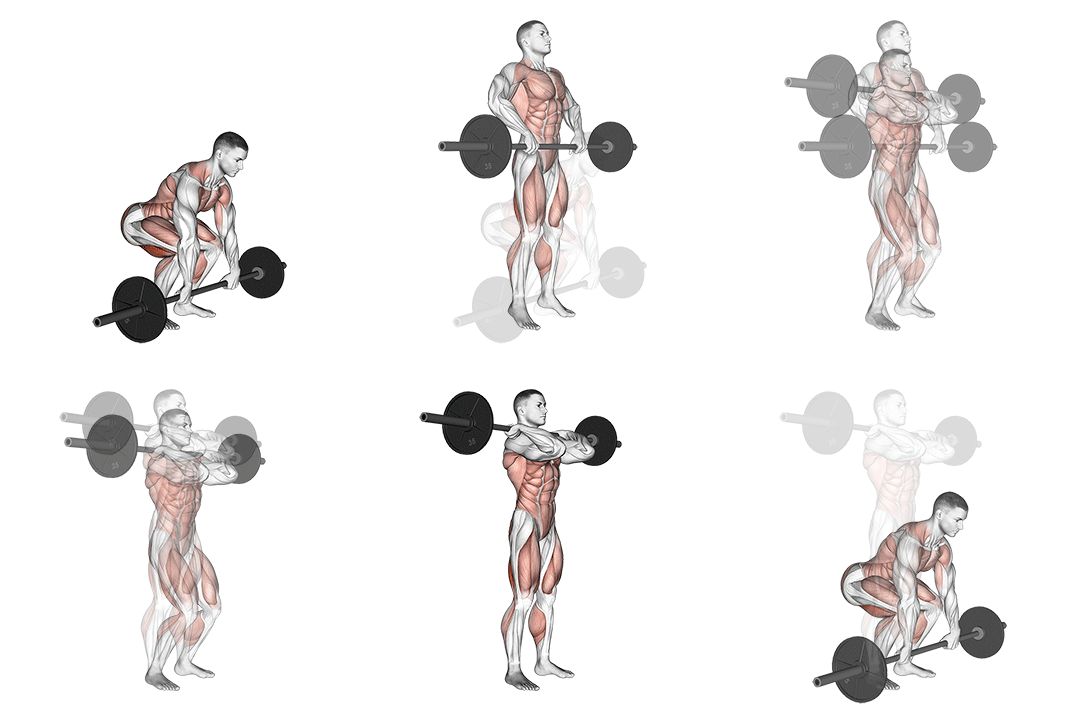
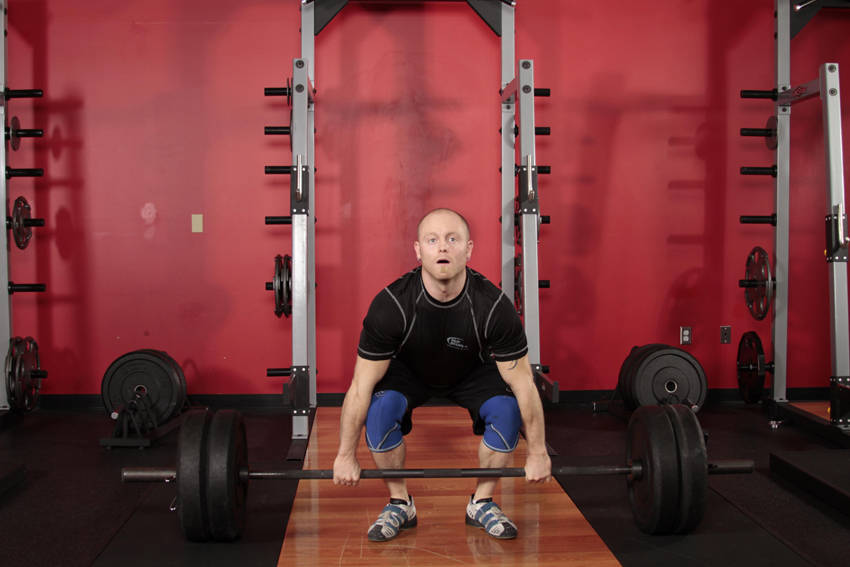
Power Clean
Head-to-Head Comparison
| Attribute | Good Morning | Power Clean |
|---|---|---|
| Target Muscle |
Hamstrings
|
Hamstrings
|
| Body Part |
Upper-legs
|
Upper-legs
|
| Equipment |
Barbell
|
Barbell
|
| Difficulty |
Intermediate
|
Advanced
|
| Movement Type |
Compound
|
Compound
|
| Secondary Muscles |
3
|
3
|
Secondary Muscles Activated
Good Morning
Power Clean
Visual Comparison
Overview
Good Morning vs Power Clean — you’re comparing two barbell staples that both hit the hamstrings but ask very different jobs from your body. This guide helps you choose by breaking down primary and secondary muscle activation, equipment needs, learning curve, injury risk, and programming tips. You’ll get specific technique cues (hip-hinge angles, trunk position, rep ranges), biomechanical reasoning (length-tension, force vectors, rate of force development), and clear recommendations for hypertrophy, strength, beginners, and home workouts so you can pick the right lift for your goals.
Key Differences
- Difficulty levels differ: Good Morning is intermediate, while Power Clean is advanced.
- Both exercises target the Hamstrings using Barbell. The main differences are in their movement patterns and muscle activation angles.
Pros & Cons
Good Morning
+ Pros
- High hamstring and posterior chain time under tension for hypertrophy
- Easy to load progressively with heavy sets (3–8 reps) for strength
- Requires minimal space and no need to drop the bar
- Teaches a strong hip hinge and improves deadlift carryover
− Cons
- Significant lumbar loading — technique and bracing are essential
- Less carryover to explosive athletic power and triple-extension
- Limited upper-body development compared to dynamic Olympic movements
Power Clean
+ Pros
- Develops explosive hip extension and high rate-of-force development
- Transfers directly to athletic power, sprinting, and jumping
- Engages quads and calves for a more total-leg stimulus
- Efficient for low-rep power and strength work (1–5 reps)
− Cons
- Steep technical learning curve; needs coaching or video feedback
- Requires bumper plates/platform for safe practice and dropping
- Higher acute risk to shoulders, wrists, and spine if rushed
When Each Exercise Wins
Good Mornings produce longer hamstring time under tension and controlled eccentrics, ideal for 6–12 rep ranges and tempos like 3-1-1. That prolonged length-tension stimulus favors muscle growth in the posterior chain.
For raw posterior-chain strength and lumbar control, heavy Good Mornings (3–6 reps at 75–90% of 1RM) allow progressive overload with less technical variability than cleans, producing reliable strength adaptations.
Good Mornings require a repeatable hip hinge and bracing that a coachable beginner can learn in weeks, whereas Power Cleans need months of technical practice to perform safely at heavy loads.
You only need a barbell and rack or pins; no bumper plates or space for drops. The Good Morning is safer to program at home where surface or space is limited.
Frequently Asked Questions
Can I do both Good Morning and Power Clean in the same workout?
Yes — but sequence matters. Do Power Cleans early when you’re fresh to preserve speed and technique, then use Good Mornings later for heavier, slower posterior-chain loading. Keep total volume reasonable (e.g., 3–6 sets total) to avoid excessive lumbar fatigue.
Which exercise is better for beginners?
Good Morning is better for most beginners because it teaches the hip hinge and can be safely progressed in 2–6 weeks. Power Cleans require more technical coaching and months of practice to perform safely under load.
How do the muscle activation patterns differ?
Good Mornings emphasize eccentric and isometric hamstring activation at long muscle lengths and sustained lumbar extension. Power Cleans create short, high-amplitude hamstring and glute bursts during rapid triple extension and catch, prioritizing rate-of-force development and elastic recoil.
Can Power Clean replace Good Morning?
Not entirely. Power Cleans develop explosive power and recruit quads and calves more, but they don’t provide the same long-duration eccentric load or lumbar conditioning that Good Mornings offer. Choose the movement that matches your goal: power vs sustained posterior-chain loading.
Expert Verdict
Use Good Mornings when your goal is posterior-chain hypertrophy, lower-back resilience, or straightforward strength progression. Program them for 6–12 reps for hypertrophy with controlled eccentrics (3s descent) or 3–6 reps for strength at heavier loads. Pick Power Cleans when you want to develop explosive hip extension, power, and athletic transfer—train them for 1–5 reps with moderate to high intent and light enough loads to preserve technique. If you can, combine both across a training week: Good Mornings for controlled strength and hypertrophy, Power Cleans for power and rate-of-force development.
Also Compare
More comparisons with Good Morning
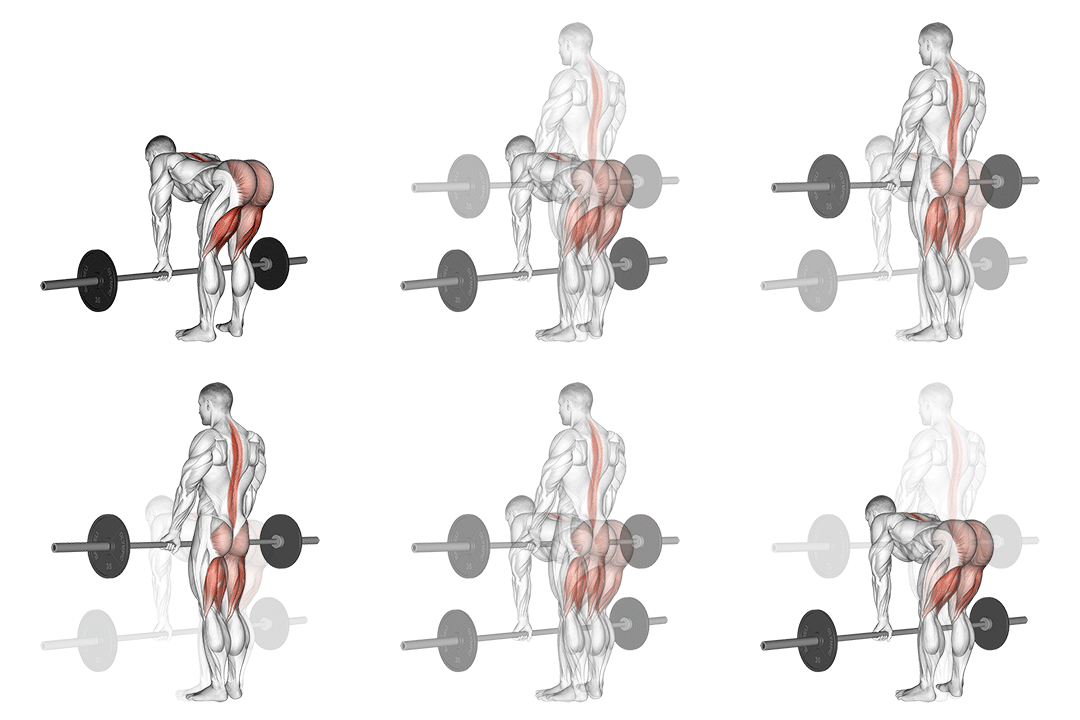
Compare More Exercises
Use our free comparison tool to analyze any two exercises head-to-head.
Compare Exercises