

Lever Chest Press vs Lever Seated Fly
Compare target muscles, equipment, difficulty, movement type, and secondary muscles for Lever Chest Press and Lever Seated Fly.
Get comparison link
Select the link and use your device's Copy command.
Comparison overview
AI-generatedExercise Comparison
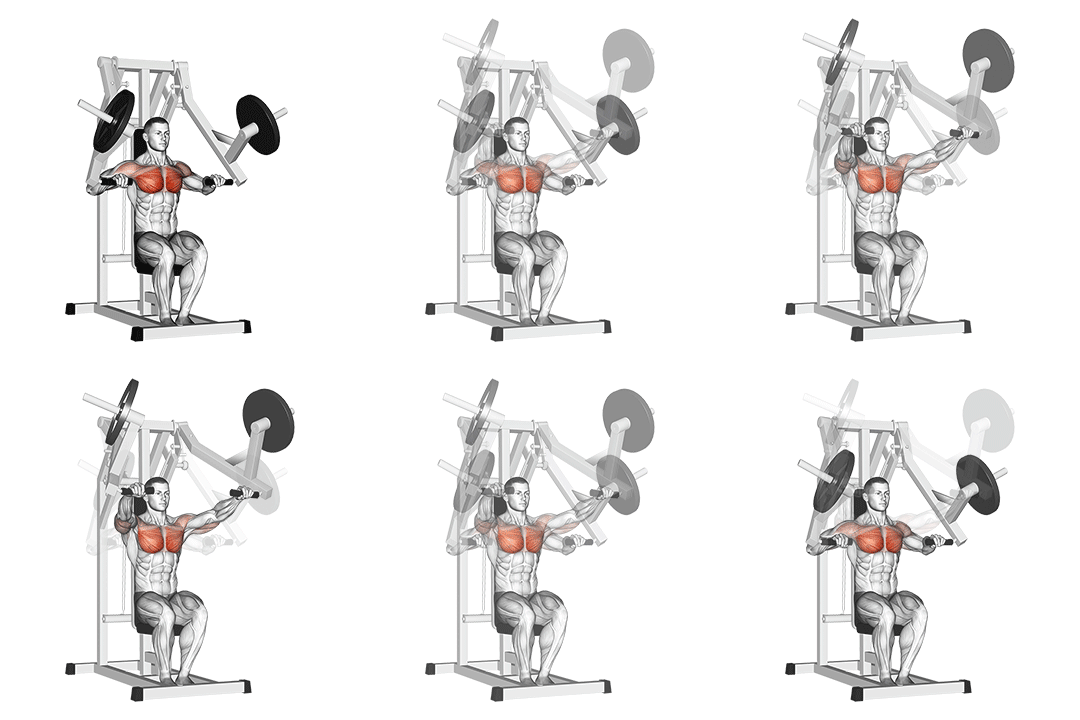
Lever Chest Press
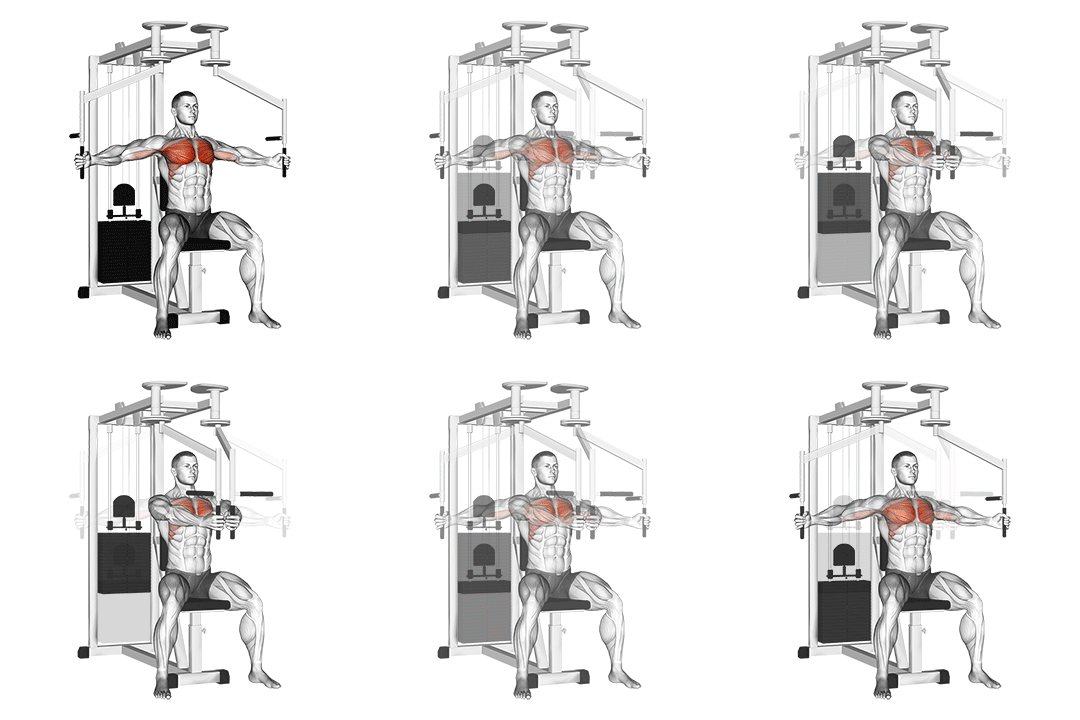
Lever Seated Fly
Head-to-Head Comparison
Different values are marked. These are catalogue attributes, not performance scores.
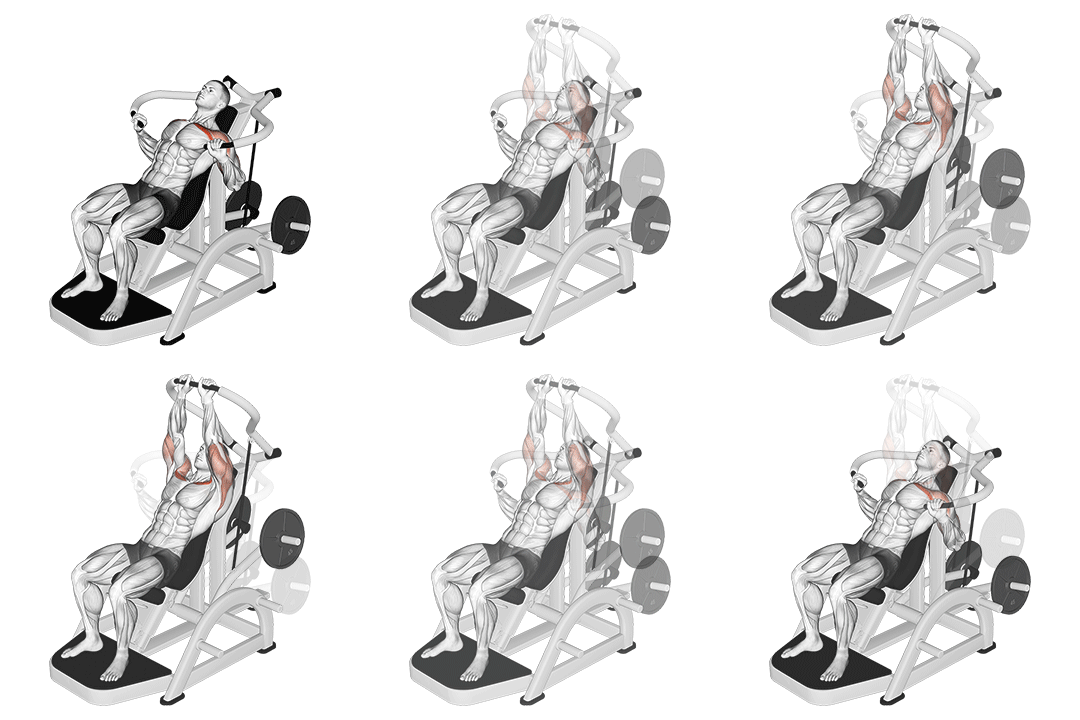
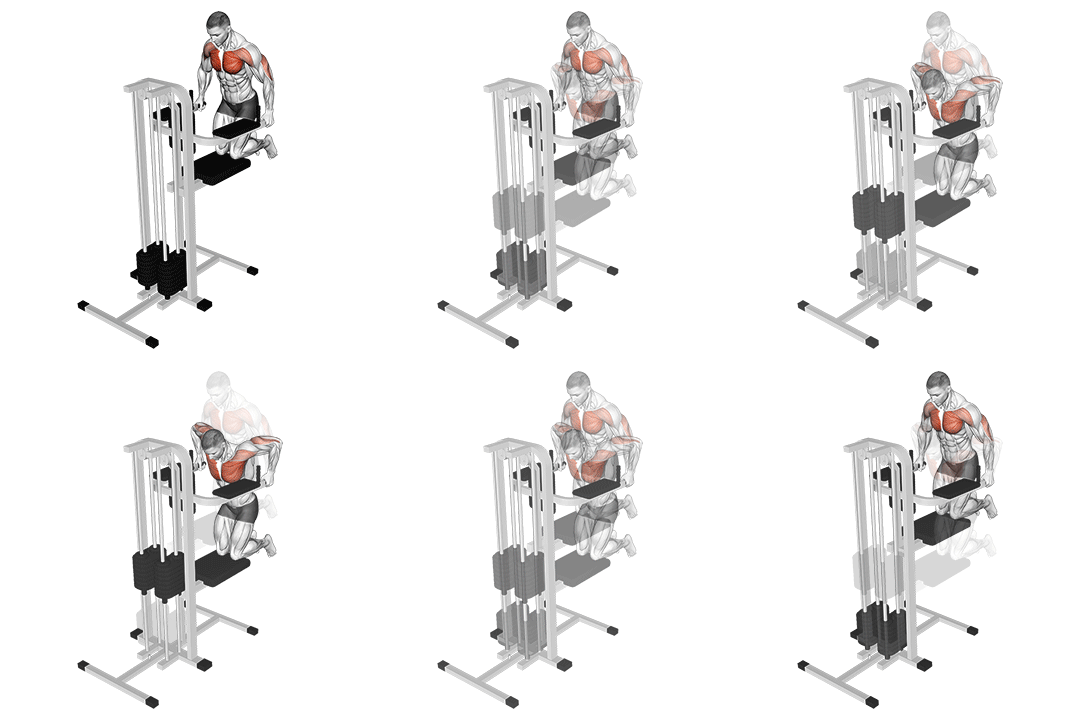
Muscles used
Listed target and secondary muscles, shown on the body. Locations, not activation or strength scores.
- Target
- Secondary
- Not highlighted
Lever Chest Press
- Target
- Pectorals
- Secondary
- Triceps, Shoulders
Not shown on diagram: Shoulders. These labels do not identify a precise region on this map.
Lever Seated Fly
- Target
- Pectorals
- Secondary
- Deltoids, Trapezius
Not shown on diagram: Deltoids. These labels do not identify a precise region on this map.
Grey does not mean a muscle is unused. The diagrams show only the mapped catalogue labels.
| Attribute | Lever Chest Press | Lever Seated Fly |
|---|---|---|
| Target Muscle | Pectorals |
Pectorals |
| Body Part | Chest |
Chest |
| Equipment | Lever |
Lever |
| Difficulty | Beginner |
Beginner |
| Movement Type Different | Compound |
Isolation |
| Secondary Muscles Different | Triceps, Shoulders |
Deltoids, Trapezius |
Visual Comparison
An illustrative 1–10 profile derived from catalog difficulty, equipment, and listed-muscle fields—not measured performance or muscle activation.
Key Differences
- Lever Chest Press is a compound movement, while Lever Seated Fly is an isolation exercise.
- Both exercises target the Pectorals using Lever. The catalogue does not establish which exercise is better for an individual goal.
Muscle comparison
Shared target muscles
Secondary muscle differences
Muscle involvement analysis
Equipment and setup
Lever Chest Press: setup
Lever Seated Fly: setup
Access and practicality
Learning and progression
Learning the movements
Progression considerations
Limitations and precautions
Pros & Cons
Lever Chest Press
+ Pros
- Allows higher external load for greater mechanical tension
- Simple seat and handle set-up — quick to learn for beginners
- Recruits triceps and deltoids for compound strength transfer
- Clear progression path with measurable weight increases
− Cons
- Less isolation of pec peak contraction compared to fly
- If seat is misaligned, can stress shoulder joint
- Can mask weak chest activation if triceps dominate the lockout
Lever Seated Fly
+ Pros
- Maximizes mid-range pec peak contraction and stretch
- Lower triceps involvement — better for isolating chest
- Easy to control tempo and time under tension
- Great finisher to accentuate chest hypertrophy and shape
− Cons
- Lower absolute loading limits — less for heavy strength work
- Requires good scapular stability to avoid shoulder strain
- Fewer straightforward progression increments for load
When Each Exercise Wins
The Lever Chest Press allows higher external loads and combines mechanical tension with sufficient time under tension; use 6–12 reps with 1–2 second pauses at mid-range to drive hypertrophy across the pecs and triceps.
Its compound nature and ability to progressively overload in 3–6 rep ranges makes the chest press better for increasing pressing strength and force production transferred to free-weight presses.
Guided path, simple seat alignment cues, and a natural press pattern make the chest press the easier entry point; beginners can learn scapular retraction and breathing while safely handling load.
While both require a lever machine, the press movement transfers directly to push-ups or dumbbell presses you can do at home, making the chest-press pattern more practical if you lack machine access.
Comparison Summary
Exercise instructions
Steps from the exercise catalogue. Read the full sequence before starting.
Lever Chest Press
- Adjust the seat height and position yourself on the machine with your back flat against the pad.
- Grasp the handles with an overhand grip and position your elbows at a 90-degree angle.
- Push the handles forward until your arms are fully extended, exhaling during the movement.
Read remaining steps for Lever Chest Press
- Pause briefly at the end of the movement, then slowly return to the starting position, inhaling as you do so.
- Repeat for the desired number of repetitions.
Lever Seated Fly
- Adjust the seat height and position yourself on the machine with your back against the pad.
- Grasp the handles with a pronated grip and keep your elbows slightly bent.
- Exhale and push the handles forward, bringing them together in front of your chest.
Read remaining steps for Lever Seated Fly
- Pause for a moment, squeezing your chest muscles.
- Inhale and slowly return to the starting position, allowing your chest muscles to stretch.
- Repeat for the desired number of repetitions.
Also Compare
Compare another pair
Choose two exercises to see their differences side by side.