Lever Incline Chest Press vs Lever Seated Fly

Compare target muscles, equipment, difficulty, movement type, and secondary muscles for Lever Incline Chest Press and Lever Seated Fly.

Change comparison Share

Get comparison link

Select the link and use your device's Copy command.

Comparison overview

AI-generated
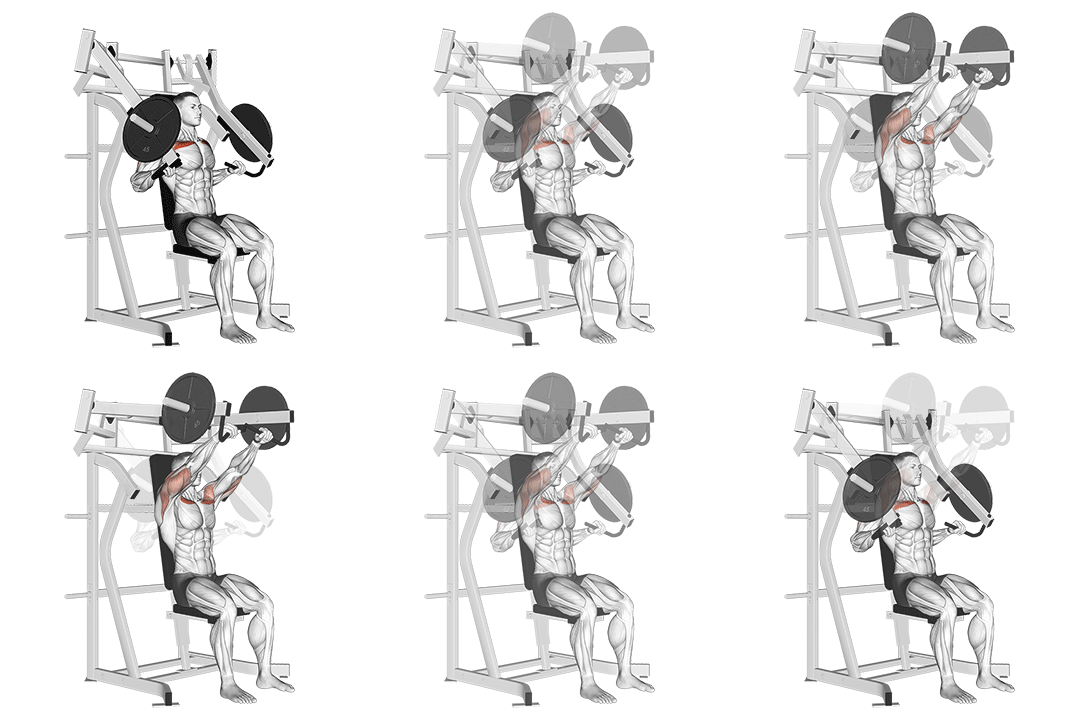
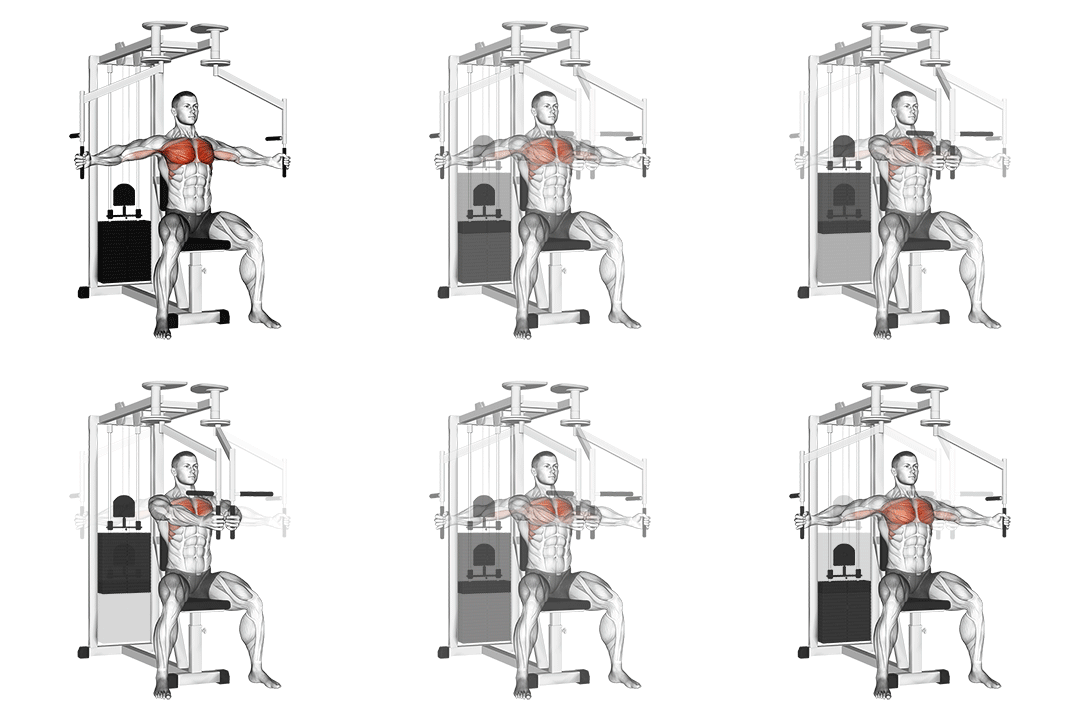
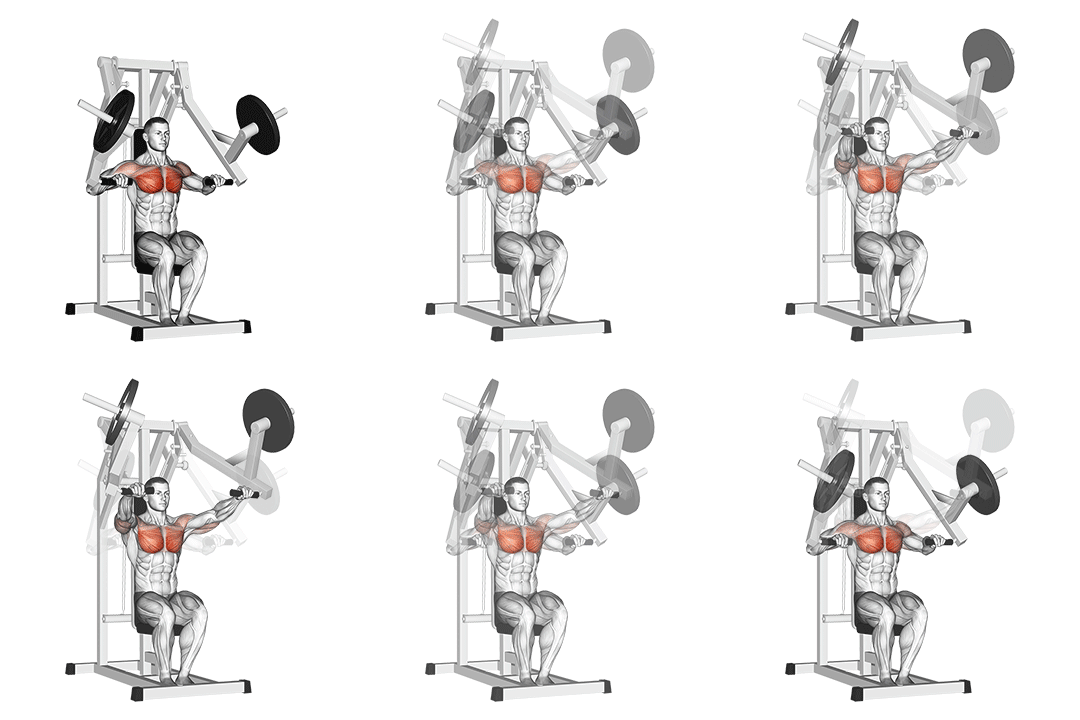
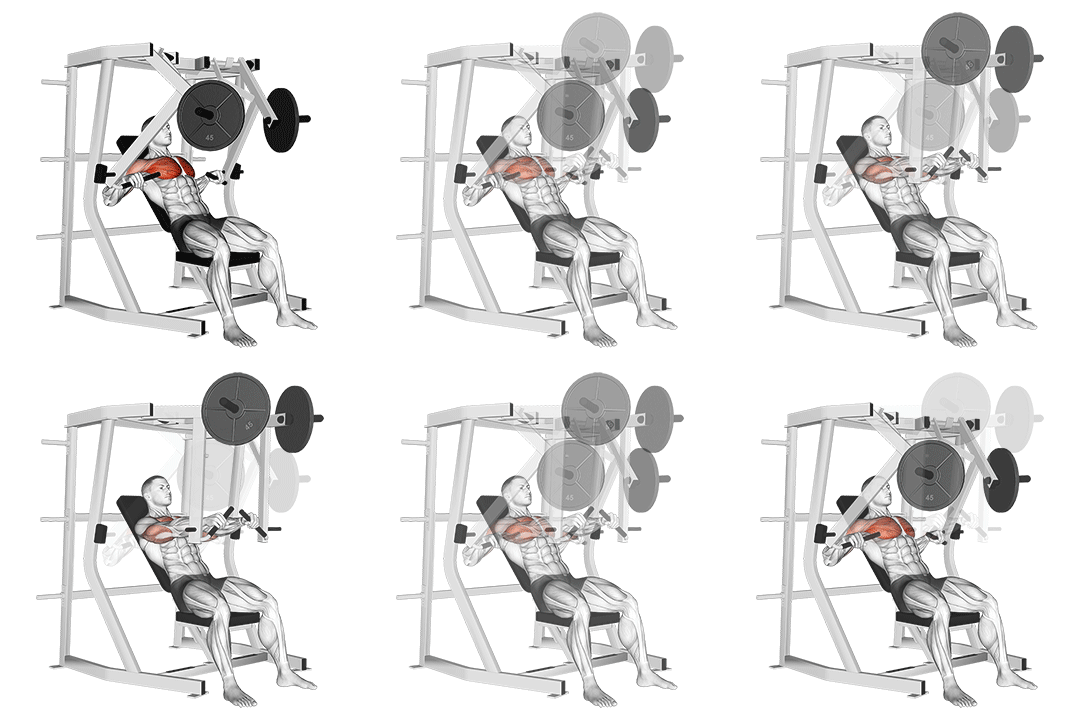
Lever Incline Chest Press vs Lever Seated Fly — if you want a stronger, fuller chest you need to pick the right tool. You’ll get a clear breakdown of how each machine hits the pectorals, which secondary muscles fire, and which movement fits your training phase. I’ll cover biomechanics (force vectors, length-tension), setup cues (incline angle 30–45°, elbow path), rep ranges for hypertrophy and strength (6–12, 3–6), and practical programming tips so you can choose the best exercise for your goals.

Exercise Comparison

Exercise A
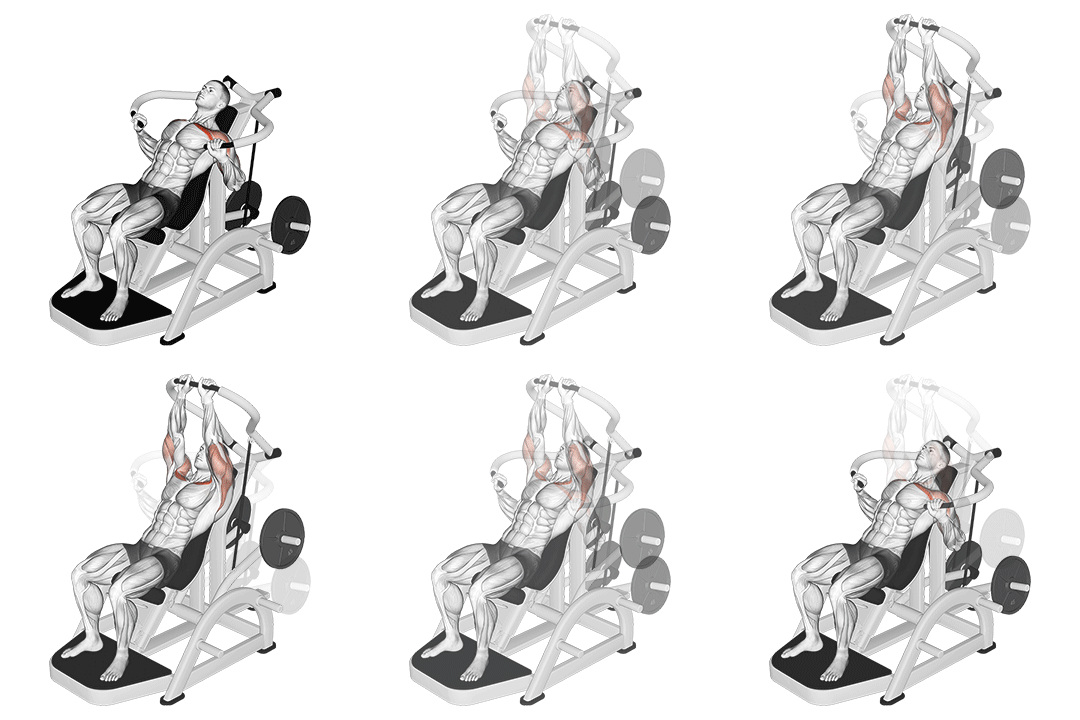
Lever Incline Chest Press demonstration

Lever Incline Chest Press

Target Pectorals
Equipment Lever
Body Part Chest
Difficulty Intermediate
Movement Compound
Secondary Muscles
Shoulders Triceps
VS
Exercise B
Lever Seated Fly demonstration

Lever Seated Fly

Target Pectorals
Equipment Lever
Body Part Chest
Difficulty Beginner
Movement Isolation
Secondary Muscles
Deltoids Trapezius

Head-to-Head Comparison

Different values are marked. These are catalogue attributes, not performance scores.

Muscles used

Listed target and secondary muscles, shown on the body. Locations, not activation or strength scores.

  • Target
  • Secondary
  • Not highlighted

Lever Incline Chest Press

Front
Lever Incline Chest Press: front muscle locationsSolid: listed target. Striped: listed secondary. Grey: not highlighted. Locations, not activation or strength scores. See the muscle names below.
Back
Lever Incline Chest Press: back muscle locationsSolid: listed target. Striped: listed secondary. Grey: not highlighted. Locations, not activation or strength scores. See the muscle names below.
Target
Pectorals
Secondary
Shoulders, Triceps

Not shown on diagram: Shoulders. These labels do not identify a precise region on this map.

Lever Seated Fly

Front
Lever Seated Fly: front muscle locationsSolid: listed target. Striped: listed secondary. Grey: not highlighted. Locations, not activation or strength scores. See the muscle names below.
Back
Lever Seated Fly: back muscle locationsSolid: listed target. Striped: listed secondary. Grey: not highlighted. Locations, not activation or strength scores. See the muscle names below.
Target
Pectorals
Secondary
Deltoids, Trapezius

Not shown on diagram: Deltoids. These labels do not identify a precise region on this map.

Grey does not mean a muscle is unused. The diagrams show only the mapped catalogue labels.

Attribute Lever Incline Chest Press Lever Seated Fly
Target Muscle
Pectorals
Pectorals
Body Part
Chest
Chest
Equipment
Lever
Lever
Difficulty Different
Intermediate
Beginner
Movement Type Different
Compound
Isolation
Secondary Muscles Different
Shoulders, Triceps
Deltoids, Trapezius

Visual Comparison

An illustrative 1–10 profile derived from catalog difficulty, equipment, and listed-muscle fields—not measured performance or muscle activation.

Key Differences

  • Lever Incline Chest Press is a compound movement, while Lever Seated Fly is an isolation exercise.
  • Difficulty levels differ: Lever Incline Chest Press is intermediate, while Lever Seated Fly is beginner.
  • Both exercises target the Pectorals using Lever. The catalogue does not establish which exercise is better for an individual goal.

Muscle comparison

Shared target muscles

Both exercises target the pectorals, but they emphasize the fibers differently. The Lever Incline Chest Press directs force along a diagonal pressing vector that emphasizes the clavicular (upper) pec fibers when set at a 30–45° incline and allows heavy loads for high mechanical tension. The Lever Seated Fly focuses pure horizontal adduction, placing the pecs under a longer muscle length during the eccentric phase and concentrating tension on the pec major without substantial triceps contribution.

Secondary muscle differences

The incline press recruits anterior deltoids and triceps strongly because the movement combines shoulder flexion and elbow extension. Expect 20–40% greater triceps activation compared with a fly. The seated fly recruits the anterior deltoid and upper trapezius to stabilize the shoulder girdle, but those muscles remain secondary and lower in absolute load compared with the incline press.

Muscle involvement analysis

Incline pressing shows a stronger concentric drive from tri-shoulder extension near lockout; peak pec stress occurs earlier in the concentric phase. Seated flies place more emphasis on the eccentric stretch at end range — pec fibers lengthen under load, increasing time under tension and passive tension contribution. Force vectors differ: presses are axial/diagonal pushing; flies are transverse horizontal adduction, which isolates cross-fiber activation.

Equipment and setup

Lever Incline Chest Press: setup

Lever Incline Chest Press requires a lever-based incline press machine adjustable to 30–45°, a stable foot placement, and a seat with scapular support so you can press on a set path while loading progressively.

Lever Seated Fly: setup

Lever Seated Fly needs a lever fly machine with adjustable seat height and arm pivot that aligns with the glenohumeral joint; good holds for chest-supported stabilization and a pin-loaded or plate-loaded resistance system for consistent tension.

Access and practicality

Lever Seated Fly — it's easier to learn, requires less setup precision, and many gyms feature a chest fly station even if they lack a dedicated incline lever press. The fly’s fixed ROM and single-joint motion makes it more accessible for routine use.

Learning and progression

Learning the movements

Lever Seated Fly is easier to learn because it uses a single-joint horizontal adduction pattern with minimal elbow extension. The incline press requires coordinating shoulder flexion and elbow extension under load, so proper setup and technique take more practice.

Progression considerations

Lever Incline Chest Press offers greater progression options: you can increase load in larger increments, manipulate bar path, use pauses at 1–2 seconds, or apply tempo work (3-1-2) and partials for strength and hypertrophy.

Limitations and precautions

Lever Seated Fly has a higher risk of overstretching the anterior shoulder capsule if you go too deep or use excessive load; peak tensile stress occurs at end-range eccentric. The incline press places more compressive load through the shoulder and sternoclavicular region but is generally safer for heavy loading if scapular position and elbow tracking are correct.

Pros & Cons

Lever Incline Chest Press

+ Pros

  • Allows heavier loads for greater mechanical tension and strength progression
  • Hits upper pecs effectively when set at 30–45° incline
  • Engages triceps and anterior deltoids for compound overload
  • Multiple progression variables: weight, tempo, pauses, and incline angle

Cons

  • Requires better setup and technique to avoid shoulder strain
  • Greater demand on triceps can limit pec-focused overload for some lifters
  • Less isolation — harder to target specific pec fibers without recruiting synergists

Lever Seated Fly

+ Pros

  • Simple single-joint motion ideal for isolating pectorals
  • Lower skill requirement — quick to learn and set up
  • Excellent for eccentric control and time under tension
  • Safer for light-to-moderate loads and pump-style training

Cons

  • Limited ability to load heavily for raw strength progression
  • Can overstretch the anterior shoulder if range isn’t managed
  • Less overall muscle recruitment, so slower systemic strength improvements

When Each Exercise Wins

1
For muscle hypertrophy: Lever Incline Chest Press

The incline press allows heavier loads and greater mechanical tension across the pecs and supporting muscles, making it ideal for 6–12 rep hypertrophy blocks. Use it as your primary mass-mover and follow with isolation work like 8–15 rep flies for targeted fiber fatigue.

2
For strength gains: Lever Incline Chest Press

Its compound pattern recruits triceps and deltoids and lets you progressively overload in 3–6 rep ranges. The fixed path of a lever machine also improves force transfer and makes it easier to track strength increases.

3
For beginners: Lever Seated Fly

The fly’s single-joint motion and fixed ROM reduce coordination demands and setup mistakes. Start with 8–15 reps focusing on controlled eccentrics and scapular stability before adding compound presses.

4
For home workouts: Lever Seated Fly

If you have only limited lever equipment or a compact machine, the seated fly gives targeted chest work with simpler setup and lower injury risk. It’s easier to program as a standalone chest movement in small spaces.

Frequently Asked Questions

Can I do both Lever Incline Chest Press and Lever Seated Fly in the same workout?

Yes. Start with the Lever Incline Chest Press as the heavy compound (3–6 or 6–12 reps), then finish with the Lever Seated Fly for 8–15 reps to increase time under tension and isolate the pecs. Keep total volume and joint fatigue in mind to avoid shoulder overload.

Which exercise is better for beginners?

Lever Seated Fly is better for most beginners because it has a simpler single-joint pattern and a fixed ROM. It builds mind-muscle connection and eccentric control before progressing to compound incline presses.

How do the muscle activation patterns differ?

The incline press produces a diagonal force vector that engages upper pecs, anterior deltoids, and triceps with peak concentric force earlier in the rep. The seated fly emphasizes horizontal adduction and eccentric stretch, increasing pec fiber length-tension demand during the lowering phase.

Can Lever Seated Fly replace Lever Incline Chest Press?

Not fully. The fly isolates the chest but cannot match the mechanical tension and systemic overload the incline press provides for strength and mass. Use flies as a complement or substitute only when you need lower technical demand or are managing heavy load limitations.

Comparison Summary

Use the Lever Incline Chest Press as your go-to compound when you want upper-chest mass and strength: set the bench at 30–45°, press for 3–6 reps for strength or 6–12 for hypertrophy, and prioritize scapular retraction and elbow tracking. Use the Lever Seated Fly as a technical finisher or for rehabilitation and beginner phases — it isolates horizontal adduction, emphasizes eccentric stretch, and is safer for controlled time under tension (8–15 reps). Combine them in phases: prioritize incline pressing during heavy blocks and add seated flies to increase time under tension and fiber-specific fatigue.

Exercise instructions

Steps from the exercise catalogue. Read the full sequence before starting.

Lever Incline Chest Press

  1. Adjust the seat and backrest of the leverage machine to a comfortable position.
  2. Sit on the machine with your back against the backrest and your feet flat on the floor.
  3. Grasp the handles with an overhand grip and position your hands slightly wider than shoulder-width apart.
Read remaining steps for Lever Incline Chest Press
  1. Push the handles forward and away from your body until your arms are fully extended.
  2. Pause for a moment, then slowly bend your elbows and lower the handles back towards your chest.
  3. Repeat for the desired number of repetitions.

Lever Seated Fly

  1. Adjust the seat height and position yourself on the machine with your back against the pad.
  2. Grasp the handles with a pronated grip and keep your elbows slightly bent.
  3. Exhale and push the handles forward, bringing them together in front of your chest.
Read remaining steps for Lever Seated Fly
  1. Pause for a moment, squeezing your chest muscles.
  2. Inhale and slowly return to the starting position, allowing your chest muscles to stretch.
  3. Repeat for the desired number of repetitions.

Also Compare

Compare another pair

Choose two exercises to see their differences side by side.

Compare Exercises