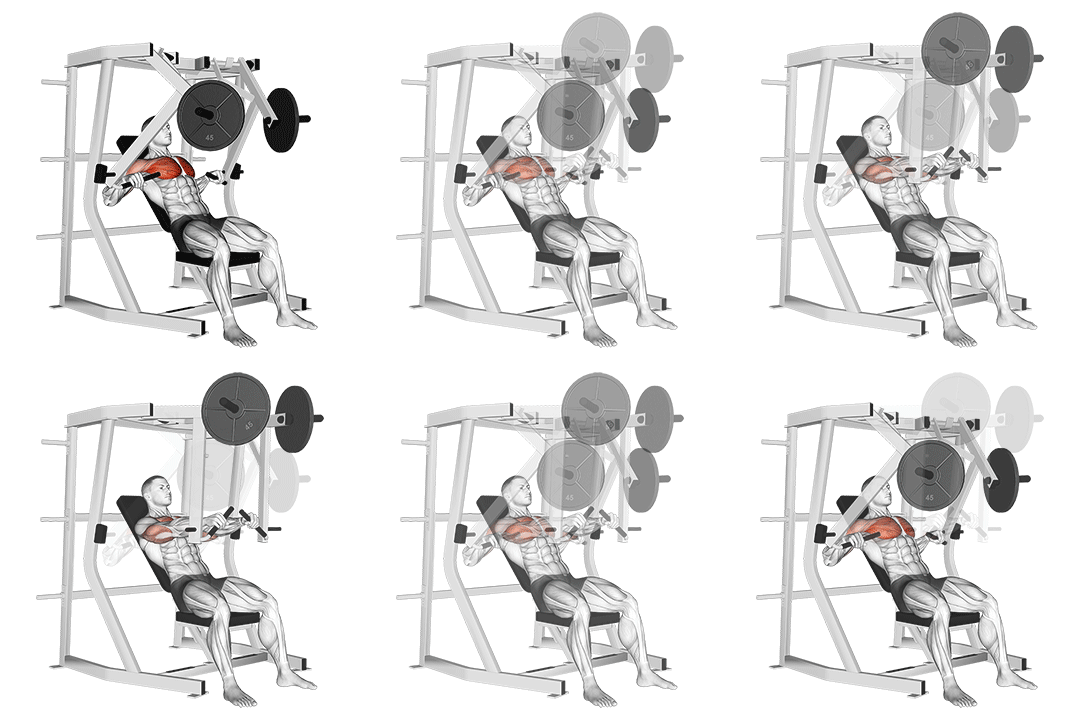
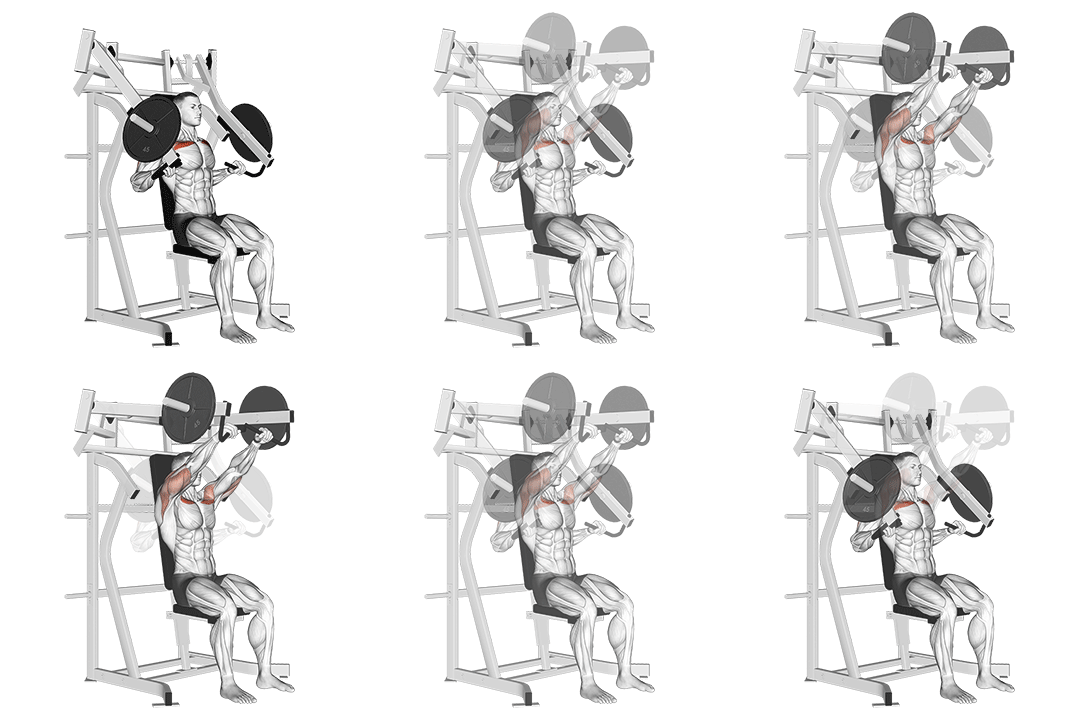
Assisted Chest Dip (kneeling) vs Lever Seated Fly

Compare target muscles, equipment, difficulty, movement type, and secondary muscles for Assisted Chest Dip (kneeling) and Lever Seated Fly.

Change comparison Share

Get comparison link

Select the link and use your device's Copy command.

Comparison overview

AI-generated
Assisted Chest Dip (kneeling) vs Lever Seated Fly — you’re choosing between a beginner-friendly compound press and a beginner isolation movement for the chest. If you want clear guidance, this guide breaks down muscle activation, biomechanics, equipment needs, learning curve, and programming tips. I’ll give technique cues (torso lean, scapular control, arm path), rep ranges for strength and hypertrophy, and when to pick one over the other based on goal and gym setup. Read on so you can pick the right chest exercise and program it for measurable progress.

Exercise Comparison

Exercise A
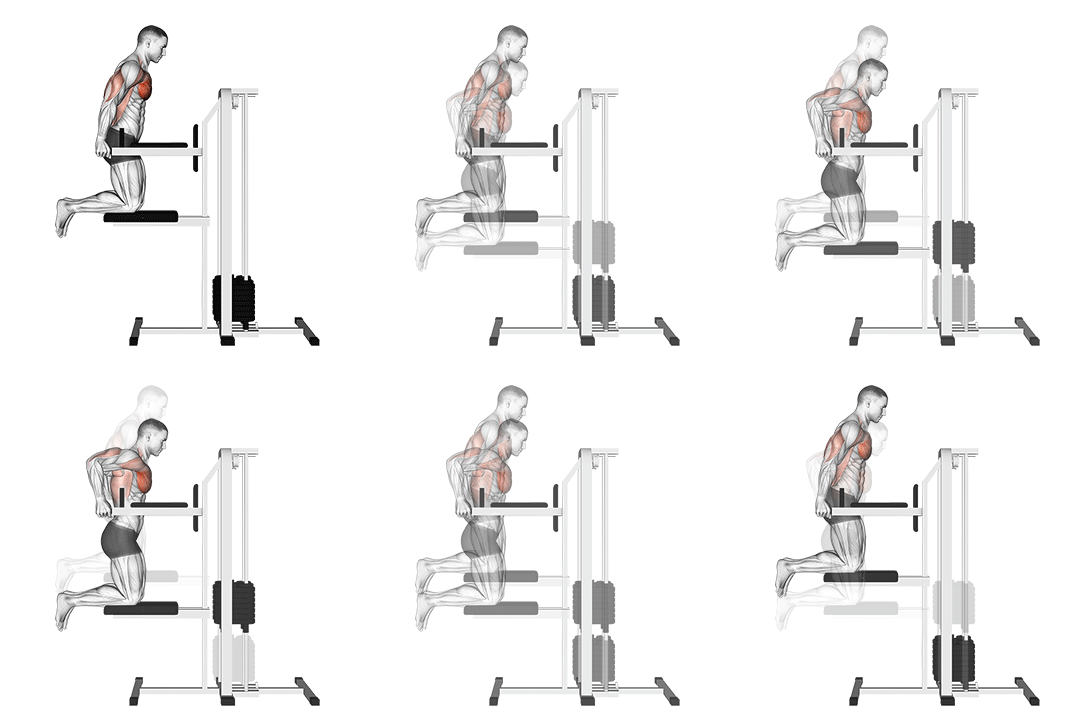
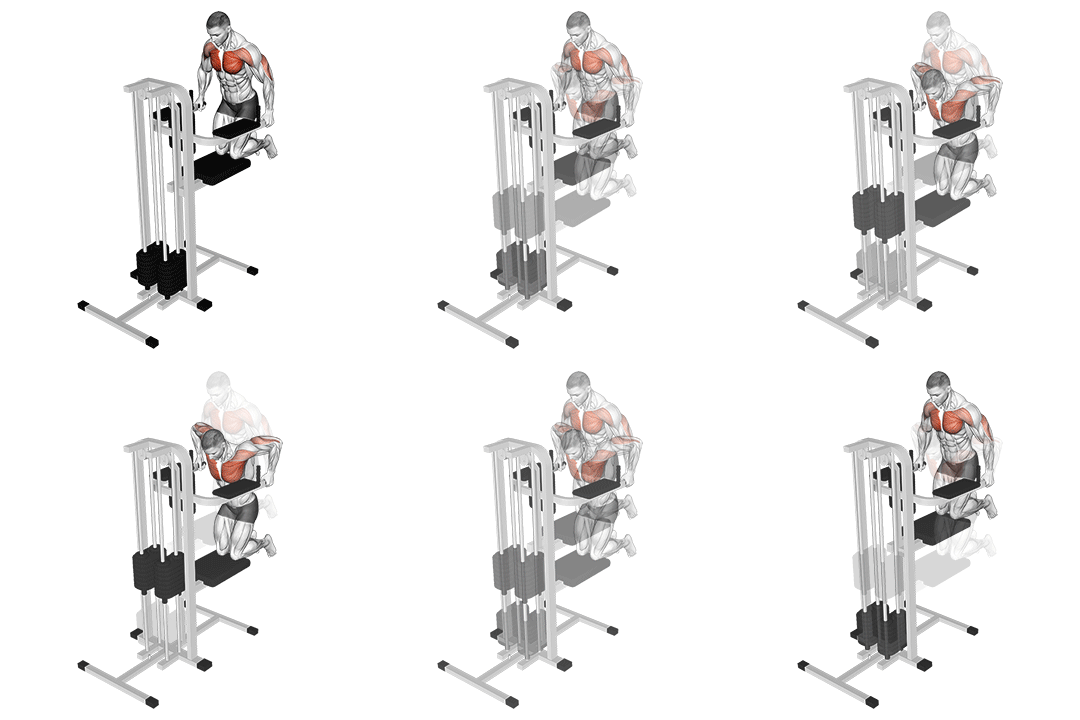
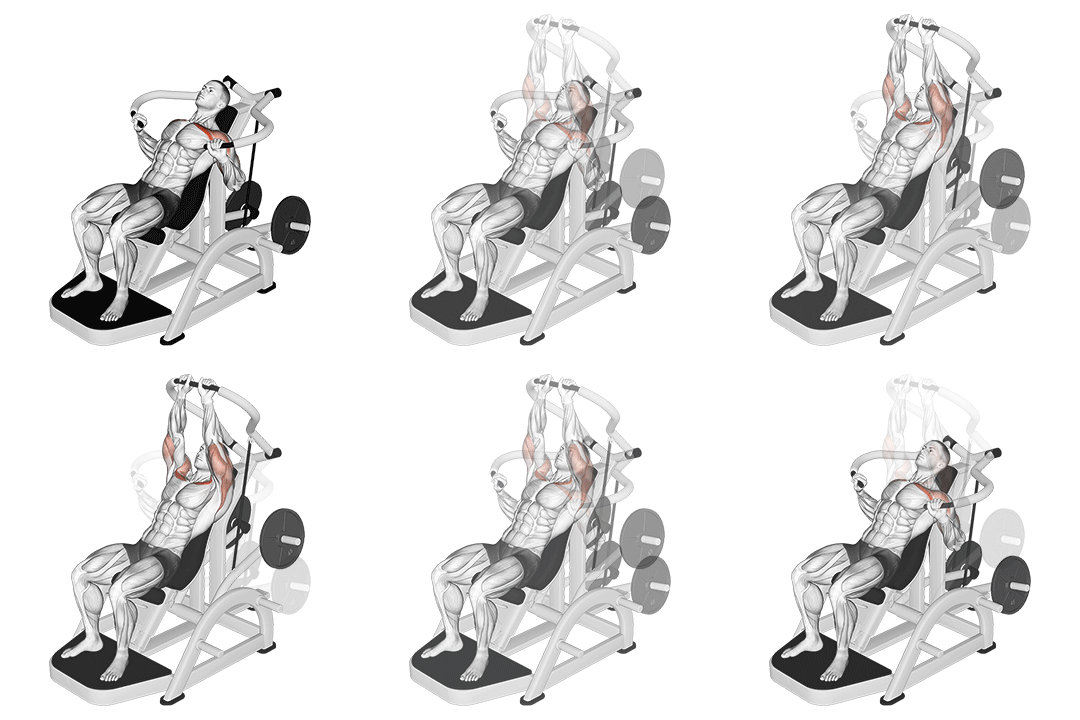
Assisted Chest Dip (kneeling) demonstration

Assisted Chest Dip (kneeling)

Target Pectorals
Equipment Lever
Body Part Chest
Difficulty Beginner
Movement Compound
Secondary Muscles
Triceps Shoulders
VS
Exercise B
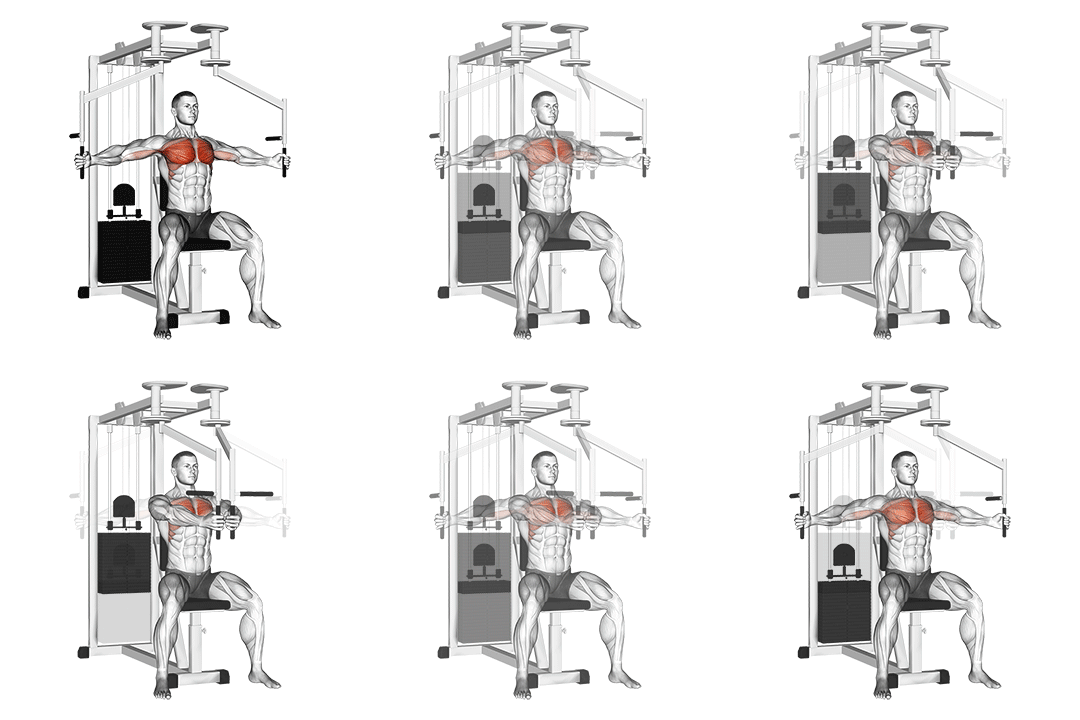
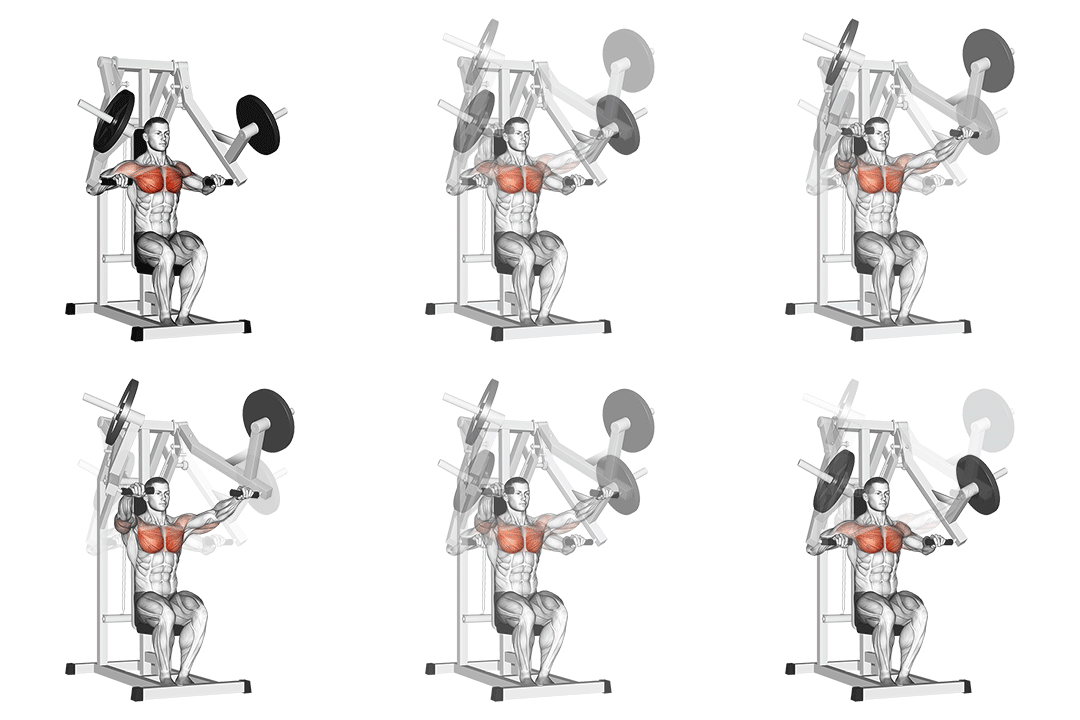
Lever Seated Fly demonstration

Lever Seated Fly

Target Pectorals
Equipment Lever
Body Part Chest
Difficulty Beginner
Movement Isolation
Secondary Muscles
Deltoids Trapezius

Head-to-Head Comparison

Different values are marked. These are catalogue attributes, not performance scores.

Muscles used

Listed target and secondary muscles, shown on the body. Locations, not activation or strength scores.

  • Target
  • Secondary
  • Not highlighted

Assisted Chest Dip (kneeling)

Front
Assisted Chest Dip (kneeling): front muscle locationsSolid: listed target. Striped: listed secondary. Grey: not highlighted. Locations, not activation or strength scores. See the muscle names below.
Back
Assisted Chest Dip (kneeling): back muscle locationsSolid: listed target. Striped: listed secondary. Grey: not highlighted. Locations, not activation or strength scores. See the muscle names below.
Target
Pectorals
Secondary
Triceps, Shoulders

Not shown on diagram: Shoulders. These labels do not identify a precise region on this map.

Lever Seated Fly

Front
Lever Seated Fly: front muscle locationsSolid: listed target. Striped: listed secondary. Grey: not highlighted. Locations, not activation or strength scores. See the muscle names below.
Back
Lever Seated Fly: back muscle locationsSolid: listed target. Striped: listed secondary. Grey: not highlighted. Locations, not activation or strength scores. See the muscle names below.
Target
Pectorals
Secondary
Deltoids, Trapezius

Not shown on diagram: Deltoids. These labels do not identify a precise region on this map.

Grey does not mean a muscle is unused. The diagrams show only the mapped catalogue labels.

Attribute Assisted Chest Dip (kneeling) Lever Seated Fly
Target Muscle
Pectorals
Pectorals
Body Part
Chest
Chest
Equipment
Lever
Lever
Difficulty
Beginner
Beginner
Movement Type Different
Compound
Isolation
Secondary Muscles Different
Triceps, Shoulders
Deltoids, Trapezius

Visual Comparison

An illustrative 1–10 profile derived from catalog difficulty, equipment, and listed-muscle fields—not measured performance or muscle activation.

Key Differences

  • Assisted Chest Dip (kneeling) is a compound movement, while Lever Seated Fly is an isolation exercise.
  • Both exercises target the Pectorals using Lever. The catalogue does not establish which exercise is better for an individual goal.

Muscle comparison

Shared target muscles

Both exercises target the pectoralis major, but they emphasize different fibers and contraction types. Assisted Chest Dip (kneeling) shifts the force vector into a more vertical-to-horizontal press when you lean forward ~20–30°, engaging the sternal head and allowing higher total load through compound extension. The Lever Seated Fly places the shoulder into controlled horizontal adduction through ~50–120° of ROM, producing more peak contraction and constant tension on the pecs throughout the set.

Secondary muscle differences

Assisted Chest Dip (kneeling) recruits triceps and anterior deltoids strongly because elbow extension and shoulder flexion occur under load; the scapular stabilizers and core also work to maintain torso position. Lever Seated Fly has lower triceps demand and pulls in the anterior deltoids and upper trapezius for scapular retraction and posture, so secondary activation shifts away from elbow extensors toward shoulder abductors/adductors and scapular muscles.

Muscle involvement analysis

The dip pattern produces a rising-to-falling pec length-tension curve: pecs start mid-length and shorten under heavy compound load, favoring force production in the mid-range. The fly enforces near-constant tension with a larger emphasis on end-range shortening and peak contraction — you’ll feel maximal pec loading at horizontal adduction endpoint. Force vectors differ: dips combine vertical and horizontal vectors (more overall load), flies isolate horizontal vector with less axial loading.

Equipment and setup

Assisted Chest Dip (kneeling): setup

Assisted Chest Dip (kneeling) requires a lever dip station with an adjustable assistance weight or a counterbalance platform; the machine must allow a kneeling or foot-supported position and a stable handgrip at chest height.

Lever Seated Fly: setup

Lever Seated Fly requires a lever fly machine with an adjustable seat and arm pads; it needs a fixed pivot to guide horizontal adduction and weight plates or a weight stack.

Access and practicality

Lever Seated Fly is the more accessible gym machine because most commercial gyms have a fly/pec-deck or lever variant. However, Assisted Chest Dip (kneeling) can be approximated with a band or assisted dip station at home, so if you value portability, dips are easier to substitute.

Learning and progression

Learning the movements

Both are beginner-friendly, but the Lever Seated Fly is easier to learn for strict pec isolation—set seat height, pin load, and bring the arms together with controlled tempo. Assisted Chest Dip (kneeling) requires coordination of torso lean, elbow travel, and assistance level, so it takes a few sets to dial in safe form.

Progression considerations

Assisted Chest Dip (kneeling) offers broader progression: reduce assistance, add external weight, or increase tempo for strength and compound overload. Lever Seated Fly provides fine-tuned progression through micro-loading, higher-rep schemes, and tempo changes to improve hypertrophy and peak contraction.

Limitations and precautions

Relative risk is moderate for both. Chest dips can stress the anterior shoulder if you over-lean or use excessive range (risk rises with >45° forward lean); keep elbow flaring controlled. Lever flies reduce joint shear but may irritate the anterior shoulder if ROM is forced past comfortable end-range; both are lower risk when using moderate loads and strict form.

Pros & Cons

Assisted Chest Dip (kneeling)

+ Pros

  • Builds compound pressing strength while heavily loading the sternal pecs
  • Teaches coordinated elbow extension and scapular control useful for pressing lifts
  • Easy to progress by decreasing assistance or adding load
  • Engages triceps and shoulders, giving more total-body training stimulus

Cons

  • Requires a lever dip or assisted-dip unit (machine space)
  • Forward lean can stress anterior shoulder if done aggressively
  • Less isolated pec peak contraction compared to a fly

Lever Seated Fly

+ Pros

  • Provides strong peak contraction and constant tension on the pecs
  • Simple setup and consistent movement path reduce technical errors
  • Lower triceps demand lets you isolate the chest effectively
  • Easy to micro-load and manipulate tempo for hypertrophy

Cons

  • Limited transfer to compound pressing strength
  • Requires a dedicated lever fly / pec-deck machine
  • Less effective at training triceps or stabilizer muscles

When Each Exercise Wins

1
For muscle hypertrophy: Lever Seated Fly

The Lever Seated Fly gives constant tension and stronger peak contraction on the pectorals, which helps sarcomere-level stimulus for hypertrophy. Use 8–12 reps with 2–4 second negatives and short 30–60 second rests to maximize time under tension.

2
For strength gains: Assisted Chest Dip (kneeling)

Assisted Chest Dip is a compound pattern that allows heavier progressive loading and trains elbow extension under load, which transfers to pressing strength. Progress by reducing assistance or adding 3–5% load increments and focus on 4–8 rep ranges.

3
For beginners: Assisted Chest Dip (kneeling)

Assisted Chest Dip builds a natural pressing pattern and recruits multiple muscles, giving a bigger functional foundation for new lifters. The assistance mechanism lets you match load to current strength while reinforcing torso and scapular control.

4
For home workouts: Assisted Chest Dip (kneeling)

Lever machines are uncommon at home, but you can mimic assisted dips with resistance bands, a bench dip variation, or an assisted dip station. Those substitutions maintain the compound movement and are easier to set up outside a commercial gym.

Frequently Asked Questions

Can I do both Assisted Chest Dip (kneeling) and Lever Seated Fly in the same workout?

Yes. Use Assisted Chest Dip earlier as a compound lift (3–5 sets of 4–8 or 6–10 reps) and follow with 2–4 sets of Lever Seated Fly at 8–15 reps as an isolation finisher to increase time under tension and target peak pec contraction.

Which exercise is better for beginners?

Assisted Chest Dip (kneeling) is better for most beginners because it teaches a natural pressing pattern and allows load scaling via assistance. It builds a stronger foundation for other presses while still being adjustable to your current strength level.

How do the muscle activation patterns differ?

Dips create a combined vertical and horizontal force vector that loads the sternal pecs in mid-range under compound tension, engaging triceps during elbow extension. Flies emphasize horizontal adduction and peak pec shortening with more constant tension and less elbow involvement, so activation peaks at end-range contraction.

Can Lever Seated Fly replace Assisted Chest Dip (kneeling)?

It can replace dips if your goal is pure pec isolation, but it won’t substitute for the compound strength and triceps work dips provide. For balanced development, include flies for hypertrophy and dips for compound strength.

Comparison Summary

If you want a compound movement that builds pressing strength and trains the triceps and stabilizers, prioritize Assisted Chest Dip (kneeling) and progress by reducing assistance or adding weight in the 4–8 rep range for strength or 8–12 for mixed hypertrophy. If your goal is focused pec development and maximizing peak contraction, choose the Lever Seated Fly and use 8–12 reps with controlled eccentric tempo and minimal momentum. Use both in a program: dips earlier as a strength or compound stimulus, flies later as a finisher to increase time under tension and shape the chest fibers.

Exercise instructions

Steps from the exercise catalogue. Read the full sequence before starting.

Assisted Chest Dip (kneeling)

  1. Adjust the machine to your desired height and secure your knees on the pad.
  2. Grasp the handles with your palms facing down and your arms fully extended.
  3. Lower your body by bending your elbows until your upper arms are parallel to the floor.
Read remaining steps for Assisted Chest Dip (kneeling)
  1. Pause for a moment, then push yourself back up to the starting position.
  2. Repeat for the desired number of repetitions.

Lever Seated Fly

  1. Adjust the seat height and position yourself on the machine with your back against the pad.
  2. Grasp the handles with a pronated grip and keep your elbows slightly bent.
  3. Exhale and push the handles forward, bringing them together in front of your chest.
Read remaining steps for Lever Seated Fly
  1. Pause for a moment, squeezing your chest muscles.
  2. Inhale and slowly return to the starting position, allowing your chest muscles to stretch.
  3. Repeat for the desired number of repetitions.

Also Compare

Compare another pair

Choose two exercises to see their differences side by side.

Compare Exercises