

Power Clean vs Sumo Deadlift: Complete Comparison Guide
Power Clean vs Sumo Deadlift — choose the lift that matches your goals and skill level. {Exercise1} vs {Exercise2} are both advanced barbell compounds that hit the hamstrings and upper legs, but they use different force vectors and timing. In this guide you’ll get clear technique cues, biomechanical comparisons (hip hinge vs triple extension, knee angles, and bar path), recommended rep ranges (power 1–5, strength 3–6, hypertrophy 6–12), equipment notes, and practical progressions so you can decide which lift to prioritize for muscle growth, power, or raw strength.
Exercise Comparison
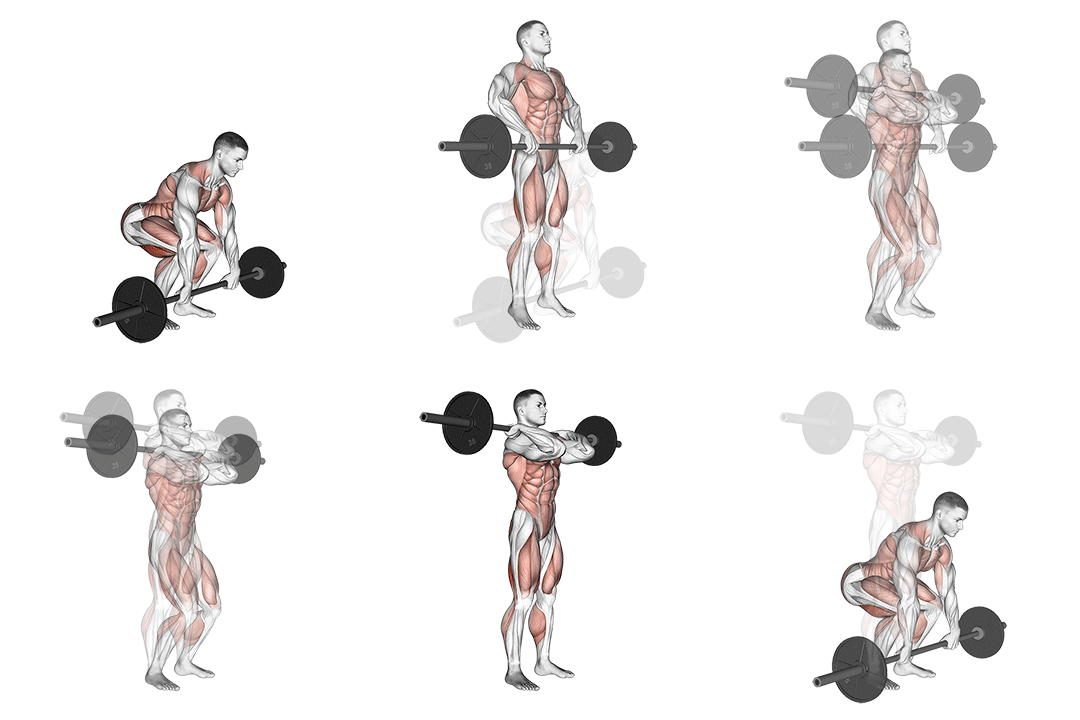
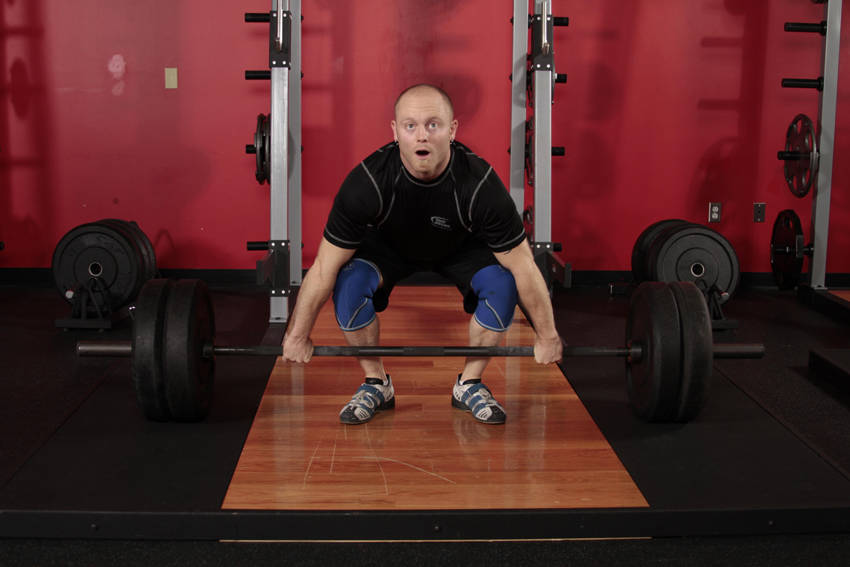
Power Clean
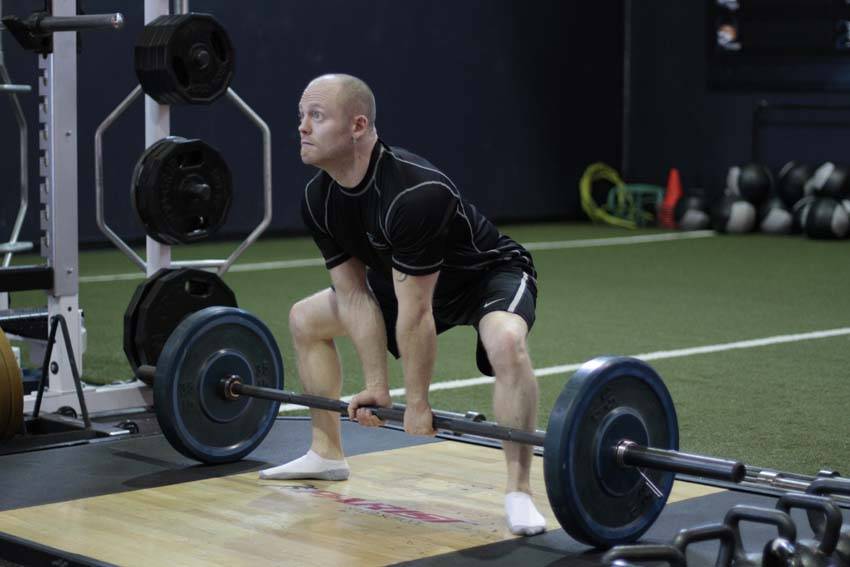
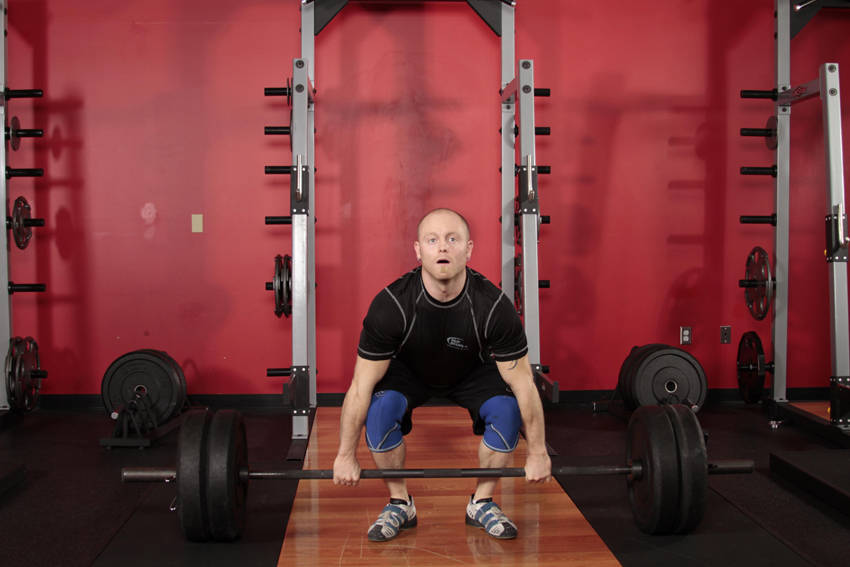
Sumo Deadlift
Head-to-Head Comparison
| Attribute | Power Clean | Sumo Deadlift |
|---|---|---|
| Target Muscle |
Hamstrings
|
Hamstrings
|
| Body Part |
Upper-legs
|
Upper-legs
|
| Equipment |
Barbell
|
Barbell
|
| Difficulty |
Advanced
|
Advanced
|
| Movement Type |
Compound
|
Compound
|
| Secondary Muscles |
3
|
7
|
Secondary Muscles Activated
Power Clean
Sumo Deadlift
Visual Comparison
Overview
Power Clean vs Sumo Deadlift — choose the lift that matches your goals and skill level. {Exercise1} vs {Exercise2} are both advanced barbell compounds that hit the hamstrings and upper legs, but they use different force vectors and timing. In this guide you’ll get clear technique cues, biomechanical comparisons (hip hinge vs triple extension, knee angles, and bar path), recommended rep ranges (power 1–5, strength 3–6, hypertrophy 6–12), equipment notes, and practical progressions so you can decide which lift to prioritize for muscle growth, power, or raw strength.
Key Differences
- Both exercises target the Hamstrings using Barbell. The main differences are in their movement patterns and muscle activation angles.
Pros & Cons
Power Clean
+ Pros
- Develops explosive triple-extension and athletic power
- High peak hamstring and glute activation per rep
- Improves rate of force development and coordination
- Carries over to vertical jump and sprint acceleration
− Cons
- Requires precise timing and practice to execute safely
- Needs bumpers/platform to train optimally (dropping the bar)
- Less effective for maximal strength due to lower absolute loads
Sumo Deadlift
+ Pros
- Allows heavier loads for raw strength and hypertrophy
- Stronger adductor and mid-back recruitment improves carryover
- Simpler setup and easier to learn technical pattern
- Works well in standard gym or home setups without bumpers
− Cons
- Wide stance can stress groin/adductors if mobility is limited
- Heavier loads increase spinal compression and CNS fatigue
- Less emphasis on explosive rate-of-force development
When Each Exercise Wins
Sumo Deadlifts let you use higher absolute loads and longer time-under-tension across hamstrings, glutes, quads and adductors. Use 6–12 rep sets, tempo variations, and paused lockouts to maximize muscle growth.
You can handle heavier singles and triples with the sumo stance, making it superior for building maximal hip and knee extension strength. Program 1–5 rep progressions with heavy doubles and triples.
Sumo Deadlift has a more forgiving, slower movement pattern and simpler setup. With basic bracing and hip hinge coaching you can safely develop strength before introducing technical Olympic lifts.
Sumo requires less specialized equipment and doesn’t force you to drop the bar, so it fits common home setups. Use flat shoes and manageable loads; straps help if grip limits you.
Frequently Asked Questions
Can I do both Power Clean and Sumo Deadlift in the same workout?
Yes — but sequence them wisely. Do Power Cleans first when your CNS is fresh for low-rep explosive sets (1–5 reps), then follow later with Sumo Deadlift strength work (3–6 reps) or hypertrophy sets (6–12). Keep volume in check to avoid CNS fatigue.
Which exercise is better for beginners?
Sumo Deadlift is better for most beginners because the setup is simpler and the movement is slower, which makes bracing and hip hinge patterns easier to learn. Start with lighter loads and coach neutral spine, hip drive, and knee tracking.
How do the muscle activation patterns differ?
Power Clean creates a short, high-intensity burst with rapid concentric hip and knee extension and a fast eccentric catch; hamstrings act quickly in the stretch-shortening cycle. Sumo Deadlift produces sustained concentric force through the hip hinge with increased adductor and isometric back loading, creating longer time-under-tension.
Can Sumo Deadlift replace Power Clean?
Not entirely — if your goal is athletic power and rate-of-force development, the Power Clean is irreplaceable. For raw strength or hypertrophy you can prioritize Sumo Deadlift instead, but expect less carryover to explosive vertical or sprint performance.
Expert Verdict
Use the Power Clean when your priority is athletic power, rate-of-force development, and explosive triple extension — program it with low reps (1–5), fast intent, and technical drills (hang cleans, high pulls, receiving with elbows high). Choose the Sumo Deadlift when your priority is maximal strength or hypertrophy: it lets you move heavier loads, recruits adductors and upper back more, and is easier to learn. If you can, include both across a training cycle: emphasize Power Cleans in power-focused phases and Sumo Deadlifts in strength or hypertrophy phases. Always prioritize technique, progressive overload, and mobility (hip abduction 30–45° for sumo, neutral spine and 10–20° knee bend for clean catch).
Also Compare
More comparisons with Power Clean
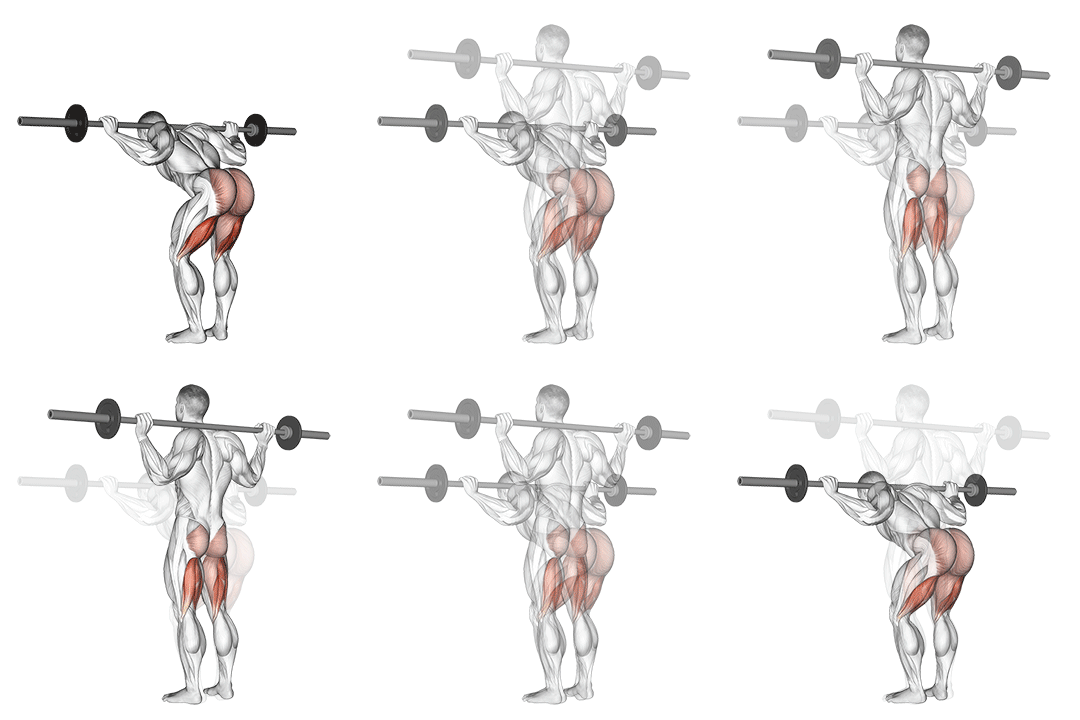
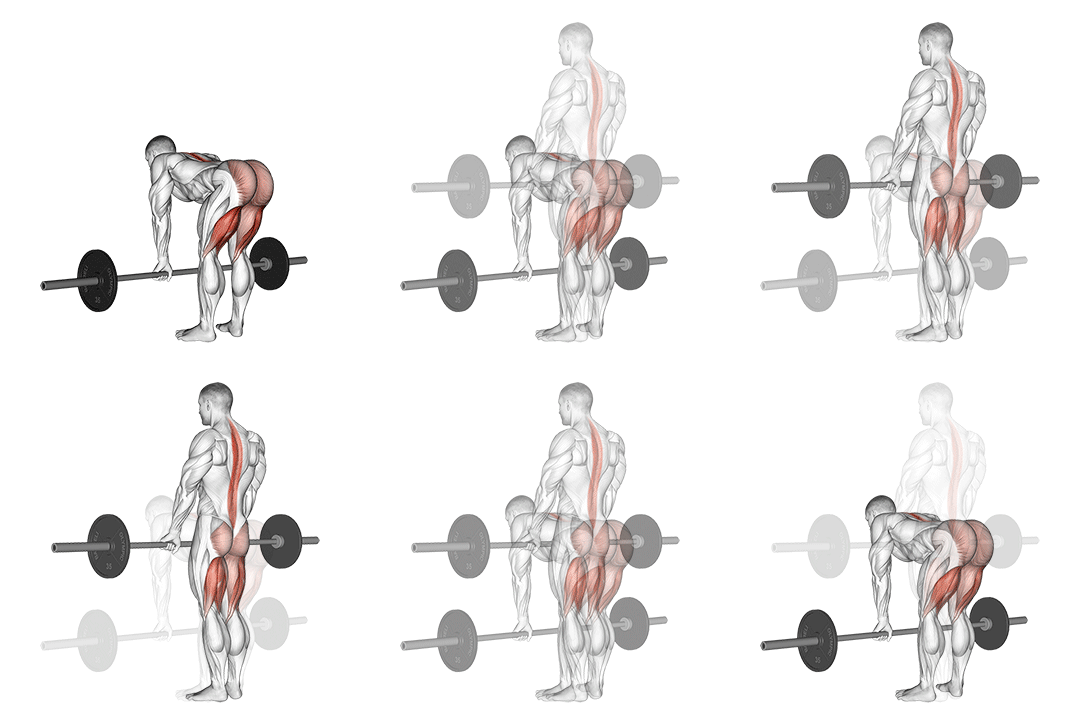
Compare More Exercises
Use our free comparison tool to analyze any two exercises head-to-head.
Compare Exercises