
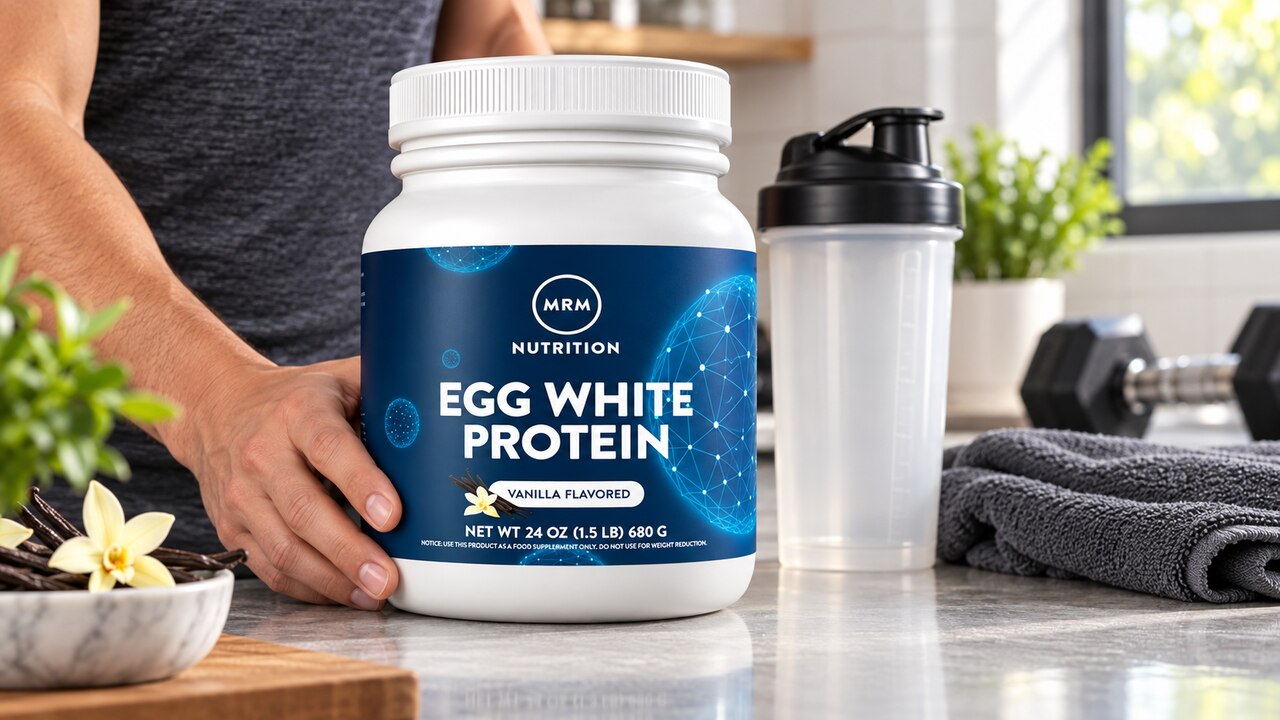
MRM Egg White Protein Vanilla supplies 23 g of protein in a 120-calorie, 33 g scoop. The current 24 oz container holds only 20 servings, and the reviewed $49.99 price works out to $2.50 per shake. That is the central tradeoff: a lean, dairy-free protein source with a high cost per serving.
It fits buyers who eat eggs but avoid dairy proteins and want 23 g in one scoop. It does not fit an egg allergy, a strict vegan diet, or a value-first shopper. The 400 mg sodium per serving also deserves attention when comparing it with whey, plant, or whole-food options.
FitnessVolt may earn a commission from purchases through our links. Tom Miller mixed, tasted, and used the Vanilla powder from the current 24 oz container, then checked its label, price, and relevant protein research.

MRM Egg White Protein, Vanilla, 24 oz
23 g Protein Per ScoopA lean dairy-free protein powder with 23 g per 120 calories, limited by a $2.50 serving cost, egg allergen, and 400 mg sodium.
Pros
- 23 g protein per 120-calorie scoop
- Only 0.5 g fat and 5 g carbohydrate
- Dairy-free for egg-tolerant buyers
- One scoop lands inside a common per-meal protein range
Cons
- About $2.50 per serving at the reviewed price
- Only 20 servings in the 24 oz container
- Contains egg and is not vegan
- 400 mg sodium per serving
The 23 g Protein Serving Is Lean but Salty
One 33 g scoop provides 120 calories, 23 g protein, 5 g carbohydrate, 0.5 g fat, zero total sugar, and 400 mg sodium. Protein supplies about 92 of the 120 calories, so the powder is protein-dense without being protein-only.
| Per 33 g scoop | Amount | Buyer implication |
|---|---|---|
| Protein | 23 g | A useful single-serving amount |
| Calories | 120 | About 5.2 calories per gram of protein |
| Carbohydrate and fat | 5 g and 0.5 g | A relatively lean formula |
| Sodium | 400 mg | Worth counting in a sodium-restricted diet |
| Servings | 20 | A daily tub lasts less than three weeks |
The International Society of Sports Nutrition position stand discusses roughly 20 to 40 g of high-quality protein per meal as a useful general range for many exercising adults. MRM’s 23 g serving sits inside that range. Total daily intake, meal pattern, body size, training, and overall diet still determine whether another shake adds value.
Protein Quality Is Useful, but the Context Still Matters
Egg protein contains all essential amino acids and is commonly treated as a high-quality animal protein. That supports its role as a protein source; it does not make 23 g from powder inherently more anabolic than 23 g from an appropriate meal. The body responds to the broader dose, amino-acid profile, energy intake, and training context.
The powder format can help when a meal is inconvenient or when adding protein without much fat is the goal. It contributes little fiber and is not a complete meal on its own. Fruit, oats, nut butter, or another ingredient can change the nutrition substantially, so the final shake should be counted rather than treating the scoop as the entire recipe.
Older adults, very large athletes, and people eating fewer daily meals may need a different per-meal strategy than a smaller person spreading protein across several meals. The product supplies a fixed 23 g; it does not personalize the rest of the day.
Price Per Scoop and Per Gram of Protein
Amazon listed the 24 oz tub at $49.99 and in stock on September 11, 2026. Across 20 servings, that equals $2.50 per scoop. Dividing again by 23 g gives about 10.9 cents per gram of protein, before tax, shipping, coupons, or subscription changes.
At one scoop per day, the container lasts 20 days and costs roughly $75 over 30 days at the same per-serving rate. That makes the product hard to recommend purely on value. Eggs, dairy, soy foods, meat, or a larger protein tub may provide protein for less, depending on local prices and dietary needs.
For a fair comparison, use cost per gram of protein rather than tub price. A cheaper container can still be worse value if its servings are small, while a more expensive container may last longer. MRM’s current 10.9 cents per gram is easy to calculate and gives buyers a clean benchmark for another label.
MRM’s strongest use case is narrower: someone who wants a powdered protein, tolerates egg, avoids dairy, and prefers an animal-derived option over plant protein. FitnessVolt’s egg white protein guide compares alternatives in that category.
Egg White Powder Is Not the Same as a Whole Egg
A small study in 10 resistance-trained men found a greater post-exercise muscle protein synthesis response after whole eggs than after an egg-white condition with matched protein. That study used food, not MRM powder, and it does not prove this product is ineffective. It shows why evidence about one egg format should not be silently transferred to another.
The practical lesson is simpler. Egg white protein can help meet a protein target, while a whole egg provides yolk nutrients and a different food matrix. A powder offers portability and concentration. Neither choice has to exclude the other, and a single acute study cannot rank every diet.
The study also should not be converted into a claim that adding yolk to an MRM shake will reproduce the result. Its participants, food portions, laboratory methods, and post-exercise setting were specific. It is evidence about a whole-food matrix question, not a recipe instruction for this powder.
Allergen, Sodium, and Formula Fit
The product contains egg. “Dairy-free” does not mean allergy-free, and an egg-allergic buyer should not experiment with it. It is also not vegan. The vanilla formula contains more than egg white alone, so buyers seeking an unflavored single-ingredient powder should compare labels carefully.
The 400 mg sodium amount is not automatically excessive for an active adult, but it is high enough to include in the day’s total. It may be useful around sweaty training for some people and inconvenient for someone following a sodium restriction. Individual clinical advice takes priority.
Tom found the Vanilla powder workable in a shaker and easy to pair with breakfast foods. As with many egg-white powders, a firm shake produces some foam, so letting it settle briefly makes it more pleasant to drink. The flavor is mild enough to combine with oats or fruit, although the 20-serving price makes regular use expensive.
Who Should Buy It, and Who Should Skip It?
Buy it if you tolerate egg, avoid dairy protein, and want a lean 23 g scoop in a powdered format. It can also help when appetite or food preparation makes a conventional protein meal inconvenient.
Skip it if you have an egg allergy, follow a vegan diet, need the lowest protein cost, or want more than 20 servings per container. Buyers limiting sodium should compare the 400 mg serving with the rest of their diet.
A protein powder is a convenience food, not a prerequisite for strength or muscle. Use it to close a real intake gap after ordinary meals are considered, rather than treating the scoop as inherently superior to food.
Bottom Line
MRM Egg White Protein earns a 4.4 out of 5 editorial rating for providing 23 g protein in 120 calories and offering a useful dairy-free animal-protein option. At $49.99, however, each of the 20 servings costs about $2.50. The egg allergen, 400 mg sodium, and small container narrow the audience. It is a targeted alternative for egg-tolerant dairy avoiders, not the obvious value winner.
Sources
- MRM Nutrition. (Accessed September 11, 2026). Egg White Protein product page and current 24 oz label.
- MRM Nutrition. (Accessed September 11, 2026). Vanilla Egg White Protein package information.
- Jager R, et al. (2017). International Society of Sports Nutrition position stand: protein and exercise.
- van Vliet S, et al. (2017). Consumption of whole eggs promotes greater stimulation of postexercise muscle protein synthesis than egg whites in young men.