
Muscles play a pivotal role in our daily lives. Whether we are training, feeding, or resting them, our muscles consistently command our attention. In the pursuit of building muscle, we often seek novel strategies grounded in science or logic to optimize results.
The Building Blocks of Muscles
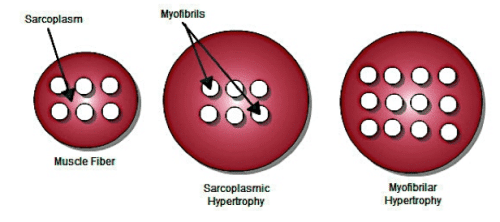
Striated muscles, the primary constituents of our large muscle groups, comprise myofibrils (muscle fibers). These are basic tube-like muscle pieces made up of long proteins and other stabilizing proteins. Organized into thick and thin filaments, these proteins form sections called sarcomeres, facilitating muscle contractions. Between these myofibrils is a gelatinous substance known as sarcoplasm.
Muscle Fiber Types: An Overview
There are two main muscle fiber types:
- Type 1 Fibers: These are slow-twitch, oxidative fibers geared towards endurance. They are less prone to fatigue.
- Type 2 Fibers: These fast-twitch fibers are larger and designed for short bursts of strength. However, they fatigue rapidly. Regardless of their functionality, both muscle fiber types require fuel to operate.
Adenosine Triphosphate (ATP): The Muscle’s Powerhouse
Muscle fibers harness energy from Adenosine Triphosphate (ATP) to contract. Our bodies produce ATP in various ways:
- Phosphagen System: The quickest method utilizes phosphocreatine, but this source is rapidly depleted.
- Glycolytic System: Breaks down glucose or glycogen into pyruvic or lactic acid when oxygen is absent.
- Oxidative System: In the presence of oxygen, it breaks down substrates like carbs, fats, and protein.
Mechanisms of Hypertrophy
Muscle growth or hypertrophy can be achieved in two primary ways:
- By increasing the size and number of myofibrils (muscle fibers) through consistent and adequate tension.
- Ensuring an ample ATP supply is crucial for muscle recovery and the functionality of new muscle growth.
Sarcoplasmic Hypertrophy: A Deep Dive
Sarcoplasmic hypertrophy focuses on increasing the sarcoplasm volume. With an enlarged sarcoplasm, there’s an increase in the number of mitochondria responsible for ATP production. This not only enlarges the muscle but also ensures that new muscle tissues have enough ATP to function properly and undergo necessary protein synthesis.
Training for Sarcoplasmic Growth
To stimulate sarcoplasmic growth:
- Train with weights at 70-80% of your one rep maximum.
- Aim for 8-12 reps per set.
Such training ensures muscle fibers are optimally recruited and exposed to enough tension for growth. It also pushes the muscles’ endurance capacities, demanding an adaptive response from the body in the form of more ATP.
A Practical Approach to Muscle Training
For effective muscle training:
- Begin with a warm-up set to prepare muscles, joints, tendons, and ligaments.
- Follow with two sets of 5-8 reps at 85% of your one rep maximum.
- Conclude with one or two sets at 70% of your maximum, aiming for 12 reps.
This approach not only enhances muscle size through sarcoplasmic hypertrophy but also improves muscle fiber size and strength, given the increased ATP availability.
Conclusion
Incorporating strategies that address both muscle fiber stimulation and sarcoplasmic growth is a comprehensive approach to muscle mass enhancement. By understanding and applying these methods, you’re setting the stage for more effective muscle growth and strength development.
Happy Lifting!