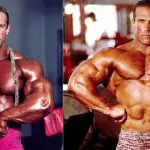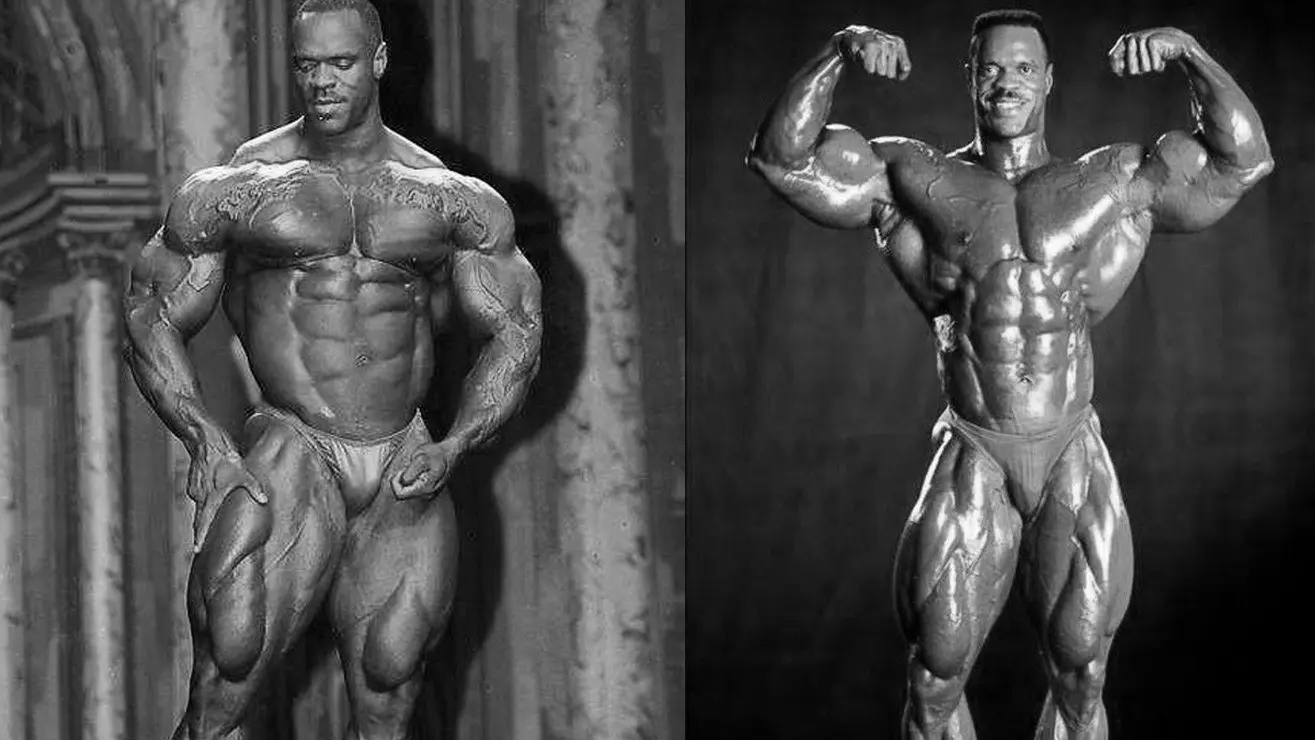
Paul Dillett is a retired professional bodybuilder from Montreal, Canada. He competed in the 1990s and 2000s era of bodybuilding and held his own against the elite bodybuilders like Ronnie Coleman, Dorian Yates, Shawn Ray and Flex Wheeler, to name a few. This article explores his biography, career accomplishments, training routine, workout and diet as well as statistics.
Paul Dillett Statistics
| Nickname: The King, Freak-einstein | ||
| Off Season Weight | Competition Weight | Height |
| 320 lbs (145 kg) | 285 lbs (129 kg) | 6′ 1″ (185 cm) |
| Date of Birth | Age | Residence |
| April 12, 1965 | 61 years | Toronto, Ontario |
Paul Dillett Biography
Early Life
Paul Dillett is from Montreal, Canada. He was born to a French father and a Jamaican mother. Growing up, Dillett was an active kid and his parents encouraged him to participate in sports and other physical activities from an early age. He was excellent at playing football and became one of the best talents in the Canadian Football League (CFL). Dillett would probably have done well in this sport as well if he continued his journey.
However, the young man also developed the passion to build a great physique. The foundations of his passion for bodybuilding were laid by football as he trained hard at his elementary school gym to gain physical strength for the sport. Eventually, Dillett was completely taken over by bodybuilding and he started lifting weights regularly. This slowly pulled him away from football and Dillett completely stopped playing the sport in the years that followed.
While explaining the factors that ignited his passion for bodybuilding, Dillett once explained:
“I was a huge fan of Tony Atlas; he’s former Mr. USA and Rocky Johnson. He was Dwayne Johnson’s dad, you know. I just loved how they looked and I wanted my older brother to get involved in lifting weight because I wanted him to look like them. He was a little too lazy to do it so I said, ‘screw it. I’m going to do it myself’. To be honest, that’s really how I started.”
Once Paul Dillett decided to pursue bodybuilding as the primary focus of his life, he started seeing results daily quickly and it gave him the confidence to compete professionally.
Bodybuilding Career
Paul was a relative newcomer to the sport of bodybuilding as well as an ‘outsider’. Additionally, he was unusually tall for the sport of bodybuilding at 6’1” tall. This meant that he had to pack a lot of muscle to get the desired look to be successful as a pro.
He competed at the 1991 North American Championships in the heavyweight category. Fans were taken by surprise when the Montreal native finished second in the division. While this might have satisfied someone else’s ego, Dillett was possessed with the goal to make strides in the sport.
He returned at the same show the following year and became the overall champion. The win also earned him an IFBB Pro Card. Dillett never looked back after this and only made progress.
Paul Dillett made his professional bodybuilding debut at the 1993 Arnold Classic and finished fourth at the show. He then returned to stage at the Ironman Pro Invitational and secured another fourth-place finish. Dillett’s Olympia debut came that same year. To the surprise of many, the Canadian surged into the top seven at the show and achieved a respectable sixth place finish.
Health scare and absence from competition
Paul Dillett’s first year as an IFBB Pro bodybuilder was impressive and he became an instant sensation in the industry. His massive frame, narrow waist and boulder shoulders earned him a moniker ‘Freak-einstein’. He looked like a man on a mission to rule the sport in the years to come.
However, fate had it the other way. Dillett returned to the stage with a singular objective to take home the 1994 Arnold Classic trophy. However, he was extremely dehydrated on stage as a result of weight cut. When Dillett attempted to flex his muscles for the front double biceps pose on stage, his muscles cramped severely and he went down in pain, shouting ‘Oh my god’ several times.
The mass monster was legally dead for a couple of minutes but the doctors were able to revive him. Years later, Paul Dillett shed light on the causes of the incident during an interview with Generation Iron Fitness and Bodybuilding Network. He explained:
“It’s too much calcium and no magnesium… And just listening to someone I shouldn’t have listened to.”
Dillett takes full responsibility for the actions that led to the collapse and subsequent health issues. However, he feels fortunate to have survived the dramatic event.
“My heart stopped beating for a minute, yeah! I was so dry they couldn’t even put the IV needles into my veins.”
Impact on long-term health and performance
A health scare of this magnitude can take a serious toll on a person’s long term health and athletic performance. Unfortunately, that’s exactly what happened with Paul Dillett and he admits that he could never achieve his full potential even after making a complete recovery in the months that followed.
“I was just never the same, you know. When I train, when I get ready for the shows, it’s always in the back of your mind, right? There’s always that fear. My condition never came back to like when I first started because of that incident. I never used diuretic after that.”
Irrespective of how he felt on the inside, Paul Dillett continued to compete professionally for over a decade and won several pro shows.
Career after the health scare
Paul Dillett took the entire 1995 off to regain his health. He registered a solid comeback in the year 1996 with a podium finish at the 1996 Arnold Classic. He repeated the third-place finish at the 1996 Czech Republic Grand Prix.
Dillett regained the confidence in his abilities with back-to-back podium finishes and continued to compete until 2006.
The best performances of the Canadian bodybuilder’s career came at the 1999 Night of Champions, which is now known as the IFBB New York Pro. Dillett demolished the competition and secured a win there. He achieved top five finishes on the Olympia stage in 1996 and 1997 as well.
Paul Dillett’s final Olympia appearance came in the year 1999 when he finished seventh. However, he could never qualify for the grandest stage of bodybuilding in the last phase of his competitive career.
Paul Dillett graced the professional bodybuilding stage for the last time at the 2006 Montreal Pro that saw him get placed tenth. Although he did not participate in pro shows after this, Dillett did not make a formal announcement of his retirement from the sport of bodybuilding until 2012.
Life After Retirement
Paul Dillett was one of the biggest competitors in the history of the sport. He had a genetic gift of massive size and muscle mass that enabled him to hang in there with some of the best bodybuilders of the era. However, ‘Freak-einstein’ never fully mastered the art of posing which hurt his chances against the most elite of his competitors of his time.
But the massive and muscular physique served him well in exploring other opportunities. During his career, Paul Dillett featured in several fitness magazines and photoshoots. He was also a subject of several bodybuilding articles written at the time.
After retiring from bodybuilding, Paul Dillett completely shed his skin and focused his energies on other aspects of his life. He let go of the massive and iconic physique that made him famous. The Canadian downsized significantly, slowly transforming into an average person. His impressive physique eventually became a distant memory.
But Dillett did not stop working on other ventures. He started personal training businesses and became an entrepreneur. In 2007, Paul Dillett became the owner and CEO of The World Bodybuilding and Fitness Federation (WBFF).
Paul Dillett Competition History
Dillett entered 42 contests between 1991 and 2006, winning four of them: the 1992 North American Championships, the 1994 Grand Prix France, the 1994 Grand Prix Germany and the 1999 Night of Champions.
Paul Dillett Workout
Paul Dillett is widely regarded as the mass monster of the 1990s because of his massive frame and muscle mass. He carried it on a taller frame than most of his rivals, and much of the effect came from proportion rather than sheer bulk.
He made sure that the joints on his body were smaller and the muscles were more full. This made him look bigger on stage than he actually was. But the veteran bodybuilder could not have achieved this appearance without an effective training method.
At the peak of his bodybuilding career, Dillett followed an arduous training routine. He usually trained twice every day and also incorporated cardio training in his workout regimen. Dillet did not lift weights early in the morning. Instead, he would do fasted cardio at 6:30 in the morning. The Canadian’s first weight training session started at 12:30. He rested for three to four hours after the workout and then headed back to the gym for a second training session.
The second session would typically target the smaller muscle groups like arms, calves, lower back and hamstrings. Paul Dillett then followed it up with an intense cardio workout. The Canadian bodybuilder strictly followed his routine for the majority of his bodybuilding career.
Training philosophy and opinions on evolution of bodybuilding
Paul Dillett is a student of bodybuilding and he has gained bodybuilding wisdom through decades of training. Most experts in the bodybuilding industry have different but equally convincing opinions on training methods.
Dillet does not give too much importance to arguments like free weight vs machine training. However, he believes that free weights tend to do a lot of harm to the body. According to the Canadian, free weight movements force the body to lift weights in positions that it is not designed to lift them.
Dillett has been observing the evolution of machines closely and thinks that exercise machines have evolved to a level where chances of injuries or long-term hazards of training can be greatly avoided.
A popular narrative around Paul Dillett claimed that he was a genetically gifted bodybuilder that did not work as hard as his peers. The veteran bodybuilder has an interesting take on such allegations. He says:
“I think people start such narratives, you know. ‘Oh, he was a lazy chair’. I’m like, I don’t know. I’m the guy who got up at 6 AM in the morning to go do cardio, I’m the guy who does another hour of cardio at 8:30 at night, and trains twice a day.”
Thoughts on cardio
As you may have noticed by now, Paul Dillett did a lot more cardio than most professional bodybuilders tend to do. A general fear of losing muscle mass compels the majority of bodybuilders to limit the amount of cardio in their training routine. However, Dillett is not among them. He allotted a considerable portion of training time to cardio and ramped it up even more during the competition prep.
“I did a lot of cardio. I was one of the guys who would do two hours of cardio a day. Sometimes even a little more. It didn’t bother me. It didn’t… A lot of guys say they lose muscle mass when they do cardio. I didn’t lose any muscle mass from doing cardio,” Dillett said in an interview.
Treadmill and bike were ‘Freak-einstein’s favorite forms of cardio.
Paul Dillett’s training split
‘Freakenstein’s training routine was not formulated as per the weekly training model. Instead, he would train four days in a row, take the fifth day off and then repeat the four-day training split again. This five-day routine proved to be effective and Dillett’s massive physique is the testimony to that.
Dillett did change up the method a little bit during competition prep. Instead of working out four days, he would train three days in a row, take a day off and then repeat the three-day routine. The increased frequency of rest days allowed him to recover faster between the training days and avoid injuries or training fatigue.
Typically, Paul Dillett’s off-season training split looked like this:
- 1st Day – Shoulders
- 2nd Day – Quads in the morning and Hamstrings in the evening
- 3rd Day – Chest in the morning and Arms in the evening
- 4th Day – Back
- 5th Day – Rest
- 6th Day – Start Over
Paul Dillett Diet
The simplicity of Paul Dillett’s training routine reflects in his dietary practices as well. He did not subscribe to any fancy or miraculous nutrition methods. The Canadian bodybuilder’s diet was a basic mix of protein sources like chicken, steak and eggs. He coupled it with carbohydrate-rich foods like rice, potatoes etc. Dillett included green vegetables in the diet as well.
Some of the common foods in his diet are mentioned below. These are not the exact foods that Dillett ate. Instead, this is the list of foods that he preferred to eat based on his interviews and common bodybuilding diets that were followed in the 1980s and 1990s.
Protein
- Chicken
- Egg Whites
- Fish
- Lean Cuts of Steak
Carbohydrates
- Brown Rice
- Potatoes
- Oats
Fats
- Olive Oil
- Egg Yolk
- Nuts
Paul Dillett also supplemented his diet with supplements like multivitamins, fish oils and fat burners. However, he only took them during competition prep when the caloric intake was restricted. Whey protein was the only supplement that Dillett consumed all year round.
To Conclude…
Paul Dillett’s 1994 Arnold Classic health scare is a reminder that professional bodybuilding is an extreme sport and all the competitors work hard to achieve the muscular physique. However, his courage and resilience to get back to the stage after a life-threatening incident is worth admiring. Dillet built the massive physique by sticking to the basics, which is something that most people today need to understand.
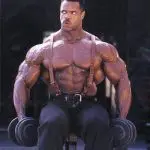
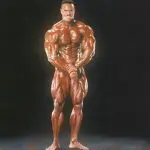
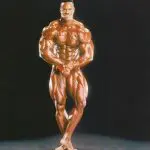
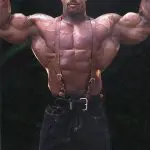
Paul Dillett Gallery
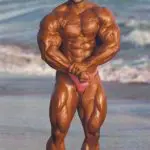
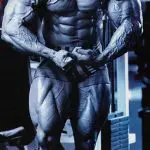
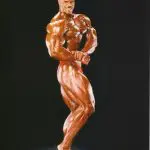
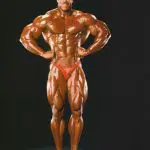
Paul Dillett Videos
https://www.youtube.com/watch?v=MRTiDHH7hXE