



This is a reversed version of the normal BMI (body mass index) calculation. Instead of calculating BMI, you calculate the weight that will provide you with a certain BMI.
Example: BMI 22 at 5 ft 8 in
144.7lb
A BMI of 22.0 is in the healthy weight range for adults, 18.5 to 24.9.
These bands are for adults 20 and older; for children and teens, BMI is read on the CDC age and sex percentiles in our BMI calculator. NICE uses lower thresholds for adults with a South Asian, Chinese, other Asian, Middle Eastern, Black African or African-Caribbean background: overweight from 23 and obesity from 27.5. Enter your own numbers above to replace this example.
Healthy weight for your height
121.4 to 164.0 lb
Adult BMI 18.5 to 24.9
In kilograms
65.6 kg
| NICE BMI band | BMI |
|---|---|
| Under the healthy weight range | under 18.5 |
| Healthy weight | 18.5 to 24.9 |
| Overweight | 25 to under 30 |
| Obesity class 1 | 30 to under 35 |
| Obesity class 2 | 35 to under 40 |
| Obesity class 3 | 40 or more |
- Next stepBMI calculatorThe BMI of the weight you are now.
Formula: kg = BMI x height in m ^ 2; lb = kg / 0.45359237. The band uses the BMI to one decimal, as NICE prints its bands. The healthy weight range is the lightest to the heaviest weight, to one decimal, whose BMI reads 18.5 to 24.9. Your weight prints to one decimal too; near either end of that range it is rounded to the side its BMI falls on, so it can be up to 0.1 off the exact figure, and the figure in the other unit is that printed weight converted. BMI is a guide to weight for height; NICE advises reading it with care for adults with high muscle mass and people aged 65 and over.
Sources: WHO 2000 (Technical Report Series 894); CDC adult BMI categories; NICE guideline NG246
What is The Reverse BMI Calculator?
The reverse BMI calculator estimates the weight you need to be at to achieve a specific BMI score. Ideally, your goal BMI should put you in a healthy weight range.
But to truly understand what the Reverse BMI calculator is and how it works, we must first understand BMI, which stands for body mass index.
What is Body Mass Index (BMI)?
Body mass index is an estimate of body fat based on an individual’s weight and height. It’s one way to determine whether or not someone is at a healthy weight.
BMI is not an accurate measure of body fat percentage. However, it uses a formula (weight in kilograms divided by the square of height in meters) for an approximation of fat mass.
To find your body mass index, you can use a BMI calculator.
BMI categories
Based on your BMI score, you will be categorized accordingly.
Underweight = <18.5
Healthy weight = 18.5 – 24.9
Overweight = 25 – 29.9
Obesity = BMI of 30 or greater
So, for example, according to the basic BMI calculation, someone who is 5’2″ and weighs 160 lbs is considered to be overweight. They have a high BMI score between 25 and 29.9.
On the other end, someone who stands at 6’2″ and weighs 140 lbs would be considered underweight or having too little fat on their body.
If you have a South Asian, Chinese, other Asian, Middle Eastern, Black African or African-Caribbean background, NICE uses lower thresholds: overweight from a BMI of 23 and obesity from 27.5.
Body Mass Index Table
Find the height in the left-hand and move across to a given weight (in pounds, rounded to the nearest pound). The number at the top of the column is the BMI at that height and weight. On a phone, swipe a table sideways to see the higher BMIs.
Body Mass Index Table #1
| BMI | 19 | 20 | 21 | 22 | 23 | 24 | 25 | 26 | 27 | 28 | 29 | 30 | 31 | 32 | 33 | 34 | 35 |
|---|---|---|---|---|---|---|---|---|---|---|---|---|---|---|---|---|---|
| Height (inches) |
Body Weight (pounds) | ||||||||||||||||
| 58 | 91 | 96 | 100 | 105 | 110 | 115 | 120 | 124 | 129 | 134 | 139 | 144 | 148 | 153 | 158 | 163 | 167 |
| 59 | 94 | 99 | 104 | 109 | 114 | 119 | 124 | 129 | 134 | 139 | 144 | 149 | 153 | 158 | 163 | 168 | 173 |
| 60 | 97 | 102 | 108 | 113 | 118 | 123 | 128 | 133 | 138 | 143 | 148 | 154 | 159 | 164 | 169 | 174 | 179 |
| 61 | 101 | 106 | 111 | 116 | 122 | 127 | 132 | 138 | 143 | 148 | 153 | 159 | 164 | 169 | 175 | 180 | 185 |
| 62 | 104 | 109 | 115 | 120 | 126 | 131 | 137 | 142 | 148 | 153 | 159 | 164 | 169 | 175 | 180 | 186 | 191 |
| 63 | 107 | 113 | 119 | 124 | 130 | 135 | 141 | 147 | 152 | 158 | 164 | 169 | 175 | 181 | 186 | 192 | 198 |
| 64 | 111 | 117 | 122 | 128 | 134 | 140 | 146 | 151 | 157 | 163 | 169 | 175 | 181 | 186 | 192 | 198 | 204 |
| 65 | 114 | 120 | 126 | 132 | 138 | 144 | 150 | 156 | 162 | 168 | 174 | 180 | 186 | 192 | 198 | 204 | 210 |
| 66 | 118 | 124 | 130 | 136 | 143 | 149 | 155 | 161 | 167 | 173 | 180 | 186 | 192 | 198 | 204 | 211 | 217 |
| 67 | 121 | 128 | 134 | 140 | 147 | 153 | 160 | 166 | 172 | 179 | 185 | 192 | 198 | 204 | 211 | 217 | 223 |
| 68 | 125 | 132 | 138 | 145 | 151 | 158 | 164 | 171 | 178 | 184 | 191 | 197 | 204 | 210 | 217 | 224 | 230 |
| 69 | 129 | 135 | 142 | 149 | 156 | 163 | 169 | 176 | 183 | 190 | 196 | 203 | 210 | 217 | 223 | 230 | 237 |
| 70 | 132 | 139 | 146 | 153 | 160 | 167 | 174 | 181 | 188 | 195 | 202 | 209 | 216 | 223 | 230 | 237 | 244 |
| 71 | 136 | 143 | 151 | 158 | 165 | 172 | 179 | 186 | 194 | 201 | 208 | 215 | 222 | 229 | 237 | 244 | 251 |
| 72 | 140 | 147 | 155 | 162 | 170 | 177 | 184 | 192 | 199 | 206 | 214 | 221 | 229 | 236 | 243 | 251 | 258 |
| 73 | 144 | 152 | 159 | 167 | 174 | 182 | 189 | 197 | 205 | 212 | 220 | 227 | 235 | 243 | 250 | 258 | 265 |
| 74 | 148 | 156 | 164 | 171 | 179 | 187 | 195 | 203 | 210 | 218 | 226 | 234 | 241 | 249 | 257 | 265 | 273 |
| 75 | 152 | 160 | 168 | 176 | 184 | 192 | 200 | 208 | 216 | 224 | 232 | 240 | 248 | 256 | 264 | 272 | 280 |
| 76 | 156 | 164 | 173 | 181 | 189 | 197 | 205 | 214 | 222 | 230 | 238 | 246 | 255 | 263 | 271 | 279 | 288 |
Body Mass Index Table #2
For BMI greater than 35
| BMI | 36 | 37 | 38 | 39 | 40 | 41 | 42 | 43 | 44 | 45 | 46 | 47 | 48 | 49 | 50 | 51 | 52 | 53 | 54 |
|---|---|---|---|---|---|---|---|---|---|---|---|---|---|---|---|---|---|---|---|
| Height (inches) |
Body Weight (pounds) | ||||||||||||||||||
| 58 | 172 | 177 | 182 | 187 | 191 | 196 | 201 | 206 | 211 | 215 | 220 | 225 | 230 | 234 | 239 | 244 | 249 | 254 | 258 |
| 59 | 178 | 183 | 188 | 193 | 198 | 203 | 208 | 213 | 218 | 223 | 228 | 233 | 238 | 243 | 248 | 253 | 257 | 262 | 267 |
| 60 | 184 | 189 | 195 | 200 | 205 | 210 | 215 | 220 | 225 | 230 | 236 | 241 | 246 | 251 | 256 | 261 | 266 | 271 | 277 |
| 61 | 191 | 196 | 201 | 206 | 212 | 217 | 222 | 228 | 233 | 238 | 243 | 249 | 254 | 259 | 265 | 270 | 275 | 281 | 286 |
| 62 | 197 | 202 | 208 | 213 | 219 | 224 | 230 | 235 | 241 | 246 | 252 | 257 | 262 | 268 | 273 | 279 | 284 | 290 | 295 |
| 63 | 203 | 209 | 215 | 220 | 226 | 231 | 237 | 243 | 248 | 254 | 260 | 265 | 271 | 277 | 282 | 288 | 294 | 299 | 305 |
| 64 | 210 | 216 | 221 | 227 | 233 | 239 | 245 | 251 | 256 | 262 | 268 | 274 | 280 | 285 | 291 | 297 | 303 | 309 | 315 |
| 65 | 216 | 222 | 228 | 234 | 240 | 246 | 252 | 258 | 264 | 270 | 276 | 282 | 288 | 294 | 300 | 306 | 312 | 318 | 325 |
| 66 | 223 | 229 | 235 | 242 | 248 | 254 | 260 | 266 | 273 | 279 | 285 | 291 | 297 | 304 | 310 | 316 | 322 | 328 | 335 |
| 67 | 230 | 236 | 243 | 249 | 255 | 262 | 268 | 275 | 281 | 287 | 294 | 300 | 306 | 313 | 319 | 326 | 332 | 338 | 345 |
| 68 | 237 | 243 | 250 | 256 | 263 | 270 | 276 | 283 | 289 | 296 | 303 | 309 | 316 | 322 | 329 | 335 | 342 | 349 | 355 |
| 69 | 244 | 251 | 257 | 264 | 271 | 278 | 284 | 291 | 298 | 305 | 311 | 318 | 325 | 332 | 339 | 345 | 352 | 359 | 366 |
| 70 | 251 | 258 | 265 | 272 | 279 | 286 | 293 | 300 | 307 | 314 | 321 | 328 | 335 | 342 | 348 | 355 | 362 | 369 | 376 |
| 71 | 258 | 265 | 272 | 280 | 287 | 294 | 301 | 308 | 315 | 323 | 330 | 337 | 344 | 351 | 358 | 366 | 373 | 380 | 387 |
| 72 | 265 | 273 | 280 | 288 | 295 | 302 | 310 | 317 | 324 | 332 | 339 | 347 | 354 | 361 | 369 | 376 | 383 | 391 | 398 |
| 73 | 273 | 280 | 288 | 296 | 303 | 311 | 318 | 326 | 334 | 341 | 349 | 356 | 364 | 371 | 379 | 387 | 394 | 402 | 409 |
| 74 | 280 | 288 | 296 | 304 | 312 | 319 | 327 | 335 | 343 | 350 | 358 | 366 | 374 | 382 | 389 | 397 | 405 | 413 | 421 |
| 75 | 288 | 296 | 304 | 312 | 320 | 328 | 336 | 344 | 352 | 360 | 368 | 376 | 384 | 392 | 400 | 408 | 416 | 424 | 432 |
| 76 | 296 | 304 | 312 | 320 | 329 | 337 | 345 | 353 | 361 | 370 | 378 | 386 | 394 | 403 | 411 | 419 | 427 | 435 | 444 |
How Accurate is The BMI Calculation?
Using BMI as a measure of whether or not someone is at a healthy weight may be a good option for some people.
However, it does not take into account body composition or how much muscle mass someone has.
For example, let’s say two people are considered overweight based on the basic BMI formula. However, one has more muscle and a healthy body fat percentage, while the other has a high body fat percentage.
Do you see how BMI is not necessarily accurate?
It only considers weight and height. There are many different body types and variables that determine a healthy or unhealthy weight.
While BMI is can be a useful gauge of body composition, especially more so in the general population, ‘BMI range’ may offer a more accurate measure of ideal body mass relative to height.
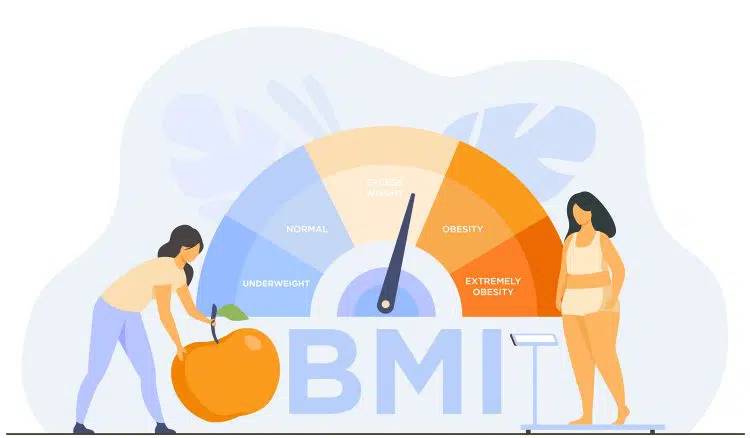
What is BMI range?
BMI range is a variation of BMI. Based on your height, it calculates an ideal weight range rather than a specific weight.
For example, at 5’8″ a BMI of 22 works out to 144.7 lb. The BMI range gives you a lower and a higher weight instead: 121.4 to 164.0 lb at that height, a BMI of 18.5 to 24.9.
That’s because, as previously mentioned, there are many different variables that determine what is an appropriate weight.
The reverse BMI calculator above shows this range for your height alongside your target weight. The ideal body weight calculator gives a BMI range too, along with other ideal weight formulas to compare.
How To Use The Reverse BMI calculator
The reverse BMI tool is very simple and quick to use. It only requires you to input the desired BMI and your height. Note: Use the BMI categories to determine your desired BMI.
From there, it will show the weight you need to be in order to achieve the BMI score that you typed into the calculator.
So, for example, let’s say you type in a BMI of 20 and a height of 5’5″.
According to the calculator, to achieve a BMI of 20, you’ll have to weigh 120.2 lb. That BMI is in the healthy weight range, 18.5 to 24.9, which runs from 110.9 to 149.9 lb at 5’5″.
The reverse BMI calculator gives you a target weight goal based on the BMI you want to achieve.
Other related calculators
- BMR Calculator
- BMI Calculator
- Carb Cycling Calculator
- Intermittent Fasting Calculator
- Weight Gain Calculator
- Macro Calculator
- Weight Loss Calculator
- Macro Calculator
- Body Fat Calculator
- Protein Calculator
- Calorie Deficit Calculator
Find Your Reverse BMI
While the Reverse BMI calculator is based on the limited BMI formula, it can certainly be a useful tool to help people aim to be in a healthy weight range.
The reverse BMI will suggest a specific weight based on your height. However, that does not mean you have to aim for that exact weight.
As we explained, we’re all different and we have different goals.
So treat the weight as a reference point. The calculator also shows the healthy weight range for your height, a BMI of 18.5 to 24.9, and any weight inside that range puts you in the healthy weight category.