What is a good barbell jefferson squat?
For a 180 lb male, an Intermediate barbell jefferson squat is about 210 lb (1.17x bodyweight). Advanced starts around 269 lb. Enter your own bodyweight below to get the exact standard and FVCP rank.
Competition results, gym submissions, and reader logs stay labeled separately so the ranking source is clear.
A solid (Intermediate) barbell jefferson squat for a 180 lb male is about 210 lb (1.17x bodyweight). Use the calculator below to convert your own barbell jefferson squat into an FVCP percentile for your bodyweight. An Advanced lifter at this weight reaches 269 lb (1.49x bodyweight).
FitnessVolt standards, with FVCP competition rankings shown separately from gym percentiles
How strong is your barbell jefferson squat? Compare your 1RM against standards for 21 bodyweight categories, from Beginner to Elite.
Estimated Standards - The level table for this exercise is modeled from FitnessVolt strength ratios for a related base lift, not from direct measurements of this movement. Learn about our methodology
How Strong Is Your barbell jefferson squat?
That clears the median for this bodyweight and gives you a useful benchmark for the next tier.
Over 40? Our calculator also reports an age-adjusted percentile and an age-30 equivalent using the McCulloch age factor, so masters lifters are compared to lifters their own age. See the age-adjusted (Masters 40+) standards below for the full breakdown.
Illustrative: a normal-distribution model anchored to the real Beginner to Elite percentile thresholds for your bodyweight. The marker shows where your lift falls, not a measured frequency count.
Reader Data Is Still Building
We do not have enough reader-submitted barbell jefferson squat entries yet to publish a stable crowd benchmark. Until then, this panel shows the Intermediate standards baseline only:
Baseline figures for a 180 lb male at Intermediate level, from the standards table. This is not reader-submitted data. So far readers have logged a lift here.
How Much Should You barbell jefferson squat?
Use this table to find the standard closest to your bodyweight. The tiers are standards, not claims about reader submissions.
How a male lifter's expected 1RM scales with bodyweight at each level. Exact numbers in the table below.
| BW (lbs) | Beginner | Novice | Intermediate | Advanced | Elite |
|---|---|---|---|---|---|
| 110 | 53 | 82 | 120 | 165 | 215 |
| 120 | 63 | 94 | 135 | 181 | 233 |
| 130 | 72 | 106 | 148 | 197 | 251 |
| 140 | 81 | 117 | 161 | 212 | 269 |
| 150 | 90 | 127 | 174 | 228 | 285 |
| 160 | 99 | 138 | 186 | 242 | 301 |
| 170 | 108 | 149 | 199 | 256 | 316 |
| 180 | 117 | 159 | 210 | 269 | 331 |
| 190 | 125 | 169 | 222 | 282 | 345 |
| 200 | 134 | 179 | 233 | 294 | 359 |
| 210 | 142 | 188 | 243 | 306 | 372 |
| 220 | 150 | 197 | 254 | 318 | 385 |
| 230 | 158 | 207 | 264 | 329 | 398 |
| 240 | 166 | 215 | 274 | 341 | 410 |
| 250 | 174 | 224 | 284 | 351 | 422 |
| 260 | 181 | 233 | 294 | 362 | 434 |
| 270 | 189 | 241 | 303 | 372 | 445 |
| 280 | 196 | 249 | 312 | 382 | 456 |
| 290 | 203 | 257 | 321 | 392 | 467 |
| 300 | 210 | 265 | 330 | 402 | 478 |
| 310 | 217 | 273 | 338 | 412 | 488 |
| 90 | 28 | 51 | 82 | 120 | 163 |
| 100 | 33 | 57 | 89 | 129 | 174 |
| 110 | 37 | 63 | 96 | 138 | 183 |
| 120 | 41 | 68 | 103 | 145 | 192 |
| 130 | 45 | 73 | 109 | 153 | 201 |
| 140 | 49 | 78 | 115 | 160 | 209 |
| 150 | 53 | 83 | 121 | 166 | 217 |
| 160 | 56 | 87 | 126 | 173 | 224 |
| 170 | 60 | 91 | 132 | 179 | 230 |
| 180 | 63 | 96 | 137 | 184 | 237 |
| 190 | 67 | 99 | 141 | 190 | 243 |
| 200 | 70 | 104 | 146 | 196 | 250 |
| 210 | 73 | 107 | 150 | 201 | 256 |
| 220 | 76 | 111 | 155 | 206 | 261 |
| 230 | 79 | 114 | 159 | 211 | 267 |
| 240 | 82 | 118 | 163 | 215 | 272 |
| 250 | 85 | 122 | 167 | 220 | 277 |
| 260 | 88 | 125 | 171 | 225 | 282 |
Is Your barbell jefferson squat Good?
A quick read on what counts as a good barbell jefferson squat at each level, for a typical male and female lifter.
Men (180 lb): a good (Intermediate) barbell jefferson squat is about 210 lb (1.17x bodyweight). Advanced lifters hit 269 lb (1.49x), and Elite is 331 lb (1.84x).
Women (140 lb): a good (Intermediate) barbell jefferson squat is about 115 lb (0.82x bodyweight). Advanced lifters hit 160 lb (1.14x), and Elite is 209 lb (1.49x).
How Much Should You Be Able to barbell jefferson squat?
Men: a 180 lb male should lift about 210 lb at an Intermediate level (a beginner target is around 117 lb).
Women: a 140 lb female should lift about 115 lb at an Intermediate level (a beginner target is around 49 lb).
By bodyweight (men): A 150 lb lifter lifts about 174 lb, and a 220 lb lifter lifts about 254 lb at an Intermediate level. Find your exact bodyweight in the table above.
By age (men): at an Intermediate level a 30 year old male lifts about 207 lb, while by age 50 the Intermediate standard is about 184 lb. See the By Age tab for every age band.
FitnessVolt standards, with FVCP competition rankings shown separately from gym percentiles
How Does Age Affect barbell jefferson squat Strength?
How barbell jefferson squat standards change across different age groups. Values represent a 1RM in lbs.
How a male lifter's expected 1RM changes with age at each level. Exact numbers in the table below.
| Age | Beginner | Novice | Intermediate | Advanced | Elite |
|---|---|---|---|---|---|
| 15 | 86 | 126 | 176 | 233 | 296 |
| 20 | 99 | 145 | 201 | 267 | 339 |
| 25 | 102 | 148 | 207 | 274 | 348 |
| 30 | 102 | 148 | 207 | 274 | 348 |
| 35 | 102 | 148 | 207 | 274 | 348 |
| 40 | 102 | 148 | 207 | 274 | 348 |
| 45 | 96 | 140 | 196 | 260 | 330 |
| 50 | 91 | 132 | 184 | 244 | 310 |
| 55 | 84 | 122 | 170 | 226 | 287 |
| 60 | 76 | 112 | 156 | 206 | 261 |
| 65 | 69 | 101 | 140 | 186 | 236 |
| 70 | 62 | 91 | 126 | 167 | 212 |
| 75 | 55 | 81 | 112 | 150 | 189 |
| 80 | 50 | 72 | 101 | 134 | 169 |
| 85 | 45 | 65 | 90 | 120 | 152 |
| 90 | 40 | 58 | 81 | 108 | 137 |
| 15 | 40 | 66 | 99 | 139 | 184 |
| 20 | 45 | 75 | 113 | 159 | 210 |
| 25 | 47 | 77 | 116 | 163 | 216 |
| 30 | 47 | 77 | 116 | 163 | 216 |
| 35 | 47 | 77 | 116 | 163 | 216 |
| 40 | 47 | 77 | 116 | 163 | 216 |
| 45 | 45 | 73 | 110 | 155 | 204 |
| 50 | 42 | 68 | 103 | 145 | 192 |
| 55 | 39 | 63 | 96 | 135 | 178 |
| 60 | 35 | 58 | 87 | 122 | 162 |
| 65 | 32 | 52 | 78 | 111 | 146 |
| 70 | 29 | 47 | 71 | 99 | 132 |
| 75 | 25 | 42 | 63 | 89 | 117 |
| 80 | 23 | 37 | 56 | 79 | 105 |
| 85 | 20 | 34 | 50 | 71 | 94 |
| 90 | 19 | 30 | 45 | 64 | 85 |
What Do barbell jefferson squat Strength Standards Mean?
Stronger than 5% of lifters. You are learning to hit proper depth on the barbell jefferson squat, building ankle and hip mobility, and developing the bracing pattern needed to keep your torso upright under load.
Stronger than 20% of lifters. You can execute the barbell jefferson squat with consistent depth and bracing. You are adding weight session to session using linear progression and building foundational leg strength.
Stronger than 50% of lifters. Your barbell jefferson squat technique is solid through heavy loads. You use periodized programming, understand RPE-based autoregulation, and can grind through sticking points without form breakdown.
Stronger than 80% of lifters. You have refined your barbell jefferson squat stance, bar position, and breathing to maximize leverage. You train with block periodization, manage fatigue across training cycles, and likely compete or train at a competitive level.
Stronger than 95% of lifters. Your barbell jefferson squat is at a regional or national competitive standard. You have years of structured peaking cycles behind you and have optimized every technical detail from walkout to lockout.
How to Progress Your barbell jefferson squat
Tier-specific training recommendations to move your barbell jefferson squat to the next level.
- Train the barbell jefferson squat 2x per week, focusing on hitting consistent depth every rep.
- Use linear progression: add 5 lbs each session as long as form stays solid.
- Record sets at RPE 6-7 to build volume without excessive fatigue.
- Prioritize ankle and hip mobility work before each session.
- Switch from linear to weekly periodization (e.g., light/medium/heavy days).
- Add a barbell jefferson squat variation (pause squats, tempo squats) for weak-point work.
- Keep most working sets at RPE 7-8, with occasional top singles at RPE 9.
- Start tracking your training volume (sets x reps x load) week to week.
- Run 4-6 week training blocks with planned intensity peaks and deloads.
- Use RPE 8-9 for primary sets, RPE 7 for backoff volume.
- Address specific sticking points with targeted accessory work.
- Manage fatigue: total weekly sets of 12-20 for the barbell jefferson squat movement pattern.
- Run structured peaking cycles (8-12 weeks) leading to maximal attempts.
- Fine-tune technique details: walkout, descent speed, breath timing.
- Use the RPE chart to hit precise percentages during peaking blocks.
- Consider competing to test your barbell jefferson squat under meet conditions.
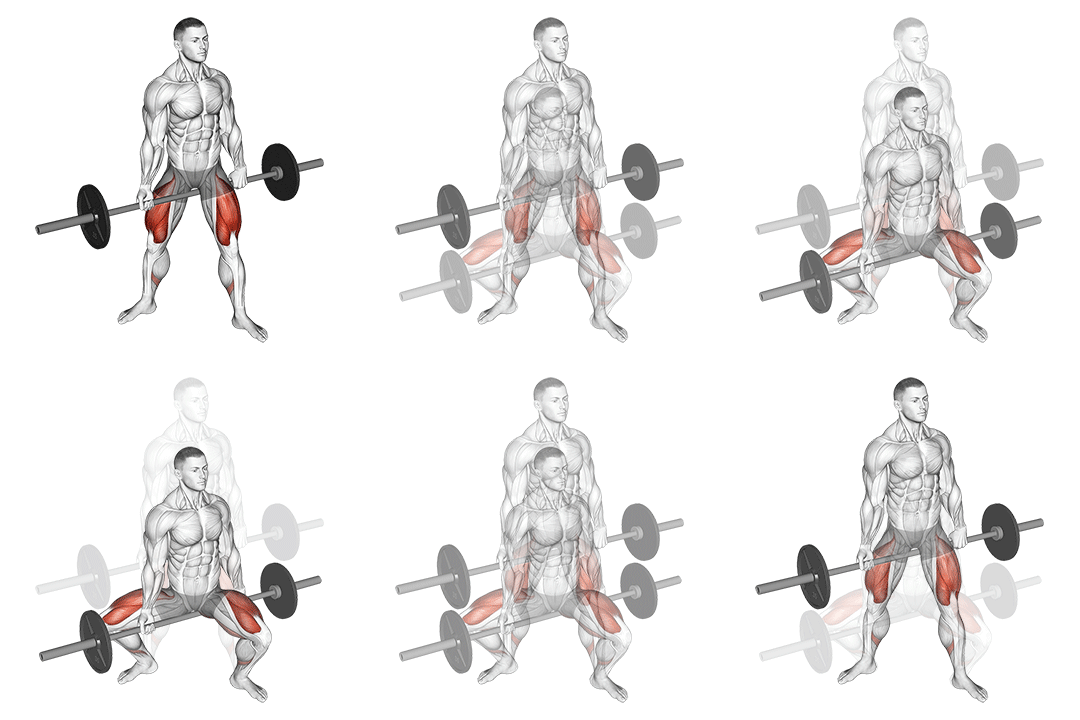
How to Perform barbell jefferson squat
Read the complete barbell jefferson squat guide on FitnessVolt →
Where Do These barbell jefferson squat Standards Come From?
FitnessVolt keeps each data population labeled. Competition percentiles use verified raw meet results where available. Gym percentile tabs use self-reported Symmetric Strength data. Reader-submitted benchmarks appear only after enough entries are logged for this lift.
Standards data last refreshed: March 29, 2026
Is Your barbell jefferson squat Good for Your Weight?
Use this page to compare your barbell jefferson squat against clearly labeled standards and percentile datasets. Here is the cleanest way to read it:
- Start with Standards to find the tier closest to your bodyweight.
- Use Gym Percentiles when you want self-reported gym comparisons.
- Use Competition for verified meet-result percentiles where the lift supports it.
- Use By Age when age-segmented gym data is available.
If you do not know your 1RM, use the one rep max calculator to estimate it from any rep set. For example, if you can barbell jefferson squat 185 lbs for 5 reps, the calculator will estimate your max.
The important rule: do not mix the tabs. Standards, gym percentiles, competition percentiles, and reader logs answer different questions.
Frequently Asked Questions