

A 180 lb male with an Intermediate-level Single Leg Deadlift of 155 lbs ranks at the 50th percentile (FVCP), stronger than ~50% of lifters. An Advanced lifter at this weight lifts 255 lbs (1.42x bodyweight).
FitnessVolt Competition Percentile (FVCP), based on 2.5M+ verified competition results
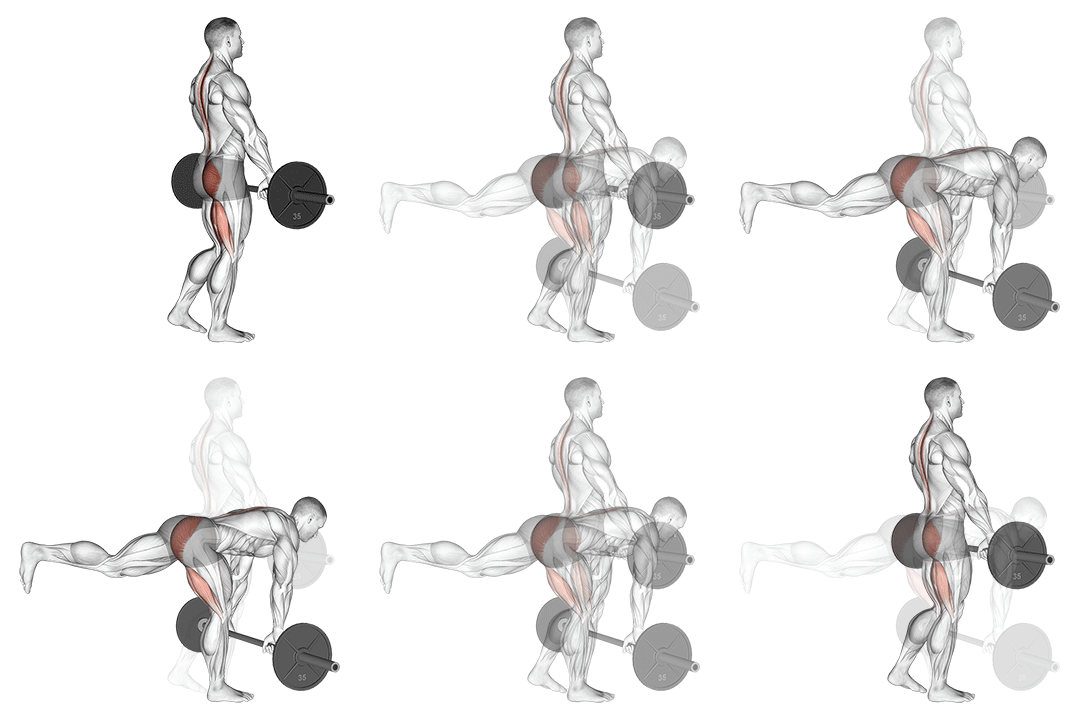
How strong is your Single Leg Deadlift? Compare your 1RM against standards for 21 bodyweight categories, from Beginner to Elite.
How Strong Is Your Single Leg Deadlift?
How Much Should You Single Leg Deadlift?
1RM weight (lbs) you should be able to lift at each standard, based on your bodyweight.
| BW (lbs) | Beginner | Novice | Intermediate | Advanced | Elite |
|---|---|---|---|---|---|
| 110 | 1 | 19 | 63 | 130 | 218 |
| 120 | 4 | 27 | 76 | 149 | 242 |
| 130 | 7 | 35 | 89 | 168 | 266 |
| 140 | 11 | 44 | 103 | 186 | 289 |
| 150 | 15 | 53 | 116 | 204 | 311 |
| 160 | 20 | 62 | 129 | 221 | 332 |
| 170 | 26 | 71 | 142 | 238 | 352 |
| 180 | 31 | 80 | 155 | 255 | 372 |
| 190 | 37 | 89 | 168 | 271 | 392 |
| 200 | 43 | 98 | 180 | 286 | 411 |
| 210 | 49 | 107 | 192 | 302 | 429 |
| 220 | 56 | 117 | 204 | 317 | 447 |
| 230 | 62 | 126 | 216 | 332 | 465 |
| 240 | 68 | 134 | 228 | 346 | 482 |
| 250 | 74 | 143 | 240 | 360 | 498 |
| 260 | 81 | 152 | 251 | 374 | 515 |
| 270 | 87 | 161 | 262 | 388 | 530 |
| 280 | 94 | 169 | 273 | 401 | 546 |
| 290 | 100 | 178 | 284 | 414 | 561 |
| 300 | 106 | 186 | 294 | 427 | 576 |
| 310 | 113 | 195 | 305 | 439 | 591 |
| 90 | 12 | 26 | 47 | 73 | 103 |
| 100 | 14 | 29 | 50 | 77 | 108 |
| 110 | 16 | 31 | 53 | 80 | 112 |
| 120 | 17 | 33 | 56 | 84 | 116 |
| 130 | 19 | 36 | 59 | 87 | 120 |
| 140 | 20 | 38 | 61 | 91 | 124 |
| 150 | 22 | 39 | 64 | 94 | 127 |
| 160 | 23 | 41 | 66 | 96 | 131 |
| 170 | 24 | 43 | 68 | 99 | 134 |
| 180 | 26 | 45 | 70 | 102 | 137 |
| 190 | 27 | 46 | 72 | 104 | 140 |
| 200 | 28 | 48 | 74 | 106 | 142 |
| 210 | 29 | 50 | 76 | 109 | 145 |
| 220 | 31 | 51 | 78 | 111 | 148 |
| 230 | 32 | 53 | 80 | 113 | 150 |
| 240 | 33 | 54 | 82 | 115 | 152 |
| 250 | 34 | 55 | 83 | 117 | 155 |
| 260 | 35 | 57 | 85 | 119 | 157 |
How Does Age Affect Single Leg Deadlift Strength?
How Single Leg Deadlift standards change across different age groups. Values represent a 1RM in lbs.
| Age | Beginner | Novice | Intermediate | Advanced | Elite |
|---|---|---|---|---|---|
| 15 | 17 | 55 | 119 | 208 | 315 |
| 20 | 19 | 63 | 136 | 238 | 360 |
| 25 | 20 | 65 | 140 | 244 | 370 |
| 30 | 20 | 65 | 140 | 244 | 370 |
| 35 | 20 | 65 | 140 | 244 | 370 |
| 40 | 20 | 65 | 140 | 244 | 370 |
| 45 | 19 | 61 | 133 | 231 | 351 |
| 50 | 17 | 58 | 125 | 217 | 329 |
| 55 | 16 | 53 | 115 | 201 | 304 |
| 60 | 15 | 49 | 105 | 183 | 278 |
| 65 | 13 | 44 | 95 | 166 | 251 |
| 70 | 12 | 39 | 85 | 149 | 225 |
| 75 | 11 | 35 | 76 | 133 | 201 |
| 80 | 10 | 32 | 68 | 119 | 180 |
| 85 | 9 | 28 | 61 | 106 | 161 |
| 90 | 8 | 25 | 55 | 96 | 146 |
| 15 | 17 | 31 | 52 | 77 | 106 |
| 20 | 19 | 36 | 59 | 88 | 122 |
| 25 | 19 | 37 | 61 | 91 | 125 |
| 30 | 19 | 37 | 61 | 91 | 125 |
| 35 | 19 | 37 | 61 | 91 | 125 |
| 40 | 19 | 37 | 61 | 91 | 125 |
| 45 | 18 | 35 | 58 | 86 | 118 |
| 50 | 17 | 33 | 54 | 81 | 111 |
| 55 | 16 | 30 | 50 | 75 | 103 |
| 60 | 15 | 28 | 46 | 68 | 94 |
| 65 | 13 | 25 | 41 | 62 | 85 |
| 70 | 12 | 22 | 37 | 55 | 76 |
| 75 | 11 | 20 | 33 | 49 | 68 |
| 80 | 9 | 18 | 30 | 44 | 61 |
| 85 | 8 | 16 | 27 | 40 | 55 |
| 90 | 8 | 14 | 24 | 36 | 49 |
What Do Single Leg Deadlift Strength Standards Mean?
Stronger than 5% of lifters. You are developing the hip-hinge pattern for the Single Leg Deadlift, learning to load your hamstrings and glutes while keeping a neutral spine under tension.
Stronger than 20% of lifters. You can perform the Single Leg Deadlift with a consistent hinge pattern and controlled eccentric. You are building posterior chain strength and grip endurance through progressive loading.
Stronger than 50% of lifters. Your Single Leg Deadlift leverages a strong hip drive and solid lockout. You program variations strategically, use RPE to manage intensity, and have built serious hamstring and glute development.
Stronger than 80% of lifters. You have optimized your Single Leg Deadlift setup, grip strategy, and bracing sequence for maximal output. You train with periodized blocks and manage recovery to handle high-intensity pulling sessions.
Stronger than 95% of lifters. Your Single Leg Deadlift is competition-caliber. You have dialed in every variable from stance width to breathing cadence and can execute near-maximal pulls with technical consistency.
How to Progress Your Single Leg Deadlift
Tier-specific training recommendations to move your Single Leg Deadlift to the next level.
- Train the Single Leg Deadlift 1-2x per week, drilling the hip-hinge pattern with moderate loads.
- Focus on keeping a neutral spine throughout the entire range of motion.
- Use linear progression: add 5-10 lbs per session while form remains solid.
- Build grip endurance with holds at the top of each set.
- Add a hinge variation (deficit, pause, or tempo) to address weak positions.
- Program the Single Leg Deadlift with RPE 7-8 working sets and occasional heavier singles.
- Strengthen your grip separately if it becomes a limiting factor.
- Begin tracking volume load to manage posterior chain fatigue.
- Run 4-6 week blocks alternating between volume accumulation and intensity peaks.
- Use RPE 8-9 for top sets, with calculated backoff sets at RPE 7.
- Address posterior chain weak points with targeted Romanian deadlifts, hip thrusts, or glute-ham raises.
- Manage weekly hinge volume (10-16 hard sets) to avoid CNS fatigue.
- Run peaking cycles with precise RPE targets for each session.
- Optimize your setup: stance, grip, hip height, and bracing sequence.
- Manage recovery carefully - heavy hinge work has high systemic fatigue.
- Test your Single Leg Deadlift in competition or mock-meet conditions.
How to Perform Single Leg Deadlift
- Stand upright with feet hip-width apart, holding a dumbbell in each hand.
- Shift your weight onto one leg, keeping a slight bend in the knee.
- Hinge at the hips, lowering the dumbbells towards the floor while extending the opposite leg straight behind you.
- Maintain a neutral spine and engage your core throughout the movement.
- Lower until your torso is parallel to the floor or you feel a stretch in the hamstrings.
- Return to the starting position by driving through the heel and engaging the glutes.
- Repeat for the desired number of reps before switching legs. Inhale as you lower and exhale as you return to standing.
Read the complete Single Leg Deadlift guide on FitnessVolt →
Tips for Single Leg Deadlift
- Keep your core tight and back flat to avoid rounding the spine.
- Focus on balance and move slowly to maintain control.
- If new to the exercise, start without weights to master the form.
Where Do These Single Leg Deadlift Standards Come From?
These Single Leg Deadlift standards are based on 2.5M+ verified competition results from powerlifting, weightlifting, and strongman federations worldwide. Every number comes from a sanctioned meet with certified judges - not self-reported gym lifts. Data is sourced from OpenPowerlifting and other verified competition databases, ensuring accuracy you can trust.
Last Updated: March 30, 2026
Reviewed by the Fitness Volt Editorial Team, certified strength training analysts.
Is Your Single Leg Deadlift Good for Your Weight?
Strength standards help you objectively measure your Single Leg Deadlift performance relative to other lifters of the same bodyweight and sex. Here is how to interpret them:
- Find your bodyweight in the left column of the table above.
- Look across the row to find which strength level your 1RM falls into.
- Use the age tab to see how your strength compares within your age group.
- Switch between Male and Female standards using the toggle - each has its own dataset.
If you do not know your 1RM, use the E1RM Calculator to estimate it from any rep set. For example, if you can Single Leg Deadlift 185 lbs for 5 reps, the calculator will estimate your max.
These standards are derived from 2.5M+ competition results across powerlifting, weightlifting, and strongman federations worldwide, combined with community training data.