

10 Best Ankle Circles Alternatives for Mobility and Calf Strength
What can you do instead of Ankle Circles? Use standing calf raises, seated calf raises, band-resisted dorsiflexion, towel foot scrunches, or ankle alphabet drills. For example, perform standing calf raises with full plantarflexion and a slow 2–3 second eccentric to load the gastrocnemius and improve plantarflexion control and ankle mobility.
Original Exercise: Ankle Circles
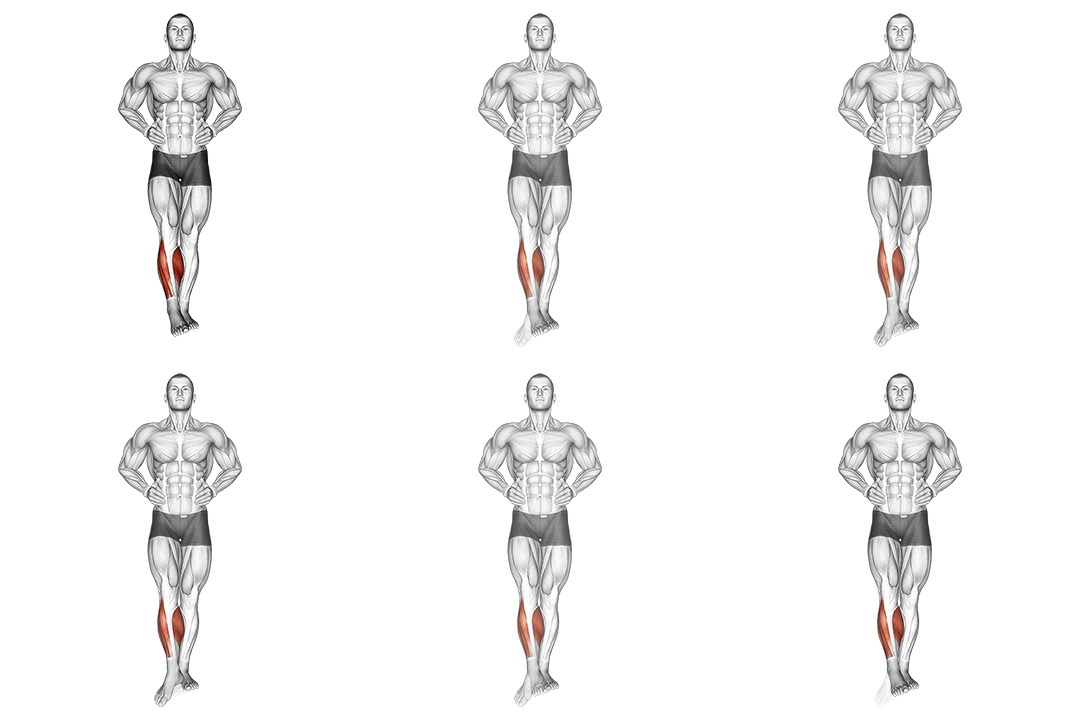
How to Perform Ankle Circles
- Sit on the ground with your legs extended in front of you.
- Lift one leg off the ground and rotate your ankle in a circular motion.
- Perform the desired number of circles in one direction, then switch to the other direction.
- Repeat with the other leg.
Best Ankle Circles Alternatives
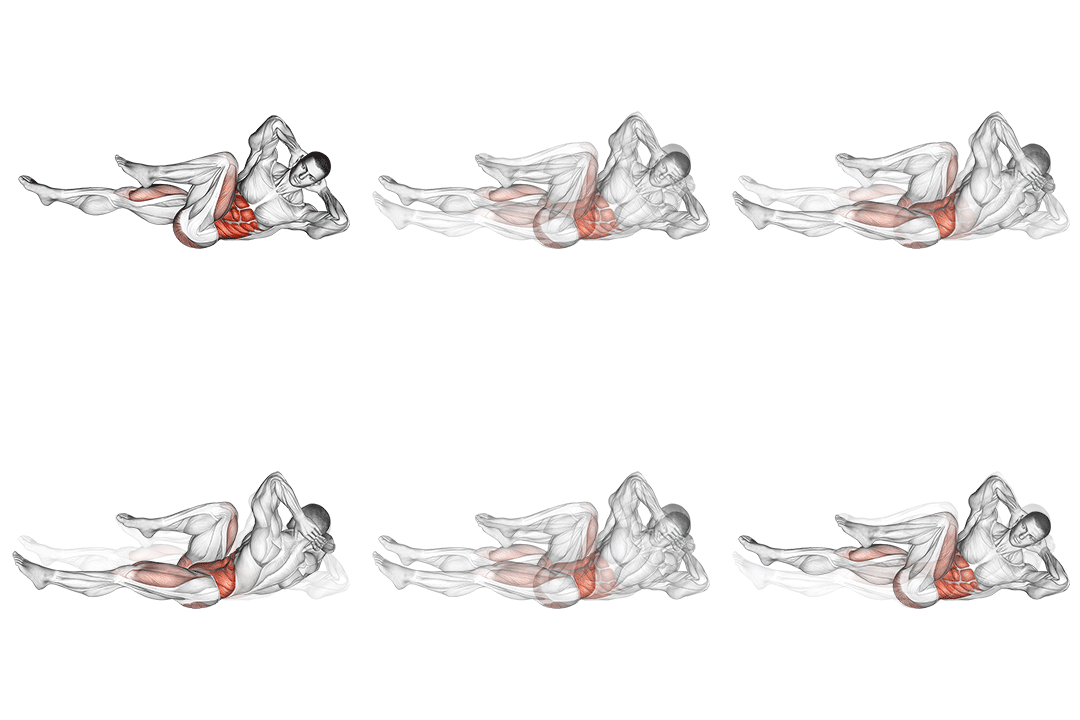
1. Elbow-to-knee
74.3% MatchHow to perform this exercise
- Start by lying flat on your back with your knees bent and feet flat on the ground.
- Place your hands behind your head with your elbows pointing outwards.
- Engage your abs and lift your upper body off the ground, bringing your right elbow towards your left knee.
- At the same time, bring your left knee towards your right elbow, creating a twisting motion.
- Pause for a moment at the top, then slowly lower your upper body and extend your legs back to the starting position.
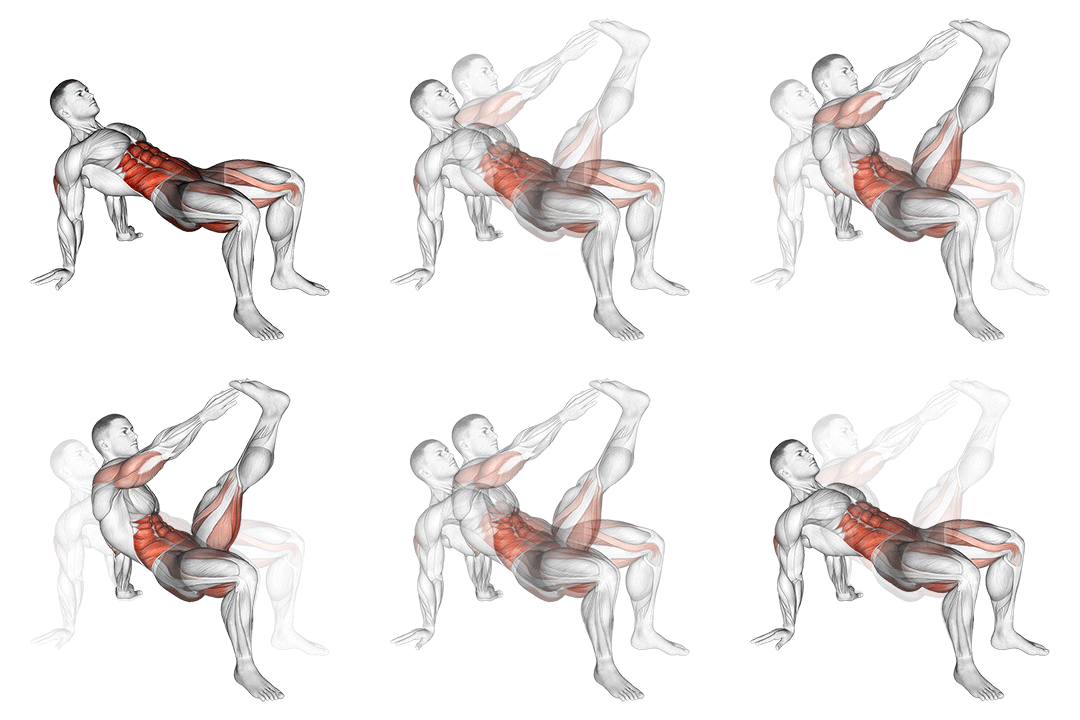
2. Crab Twist Toe Touch
72.6% MatchHow to perform this exercise
- Start by sitting on the ground with your knees bent and feet flat on the floor.
- Place your hands behind you, fingers pointing towards your feet, and lift your hips off the ground.
- Extend one leg straight out in front of you while simultaneously reaching your opposite hand towards your toes.
- Return to the starting position and repeat on the other side.
- Continue alternating sides for the desired number of repetitions.
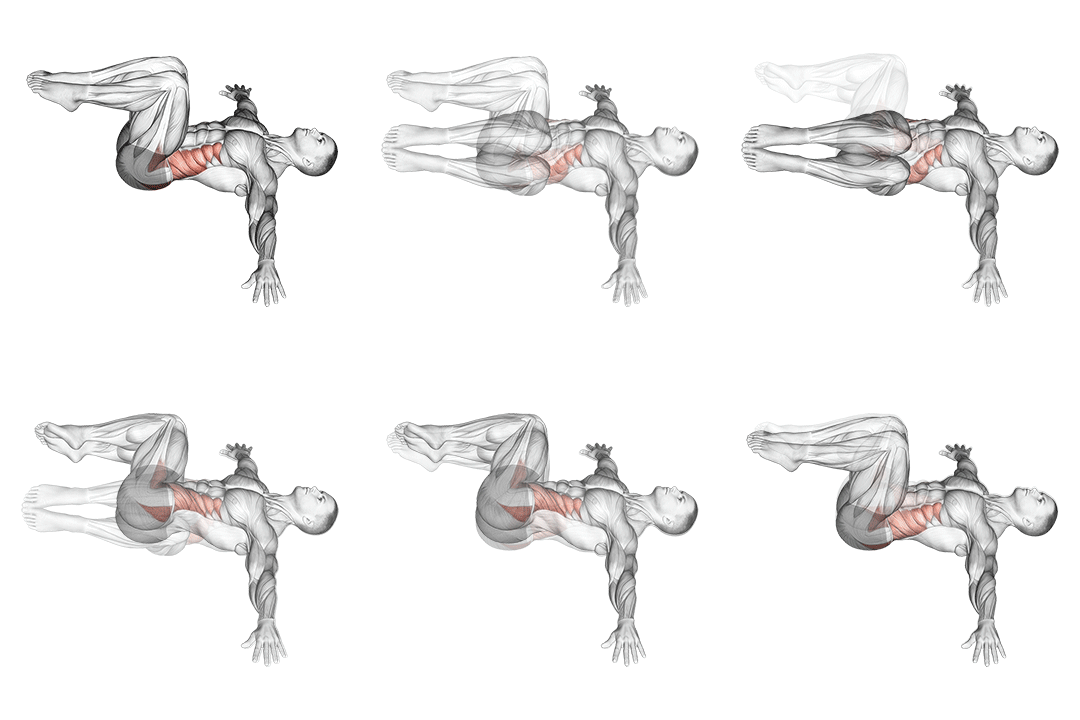
3. Bent Knee Lying Twist (male)
71.7% MatchHow to perform this exercise
- Lie flat on your back with your knees bent and feet flat on the ground.
- Extend your arms out to the sides, perpendicular to your body.
- Keeping your knees together, slowly lower them to one side, aiming to touch the ground with your knees.
- Pause for a moment, then engage your core and slowly lift your knees back to the starting position.
- Repeat the movement to the other side.
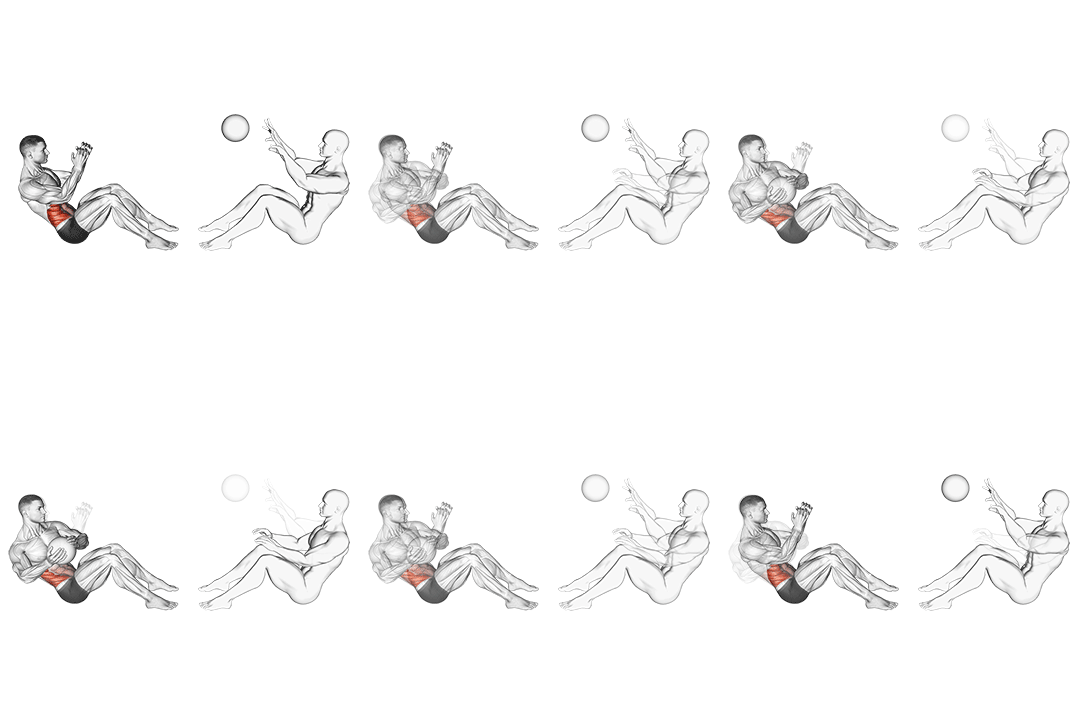
4. Assisted Motion Russian Twist
69.7% MatchHow to perform this exercise
- Sit on the ground with your knees bent and feet flat on the floor.
- Hold the medicine ball with both hands in front of your chest.
- Lean back slightly, engaging your abs and keeping your back straight.
- Slowly twist your torso to the right, bringing the medicine ball towards the right side of your body.
- Pause for a moment, then twist your torso to the left, bringing the medicine ball towards the left side of your body.
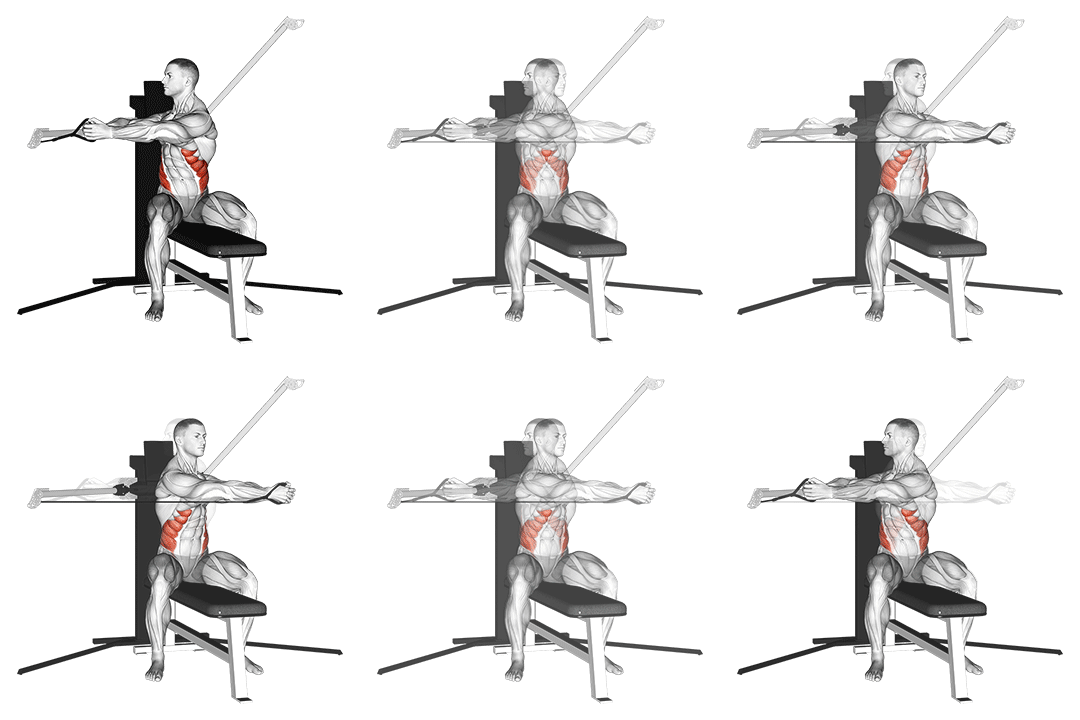
5. Cable Seated Twist
67.8% MatchHow to perform this exercise
- Sit on a cable machine with your feet flat on the ground and your knees slightly bent.
- Hold the cable handle with both hands and extend your arms straight in front of you.
- Keeping your core engaged, slowly rotate your torso to one side, pulling the cable across your body.
- Pause for a moment at the end of the range of motion, then slowly rotate back to the starting position.
- Repeat on the other side.
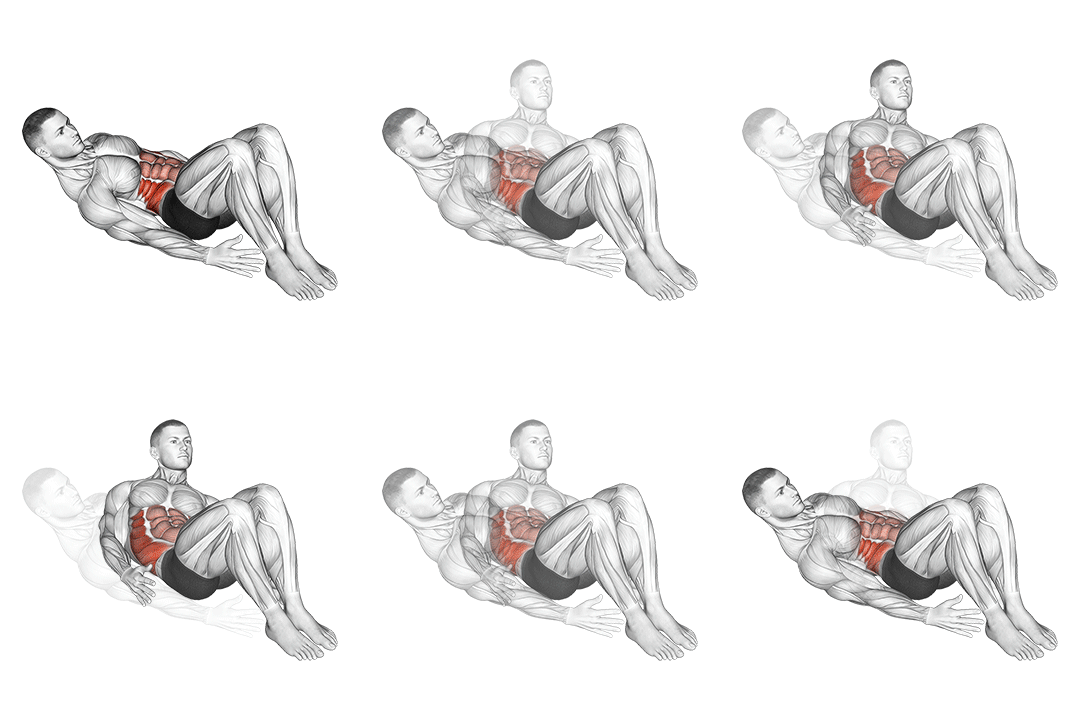
6. Alternate Heel Touchers
65.3% MatchHow to perform this exercise
- Lie flat on your back with your knees bent and feet flat on the ground.
- Extend your arms straight out to the sides, parallel to the ground.
- Engaging your abs, lift your shoulders off the ground and reach your right hand towards your right heel.
- Return to the starting position and repeat on the left side, reaching your left hand towards your left heel.
- Continue alternating sides for the desired number of repetitions.
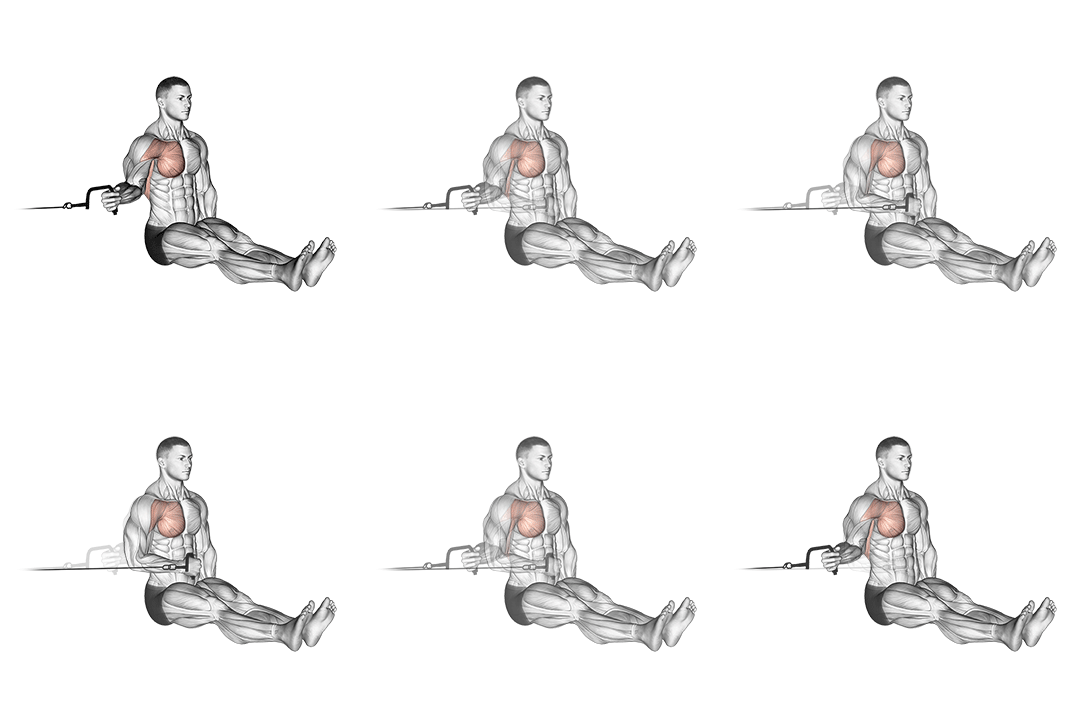
7. Cable Seated Shoulder Internal Rotation
65.3% MatchHow to perform this exercise
- Sit on a bench or chair facing the cable machine with your feet flat on the ground.
- Hold the cable handle with your arm extended straight out in front of you, parallel to the ground.
- Keep your elbow slightly bent and your shoulder blades pulled back and down.
- Slowly rotate your arm inward, bringing the cable handle towards the center of your body.
- Pause for a moment at the end of the movement, then slowly return to the starting position.
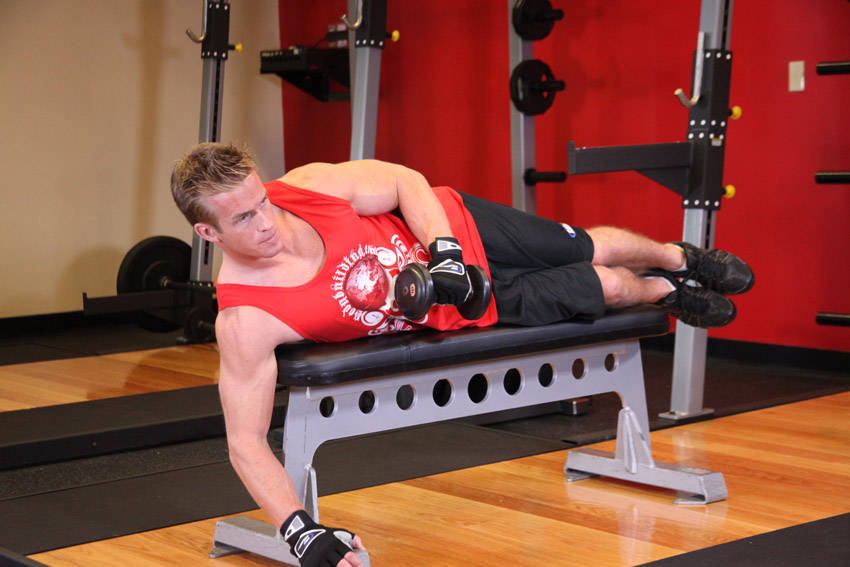
8. External Rotation
65.3% MatchHow to perform this exercise
- Lie sideways on a flat bench with one arm holding a dumbbell and the other hand on top of the bench folded so that you can rest your head on it.
- Bend the elbows of the arm holding the dumbbell so that it creates a 90-degree angle between the upper arm and the forearm. Tip: Keep the arm parallel to your torso.
- Now bend the elbow while keeping the upper arm stationary. In this manner, the forearm will be parallel to the floor and perpendicular to your torso (Tip: So the forearm will be directly in front of you). The upper arm will be stationary by your torso and should be parallel to the floor (aligned with your torso at all times). This will be your starting position.
- As you breathe out, externally rotate your forearm so that the dumbbell is lifted up in a semicircle motion as you maintain the 90 degree angle bend between the upper arms and the forearm. You will continue this external rotation until the forearm is perpendicular to the floor and the torso pointing towards the ceiling. At this point you will hold the contraction for a second.
- As you breathe in, slowly go back to the starting position.
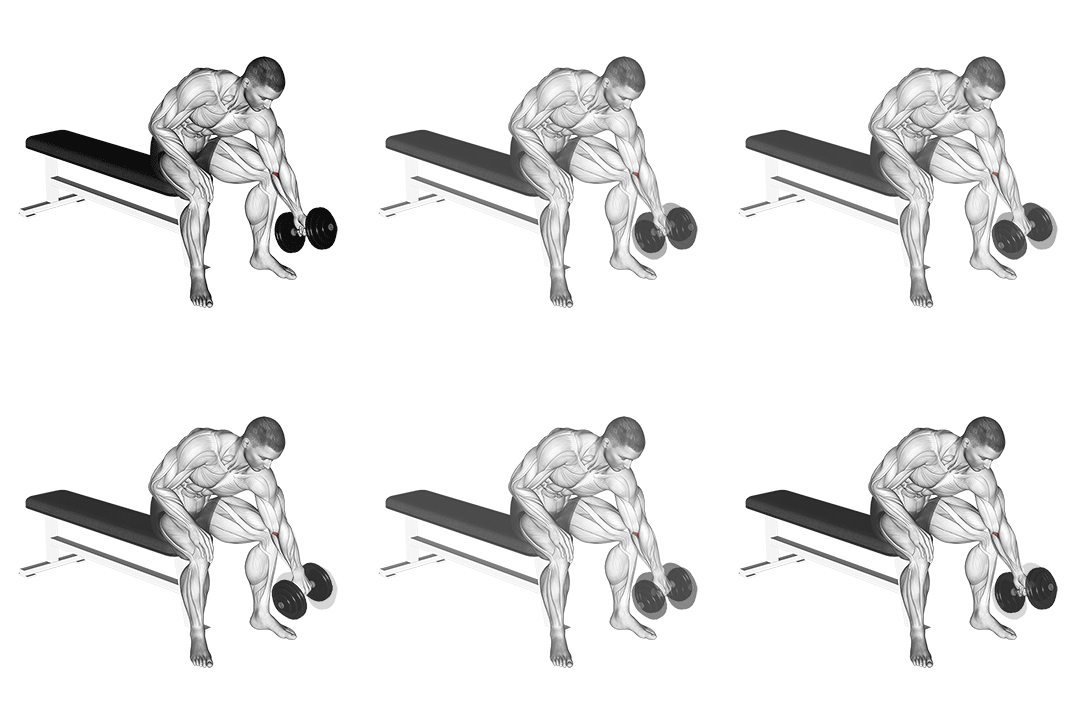
9. Dumbbell Seated One Arm Rotate
65.3% MatchHow to perform this exercise
- Sit on a bench with your back straight and hold a dumbbell in one hand, resting it on your thigh.
- Raise the dumbbell up to shoulder height, keeping your elbow close to your body.
- Rotate your forearm outward, away from your body, while keeping your upper arm stationary.
- Pause for a moment at the top, then slowly rotate your forearm back to the starting position.
- Repeat for the desired number of repetitions, then switch to the other arm.
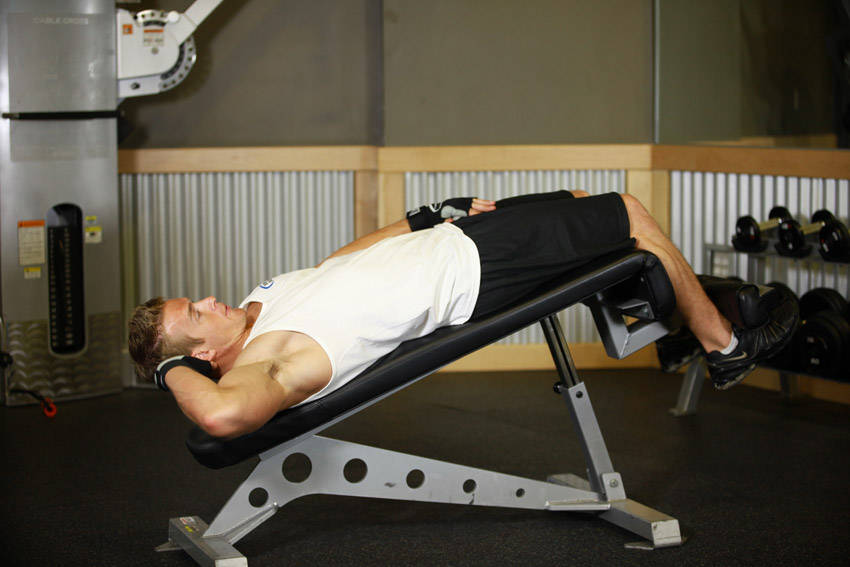
10. Decline Oblique Crunch
64.7% MatchHow to perform this exercise
- Secure your legs at the end of the decline bench and slowly lay down on the bench.
- Raise your upper body off the bench until your torso is about 35-45 degrees if measured from the floor.
- Put one hand beside your head and the other on your thigh. This will be your starting position.
- Raise your upper body slowly from the starting position while turning your torso to the left. Continue crunching up as you exhale until your right elbow touches your left knee. Hold this contracted position for a second. Tip: Focus on keeping your abs tight and keeping the movement slow and controlled.
- Lower your body back down slowly to the starting position as you inhale.
Why You Might Need a Ankle Circles Alternative
You may substitute Ankle Circles for several reasons: pain in the talocrural joint, limited range of motion, poor balance, or a need for progressive overload. Alternatives let you target the calves and ankle stabilizers while adjusting load and plane of motion. For rehabilitation, choose low-load band dorsiflexion or towel scrunches to activate the tibialis anterior and intrinsic foot muscles. To build strength, pick standing calf raises and emphasize full plantarflexion with controlled eccentrics to recruit the gastrocnemius; keep the knee slightly bent to bias the soleus when needed.
How to Choose the Right Substitute
Select a substitute based on your goal, pain tolerance, and available equipment. For strength, use standing calf raises and press through the forefoot while keeping a slow 2–3 second descent to maximize muscle tension in the gastrocnemius. For mobility or rehab, choose band-resisted dorsiflexion and perform 10–15 controlled reps focusing on active dorsiflexion to engage the tibialis anterior and ankle dorsiflexors. If balance is the limiting factor, use bilateral variations or hold a stable support and progress to single-leg reps only when you maintain neutral ankle alignment.
Frequently Asked Questions
What muscles does Ankle Circles work?
Ankle circles primarily mobilize the ankle joint but engage the calves (gastrocnemius and soleus), tibialis anterior, and lateral stabilizers like the peroneals. The movement promotes range of motion and neuromuscular control around the talocrural and subtalar joints.
What is the best bodyweight alternative to Ankle Circles?
The standing calf raise is the top bodyweight alternative. Perform full plantarflexion on the toes and lower with a slow 2–3 second eccentric to load the gastrocnemius; bend the knee slightly to shift emphasis to the soleus if needed.
Can I build muscle without doing Ankle Circles?
Yes — progressive loaded calf exercises build muscle better than mobility-only drills. Use standing or seated calf raises with progressive loading and controlled eccentrics to increase calf hypertrophy while including mobility work like band dorsiflexion for joint health.
More Exercise Alternatives
Find Alternatives for Any Exercise
Use our free tool to discover the best substitute exercises based on your available equipment and goals.
Try the Exercise Substitution Finder →