

10 Best Air Bike Alternatives for Core Conditioning
The Air Bike is done seated. Ranked closest by our scoring: Cable Russian Twists, the Crab Twist Toe Touch and the Spine Twist. A harder version, Scissor Jumps, is listed below as a progression rather than a swap.
Updated Ranked by our 12-factor similarity model How it works
Original Exercise: Air Bike
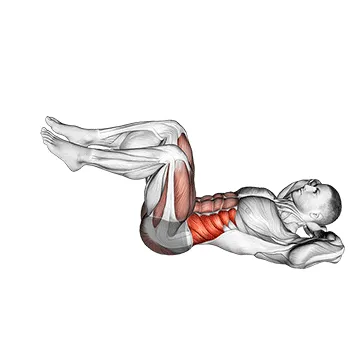
- Primary muscle
- Abs
- Equipment
- Bodyweight
- Difficulty
- Intermediate
- Type
- Compound
Secondary muscles: Hip Flexors
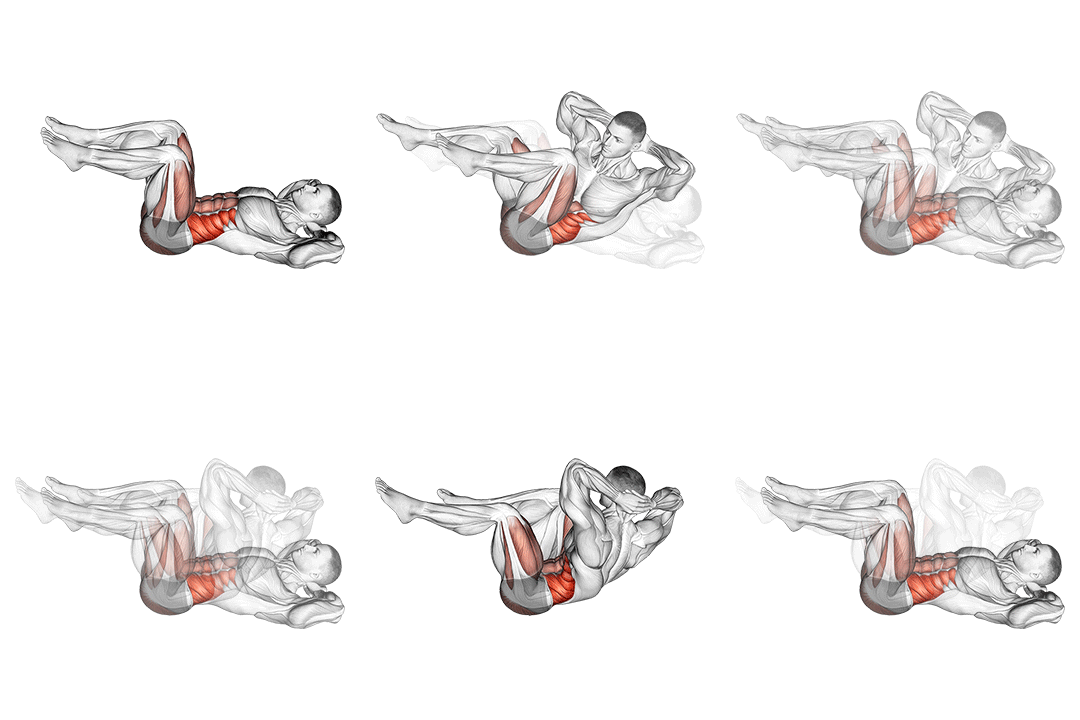
How to perform Air Bike
- Lie flat on your back with your hands placed behind your head.
- Lift your legs off the ground and bend your knees at a 90-degree angle.
- Bring your right elbow towards your left knee while simultaneously straightening your right leg.
- Return to the starting position and repeat the movement on the opposite side, bringing your left elbow towards your right knee while straightening your left leg.
- Continue alternating sides in a pedaling motion for the desired number of repetitions.
Ranked Air Bike Alternatives
10 substitutes, ranked by how closely each one matches the Air Bike on movement pattern, muscles worked, equipment and body position. The higher the score, the less you change. Open "How to perform this exercise" on a card for the steps; every card title links to that exercise's own alternatives page. Harder versions are tagged as progressions and kept out of the top spot even when they score higher.
Best match 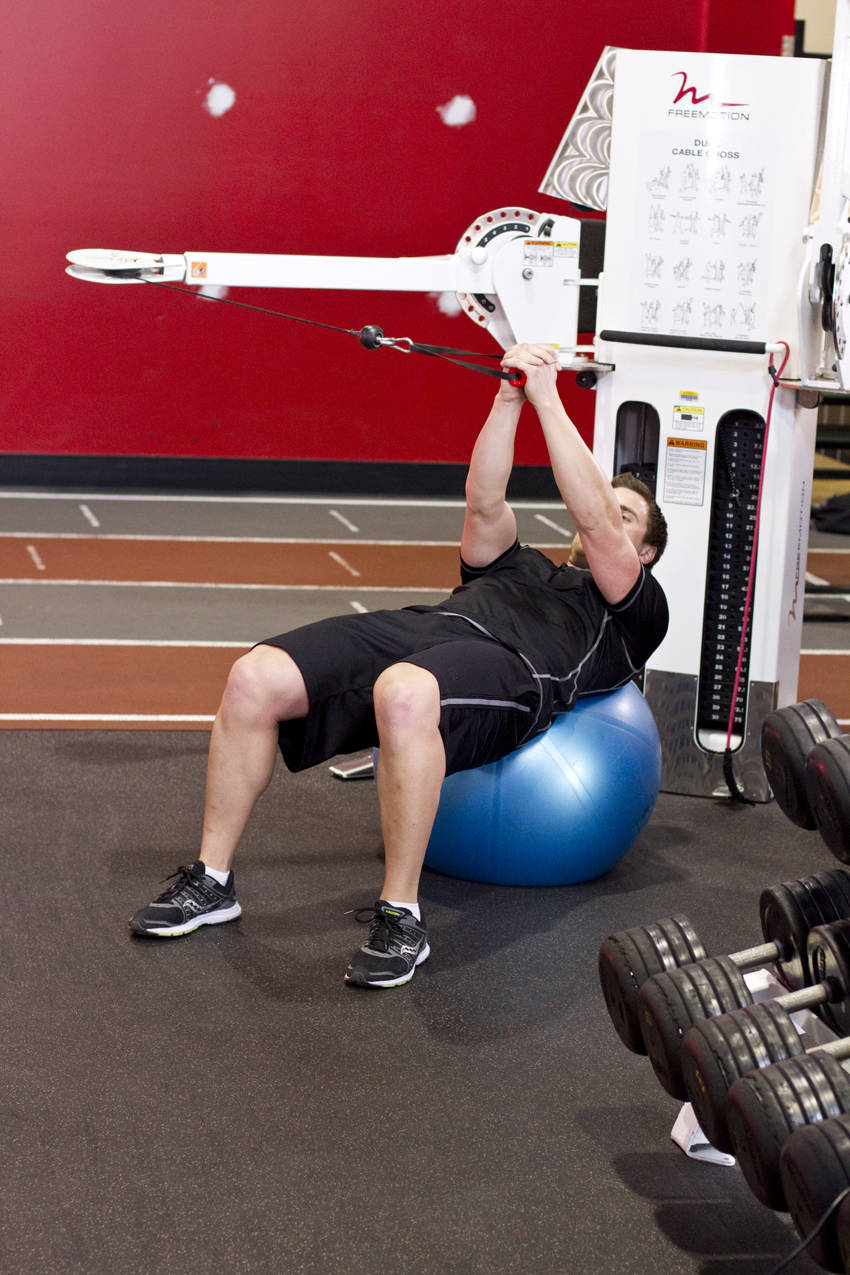
1. Cable Russian Twists
54% match- Abs
- Cable
- Intermediate
- Compound
A good swap when you have a cable machine to work with, and it still works the abs.
How to perform this exercise
- Connect a standard handle attachment, and position the cable to a middle pulley position.
- Lie on a stability ball perpendicular to the cable and grab the handle with one hand. You should be approximately arm's length away from the pulley, with the tension of the weight on the cable.
- Grab the handle with both hands and fully extend your arms above your chest. You hands should be directly in-line with the pulley. If not, adjust the pulley up or down until they are.
- Keep your hips elevated and abs engaged. Rotate your torso away from the pulley for a full-quarter rotation. Your body should be flat from head to knees.
- Pause for a moment and in a slow and controlled manner reset to the starting position. You should still have side tension on the cable in the resting position.
- Repeat the same movement to failure.
- Then, reposition and repeat the same series of movements on the opposite side.
Sets and reps: 3 or 4 sets of 6 to 10 reps on each side.
Why this matches
- Primary muscle: abs, the same as the Air Bike
- Equipment: a cable, not a cardio machine
- Body position: seated, the same as the Air Bike
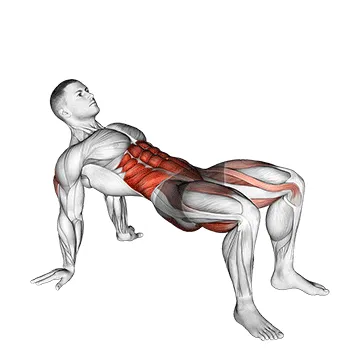
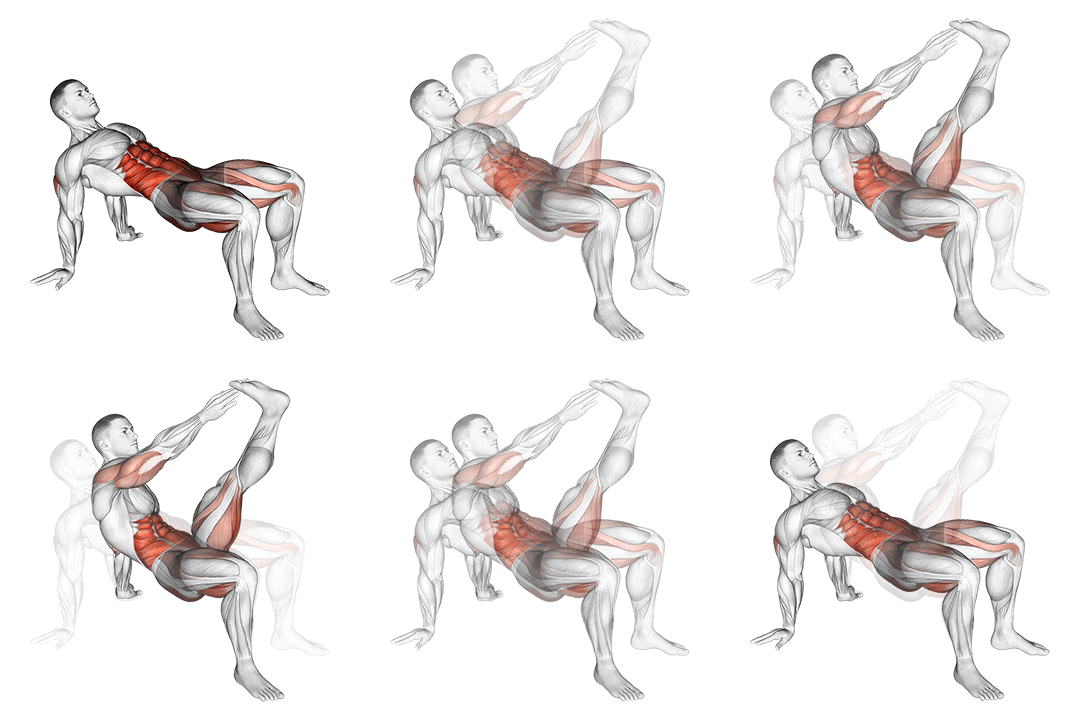
2. Crab Twist Toe Touch
51% match- Abs
- Bodyweight
- Intermediate
- Compound
It still works the abs, through a different movement.
How to perform this exercise
- Start by sitting on the ground with your knees bent and feet flat on the floor.
- Place your hands behind you, fingers pointing towards your feet, and lift your hips off the ground.
- Extend one leg straight out in front of you while simultaneously reaching your opposite hand towards your toes.
- Return to the starting position and repeat on the other side.
- Continue alternating sides for the desired number of repetitions.
Sets and reps: 3 or 4 sets of 6 to 10 reps on each side.
Why this matches
- Primary muscle: abs, the same as the Air Bike
- Equipment: bodyweight only, not a cardio machine
- Body position: seated, the same as the Air Bike
- Balance: harder to stay steady on than the Air Bike
3. Spine Twist
50% match- Abs
- Bodyweight
- Beginner
- Isolation
How to perform this exercise
- Sit on the ground with your legs extended in front of you.
- Bend your knees and place your feet flat on the ground, hip-width apart.
- Place your hands behind your head with your elbows pointing outwards.
- Engage your abs and slowly twist your torso to the right, bringing your right elbow towards your left knee.
- Pause for a moment at the end of the twist, then slowly return to the starting position.
- Repeat the twist to the left side, bringing your left elbow towards your right knee.
- Continue alternating sides for the desired number of repetitions.
Sets and reps: 3 sets of 8 to 12 reps on each side, and add reps before you add load.
Why this matches
- Primary muscle: abs, the same as the Air Bike
- Equipment: bodyweight only, not a cardio machine
- Body position: seated, the same as the Air Bike
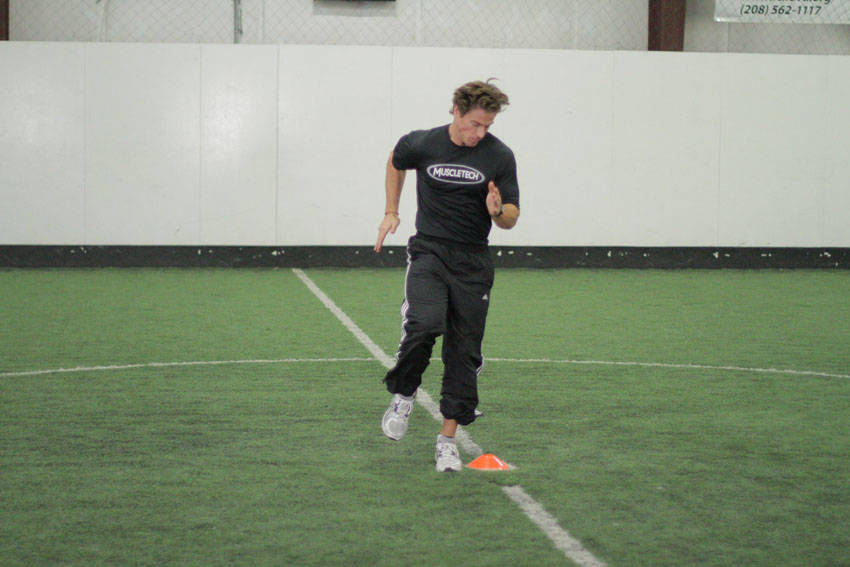
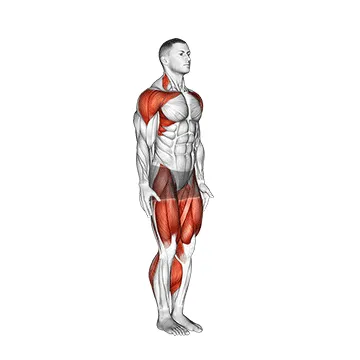
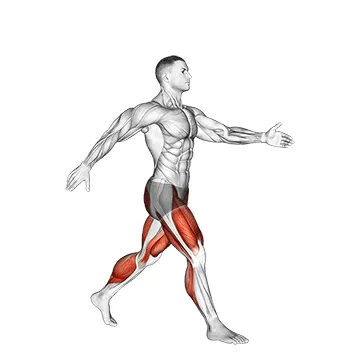
4. Single-cone Sprint Drill
49% match- Quadriceps
- Other
- Intermediate
- Compound
A looser match: it works the quadriceps rather than the abs.
How to perform this exercise
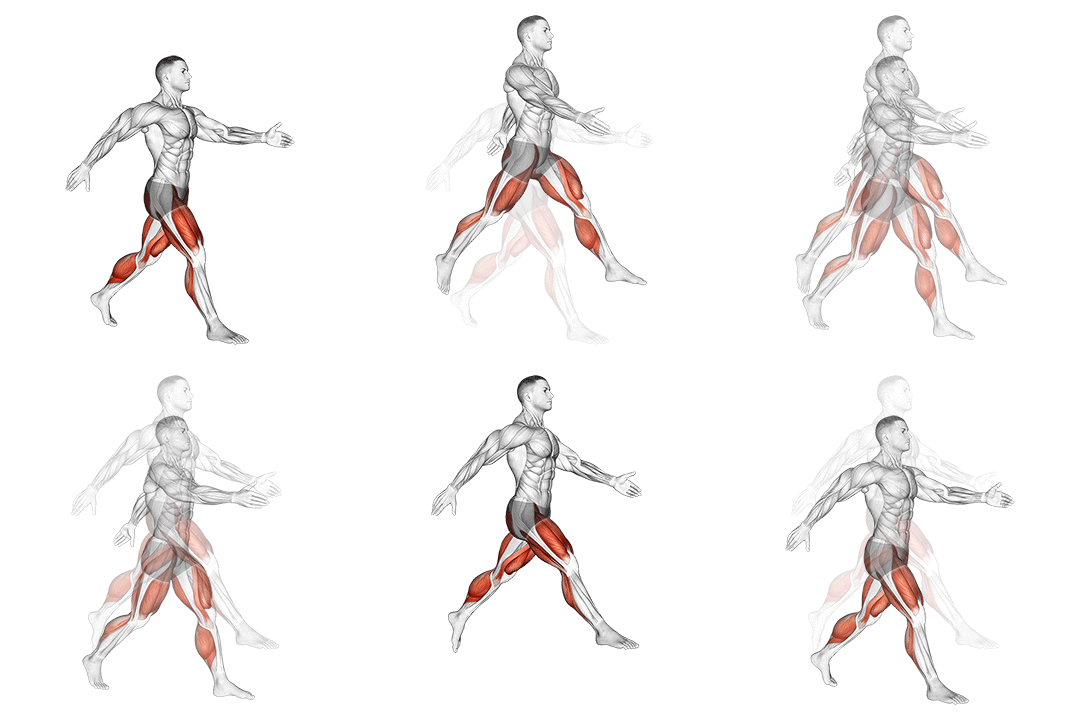
- This drill teaches quick foot action. You need a single cone. Begin standing next to the cone with one arm back and one arm forward.
- Chop the feet as quickly as possible, blocking with the arms. Circle the cone, keep your knees up, with violent foot action.
- Rest after three trips around the cone.
Sets and reps: Work for 30 to 60 seconds, rest as long as you worked, and repeat 6 to 10 times.
Why this matches
- Primary muscle: quadriceps, not abs
- Equipment: bodyweight only, not a cardio machine
- Body position: standing, not seated
- Balance: harder to stay steady on than the Air Bike
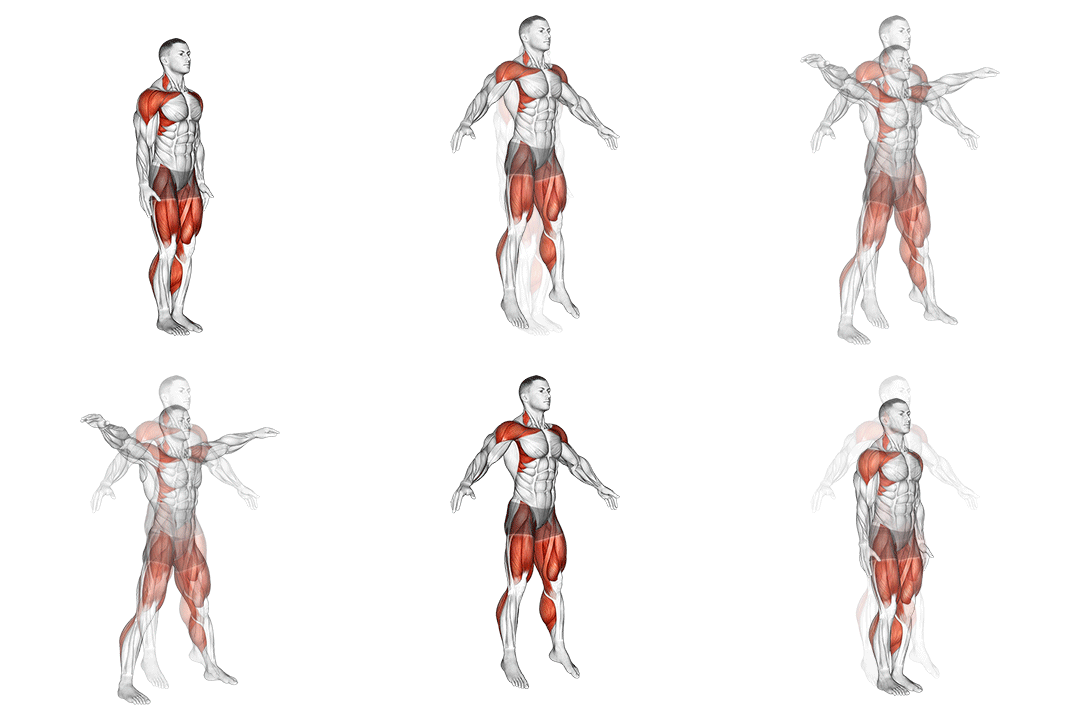
5. Astride Jumps
49% match- Cardio
- Bodyweight
- Intermediate
- Compound
A looser match: it uses the same equipment, but it works the heart and lungs rather than the abs.
How to perform this exercise
- Stand with your feet shoulder-width apart.
- Bend your knees and lower your body into a squat position.
- Jump explosively upwards, extending your legs and arms.
- While in the air, spread your legs apart and bring your arms out to the sides.
- Land softly with your feet shoulder-width apart, bending your knees to absorb the impact.
- Repeat for the desired number of repetitions.
Sets and reps: Work for 30 to 60 seconds, rest as long as you worked, and repeat 6 to 10 times.
Why this matches
- Primary muscle: your heart and lungs, not abs
- Equipment: bodyweight only, not a cardio machine
- Body position: standing, not seated
- Balance: harder to stay steady on than the Air Bike
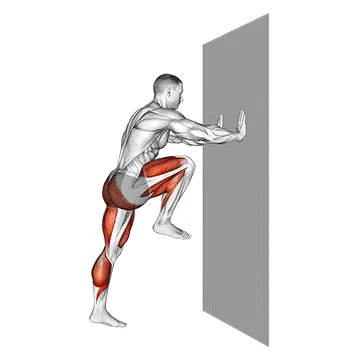
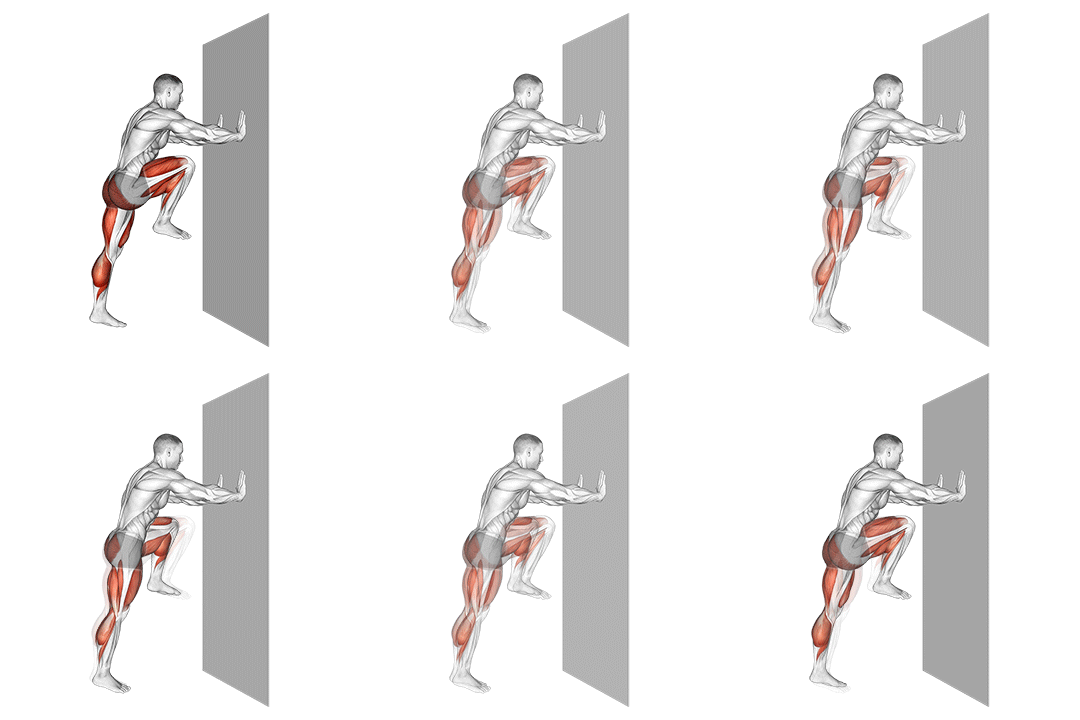
6. High Knee Against Wall
48% match- Cardio
- Bodyweight
- Beginner
- Compound
How to perform this exercise
- Stand facing a wall with your feet hip-width apart.
- Place your hands on the wall for support.
- Engage your core and lift your right knee up towards your chest, while keeping your left foot on the ground.
- Quickly switch legs, bringing your left knee up towards your chest and lowering your right foot back down.
- Continue alternating legs in a running motion, bringing your knees up as high as possible.
- Maintain a fast pace and keep your upper body stable throughout the exercise.
- Repeat for the desired duration or number of repetitions.
Sets and reps: Work for 30 to 60 seconds, rest as long as you worked, and repeat 6 to 10 times.
Why this matches
- Primary muscle: your heart and lungs, not abs
- Equipment: bodyweight only, not a cardio machine
- Body position: standing, not seated
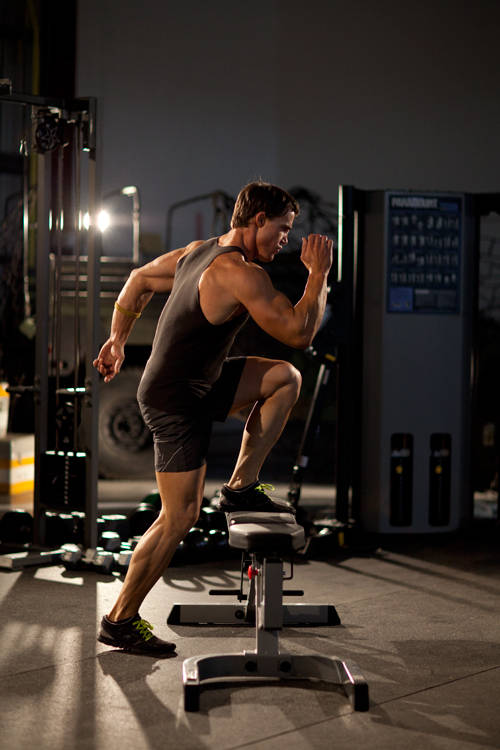
7. Bench Sprint
48% match- Glutes
- Other
- Intermediate
- Compound
A looser match: it works the glutes rather than the abs.
How to perform this exercise
- Stand on the ground with one foot resting on a bench or box with your heel close to the edge.
- Push off with your foot on top of the bench, extending through the hip and knee.
- Land with the opposite foot on top of the box, returning your other foot back to the start position.
- Continue alternating from one foot to another to complete the set.
Sets and reps: Work for 30 to 60 seconds, rest as long as you worked, and repeat 6 to 10 times.
Why this matches
- Primary muscle: glutes, not abs
- Equipment: bodyweight only, not a cardio machine
- Body position: standing, not seated
- Balance: harder to stay steady on than the Air Bike
Progression
8. Scissor Jumps
48% match- Cardio
- Bodyweight
- Intermediate
- Compound
How to perform this exercise
- Stand with your feet shoulder-width apart.
- Jump off the ground and simultaneously cross your right leg in front of your left leg.
- As you land, quickly switch legs, crossing your left leg in front of your right leg.
- Continue alternating legs and jumping as quickly as possible.
- Repeat for the desired number of repetitions.
Sets and reps: Work for 30 to 60 seconds, rest as long as you worked, and repeat 6 to 10 times.
Why this matches
- Primary muscle: your heart and lungs, not abs
- Equipment: bodyweight only, not a cardio machine
- Body position: standing, not seated
- Balance: harder to stay steady on than the Air Bike
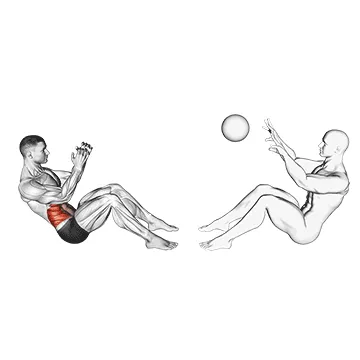
9. Assisted Motion Russian Twist
48% match- Abs
- Medicine-ball
- Intermediate
- Isolation
How to perform this exercise
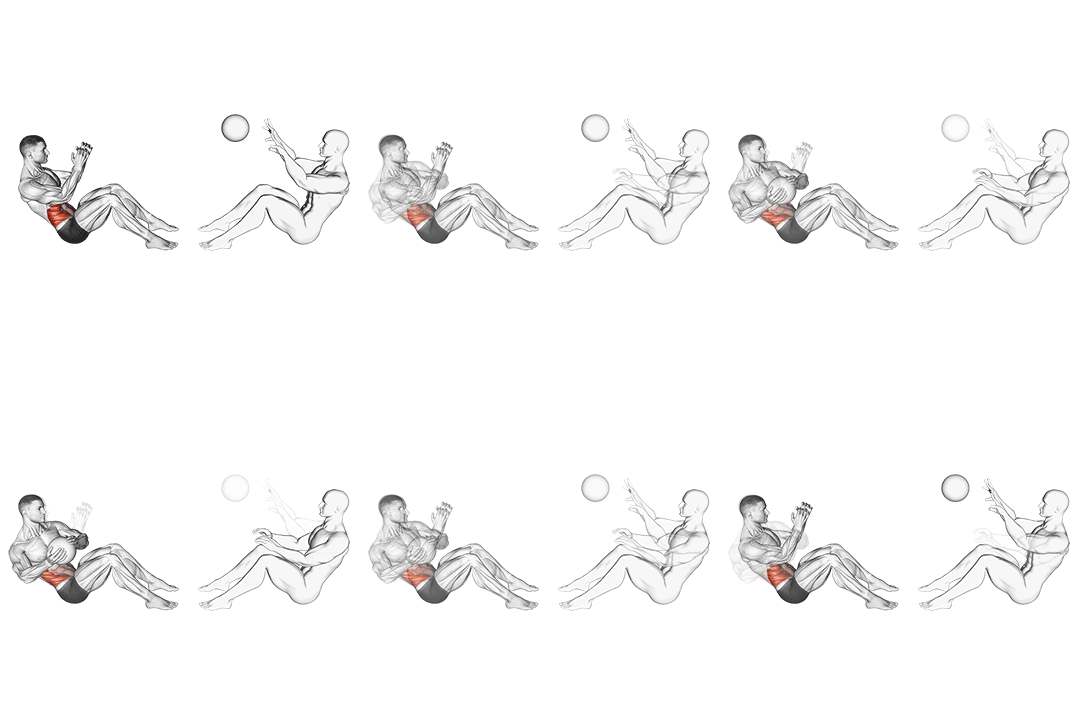
- Sit on the ground with your knees bent and feet flat on the floor.
- Hold the medicine ball with both hands in front of your chest.
- Lean back slightly, engaging your abs and keeping your back straight.
- Slowly twist your torso to the right, bringing the medicine ball towards the right side of your body.
- Pause for a moment, then twist your torso to the left, bringing the medicine ball towards the left side of your body.
- Continue alternating sides for the desired number of repetitions.
Sets and reps: 3 sets of 10 to 15 reps on each side.
Why this matches
- Primary muscle: abs, the same as the Air Bike
- Equipment: free weights, not a cardio machine
- Body position: seated, the same as the Air Bike
- Balance: harder to stay steady on than the Air Bike
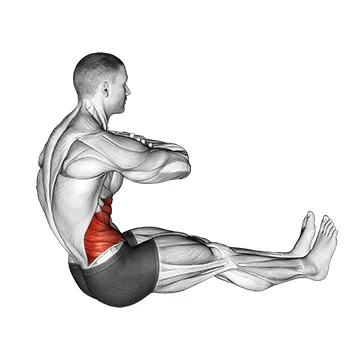
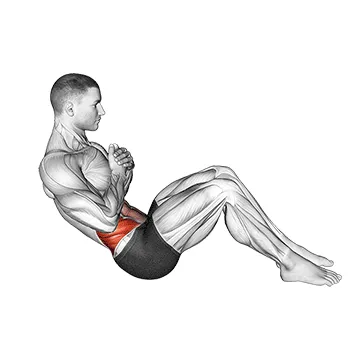
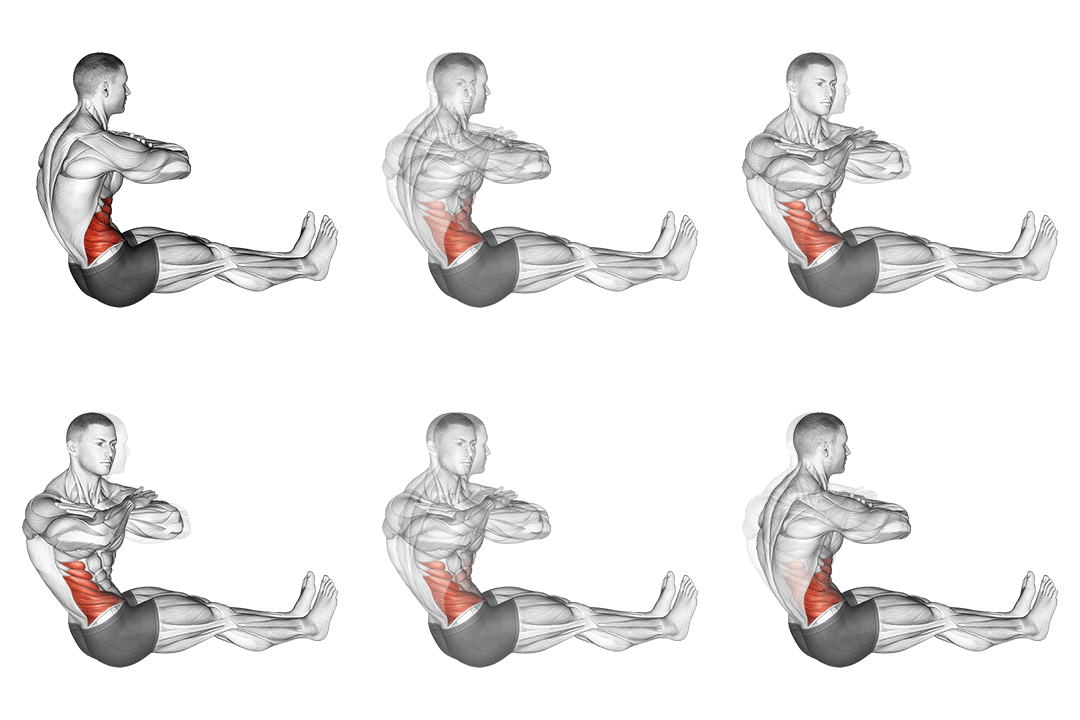
10. Russian Twist
48% match- Abs
- Bodyweight
- Intermediate
- Isolation
How to perform this exercise
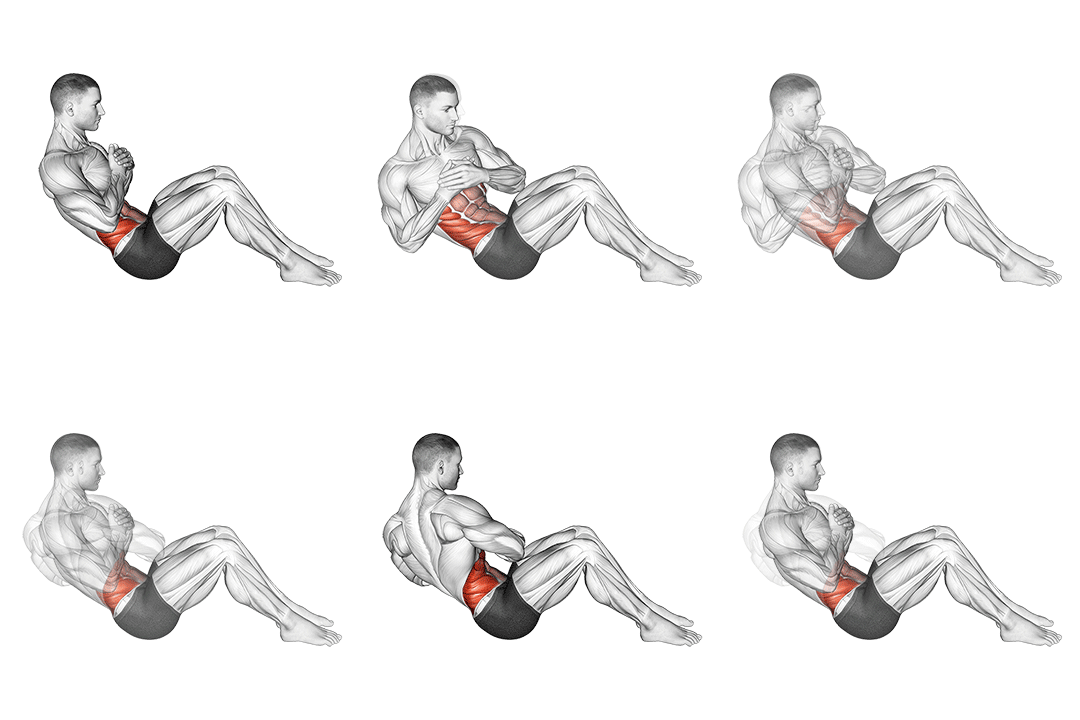
- Sit on the ground with your knees bent and feet flat on the floor.
- Lean back slightly while keeping your back straight and your core engaged.
- Hold your hands together in front of your chest or hold a weight if desired.
- Lift your feet off the ground, balancing on your sit bones.
- Twist your torso to the right, bringing your hands or weight towards the right side of your body.
- Pause for a moment, then twist your torso to the left, bringing your hands or weight towards the left side of your body.
- Continue alternating sides for the desired number of repetitions.
Sets and reps: 3 sets of 10 to 15 reps on each side.
Why this matches
- Primary muscle: abs, the same as the Air Bike
- Equipment: bodyweight only, not a cardio machine
- Body position: seated, the same as the Air Bike
- Balance: harder to stay steady on than the Air Bike
Why You Might Need an Air Bike Alternative
You may need substitutes because of equipment limits, lower‑back pain, wrist or shoulder injuries, or a preference for lower‑impact or travel‑friendly options. The air bike combines intense hip flexion, cyclical knee drive and anti‑extension of the anterior chain; alternatives let you isolate or reproduce those demands without a machine. Substitutes preserve mechanical patterns that activate rectus abdominis, obliques and hip flexors while enabling interval conditioning or slower tempo strength work. Choosing the right swap prevents aggravation of existing injuries, keeps training stimulus consistent, and lets you progress intensity via tempo, reps, or added resistance.
Air Bike FAQ
What muscles does air bike work?
The movement strongly activates the rectus abdominis, internal and external obliques, and hip flexors through repetitive trunk flexion and rotation. It also recruits the anterior chain for anti‑extension and stabilizes the waist during high‑tempo intervals.
Can I build muscle without doing air bike?
Yes, you can increase core muscle size and strength with progressive bodyweight progressions, added resistance, and increased time under tension. Focus on overload principles (longer holds, harder variations, weighted core work) and consistent volume to stimulate hypertrophy.
Find Alternatives for Any Exercise
Search the exercise database and filter the ranked substitutes by the equipment you own.
Similarity scores compare exercise metadata such as movement pattern, muscles, equipment and body position. They are not a safety rating or a check that you own the equipment. Learn about our methodology