

10 Best Backward Medicine Ball Throw Alternatives for Shoulder Power
If you can't perform the Backward Medicine Ball Throw, use other exercises that still train the delts and shoulder stabilizers. Top options include cable face pulls, bent-over dumbbell reverse flyes, band pull-aparts, single-arm cable rear-delt rows, and medicine-ball overhead slams. Cue: lead with the elbow and squeeze the scapula on each rep.
Original Exercise: Backward Medicine Ball Throw
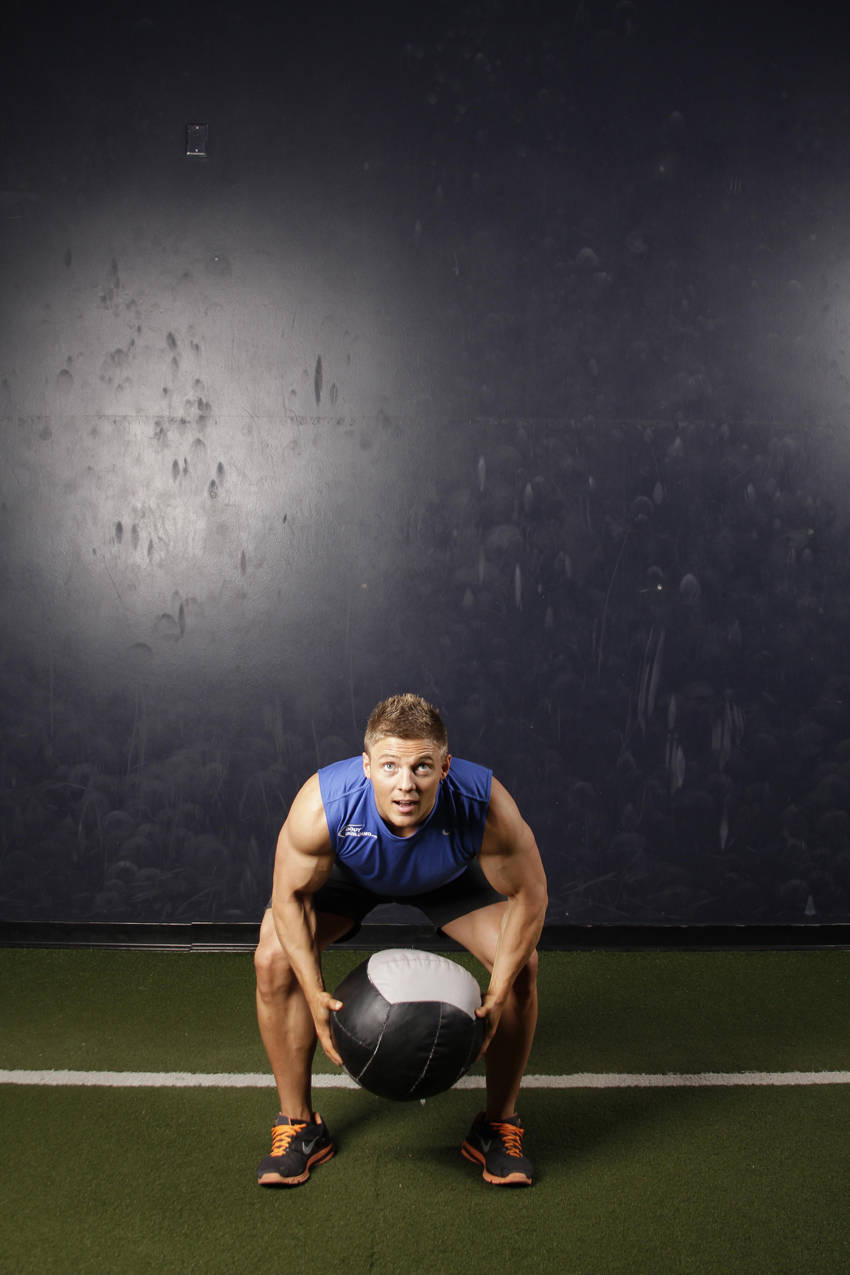
How to Perform Backward Medicine Ball Throw
- This exercise is best done with a partner. If you lack a partner, the ball can be thrown and retrieved or thrown against a wall.
- Begin standing a few meters in front of your partner, both facing the same direction. Begin holding the ball between your legs.
- Squat down and then forcefully reverse direction, coming to full extension and you toss the ball over your head to your partner.
- Your partner can then roll the ball back to you. Repeat for the desired number of repetitions.
Pro Tips
- Category: Plyometrics
- Force: Push
- Movement type: Compound
Ranked Backward Medicine Ball Throw Alternatives
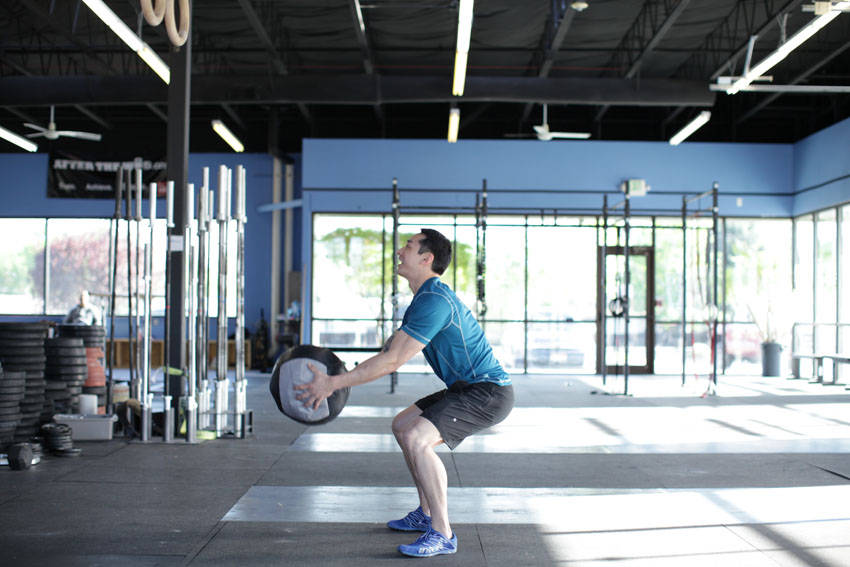
1. Medicine Ball Scoop Throw
99.2% MatchHow to perform this exercise
- Assume a semisquat stance with a medicine ball in your hands. Your arms should hang so the ball is near your feet.
- Begin by thrusting the hips forward as you extend through the legs, jumping up.
- As you do, swing your arms up and over your head, keeping them extended, releasing the ball at the peak of your movement. The goal is to throw the ball the greatest distance behind you.
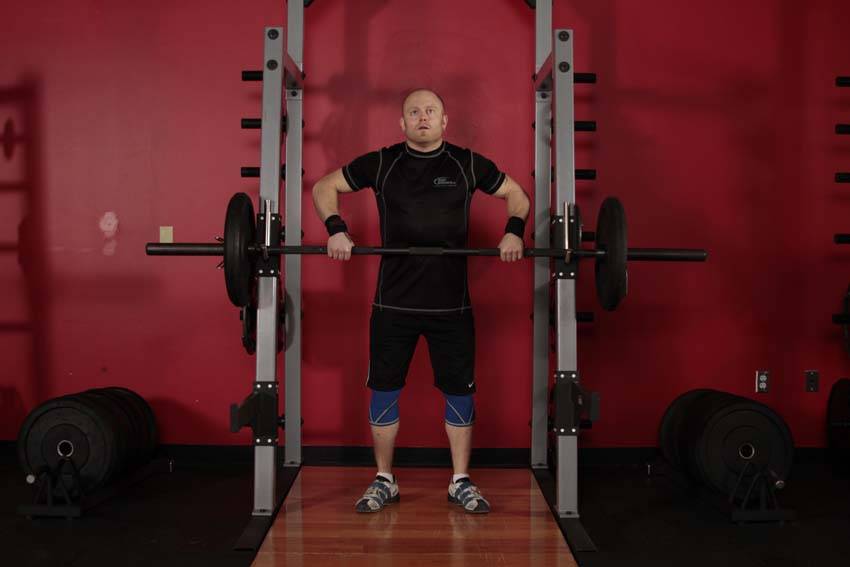
2. Rack Delivery
94.9% MatchHow to perform this exercise
- This drill teaches the delivery of the barbell to the rack position on the shoulders. Begin holding a bar in the scarecrow position, with the upper arms parallel to the floor, and the forearms hanging down. Use a hook grip, with your fingers wrapped over your thumbs.
- Begin by rotating the elbows around the bar, delivering the bar to the shoulders. As your elbows come forward, relax your grip. The shoulders should be protracted, providing a shelf for the bar, which should lightly contact the throat.
- It is important that the bar stay close to the body at all times, as with a heavier load any distance will result in an unwanted collision. As the movement becomes smoother, speed and load can be increased before progressing further.
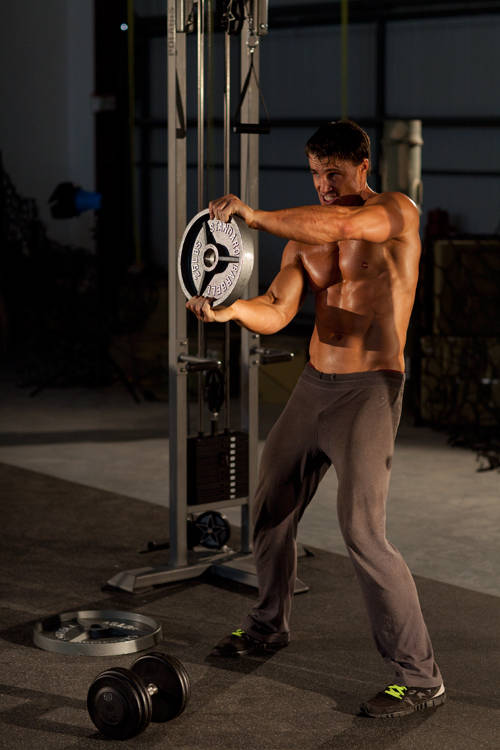
3. Car Drivers
83.4% MatchHow to perform this exercise
- While standing upright, hold a barbell plate in both hands at the 3 and 9 o'clock positions. Your palms should be facing each other and your arms should be extended straight out in front of you. This will be your starting position.
- Initiate the movement by rotating the plate as far to one side as possible. Use the same type of movement you would use to turn a steering wheel to one side.
- Reverse the motion, turning it all the way to the opposite side.
- Repeat for the recommended amount of repetitions.
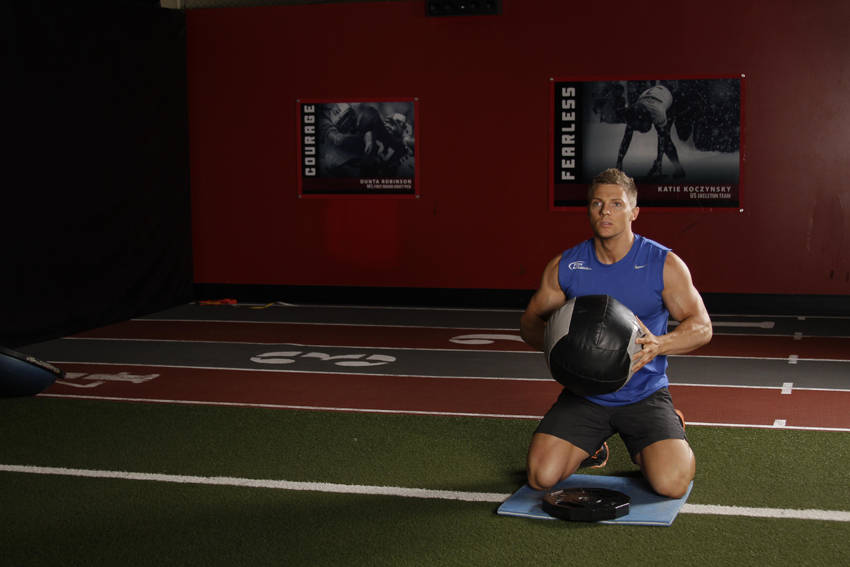
4. Chest Push (single Response)
79.9% MatchHow to perform this exercise
- Begin in a kneeling position holding the medicine ball with both hands tightly into the chest.
- Execute the pass by exploding forward and outward with the hips while pushing the ball as far as possible.
- Follow through by falling forward, catching yourself with your hands.
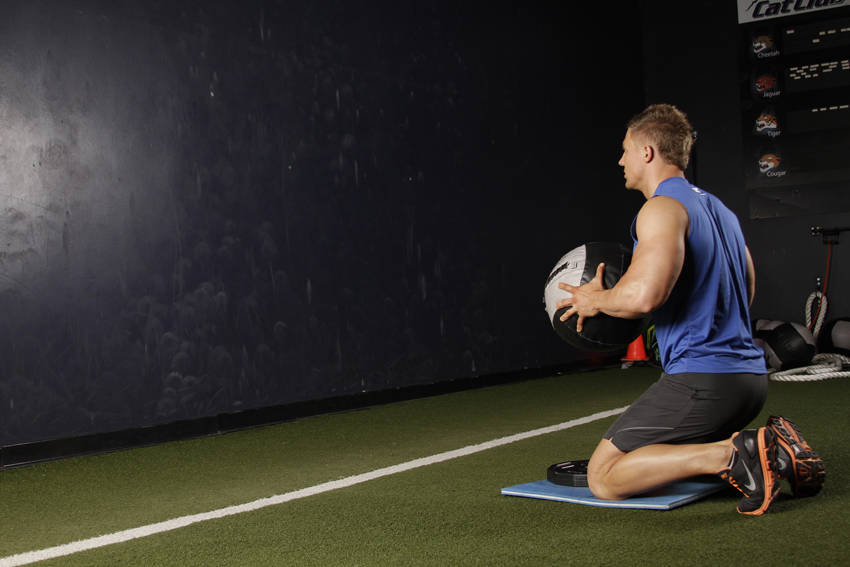
5. Chest Push (multiple Response)
79.8% MatchHow to perform this exercise
- Begin in a kneeling position facing a wall or utilize a partner. Hold the ball with both hands tight into the chest.
- Execute the pass by exploding forward and outward with the hips while pushing the ball as hard as possible.
- Follow through by falling forward, catching yourself with your hands.
- Immediately return to an upright position. Repeat for the desired number of repetitions.
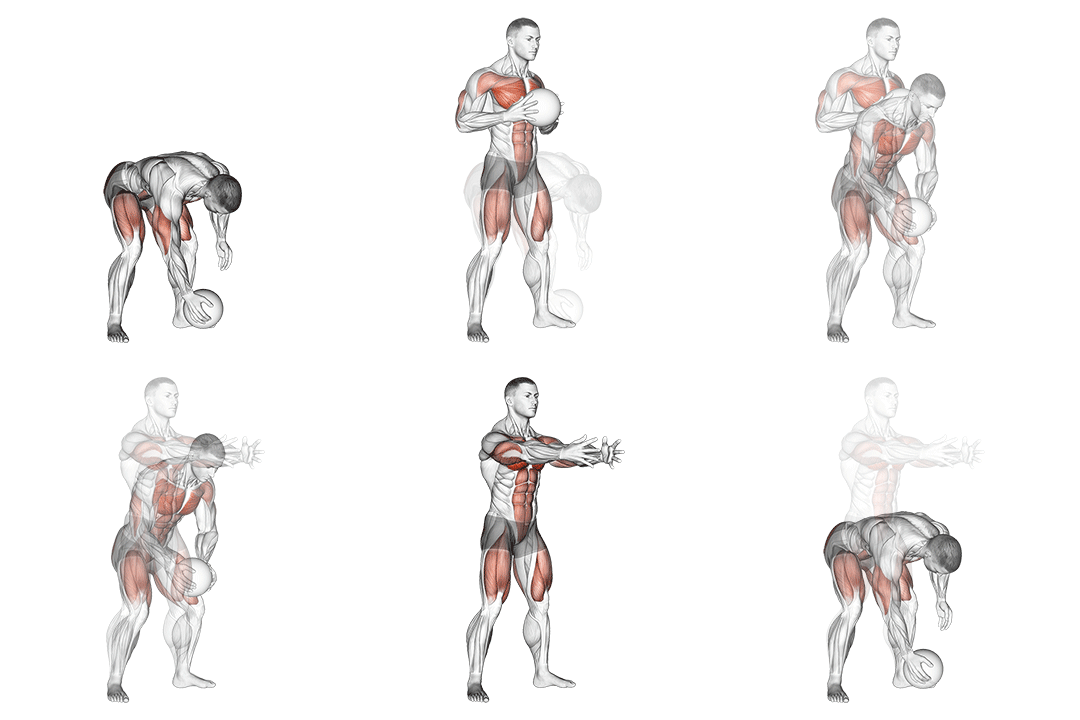
6. Medicine Ball Chest Push From 3 Point Stance
79.7% MatchHow to perform this exercise
- Start in a 3 point stance with one hand on the medicine ball and the other hand on the ground.
- Extend your legs and position your body in a straight line.
- Lower your chest towards the ground while keeping your back straight.
- Push the medicine ball away from your body, extending your arm fully.
- Return to the starting position and repeat for the desired number of repetitions.
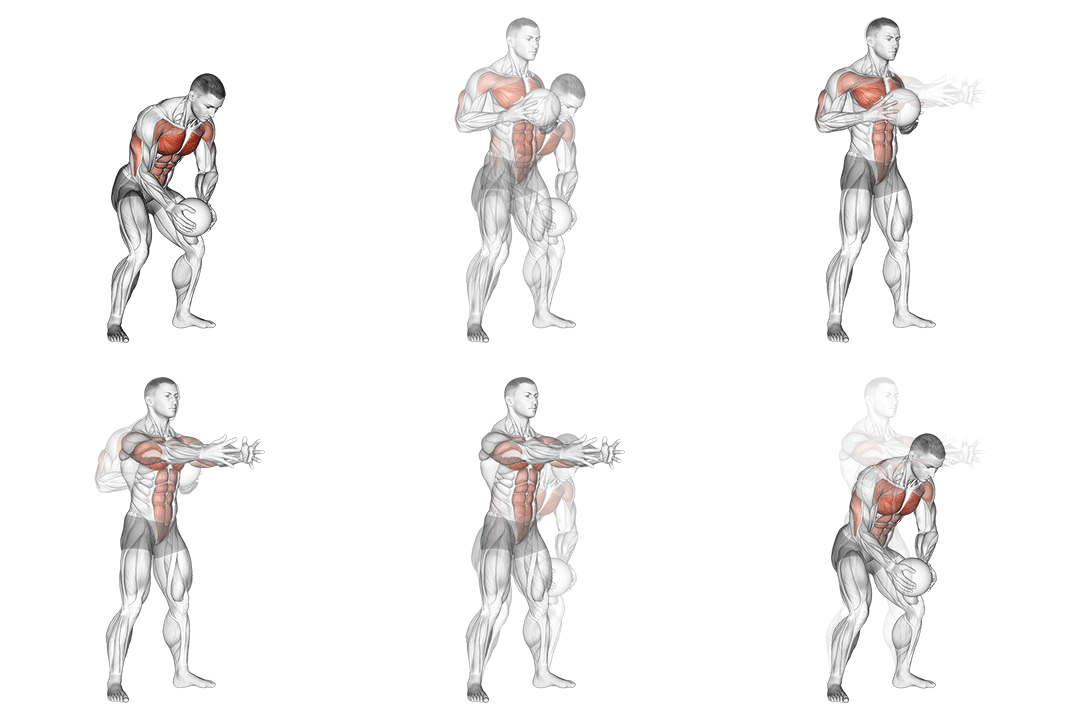
7. Medicine Ball Chest Push With Run Release
79.7% MatchHow to perform this exercise
- Stand with your feet shoulder-width apart, holding a medicine ball at chest level.
- Step forward with your right foot and simultaneously push the medicine ball forward, extending your arms fully.
- As you push the ball forward, release it and let it roll forward.
- Quickly run forward and catch the ball before it hits the ground.
- Once you catch the ball, bring it back to your chest and repeat the movement with your left foot forward.
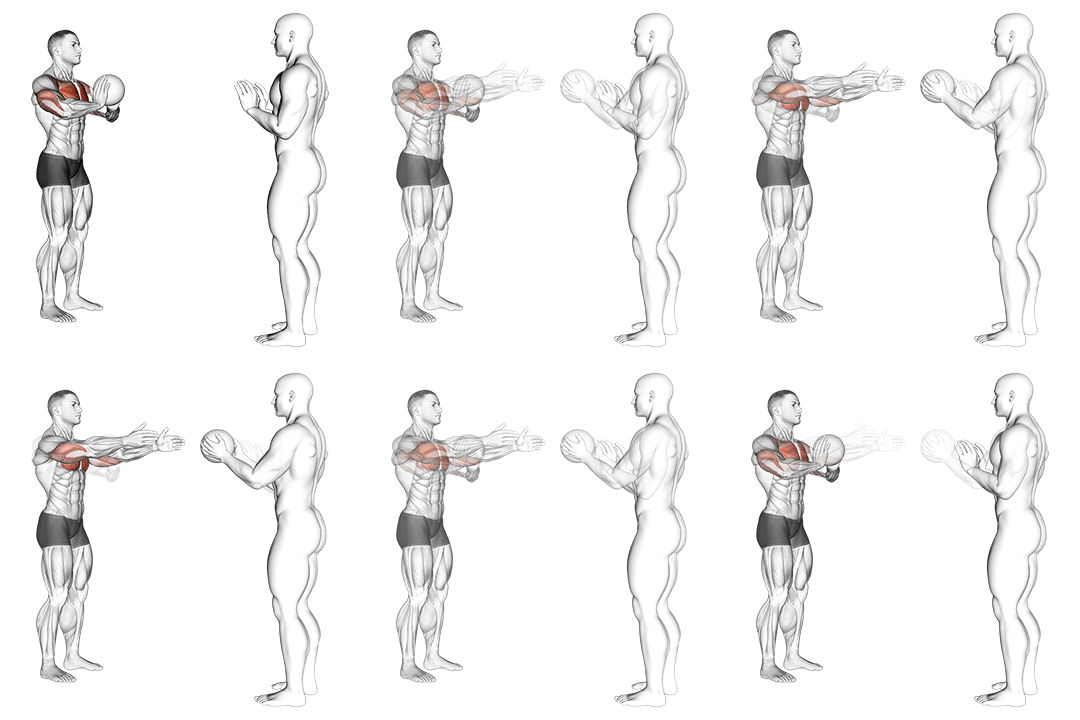
8. Medicine Ball Chest Pass
79.1% MatchHow to perform this exercise
- Stand with your feet shoulder-width apart, holding the medicine ball at chest level.
- Extend your arms forward, pushing the medicine ball away from your chest with force.
- As you release the ball, follow through with your arms and torso, transferring your weight from your back foot to your front foot.
- Catch the ball as it rebounds off the wall or partner, and immediately repeat the movement.
- Continue for the desired number of repetitions.
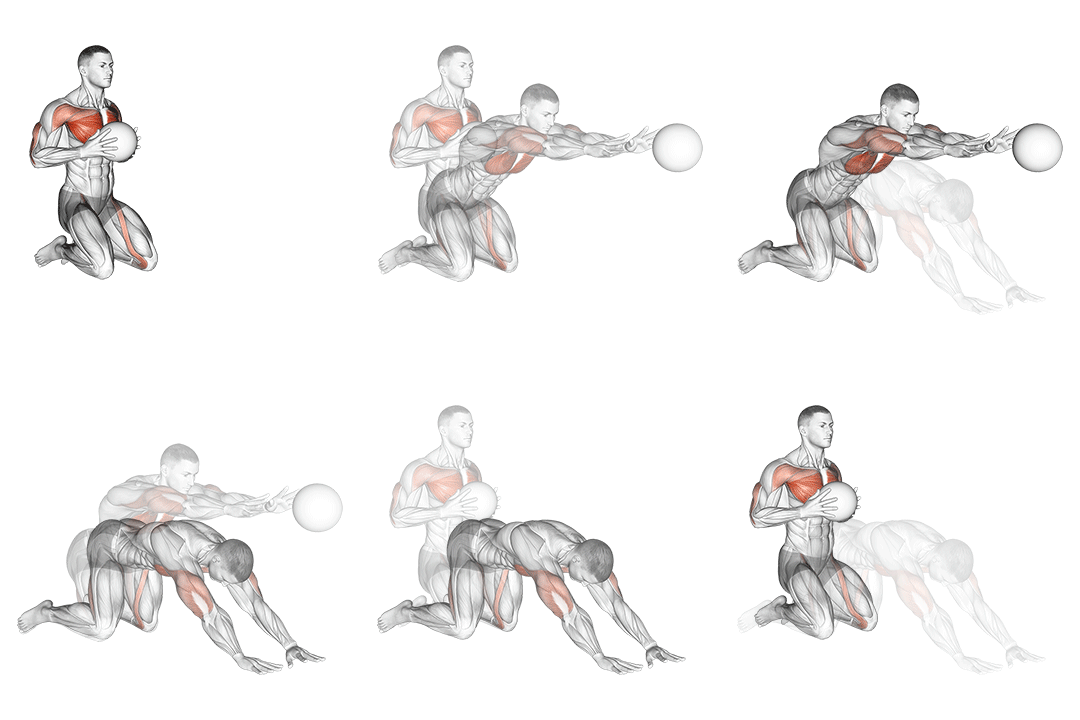
9. Medicine Ball Chest Push Multiple Response
79.1% MatchHow to perform this exercise
- Stand with your feet shoulder-width apart, holding a medicine ball at chest level.
- Extend your arms forward, pushing the medicine ball away from your chest.
- Pause for a moment, then slowly bring the medicine ball back to your chest.
- Repeat for the desired number of repetitions.
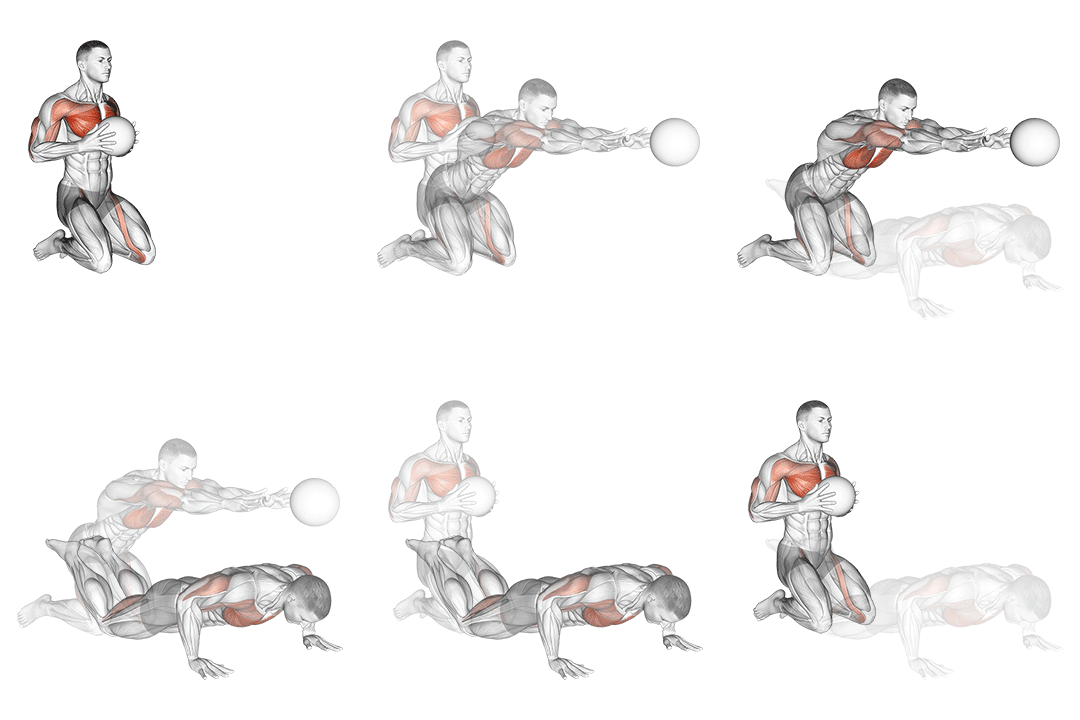
10. Medicine Ball Chest Push Single Response
79.1% MatchHow to perform this exercise
- Stand with your feet shoulder-width apart, holding the medicine ball at chest level.
- Extend your arms forward, pushing the medicine ball away from your chest.
- Pause for a moment, then slowly bring the medicine ball back to your chest.
- Repeat for the desired number of repetitions.
Why You Might Need a Backward Medicine Ball Throw Alternative
You may need substitutes because of shoulder pain, lack of a medicine ball or safe throwing space, or a shift in training goals toward hypertrophy or rehab. The throw stresses rapid horizontal abduction and scapular retraction; if that movement causes impingement, choose slower, controlled variations to preserve scapular rhythm. Equipment limits push you to cables or bands that replicate posterior-delt loading while reducing eccentric stress. For power development, pick lighter implements and prioritize velocity; for rehab, select low-load band work and focus on motor control. Cue: keep slight scapular depression and lead with the elbow to maximize posterior delt activation and protect the rotator cuff.
How to Choose the Right Substitute
Base your choice on equipment, goal (power, hypertrophy, or rehab), and shoulder tolerance. For power, use light med balls or slams with high intent and minimal contact time; emphasize rapid elbow drive and shoulder horizontal abduction. For hypertrophy, pick cables or dumbbells that allow full horizontal abduction for 6–12 controlled reps and pause at peak contraction to load the posterior delts. For rehab or stability, use bands and slow scapular retraction to retrain motor patterns. Also favor unilateral variations to fix asymmetries. Cue: maintain external rotation and scapular retraction on every rep to prioritize posterior delt recruitment and protect the glenohumeral joint.
Frequently Asked Questions
What muscles does Backward Medicine Ball Throw work?
The exercise primarily targets the posterior deltoids while recruiting the middle traps, rhomboids, and triceps for force transfer. Biomechanically it emphasizes rapid horizontal abduction and scapular retraction, with the core stabilizing the kinetic chain.
What is the best bodyweight alternative to Backward Medicine Ball Throw?
A reliable bodyweight substitute is prone Y/T raises on the floor or an incline bench; they reinforce scapular control and posterior-delt activation. Cue: lift the chest slightly, lead with the thumbs up, and squeeze the scapulae to emphasize horizontal abduction.
Can I build muscle without doing Backward Medicine Ball Throw?
Yes. You can build posterior-delt muscle using progressive overload with dumbbells, cables, and bands, examples include bent-over reverse flyes and cable face pulls in 6–12 rep ranges. Track load and range of motion, and ensure you lead with the elbow and hold peak contraction to maximize delt activation.
More Exercise Alternatives
Find Alternatives for Any Exercise
Use the exercise substitution finder to compare ranked alternatives for your available equipment and training preference.
Try the Exercise Substitution Finder →