

10 Best Band Bench Press Alternatives for Chest Pressing Strength
The Band Bench Press has you lie on a bench, grip a pair of band handles slightly wider than your shoulders and push them away from your chest, lowering them back until your elbows sit near ninety degrees. Bench Press - With Bands is the closest thing to it: the same band rig under a different name, so use whichever setup your gym has bands for. If you want a fixed load instead of a stretching band, the Barbell Bench Press keeps you on the same bench and presses a straight bar instead.
Original Exercise: Band Bench Press
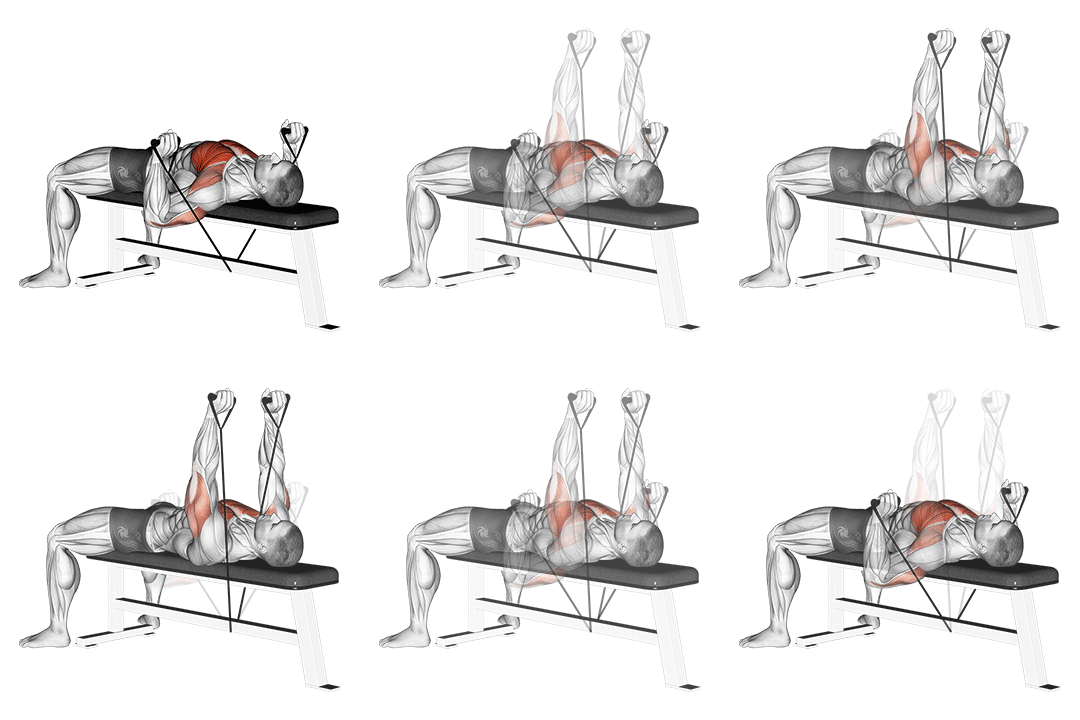
How to Perform Band Bench Press
- Lie flat on a bench with your feet flat on the ground and your back pressed against the bench.
- Grasp the band handles with an overhand grip, slightly wider than shoulder-width apart.
- Extend your arms fully, pushing the bands away from your chest.
- Slowly lower the bands back down to your chest, keeping your elbows at a 90-degree angle.
- Repeat for the desired number of repetitions.
Ranked Band Bench Press Alternatives
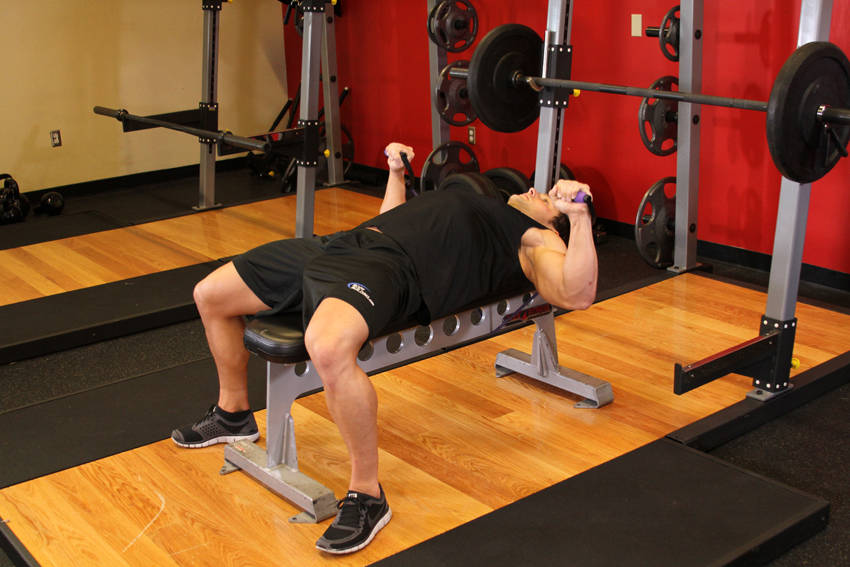
1. Bench Press - With Bands
99.4% MatchHow to perform this exercise
- Using a flat bench secure a band under the leg of the bench that is nearest to your head.
- Once the band is secure, grab it by both handles and lie down on the bench.
- Extend your arms so that you are holding the band handles in front of you at shoulder width.
- Once at shoulder width, rotate your wrists forward so that the palms of your hands are facing away from you. This will be your starting position.
- Bring down the handles slowly until your elbow forms a 90 degree angle. Keep full control at all times.
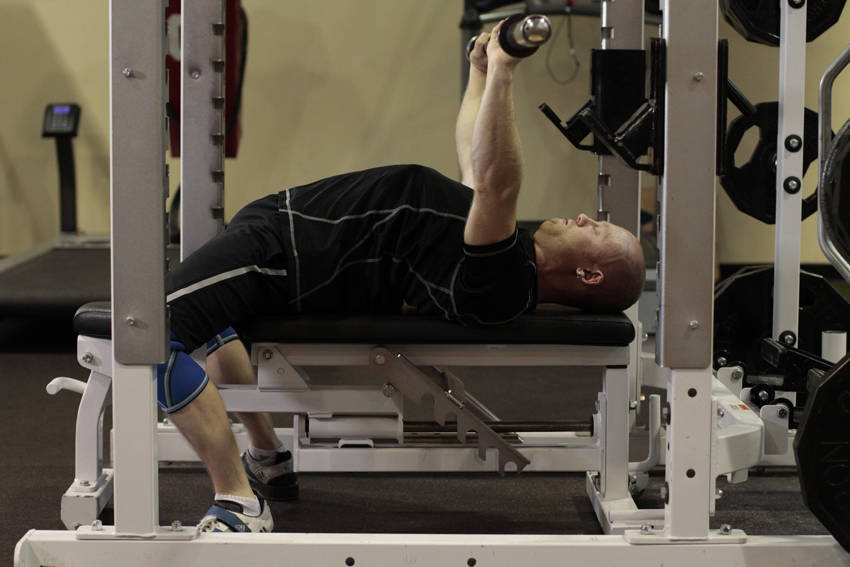
2. Bench Press - Powerlifting
89.4% MatchHow to perform this exercise
- Begin by lying on the bench, getting your head beyond the bar if possible. Tuck your feet underneath you and arch your back. Using the bar to help support your weight, lift your shoulder off the bench and retract them, squeezing the shoulder blades together. Use your feet to drive your traps into the bench. Maintain this tight body position throughout the movement.
- However wide your grip, it should cover the ring on the bar. Pull the bar out of the rack without protracting your shoulders. Focus on squeezing the bar and trying to pull it apart.
- Lower the bar to your lower chest or upper stomach. The bar, wrist, and elbow should stay in line at all times.
- Pause when the barbell touches your torso, and then drive the bar up with as much force as possible. The elbows should be tucked in until lockout.
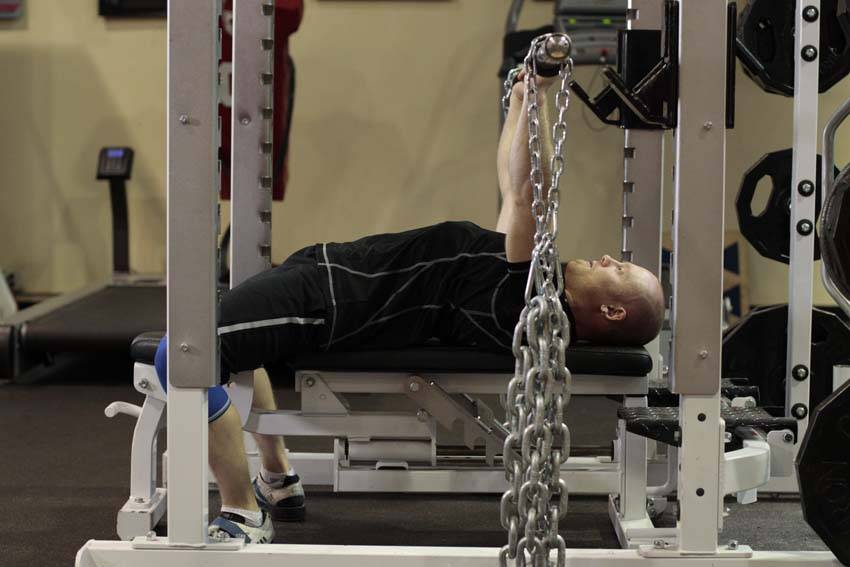
3. Bench Press With Chains
89.1% MatchHow to perform this exercise
- Adjust the leader chain, shortening it to the desired length.Place the chains on the sleeves of the bar.
- Lying on the bench, get your head beyond the bar if possible. Tuck your feet underneath you and arch your back. Using the bar to help support your weight, lift your shoulder off the bench and retract them, squeezing the shoulder blades together. Use your feet to drive your traps into the bench. Maintain this tight body position throughout the movement. However wide your grip, it should cover the ring on the bar.
- Pull the bar out of the rack without protracting your shoulders. Focus on squeezing the bar and trying to pull it apart. Lower the bar to your lower chest or upper stomach. The bar, wrist, and elbow should stay in line at all times.
- Pause when the barbell touches your torso, and then drive the bar up with as much force as possible. The elbows should be tucked in until lockout.
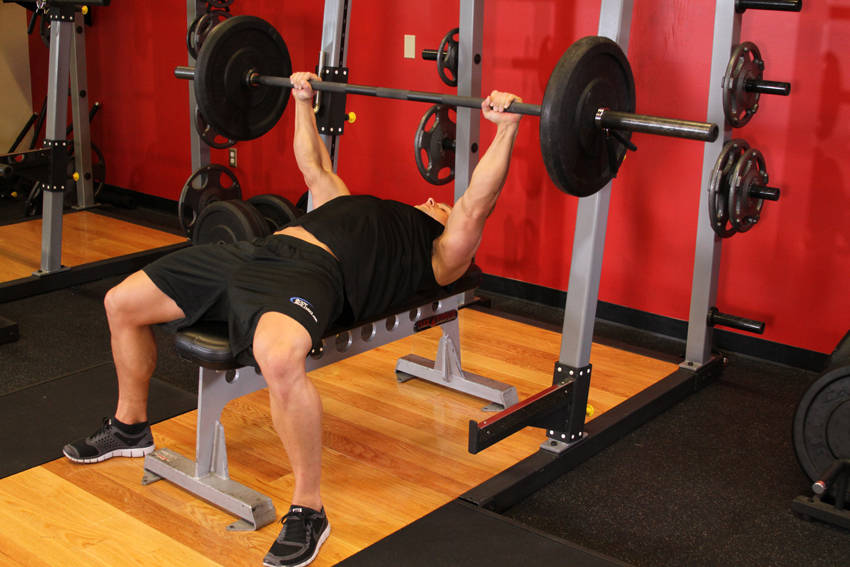
4. Barbell Bench Press - Medium Grip
88.7% MatchHow to perform this exercise
- Lie back on a flat bench. Using a medium width grip (a grip that creates a 90-degree angle in the middle of the movement between the forearms and the upper arms), lift the bar from the rack and hold it straight over you with your arms locked. This will be your starting position.
- From the starting position, breathe in and begin coming down slowly until the bar touches your middle chest.
- After a brief pause, push the bar back to the starting position as you breathe out. Focus on pushing the bar using your chest muscles. Lock your arms and squeeze your chest in the contracted position at the top of the motion, hold for a second and then start coming down slowly again. Tip: Ideally, lowering the weight should take about twice as long as raising it.
- Repeat the movement for the prescribed amount of repetitions.
- When you are done, place the bar back in the rack.
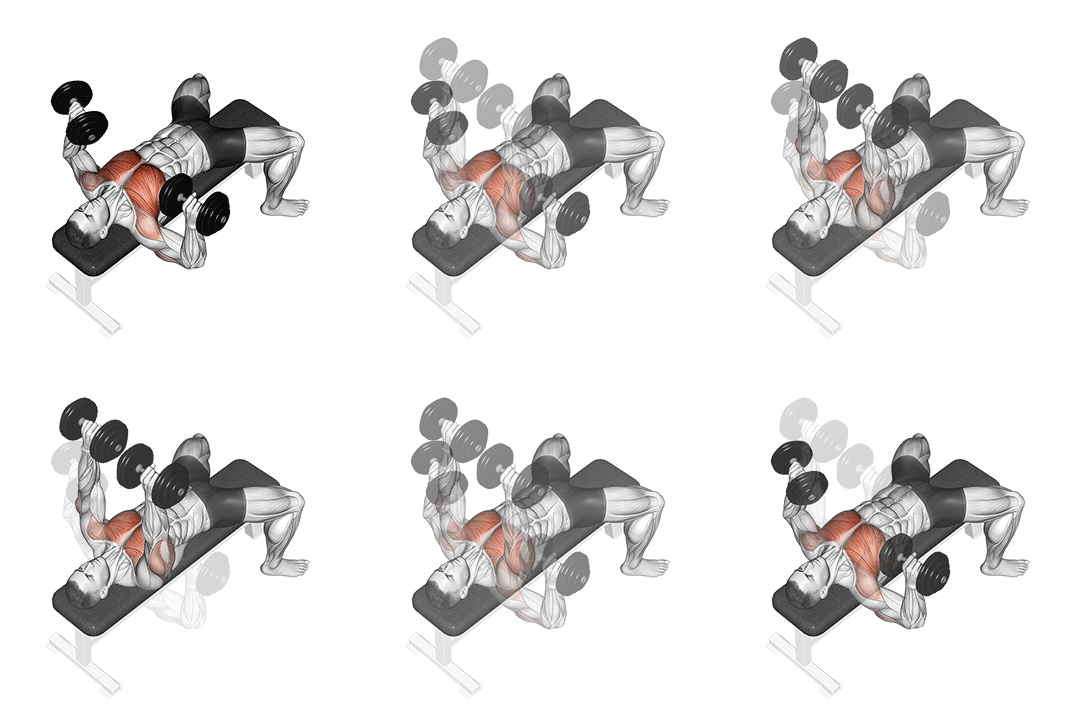
5. Dumbbell Bench Press
88.7% MatchHow to perform this exercise
- Lie flat on a bench with your feet flat on the ground and your back pressed against the bench.
- Hold a dumbbell in each hand, with your palms facing forward and your arms extended above your chest.
- Lower the dumbbells slowly to the sides of your chest, keeping your elbows at a 90-degree angle.
- Pause for a moment, then push the dumbbells back up to the starting position, fully extending your arms.
- Repeat for the desired number of repetitions.
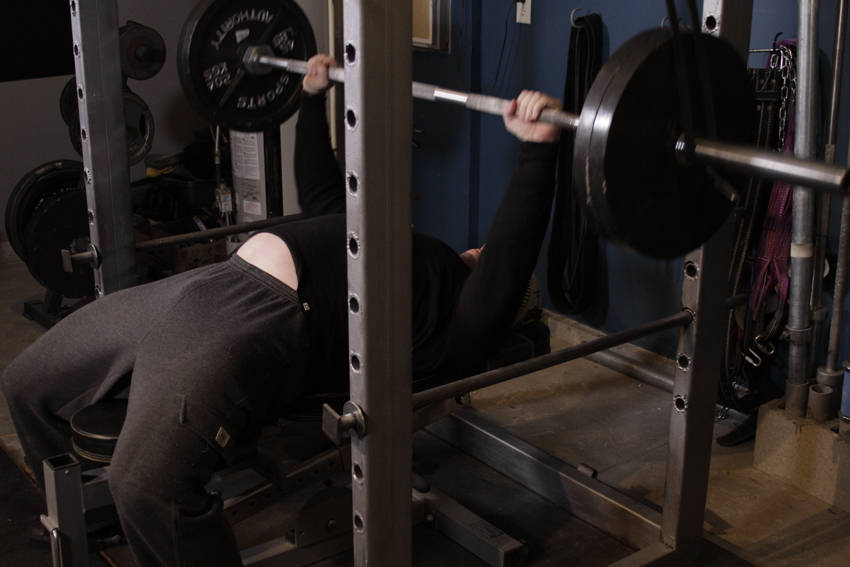
6. Reverse Band Bench Press
88.1% MatchHow to perform this exercise
- Position a bench inside a power rack, with the bar set to the correct height. Begin by anchoring bands either to band pegs or to the top of the rack. Ensure that you will be position properly under the bands. Attach the other end to the barbell.
- Lie on the bench, tuck your feet underneath you and arch your back. Using the bar to help support your weight, lift your shoulder off the bench and retract them, squeezing the shoulder blades together. Use your feet to drive your traps into the bench. Maintain this tight body position throughout the movement. However wide your grip, it should cover the ring on the bar.
- Pull the bar out of the rack without protracting your shoulders. Focus on squeezing the bar and trying to pull it apart. Lower the bar to your lower chest or upper stomach. The bar, wrist, and elbow should stay in line at all times.
- Pause when the barbell touches your torso, and then drive the bar up with as much force as possible. The elbows should be tucked in until lockout.
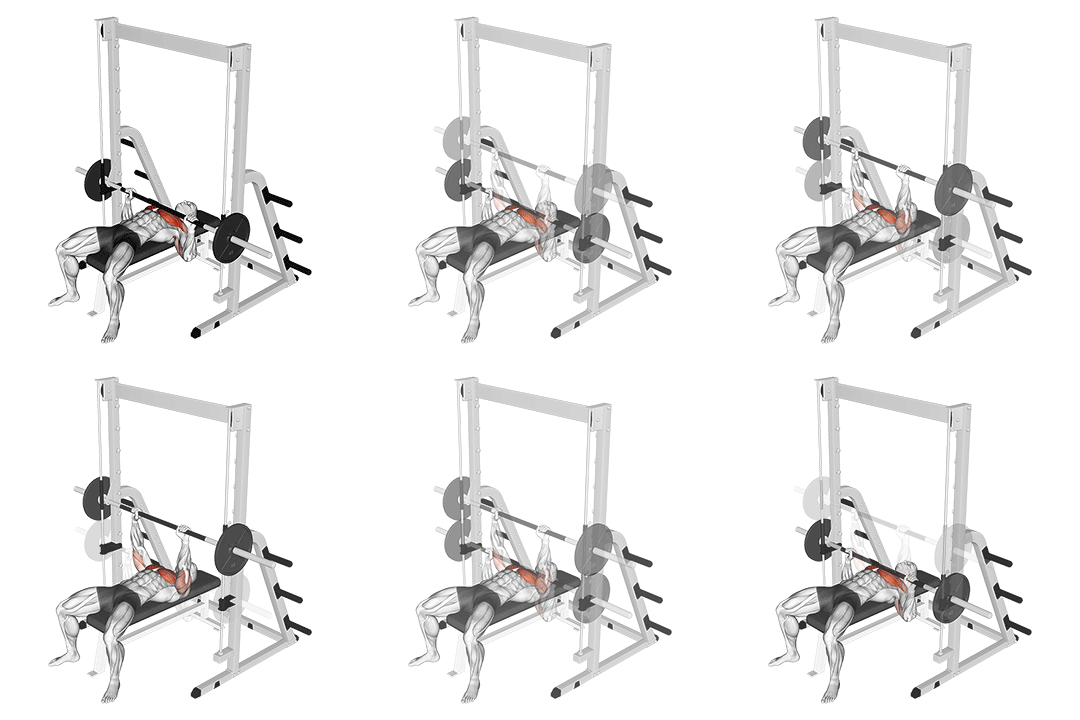
7. Smith Bench Press
87.9% MatchHow to perform this exercise
- Adjust the height of the smith machine bar to chest level.
- Lie flat on the bench with your feet firmly planted on the ground.
- Grip the bar with an overhand grip slightly wider than shoulder-width apart.
- Unrack the bar and lower it towards your chest, keeping your elbows tucked in.
- Pause for a moment when the bar touches your chest.
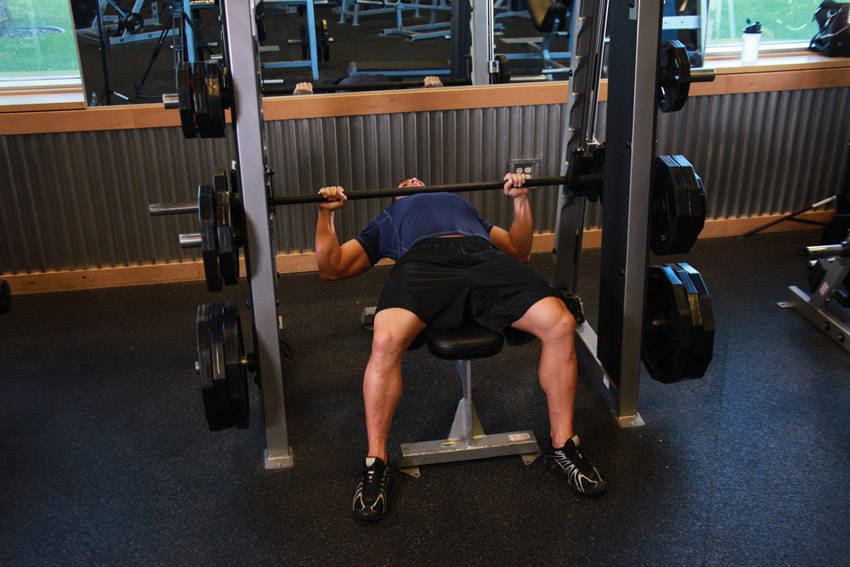
8. Smith Machine Bench Press
87.9% MatchHow to perform this exercise
- Place a flat bench underneath the smith machine. Now place the barbell at a height that you can reach when lying down and your arms are almost fully extended. Once the weight you need is selected, lie down on the flat bench. Using a pronated grip that is wider than shoulder width, unlock the bar from the rack and hold it straight over you with your arms locked. This will be your starting position.
- As you breathe in, come down slowly until you feel the bar on your middle chest.
- After a second pause, bring the bar back to the starting position as you breathe out and push the bar using your chest muscles. Lock your arms in the contracted position, hold for a second and then start coming down slowly again. Tip: It should take at least twice as long to go down than to come up.
- Repeat the movement for the prescribed amount of repetitions.
- When you are done, lock the bar back in the rack.
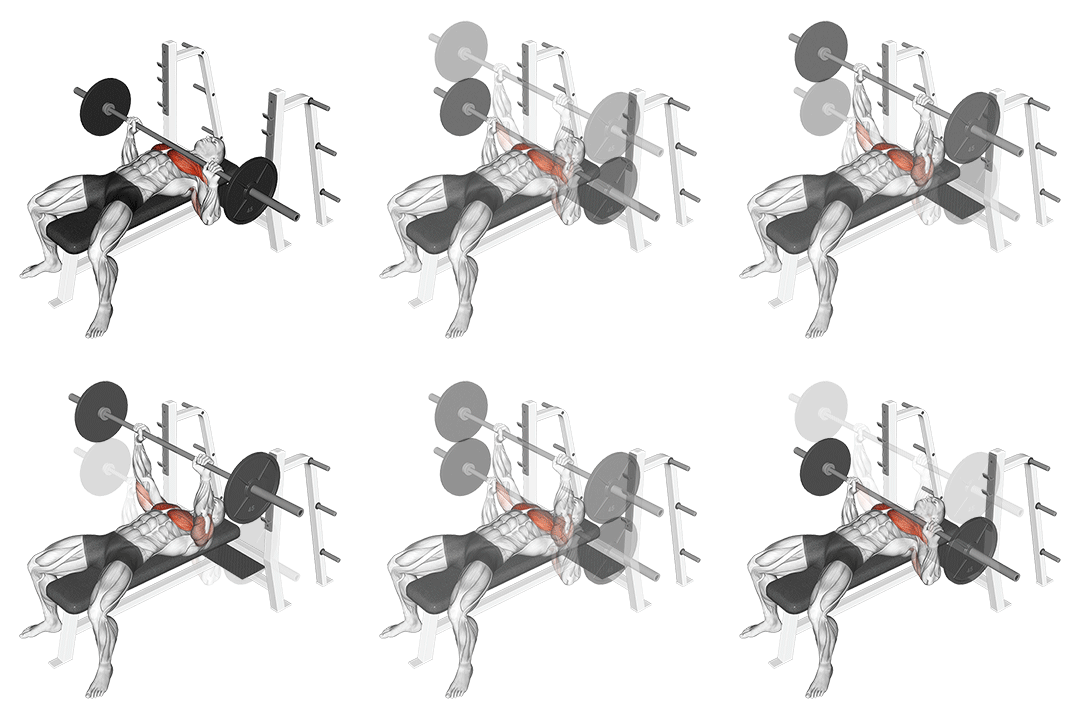
9. Barbell Bench Press
87.4% MatchHow to perform this exercise
- Lie flat on a bench with your feet flat on the ground and your back pressed against the bench.
- Grasp the barbell with an overhand grip slightly wider than shoulder-width apart.
- Lift the barbell off the rack and hold it directly above your chest with your arms fully extended.
- Lower the barbell slowly towards your chest, keeping your elbows tucked in.
- Pause for a moment when the barbell touches your chest.
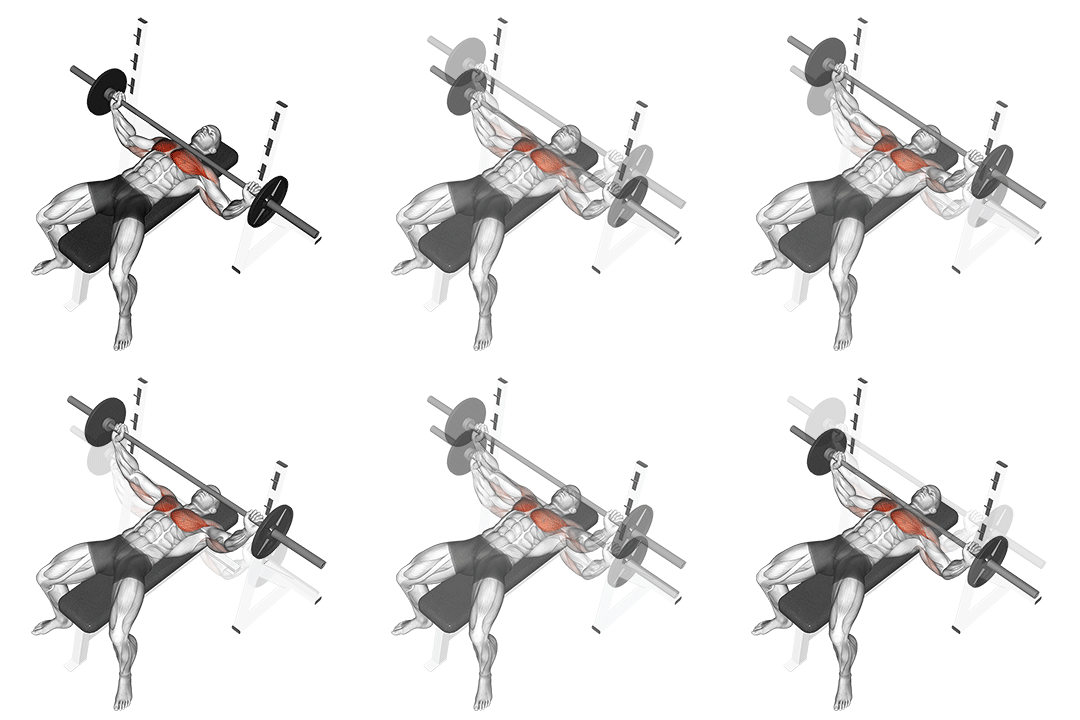
10. Barbell Wide Bench Press
87.4% MatchHow to perform this exercise
- Lie flat on a bench with your feet flat on the ground and your back pressed against the bench.
- Grasp the barbell with a wide grip, slightly wider than shoulder-width apart.
- Lift the barbell off the rack and hold it directly above your chest with your arms fully extended.
- Lower the barbell slowly towards your chest, keeping your elbows slightly flared out.
- Pause for a moment when the barbell touches your chest, then push it back up to the starting position.
Why You Might Need a Band Bench Press Alternative
The Band Bench Press needs a flat bench and a set of handled bands, and that pairing goes missing more often than the exercise itself: gyms run out of bands, and a home rack with a bar may hold none at all. Bench Press - With Bands sets up the identical band rig, so take it first if your gym has bands anywhere. Move to plates instead and you still lie on the same bench and press the same way: the Barbell Bench Press locks both hands on one bar and the Dumbbell Bench Press gives each arm its own path. The Barbell Wide Bench Press keeps the bar but widens your grip and lets your elbows flare slightly as you lower it.
How to Choose the Right Substitute
Bench Press - With Bands is the same band-under-the-bench setup, so use it whenever your gym has bands rigged. Barbell Bench Press replaces the band with a straight bar off a rack, no anchoring needed. Bench Press - Powerlifting has you arch your back, pull your shoulder blades together and drive your feet into the floor before you unrack the bar, a tighter setup built to move heavier plates. Dumbbell Bench Press lets each arm travel and lower on its own path, useful if one side presses harder than the other. Smith Bench Press and Smith Machine Bench Press are the same lift listed twice: the bar rides a fixed track, so you press straight up without balancing it. Barbell Wide Bench Press takes a wide grip and lowers the bar with elbows slightly flared out.
Frequently Asked Questions
Which alternative suits straight barbell strength work?
The Barbell Bench Press and Bench Press - Powerlifting both put a straight bar with plates in your hands, no bands involved. Bench Press - Powerlifting adds an arched back and retracted shoulder blades before you unrack the bar, a tighter setup built to move heavier plates, so treat it as the strength-focused pick once you have the barbell version down.
How does the Barbell Wide Bench Press change the press?
You grasp the bar wider than on the Barbell Bench Press and let your elbows flare slightly as the bar comes down, instead of keeping them tucked. You still pause when the bar touches your chest, then press it back to straight arms.
Can I do the Band Bench Press at home?
Yes, if you have a bench and either handled bands or dumbbells. Bench Press - With Bands is the same band setup under another name, so it changes nothing about how you train. If you only own dumbbells, the Dumbbell Bench Press keeps you lying on the bench and lets each arm press on its own path.
Which alternative helps a beginner keep the bar path straight?
The Smith Bench Press holds the bar on a fixed track, so you press straight up and down without balancing it yourself. That makes it a steadier place to learn the movement than a free barbell or a set of handled bands.
More Exercise Alternatives
Find Alternatives for Any Exercise
Use the exercise substitution finder to compare ranked alternatives for your available equipment and training preference.
Try the Exercise Substitution Finder →