

10 Best Band Front Raise Alternatives for Home or Gym
If you can't perform the band front raise, choose movements that reproduce isolated anterior deltoid flexion. Effective substitutes include dumbbell front raises, plate raises, cable front raises, barbell front raises, and landmine front raises. Each preserves anterior deltoid activation while offering different loading, stability demands, and progression options for home or gym training.
Original Exercise: Band Front Raise
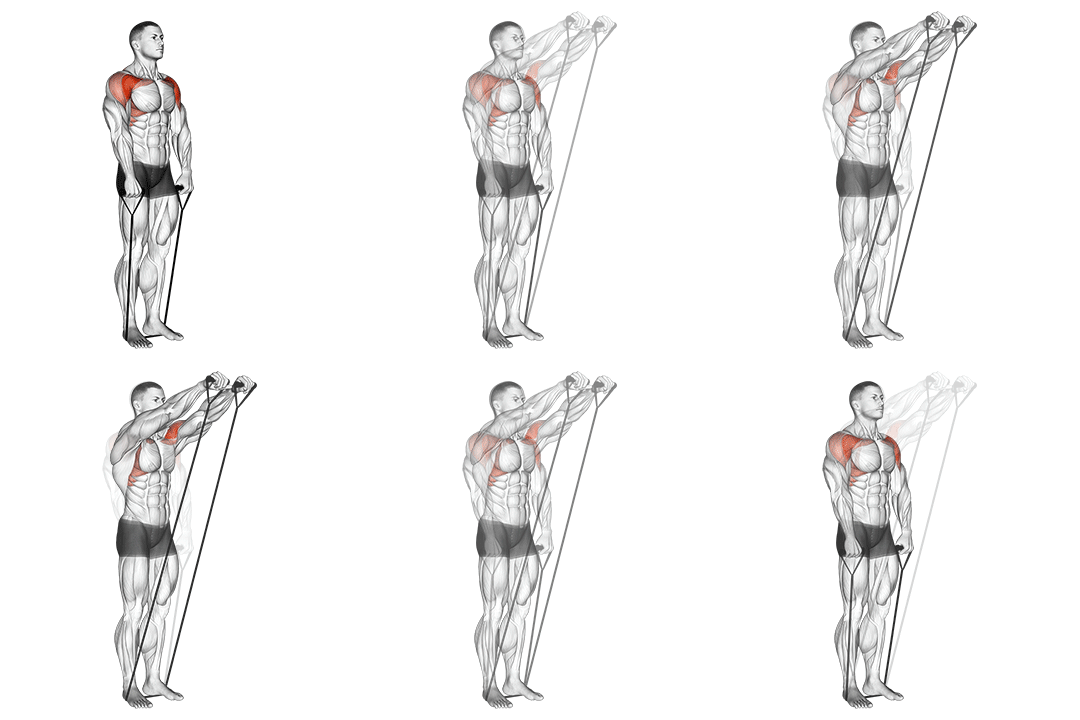
How to Perform Band Front Raise
- Stand with your feet shoulder-width apart and hold the band in front of your thighs with your palms facing down.
- Keep your arms straight and slowly raise them forward until they are parallel to the ground.
- Pause for a moment at the top, then slowly lower your arms back down to the starting position.
- Repeat for the desired number of repetitions.
Best Band Front Raise Alternatives
1. Band Front Lateral Raise
96% MatchHow to perform this exercise
- Stand with your feet shoulder-width apart and hold the band in front of your thighs with your palms facing down.
- Keep your arms straight and lift the band up in front of you until your arms are parallel to the ground.
- Pause for a moment at the top, then slowly lower the band back down to the starting position.
- Repeat for the desired number of repetitions.
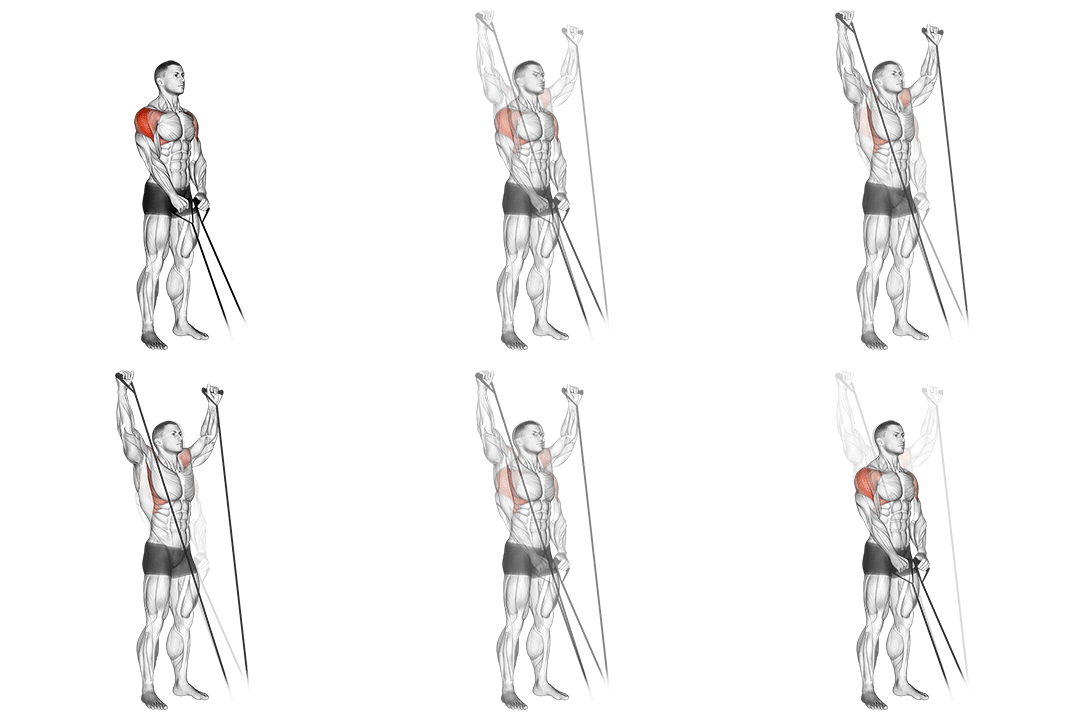
2. Band Y-raise
95.2% MatchHow to perform this exercise
- Stand with your feet shoulder-width apart and hold the band in front of your thighs with your palms facing inwards.
- Keep your arms straight and lift them up and out to the sides, forming a 'Y' shape with your body.
- Squeeze your shoulder blades together at the top of the movement.
- Slowly lower your arms back down to the starting position.
- Repeat for the desired number of repetitions.
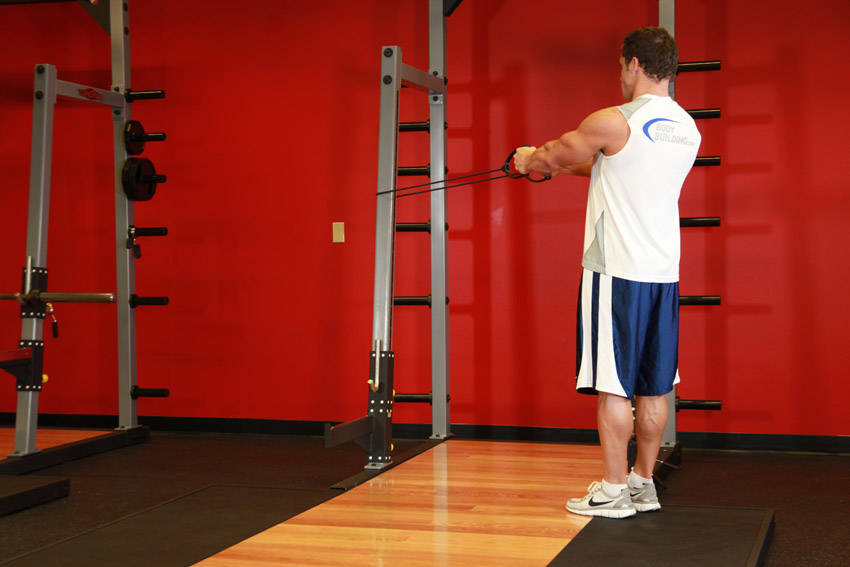
3. Back Flyes - With Bands
85.2% MatchHow to perform this exercise
- Run a band around a stationary post like that of a squat rack.
- Grab the band by the handles and stand back so that the tension in the band rises.
- Extend and lift the arms straight in front of you. Tip: Your arms should be straight and parallel to the floor while perpendicular to your torso. Your feet should be firmly planted on the floor spread at shoulder width. This will be your starting position.
- As you exhale, move your arms to the sides and back. Keep your arms extended and parallel to the floor. Continue the movement until the arms are extended to your sides.
- After a pause, go back to the original position as you inhale.
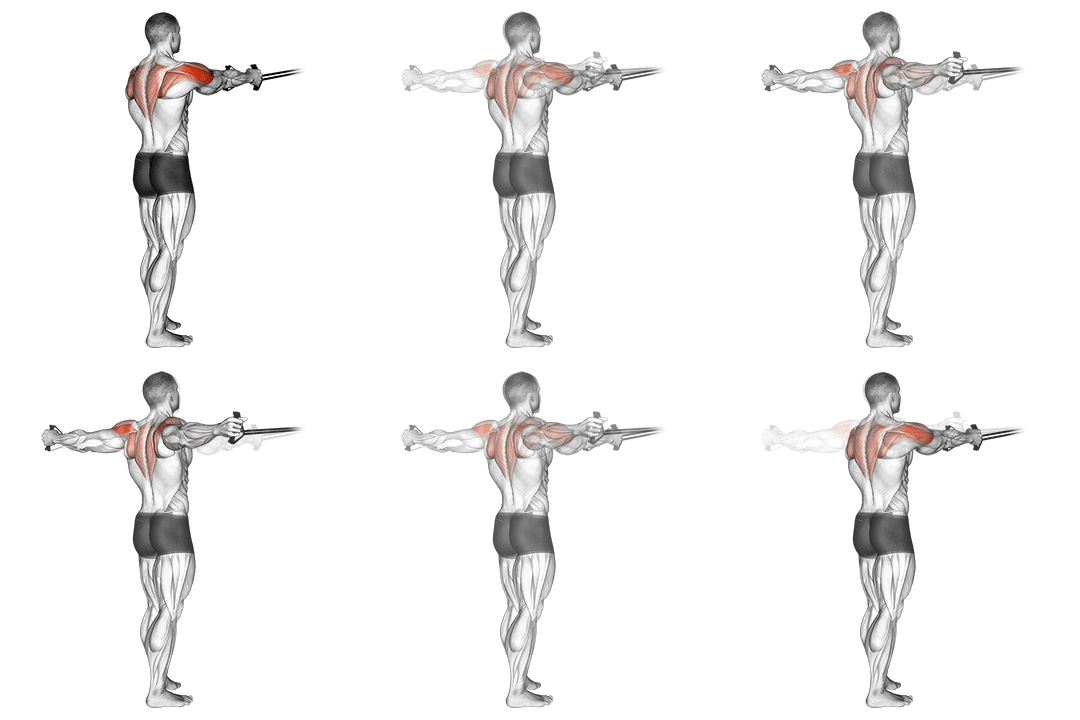
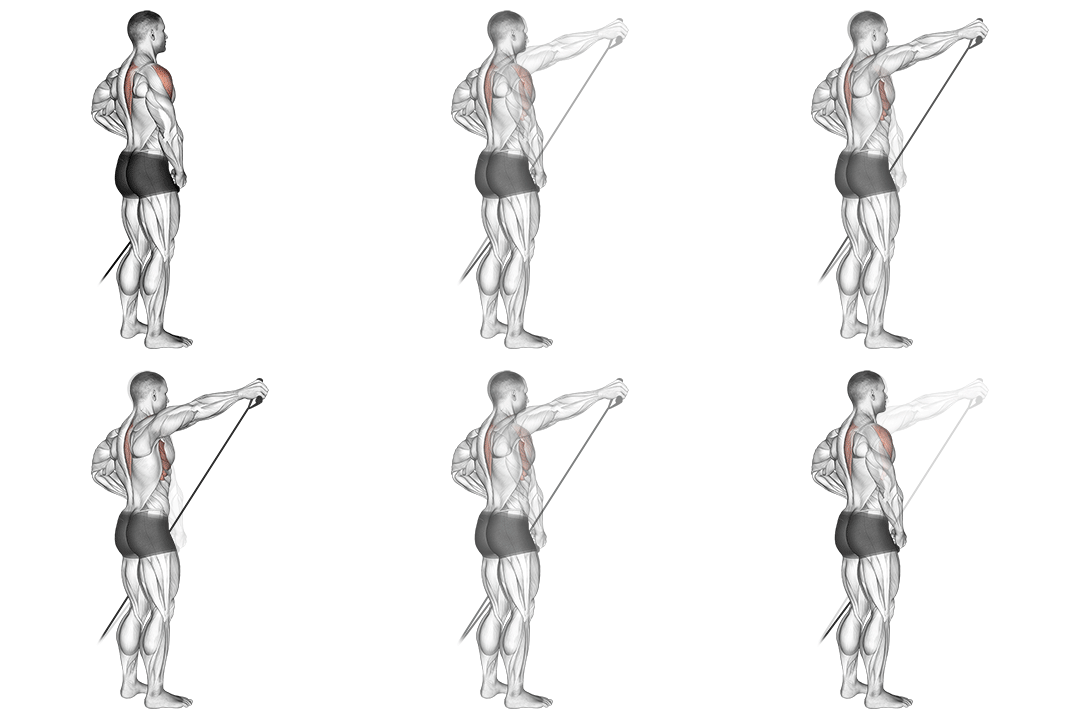
4. Band Reverse Fly
80.7% MatchHow to perform this exercise
- Attach the band to a stationary object at chest height.
- Stand with your feet shoulder-width apart and hold the band with both hands in front of you.
- Keep your arms straight and lift them out to the sides until they are parallel to the ground.
- Squeeze your shoulder blades together at the top of the movement.
- Slowly lower your arms back to the starting position.
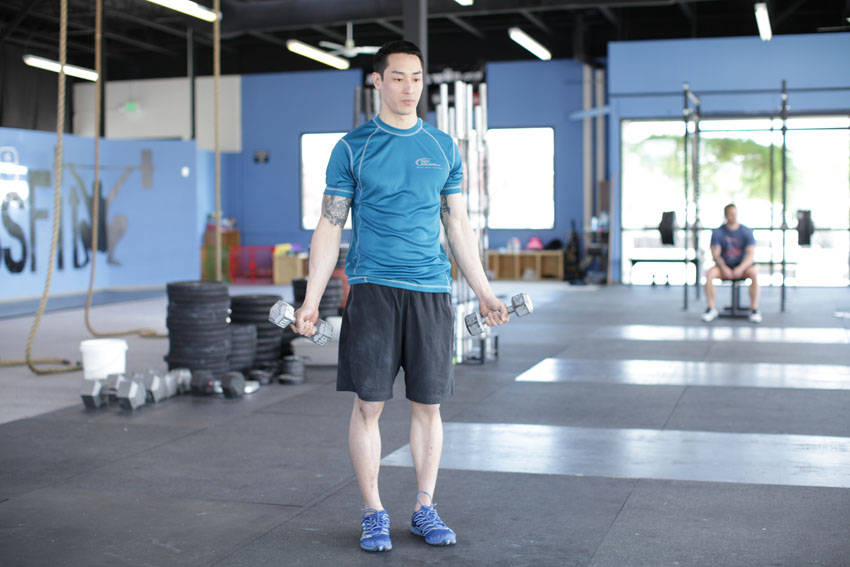
5. Dumbbell Scaption
80.7% MatchHow to perform this exercise
- This corrective exercise strengthens the muscles that stabilize your shoulder blade. Hold a light weight in each hand, hanging at your sides. Your thumbs should pointing up.
- Begin the movement raising your arms out in front of you, about 30 degrees off center. Your arms should be fully extended as you perform the movement.
- Continue until your arms are parallel to the ground, and then return to the starting position.
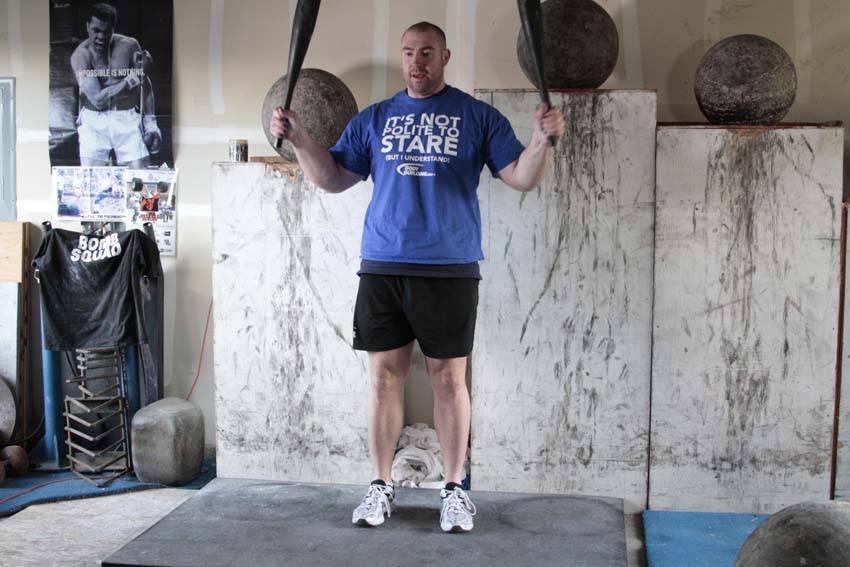
6. Crucifix
80.7% MatchHow to perform this exercise
- In the crucifix, you statically hold weights out to the side for time. While the event can be practiced using dumbbells, it is best to practice with one of the various implements used, such as axes and hammers, as it feels different.
- Begin standing, and raise your arms out to the side holding the implements. Your arms should be parallel to the ground. In competition, judges or sensors are used to let you know when you break parallel. Hold for as long as you can. Typically, the weights should be heavy enough that you fail in 30-60 seconds.
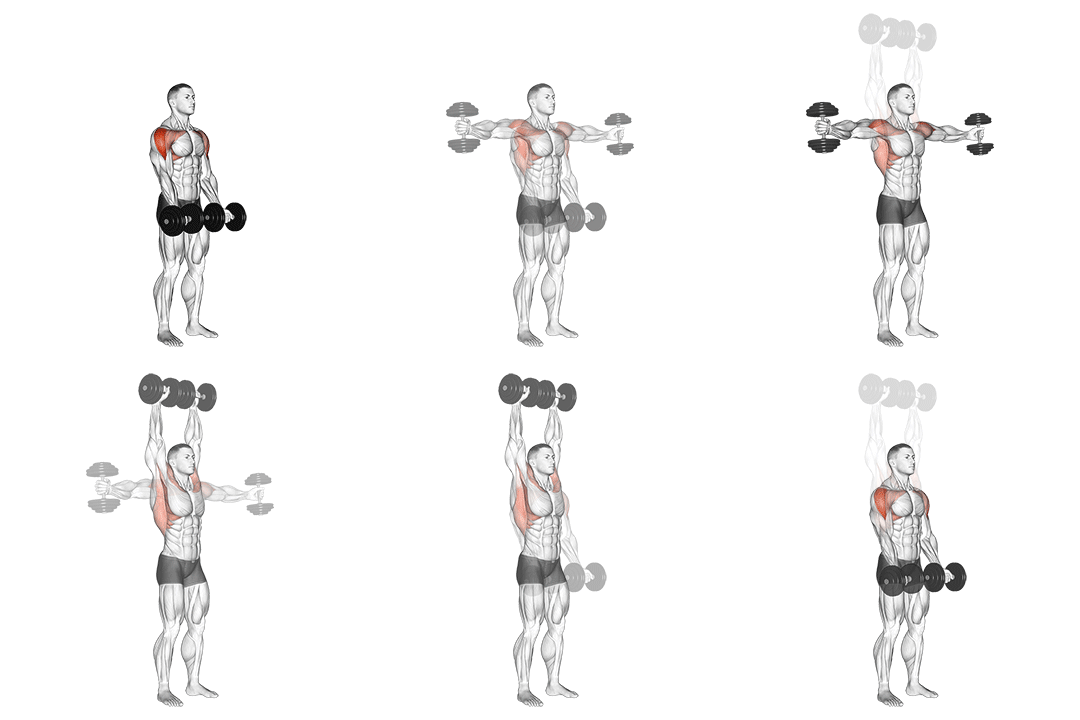
7. Dumbbell Standing Around World
80.1% MatchHow to perform this exercise
- Stand with your feet shoulder-width apart and hold a dumbbell in each hand.
- Extend your arms straight out to the sides at shoulder height, palms facing down.
- Keeping your arms straight, slowly rotate your arms in a circular motion, bringing the dumbbells in front of your body and then overhead.
- Continue the circular motion, bringing the dumbbells back down to the starting position.
- Repeat for the desired number of repetitions.
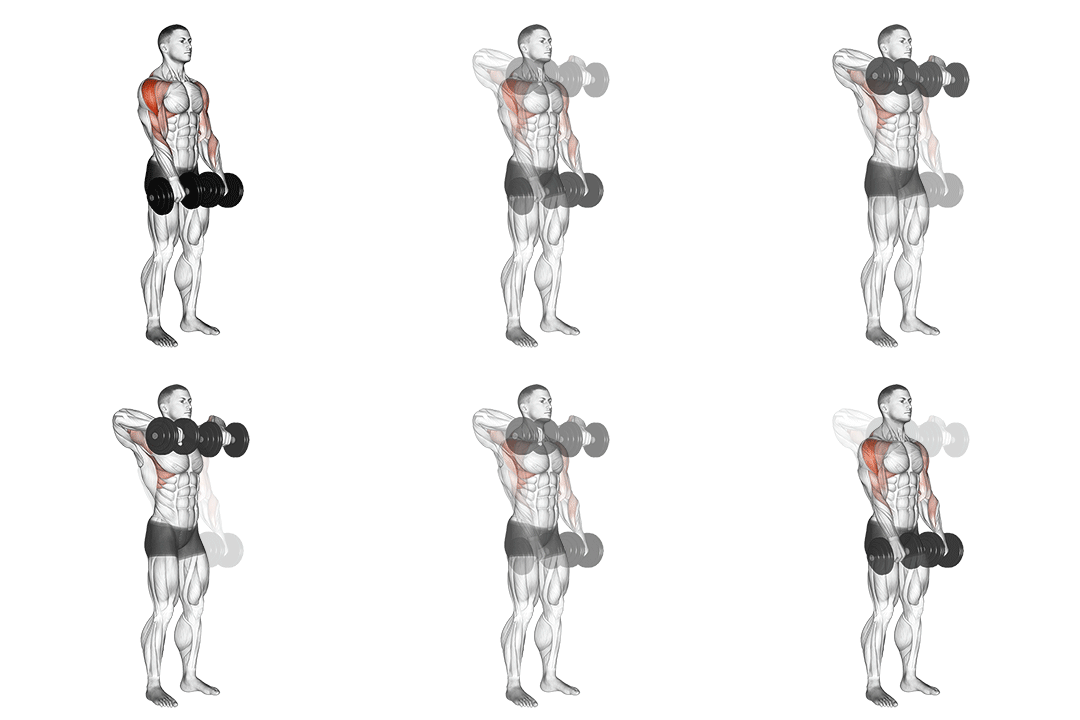
8. Dumbbell Upright Row
79.9% MatchHow to perform this exercise
- Stand with your feet shoulder-width apart, holding a dumbbell in each hand with an overhand grip.
- Let the dumbbells hang in front of your thighs, with your arms fully extended.
- Keeping your back straight and your core engaged, exhale and lift the dumbbells straight up towards your chin, leading with your elbows.
- Pause for a moment at the top, then inhale and slowly lower the dumbbells back down to the starting position.
- Repeat for the desired number of repetitions.
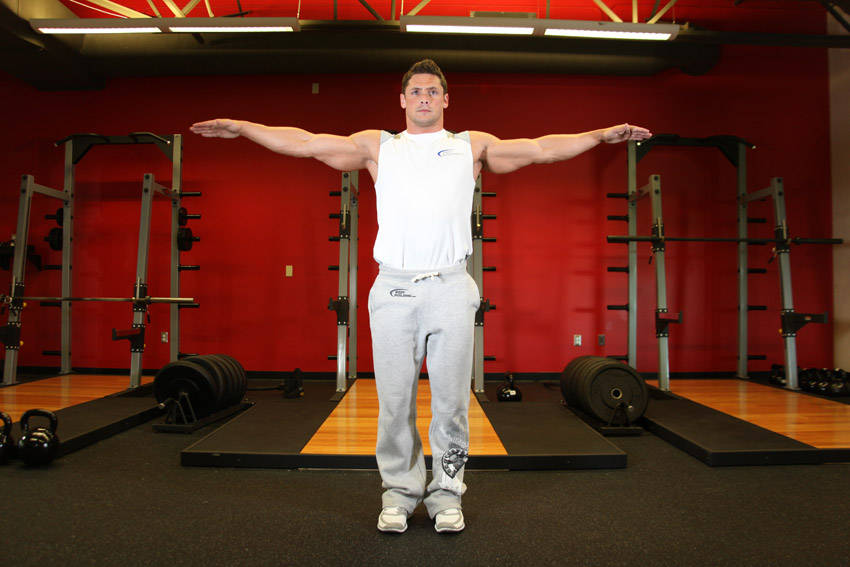
9. Arm Circles
78.6% MatchHow to perform this exercise
- Stand up and extend your arms straight out by the sides. The arms should be parallel to the floor and perpendicular (90-degree angle) to your torso. This will be your starting position.
- Slowly start to make circles of about 1 foot in diameter with each outstretched arm. Breathe normally as you perform the movement.
- Continue the circular motion of the outstretched arms for about ten seconds. Then reverse the movement, going the opposite direction.
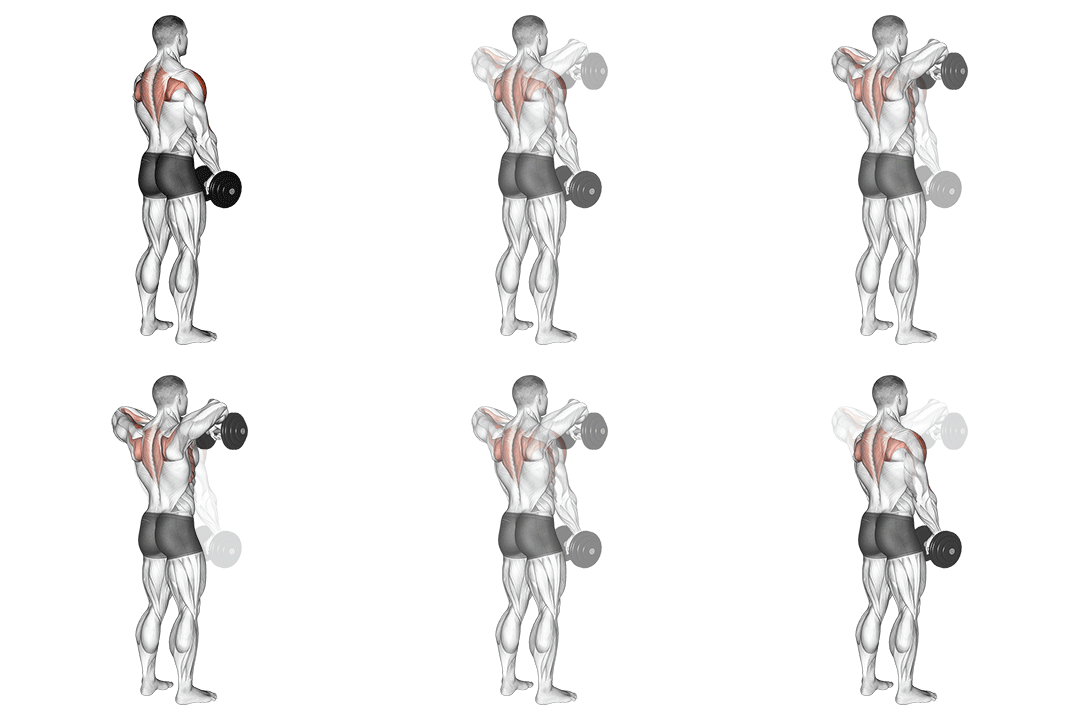
10. Dumbbell Upright Row (back Pov)
76.4% MatchHow to perform this exercise
- Stand with your feet shoulder-width apart, holding a dumbbell in each hand with an overhand grip.
- Let the dumbbells hang in front of your thighs, with your arms fully extended and your palms facing your body.
- Keeping your back straight and your core engaged, exhale and lift the dumbbells straight up towards your chin, leading with your elbows.
- Continue lifting until the dumbbells are at shoulder height, with your elbows pointing out to the sides.
- Pause for a moment at the top, then inhale and slowly lower the dumbbells back down to the starting position.
Why You Might Need a Band Front Raise Alternative
You might substitute the band front raise for several reasons: lack of a suitable band, shoulder pain or impingement with the band path, preference for heavier loading, or a need for unilateral work and progressive overload. Bands provide variable resistance and different tension curves than free weights or cables; some lifters need more constant tension, more absolute load, or a more stable setup. Substitutes let you maintain anterior deltoid stimulus while addressing joint comfort, capacity to add microload, or training specificity. Choosing an alternative can also correct compensatory movement patterns and improve scapular control under load.
How to Choose the Right Substitute
Prioritize the replacement that matches your training goal and available equipment. For hypertrophy pick an option that allows progressive overload and time under tension (dumbbells, cables, plates). For shoulder rehab or pain, choose controlled, low-load options that limit impingement—cables or light plates with strict tempo. If you need unilateral work to fix imbalances, use single-arm dumbbell or landmine front raises. Consider range of motion, scapular stability demands, and how the exercise loads the anterior deltoid through shoulder flexion rather than compensatory trunk or shrugging patterns. Always test range and pain response before increasing load.
Frequently Asked Questions
What muscles does band front raise work?
The band front raise primarily targets the anterior (front) deltoid through shoulder flexion. It also recruits the clavicular portion of the pectoralis major, upper trapezius for stabilization, and the serratus anterior and scapular stabilizers to control the shoulder blade.
What is the best bodyweight alternative to band front raise?
The best bodyweight substitute is the pike push-up or elevated pike progression, which emphasizes shoulder flexion and compressive loading of the anterior deltoids. For greater intensity, progress toward wall-facing handstand push-ups while maintaining strict scapular control.
Can I build muscle without doing band front raise?
Yes. You can build anterior deltoid mass with a variety of movements that provide progressive overload and sufficient volume, including dumbbell, barbell, cable, plate, and landmine front raises, plus compound presses to a lesser extent. Focus on consistent tension, incremental loading, and controlled range of motion to stimulate hypertrophy.
More Exercise Alternatives
Find Alternatives for Any Exercise
Use our free tool to discover the best substitute exercises based on your available equipment and goals.
Try the Exercise Substitution Finder →