

10 Best Band Standing Rear Delt Row Alternatives for Home & Gym
If the Band Standing Rear Delt Row is unavailable or uncomfortable, pick movements that load horizontal abduction and scapular retraction: bent-over dumbbell reverse fly, face pull, chest-supported rear-delt row, band pull-apart, or single-arm cable rear-delt pull. Cue: hinge at the hips, keep a neutral spine, lead with the elbow to prioritize posterior deltoid activation.
Original Exercise: Band Standing Rear Delt Row
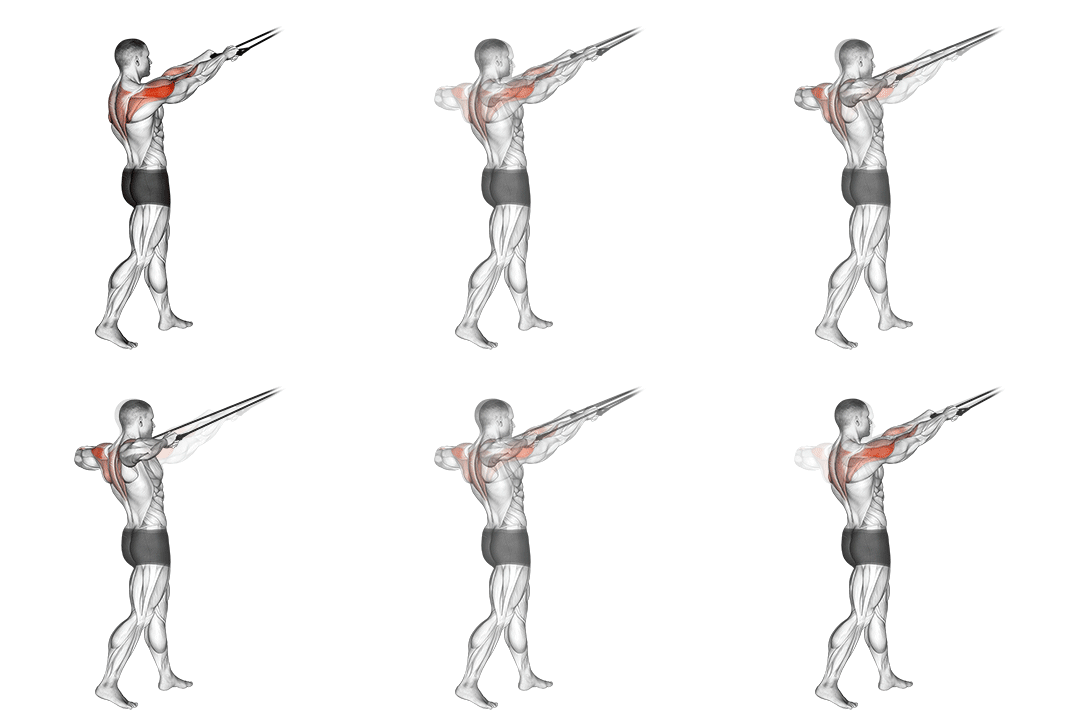
How to Perform Band Standing Rear Delt Row
- Stand with your feet shoulder-width apart and place the band under your feet.
- Hold the band handles with your palms facing each other and your arms extended in front of you.
- Bend your knees slightly and hinge forward at the hips, keeping your back straight.
- Pull the band towards your chest, squeezing your shoulder blades together.
- Pause for a moment at the top, then slowly release the tension and return to the starting position.
- Repeat for the desired number of repetitions.
Best Band Standing Rear Delt Row Alternatives
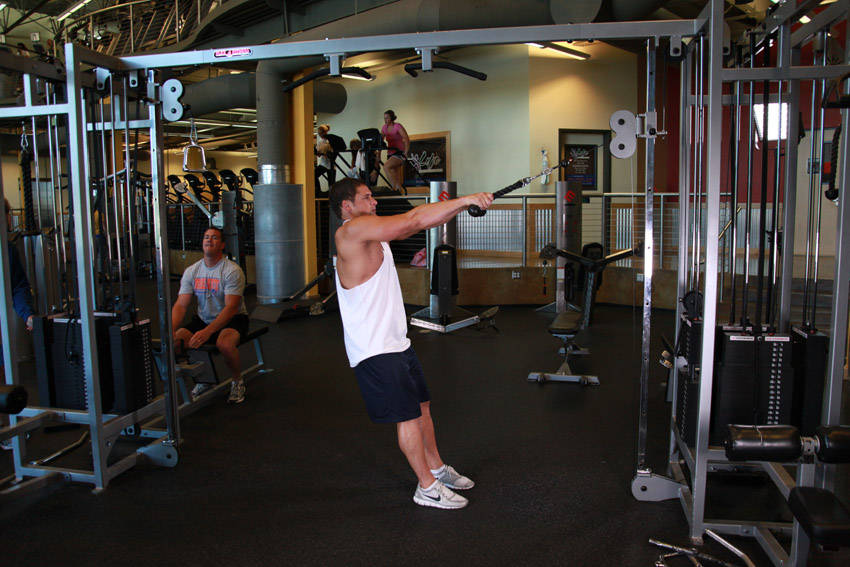
1. Cable Rope Rear-Delt Rows
85.2% MatchHow to perform this exercise
- Sit in the same position on a low pulley row station as you would if you were doing seated cable rows for the back.
- Attach a rope to the pulley and grasp it with an overhand grip. Your arms should be extended and parallel to the floor with the elbows flared out.
- Keep your lower back upright and slide your hips back so that your knees are slightly bent. This will be your starting position.
- Pull the cable attachment towards your upper chest, just below the neck, as you keep your elbows up and out to the sides. Continue this motion as you exhale until the elbows travel slightly behind the back. Tip: Keep your upper arms horizontal, perpendicular to the torso and parallel to the floor throughout the motion.
- Go back to the initial position where the arms are extended and the shoulders are stretched forward. Inhale as you perform this portion of the movement.
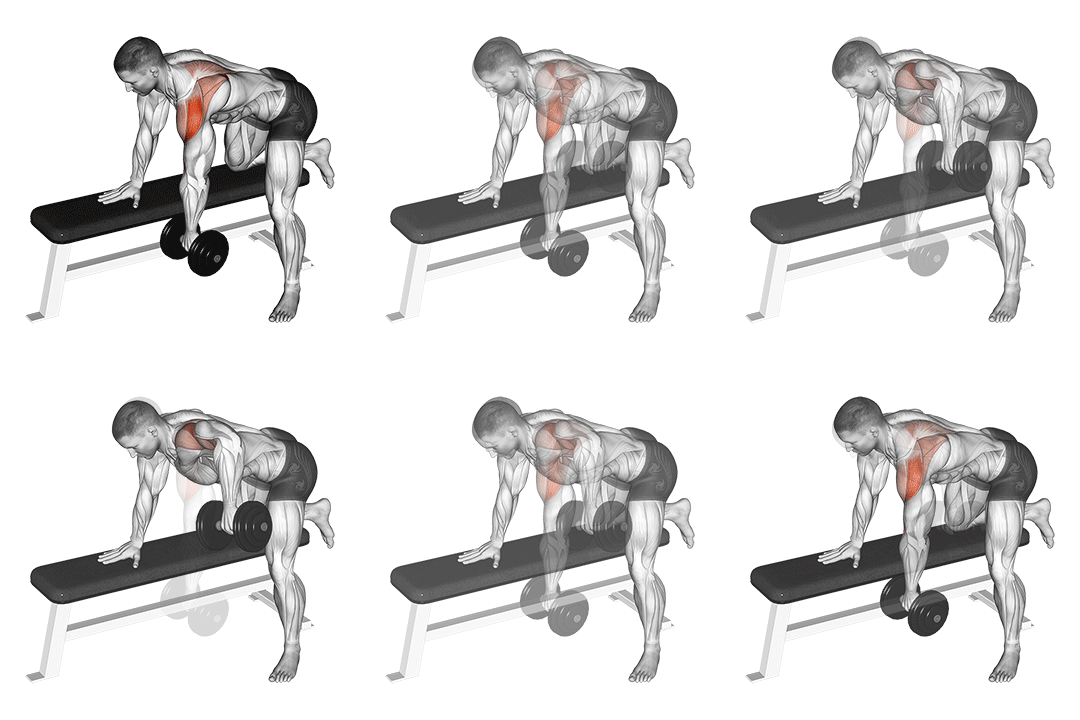
2. Dumbbell Rear Delt Row_shoulder
79.4% MatchHow to perform this exercise
- Stand with your feet shoulder-width apart and knees slightly bent.
- Hold a dumbbell in each hand with your palms facing your body.
- Bend forward at the waist, keeping your back straight and your core engaged.
- Extend your arms straight down towards the floor, with a slight bend in your elbows.
- Raise the dumbbells out to the sides, squeezing your shoulder blades together.
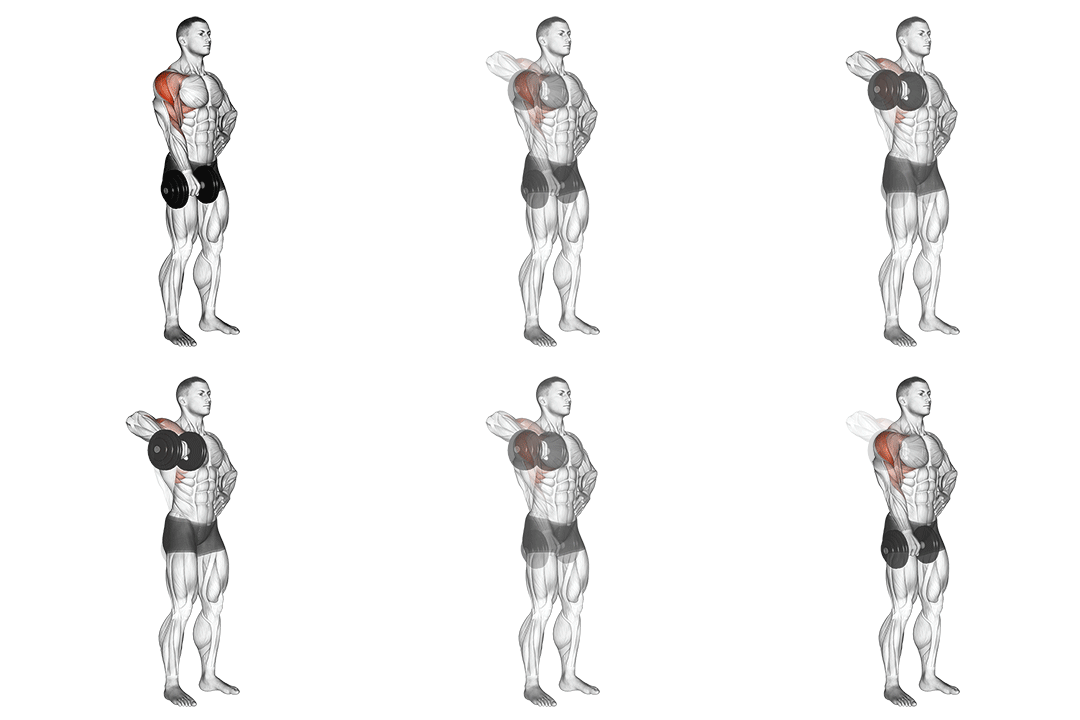
3. Dumbbell One Arm Upright Row
79% MatchHow to perform this exercise
- Stand with your feet shoulder-width apart, holding a dumbbell in one hand with an overhand grip.
- Let the dumbbell hang at arm's length in front of your thighs, with your palm facing your body.
- Keeping your back straight and your core engaged, exhale and lift the dumbbell straight up towards your chin, leading with your elbow.
- Pause for a moment at the top, then inhale and slowly lower the dumbbell back down to the starting position.
- Repeat for the desired number of repetitions, then switch to the other arm.
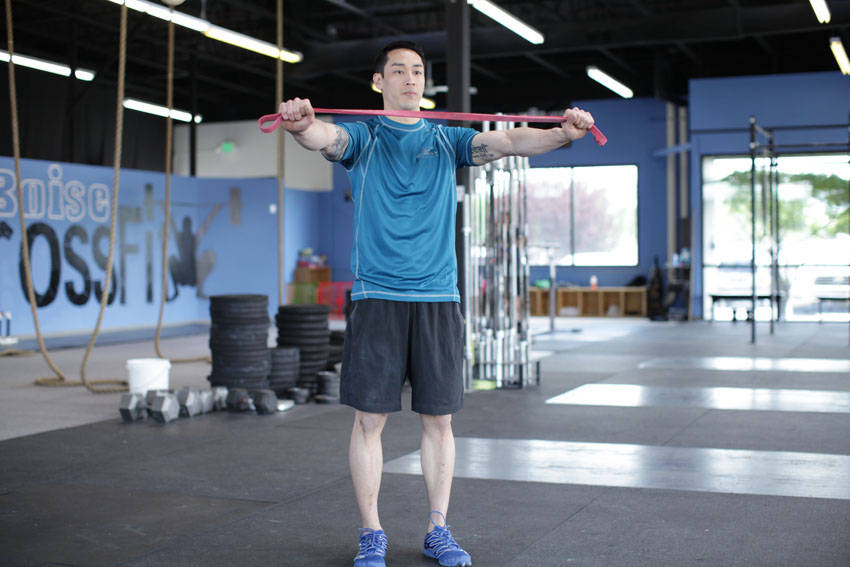
4. Band Pull Apart
77.6% MatchHow to perform this exercise
- Begin with your arms extended straight out in front of you, holding the band with both hands.
- Initiate the movement by performing a reverse fly motion, moving your hands out laterally to your sides.
- Keep your elbows extended as you perform the movement, bringing the band to your chest. Ensure that you keep your shoulders back during the exercise.
- Pause as you complete the movement, returning to the starting position under control.
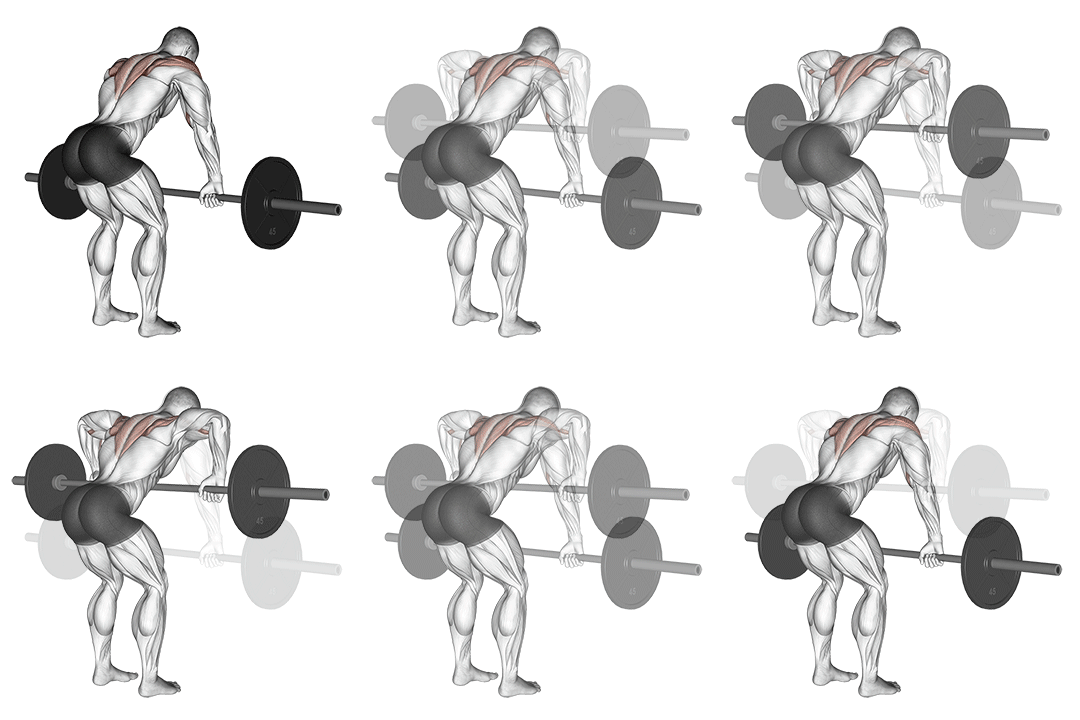
5. Barbell Rear Delt Row
75.4% MatchHow to perform this exercise
- Stand with your feet shoulder-width apart and knees slightly bent.
- Hold a barbell with an overhand grip, hands slightly wider than shoulder-width apart.
- Bend forward at the hips, keeping your back straight and chest up.
- Pull the barbell towards your chest, squeezing your shoulder blades together.
- Pause for a moment at the top, then slowly lower the barbell back to the starting position.
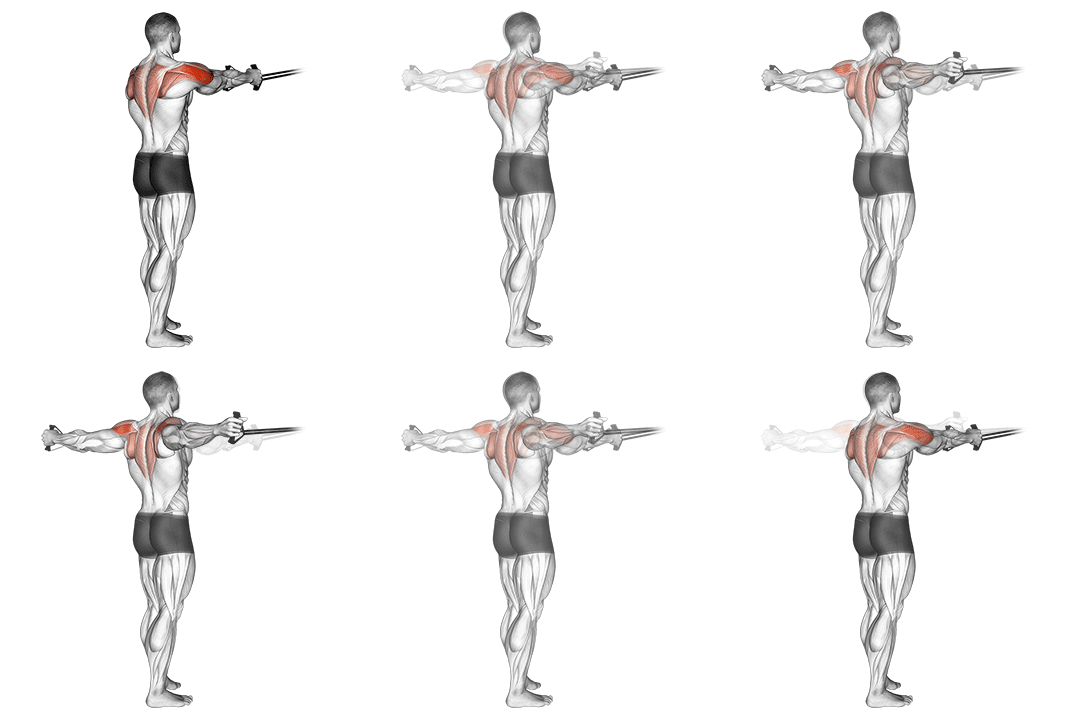
6. Band Reverse Fly
74.4% MatchHow to perform this exercise
- Attach the band to a stationary object at chest height.
- Stand with your feet shoulder-width apart and hold the band with both hands in front of you.
- Keep your arms straight and lift them out to the sides until they are parallel to the ground.
- Squeeze your shoulder blades together at the top of the movement.
- Slowly lower your arms back to the starting position.
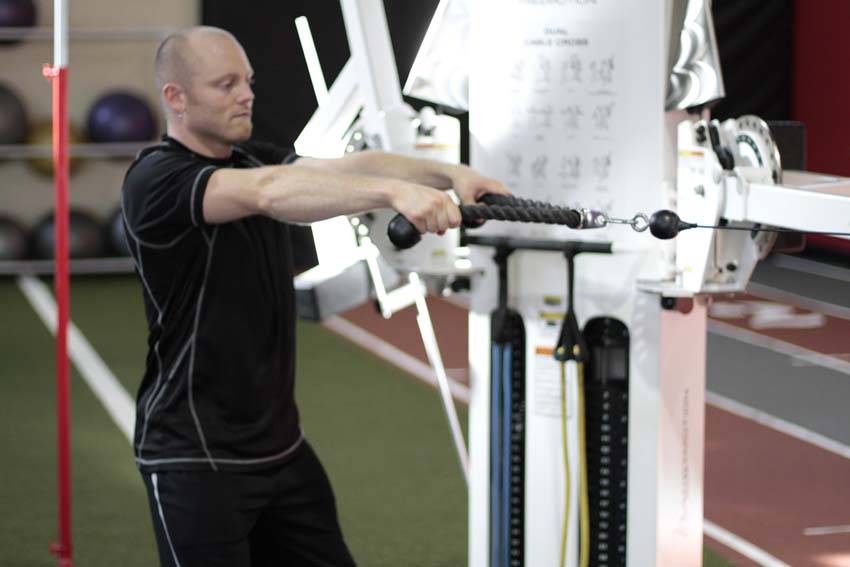
7. Face Pull
73.1% MatchHow to perform this exercise
- Facing a high pulley with a rope or dual handles attached, pull the weight directly towards your face, separating your hands as you do so. Keep your upper arms parallel to the ground.
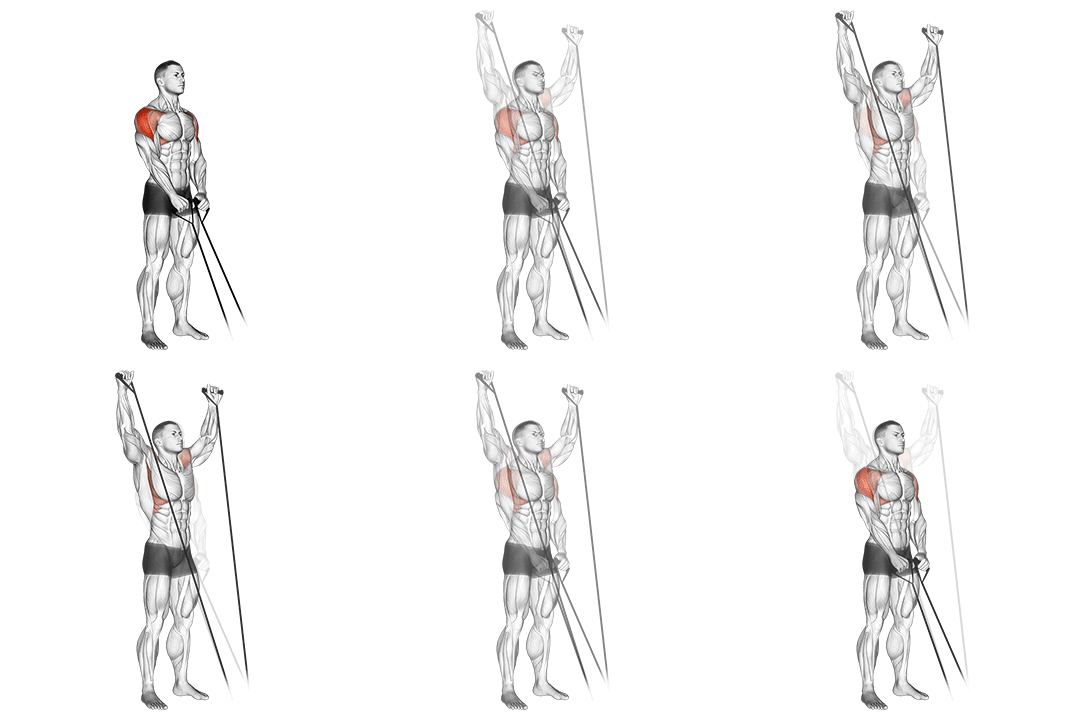
8. Band Y-raise
69.9% MatchHow to perform this exercise
- Stand with your feet shoulder-width apart and hold the band in front of your thighs with your palms facing inwards.
- Keep your arms straight and lift them up and out to the sides, forming a 'Y' shape with your body.
- Squeeze your shoulder blades together at the top of the movement.
- Slowly lower your arms back down to the starting position.
- Repeat for the desired number of repetitions.
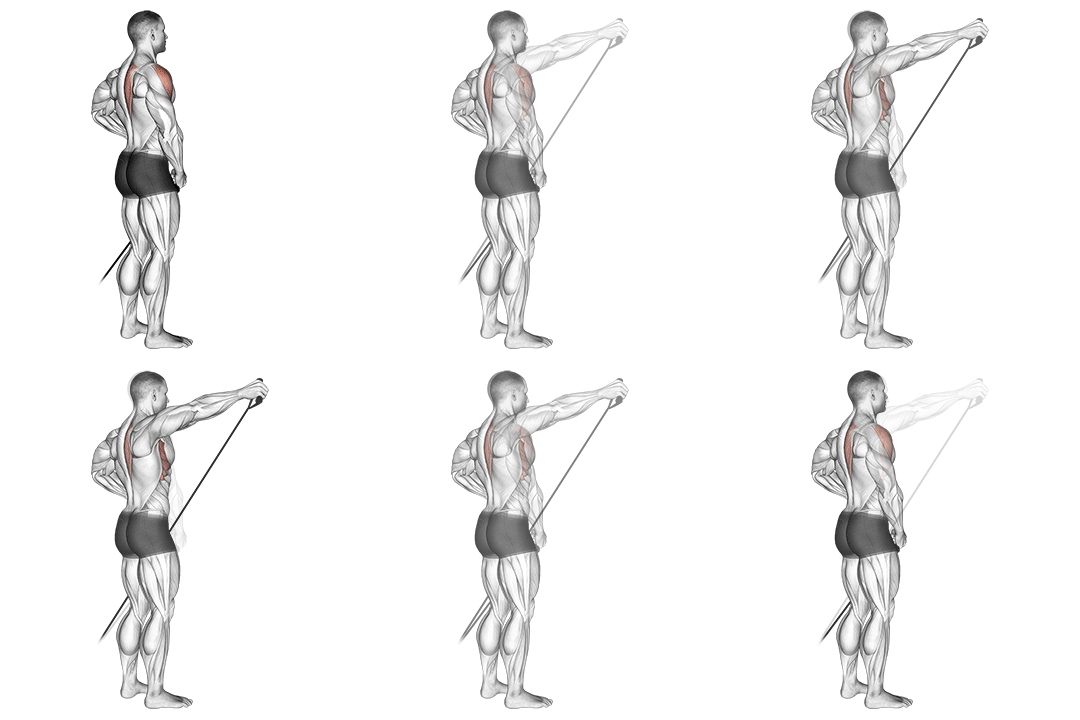
9. Band Front Lateral Raise
69.1% MatchHow to perform this exercise
- Stand with your feet shoulder-width apart and hold the band in front of your thighs with your palms facing down.
- Keep your arms straight and lift the band up in front of you until your arms are parallel to the ground.
- Pause for a moment at the top, then slowly lower the band back down to the starting position.
- Repeat for the desired number of repetitions.
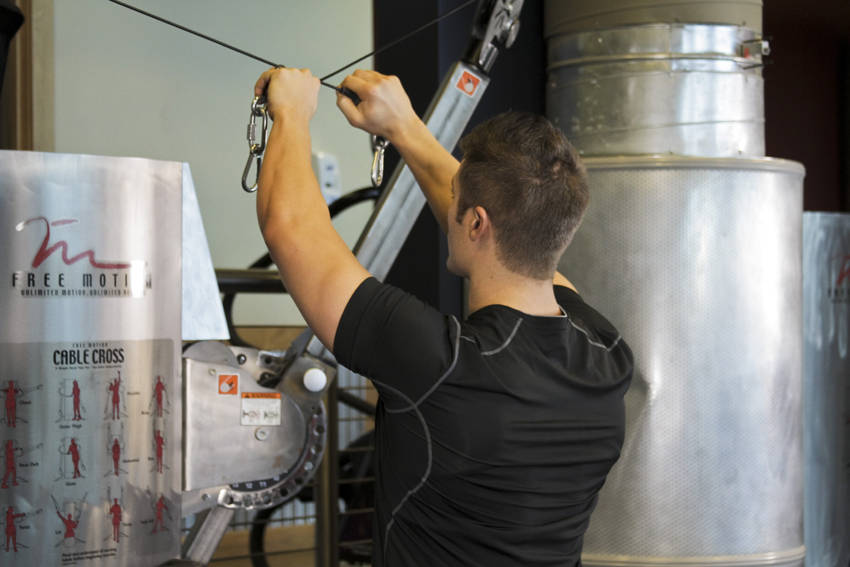
10. Cable Rear Delt Fly
68.9% MatchHow to perform this exercise
- Adjust the pulleys to the appropriate height and adjust the weight. The pulleys should be above your head.
- Grab the left pulley with your right hand and the right pulley with your left hand, crossing them in front of you. This will be your starting position.
- Initiate the movement by moving your arms back and outward, keeping your arms straight as you execute the movement.
- Pause at the end of the motion before returning the handles to the start position.
Why You Might Need a Band Standing Rear Delt Row Alternative
You might substitute the Band Standing Rear Delt Row for several reasons: lack of bands, shoulder impingement, limited space, or a need for different loading schemes. Bands change resistance curves and can create excessive end-range tension for some lifters; switching to a chest-supported row or cable face pull reduces shear on the glenohumeral joint while maintaining posterior delt recruitment. Use a cue such as "pull elbows back and up while retracting the scapula" to keep emphasis on the posterior deltoid and limit upper-trap dominance. Substitutes let you manipulate load, range, and tempo to keep progressive overload without aggravating symptoms.
How to Choose the Right Substitute
Choose a substitute by matching movement pattern, loading ability, and joint stress tolerance. Prioritize exercises that reproduce horizontal abduction and external rotation: face pulls and single-arm cable rows let you control tension through the range and emphasize external rotation to recruit posterior delts. If you need lower back support, pick chest-supported rear-delt rows to remove hip hinge demands; cue "brace core, chest on pad, drive elbows out" to target the posterior deltoid. Consider equipment, your ability to maintain scapular retraction, and progressive overload options when selecting the best replacement.
Frequently Asked Questions
What muscles does Band Standing Rear Delt Row work?
The exercise primarily targets the posterior deltoid and secondarily the rhomboids, middle trapezius, and rotator cuff for external rotation. Cue: lead with the elbow and squeeze the shoulder blades to maximize posterior delt activation while minimizing upper-trap recruitment.
What is the best bodyweight alternative to Band Standing Rear Delt Row?
A wide-grip inverted row (feet on floor, torso at ~45°) is the best bodyweight substitute because it preserves horizontal abduction and scapular retraction. Cue: pull elbows high and pinch the shoulder blades at the top to emphasize the posterior delts.
Can I build muscle without doing Band Standing Rear Delt Row?
Yes — you can build posterior delts using a variety of exercises that provide progressive overload, such as dumbbell reverse flies, face pulls, and cable rear-delt rows. Focus on loading, tempo, and full scapular retraction; cue slow eccentrics and pause at peak contraction to increase time under tension and muscle activation.
More Exercise Alternatives
Find Alternatives for Any Exercise
Use our free tool to discover the best substitute exercises based on your available equipment and goals.
Try the Exercise Substitution Finder →