

10 Best Barbell Reverse Curl Alternatives for Limited Equipment
If you can't perform a barbell reverse curl, use movements that preserve elbow-flexion with a pronated or neutral wrist. Try dumbbell reverse curls (keep wrists pronated, elbows locked to your sides) or hammer curls (neutral grip, thumbs-up) to target the brachialis and brachioradialis while maintaining strong forearm activation.
Original Exercise: Barbell Reverse Curl
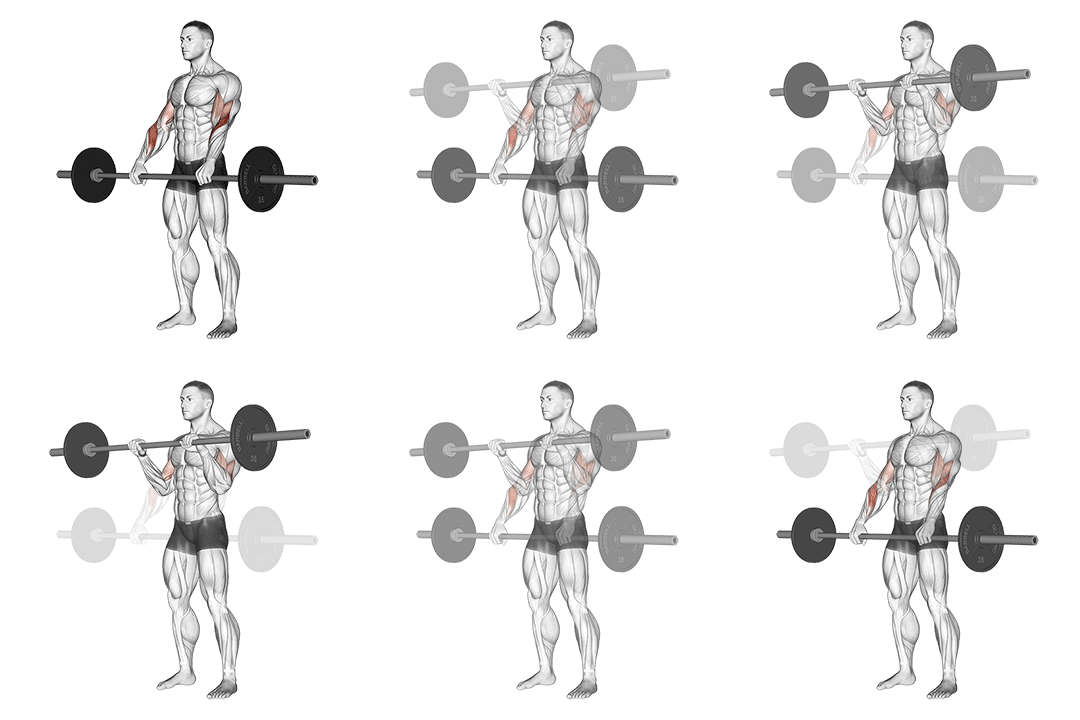
How to Perform Barbell Reverse Curl
- Stand up straight with your feet shoulder-width apart and hold a barbell with an overhand grip, palms facing down.
- Keep your upper arms stationary and exhale as you curl the barbell upward, contracting your biceps.
- Continue to raise the barbell until your biceps are fully contracted and the barbell is at shoulder level.
- Hold the contracted position for a brief pause as you squeeze your biceps.
- Inhale as you slowly lower the barbell back to the starting position, keeping your upper arms stationary.
- Repeat for the desired number of repetitions.
Best Barbell Reverse Curl Alternatives
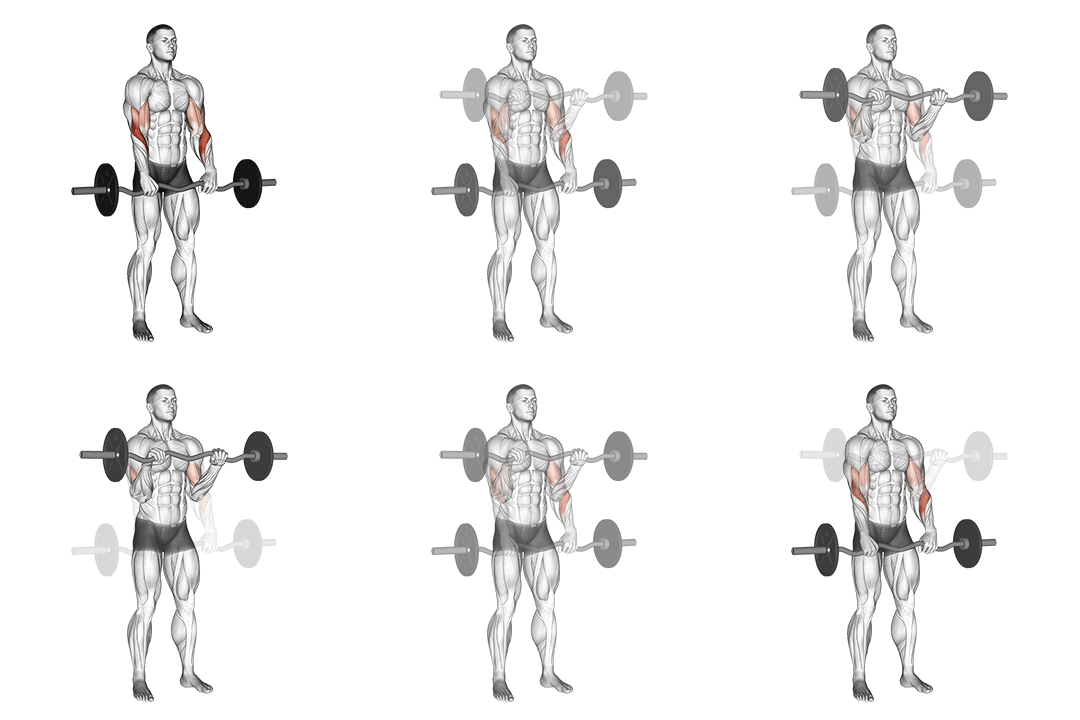
1. Ez Barbell Reverse Grip Curl
95% MatchHow to perform this exercise
- Stand up straight with your feet shoulder-width apart and hold the ez barbell with an underhand grip.
- Keep your elbows close to your torso and your upper arms stationary throughout the exercise.
- Curl the barbell upwards by contracting your biceps, while exhaling.
- Continue to raise the barbell until your biceps are fully contracted and the barbell is at shoulder level.
- Hold the contracted position for a brief pause as you squeeze your biceps.
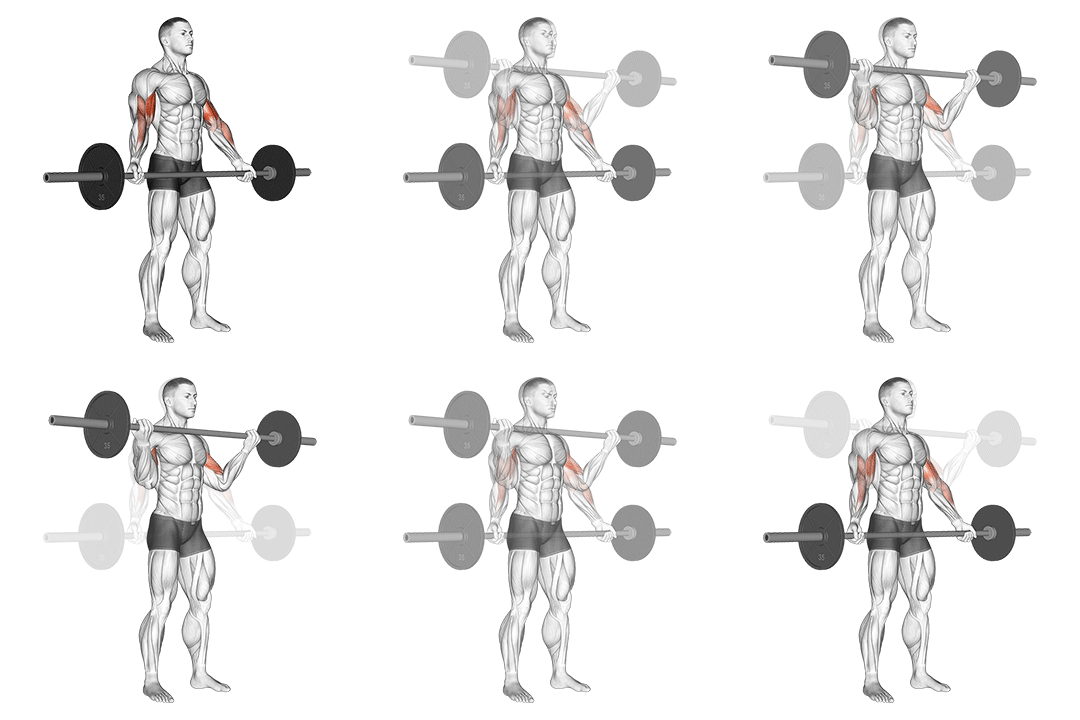
2. Barbell Standing Wide Grip Biceps Curl
93% MatchHow to perform this exercise
- Stand with your feet shoulder-width apart and hold a barbell with an underhand grip, hands wider than shoulder-width apart.
- Keep your back straight and your elbows close to your torso.
- Exhale and curl the barbell up towards your shoulders, keeping your upper arms stationary.
- Pause for a moment at the top, squeezing your biceps.
- Inhale and slowly lower the barbell back to the starting position, fully extending your arms.
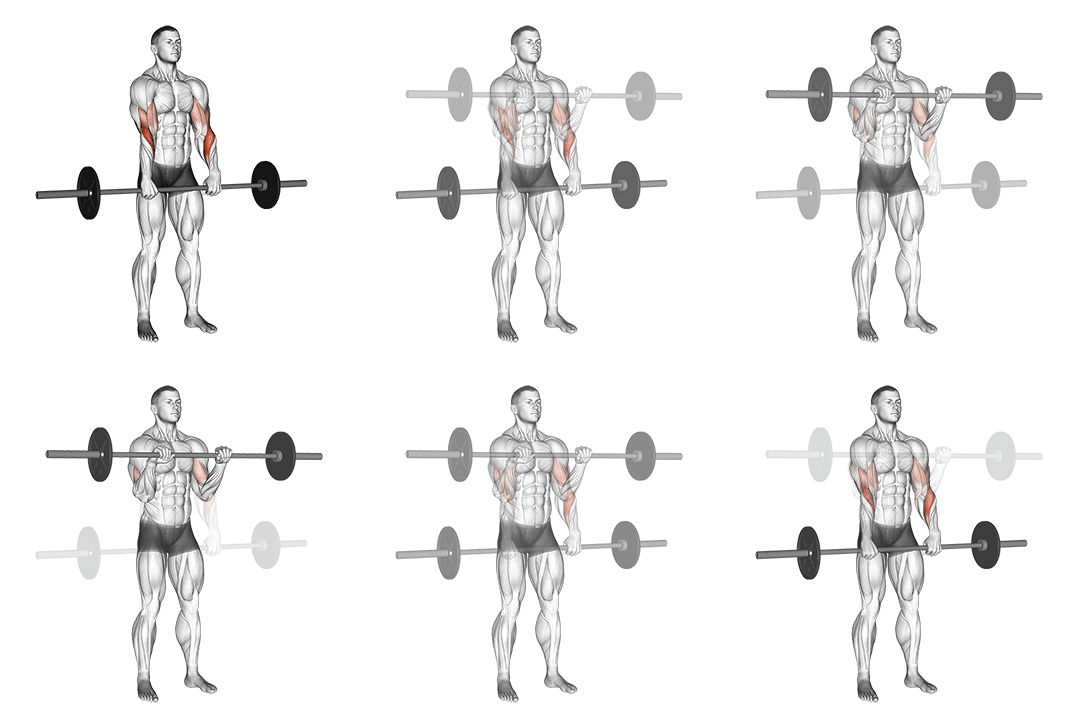
3. Barbell Standing Reverse Grip Curl
92.9% MatchHow to perform this exercise
- Stand up straight with your feet shoulder-width apart and hold a barbell with an underhand grip, palms facing up.
- Keep your elbows close to your torso and your upper arms stationary.
- Exhale and curl the weights while contracting your biceps, bringing the barbell as close to your shoulders as possible.
- Hold the contracted position for a brief pause as you squeeze your biceps.
- Inhale and slowly lower the barbell back to the starting position.
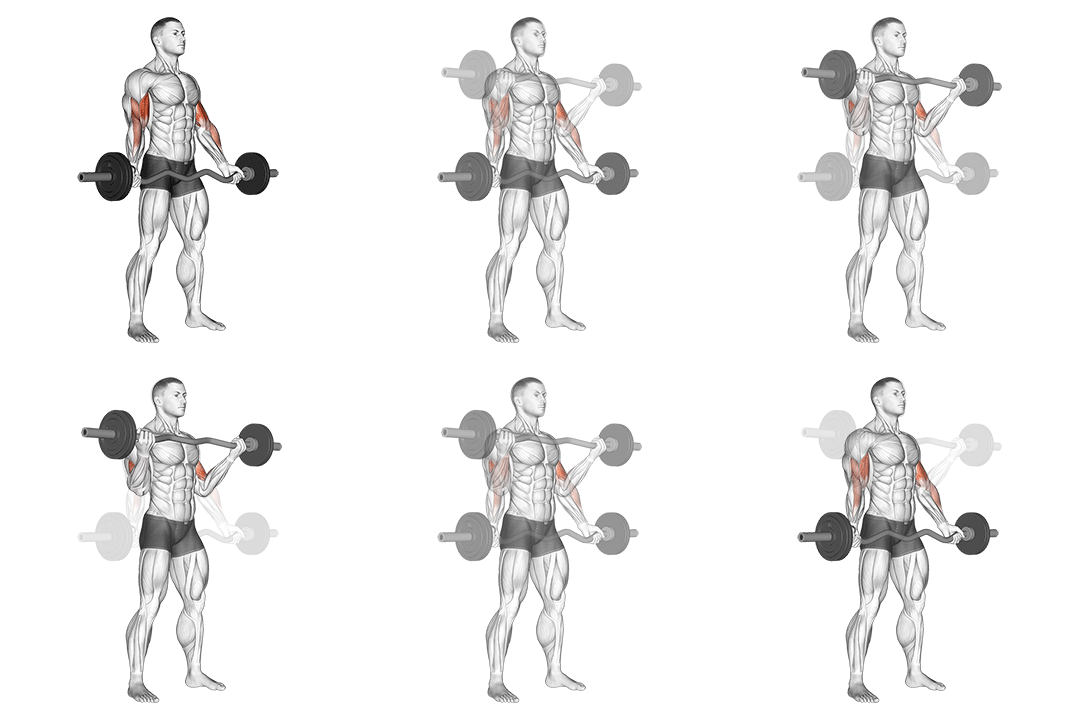
4. Ez-barbell Standing Wide Grip Biceps Curl
92.4% MatchHow to perform this exercise
- Stand up straight with your feet shoulder-width apart and hold the ez barbell with an underhand grip, hands wider than shoulder-width apart.
- Keep your elbows close to your torso and your upper arms stationary throughout the movement.
- Curl the barbell up towards your shoulders by contracting your biceps.
- Pause for a moment at the top, then slowly lower the barbell back to the starting position.
- Repeat for the desired number of repetitions.
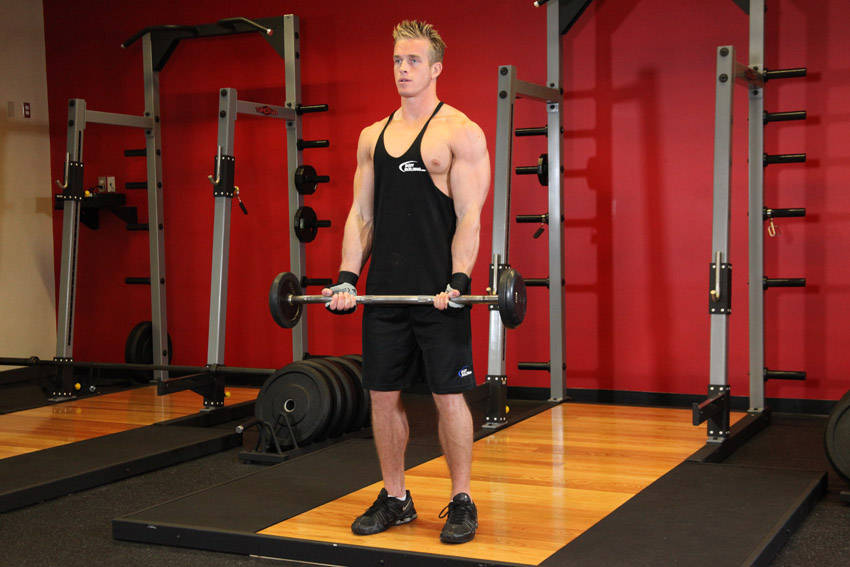
5. EZ-Bar Curl
91% MatchHow to perform this exercise
- Stand up straight while holding an EZ curl bar at the wide outer handle. The palms of your hands should be facing forward and slightly tilted inward due to the shape of the bar. Keep your elbows close to your torso. This will be your starting position.
- Now, while keeping your upper arms stationary, exhale and curl the weights forward while contracting the biceps. Focus on only moving your forearms.
- Continue to raise the weight until your biceps are fully contracted and the bar is at shoulder level. Hold the top contracted position for a moment and squeeze the biceps.
- Then inhale and slowly lower the bar back to the starting position.
- Repeat for the recommended amount of repetitions.
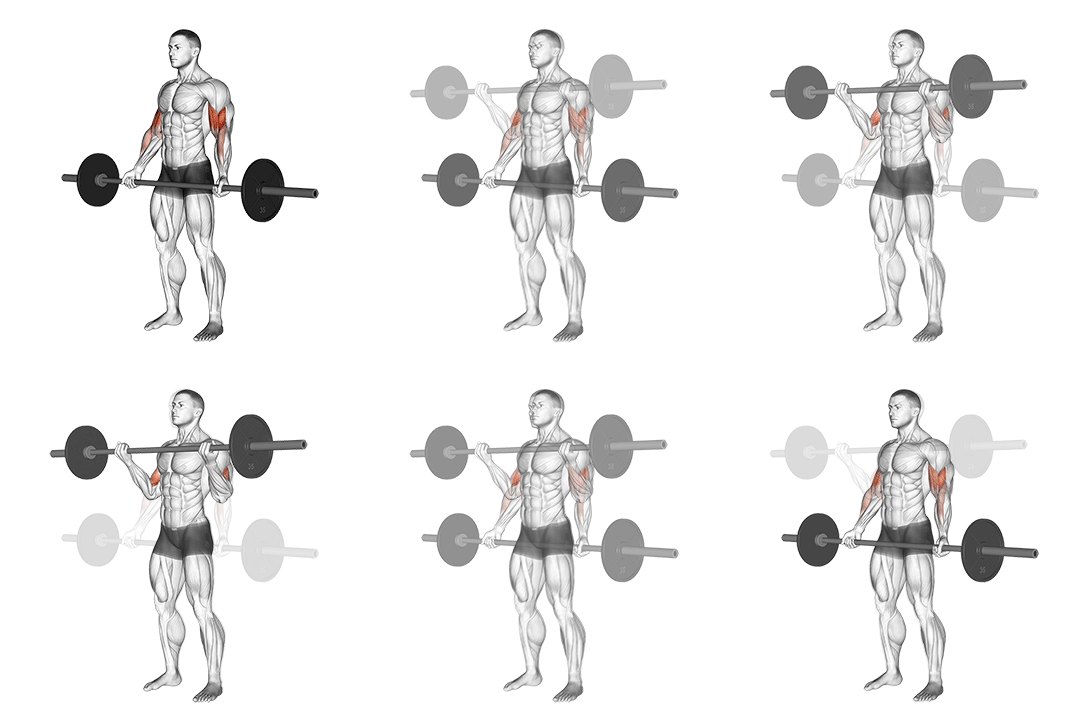
6. Barbell Standing Wide-grip Curl
90.9% MatchHow to perform this exercise
- Stand up straight with your feet shoulder-width apart and hold a barbell with an overhand grip, hands wider than shoulder-width apart.
- Let the barbell hang at arm's length in front of your thighs, with your palms facing away from your body.
- Keeping your upper arms stationary, exhale and curl the barbell upward by contracting your biceps.
- Continue to raise the barbell until your biceps are fully contracted and the barbell is at shoulder level.
- Hold the contracted position for a brief pause as you squeeze your biceps.
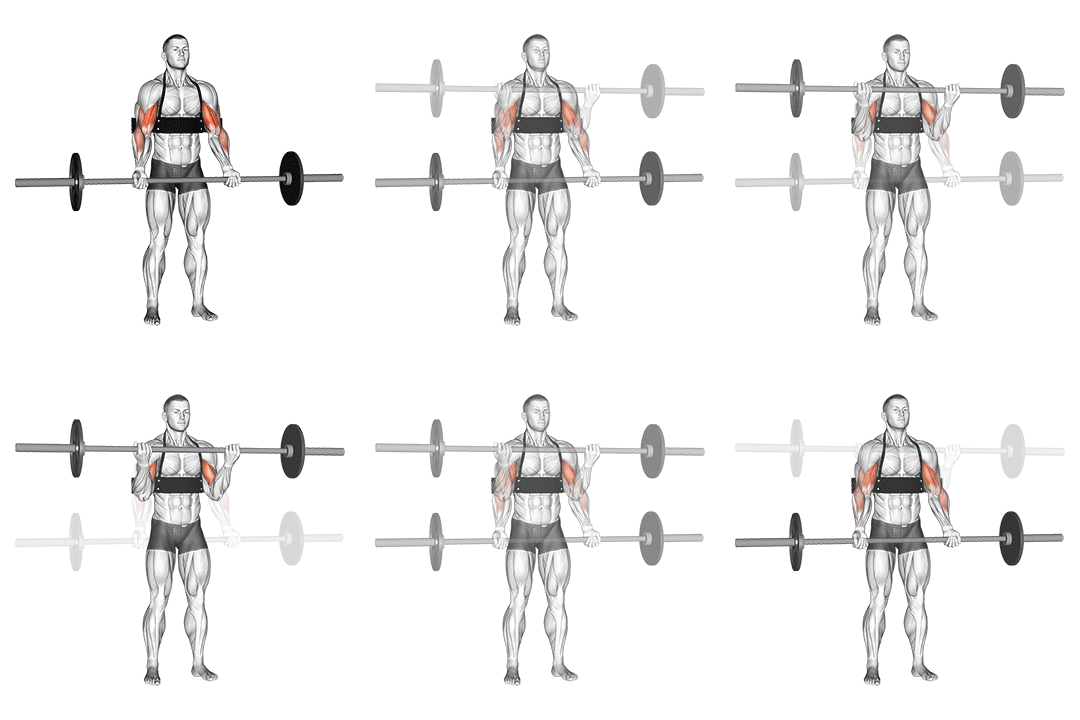
7. Barbell Biceps Curl (with Arm Blaster)
90.4% MatchHow to perform this exercise
- Stand up straight with your feet shoulder-width apart and hold a barbell with an underhand grip, palms facing up.
- Place your upper arms against the arm blaster, keeping your elbows close to your torso.
- Keeping your upper arms stationary, exhale and curl the weights while contracting your biceps.
- Continue to raise the barbell until your biceps are fully contracted and the bar is at shoulder level.
- Hold the contracted position for a brief pause as you squeeze your biceps.
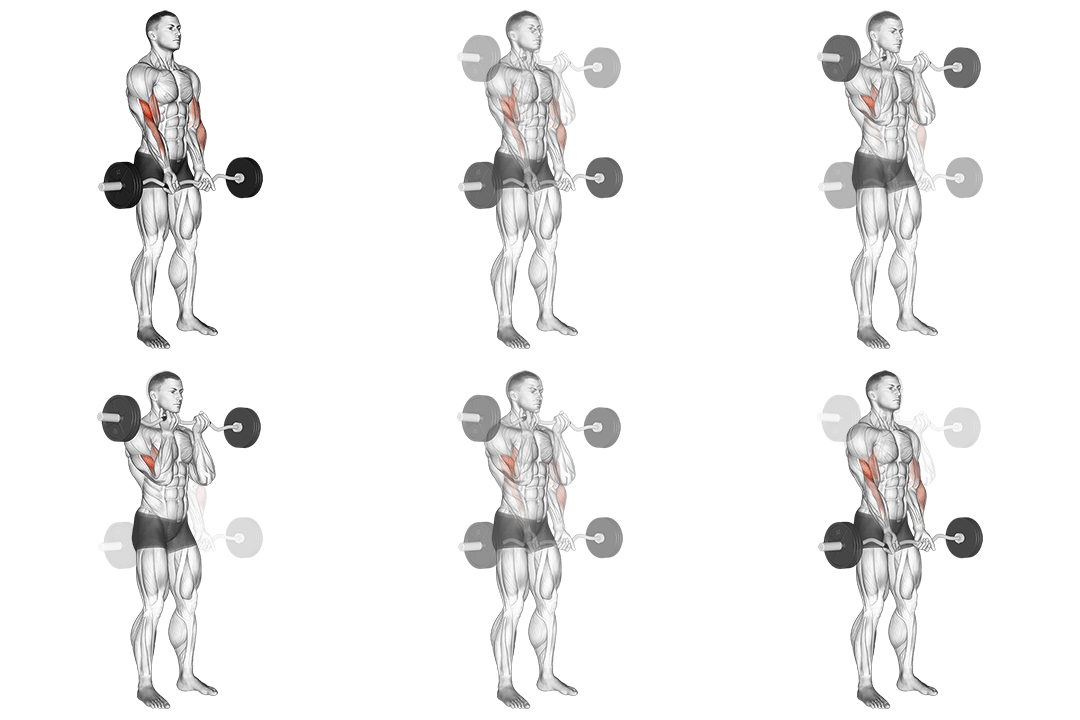
8. Ez Barbell Close-grip Curl
90.4% MatchHow to perform this exercise
- Stand up straight with your feet shoulder-width apart and hold the ez barbell with an underhand grip, hands shoulder-width apart.
- Keep your elbows close to your torso and your upper arms stationary throughout the movement.
- Curl the barbell up towards your shoulders, contracting your biceps.
- Pause for a moment at the top, then slowly lower the barbell back down to the starting position.
- Repeat for the desired number of repetitions.
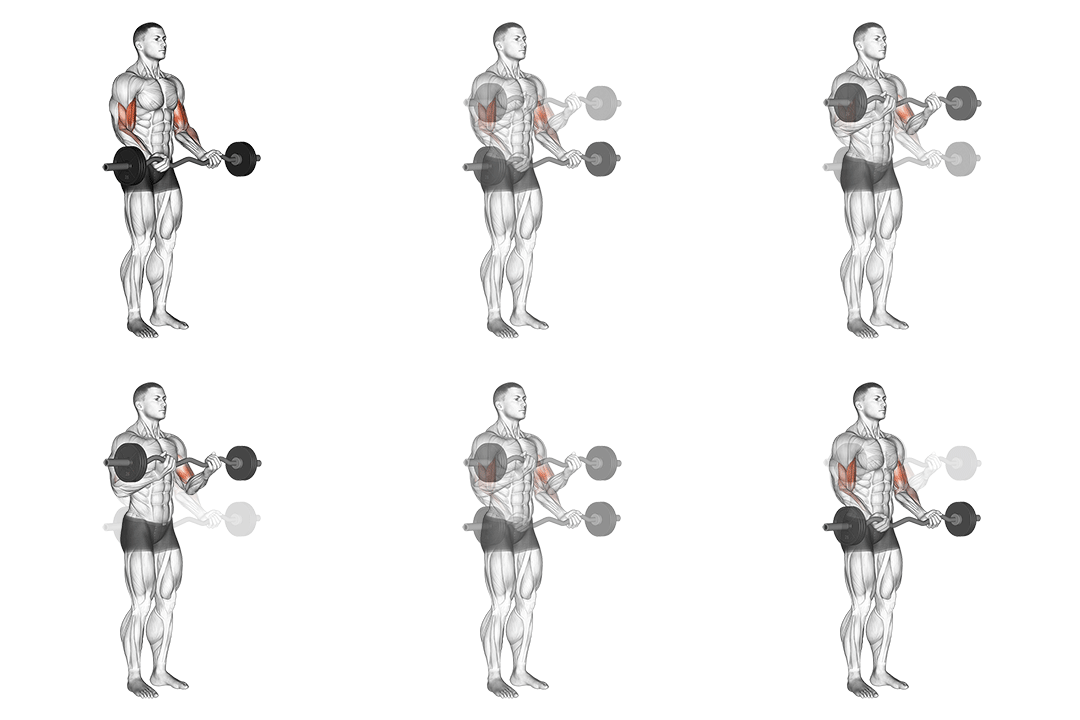
9. Ez Barbell Curl
90.4% MatchHow to perform this exercise
- Stand up straight with your feet shoulder-width apart and hold the ez barbell with an underhand grip, palms facing up.
- Keep your elbows close to your torso and your upper arms stationary throughout the movement.
- Exhale as you curl the barbell up towards your shoulders, contracting your biceps.
- Pause for a moment at the top, then inhale as you slowly lower the barbell back down to the starting position.
- Repeat for the desired number of repetitions.
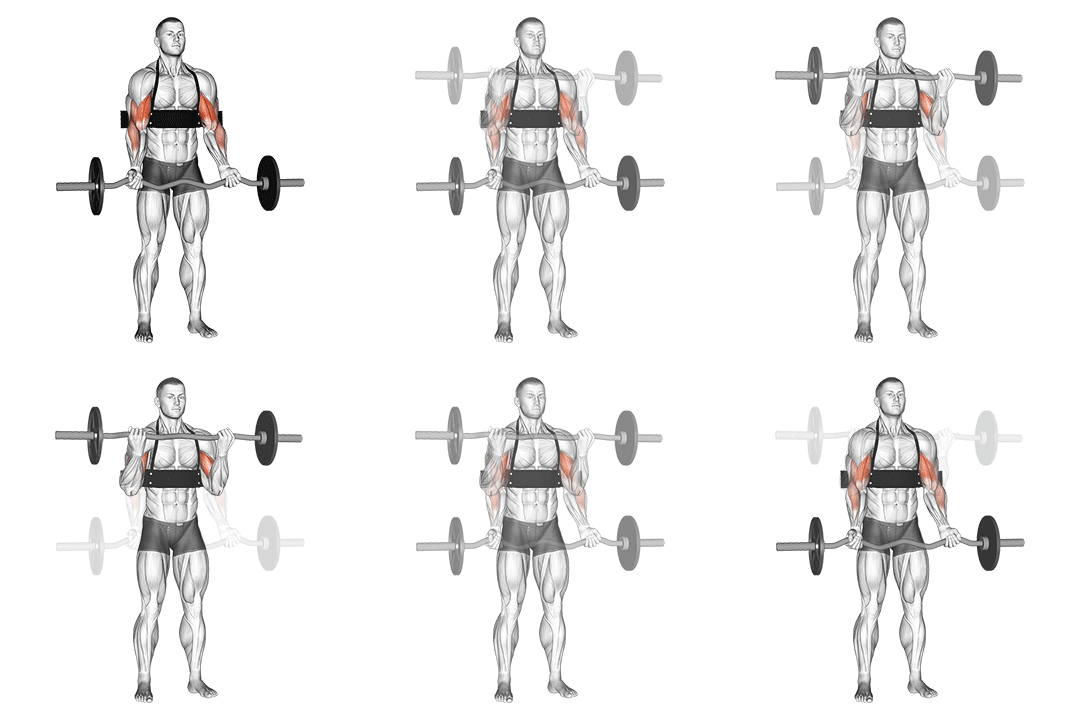
10. Ez-bar Biceps Curl (with Arm Blaster)
90.4% MatchHow to perform this exercise
- Stand up straight with your feet shoulder-width apart and hold the ez barbell with an underhand grip, palms facing up.
- Place your upper arms against the arm blaster, keeping them stationary throughout the exercise.
- Keeping your elbows close to your body, exhale and curl the barbell up towards your shoulders.
- Pause for a moment at the top, squeezing your biceps.
- Inhale and slowly lower the barbell back to the starting position, fully extending your arms.
Why You Might Need a Barbell Reverse Curl Alternative
You may substitute the barbell reverse curl for wrist pain, limited equipment, or to correct muscle imbalances. A straight bar forces a pronated wrist and increases torque at the radiocarpal joint; switching to an EZ bar, dumbbells, or neutral-grip tools reduces wrist strain and changes muscle recruitment. Pronated grips emphasize the brachioradialis and brachialis over the biceps long head, so choose alternatives that replicate that line of pull. For tendon issues, use slow eccentrics (3–4 seconds) and lighter load to maintain stimulus while controlling stress on the wrist and distal biceps tendon.
How to Choose the Right Substitute
Match the substitute to your goal, joint comfort, and equipment. For maximal brachialis/forearm emphasis pick a neutral-grip hammer curl or dumbbell reverse curl and keep elbows stationary to isolate elbow flexors. If wrist torque is an issue, use an EZ bar or rope on a cable with a pronated grip to shorten lever arm and reduce supination torque. For unilateral correction choose single-arm dumbbell reverse curls, controlling the eccentric and using progressive overload to restore symmetry. Always monitor wrist alignment and elbow position to preserve the intended muscle activation.
Frequently Asked Questions
What muscles does Barbell Reverse Curl work?
The barbell reverse curl primarily targets the brachioradialis and brachialis, with secondary activation of the biceps brachii and forearm extensors for wrist stabilization. Maintain a pronated wrist and fixed elbows to maximize elbow flexor recruitment and reduce cheating through shoulder movement.
What is the best bodyweight alternative to Barbell Reverse Curl?
A pronated-grip inverted row (feet elevated to increase load) is the best bodyweight option to approximate reverse-curl mechanics; keep hands overhand and wrists pronated so the forearms do more work. Pull to the sternum with elbows close and control the eccentric to emphasize brachioradialis activation.
Can I build muscle without doing Barbell Reverse Curl?
Yes. Use alternatives like hammer curls, EZ-bar reverse curls, cable reverse curls, and pronated pull variations while applying progressive overload and sufficient volume. Focus on full range of motion, slow eccentrics, and keeping elbows stationary to isolate the elbow flexors and drive hypertrophy.
More Exercise Alternatives
Find Alternatives for Any Exercise
Use our free tool to discover the best substitute exercises based on your available equipment and goals.
Try the Exercise Substitution Finder →