

10 Best Barbell Sitted Alternate Leg Raise Alternatives for When You Can't Use a Barbell
If you can't perform the Barbell Sitted Alternate Leg Raise, use alternatives that still load the rectus abdominis and control hip flexion. Top picks: hanging leg raises, lying single-leg raises, captain's chair raises, seated cable leg raises, and deadbugs. Cue: brace your core and initiate the lift with a posterior pelvic tilt.
Original Exercise: Barbell Sitted Alternate Leg Raise
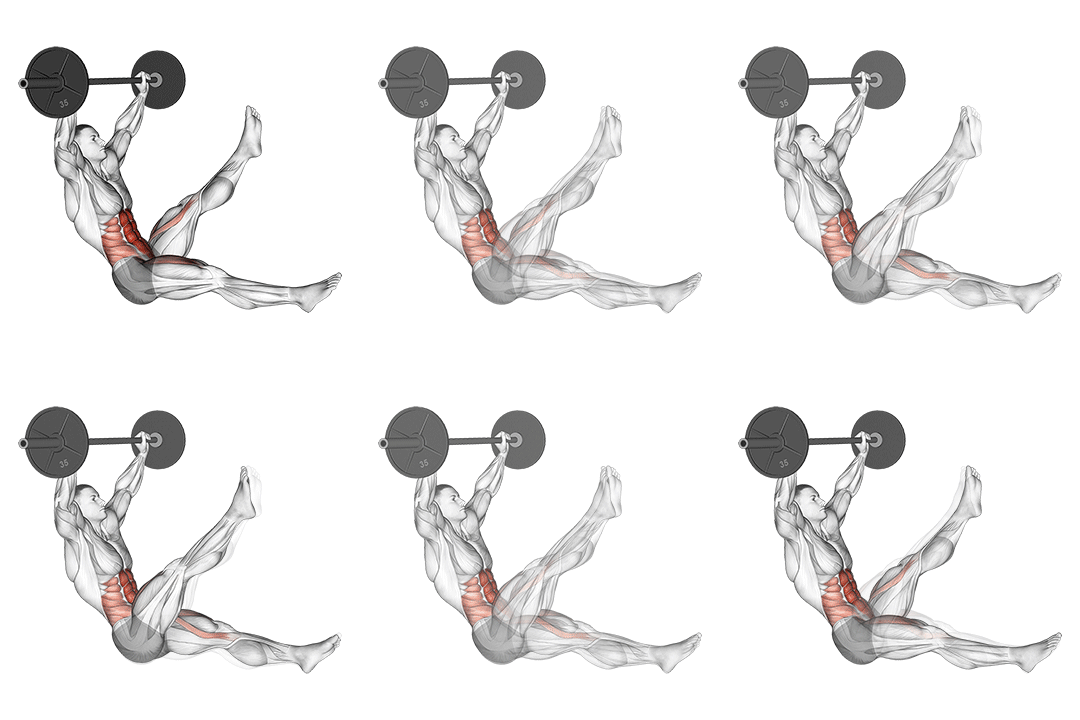
How to Perform Barbell Sitted Alternate Leg Raise
- Sit on a bench with your back straight and hold a barbell across your thighs.
- Keeping your legs straight, lift one leg up as high as possible while keeping the other leg on the ground.
- Lower the raised leg back down and repeat with the other leg.
- Continue alternating legs for the desired number of repetitions.
Best Barbell Sitted Alternate Leg Raise Alternatives
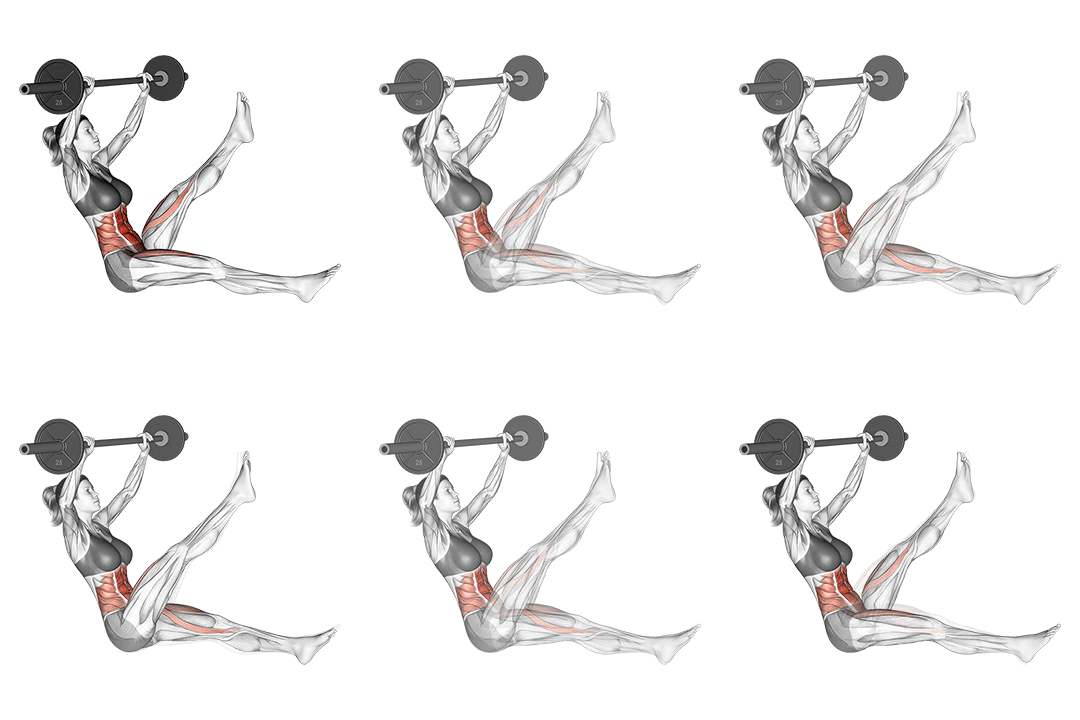
1. Barbell Sitted Alternate Leg Raise (female)
99.9% MatchHow to perform this exercise
- Sit on a bench with your back straight and hold a barbell across your thighs.
- Place your hands on the sides of the bench for support.
- Keeping your legs straight, lift one leg up as high as possible while keeping it parallel to the ground.
- Lower the leg back down and repeat with the other leg.
- Continue alternating legs for the desired number of repetitions.
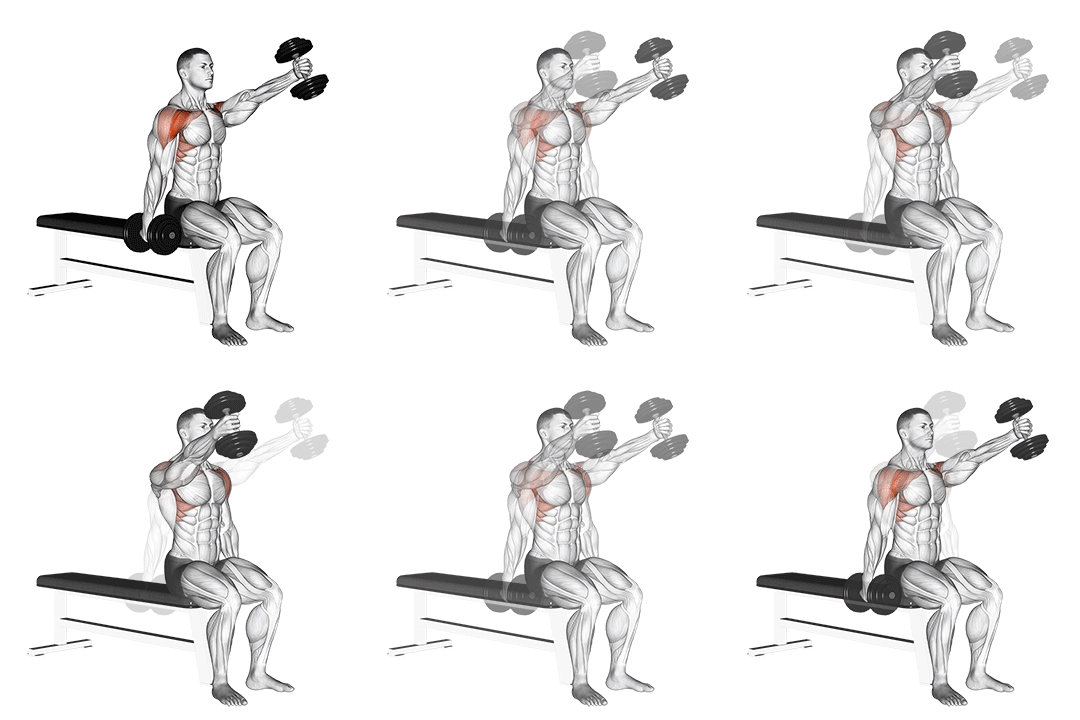
2. Dumbbell Seated Alternate Front Raise
67.5% MatchHow to perform this exercise
- Sit on a bench with your back straight and feet flat on the ground.
- Hold a dumbbell in each hand with your palms facing your body and arms extended down by your sides.
- Keeping your arms straight, raise one dumbbell in front of you until it is parallel to the ground.
- Pause for a moment at the top, then slowly lower the dumbbell back down to the starting position.
- Repeat with the other arm.
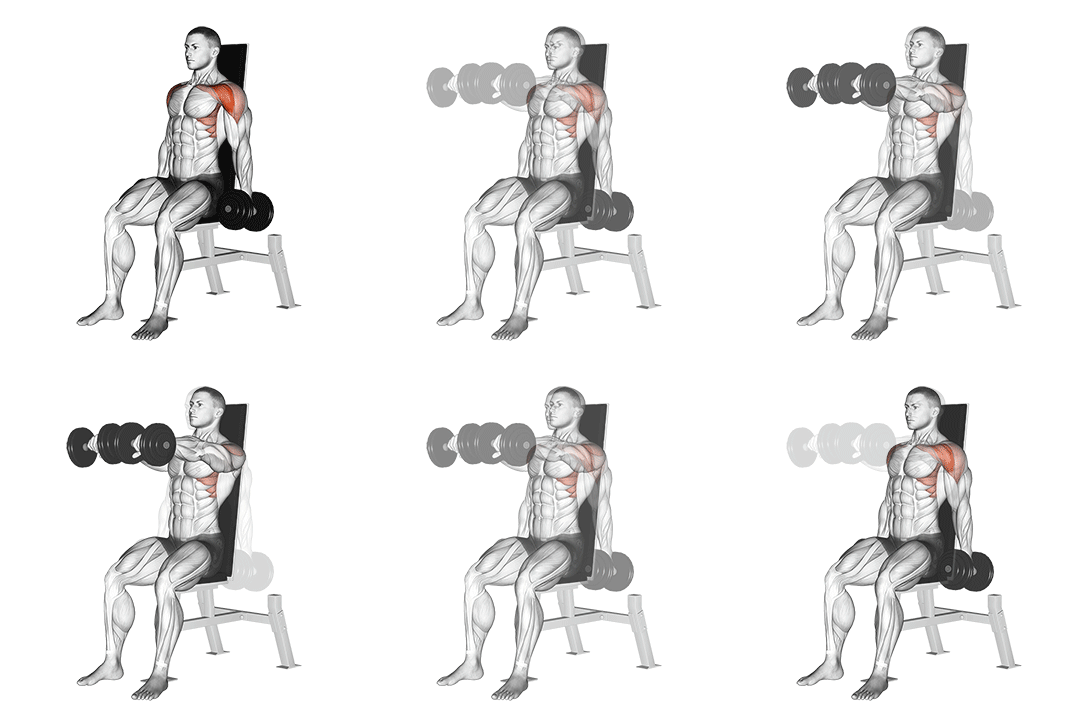
3. Dumbbell Seated Front Raise
61.2% MatchHow to perform this exercise
- Sit on a bench with your feet flat on the ground and a dumbbell in each hand, resting on your thighs.
- Keep your back straight and core engaged.
- Raise the dumbbells in front of you, with your palms facing down, until they are at shoulder level.
- Pause for a moment at the top, then slowly lower the dumbbells back down to the starting position.
- Repeat for the desired number of repetitions.
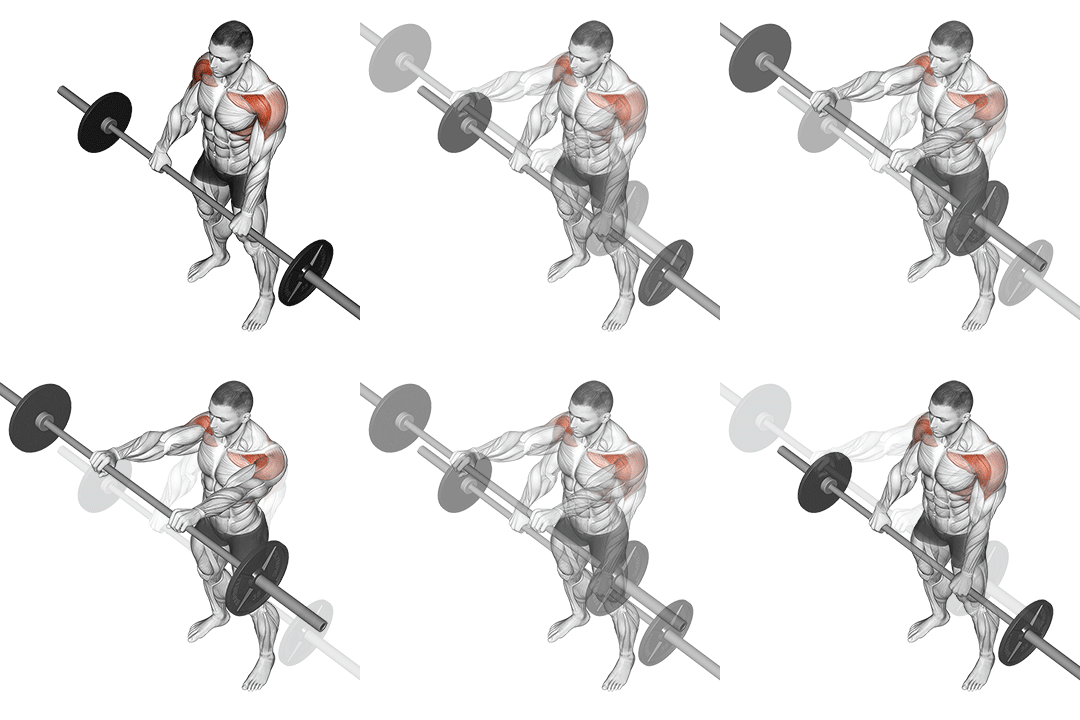
4. Barbell Front Raise
59.2% MatchHow to perform this exercise
- Stand with your feet shoulder-width apart and hold a barbell in front of your thighs with an overhand grip.
- Keep your arms straight and lift the barbell forward and upward until it reaches shoulder level.
- Pause for a moment at the top, then slowly lower the barbell back down to the starting position.
- Repeat for the desired number of repetitions.
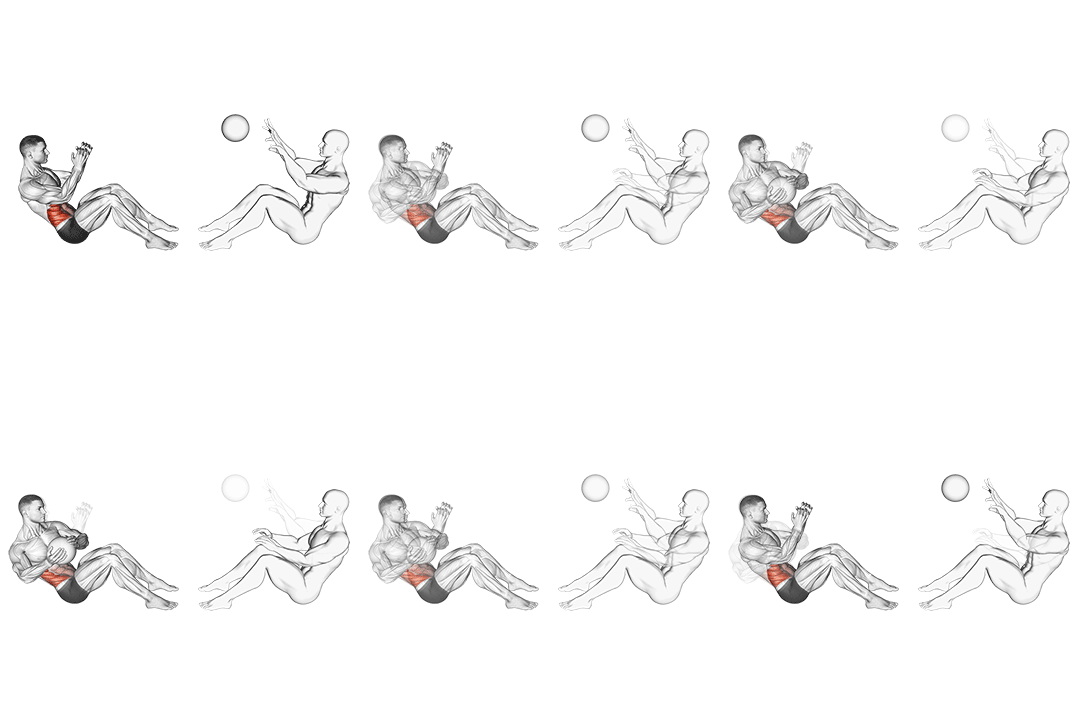
5. Assisted Motion Russian Twist
58.3% MatchHow to perform this exercise
- Sit on the ground with your knees bent and feet flat on the floor.
- Hold the medicine ball with both hands in front of your chest.
- Lean back slightly, engaging your abs and keeping your back straight.
- Slowly twist your torso to the right, bringing the medicine ball towards the right side of your body.
- Pause for a moment, then twist your torso to the left, bringing the medicine ball towards the left side of your body.
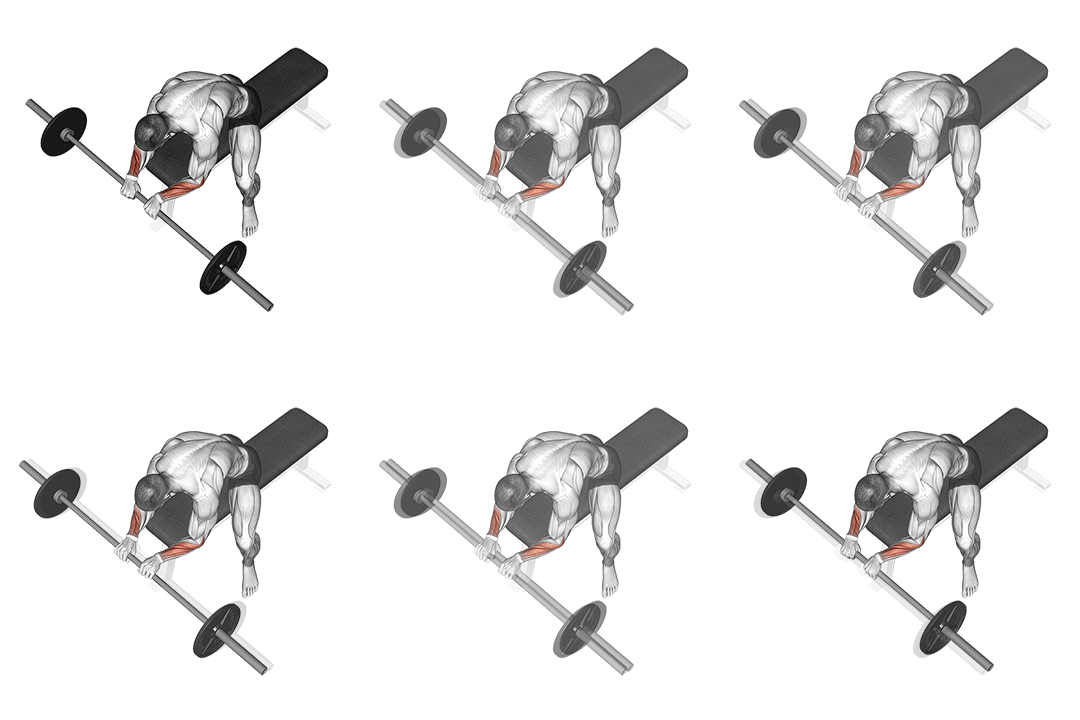
6. Barbell Reverse Wrist Curl
58% MatchHow to perform this exercise
- Sit on a bench with your feet flat on the ground and hold a barbell with an overhand grip, palms facing down.
- Rest your forearms on your thighs, allowing your wrists to hang off the edge.
- Slowly curl your wrists upward, bringing the barbell towards your body.
- Pause for a moment at the top, then slowly lower the barbell back down to the starting position.
- Repeat for the desired number of repetitions.
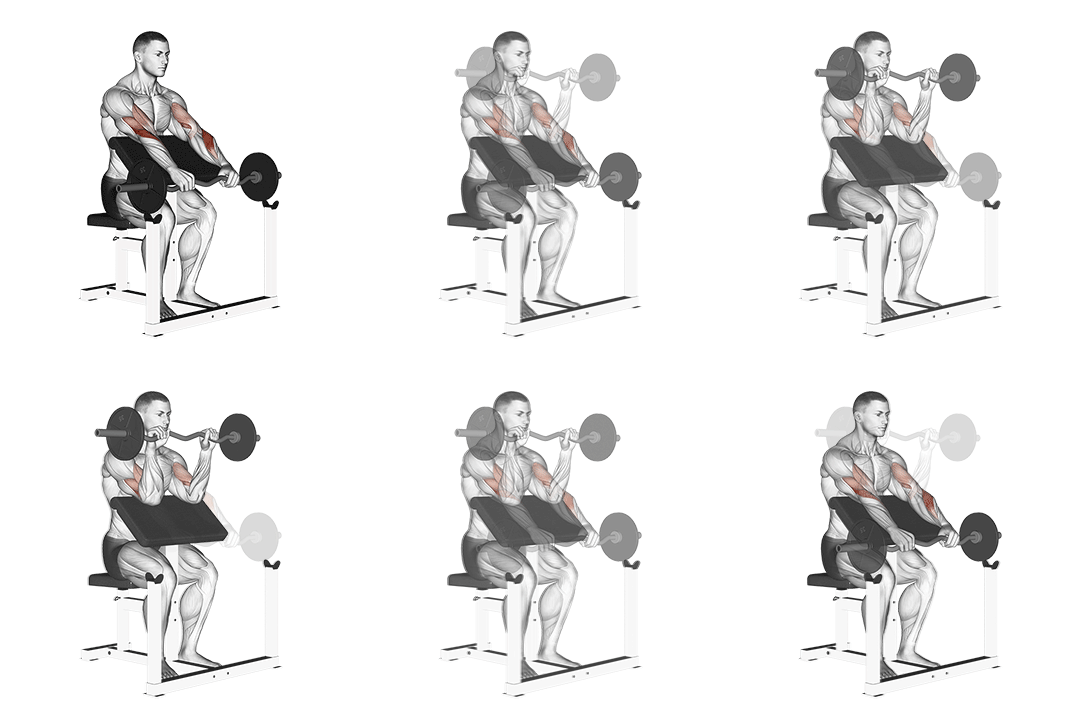
7. Ez Barbell Reverse Grip Preacher Curl
57.2% MatchHow to perform this exercise
- Sit on a preacher bench with your chest against the pad and your feet flat on the floor.
- Grasp the ez barbell with an underhand grip, hands shoulder-width apart.
- Rest your upper arms on the pad, allowing your forearms to hang down.
- Keeping your upper arms stationary, exhale and curl the barbell up towards your shoulders.
- Pause for a moment at the top, then inhale and slowly lower the barbell back down to the starting position.
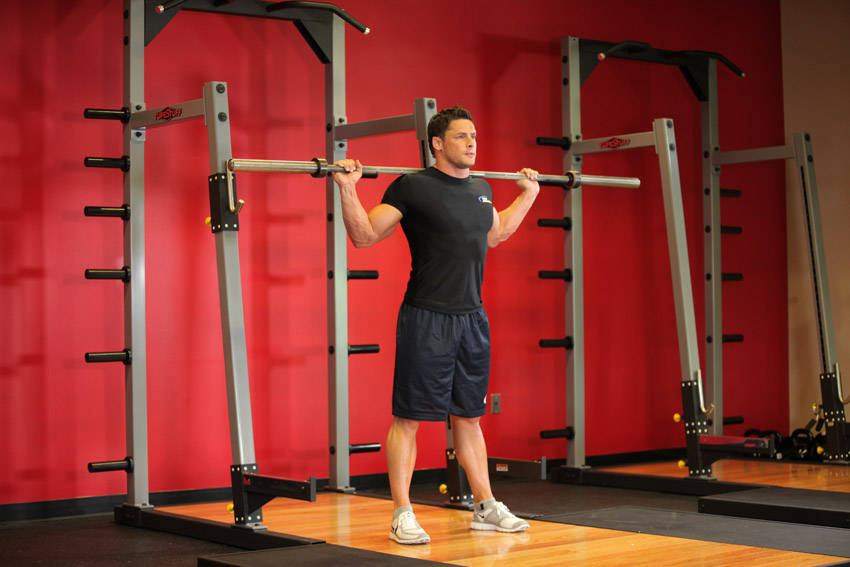
8. Barbell Side Bend
57% MatchHow to perform this exercise
- Stand up straight while holding a barbell placed on the back of your shoulders (slightly below the neck). Your feet should be shoulder width apart. This will be your starting position.
- While keeping your back straight and your head up, bend only at the waist to the right as far as possible. Breathe in as you bend to the side. Then hold for a second and come back up to the starting position as you exhale. Tip: Keep the rest of the body stationary.
- Now repeat the movement but bending to the left instead. Hold for a second and come back to the starting position.
- Repeat for the recommended amount of repetitions.
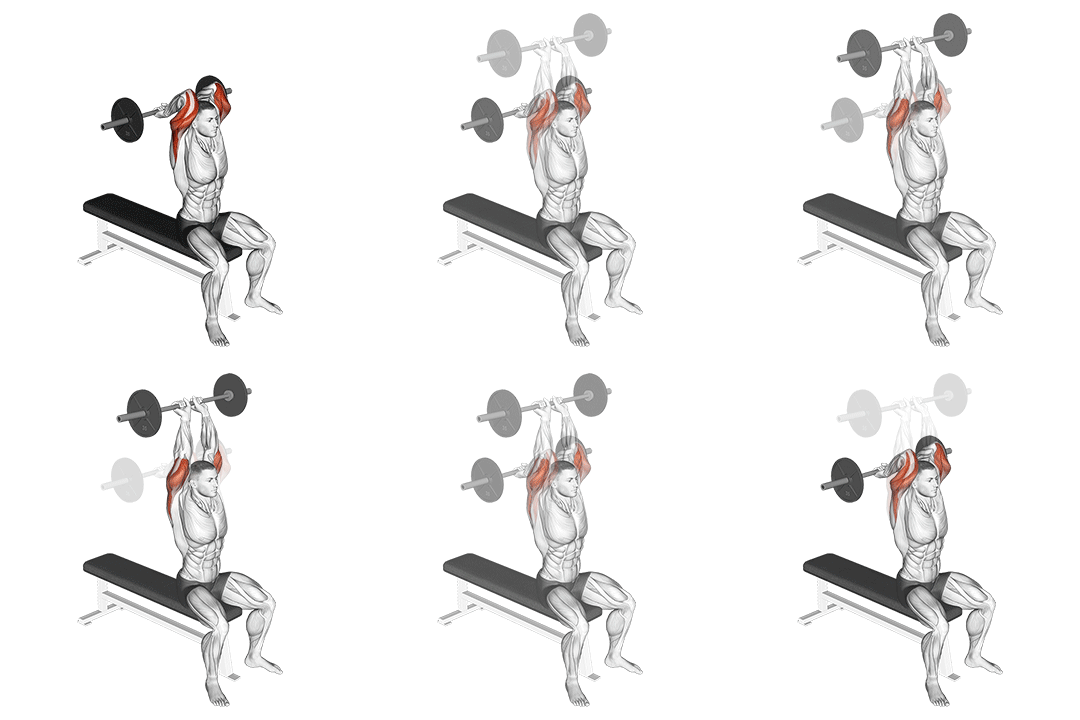
9. Barbell Seated Close Grip Behind Neck Triceps Extension
56.1% MatchHow to perform this exercise
- Sit on a bench with your back straight and feet flat on the ground.
- Hold the barbell with a close grip behind your neck, palms facing forward.
- Keep your elbows close to your head and slowly lower the barbell towards the back of your head.
- Pause for a moment, then extend your arms back up to the starting position.
- Repeat for the desired number of repetitions.
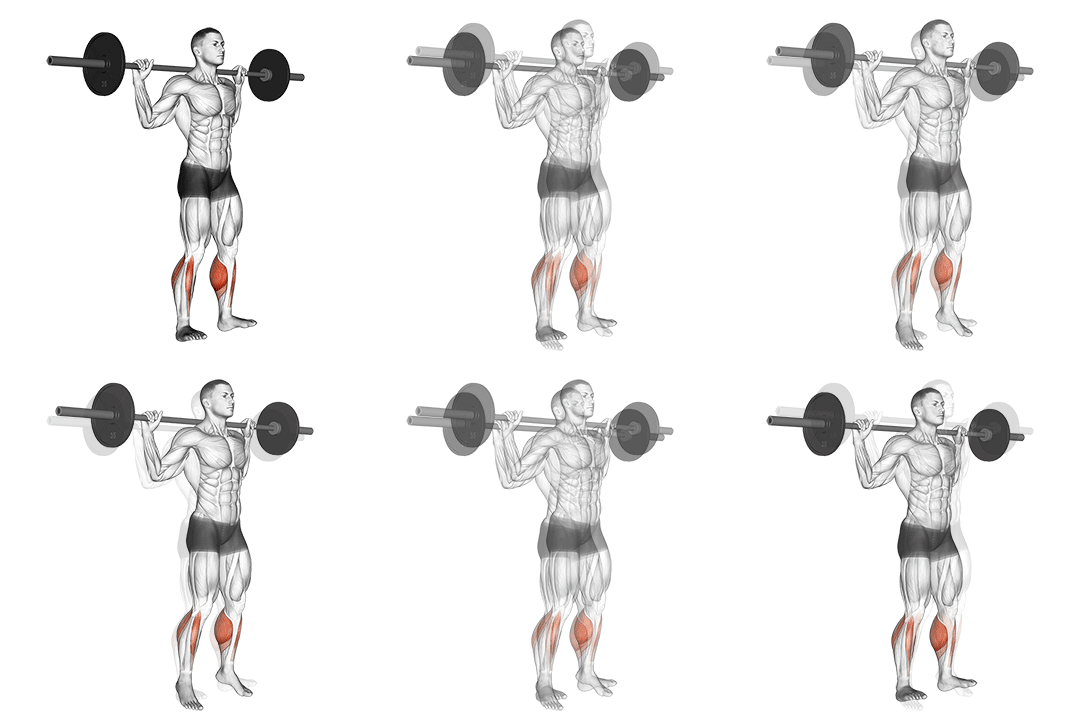
10. Barbell Standing Rocking Leg Calf Raise
54.3% MatchHow to perform this exercise
- Stand with your feet shoulder-width apart and hold a barbell across your upper back.
- Raise your heels off the ground as high as possible, balancing on the balls of your feet.
- Slowly lower your heels back down to the starting position.
- Repeat for the desired number of repetitions.
Why You Might Need a Barbell Sitted Alternate Leg Raise Alternative
You may substitute this exercise for several reasons: lack of a barbell, wrist or shoulder pain from holding the bar, excessive hip flexor dominance, or a need to reduce lumbar shear. Alternatives let you shift load away from the hips, preserve a neutral spine, or change leverage to better target the abs. For example, hanging leg raises increase long-lever challenge and activate the lower rectus abdominis, while deadbugs limit hip flexor involvement and emphasize transverse abdominis control. Cue: control the eccentric phase and avoid lumbar extension to maximize abdominal activation.
How to Choose the Right Substitute
Select a substitute based on equipment, spinal health, and the movement pattern you want to emphasize. If you lack a bar, choose lying single-leg raises or deadbugs to limit hip flexor pull; if you need greater load, use hanging or seated cable raises. Prioritize options that allow a posterior pelvic tilt and controlled eccentrics to emphasize rectus abdominis over iliopsoas. Also consider progression: start with tempo-focused bodyweight reps, then add resistance (ankle weights or cables) to increase time under tension and hypertrophy.
Frequently Asked Questions
What muscles does Barbell Sitted Alternate Leg Raise work?
The exercise primarily targets the rectus abdominis, with substantial assistance from the hip flexors (iliopsoas) and stabilizers like the transverse abdominis and obliques. Biomechanically it creates lumbar flexion and hip flexion; cue a posterior pelvic tilt to bias the abs over the hip flexors.
What is the best bodyweight alternative to Barbell Sitted Alternate Leg Raise?
Hanging leg raises are the best bodyweight alternative because they lengthen the lever and force the rectus abdominis to resist extension. Hang from a pull-up bar, retract the scapula, and lift your knees or straight legs with a controlled posterior pelvic tilt to minimize hip-dominant movement.
Can I build muscle without doing Barbell Sitted Alternate Leg Raise?
Yes. You can build abdominal muscle with progressive overload using alternatives—add eccentric tempo, increase reps, or use external resistance like ankle weights or cables. Focus on controlled movement, posterior pelvic tilt, and progressively increasing time under tension to stimulate hypertrophy.
More Exercise Alternatives
Find Alternatives for Any Exercise
Use our free tool to discover the best substitute exercises based on your available equipment and goals.
Try the Exercise Substitution Finder →