

10 Best Barbell Step Ups Alternatives for Limited Equipment
If you can’t do Barbell Step Ups, use exercises that reproduce single‑leg knee extension and hip control: dumbbell step‑ups, Bulgarian split squats, walking lunges, leg press, and goblet step‑ups. Cue: keep your chest upright, drive through the front heel, and let the knee track over the toes to load the quads effectively and maintain balance.
Original Exercise: Barbell Step Ups
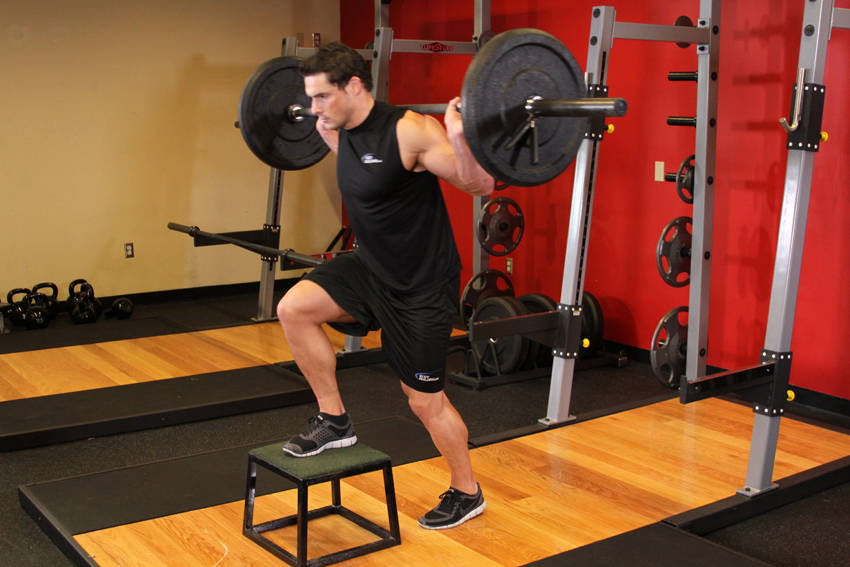
How to Perform Barbell Step Ups
- Stand up straight while holding a barbell placed on the back of your shoulders (slightly below the neck) and stand upright behind an elevated platform (such as the one used for spotting behind a flat bench). This is your starting position.
- Place the right foot on the elevated platform. Step on the platform by extending the hip and the knee of your right leg. Use the heel mainly to lift the rest of your body up and place the foot of the left leg on the platform as well. Breathe out as you execute the force required to come up.
- Step down with the left leg by flexing the hip and knee of the right leg as you inhale. Return to the original standing position by placing the right foot of to next to the left foot on the initial position.
- Repeat with the right leg for the recommended amount of repetitions and then perform with the left leg.
Pro Tips
- Category: Strength
- Force: Push
- Movement type: Compound
Best Barbell Step Ups Alternatives
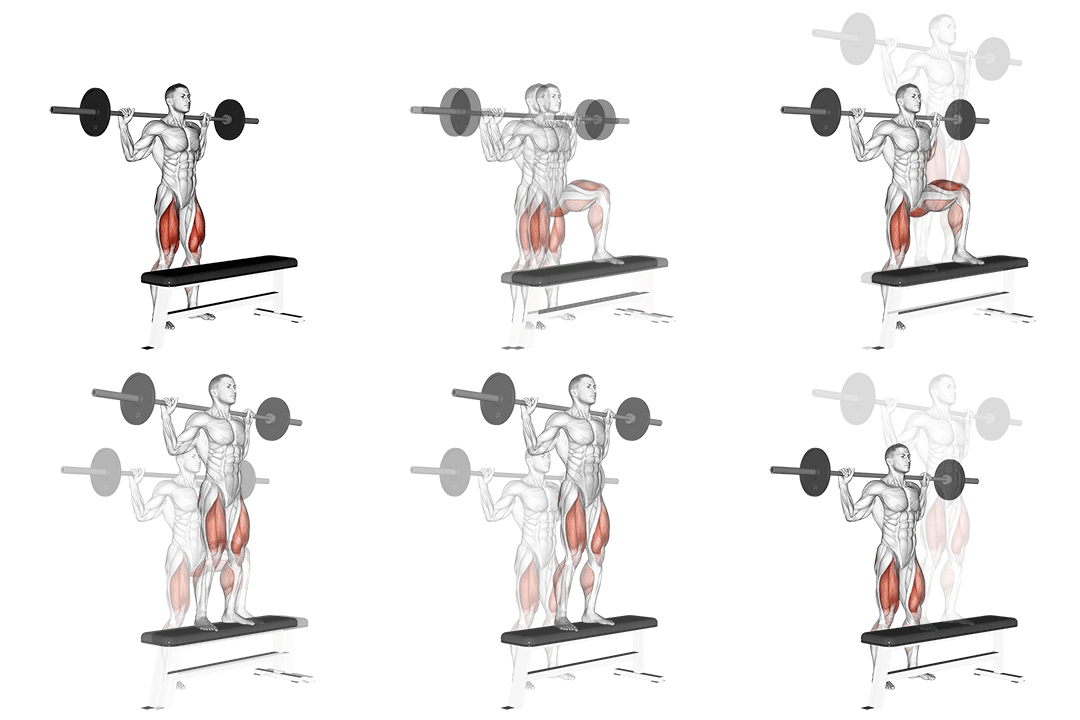
1. Barbell Step-up
85% MatchHow to perform this exercise
- Stand in front of a bench or step with a barbell resting on your upper back.
- Place one foot on the bench or step, ensuring your entire foot is in contact with the surface.
- Push through your heel and step up onto the bench or step, fully extending your hip and knee.
- Pause briefly at the top, then lower yourself back down to the starting position.
- Repeat with the opposite leg.
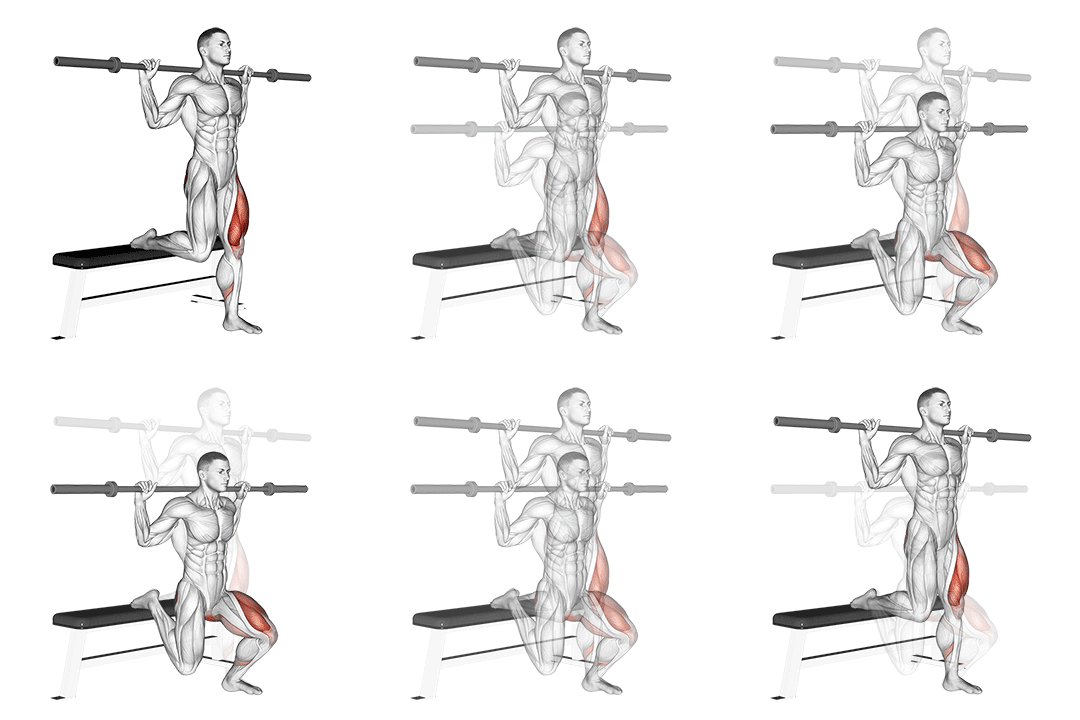
2. Barbell Single Leg Split Squat
83.7% MatchHow to perform this exercise
- Stand with your feet shoulder-width apart, holding a barbell across your upper back.
- Take a large step forward with one leg, keeping your torso upright.
- Lower your body by bending your front knee and hip, while keeping your back leg straight.
- Continue lowering until your front thigh is parallel to the ground.
- Pause for a moment, then push through your front heel to return to the starting position.
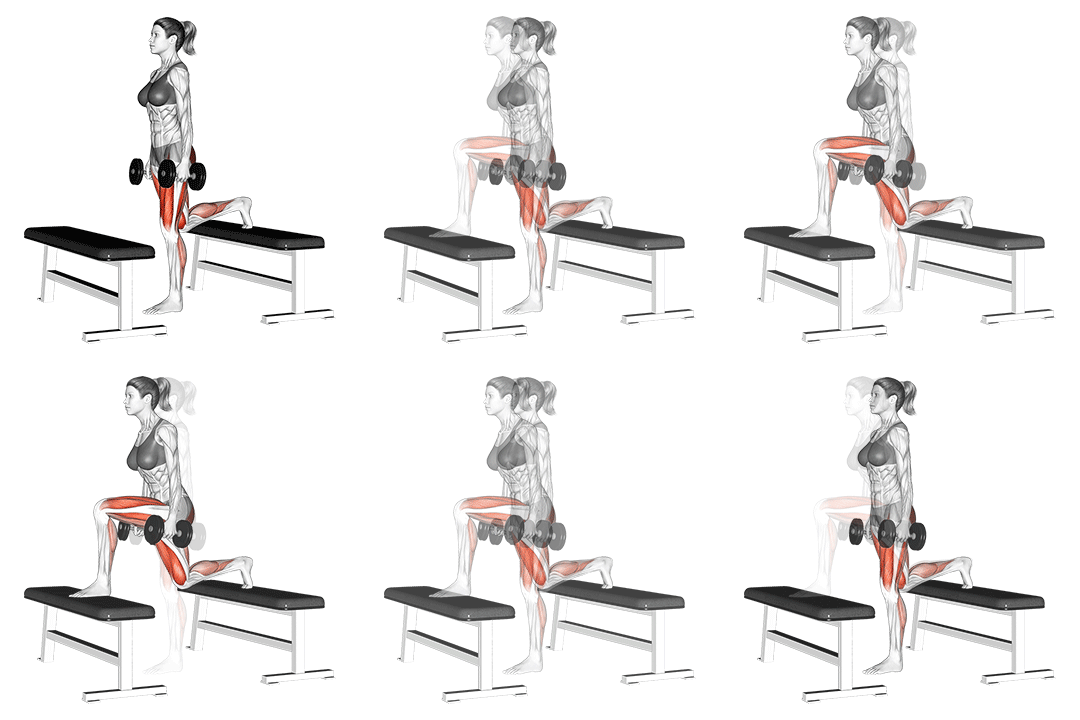
3. Dumbbell Step-up Lunge
81.9% MatchHow to perform this exercise
- Stand in front of a step or platform with a dumbbell in each hand, palms facing your sides.
- Place your right foot on the step, ensuring your entire foot is on the surface.
- Push through your right heel and lift your body up onto the step, bringing your left foot up as well.
- Once both feet are on the step, lower your left foot back down to the starting position, keeping your right foot on the step.
- Repeat the movement, alternating which foot you step up with each time.
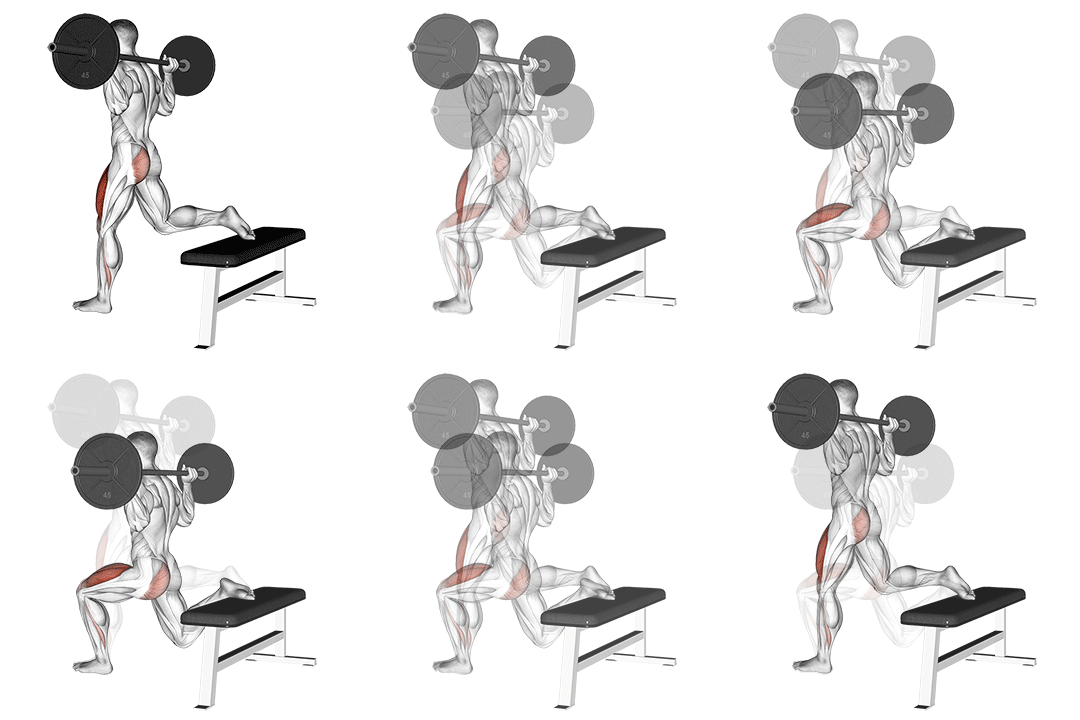
4. Barbell One Leg Squat
77.3% MatchHow to perform this exercise
- Stand with your feet shoulder-width apart and hold a barbell across your upper back.
- Lift one foot off the ground and extend it forward, keeping it parallel to the ground.
- Bend your standing leg and lower your body down as if sitting back into a chair, keeping your chest up and your back straight.
- Lower yourself until your thigh is parallel to the ground, then push through your heel to return to the starting position.
- Repeat for the desired number of repetitions, then switch legs and repeat.
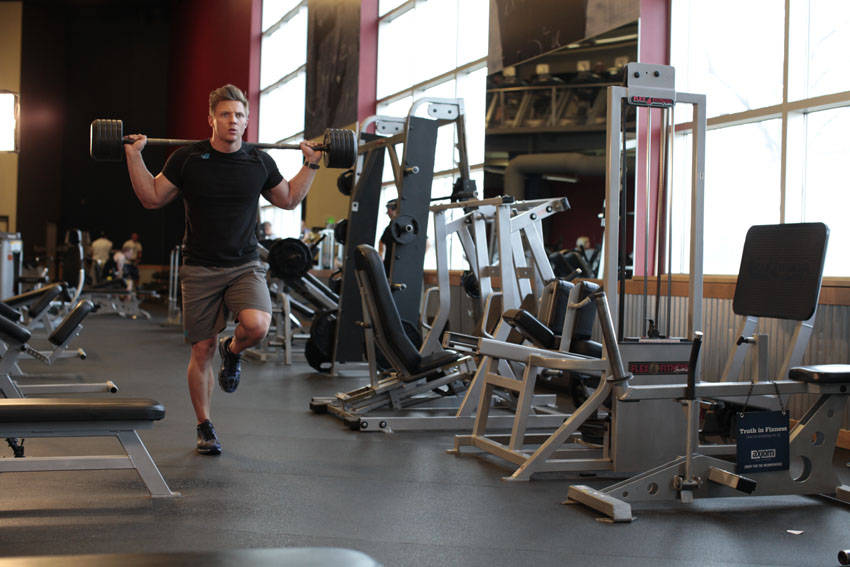
5. Barbell Walking Lunge
77.2% MatchHow to perform this exercise
- Begin standing with your feet shoulder width apart and a barbell across your upper back.
- Step forward with one leg, flexing the knees to drop your hips. Descend until your rear knee nearly touches the ground. Your posture should remain upright, and your front knee should stay above the front foot.
- Drive through the heel of your lead foot and extend both knees to raise yourself back up.
- Step forward with your rear foot, repeating the lunge on the opposite leg.
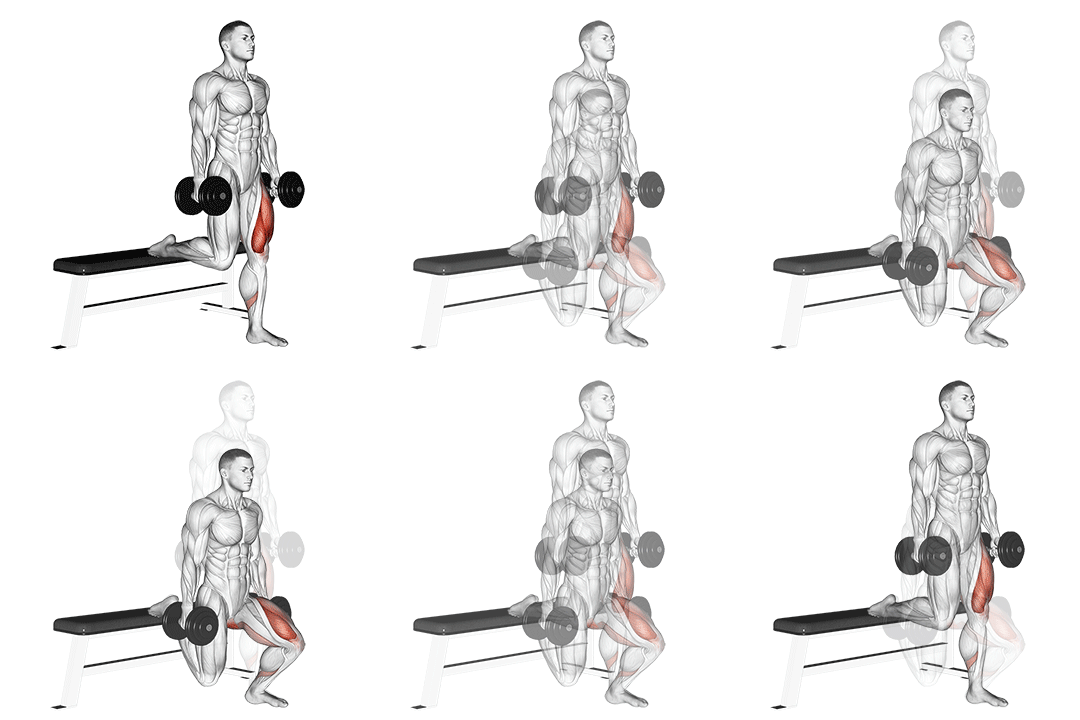
6. Dumbbell Single Leg Split Squat
76.7% MatchHow to perform this exercise
- Stand with your feet shoulder-width apart, holding a dumbbell in each hand.
- Take a step forward with one foot and position your feet so that your front foot is flat on the ground and your back foot is elevated on a bench or step.
- Lower your body by bending your front knee and hip, keeping your back knee slightly bent and your back heel off the ground.
- Continue lowering until your front thigh is parallel to the ground, then push through your front heel to return to the starting position.
- Repeat for the desired number of repetitions, then switch legs and repeat.
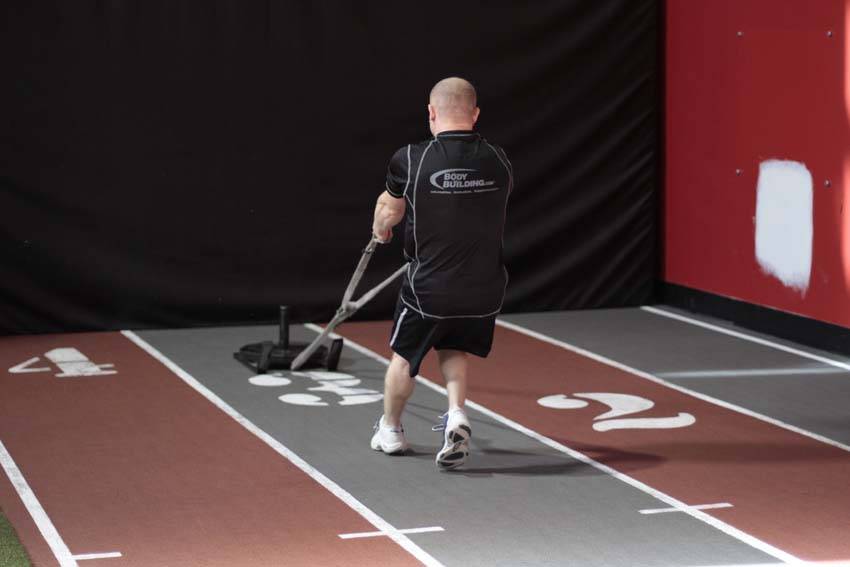
7. Backward Drag
76.2% MatchHow to perform this exercise
- Load a sled with the desired weight, attaching a rope or straps to the sled that you can hold onto.
- Begin the exercise by moving backwards for a given distance. Leaning back, extend through the legs for short steps to move as quickly as possible.
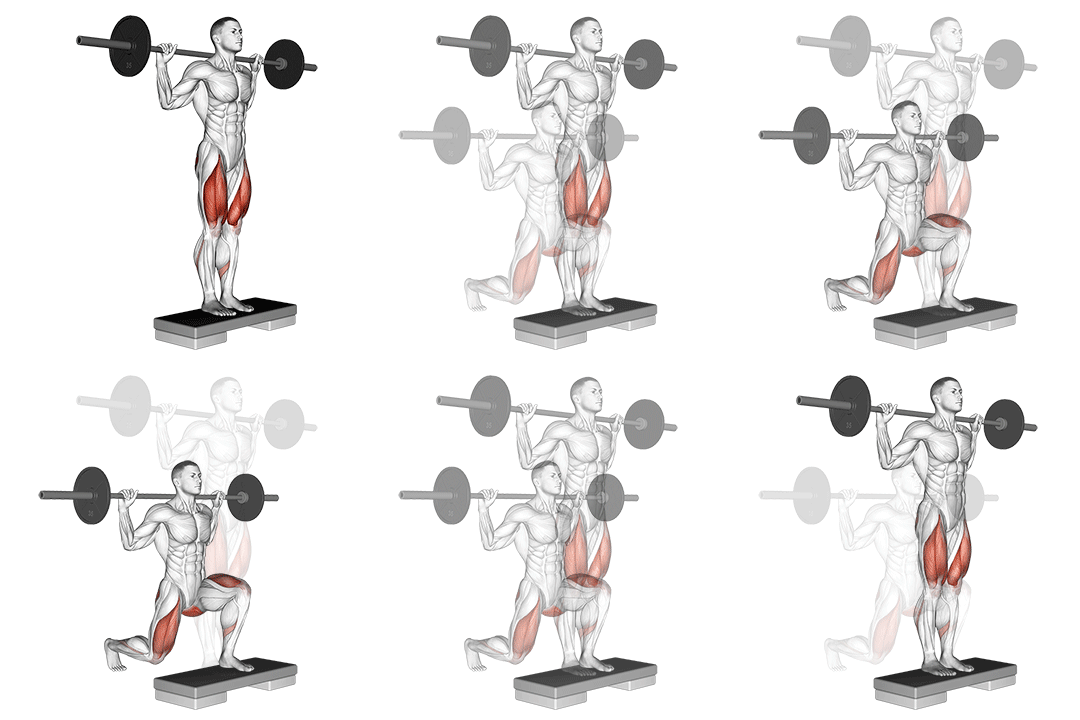
8. Barbell Rear Lunge V. 2
74.2% MatchHow to perform this exercise
- Stand with your feet shoulder-width apart and hold a barbell across your upper back.
- Take a step backward with your right foot, landing on the ball of your foot.
- Bend both knees to lower your body until your left thigh is parallel to the ground.
- Push through your left heel to return to the starting position.
- Repeat with the other leg.
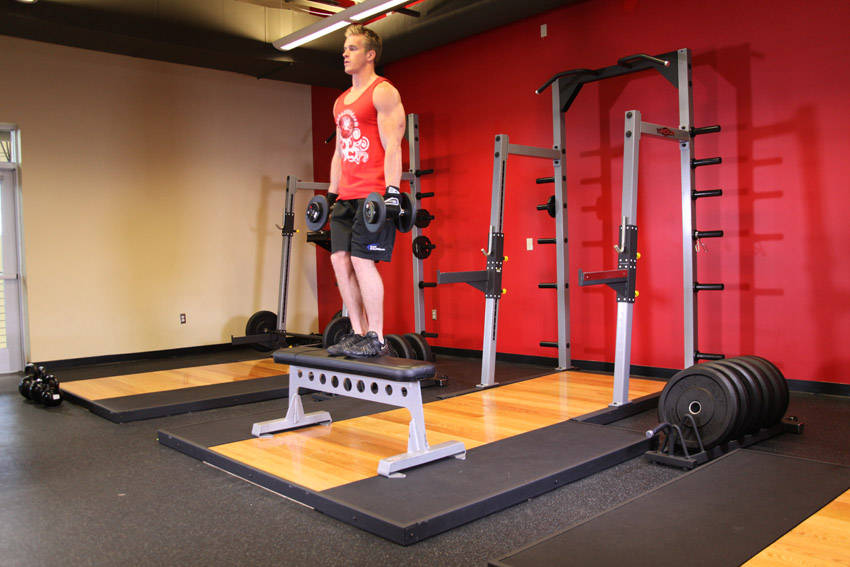
9. Dumbbell Step Ups
72.9% MatchHow to perform this exercise
- Stand up straight while holding a dumbbell on each hand (palms facing the side of your legs).
- Place the right foot on the elevated platform. Step on the platform by extending the hip and the knee of your right leg. Use the heel mainly to lift the rest of your body up and place the foot of the left leg on the platform as well. Breathe out as you execute the force required to come up.
- Step down with the left leg by flexing the hip and knee of the right leg as you inhale. Return to the original standing position by placing the right foot of to next to the left foot on the initial position.
- Repeat with the right leg for the recommended amount of repetitions and then perform with the left leg.
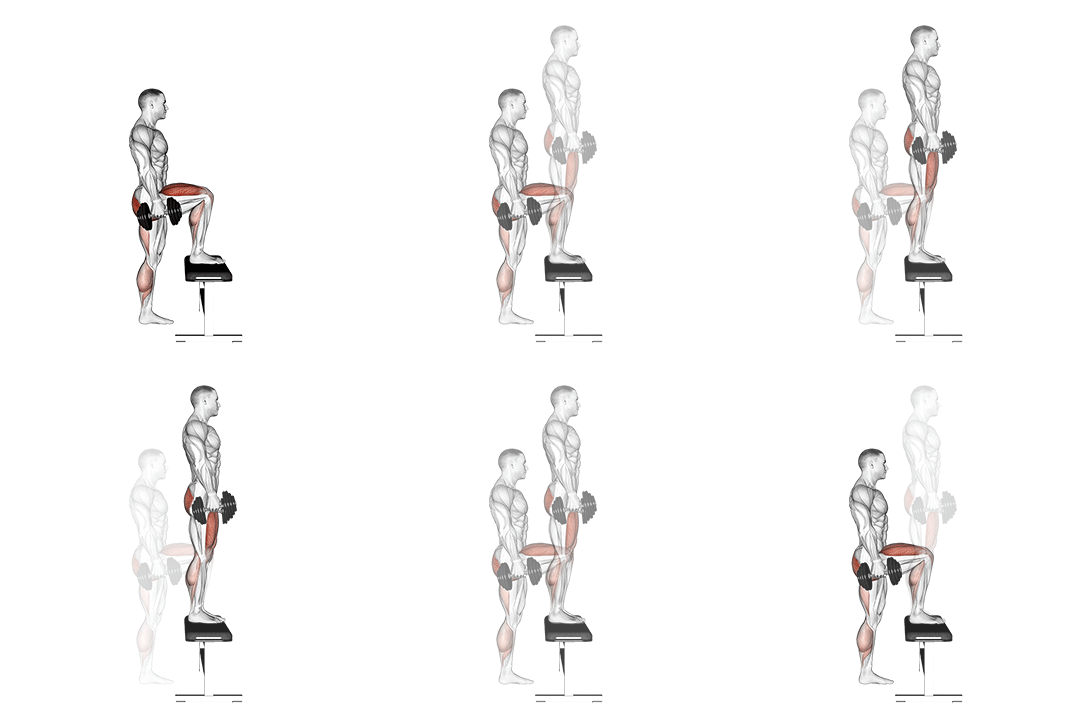
10. Dumbbell Step-up
72.4% MatchHow to perform this exercise
- Stand in front of a bench or step with a dumbbell in each hand, palms facing your body.
- Place your right foot on the bench or step, ensuring your entire foot is in contact with the surface.
- Push through your right heel and lift your body up onto the bench or step, straightening your right leg.
- Bring your left foot up onto the bench or step, standing fully upright.
- Step back down with your left foot, followed by your right foot, returning to the starting position.
Why You Might Need a Barbell Step Ups Alternative
You might substitute Barbell Step Ups for several reasons: lack of a safe rack, step height concerns, knee pain, or balance deficits. Biomechanically, step ups load the quads through concentric knee extension while demanding hip extension and single‑leg stability. If you lack equipment or need to reduce joint torque, choose bilateral or supported options that lower peak knee moment—use leg press or goblet squats. If balance or hip stability is the issue, use Bulgarian split squats with a rear foot elevated slightly lower to reduce instability. Technique cue: shorten step height to reduce knee flexion and tension on the patellofemoral joint.
How to Choose the Right Substitute
Match the substitute to your limiting factor: if equipment is limited, pick goblet or bodyweight versions and add tempo or reps to progress. For knee pain, choose lower step heights or bilateral movements like leg press to reduce single‑leg joint torque. When balance is the limiter, use supported split squats or TRX single‑leg squats to offload stabilizers while keeping quad activation. For hypertrophy prioritize full ROM and controlled eccentrics; cue: descend slowly to 2–3 seconds and pause at the bottom to increase time under tension and quad recruitment. Always monitor knee tracking and keep the torso vertical to bias the quads.
Frequently Asked Questions
What muscles does Barbell Step Ups work?
Barbell Step Ups primarily target the quadriceps through knee extension. The glutes and hamstrings assist during hip extension, while the core and hip abductors stabilize the pelvis on the loaded side. Cue: drive through the front heel to maximize quad and glute co‑activation.
What is the best bodyweight alternative to Barbell Step Ups?
The Bulgarian split squat is the top bodyweight alternative for quad development and balance. Set the rear foot on a low bench, lower until the front knee is ~90°, keep the torso upright, and drive through the front heel to emphasize the quads.
Can I build muscle without doing Barbell Step Ups?
Yes. You can achieve similar quad hypertrophy with Bulgarian split squats, front squats, leg press, and weighted lunges as long as you apply progressive overload. Use slower eccentrics, higher volume, or added resistance (dumbbells or vests) and cue consistent knee tracking and full controlled range of motion.
More Exercise Alternatives
Find Alternatives for Any Exercise
Use our free tool to discover the best substitute exercises based on your available equipment and goals.
Try the Exercise Substitution Finder →