

10 Best Cable Cross-over Revers Fly Alternatives for Limited Equipment
If you can’t do the cable cross-over reverse fly, use bent-over dumbbell reverse fly, band reverse fly, face pulls, prone Y-raises, or the seated rear-delt machine. Focus on horizontal abduction and scapular retraction to load the posterior deltoid; externally rotate the humerus slightly and pause one second at peak contraction.
Original Exercise: Cable Cross-over Revers Fly
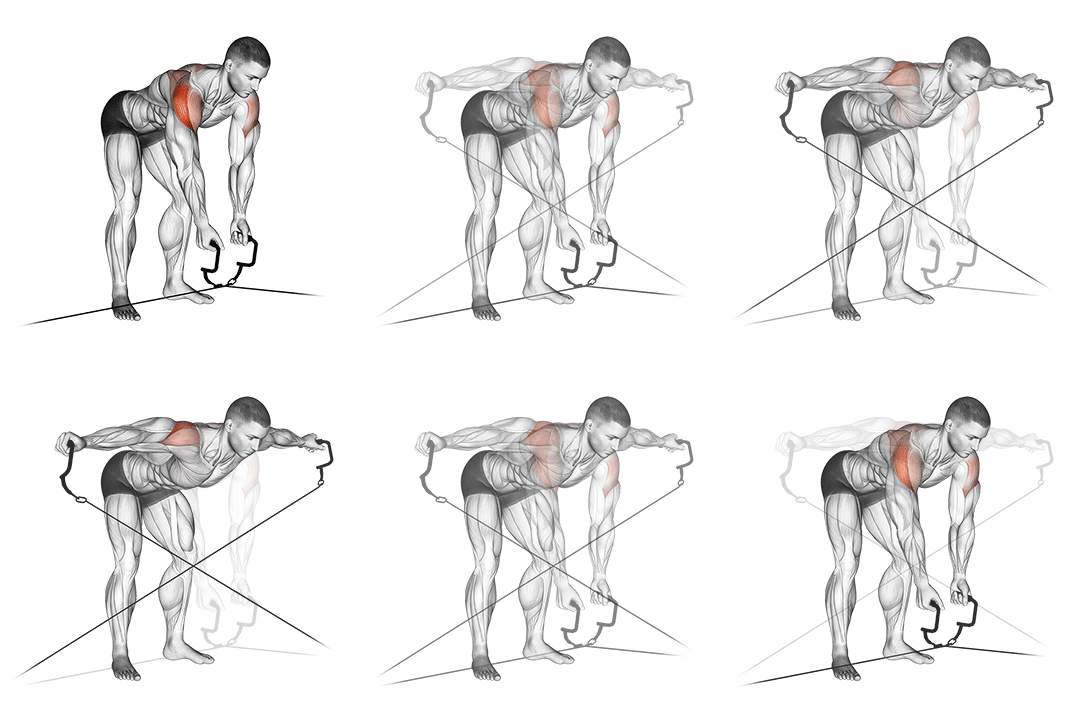
How to Perform Cable Cross-over Revers Fly
- Attach a D-handle to each low pulley cable and stand in the middle of the cable crossover machine.
- Grasp the handles with a pronated grip (palms facing down) and take a step forward, positioning your feet shoulder-width apart.
- Bend your knees slightly and lean forward at the waist, keeping your back straight and your abs engaged.
- With your arms extended out to the sides and slightly bent at the elbows, exhale and squeeze your shoulder blades together as you pull the cables back and upward in a reverse fly motion.
- Pause for a moment at the peak contraction, then inhale and slowly return to the starting position.
- Repeat for the desired number of repetitions.
Best Cable Cross-over Revers Fly Alternatives
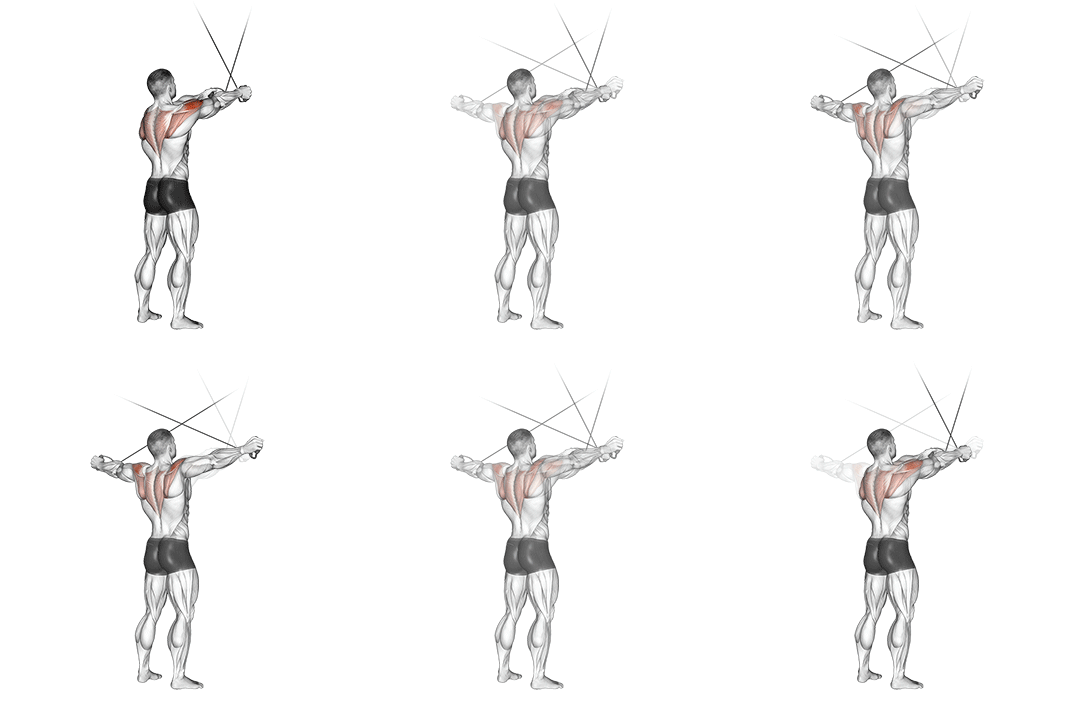
1. Cable Standing Cross-over High Reverse Fly
95.2% MatchHow to perform this exercise
- Attach a D-handle to each side of a cable machine at shoulder height.
- Stand in the middle of the cable machine with your feet shoulder-width apart.
- Grasp the handles with an overhand grip and extend your arms out to the sides, palms facing forward.
- Keep a slight bend in your elbows and maintain a straight back throughout the exercise.
- Engage your shoulder muscles and squeeze your shoulder blades together as you pull the handles towards the front of your body.
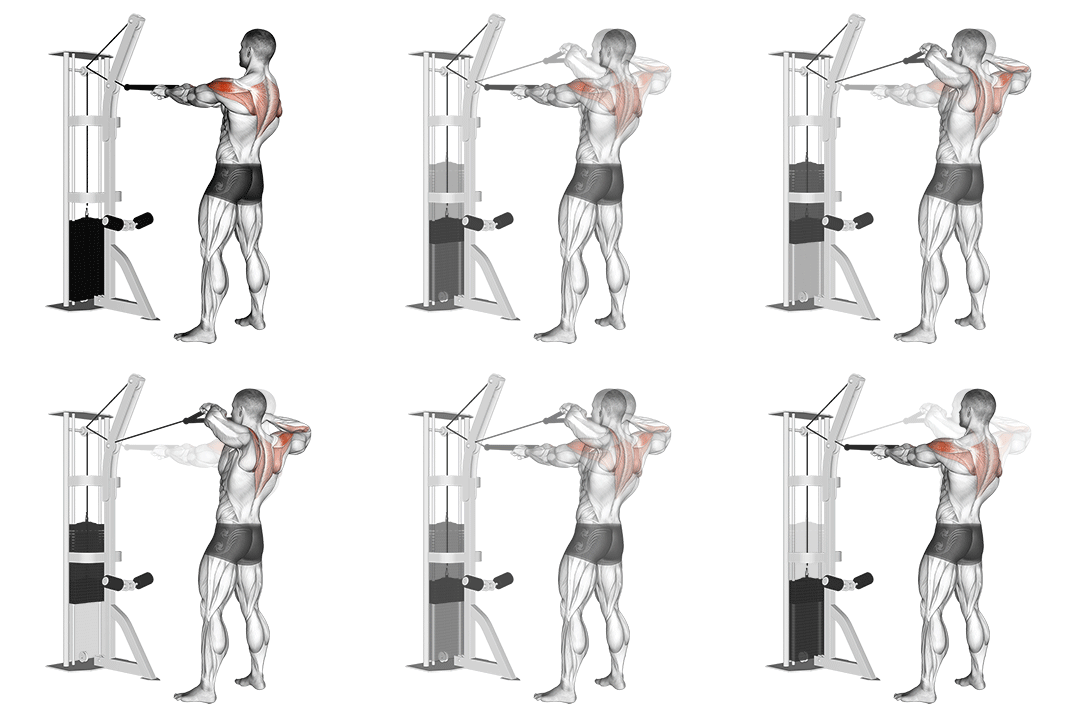
2. Cable Standing Rear Delt Row (with Rope)
90.2% MatchHow to perform this exercise
- Stand facing a cable machine with your feet shoulder-width apart.
- Hold the cable attachment with both hands, palms facing each other, and step back to create tension in the cable.
- Keep your back straight and your core engaged.
- Pull the cable towards your body, squeezing your shoulder blades together.
- Pause for a moment at the peak of the movement, then slowly release the cable back to the starting position.
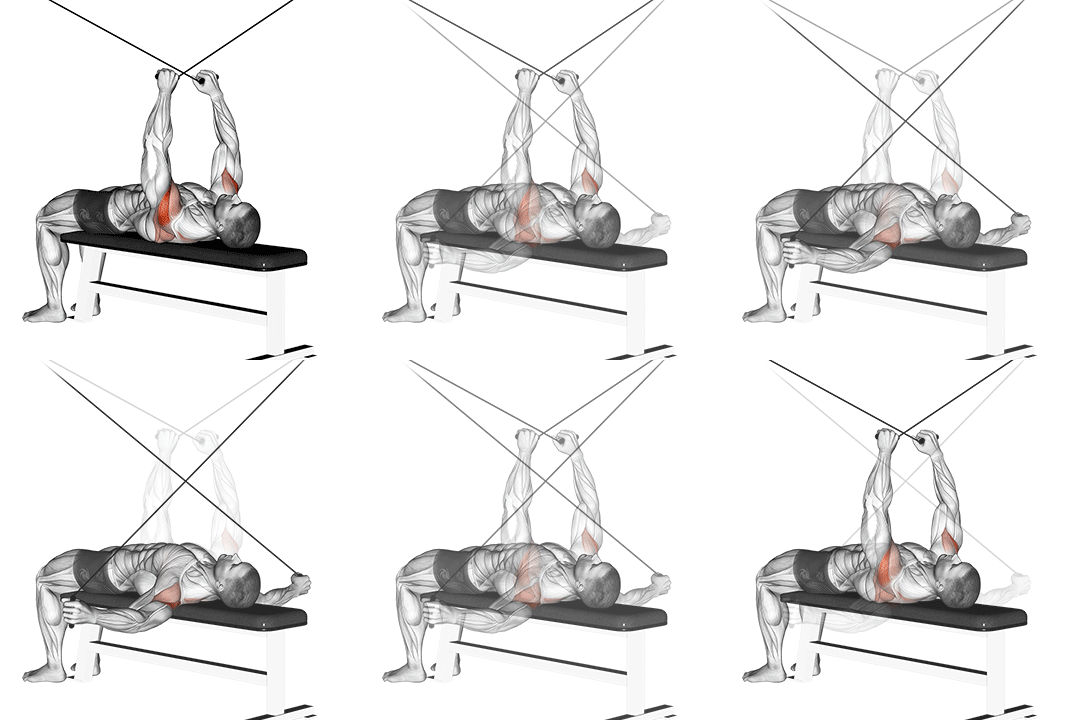
3. Cable Supine Reverse Fly
80.7% MatchHow to perform this exercise
- Attach a D-handle to a low pulley cable machine and lie face down on a flat bench.
- Grasp the D-handle with each hand, palms facing down, and extend your arms straight out in front of you.
- Keeping your arms straight, raise them out to the sides until they are parallel to the floor.
- Pause for a moment at the top, then slowly lower your arms back down to the starting position.
- Repeat for the desired number of repetitions.
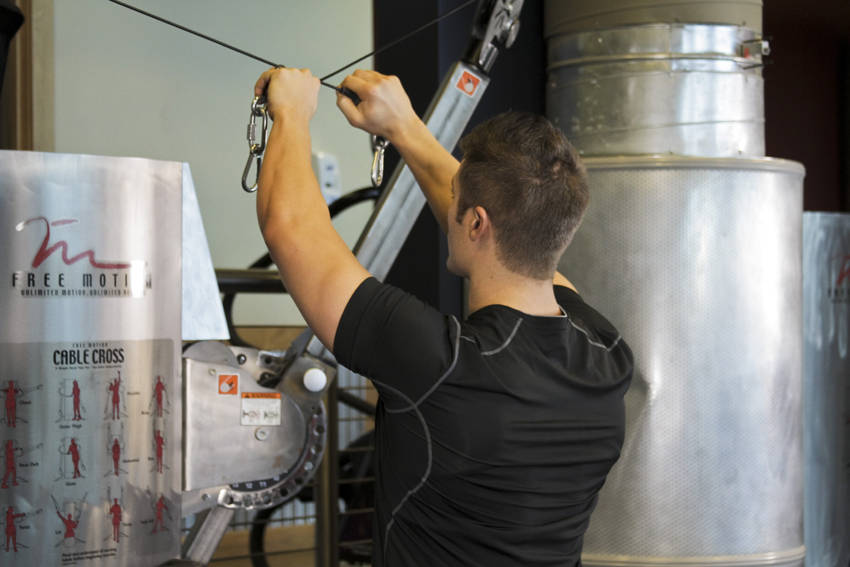
4. Cable Rear Delt Fly
79.7% MatchHow to perform this exercise
- Adjust the pulleys to the appropriate height and adjust the weight. The pulleys should be above your head.
- Grab the left pulley with your right hand and the right pulley with your left hand, crossing them in front of you. This will be your starting position.
- Initiate the movement by moving your arms back and outward, keeping your arms straight as you execute the movement.
- Pause at the end of the motion before returning the handles to the start position.
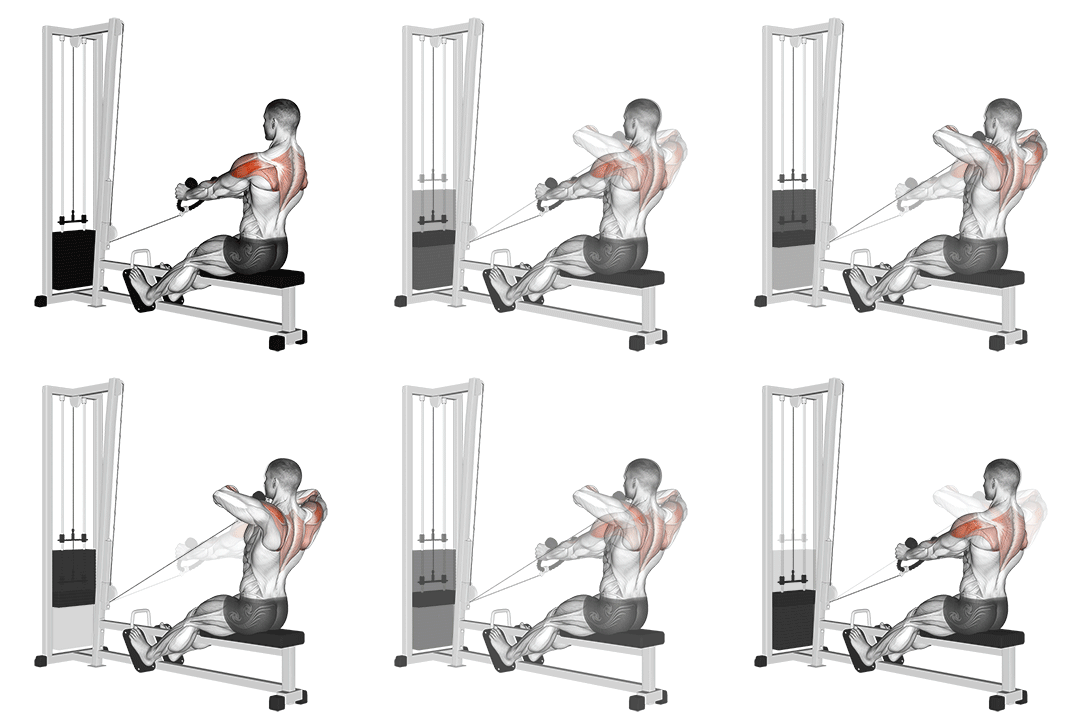
5. Cable Rear Delt Row (stirrups)
79.2% MatchHow to perform this exercise
- Attach a stirrup handle to a low cable pulley and stand facing the machine.
- Grasp the handle with your left hand and take a step back with your right foot, positioning your body at a slight angle.
- Bend your knees slightly and hinge forward at the hips, keeping your back straight and your core engaged.
- With your left arm extended and your palm facing down, pull the handle towards your chest by retracting your shoulder blade.
- Pause for a moment at the top of the movement, squeezing your shoulder blade.
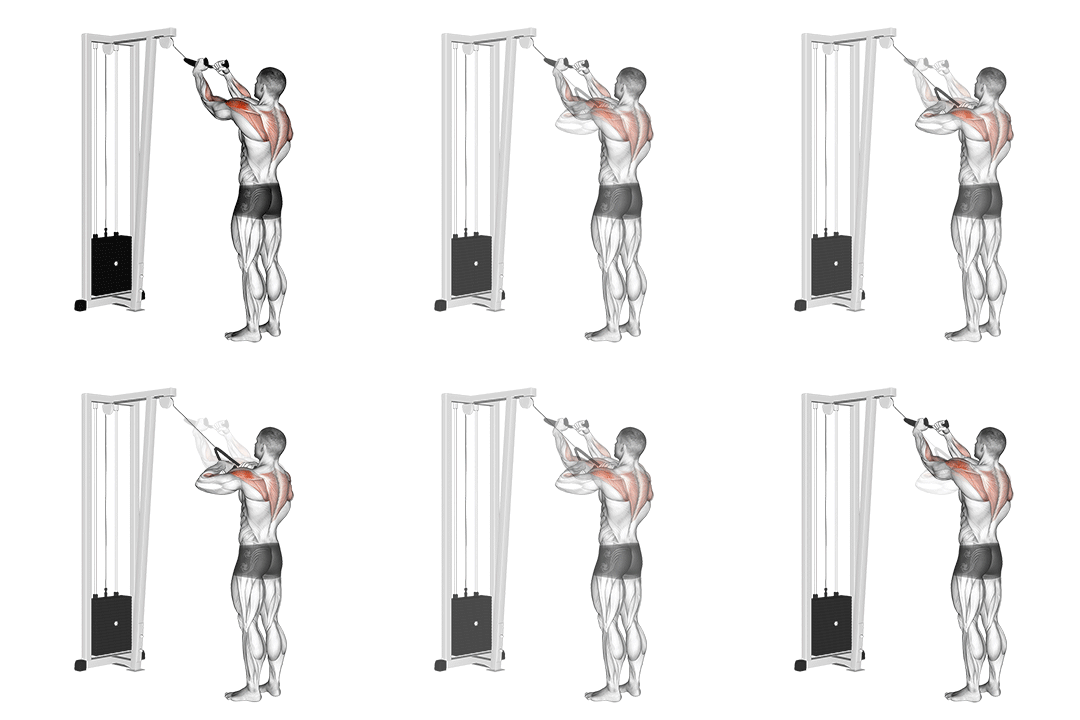
6. Cable Rear Delt Row (with Rope)
75.2% MatchHow to perform this exercise
- Attach a rope handle to a low pulley cable machine.
- Stand facing the machine with your feet shoulder-width apart.
- Grasp the rope handle with an overhand grip, palms facing each other.
- Bend your knees slightly and hinge forward at the hips, keeping your back straight.
- Keep your elbows slightly bent and pull the rope towards your chest, squeezing your shoulder blades together.
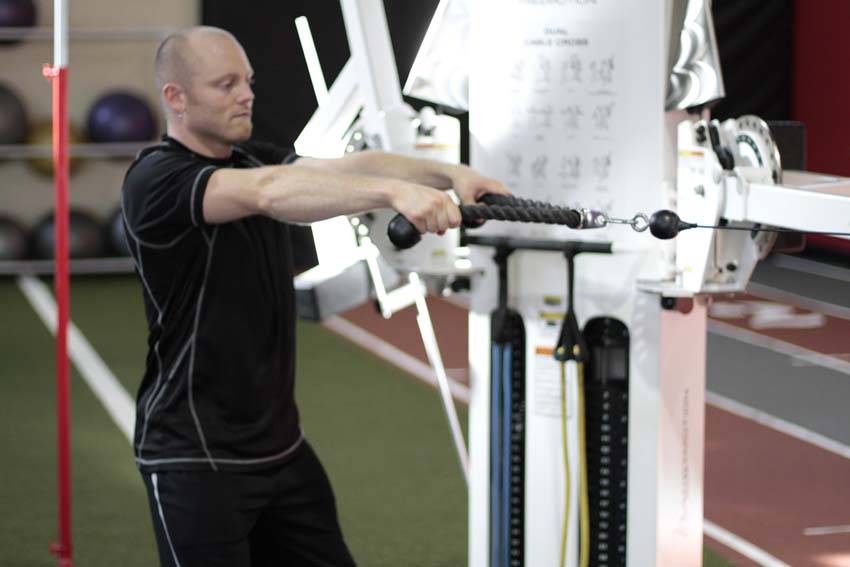
7. Face Pull
73.9% MatchHow to perform this exercise
- Facing a high pulley with a rope or dual handles attached, pull the weight directly towards your face, separating your hands as you do so. Keep your upper arms parallel to the ground.
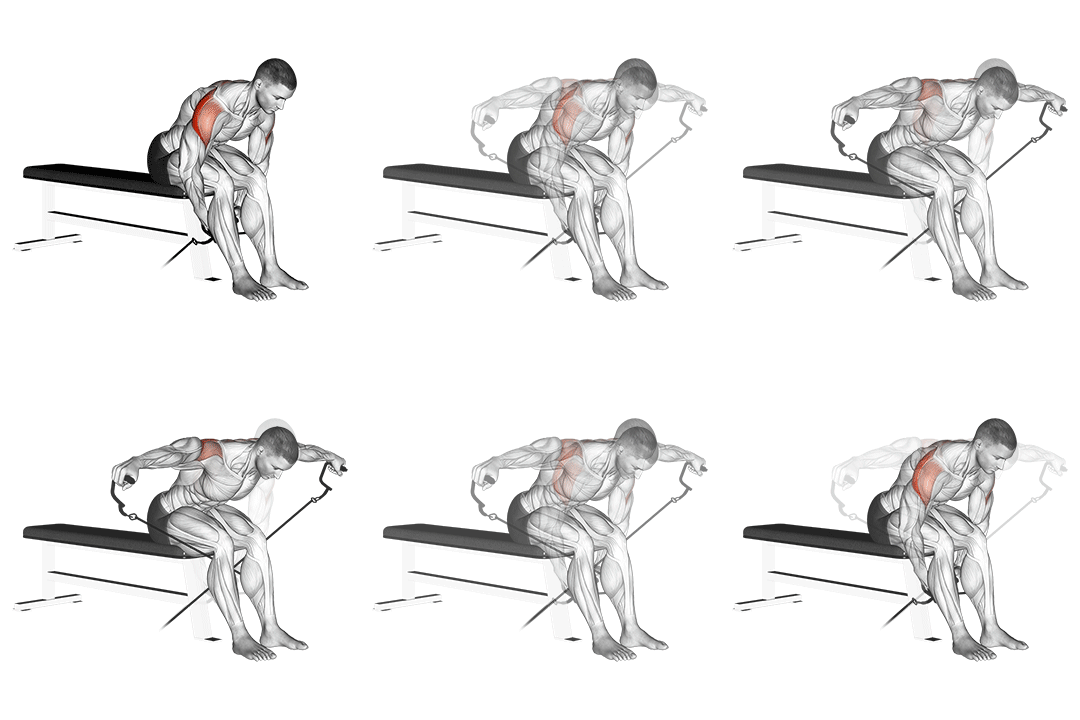
8. Cable Seated Rear Lateral Raise
69.9% MatchHow to perform this exercise
- Sit on a bench facing the cable machine with your feet flat on the ground.
- Grasp the cable handles with an overhand grip and extend your arms straight in front of you.
- Keeping your arms straight, slowly raise them out to the sides until they are parallel to the floor.
- Pause for a moment at the top, then slowly lower your arms back to the starting position.
- Repeat for the desired number of repetitions.
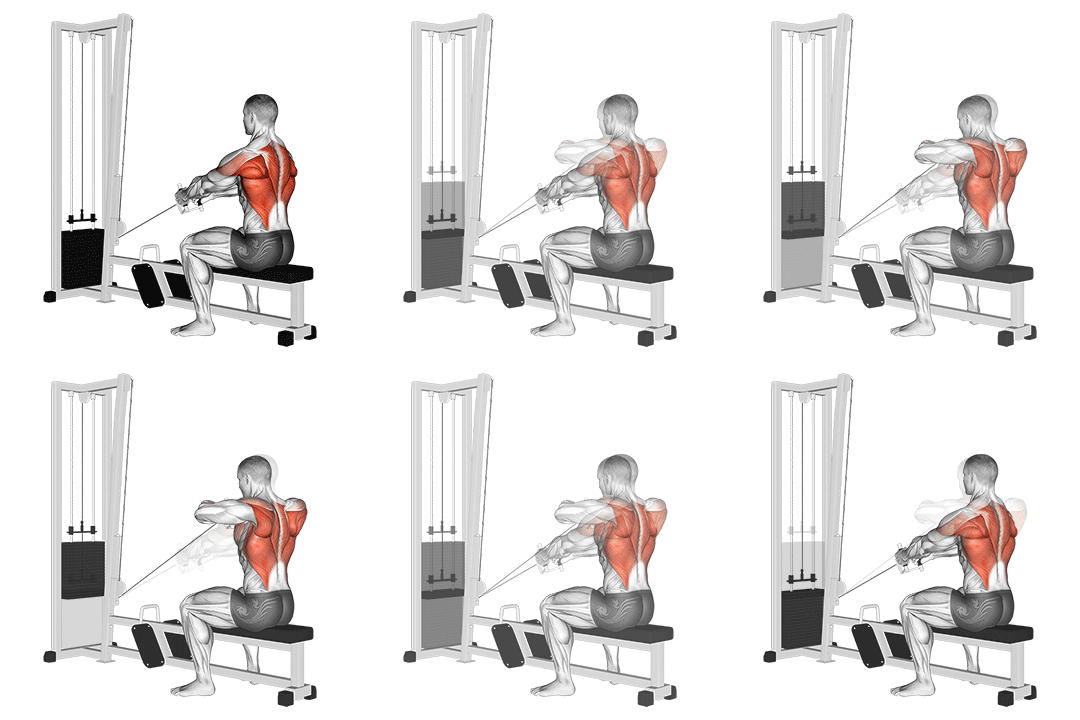
9. Cable Upper Row
68.9% MatchHow to perform this exercise
- Attach a straight bar to a cable machine at chest height.
- Stand facing the machine with your feet shoulder-width apart.
- Grasp the bar with an overhand grip, hands slightly wider than shoulder-width apart.
- Keep your back straight and your core engaged.
- Pull the bar towards your upper chest, squeezing your shoulder blades together.
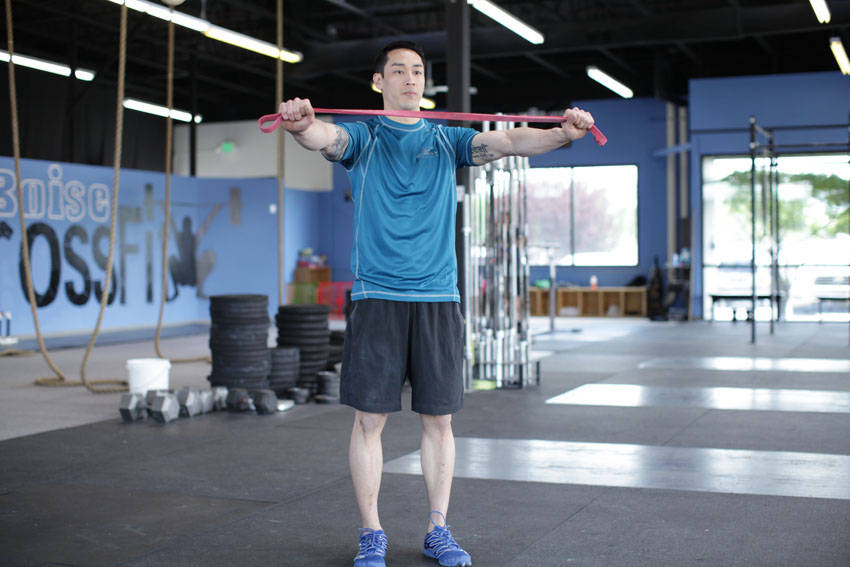
10. Band Pull Apart
68.3% MatchHow to perform this exercise
- Begin with your arms extended straight out in front of you, holding the band with both hands.
- Initiate the movement by performing a reverse fly motion, moving your hands out laterally to your sides.
- Keep your elbows extended as you perform the movement, bringing the band to your chest. Ensure that you keep your shoulders back during the exercise.
- Pause as you complete the movement, returning to the starting position under control.
Why You Might Need a Cable Cross-over Revers Fly Alternative
You might substitute the cable cross-over reverse fly because of gym access, shoulder pain, equipment failure, or the need for variation. Cables provide continuous tension, but dumbbells, bands, and bodyweight options can replicate horizontal abduction and scapular retraction while reducing joint stress. For rehab, choose movements that limit overhead elevation and emphasize scapular control—keep a neutral spine, lead the motion with the elbow, and stop when you feel compression under the acromion to avoid impingement. Substitutes also let you change loading patterns (eccentric focus, pause reps) to improve posterior-delt recruitment and overall shoulder balance.
How to Choose the Right Substitute
Select a substitute by matching movement pattern, loading method, and joint tolerance. Prioritize exercises that preserve horizontal abduction and external rotation to target posterior delts and rotator cuff stabilizers. If you need constant tension, use bands or dumbbells with slow eccentrics; if scapular control is the goal, pick face pulls or prone Y-raises and cue scapular retraction before the arm moves. For pain-free loading, reduce range to the level that doesn’t cause anterior shoulder pinching and keep the elbow slightly bent to shift emphasis from rotator cuff to rear delts.
Frequently Asked Questions
What muscles does Cable Cross-over Revers Fly work?
The exercise primarily targets the posterior deltoid and secondarily the infraspinatus, teres minor, and upper back (rhomboids and middle traps) through scapular retraction. It emphasizes horizontal abduction and external rotation; cue leading with the elbow to maximize posterior-delt activation.
What is the best bodyweight alternative to Cable Cross-over Revers Fly?
Prone Y-raises on an incline bench or the floor are the best bodyweight option because they isolate horizontal abduction and posterior-delt fibers. Keep thumbs up, neck neutral, and squeeze the rear delts at the top while avoiding momentum.
Can I build muscle without doing Cable Cross-over Revers Fly?
Yes. Use progressive overload with dumbbell reverse flies, face pulls, bent-over rows with an elbow flare, or band variations to stimulate the posterior deltoid. Emphasize slow eccentrics and a one-second pause at peak contraction to increase time under tension and hypertrophy stimulus.
More Exercise Alternatives
Find Alternatives for Any Exercise
Use our free tool to discover the best substitute exercises based on your available equipment and goals.
Try the Exercise Substitution Finder →