

10 Best Cable Decline One Arm Press Alternatives for Limited Equipment
The Cable Decline One Arm Press is done lying on your back with a cable machine. Ranked closest by our scoring: the Cable One Arm Incline Press, the Cable Decline Press and the Cable One Arm Incline Press On Exercise Ball.
Updated Ranked by our 12-factor similarity model How it works
Original Exercise: Cable Decline One Arm Press
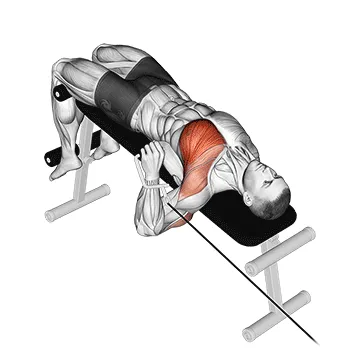
- Primary muscle
- Pectorals
- Equipment
- Cable
- Difficulty
- Intermediate
- Type
- Compound
Secondary muscles: Triceps, Shoulders
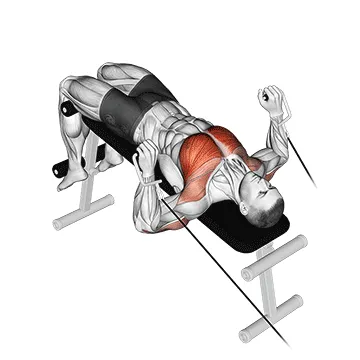
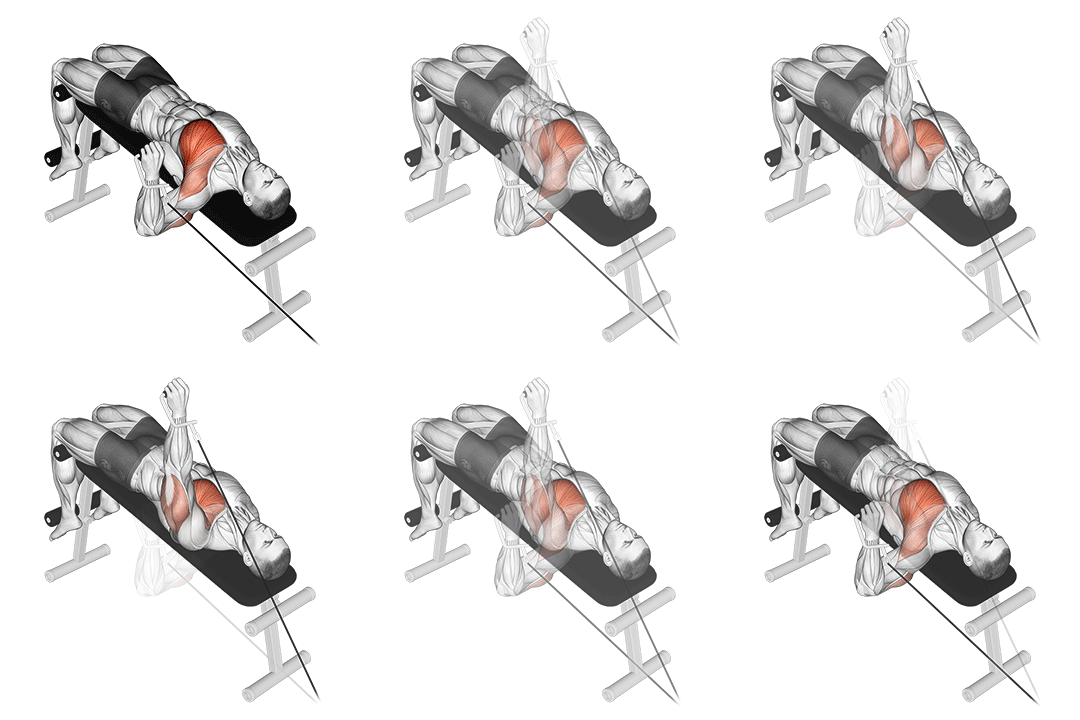
How to perform Cable Decline One Arm Press
- Adjust the cable machine to a decline position.
- Stand facing away from the machine and grab the handle with one hand.
- Position yourself with your back against the decline bench and your arm extended straight in front of you.
- Bend your elbow and lower the handle towards your chest while keeping your upper arm stationary.
- Pause for a moment at the bottom, then push the handle back up to the starting position.
- Repeat for the desired number of repetitions, then switch arms.
Ranked Cable Decline One Arm Press Alternatives
10 substitutes, ranked by how closely each one matches the Cable Decline One Arm Press on movement pattern, muscles worked, equipment and body position. The higher the score, the less you change. Open "How to perform this exercise" on a card for the steps; every card title links to that exercise's own alternatives page.
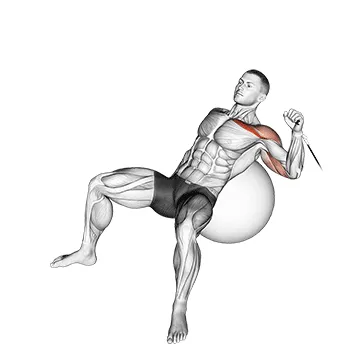
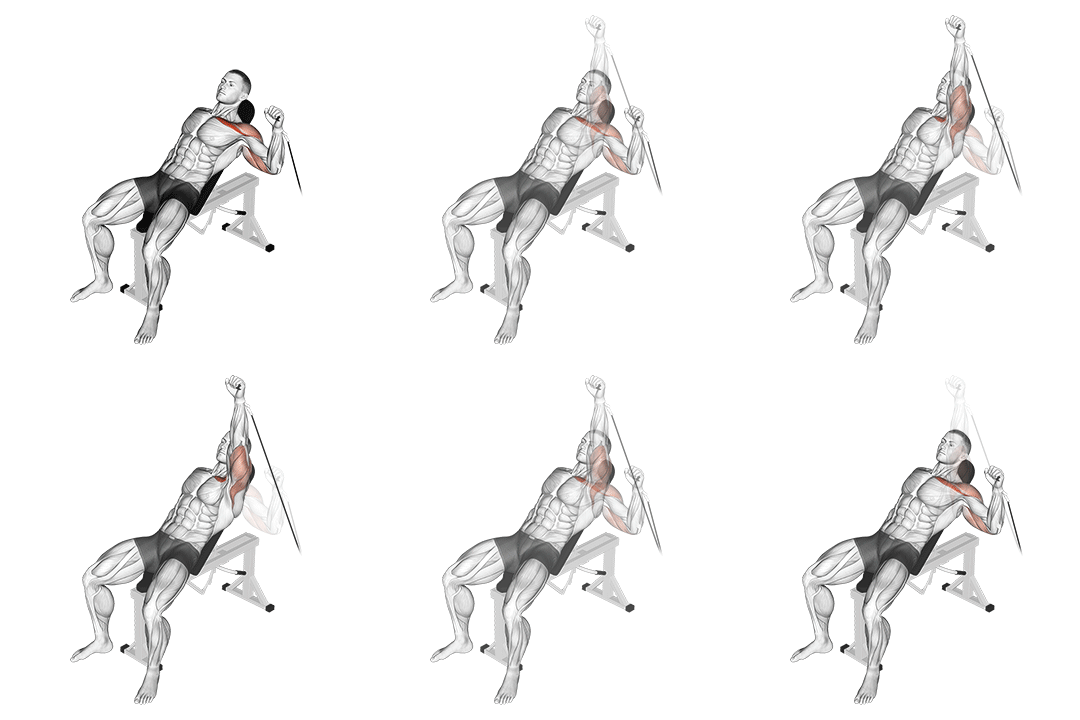
Best match 1. Cable One Arm Incline Press
91% match- Pectorals
- Cable
- Intermediate
- Compound
The same equipment, done seated instead.
How to perform this exercise
- Adjust the cable machine to a low pulley position.
- Sit on an incline bench facing away from the cable machine.
- Grasp the handle with one hand and bring it up to shoulder height.
- Position your feet firmly on the ground and maintain a stable position.
- Press the handle forward and upward, extending your arm fully.
- Pause for a moment at the top, then slowly lower the handle back to the starting position.
- Repeat for the desired number of repetitions, then switch sides.
Sets and reps: 3 or 4 sets of 6 to 10 reps on each side.
Why this matches
- Primary muscle: pectorals, the same as the Cable Decline One Arm Press
- Equipment: a cable, the same as the Cable Decline One Arm Press
- Body position: seated, not lying on your back
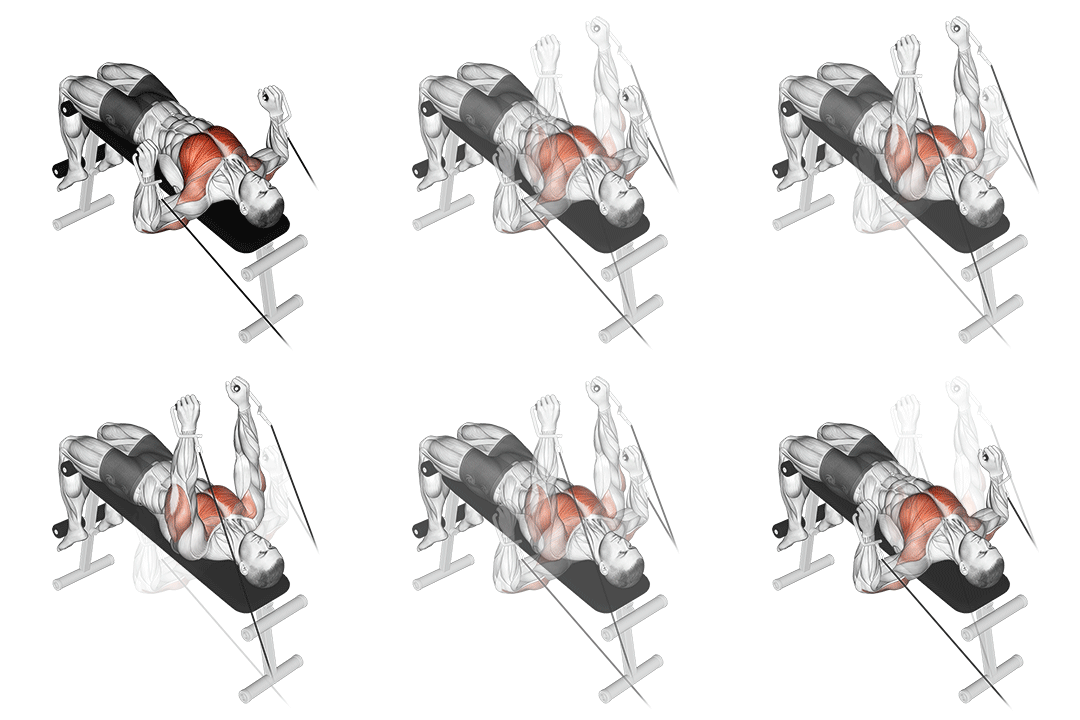
2. Cable Decline Press
89% match- Pectorals
- Cable
- Intermediate
- Compound
The same equipment, taken with an overhand grip.
How to perform this exercise
- Adjust the cable machine to a decline position.
- Sit on the decline bench facing the cable machine.
- Grasp the handles with an overhand grip and position them at chest level.
- Keep your feet flat on the ground and your back firmly against the bench.
- Exhale and push the handles away from your body, extending your arms fully.
- Pause for a moment at the end of the movement, squeezing your chest muscles.
- Inhale and slowly return the handles back to the starting position.
- Repeat for the desired number of repetitions.
Sets and reps: 3 or 4 sets of 6 to 10 reps.
Why this matches
- Primary muscle: pectorals, the same as the Cable Decline One Arm Press
- Equipment: a cable, the same as the Cable Decline One Arm Press
- Body position: lying on your back, the same as the Cable Decline One Arm Press
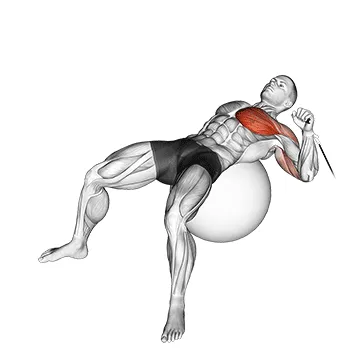
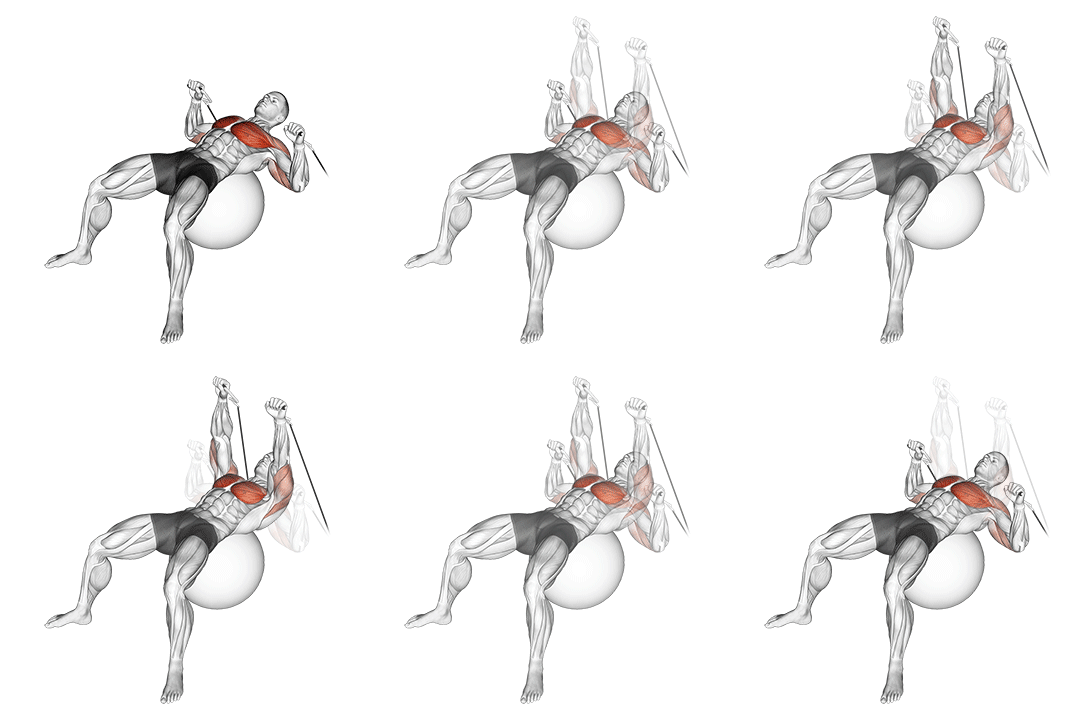
- Pectorals
- Stability-ball
- Advanced
- Compound
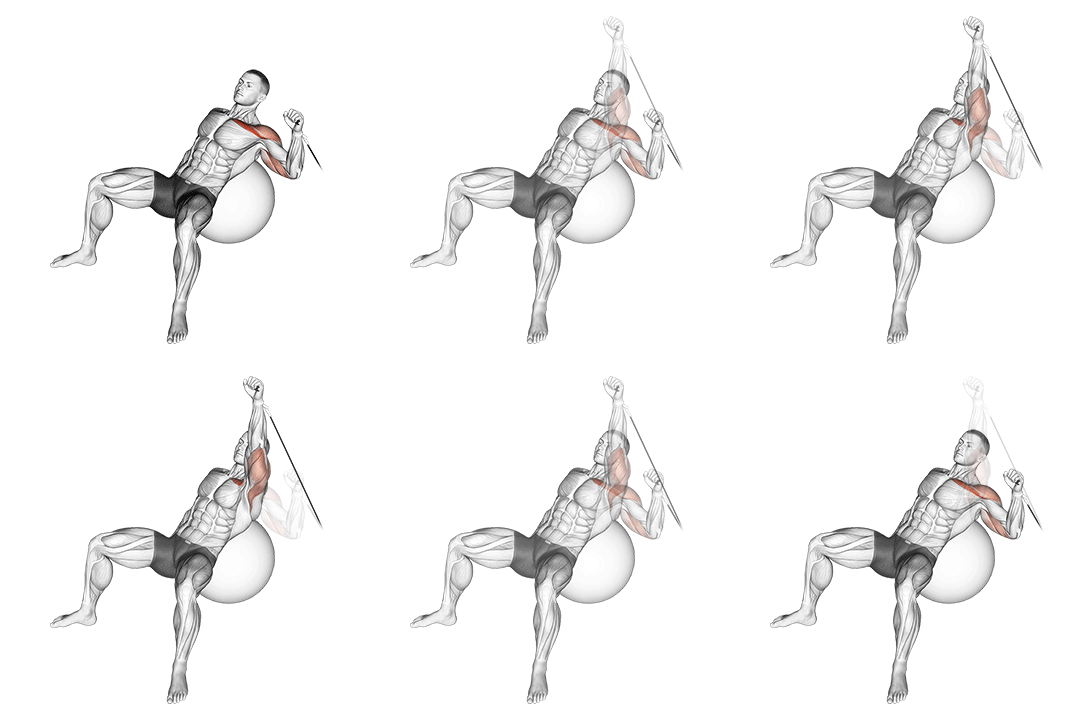
A good swap when you have a stability ball to work with, and it still works the pectorals.
How to perform this exercise
- Sit on an exercise ball with your feet flat on the ground and your back resting against an incline bench.
- Hold a cable handle in one hand and position your arm at a 90-degree angle with your elbow bent.
- Press the cable handle forward and upward, extending your arm fully.
- Pause for a moment at the top, then slowly lower the cable handle back to the starting position.
- Repeat for the desired number of repetitions, then switch to the other arm.
Sets and reps: 3 or 4 sets of 6 to 10 reps on each side.
Why this matches
- Primary muscle: pectorals, the same as the Cable Decline One Arm Press
- Equipment: bodyweight only, not a cable
- Body position: lying on your back, the same as the Cable Decline One Arm Press
- Balance: harder to stay steady on than the Cable Decline One Arm Press
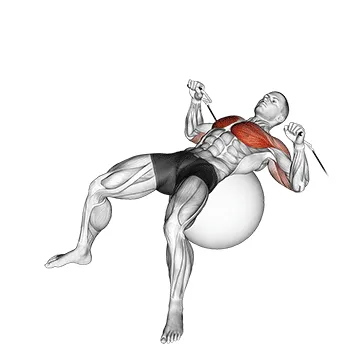
- Pectorals
- Stability-ball
- Advanced
- Compound
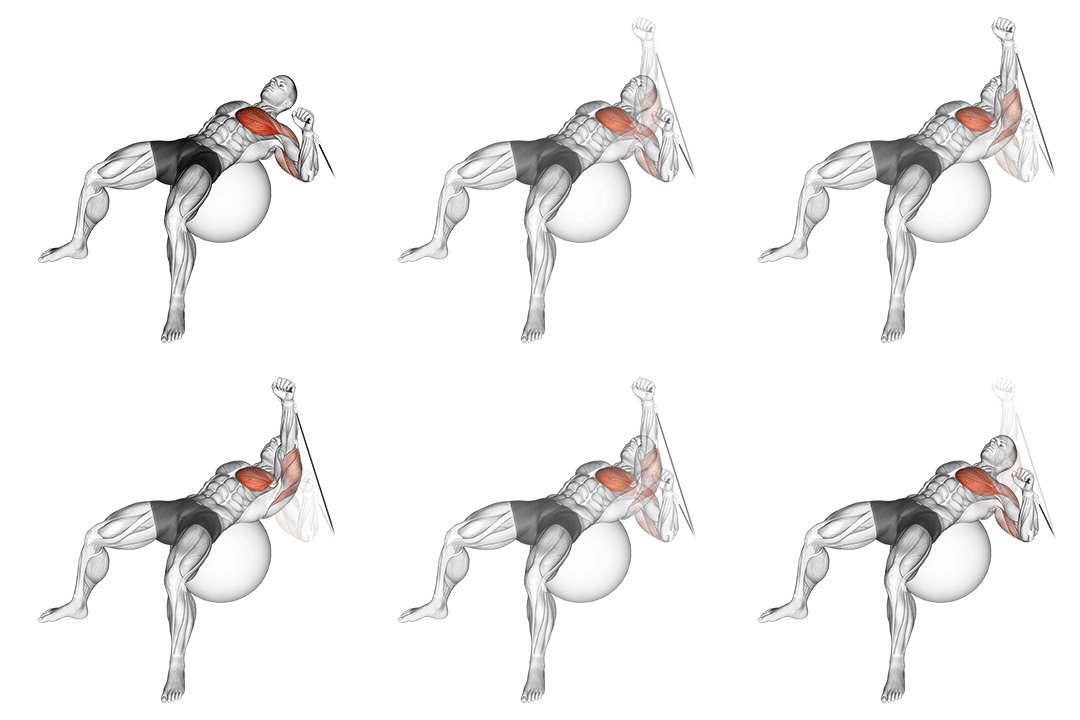
How to perform this exercise
- Sit on an exercise ball with your feet flat on the ground and your back straight.
- Hold a cable handle in one hand and position your arm at chest height, elbow bent.
- Place your other hand on your hip for stability.
- Press the cable handle forward, extending your arm fully.
- Pause for a moment, then slowly return to the starting position.
- Repeat for the desired number of repetitions, then switch arms.
Sets and reps: 3 or 4 sets of 6 to 10 reps on each side.
Why this matches
- Primary muscle: pectorals, the same as the Cable Decline One Arm Press
- Equipment: bodyweight only, not a cable
- Body position: lying on your back, the same as the Cable Decline One Arm Press
- Balance: harder to stay steady on than the Cable Decline One Arm Press
5. Cable Press On Exercise Ball
79% match- Pectorals
- Stability-ball
- Intermediate
- Compound
How to perform this exercise
- Sit on an exercise ball with your feet flat on the ground and your knees at a 90-degree angle.
- Hold the cable handles at chest height with your palms facing down and your elbows bent.
- Engage your core and press the cable handles forward until your arms are fully extended.
- Pause for a moment, then slowly release the tension and bring the cable handles back to the starting position.
- Repeat for the desired number of repetitions.
Sets and reps: 3 or 4 sets of 6 to 10 reps.
Why this matches
- Primary muscle: pectorals, the same as the Cable Decline One Arm Press
- Equipment: bodyweight only, not a cable
- Body position: lying on your back, the same as the Cable Decline One Arm Press
- Balance: harder to stay steady on than the Cable Decline One Arm Press
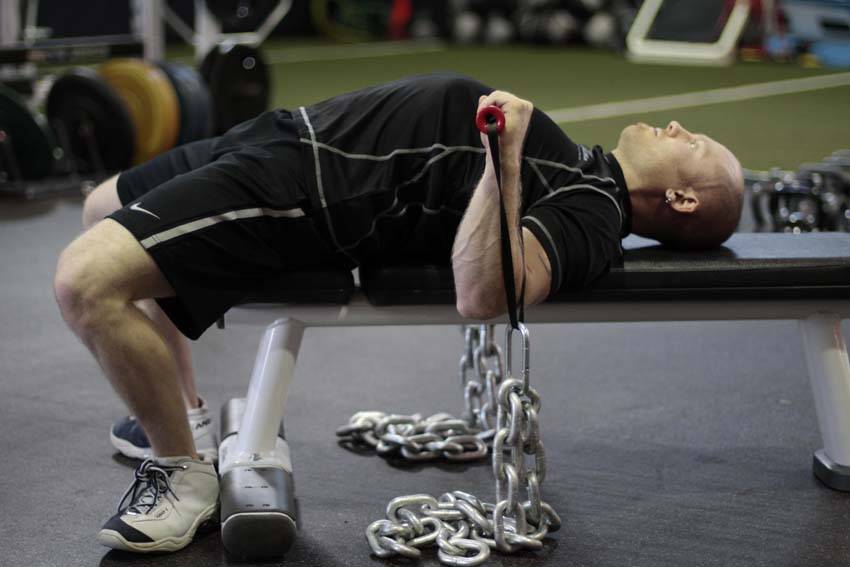
6. Chain Press
79% match- Pectorals
- Other
- Advanced
- Compound
Pick this when you want a harder version that still works the pectorals.
How to perform this exercise
- Begin by connecting the chains to the cable handle attachments. Position yourself on the flat bench in the same position as for a dumbbell press. Your wrists should be pronated and arms perpendicular to the floor. This will be your starting position.
- Lower the chains by flexing the elbows, unloading some of the chain onto the floor.
- Continue until your elbow forms a 90 degree angle, and then reverse the motion by extending through the elbow to lockout.
Sets and reps: 3 to 5 sets of 5 to 8 reps on each side.
Why this matches
- Primary muscle: pectorals, the same as the Cable Decline One Arm Press
- Body position: standing, not lying on your back
- Balance: harder to stay steady on than the Cable Decline One Arm Press
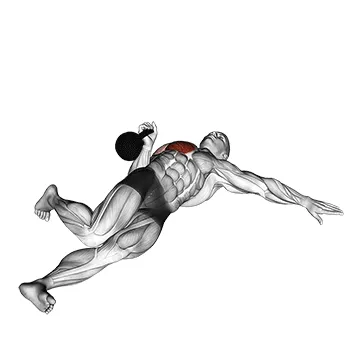
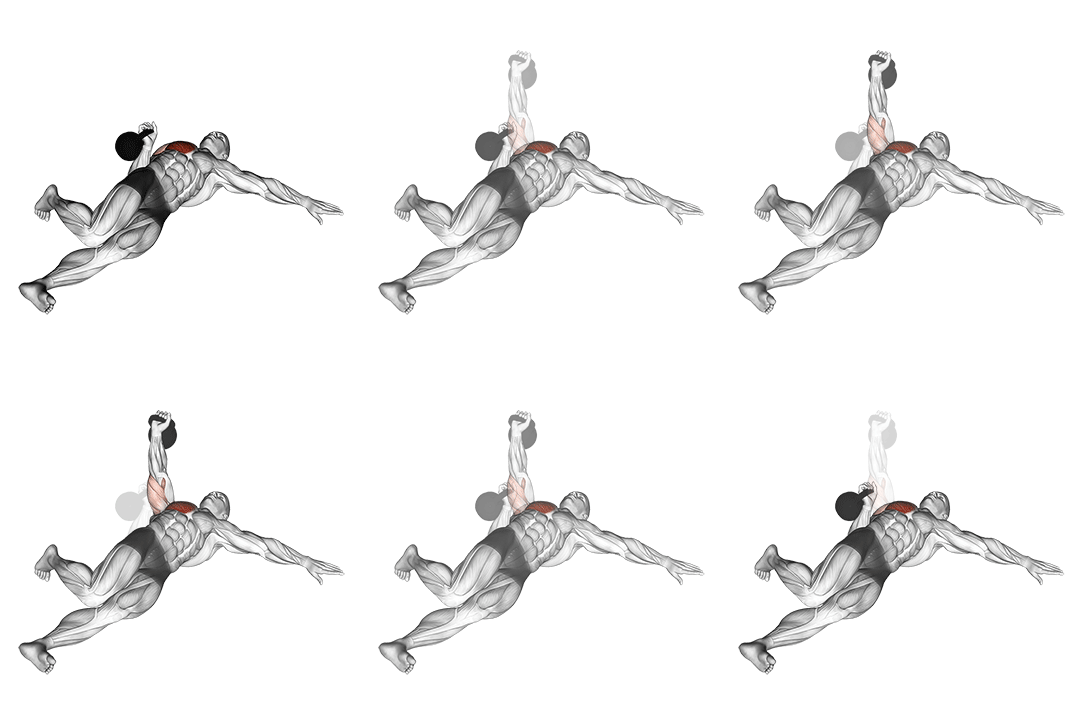
- Pectorals
- Kettlebell
- Intermediate
- Compound
A good swap when you have a kettlebell to work with, and it still works the pectorals.
How to perform this exercise
- Start by lying on your back on the floor with your knees bent and feet flat on the ground.
- Hold a kettlebell in one hand, with your palm facing towards your feet.
- Extend your arm straight up towards the ceiling, keeping your elbow locked and your wrist straight.
- Slowly lower the kettlebell back down to the starting position, maintaining control throughout the movement.
- Repeat for the desired number of repetitions, then switch to the other arm.
Sets and reps: 3 or 4 sets of 6 to 10 reps on each side.
Why this matches
- Primary muscle: pectorals, the same as the Cable Decline One Arm Press
- Equipment: free weights, not a cable
- Body position: lying on your back, the same as the Cable Decline One Arm Press
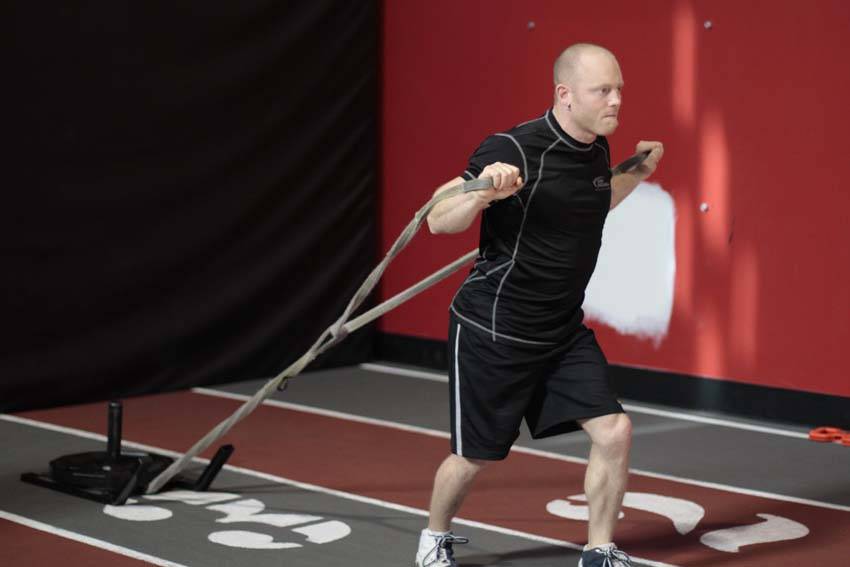
8. Forward Drag With Press
72% match- Pectorals
- Other
- Intermediate
- Compound
How to perform this exercise
- Attach a dual handled chain or rope attachment to the sled. You should be facing away from the sled, holding a handle in each hand.
- Begin the movement by moving forward for one step. Leaning forward, extend through the legs and hips to move, pausing with each step to extend through the elbows, pressing your hands forward. Step forward until you return to the start position prepared to press.
Sets and reps: 3 or 4 sets of 6 to 10 reps.
Why this matches
- Primary muscle: pectorals, the same as the Cable Decline One Arm Press
- Body position: standing, not lying on your back
- Balance: harder to stay steady on than the Cable Decline One Arm Press
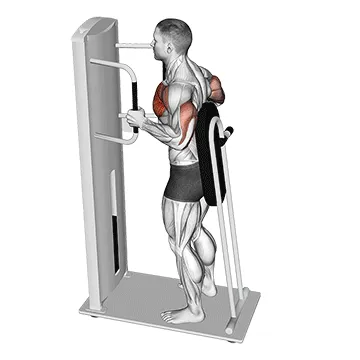
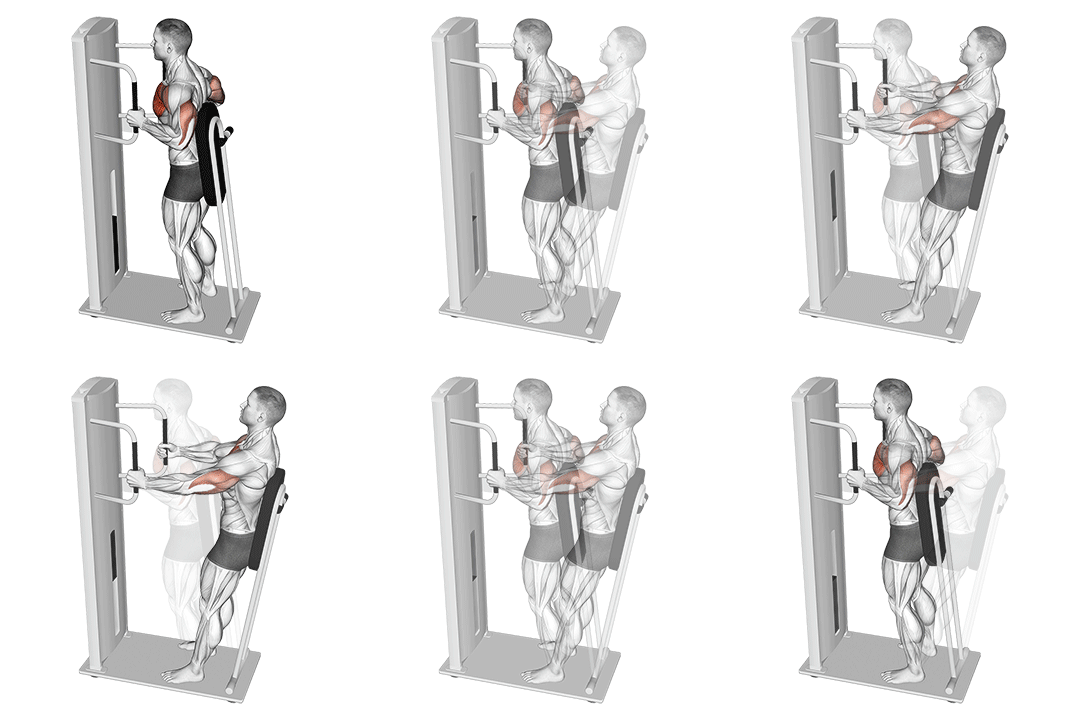
9. Lever Standing Chest Press
70% match- Pectorals
- Lever
- Intermediate
- Compound
How to perform this exercise
- Adjust the seat height and position yourself on the machine with your feet flat on the ground.
- Grasp the handles with an overhand grip and position your hands at chest level.
- Push the handles forward until your arms are fully extended, keeping your elbows slightly bent.
- Pause for a moment, then slowly bring the handles back towards your chest, maintaining control throughout the movement.
- Repeat for the desired number of repetitions.
Sets and reps: 3 or 4 sets of 6 to 10 reps.
Why this matches
- Primary muscle: pectorals, the same as the Cable Decline One Arm Press
- Equipment: a machine, not a cable
- Body position: standing, not lying on your back
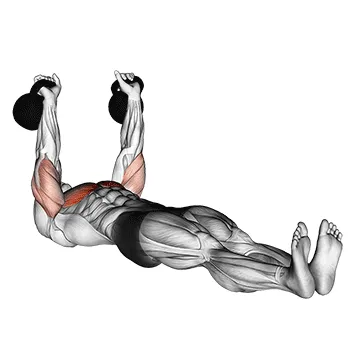
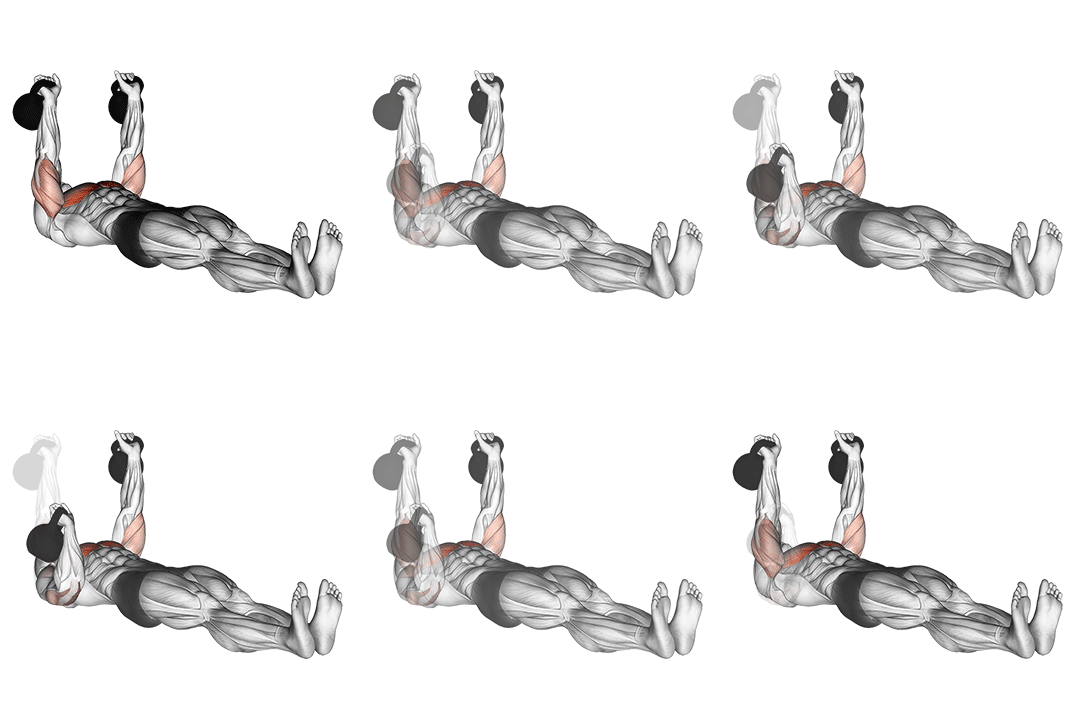
- Pectorals
- Kettlebell
- Intermediate
- Compound
How to perform this exercise
- Start by lying on your back on the floor with your knees bent and feet flat on the ground.
- Hold a kettlebell in each hand, with your palms facing towards your feet and your arms extended straight up towards the ceiling.
- Lower one kettlebell down towards your shoulder while keeping the other kettlebell extended straight up.
- Press the lowered kettlebell back up to the starting position while simultaneously lowering the other kettlebell down towards your shoulder.
- Continue alternating the press motion with each kettlebell for the desired number of repetitions.
Sets and reps: 3 or 4 sets of 6 to 10 reps on each side.
Why this matches
- Primary muscle: pectorals, the same as the Cable Decline One Arm Press
- Equipment: free weights, not a cable
- Body position: lying on your back, the same as the Cable Decline One Arm Press
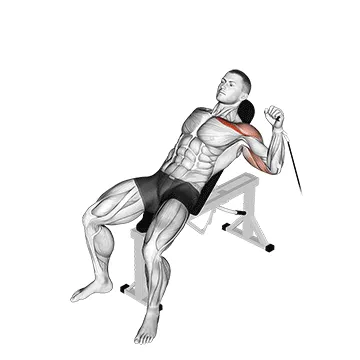
Why You Might Need a Cable Decline One Arm Press Alternative
You may need substitutes because of shoulder pain, lack of a cable station, or a desire for heavier loading and progressive overload. Cables give constant tension and a unique line of pull; machines and free weights change force vectors and stability demands. For example, decline dumbbell presses let you increase load while preserving a decline angle that targets the lower pectoralis major. If scapular motion is limited, machine declines reduce anti-rotational stress. Technique cue: set a 15–30° decline, drive the elbow slightly inward to emphasize sternal pec activation, and keep the scapula retracted to protect the glenohumeral joint.
Cable Decline One Arm Press FAQ
What muscles does Cable Decline One Arm Press work?
It primarily targets the sternal head of the pectoralis major (lower chest), with the anterior deltoid and triceps acting as synergists. The exercise also requires serratus anterior and scapular stabilizer engagement to control the single-arm descent and press, cue scapular retraction on the eccentric and controlled protraction at lockout.
Find Alternatives for Any Exercise
Search the exercise database and filter the ranked substitutes by the equipment you own.
Similarity scores compare exercise metadata such as movement pattern, muscles, equipment and body position. They are not a safety rating or a check that you own the equipment. Learn about our methodology