

10 Best Cable One Arm Bent Over Row Alternatives for Limited Equipment
If you can't do the Cable One Arm Bent Over Row, use exercises that load unilateral scapular retraction and horizontal pull: single-arm dumbbell row, landmine single-arm row, barbell bent-over row, chest-supported row, or inverted row. Focus on retracting the scapula, keeping a neutral spine, and pulling with the elbows to activate the lats and rhomboids.
Original Exercise: Cable One Arm Bent Over Row
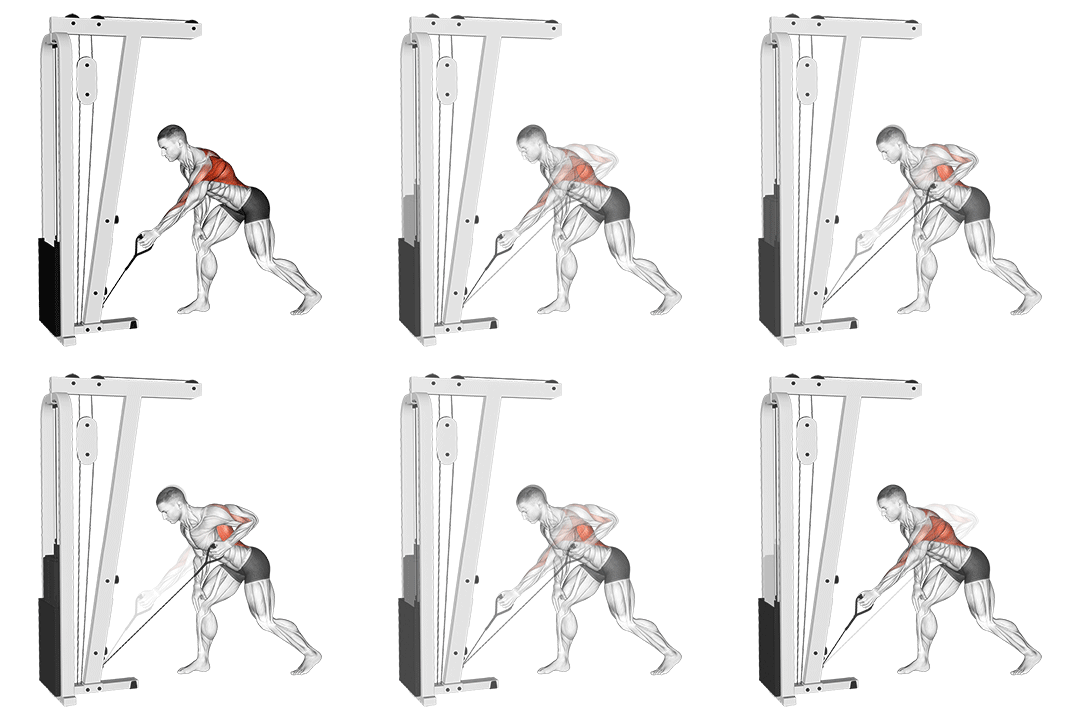
How to Perform Cable One Arm Bent Over Row
- Stand facing a cable machine with your feet shoulder-width apart.
- Bend your knees slightly and hinge forward at the hips, keeping your back straight.
- Grasp the cable handle with one hand, palm facing inward, and extend your arm fully.
- Pull the cable handle towards your body, keeping your elbow close to your side, until your hand reaches your lower chest.
- Pause for a moment, then slowly extend your arm back to the starting position.
- Repeat for the desired number of repetitions, then switch sides.
Best Cable One Arm Bent Over Row Alternatives
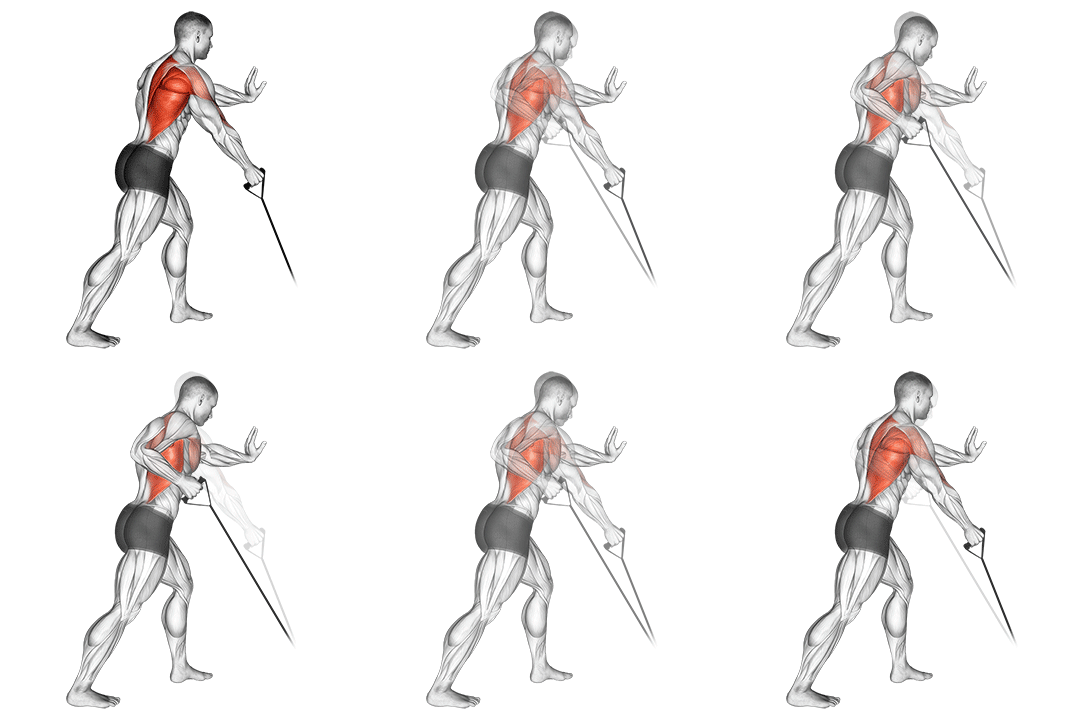
1. Band One Arm Standing Low Row
90% MatchHow to perform this exercise
- Attach the band to a stable anchor point at waist height.
- Stand facing the anchor point with your feet shoulder-width apart.
- Hold the band with one hand, palm facing inward, and step back to create tension in the band.
- Bend your knees slightly and hinge forward at the hips, keeping your back straight.
- Pull the band towards your waist, squeezing your shoulder blades together.
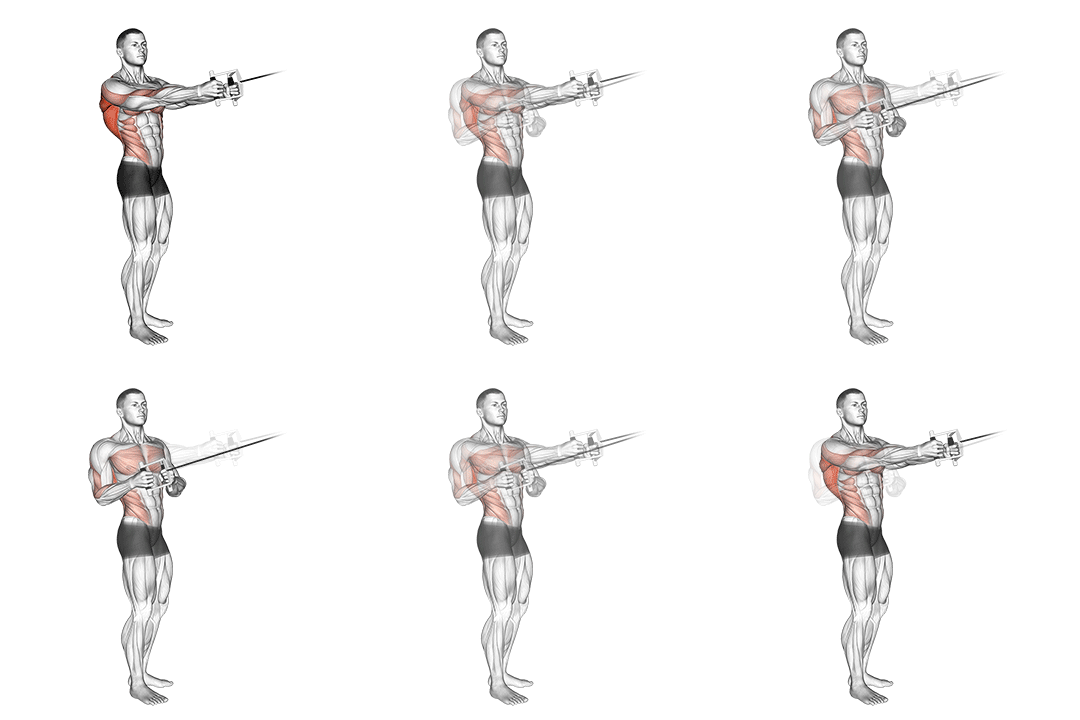
2. Cable Standing Twist Row (v-bar)
83.4% MatchHow to perform this exercise
- Attach a v-bar attachment to a cable machine at chest height.
- Stand facing the cable machine with your feet shoulder-width apart.
- Grasp the v-bar with an overhand grip, palms facing down.
- Take a step back to create tension in the cable.
- Keep your back straight and core engaged throughout the exercise.
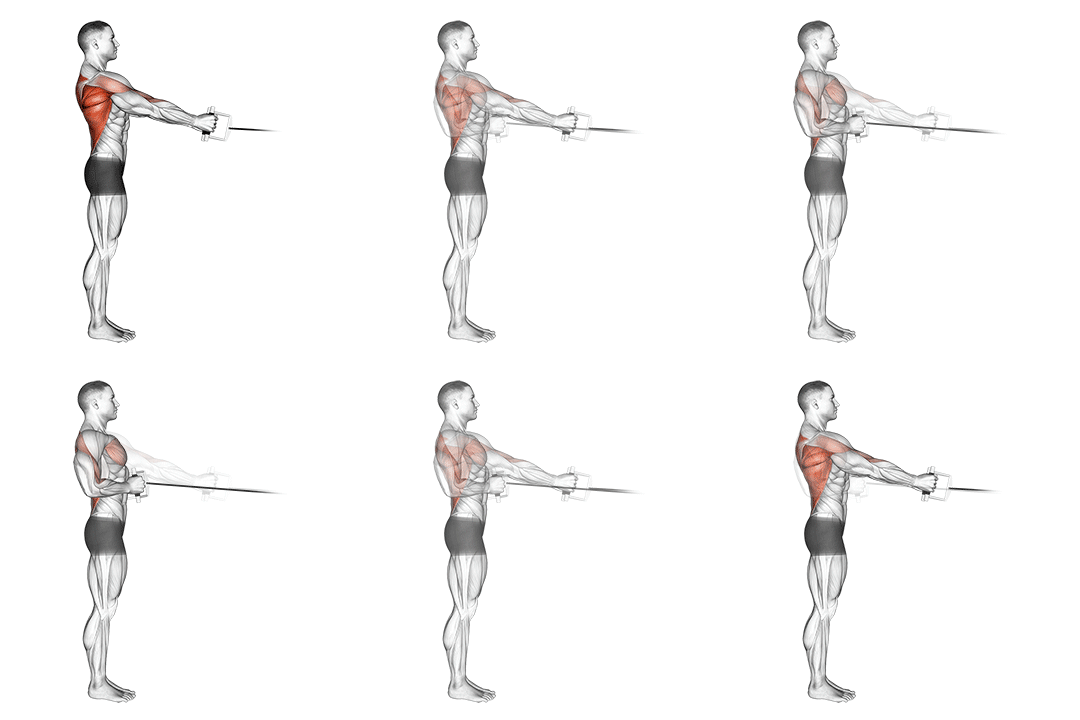
3. Cable Standing Row (v-bar)
83.4% MatchHow to perform this exercise
- Stand facing the cable machine with your feet shoulder-width apart.
- Grasp the v-bar attachment with an overhand grip, palms facing down.
- Keep your back straight and your core engaged.
- Pull the v-bar towards your body, squeezing your shoulder blades together.
- Pause for a moment at the peak of the movement, then slowly release the tension and return to the starting position.
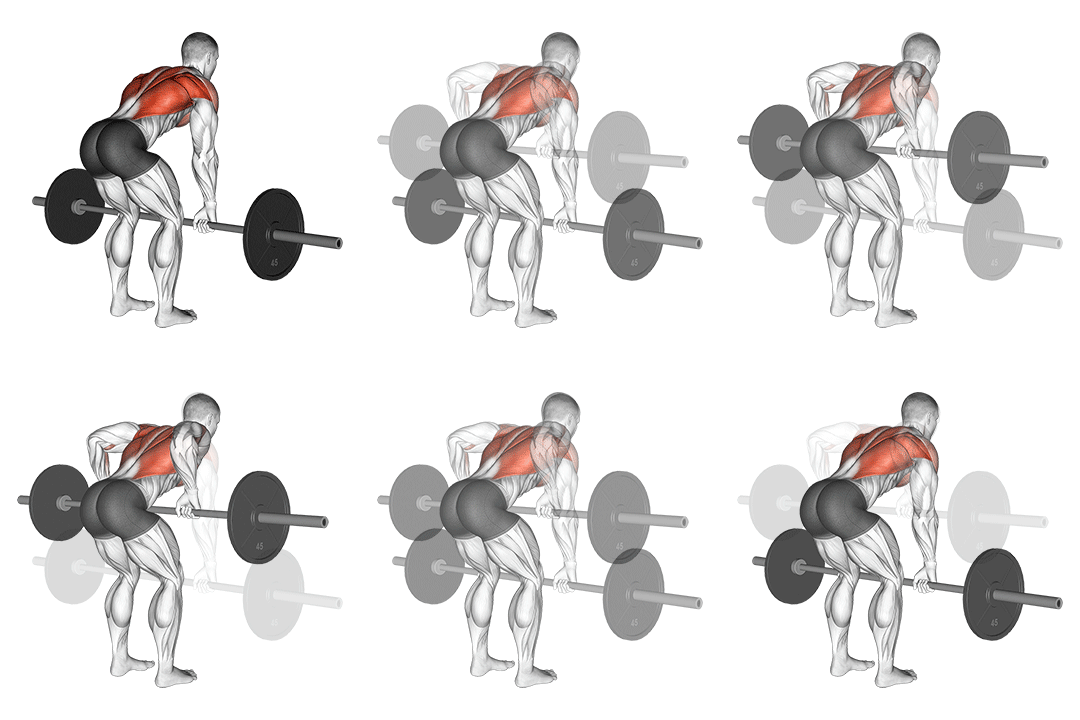
4. Barbell Bent Over Row
78.4% MatchHow to perform this exercise
- Stand with your feet shoulder-width apart and knees slightly bent.
- Bend forward at the hips while keeping your back straight and chest up.
- Grasp the barbell with an overhand grip, hands slightly wider than shoulder-width apart.
- Pull the barbell towards your lower chest by retracting your shoulder blades and squeezing your back muscles.
- Pause for a moment at the top, then slowly lower the barbell back to the starting position.
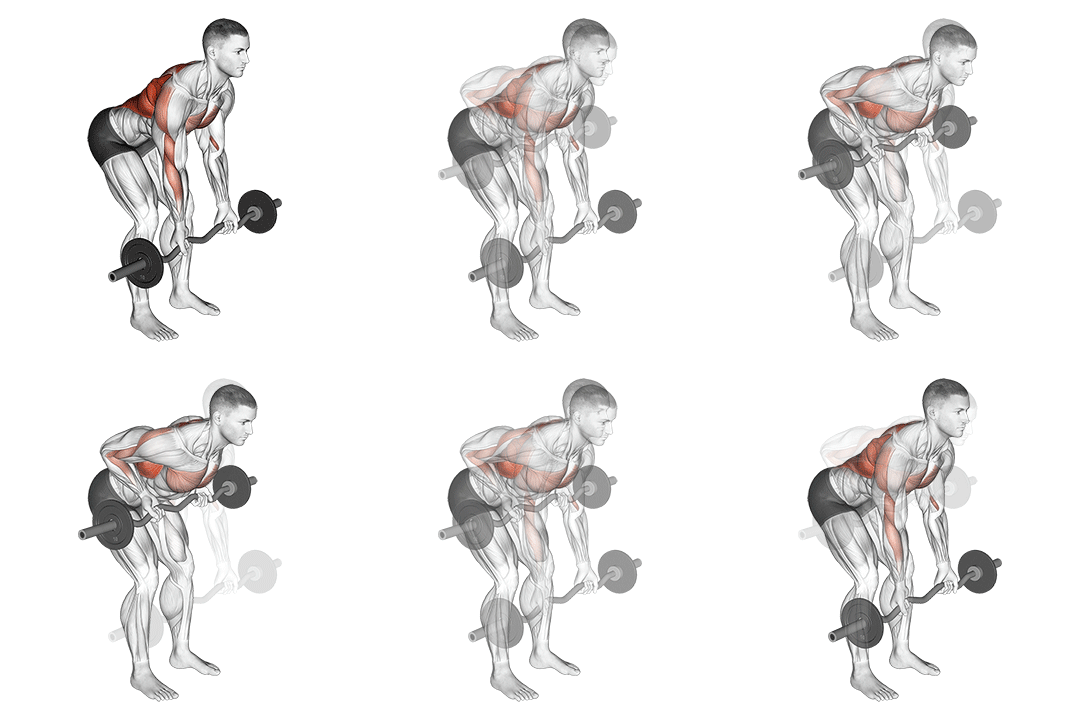
5. Ez Bar Reverse Grip Bent Over Row
78.4% MatchHow to perform this exercise
- Stand with your feet shoulder-width apart and knees slightly bent.
- Hold the ez barbell with an underhand grip, palms facing up, and hands shoulder-width apart.
- Bend forward at the hips, keeping your back straight and chest up, until your torso is almost parallel to the floor.
- Pull the ez barbell towards your lower chest, squeezing your shoulder blades together.
- Pause for a moment at the top, then slowly lower the ez barbell back to the starting position.
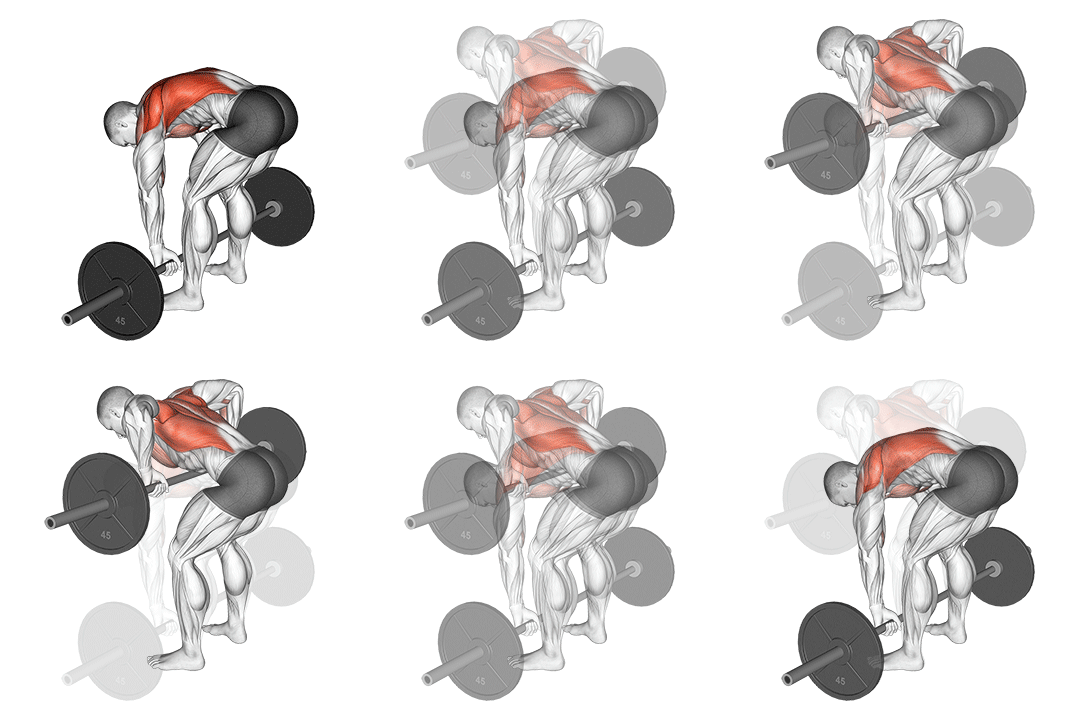
6. Barbell Pendlay Row
77.9% MatchHow to perform this exercise
- Stand with your feet shoulder-width apart and your knees slightly bent.
- Bend forward at the hips, keeping your back straight and your chest up.
- Grasp the barbell with an overhand grip, slightly wider than shoulder-width apart.
- Pull the barbell towards your upper abdomen, squeezing your shoulder blades together.
- Lower the barbell back down to the starting position.
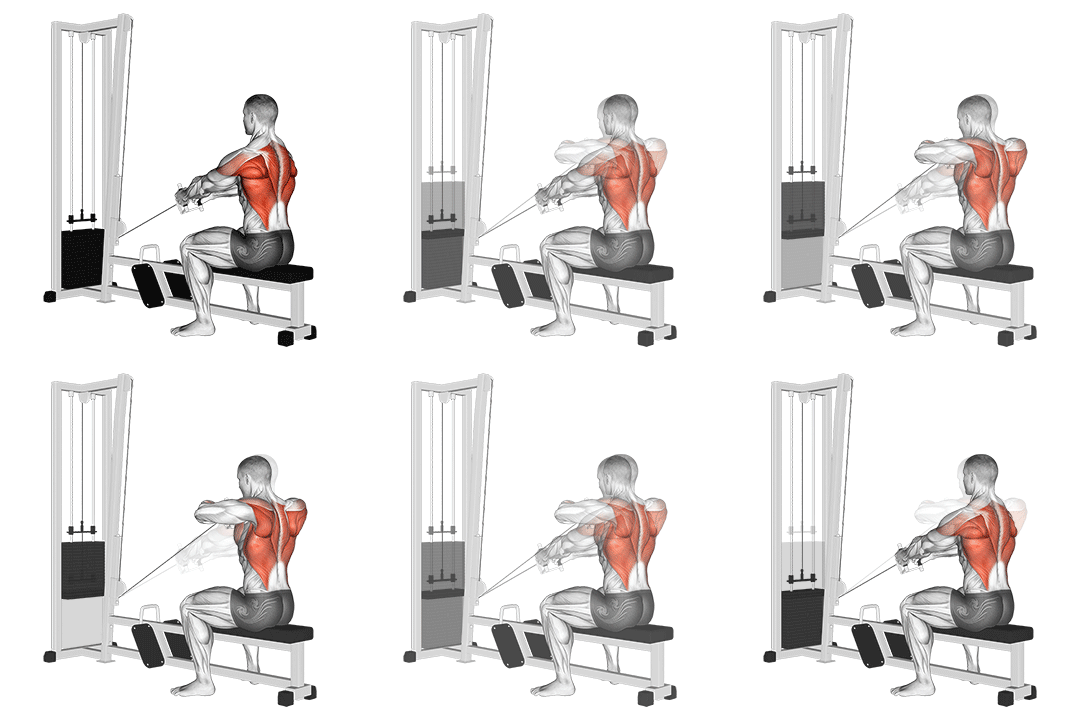
7. Cable Upper Row
76.1% MatchHow to perform this exercise
- Attach a straight bar to a cable machine at chest height.
- Stand facing the machine with your feet shoulder-width apart.
- Grasp the bar with an overhand grip, hands slightly wider than shoulder-width apart.
- Keep your back straight and your core engaged.
- Pull the bar towards your upper chest, squeezing your shoulder blades together.
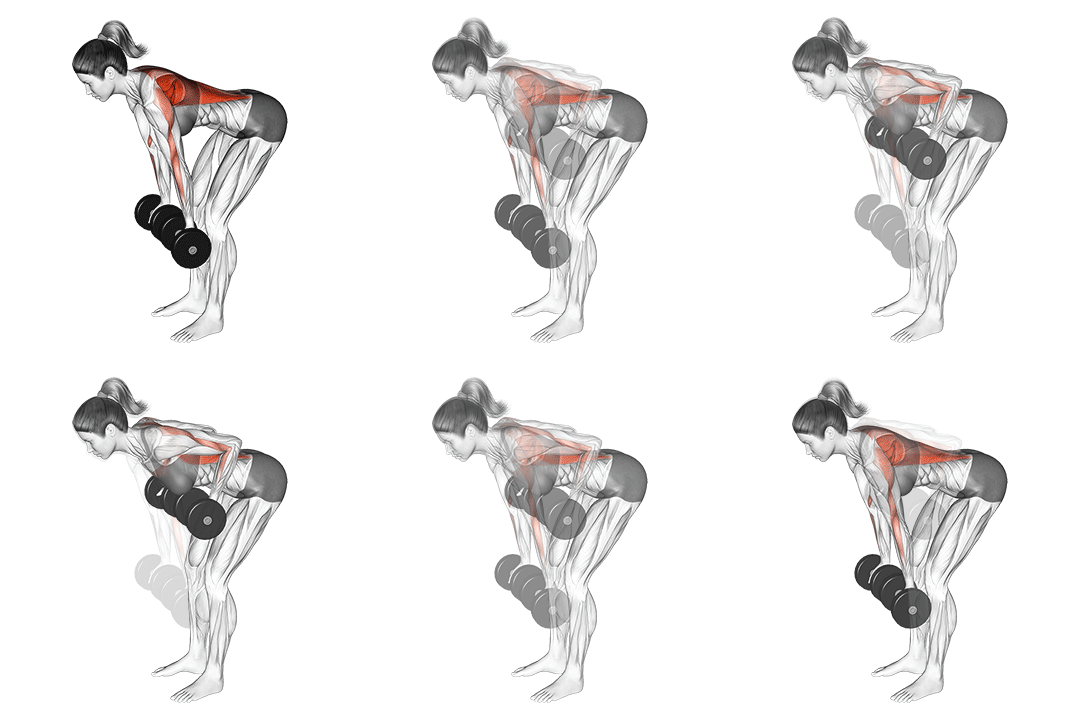
8. Dumbbell Reverse Grip Row (female)
74.5% MatchHow to perform this exercise
- Stand with your feet shoulder-width apart and knees slightly bent.
- Hold a dumbbell in each hand with an overhand grip, palms facing your body.
- Bend forward at the waist, keeping your back straight and your core engaged.
- Let your arms hang straight down, fully extended, with a slight bend in your elbows.
- Pull the dumbbells up towards your chest, squeezing your shoulder blades together.
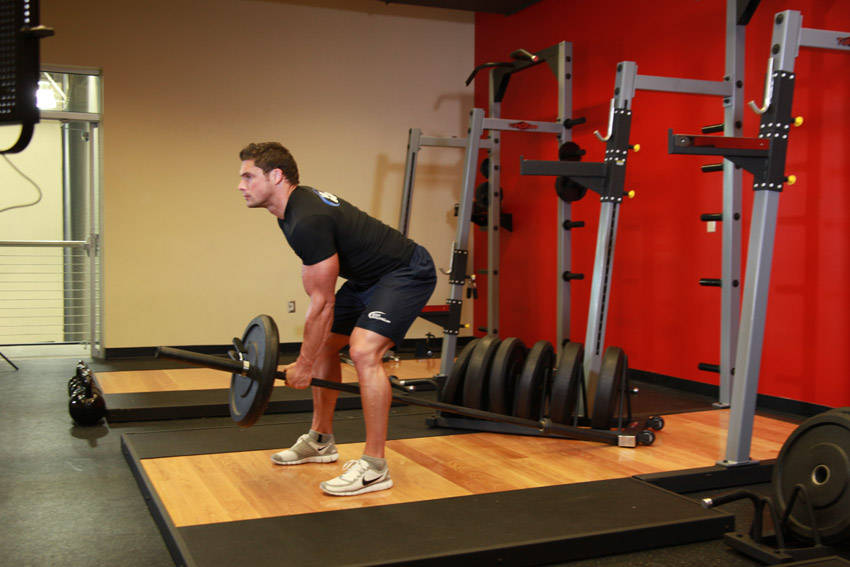
9. Bent Over One-Arm Long Bar Row
73.7% MatchHow to perform this exercise
- Put weight on one of the ends of an Olympic barbell. Make sure that you either place the other end of the barbell in the corner of two walls; or put a heavy object on the ground so the barbell cannot slide backward.
- Bend forward until your torso is as close to parallel with the floor as you can and keep your knees slightly bent.
- Now grab the bar with one arm just behind the plates on the side where the weight was placed and put your other hand on your knee. This will be your starting position.
- Pull the bar straight up with your elbow in (to maximize back stimulation) until the plates touch your lower chest. Squeeze the back muscles as you lift the weight up and hold for a second at the top of the movement. Breathe out as you lift the weight. Tip: Do not allow for any swinging of the torso. Only the arm should move.
- Slowly lower the bar to the starting position getting a nice stretch on the lats. Tip: Do not let the plates touch the floor. To ensure the best range of motion, I recommend using small plates (25-lb ones) as opposed to larger plates (like 35-45lb ones).
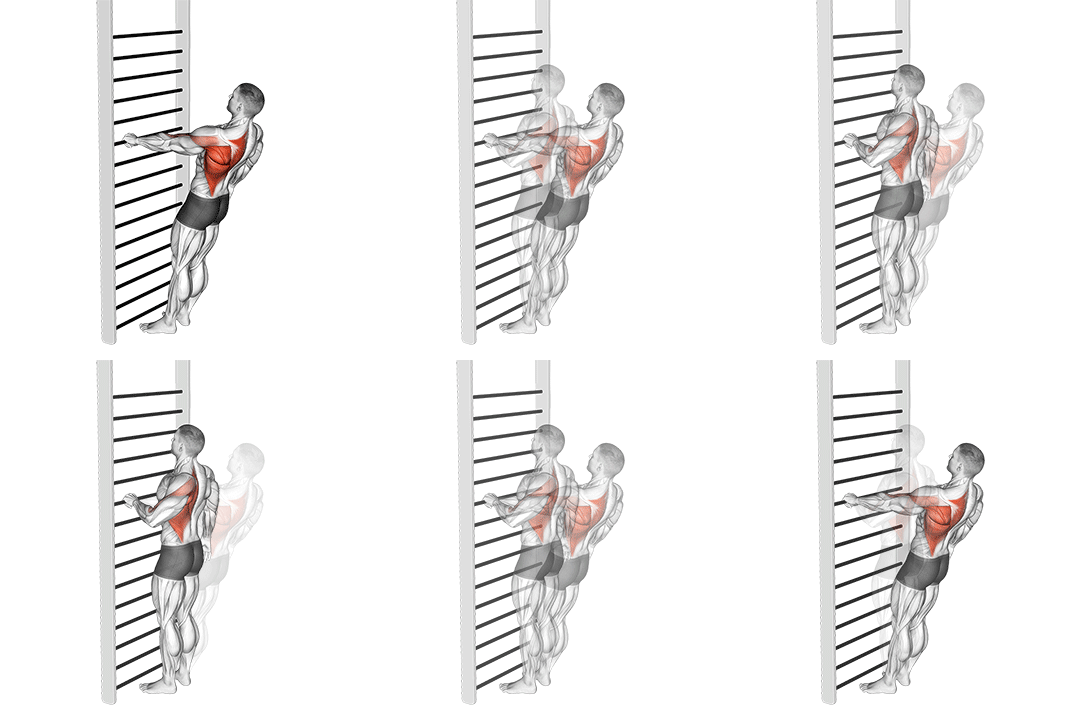
10. Bodyweight Standing One Arm Row
72.3% MatchHow to perform this exercise
- Stand with your feet shoulder-width apart, knees slightly bent, and hold a dumbbell in one hand.
- Bend forward at the hips, keeping your back straight and your core engaged.
- Let the dumbbell hang straight down in front of you, with your arm fully extended.
- Pull the dumbbell up towards your chest, keeping your elbow close to your body.
- Squeeze your shoulder blades together at the top of the movement.
Why You Might Need a Cable One Arm Bent Over Row Alternative
You may swap the Cable One Arm Bent Over Row for shoulder pain, limited access to cable stations, or to correct asymmetries. Shoulder or lower-back irritation often requires reduced torso angle — choose a chest-supported row to remove lumbar shear and maintain scapular retraction. If you lack cables, the single-arm dumbbell or landmine row preserves unilateral loading and similar elbow-driven lat activation. Programming variety also helps: alternating vertical and horizontal pull angles recruits posterior deltoids and mid-traps differently. Use the cue "brace your core and lead the pull with the elbow" to keep clean biomechanics while reducing risk.
How to Choose the Right Substitute
Match the substitute to your limitation and training goal. If you need spinal support pick chest-supported rows or inverted rows to limit lumbar demand; cue "sternum up, hinge at the hips" to preserve thoracic extension. For unilateral weakness choose single-arm dumbbell or landmine rows and emphasize "pull through the elbow" to bias lats. Consider equipment availability (barbell, dumbbell, landmine, rings) and the desired moment arm: higher torso angle increases posterior chain bracing. Track progressive overload with load, tempo, or reps while maintaining scapular retraction and a neutral spine.
Frequently Asked Questions
What muscles does Cable One Arm Bent Over Row work?
It primarily targets the latissimus dorsi, rhomboids, and middle trapezius while recruiting posterior deltoids and biceps as secondary movers. The erector spinae and glutes stabilize the torso, so keep a neutral spine and pull with the elbow to maximize scapular retraction and lat activation.
What is the best bodyweight alternative to Cable One Arm Bent Over Row?
The inverted row (Australian pull-up) is the top bodyweight substitute because it preserves the horizontal-pull pattern and allows unilateral progressions. Keep your body rigid, pull the chest to the bar, and lead the movement with the elbow to emphasize lats and mid-back recruitment.
Can I build muscle without doing Cable One Arm Bent Over Row?
Yes — you can build upper-back muscle using equivalent movement patterns such as single-arm dumbbell rows, barbell bent-over rows, chest-supported rows, and progressively loaded inverted rows. Prioritize progressive overload, full range of motion, and cues like scapular retraction and elbow-driven pulls to ensure similar muscle activation.
More Exercise Alternatives
Find Alternatives for Any Exercise
Use our free tool to discover the best substitute exercises based on your available equipment and goals.
Try the Exercise Substitution Finder →