

10 Best Cable Side Bend Alternatives for Home and Gym
If you can’t perform Cable Side Bends, use weighted side bends, side-plank dips, suitcase carries, band side bends, or controlled Russian twists to target the obliques and waist. Keep hips stacked and initiate the motion from the rib cage toward the hip to replicate lateral flexion and maximize oblique activation.
Original Exercise: Cable Side Bend
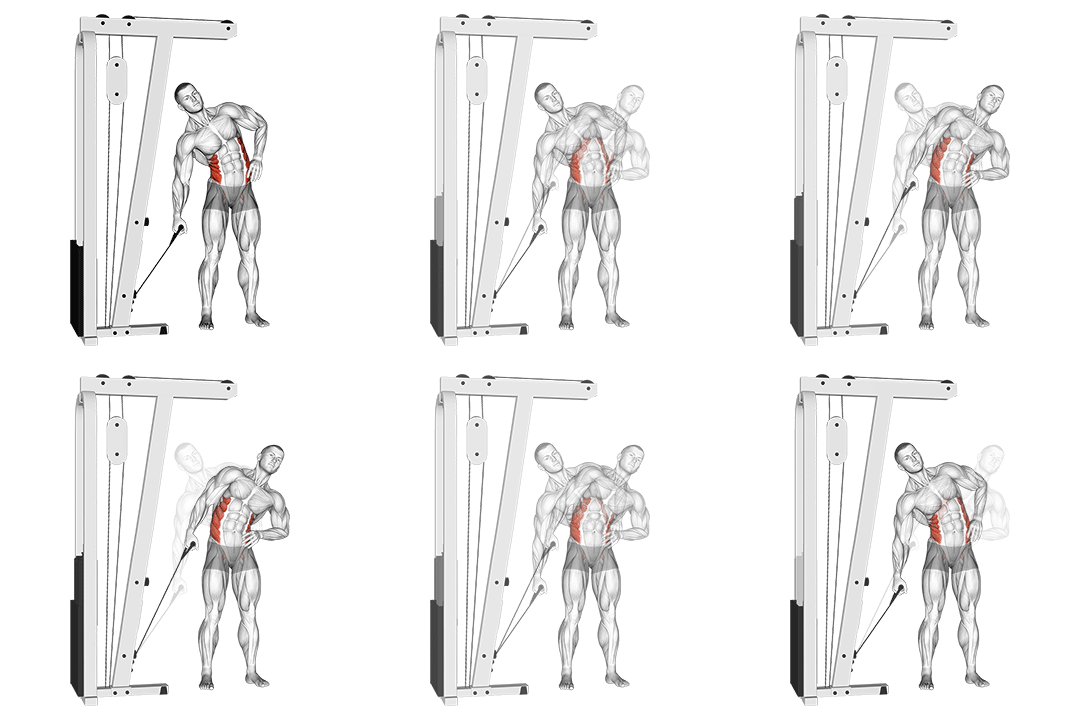
How to Perform Cable Side Bend
- Stand with your feet shoulder-width apart and grasp the cable handle with one hand.
- Keep your back straight and your core engaged.
- Slowly bend sideways at the waist, lowering the cable handle towards your knee.
- Pause for a moment, then return to the starting position.
- Repeat on the other side.
- Alternate sides for the desired number of repetitions.
Best Cable Side Bend Alternatives
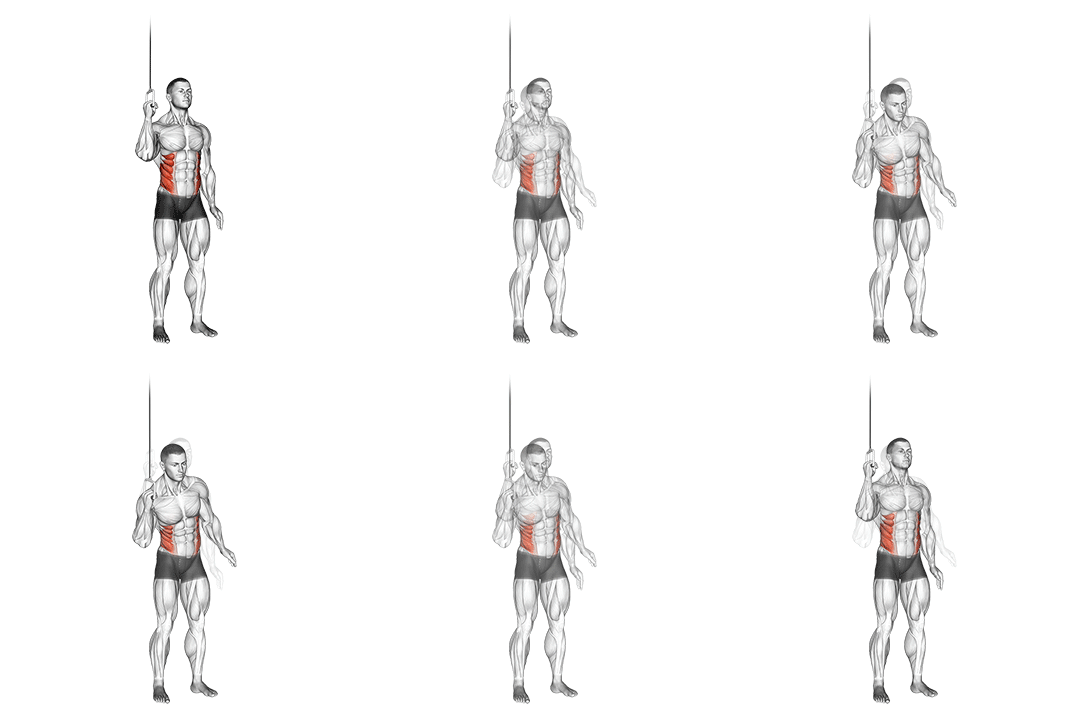
1. Cable Side Crunch
96% MatchHow to perform this exercise
- Attach a cable handle to a low pulley and stand sideways to the machine.
- Grasp the handle with the hand furthest from the machine and place your other hand on your hip.
- Keep your feet shoulder-width apart and your knees slightly bent.
- With your abs engaged, bend sideways at the waist, bringing your elbow down towards your hip.
- Pause for a moment at the bottom, then slowly return to the starting position.
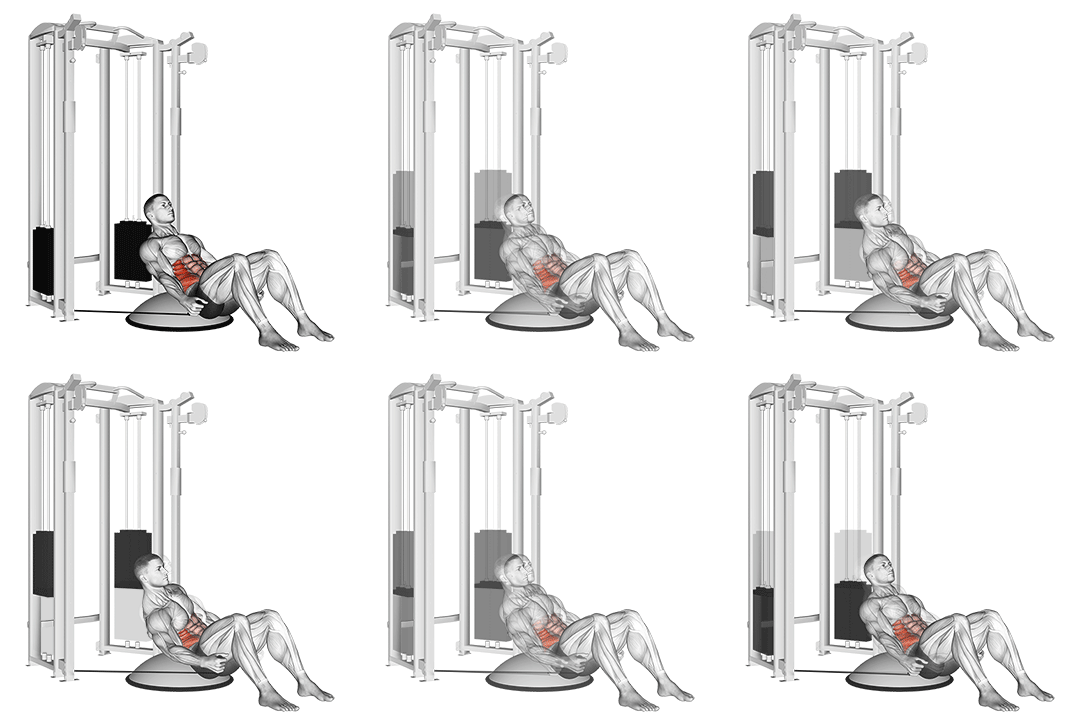
2. Cable Side Bend Crunch (bosu Ball)
91.2% MatchHow to perform this exercise
- Stand with your feet shoulder-width apart, holding a cable handle in one hand.
- Place the other hand on your hip.
- Engage your core and slowly bend sideways towards the hand holding the cable, keeping your back straight.
- Pause for a moment at the bottom of the movement, then slowly return to the starting position.
- Repeat for the desired number of repetitions, then switch sides.
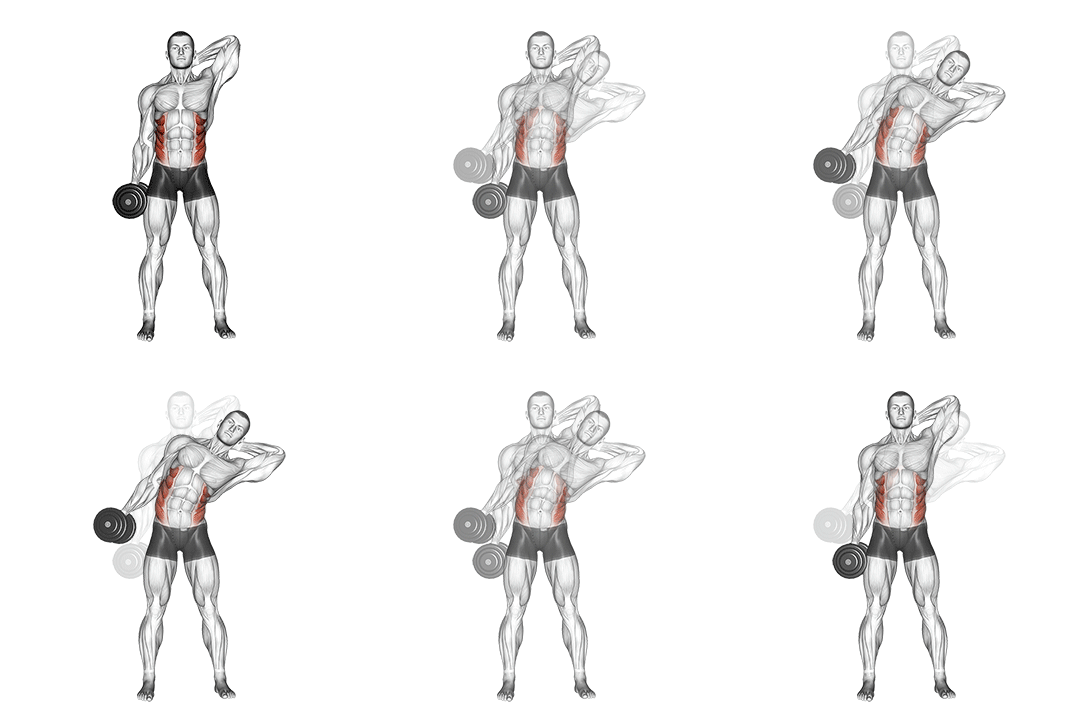
3. Dumbbell Side Bend
84.2% MatchHow to perform this exercise
- Stand up straight with your feet shoulder-width apart and hold a dumbbell in one hand, letting it hang down by your side.
- Keeping your back straight and your core engaged, slowly bend sideways at the waist towards the opposite side of the dumbbell, lowering the weight as far as you comfortably can.
- Pause for a moment, then slowly return to the starting position.
- Repeat for the desired number of repetitions, then switch sides and repeat.
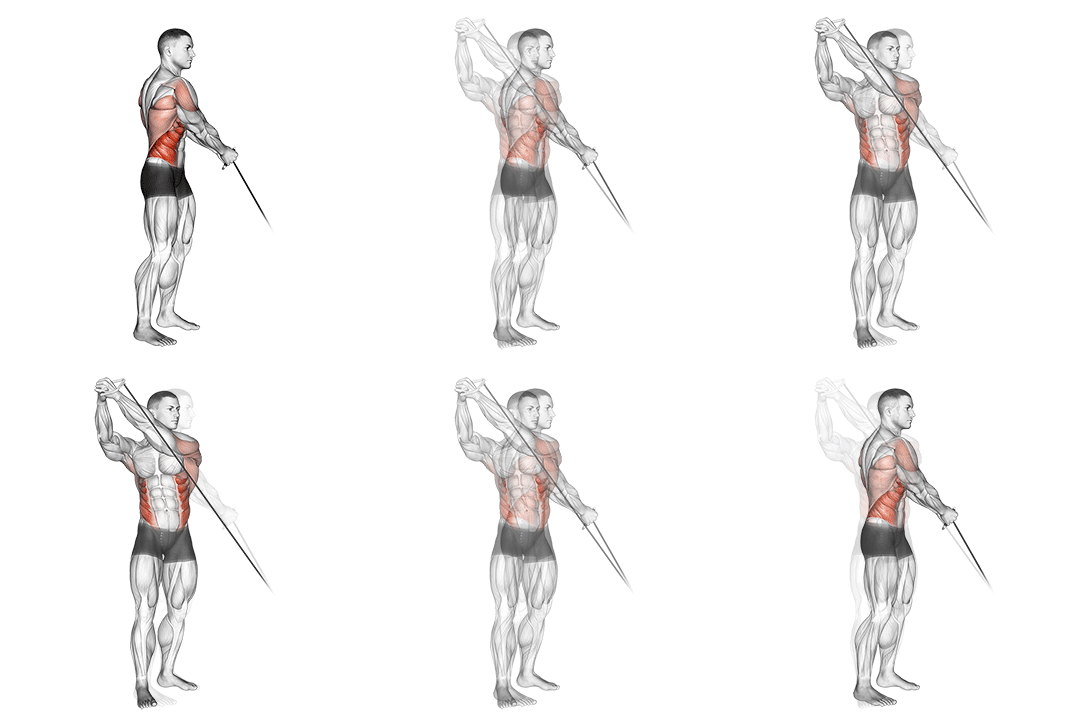
4. Cable Standing Lift
81.4% MatchHow to perform this exercise
- Stand facing the cable machine with your feet shoulder-width apart.
- Hold the cable handle with both hands and position it at waist height.
- Engage your core and maintain a straight back throughout the exercise.
- Keeping your arms straight, exhale and lift the cable handle up towards your opposite shoulder, rotating your torso.
- Pause for a moment at the top, then inhale and slowly lower the cable handle back to the starting position.
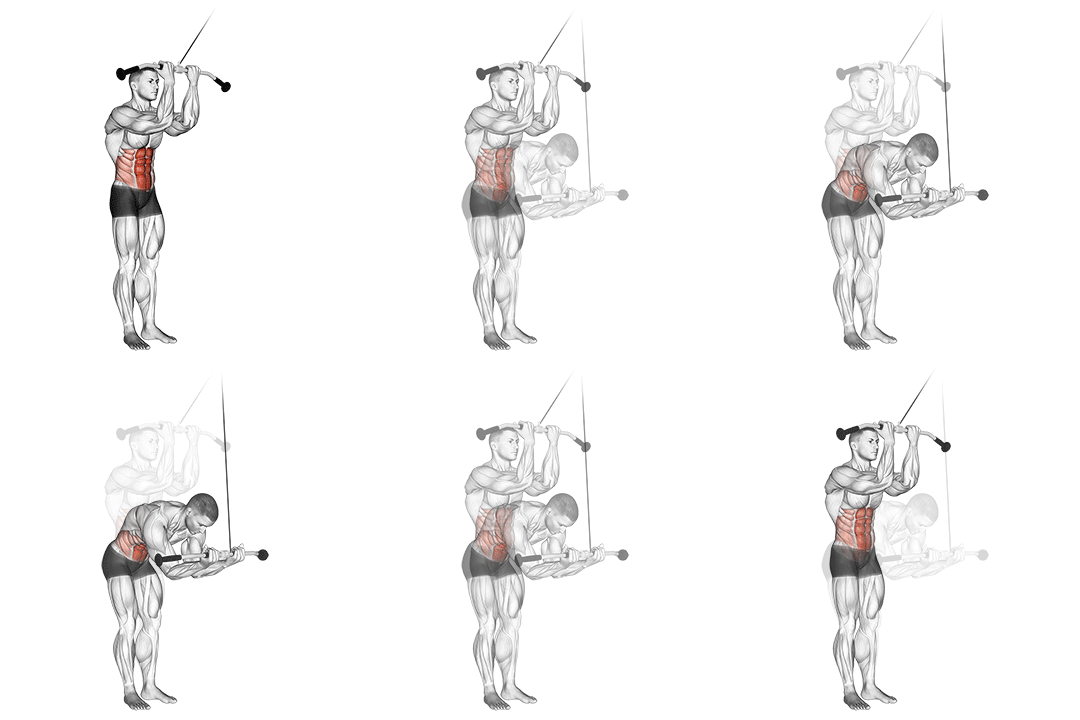
5. Cable Standing Crunch
79.2% MatchHow to perform this exercise
- Attach a cable handle to a high pulley and stand facing away from the machine.
- Hold the handle with both hands and place it behind your head, keeping your elbows bent.
- Stand with your feet shoulder-width apart and your knees slightly bent.
- Keeping your abs engaged, exhale and crunch your torso down towards your knees, bringing your elbows towards your thighs.
- Pause for a moment at the bottom of the movement, then slowly return to the starting position.
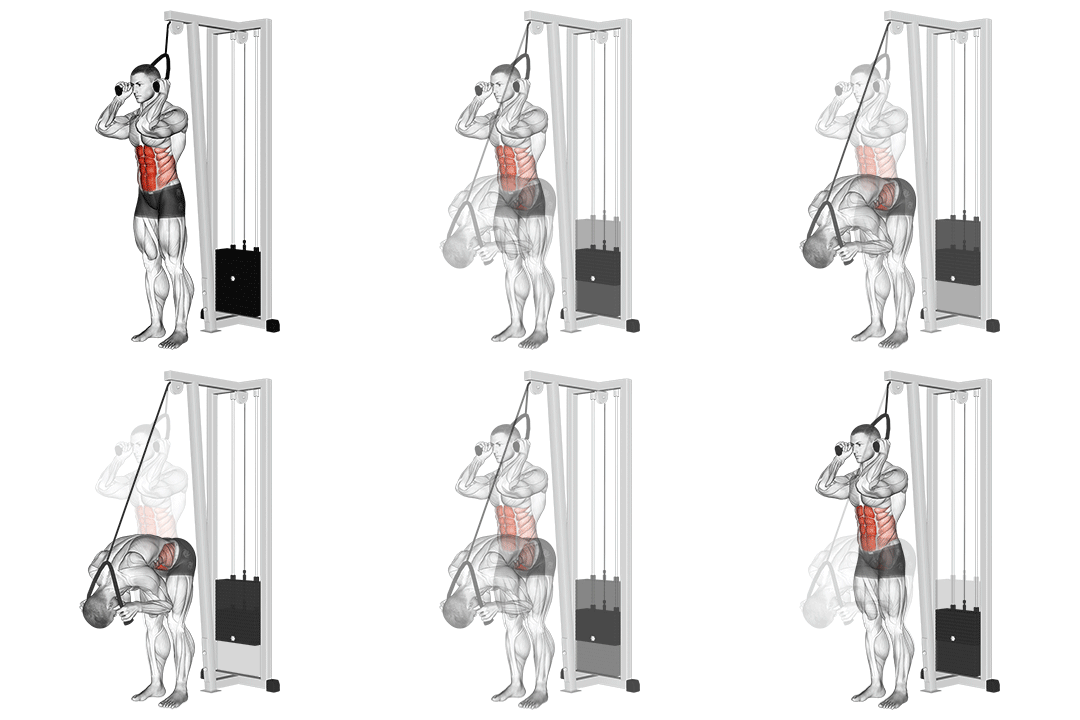
6. Cable Standing Crunch (with Rope Attachment)
79.2% MatchHow to perform this exercise
- Attach a rope to a cable machine at chest height.
- Stand facing away from the machine with your feet shoulder-width apart.
- Hold the rope with both hands and bring it behind your head, keeping your elbows bent.
- Engage your abs and slowly crunch your torso forward, bringing your elbows towards your knees.
- Pause for a moment at the top of the crunch, then slowly return to the starting position.
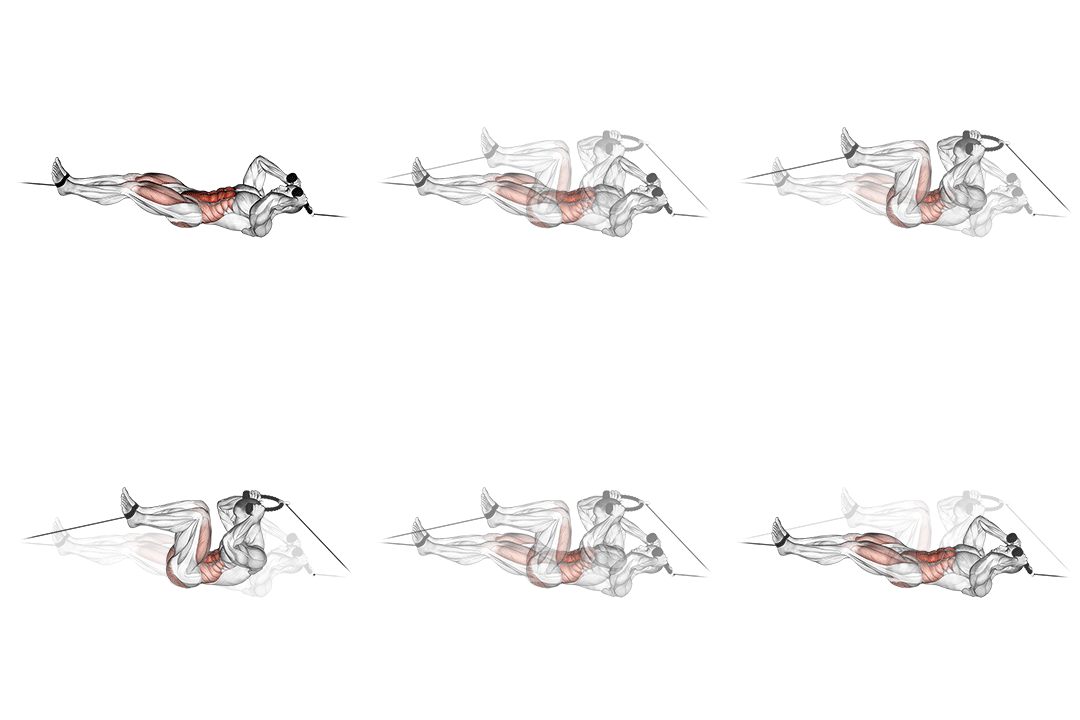
7. Cable Tuck Reverse Crunch
79.2% MatchHow to perform this exercise
- Attach a cable to a low pulley and lie down on a mat facing up.
- Hold the cable with both hands and extend your arms straight up above your chest.
- Bend your knees and lift your legs up, bringing your knees towards your chest.
- At the same time, curl your pelvis up towards your chest, lifting your hips off the ground.
- Pause for a moment at the top, then slowly lower your legs and hips back down to the starting position.
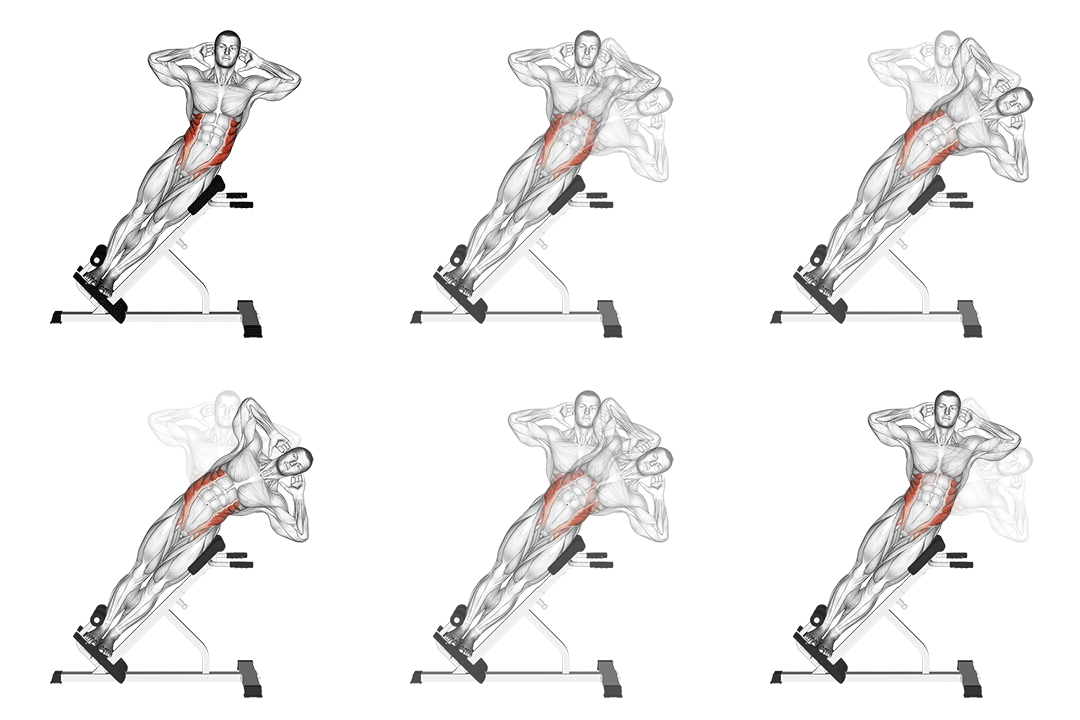
8. 45° Side Bend
75.4% MatchHow to perform this exercise
- Stand with your feet shoulder-width apart and your arms extended straight down by your sides.
- Keeping your back straight and your core engaged, slowly bend your torso to one side, lowering your hand towards your knee.
- Pause for a moment at the bottom, then slowly return to the starting position.
- Repeat on the other side.
- Continue alternating sides for the desired number of repetitions.
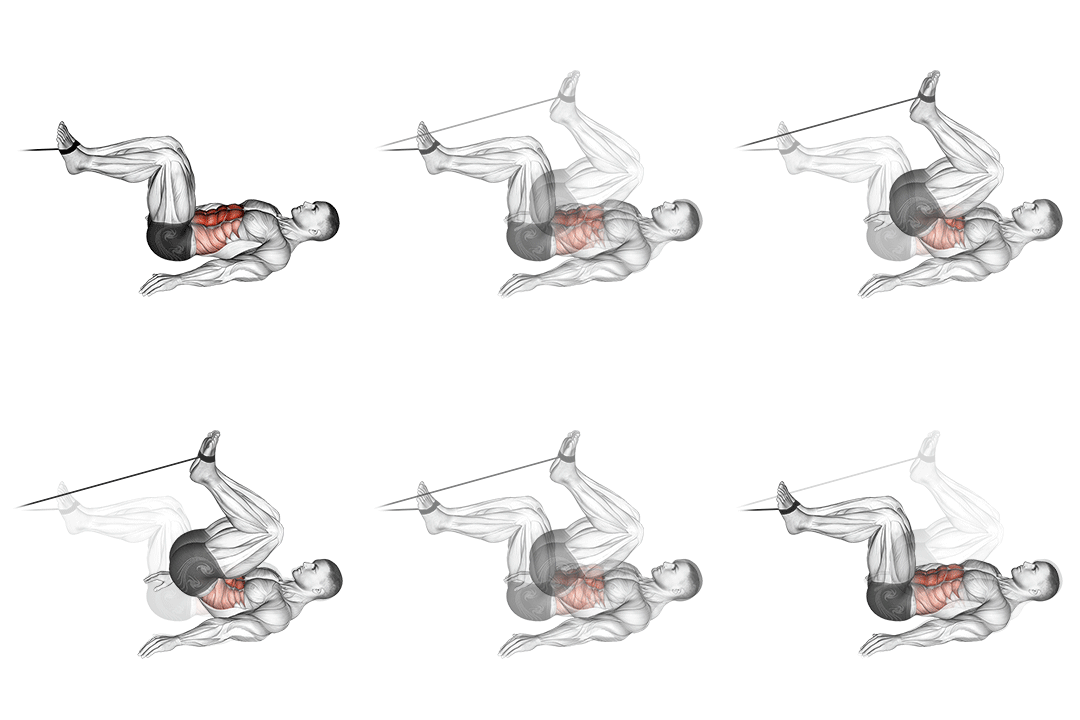
9. Cable Reverse Crunch
71.2% MatchHow to perform this exercise
- Attach a cable to a low pulley and lie down facing up on a mat.
- Hold the cable with both hands and extend your arms straight up towards the ceiling.
- Bend your knees and lift your legs up, bringing your thighs towards your chest.
- While keeping your upper body stable, curl your pelvis up towards your chest, lifting your hips off the mat.
- Pause for a moment at the top, then slowly lower your hips back down to the starting position.
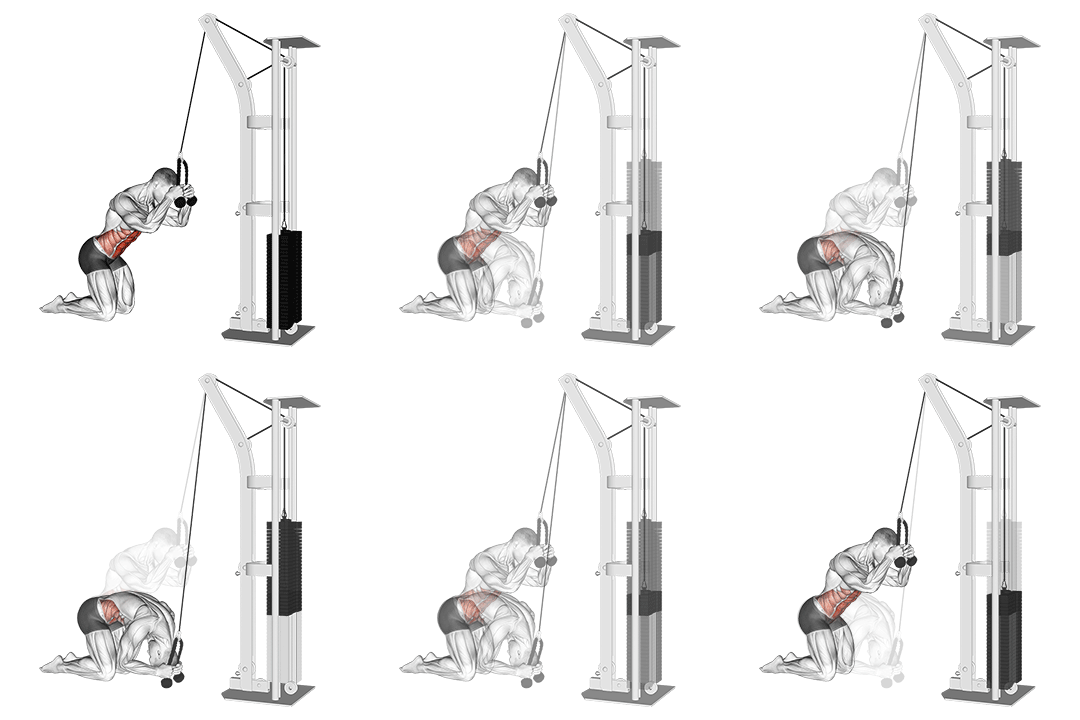
10. Cable Kneeling Crunch
70.7% MatchHow to perform this exercise
- Attach a rope handle to a high pulley and kneel down facing away from the machine.
- Hold the rope handle with both hands and place it behind your head, keeping your elbows out to the sides.
- Keeping your hips stationary, flex your waist and crunch your torso down towards your thighs.
- Pause for a moment at the bottom, then slowly return to the starting position.
- Repeat for the desired number of repetitions.
Why You Might Need a Cable Side Bend Alternative
You may substitute Cable Side Bends for several reasons: lack of cable equipment, low-back pain that makes loaded lateral flexion uncomfortable, or a training goal that favors anti-lateral flexion stability instead of pure side-bending. Cable side bends load the obliques through lateral flexion of the lumbar spine; if that loading is contraindicated, choose isometric or unloaded options. Also swap exercises when you need progressive overload or different tempo work — for example, switch to dumbbell side bends and use slow eccentrics. When selecting a substitute, keep the pelvis fixed, brace your core, and avoid excessive hip shift to preserve oblique emphasis and reduce lumbar shear.
How to Choose the Right Substitute
Pick a substitute based on movement plane, loading capacity, and spine tolerance. If you want the same lateral-flexion stimulus, choose unilateral weighted side bends or band side bends and keep hips square while driving the rib cage toward the hip. If you need spine-friendly options, select side-plank variations that train anti-lateral flexion; cue a long spine and stacked hips to force oblique isometric work. Consider equipment: dumbbells, kettlebells, or bands can replicate cable tension. Finally, match intensity—use heavier loads for hypertrophy, higher time under tension for endurance, and slow eccentrics to increase muscle damage safely.
Frequently Asked Questions
What muscles does Cable Side Bend work?
Cable Side Bend primarily targets the external and internal obliques through lateral flexion of the lumbar spine. The quadratus lumborum and rectus abdominis contribute to the movement and stabilization; you should feel the oblique contract as you draw the rib cage toward the hip.
What is the best bodyweight alternative to Cable Side Bend?
The best bodyweight alternative is the side plank with slow hip dips — it trains the obliques under tension without heavy spinal flexion. Keep hips stacked, brace your core, and lower the hip toward the floor slowly to increase oblique loading and control.
Can I build muscle without doing Cable Side Bend?
Yes. You can build oblique muscle with other loaded or high-tension exercises like dumbbell side bends, suitcase carries, and weighted Russian twists. Focus on progressive overload and technique — maintain a neutral pelvis and emphasize slow eccentrics or increased time under tension to drive hypertrophy.
More Exercise Alternatives
Find Alternatives for Any Exercise
Use our free tool to discover the best substitute exercises based on your available equipment and goals.
Try the Exercise Substitution Finder →