

10 Best Cable Standing Lift Alternatives for Core Strength
The Cable Standing Lift is done standing with a cable machine. Ranked closest by our scoring: the Hanging Leg Raise, the Hanging Straight Leg Hip Raise and the Hanging Straight Leg Raise.
Updated Ranked by our 12-factor similarity model How it works
Original Exercise: Cable Standing Lift
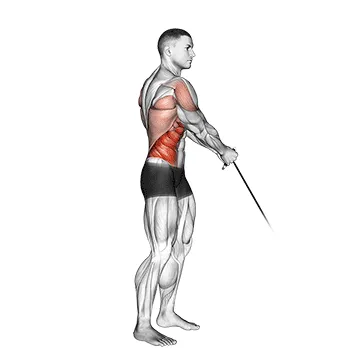
- Primary muscle
- Abs
- Equipment
- Cable
- Difficulty
- Intermediate
- Type
- Compound
Secondary muscles: Obliques, Lower Back
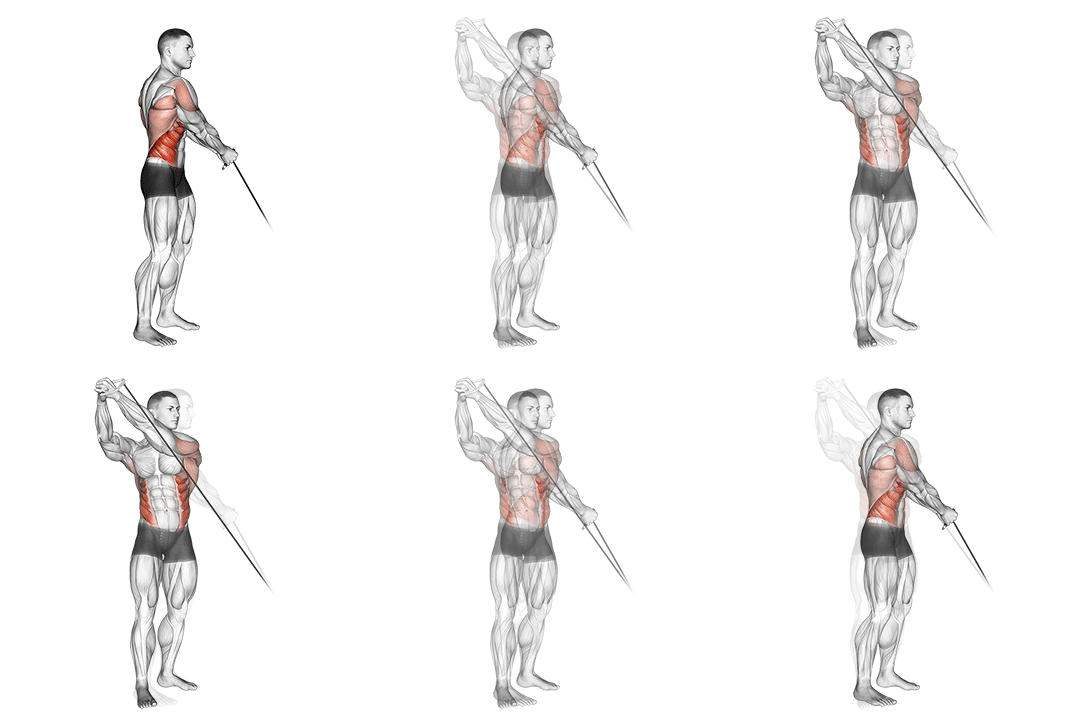
How to perform Cable Standing Lift
- Stand facing the cable machine with your feet shoulder-width apart.
- Hold the cable handle with both hands and position it at waist height.
- Engage your core and maintain a straight back throughout the exercise.
- Keeping your arms straight, exhale and lift the cable handle up towards your opposite shoulder, rotating your torso.
- Pause for a moment at the top, then inhale and slowly lower the cable handle back to the starting position.
- Repeat for the desired number of repetitions, then switch sides.
Ranked Cable Standing Lift Alternatives
10 substitutes, ranked by how closely each one matches the Cable Standing Lift on movement pattern, muscles worked, equipment and body position. The higher the score, the less you change. Open "How to perform this exercise" on a card for the steps; every card title links to that exercise's own alternatives page.
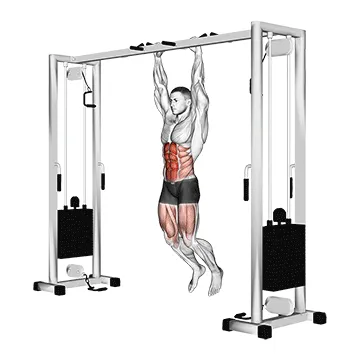
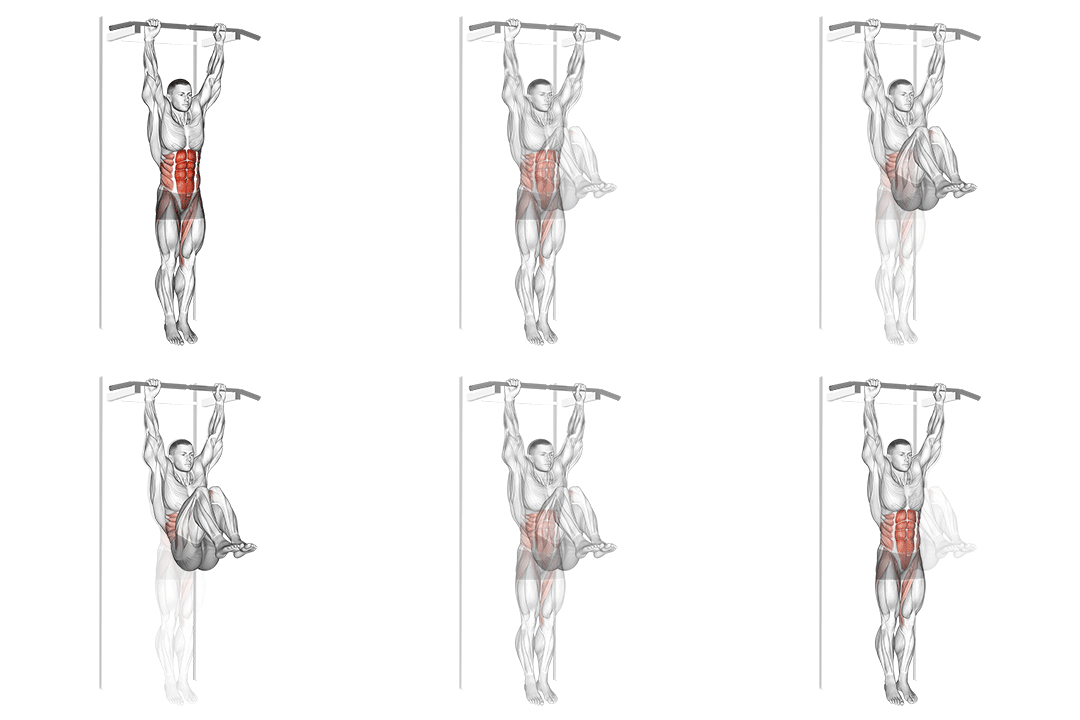
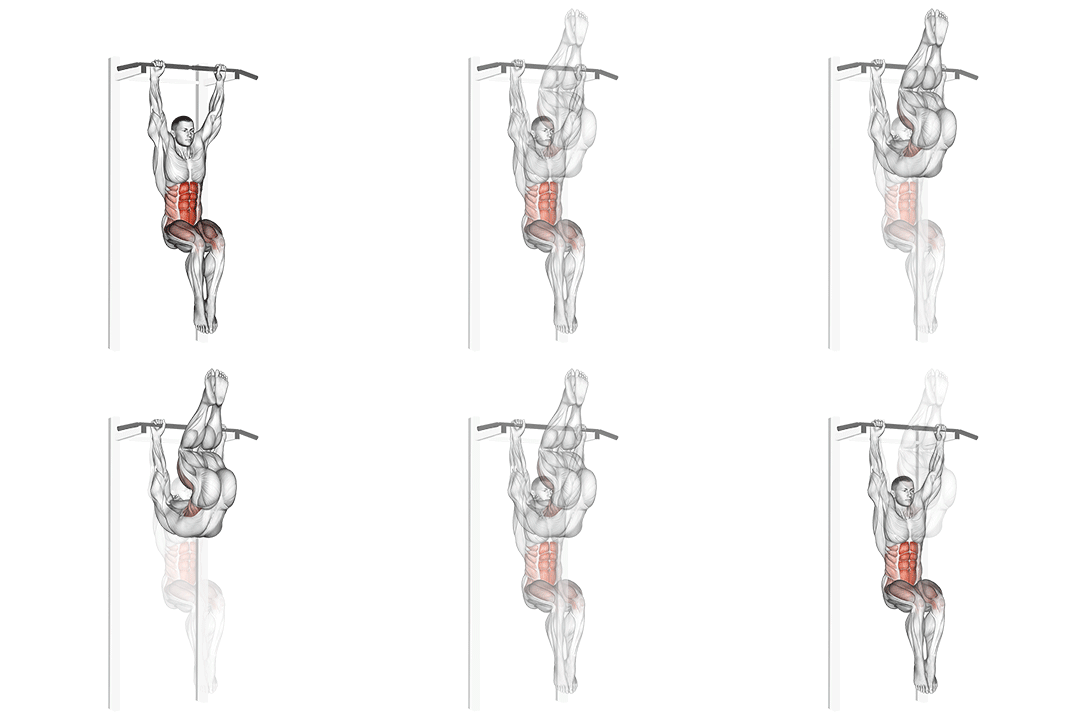
Best match 1. Hanging Leg Raise
69% match- Abs
- Bodyweight
- Advanced
- Compound
Use this when you have nothing to train with, because it works the abs with bodyweight alone.
How to perform this exercise
- Hang from a pull-up bar with your arms fully extended and your palms facing away from you.
- Engage your core and lift your legs up in front of you, keeping them straight.
- Continue lifting until your legs are parallel to the ground or as high as you can comfortably go.
- Pause for a moment at the top, then slowly lower your legs back down to the starting position.
- Repeat for the desired number of repetitions.
Sets and reps: 3 or 4 sets of 6 to 10 reps.
Why this matches
- Primary muscle: abs, the same as the Cable Standing Lift
- Equipment: bodyweight only, not a cable
- Body position: hanging, not standing
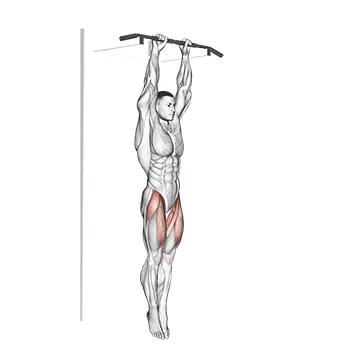
2. Hanging Straight Leg Hip Raise
69% match- Abs
- Bodyweight
- Advanced
- Compound
How to perform this exercise
- Hang from a pull-up bar with your arms fully extended and your palms facing away from you.
- Engage your core and lift your legs up in front of you until they are parallel to the ground.
- Pause for a moment at the top, then slowly lower your legs back down to the starting position.
- Repeat for the desired number of repetitions.
Sets and reps: 3 or 4 sets of 6 to 10 reps.
Why this matches
- Primary muscle: abs, the same as the Cable Standing Lift
- Equipment: bodyweight only, not a cable
- Body position: hanging, not standing
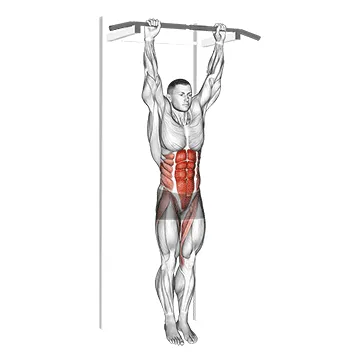
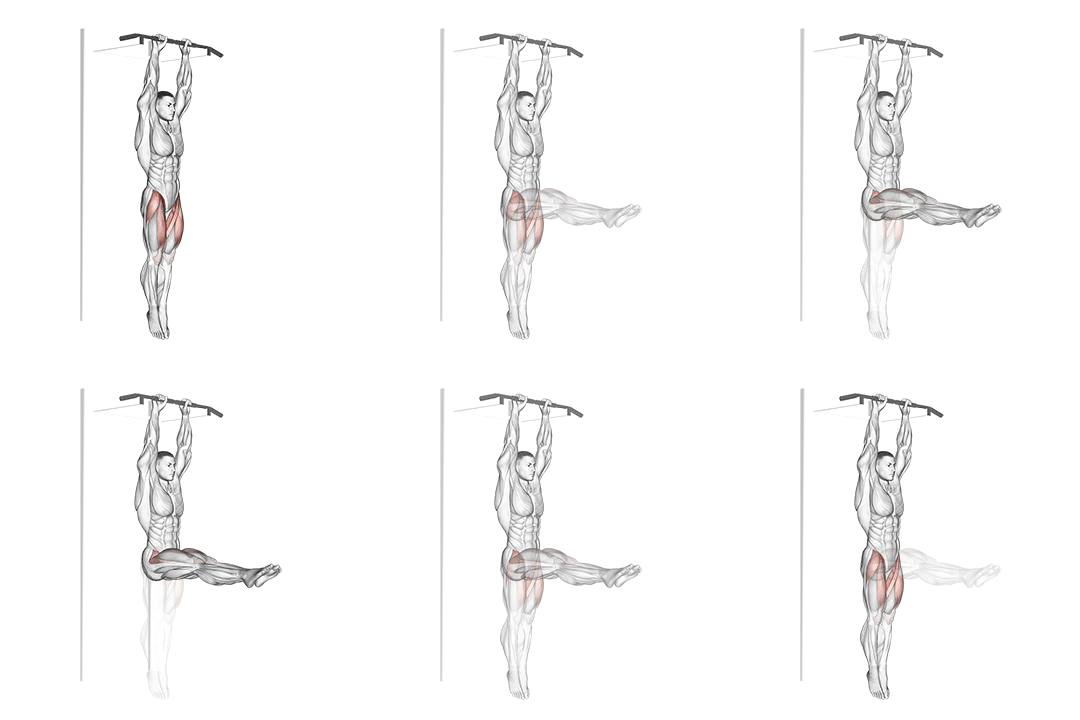
3. Hanging Straight Leg Raise
69% match- Abs
- Bodyweight
- Advanced
- Compound
How to perform this exercise
- Hang from a pull-up bar with your arms fully extended and your palms facing away from you.
- Engage your core and lift your legs up in front of you, keeping them straight.
- Continue lifting until your legs are parallel to the ground or as high as you can comfortably go.
- Pause for a moment at the top, then slowly lower your legs back down to the starting position.
- Repeat for the desired number of repetitions.
Sets and reps: 3 or 4 sets of 6 to 10 reps.
Why this matches
- Primary muscle: abs, the same as the Cable Standing Lift
- Equipment: bodyweight only, not a cable
- Body position: hanging, not standing
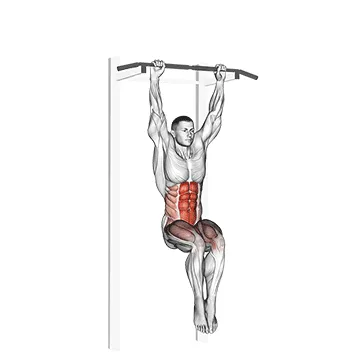
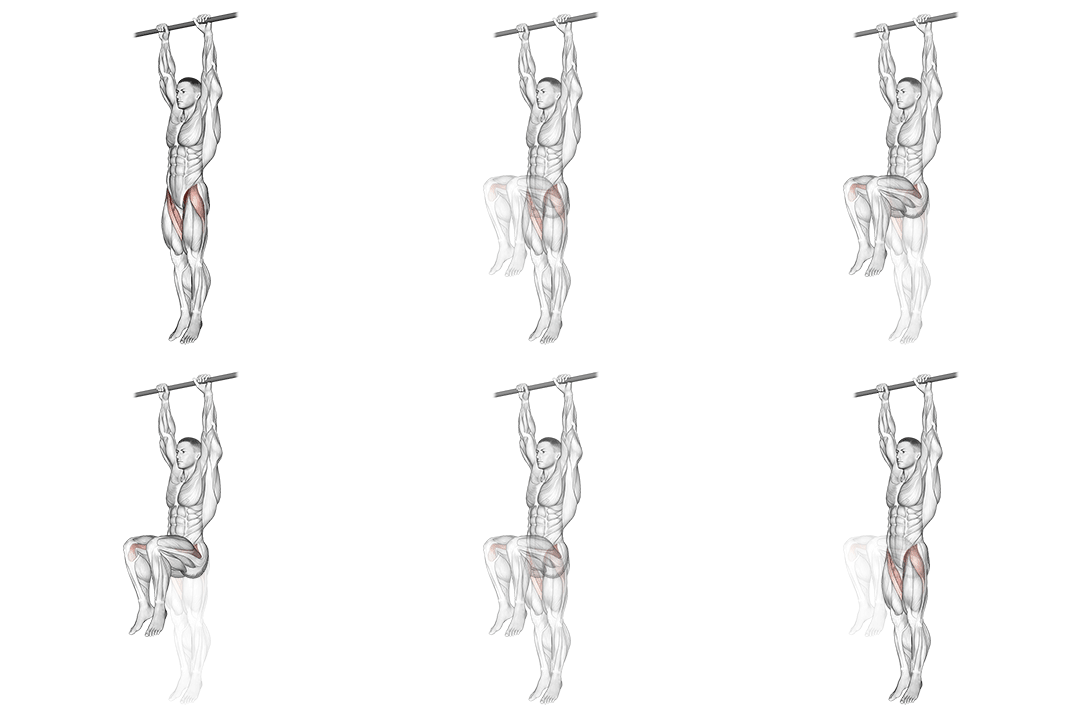
4. Hanging Leg Hip Raise
68% match- Abs
- Bodyweight
- Advanced
- Compound
How to perform this exercise
- Hang from a pull-up bar with your arms fully extended and your palms facing away from you.
- Engage your core and lift your legs up by flexing your hips and knees until your thighs are parallel to the ground.
- Pause for a moment at the top, then slowly lower your legs back down to the starting position.
- Repeat for the desired number of repetitions.
Sets and reps: 3 or 4 sets of 6 to 10 reps.
Why this matches
- Primary muscle: abs, the same as the Cable Standing Lift
- Equipment: bodyweight only, not a cable
- Body position: hanging, not standing
- Balance: harder to stay steady on than the Cable Standing Lift
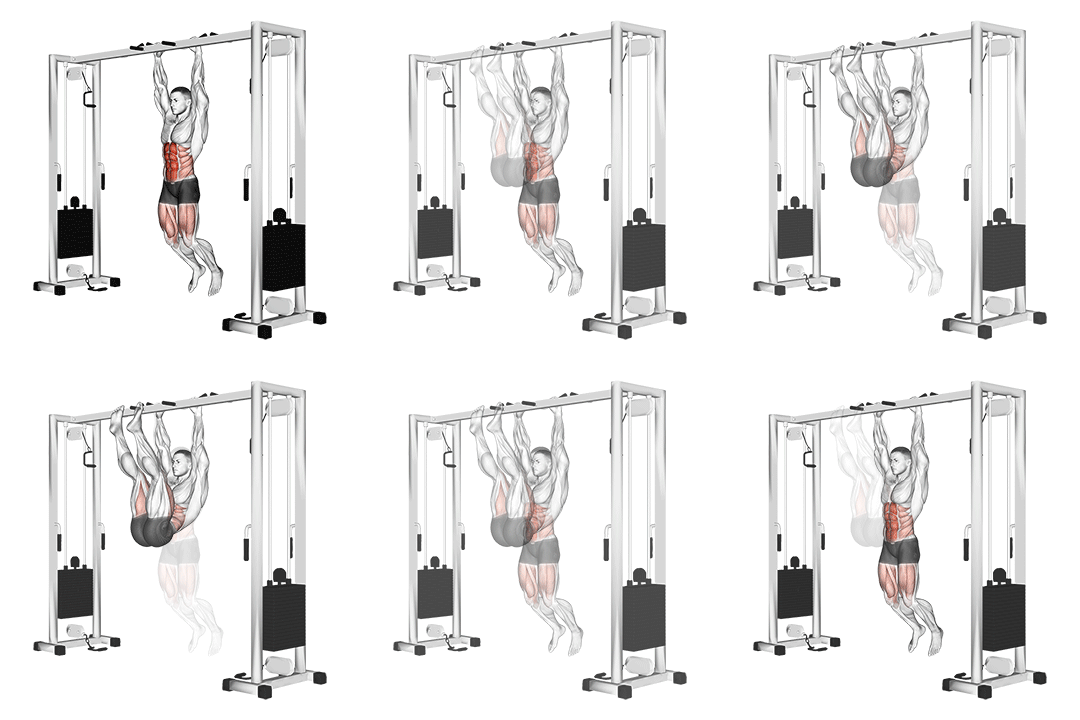
5. Hanging Pike
67% match- Abs
- Bodyweight
- Advanced
- Compound
How to perform this exercise
- Hang from a pull-up bar with your arms fully extended and your palms facing away from you.
- Engage your core and lift your legs up towards the bar, keeping them straight.
- Continue lifting until your body forms a 'V' shape, with your legs parallel to the ground.
- Hold the position for a moment, then slowly lower your legs back down to the starting position.
- Repeat for the desired number of repetitions.
Sets and reps: 3 or 4 sets of 6 to 10 reps.
Why this matches
- Primary muscle: abs, the same as the Cable Standing Lift
- Equipment: bodyweight only, not a cable
- Body position: hanging, not standing
- Balance: harder to stay steady on than the Cable Standing Lift
6. Cocoons
65% match- Abs
- Bodyweight
- Beginner
- Isolation
How to perform this exercise
- Lie flat on your back with your knees bent and feet flat on the ground.
- Place your hands behind your head with your elbows pointing outwards.
- Engaging your abs, slowly lift your upper body off the ground, curling forward until your torso is at a 45-degree angle.
- Pause for a moment at the top, then slowly lower your upper body back down to the starting position.
- Repeat for the desired number of repetitions.
Sets and reps: 3 sets of 8 to 12 reps, and add reps before you add load.
Why this matches
- Primary muscle: abs, the same as the Cable Standing Lift
- Equipment: bodyweight only, not a cable
- Body position: lying on your back, not standing
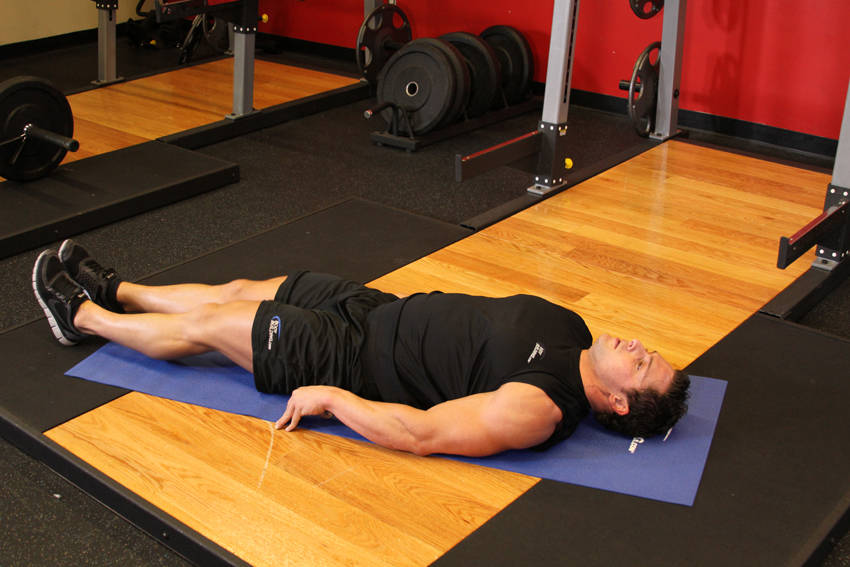
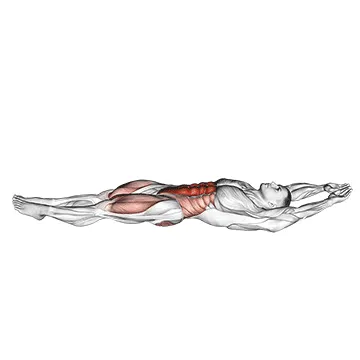
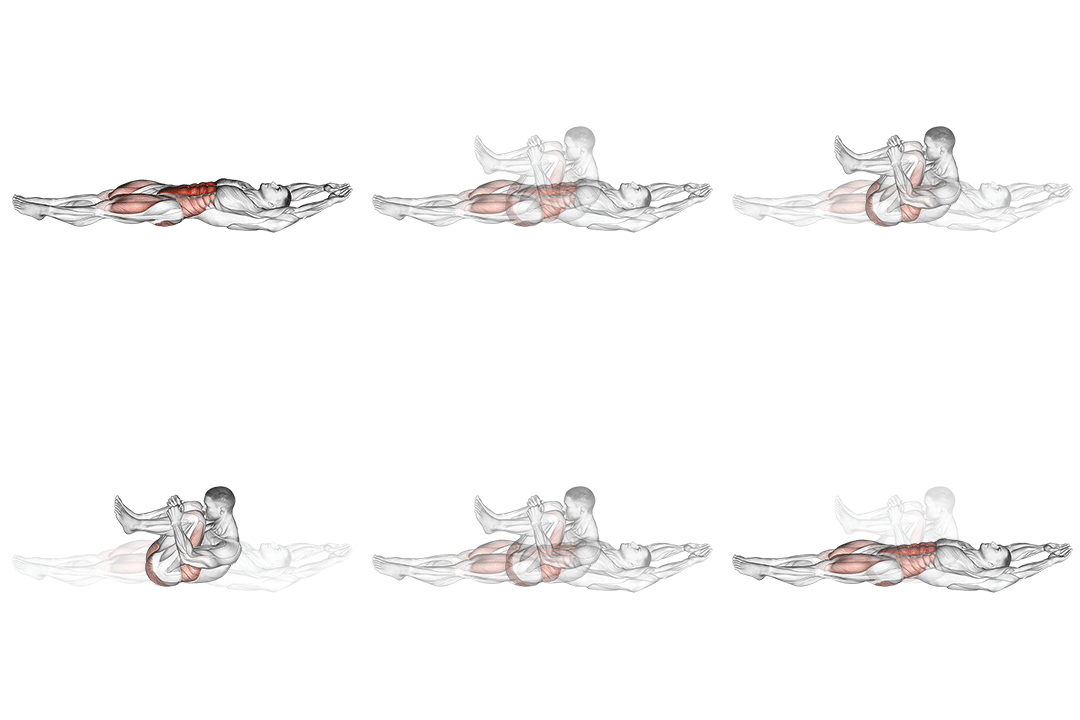
7. Leg Pull-in
65% match- Abs
- Bodyweight
- Intermediate
- Compound
How to perform this exercise
- Lie on an exercise mat with your legs extended and your hands either palms facing down next to you or under your glutes. Tip: My preference is with the hands next to me. This will be your starting position.
- Bend your knees and pull your upper thighs into your midsection as you breathe out. Continue the motion until your knees are around chest level. Contract your abs as you execute this movement and hold for a second at the top. Tip: As you perform the motion, the lower legs (calves) should always remain parallel to the floor.
- Return to the starting position as you inhale.
- Repeat for the recommended amount of repetitions.
Sets and reps: 3 or 4 sets of 6 to 10 reps.
Why this matches
- Primary muscle: abs, the same as the Cable Standing Lift
- Equipment: bodyweight only, not a cable
- Body position: hanging, not standing
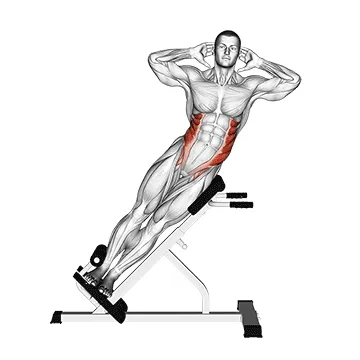
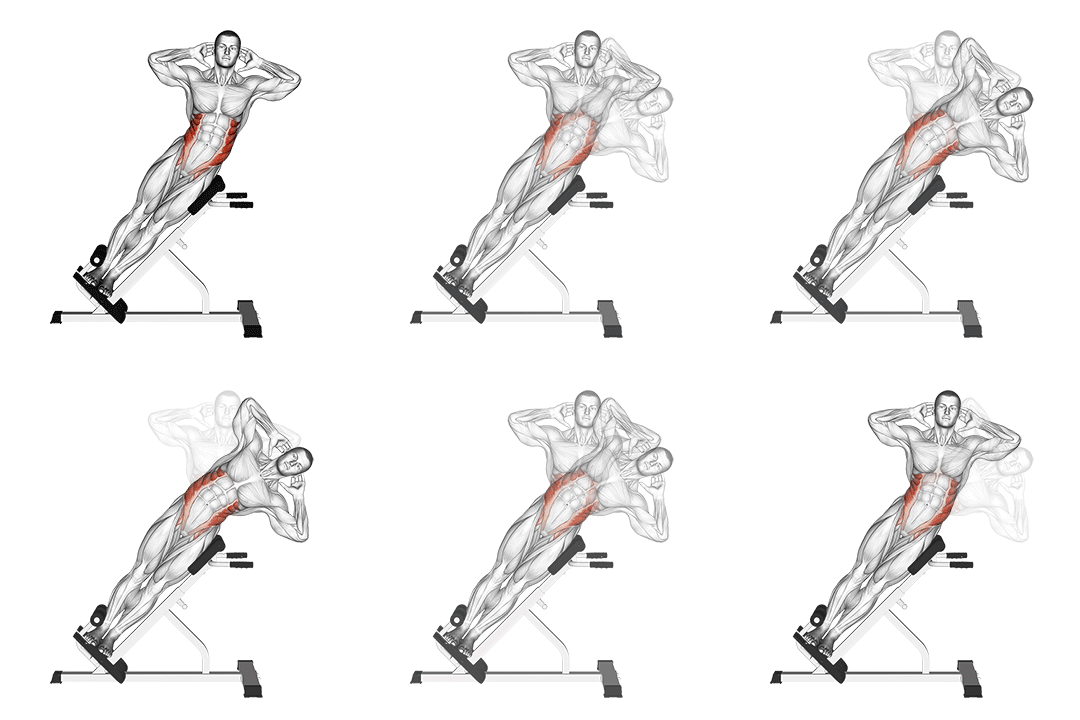
8. 45° Side Bend
65% match- Abs
- Bodyweight
- Beginner
- Isolation
How to perform this exercise
- Stand with your feet shoulder-width apart and your arms extended straight down by your sides.
- Keeping your back straight and your core engaged, slowly bend your torso to one side, lowering your hand towards your knee.
- Pause for a moment at the bottom, then slowly return to the starting position.
- Repeat on the other side.
- Continue alternating sides for the desired number of repetitions.
Sets and reps: 3 sets of 8 to 12 reps on each side, and add reps before you add load.
Why this matches
- Primary muscle: abs, the same as the Cable Standing Lift
- Equipment: bodyweight only, not a cable
- Body position: standing, the same as the Cable Standing Lift
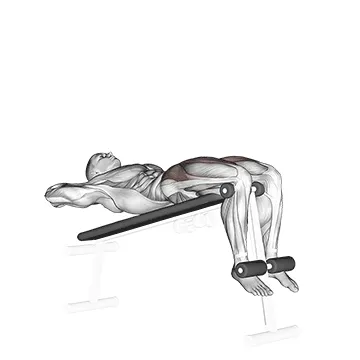
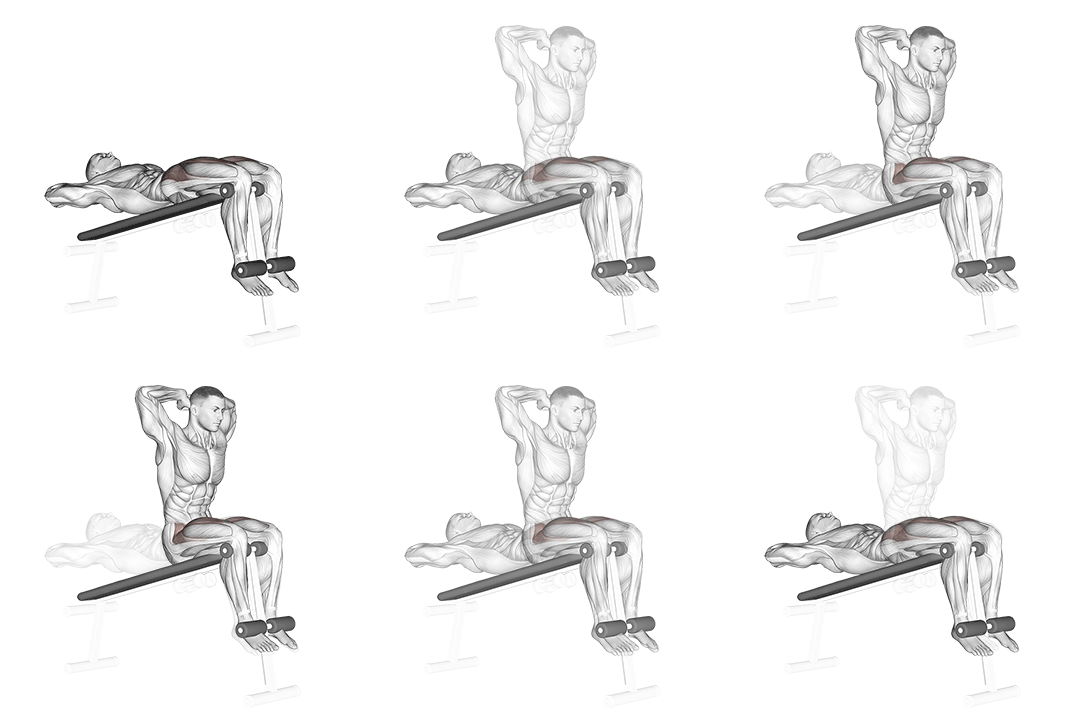
9. Decline Sit-up
65% match- Abs
- Bodyweight
- Intermediate
- Compound
How to perform this exercise
- Lie on a decline bench with your feet secured and your knees bent.
- Place your hands behind your head or across your chest.
- Engage your abs and lift your upper body off the bench, curling forward towards your knees.
- Pause for a moment at the top, then slowly lower your upper body back down to the starting position.
- Repeat for the desired number of repetitions.
Sets and reps: 3 or 4 sets of 6 to 10 reps.
Why this matches
- Primary muscle: abs, the same as the Cable Standing Lift
- Equipment: bodyweight only, not a cable
- Body position: lying on your back, not standing
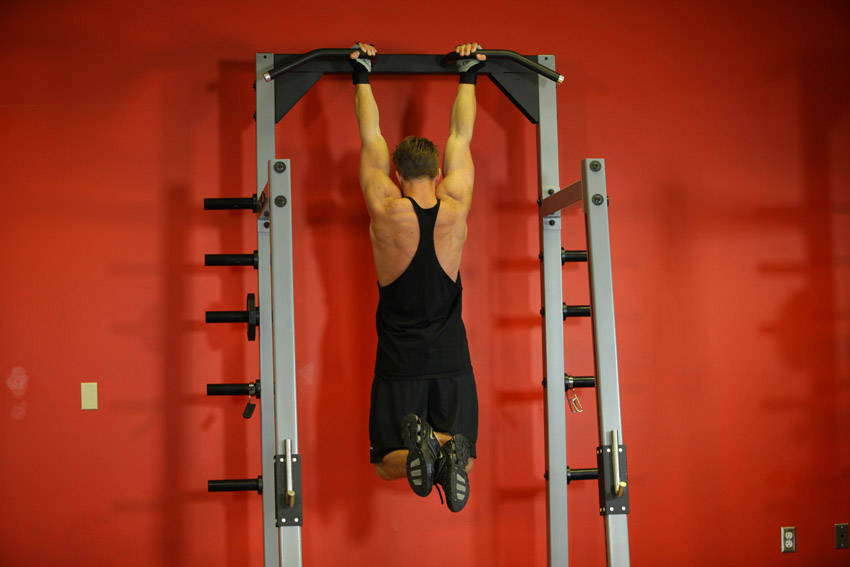
10. Gorilla Chin/crunch
64% match- Abs
- Bodyweight
- Intermediate
- Isolation
How to perform this exercise
- Hang from a chin-up bar using an underhand grip (palms facing you) that is slightly wider than shoulder width.
- Now bend your knees at a 90 degree angle so that the calves are parallel to the floor while the thighs remain perpendicular to it. This will be your starting position.
- As you exhale, pull yourself up while crunching your knees up at the same time until your knees are at chest level. You will stop going up as soon as your nose is at the same level as the bar. Tip: When you get to this point you should also be finishing the crunch at the same time.
- Slowly start to inhale as you return to the starting position.
- Repeat for the recommended amount of repetitions.
Sets and reps: 3 sets of 10 to 15 reps.
Why this matches
- Primary muscle: abs, the same as the Cable Standing Lift
- Equipment: bodyweight only, not a cable
- Body position: hanging, not standing
How to Choose the Right Cable Standing Lift Substitute
Match the substitute to your goal: choose anti-rotation for stiffness, dynamic chops for power, and controlled holds for rehab. Evaluate equipment, bands and landmine options let you replicate cable torque; bodyweight choices focus on timing and muscle activation. Cue: maintain a neutral spine, brace the transverse abdominis, and breathe out during exertion. Consider pain patterns, favor kneeling or isometric variations if the shoulder or lumbar spine limits you, and progress by increasing load, range of motion, or time under tension while tracking hip-to-rib sequencing to ensure oblique engagement.
Cable Standing Lift FAQ
What muscles does Cable Standing Lift work?
The Cable Standing Lift primarily targets the external and internal obliques and the transverse abdominis for transverse-plane torque and trunk control, while the rectus abdominis, lats, glutes and erector spinae support and stabilize. Cue: brace the core and rotate from the thorax with a stable pelvis to emphasize oblique activation and limit lumbar shear.
What is the best bodyweight alternative to Cable Standing Lift?
A side plank with hip dips is an effective bodyweight alternative for oblique strength and spinal stability. Press your forearm into the floor, lift the hips into a straight line, then lower and lift the hips using the obliques; cue: pull the navel to the spine and squeeze the glutes to avoid hip sag.
Find Alternatives for Any Exercise
Search the exercise database and filter the ranked substitutes by the equipment you own.
Similarity scores compare exercise metadata such as movement pattern, muscles, equipment and body position. They are not a safety rating or a check that you own the equipment. Learn about our methodology