

10 Best Cable Standing Twist Row (v-bar) Alternatives for Home & Gym
If you can’t perform the Cable Standing Twist Row (v-bar), use compound horizontal pulls that load the mid-traps, rhomboids and rear delts while preserving rotation or anti-rotation. Solid options are inverted rows, single-arm cable rows, chest-supported rows, bent-over barbell rows, and landmine rows—focus on scapular retraction and a controlled 2‑3 second eccentric.
Original Exercise: Cable Standing Twist Row (v-bar)
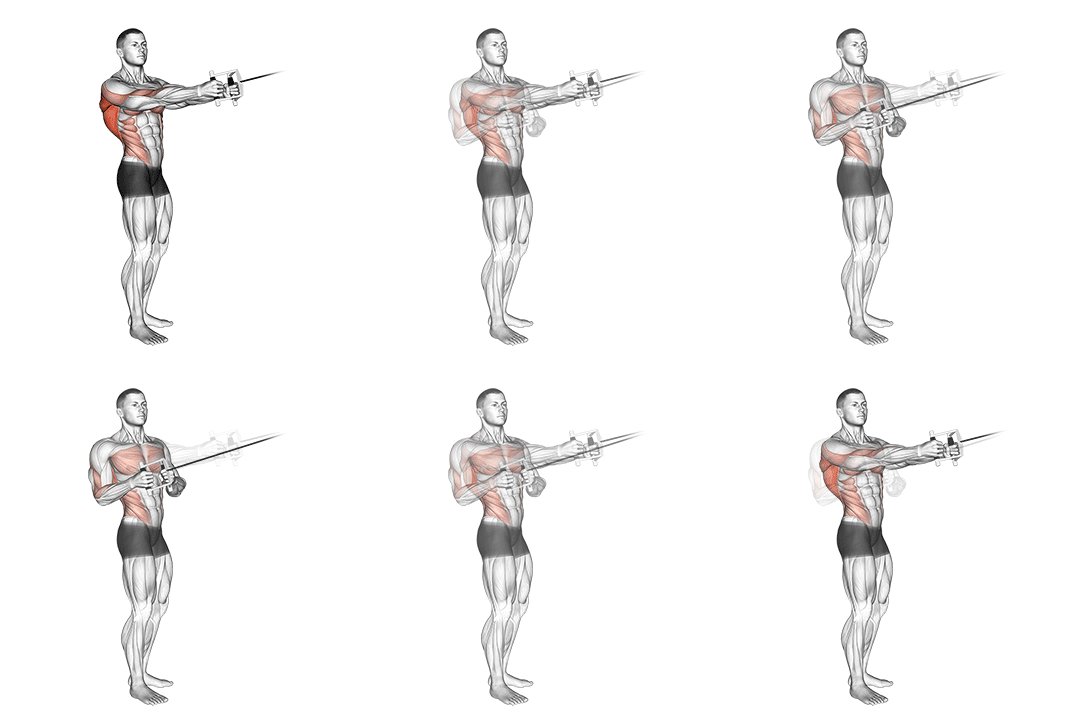
How to Perform Cable Standing Twist Row (v-bar)
- Attach a v-bar attachment to a cable machine at chest height.
- Stand facing the cable machine with your feet shoulder-width apart.
- Grasp the v-bar with an overhand grip, palms facing down.
- Take a step back to create tension in the cable.
- Keep your back straight and core engaged throughout the exercise.
- Pull the v-bar towards your torso by retracting your shoulder blades and bending your elbows.
- As you pull, twist your torso to one side, squeezing your shoulder blades together.
- Pause for a moment at the top of the movement, feeling the contraction in your upper back.
- Slowly release the tension and return to the starting position, untwisting your torso.
- Repeat the movement for the desired number of repetitions, alternating the twisting direction with each rep.
Best Cable Standing Twist Row (v-bar) Alternatives
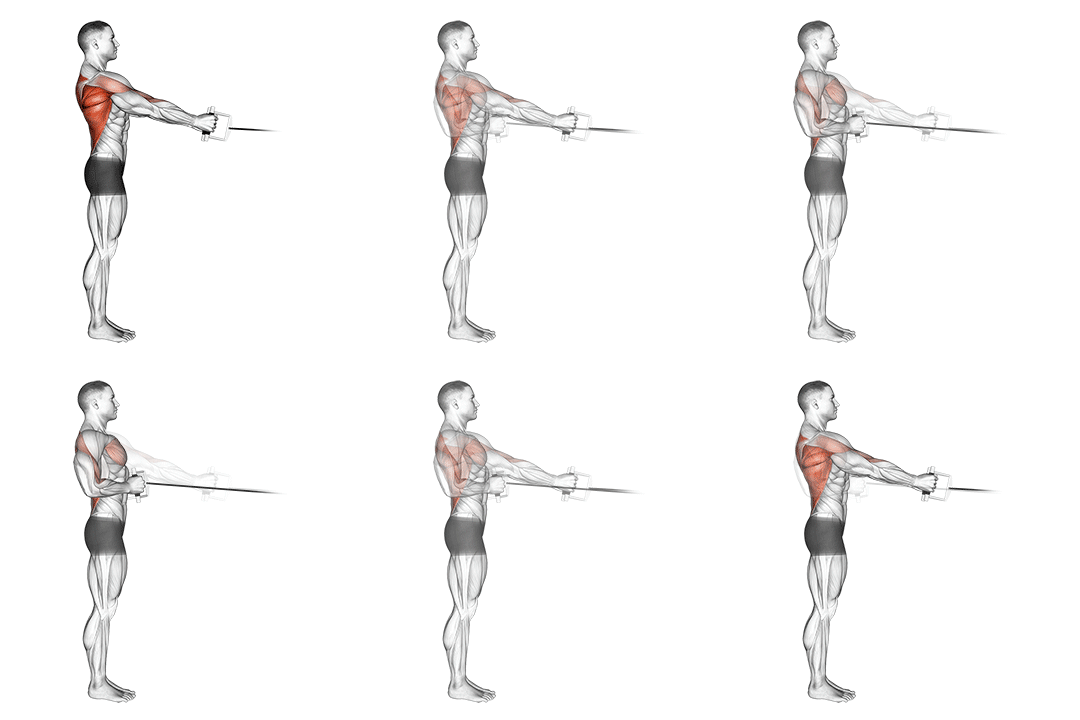
1. Cable Standing Row (v-bar)
93% MatchHow to perform this exercise
- Stand facing the cable machine with your feet shoulder-width apart.
- Grasp the v-bar attachment with an overhand grip, palms facing down.
- Keep your back straight and your core engaged.
- Pull the v-bar towards your body, squeezing your shoulder blades together.
- Pause for a moment at the peak of the movement, then slowly release the tension and return to the starting position.
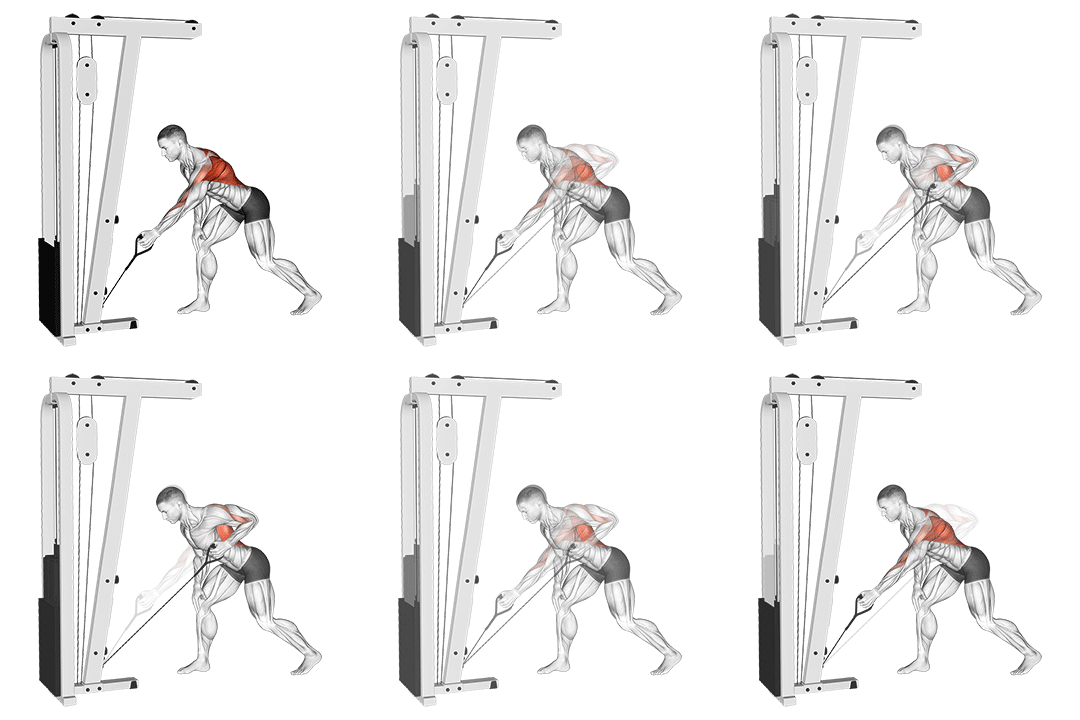
2. Cable One Arm Bent Over Row
83.4% MatchHow to perform this exercise
- Stand facing a cable machine with your feet shoulder-width apart.
- Bend your knees slightly and hinge forward at the hips, keeping your back straight.
- Grasp the cable handle with one hand, palm facing inward, and extend your arm fully.
- Pull the cable handle towards your body, keeping your elbow close to your side, until your hand reaches your lower chest.
- Pause for a moment, then slowly extend your arm back to the starting position.
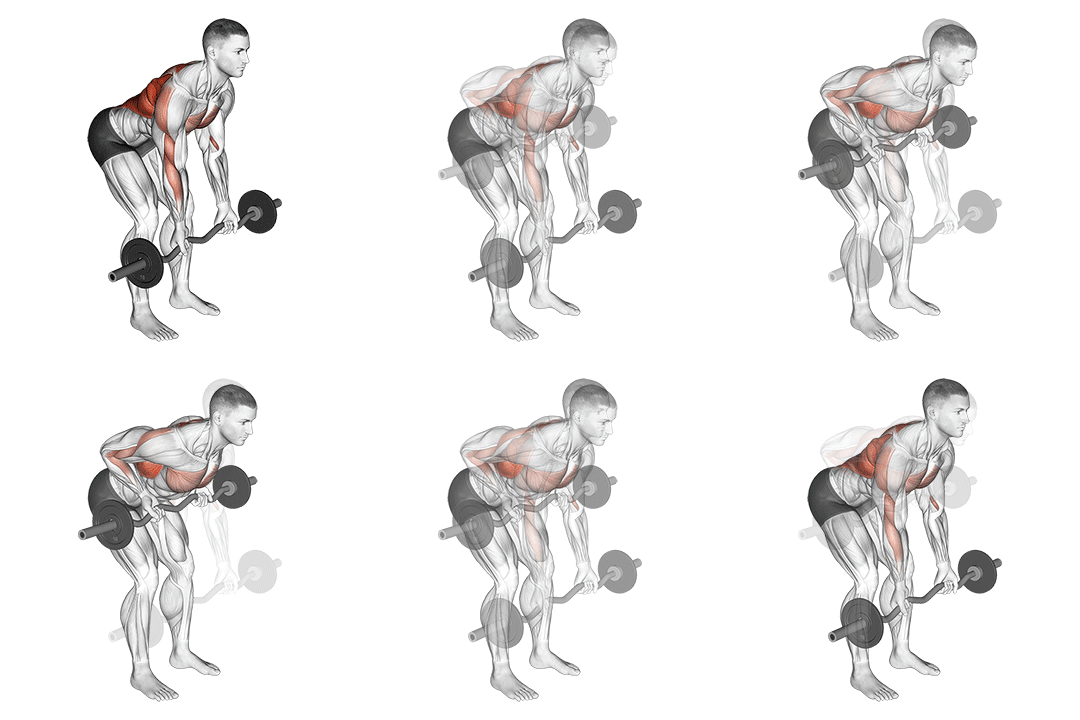
3. Ez Bar Reverse Grip Bent Over Row
76% MatchHow to perform this exercise
- Stand with your feet shoulder-width apart and knees slightly bent.
- Hold the ez barbell with an underhand grip, palms facing up, and hands shoulder-width apart.
- Bend forward at the hips, keeping your back straight and chest up, until your torso is almost parallel to the floor.
- Pull the ez barbell towards your lower chest, squeezing your shoulder blades together.
- Pause for a moment at the top, then slowly lower the ez barbell back to the starting position.
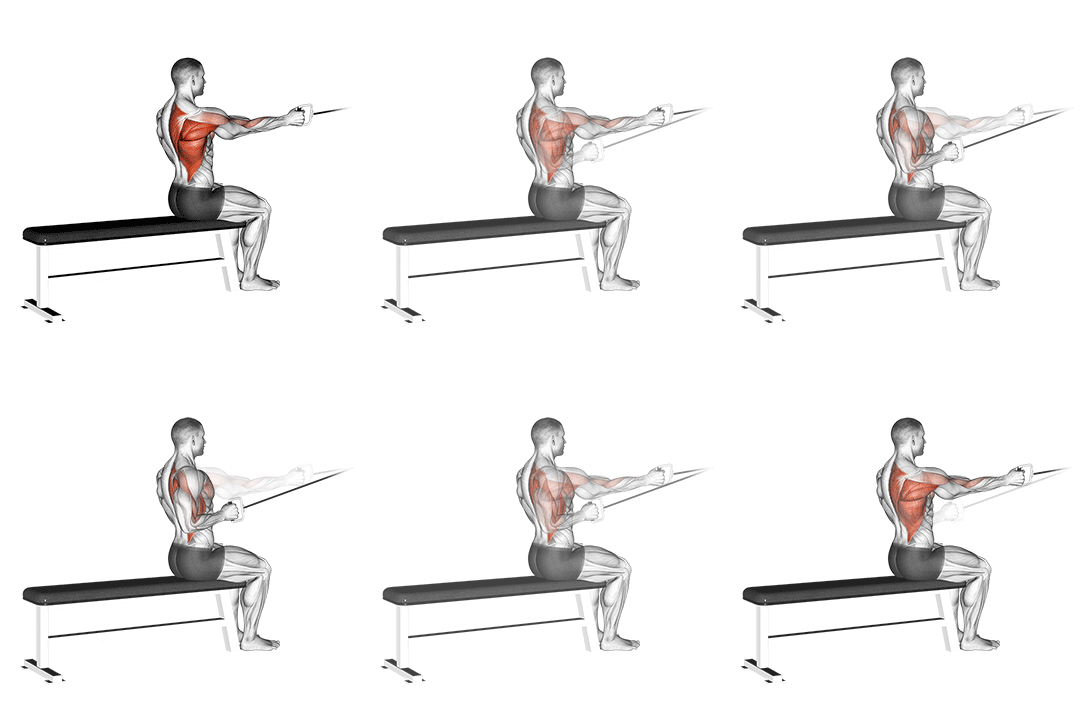
4. Cable Seated One Arm Alternate Row
75.9% MatchHow to perform this exercise
- Sit on a bench facing a cable machine with your feet flat on the ground and knees slightly bent.
- Grasp the handle with one hand and keep your arm fully extended in front of you.
- Pull the handle towards your body, retracting your shoulder blade and keeping your elbow close to your side.
- Pause for a moment at the top of the movement, squeezing your back muscles.
- Slowly release the handle back to the starting position.
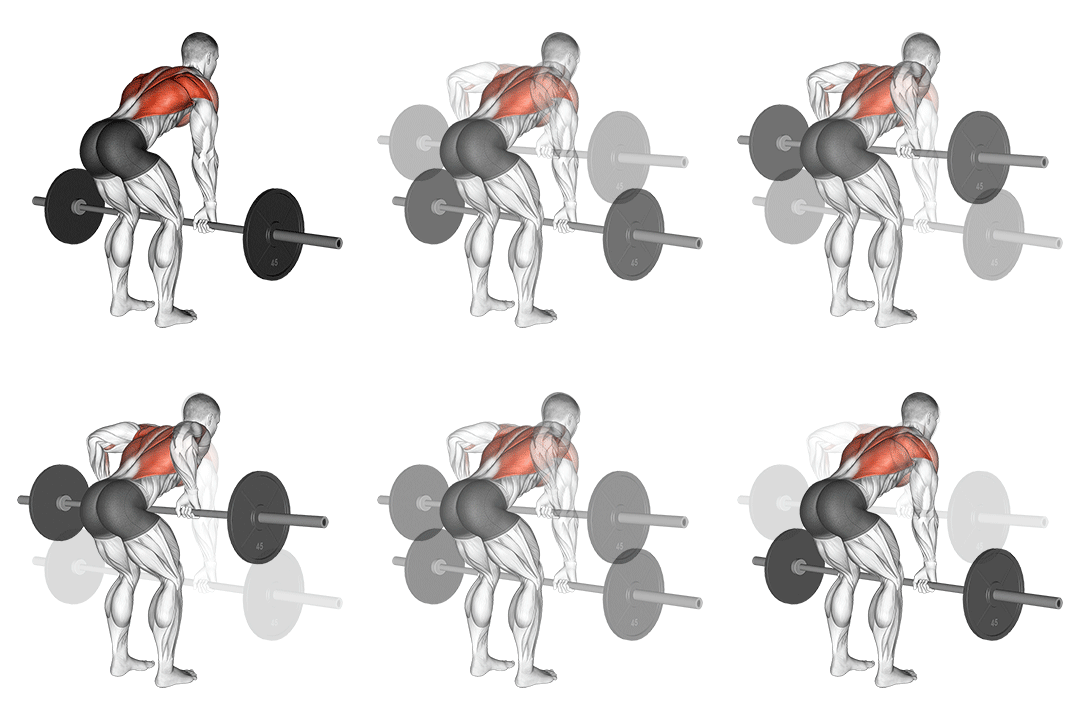
5. Barbell Bent Over Row
74% MatchHow to perform this exercise
- Stand with your feet shoulder-width apart and knees slightly bent.
- Bend forward at the hips while keeping your back straight and chest up.
- Grasp the barbell with an overhand grip, hands slightly wider than shoulder-width apart.
- Pull the barbell towards your lower chest by retracting your shoulder blades and squeezing your back muscles.
- Pause for a moment at the top, then slowly lower the barbell back to the starting position.
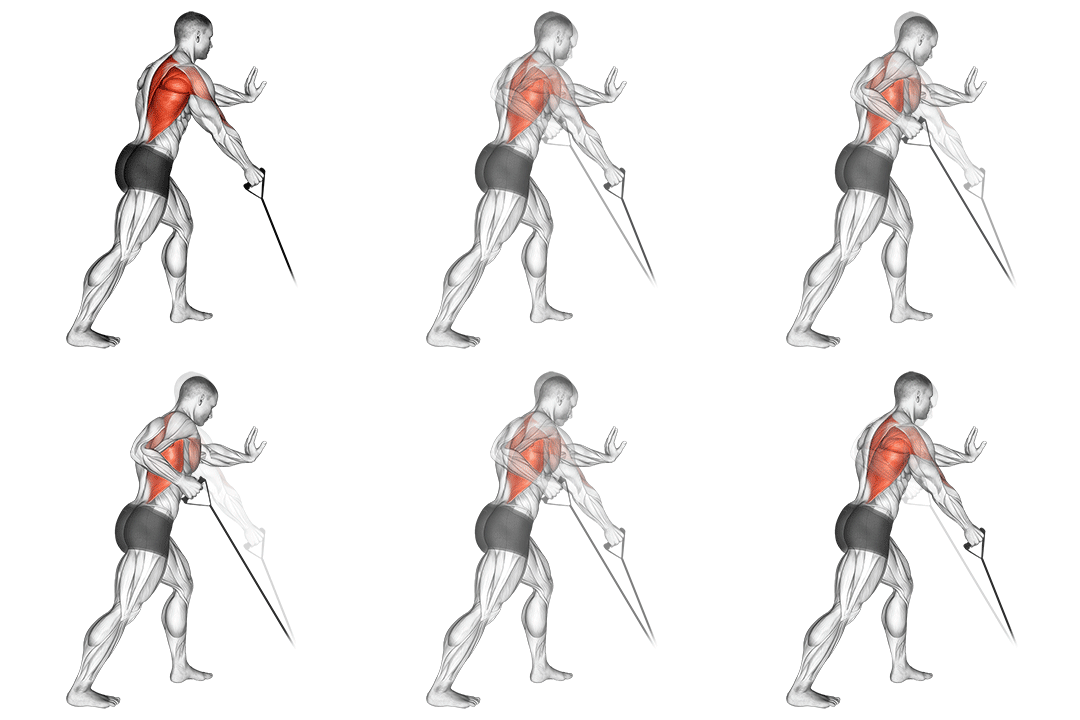
6. Band One Arm Standing Low Row
73.4% MatchHow to perform this exercise
- Attach the band to a stable anchor point at waist height.
- Stand facing the anchor point with your feet shoulder-width apart.
- Hold the band with one hand, palm facing inward, and step back to create tension in the band.
- Bend your knees slightly and hinge forward at the hips, keeping your back straight.
- Pull the band towards your waist, squeezing your shoulder blades together.
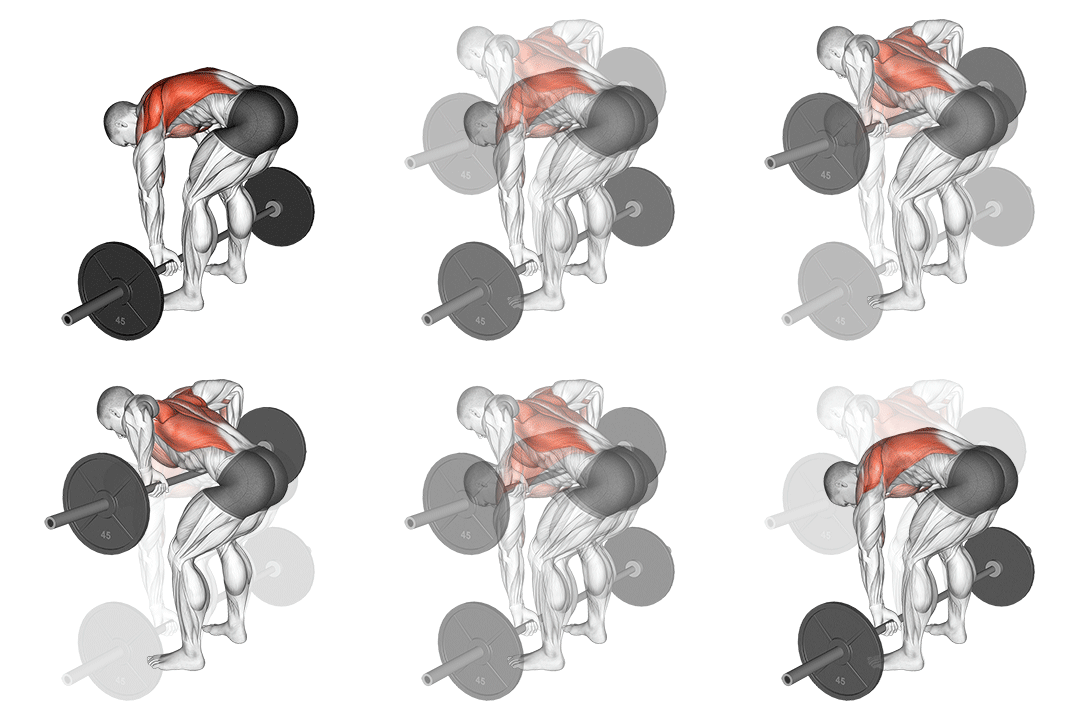
7. Barbell Pendlay Row
73.4% MatchHow to perform this exercise
- Stand with your feet shoulder-width apart and your knees slightly bent.
- Bend forward at the hips, keeping your back straight and your chest up.
- Grasp the barbell with an overhand grip, slightly wider than shoulder-width apart.
- Pull the barbell towards your upper abdomen, squeezing your shoulder blades together.
- Lower the barbell back down to the starting position.
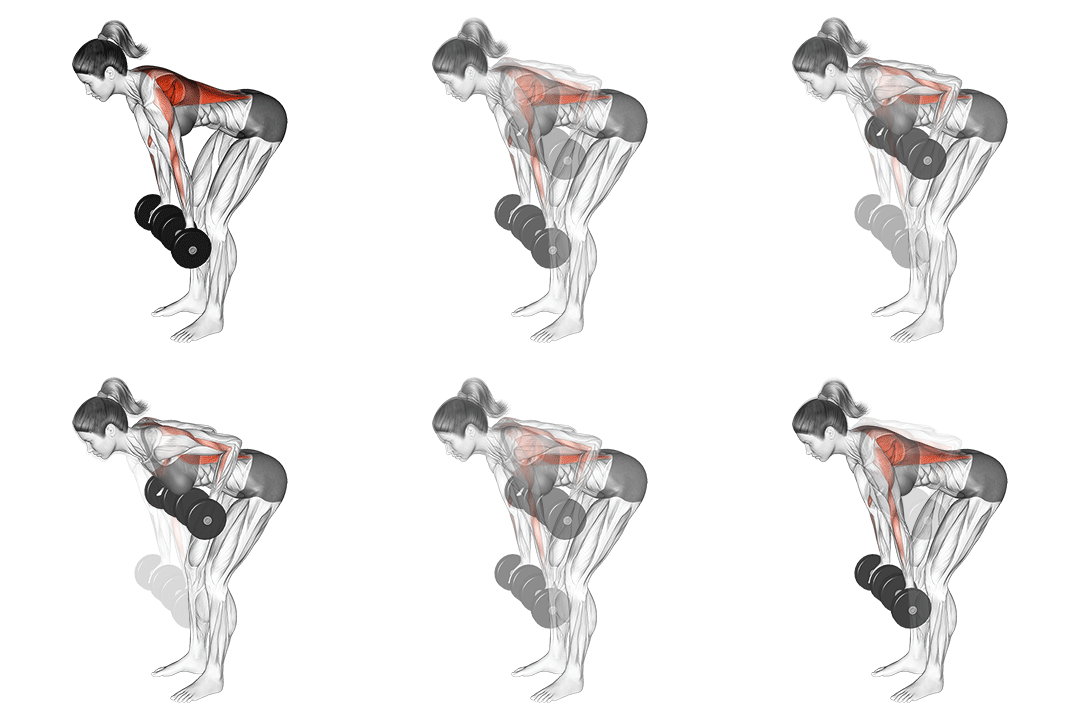
8. Dumbbell Reverse Grip Row (female)
72.2% MatchHow to perform this exercise
- Stand with your feet shoulder-width apart and knees slightly bent.
- Hold a dumbbell in each hand with an overhand grip, palms facing your body.
- Bend forward at the waist, keeping your back straight and your core engaged.
- Let your arms hang straight down, fully extended, with a slight bend in your elbows.
- Pull the dumbbells up towards your chest, squeezing your shoulder blades together.
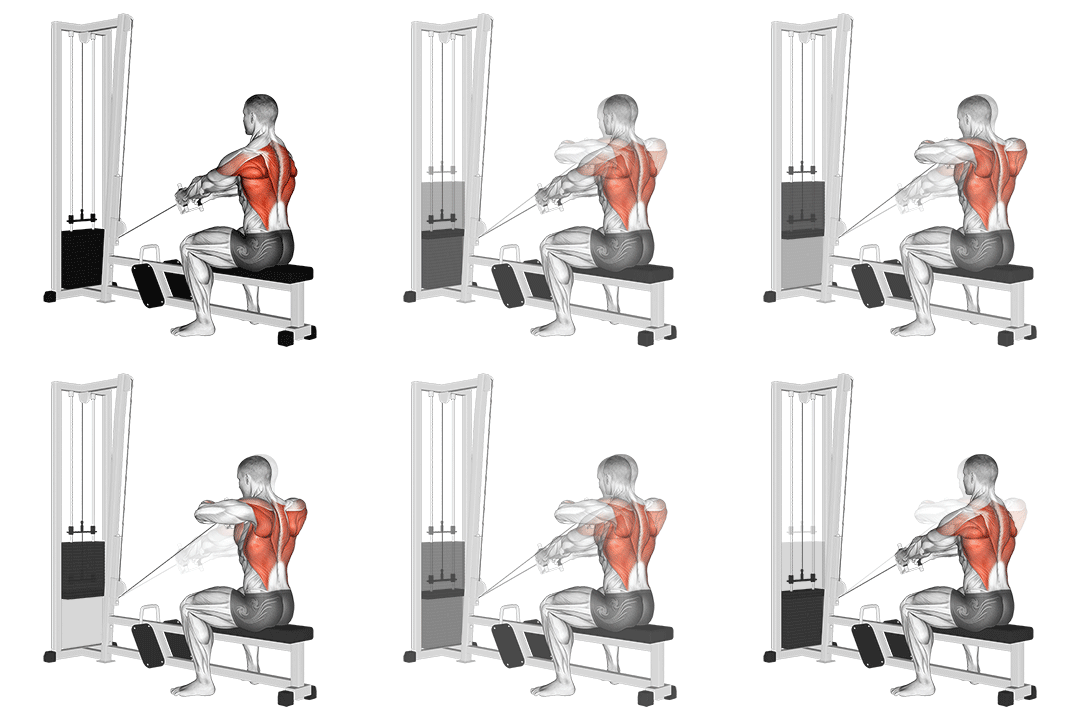
9. Cable Upper Row
70.6% MatchHow to perform this exercise
- Attach a straight bar to a cable machine at chest height.
- Stand facing the machine with your feet shoulder-width apart.
- Grasp the bar with an overhand grip, hands slightly wider than shoulder-width apart.
- Keep your back straight and your core engaged.
- Pull the bar towards your upper chest, squeezing your shoulder blades together.
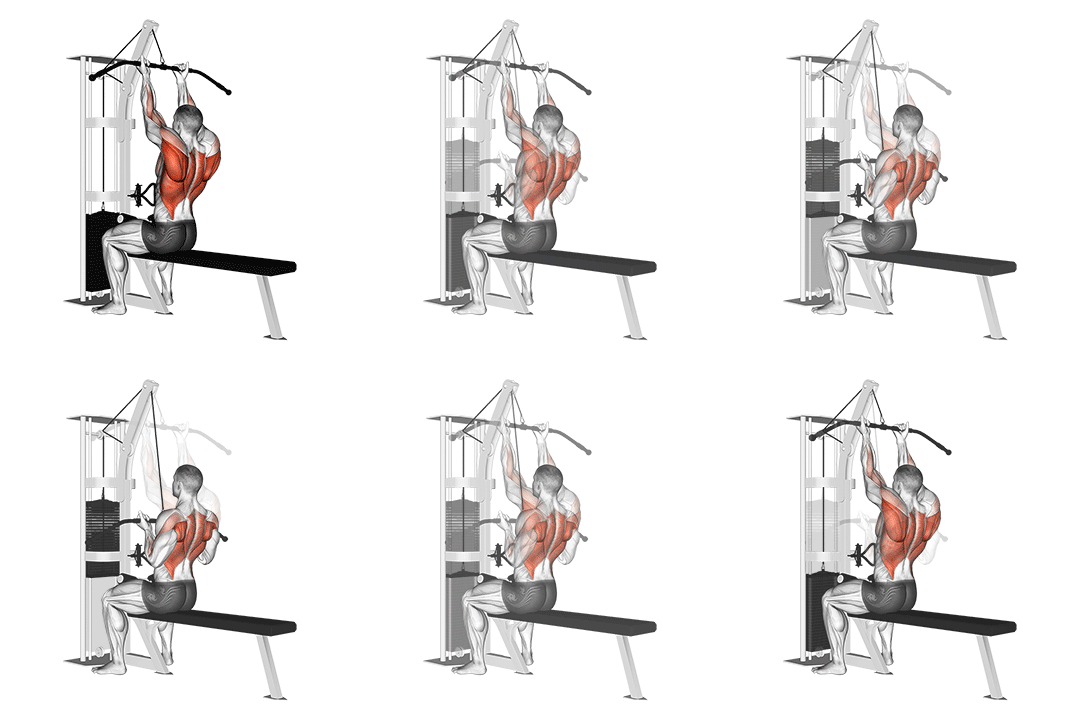
10. Cable Reverse-grip Straight Back Seated High Row
69.6% MatchHow to perform this exercise
- Sit on the seat facing the cable machine with your feet flat on the floor.
- Grasp the cable attachment with an underhand grip, palms facing up, and your hands shoulder-width apart.
- Keep your back straight and lean slightly forward from your hips.
- Pull the cable towards your torso by retracting your shoulder blades and squeezing your back muscles.
- Pause for a moment at the peak of the contraction, then slowly release the cable back to the starting position.
Why You Might Need a Cable Standing Twist Row (v-bar) Alternative
You may substitute the Cable Standing Twist Row (v-bar) due to equipment limits, shoulder or elbow irritation, or to prioritize stability and different loading angles. The twist-row combines horizontal pull with transverse rotation, which recruits mid‑traps, rhomboids and obliques; some athletes swap it for chest-supported rows to remove lumbar stress or for single-arm rows to correct asymmetry. Pick alternatives when cables aren’t available, when you need a lower‑risk option for a rehabbing shoulder (use a chest-supported row and keep elbows tucked), or when you want stronger peak contraction by pausing for 1–2 seconds at full scapular retraction.
How to Choose the Right Substitute
Match the substitute to the movement pattern and your limitation: if you need horizontal pulling with rotation, choose unilateral or anti-rotation single-arm cable rows; if lower‑back pain limits you, use chest-supported rows to isolate the upper back while keeping a neutral spine. Check biomechanics—ensure the exercise allows full scapular retraction and elbow travel toward the hip to target mid‑traps and rhomboids. For strength focus, pick barbell or landmine rows and load progressively; for rehab or stability, prefer controlled tempo (3–4 second eccentric) and pause at peak contraction to enhance muscle activation.
Frequently Asked Questions
What muscles does Cable Standing Twist Row (v-bar) work?
The exercise primarily targets the upper back—rhomboids, mid‑trapezius and posterior deltoids—while the twist recruits obliques and the rotator cuff for stabilization. Cue scapular retraction and pull the elbows back toward the ribs to maximize mid‑trap and rhomboid activation.
What is the best bodyweight alternative to Cable Standing Twist Row (v-bar)?
The inverted row (bodyweight row) is the best bodyweight alternative because it preserves a horizontal pull and allows full scapular retraction. Set a bar at waist height, keep your body rigid, pull the sternum to the bar, and squeeze shoulder blades 1–2 seconds at the top.
Can I build muscle without doing Cable Standing Twist Row (v-bar)?
Yes—muscle growth follows progressive overload and effective tension on the target fibers, not a single exercise. Use equivalent horizontal pulls (barbell rows, chest‑supported rows, single‑arm rows) and focus on full range, controlled eccentrics, and progressive load to stimulate the same upper‑back muscles.
More Exercise Alternatives
Find Alternatives for Any Exercise
Use our free tool to discover the best substitute exercises based on your available equipment and goals.
Try the Exercise Substitution Finder →