

5 Alternatives to Cable Triceps Pushdown (v-bar) with Arm Blaster
If you can’t perform the cable v-bar pushdown with an arm blaster, use exercises that reproduce elbow extension under load. Try rope pushdowns, straight-bar pushdowns, single-arm cable pushdowns, EZ-bar skull crushers, or dumbbell overhead triceps extensions. Cue: keep elbows pinned to your sides and drive through elbow extension to target the triceps long and lateral heads.
Original Exercise: Cable Triceps Pushdown (v-bar) (with Arm Blaster)
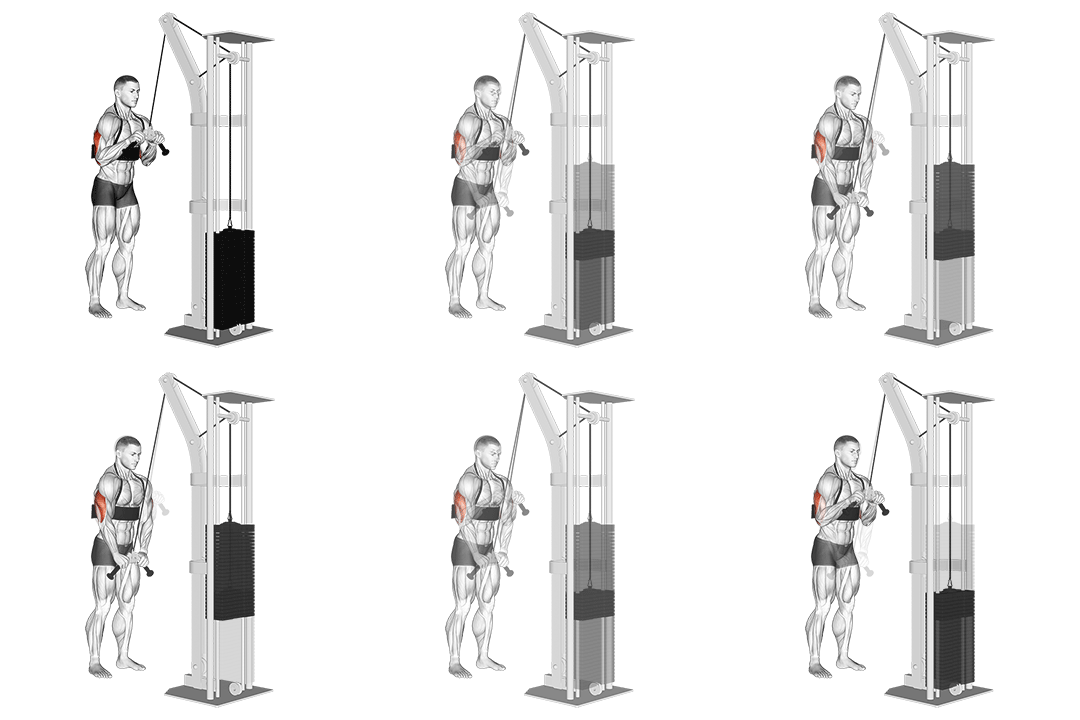
How to Perform Cable Triceps Pushdown (v-bar) (with Arm Blaster)
- Attach a v-bar attachment to the cable machine at the highest setting.
- Stand facing the cable machine with your feet shoulder-width apart.
- Grasp the v-bar with an overhand grip, palms facing down, and your hands shoulder-width apart.
- Keep your elbows close to your sides and your upper arms stationary throughout the exercise.
- Engage your triceps and exhale as you push the v-bar down until your arms are fully extended.
- Pause for a moment at the bottom of the movement, squeezing your triceps.
- Inhale as you slowly return the v-bar to the starting position, maintaining control.
- Repeat for the desired number of repetitions.
Best Cable Triceps Pushdown (v-bar) (with Arm Blaster) Alternatives
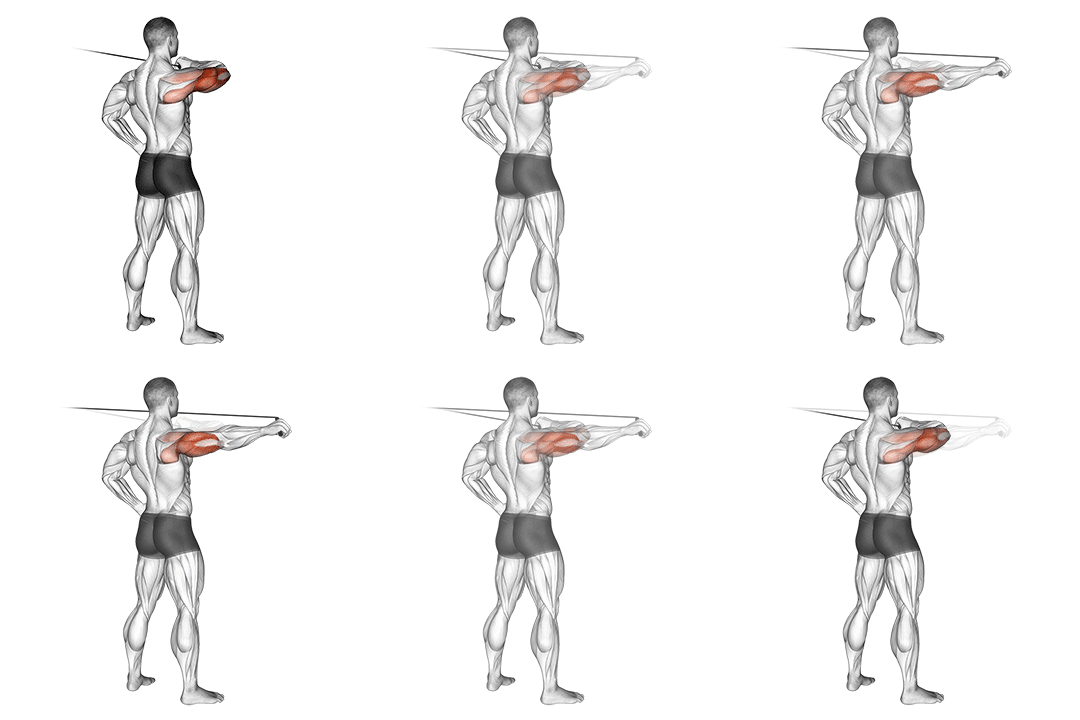
1. Cable Rear Drive
93.7% MatchHow to perform this exercise
- Attach a handle to a low pulley cable machine and stand facing away from the machine.
- Grasp the handle with an overhand grip and extend your arms straight out in front of you.
- Keeping your elbows stationary, pull the handle back towards your body, squeezing your triceps at the end of the movement.
- Slowly return the handle to the starting position and repeat for the desired number of repetitions.
2. Cable One Arm Tricep Extension
87.2% MatchHow to perform this exercise
- With your right hand, grasp a single handle attached to the high-cable pulley using a supinated (underhand; palms facing up) grip. You should be standing directly in front of the weight stack.
- Now pull the handle down so that your upper arm and elbow are locked in to the side of your body. Your upper arm and forearm should form an acute angle (less than 90-degrees). You can keep the other arm by the waist and you can have one leg in front of you and the other one back for better balance. This will be your starting position.
- As you contract the triceps, move the single handle attachment down to your side until your arm is straight. Breathe out as you perform this movement. Tip: Only the forearms should move. Your upper arms should remain stationary at all times.
- Squeeze the triceps and hold for a second in this contracted position.
- Slowly return the handle to the starting position.
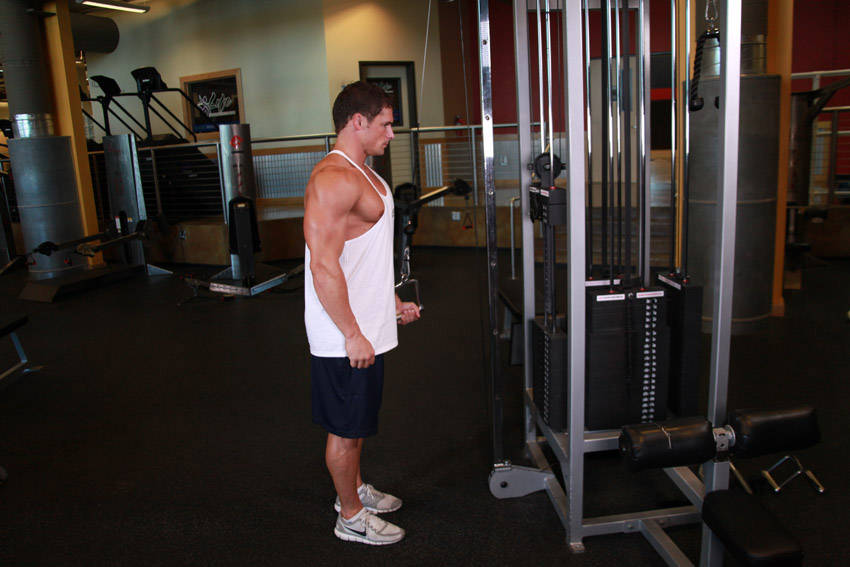
3. Cable Pushdown
86% MatchHow to perform this exercise
- Attach a straight bar to a high pulley cable machine.
- Stand facing the machine with your feet shoulder-width apart and a slight bend in your knees.
- Grasp the bar with an overhand grip, hands shoulder-width apart.
- Keep your elbows close to your sides and your upper arms stationary.
- Exhale and push the bar down until your elbows are fully extended.
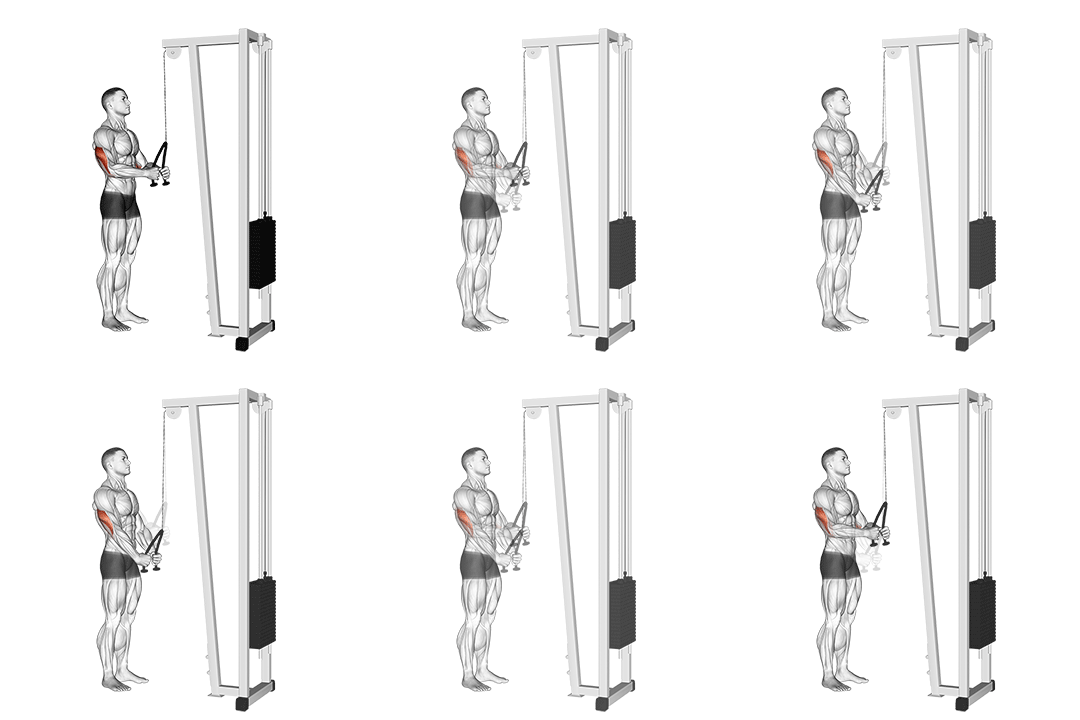
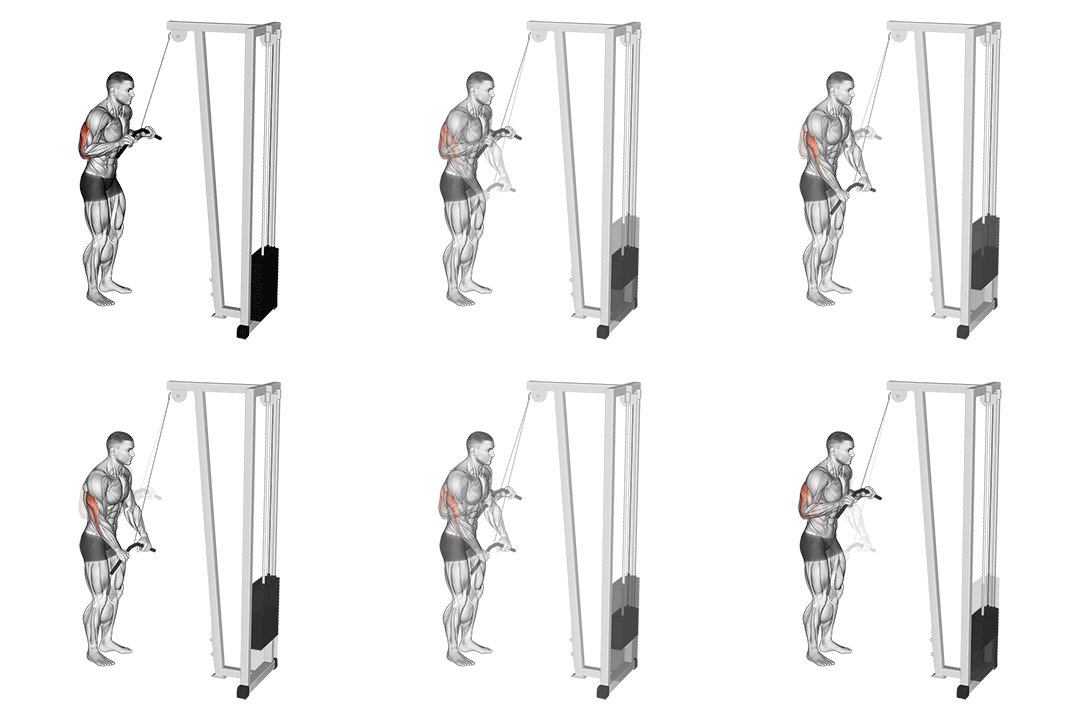
4. Cable Pushdown (with Rope Attachment)
86% MatchHow to perform this exercise
- Attach a rope attachment to a high pulley on a cable machine.
- Stand facing the machine with your feet shoulder-width apart and a slight bend in your knees.
- Grasp the rope with an overhand grip, palms facing each other.
- Keep your elbows close to your sides and your upper arms stationary throughout the exercise.
- Exhale and push the rope downward by extending your elbows until your arms are fully extended.
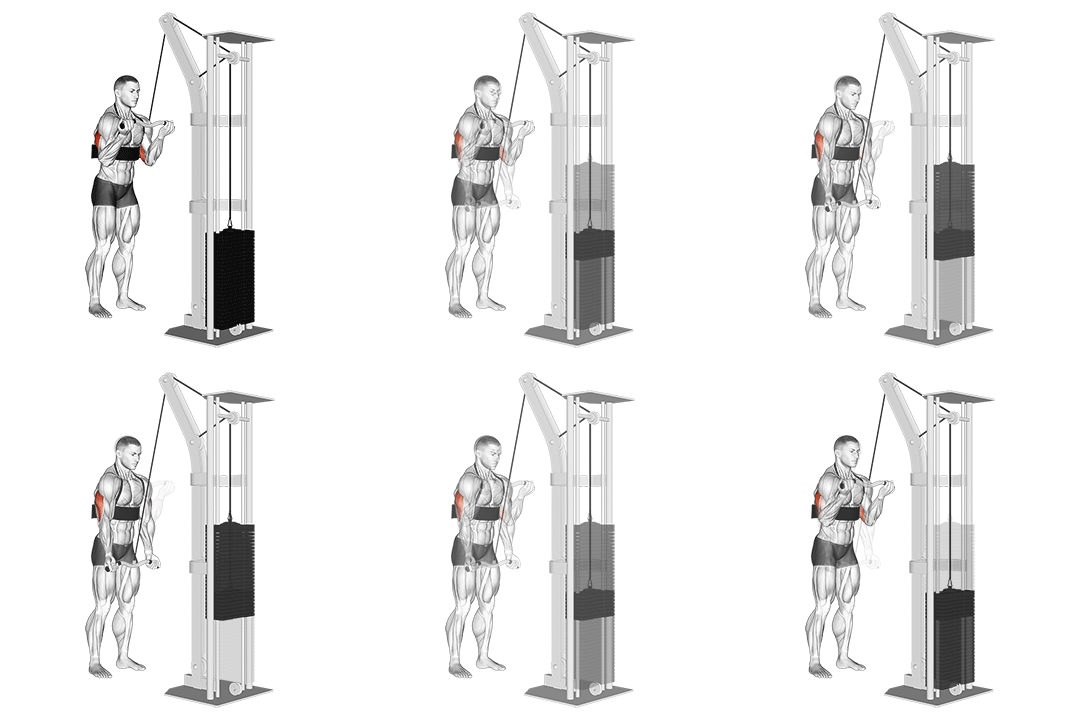
5. Cable Reverse Grip Triceps Pushdown (sz-bar) (with Arm Blaster)
86% MatchHow to perform this exercise
- Attach a straight bar to the cable machine at the highest setting.
- Stand facing the cable machine with your feet shoulder-width apart.
- Grasp the bar with an underhand grip, palms facing up, and your hands shoulder-width apart.
- Keep your elbows close to your sides and your upper arms stationary throughout the exercise.
- Engage your triceps and slowly push the bar down until your arms are fully extended.
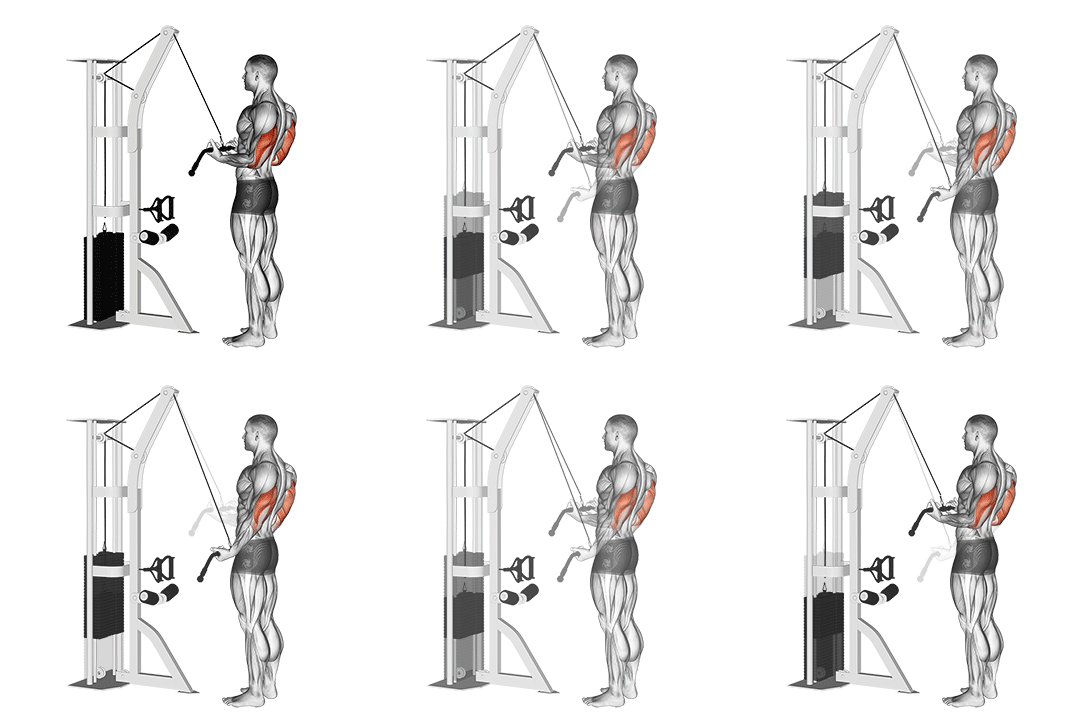
6. Cable Reverse-grip Pushdown
86% MatchHow to perform this exercise
- Attach a straight bar to a high pulley cable machine.
- Stand facing the machine with your feet shoulder-width apart.
- Grasp the bar with an underhand grip, palms facing up, and your hands shoulder-width apart.
- Keep your elbows close to your sides and your upper arms stationary throughout the exercise.
- Using your triceps, push the bar down until your arms are fully extended and your triceps are contracted.
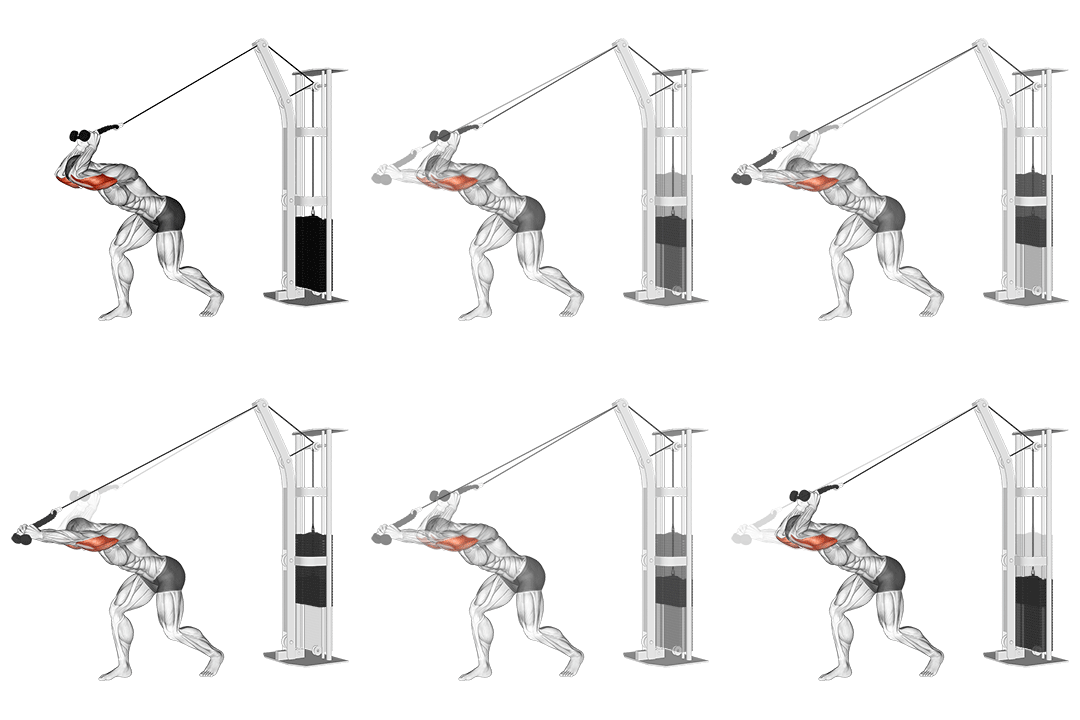
7. Cable High Pulley Overhead Tricep Extension
84.7% MatchHow to perform this exercise
- Attach a rope to a high pulley and stand facing away from the machine.
- Grasp the rope with both hands and extend your arms overhead.
- Keep your elbows close to your head and your upper arms stationary.
- Slowly lower the rope behind your head by bending your elbows.
- Pause for a moment, then extend your arms back to the starting position.
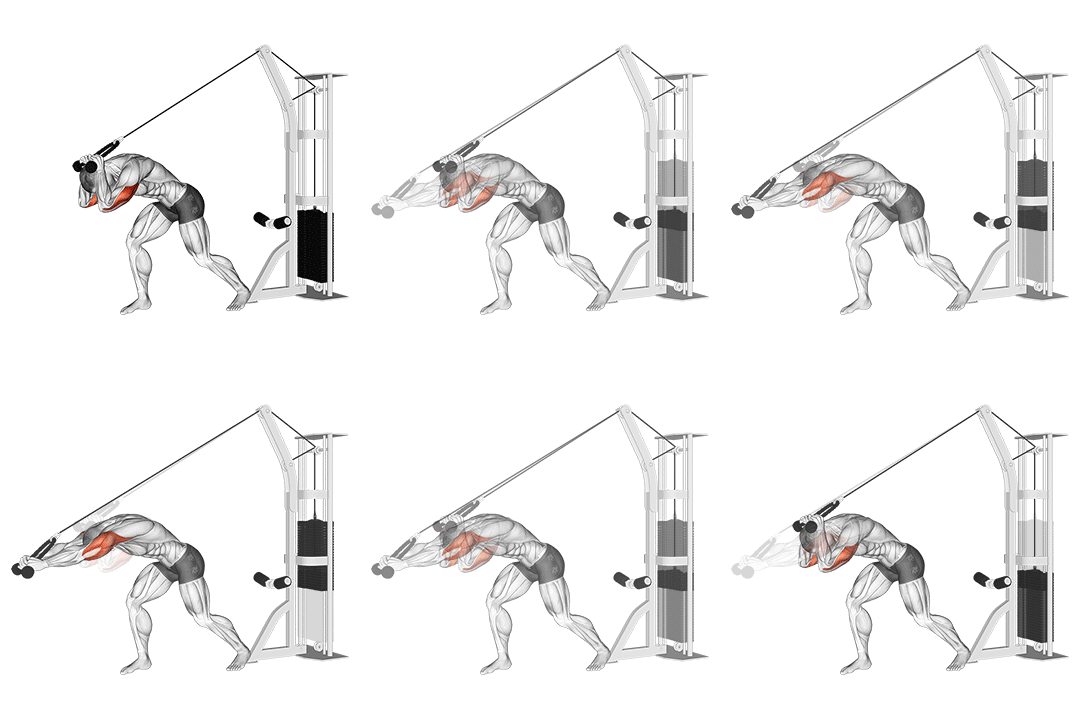
8. Cable Rope High Pulley Overhead Tricep Extension
84.7% MatchHow to perform this exercise
- Attach a rope to a high pulley and adjust the weight accordingly.
- Stand facing away from the pulley machine with your feet shoulder-width apart.
- Grasp the rope with both hands, palms facing down, and bring your hands above your head.
- Keep your upper arms close to your head and perpendicular to the floor.
- Slowly lower the rope behind your head by bending your elbows.
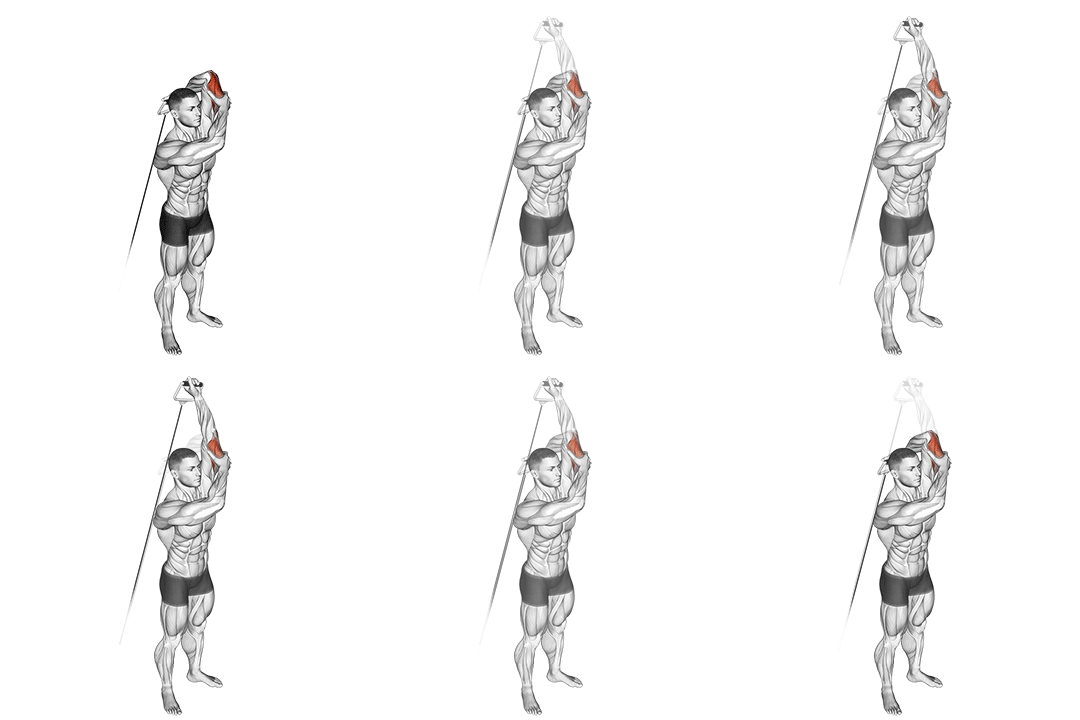
9. Cable Alternate Triceps Extension
84% MatchHow to perform this exercise
- Stand facing the cable machine with your feet shoulder-width apart.
- Hold the cable handle with your right hand and bring your arm up so that your upper arm is parallel to the ground and your elbow is bent at a 90-degree angle.
- Keep your upper arm stationary and extend your forearm backward, fully straightening your arm.
- Pause for a moment, then slowly return to the starting position.
- Repeat with your left arm.
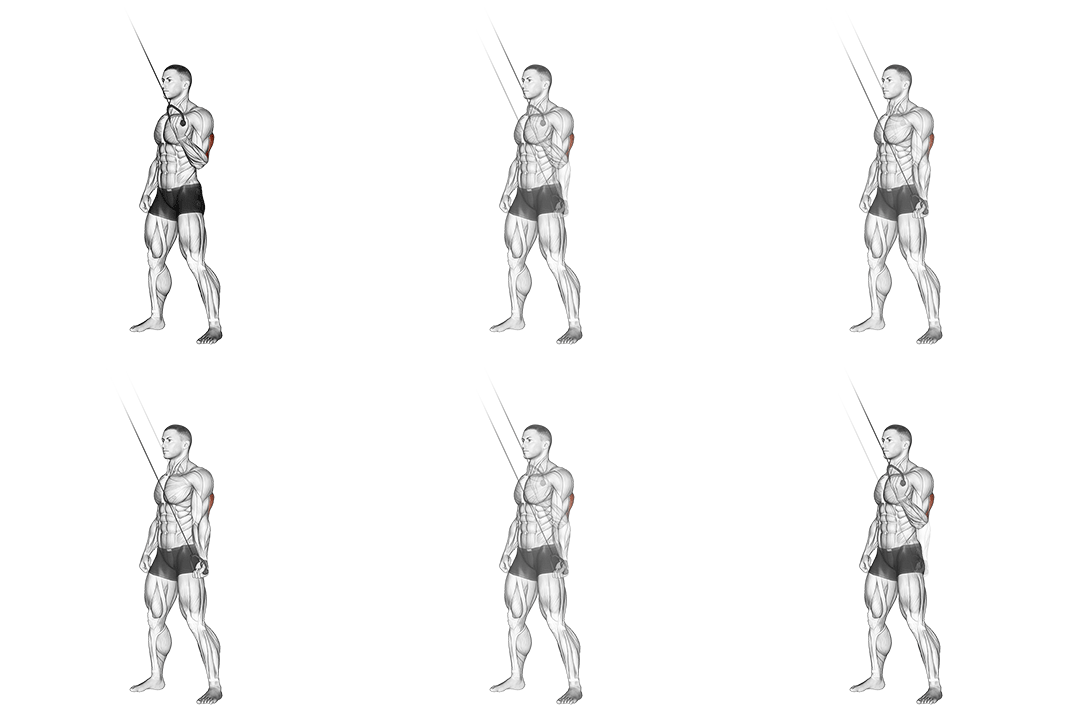
10. Cable Standing One Arm Triceps Extension
83.2% MatchHow to perform this exercise
- Stand with your feet shoulder-width apart, facing the cable machine.
- Hold the cable handle with your right hand, palm facing down, and position your arm so that it is fully extended and parallel to the ground.
- Keep your elbow stationary and close to your body.
- Slowly bend your elbow, lowering the cable handle towards the back of your head.
- Pause for a moment at the bottom of the movement, then extend your arm back to the starting position.
Why You Might Need a Cable Triceps Pushdown (v-bar) (with Arm Blaster) Alternative
You might substitute this exercise because of cable machine unavailability, shoulder pain from fixed elbow paths, or a desire for unilateral work. Alternatives let you preserve peak tension, vary elbow and shoulder angles, and manage joint stress. For shoulder irritation use overhead or unilateral variations to offload the scapula; cue: limit shoulder elevation and keep the upper arm stationary to emphasize elbow extension and triceps activation. For equipment-limited settings pick dumbbell extensions or bodyweight dips and focus on slow eccentrics to increase time under tension.
How to Choose the Right Substitute
Pick a substitute based on equipment, desired muscle emphasis, and joint tolerance. If you want maximum lateral-head activation choose a straight-bar or v-grip and keep a neutral wrist; cue: stop 1–2 inches short of full lockout to maintain tension. For long-head focus use overhead dumbbell extensions with a full shoulder flexion and an extended ROM; cue: brace your core and avoid arching the low back. For unilateral weaknesses choose single-arm cable pushdowns and perform controlled 3–4 second eccentrics to balance strength and motor control.
Frequently Asked Questions
What muscles does Cable Triceps Pushdown (v-bar) (with Arm Blaster) work?
The movement primarily targets the triceps—long, lateral, and medial heads—by producing elbow extension. Keep your elbows pinned and avoid shoulder retraction so the triceps drive the movement; the anconeus assists near lockout.
What is the best bodyweight alternative to Cable Triceps Pushdown (v-bar) (with Arm Blaster)?
Diamond push-ups or bench dips are effective bodyweight alternatives. For diamond push-ups place hands under the sternum in a diamond shape, keep elbows close to the ribcage, and lower to about 90° elbow flexion to emphasize triceps activation.
Can I build muscle without doing Cable Triceps Pushdown (v-bar) (with Arm Blaster)?
Yes—you can achieve hypertrophy with other movements that provide progressive overload and sufficient time under tension. Use heavier skull crushers, overhead dumbbell extensions, or weighted dips and emphasize controlled eccentrics and full elbow extension to stimulate the triceps.
More Exercise Alternatives
Find Alternatives for Any Exercise
Use our free tool to discover the best substitute exercises based on your available equipment and goals.
Try the Exercise Substitution Finder →