

10 Best Catch And Overhead Throw Alternatives for Limited Equipment
If you can’t do the Catch And Overhead Throw, choose exercises that replicate lat-driven shoulder extension and adduction. Try a single-arm dumbbell row: hinge at the hips, brace your core, retract the scapula, then pull the elbow toward the hip to emphasize lat activation and minimize trunk rotation.
Original Exercise: Catch And Overhead Throw
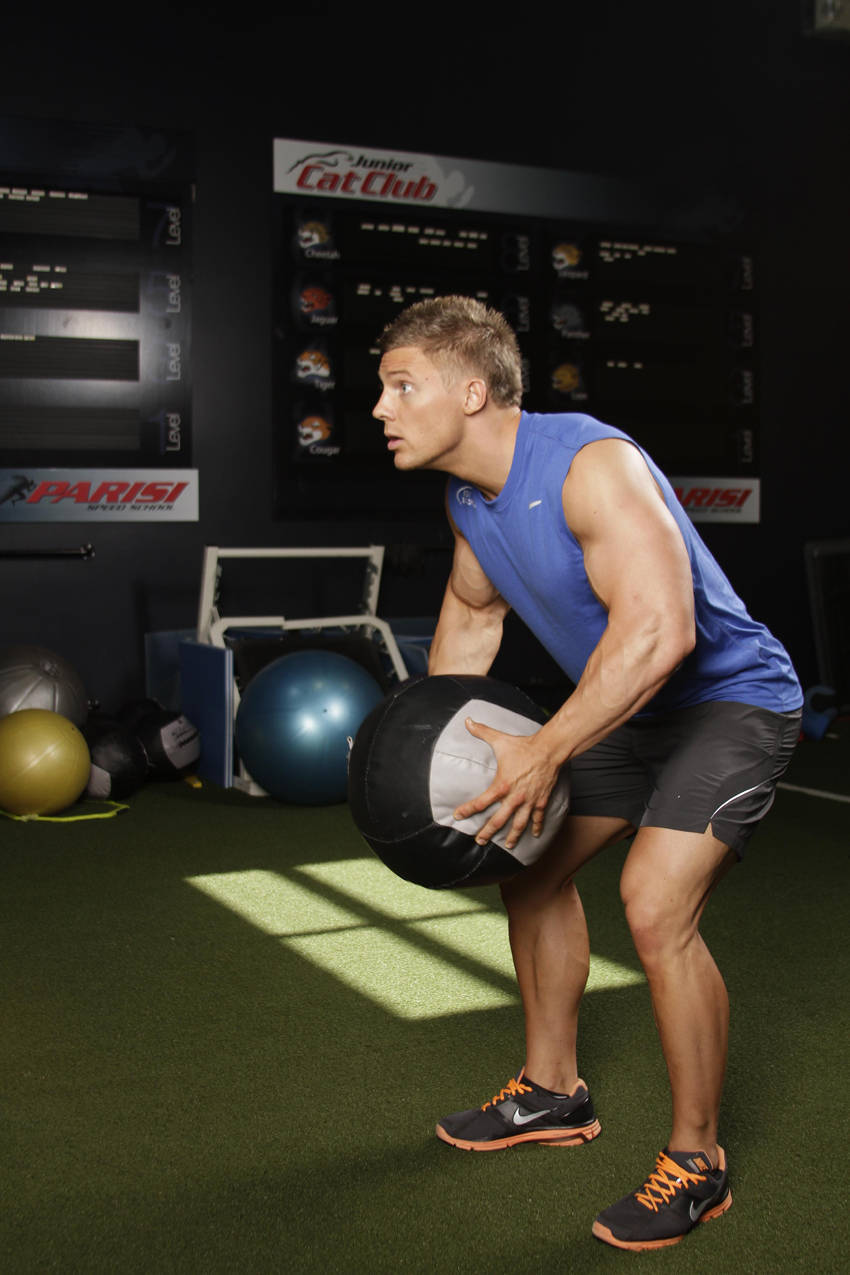
How to Perform Catch And Overhead Throw
- Begin standing while facing a wall or a partner.
- Using both hands, position the ball behind your head, stretching as much as possible, and forcefully throw the ball forward.
- Ensure that you follow your throw through, being prepared to receive your rebound from your throw. If you are throwing against the wall, make sure that you stand close enough to the wall to receive the rebound, and aim a little higher than you would with a partner.
Pro Tips
- Category: Plyometrics
- Force: Push
- Movement type: Compound
Best Catch And Overhead Throw Alternatives
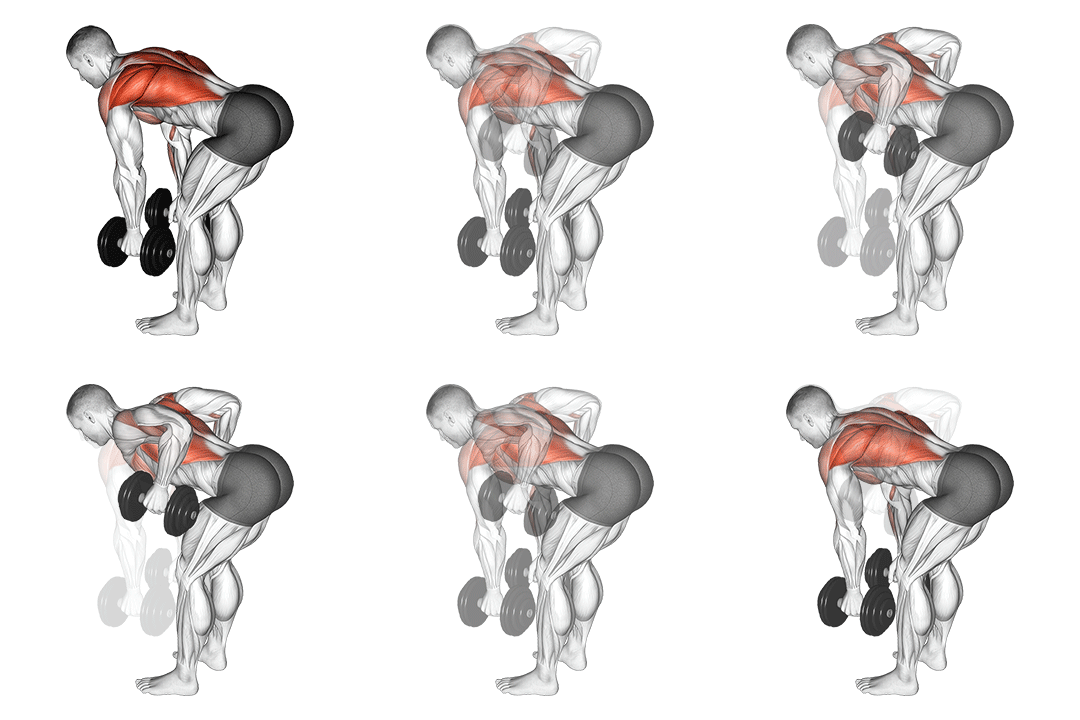
1. Dumbbell Bent Over Row
74.1% MatchHow to perform this exercise
- Stand with your feet shoulder-width apart, knees slightly bent, and hold a dumbbell in each hand with your palms facing your body.
- Bend forward at the hips, keeping your back straight and your core engaged.
- Let your arms hang straight down towards the floor, with your elbows slightly bent.
- Pull the dumbbells up towards your chest, squeezing your shoulder blades together.
- Pause for a moment at the top, then slowly lower the dumbbells back down to the starting position.
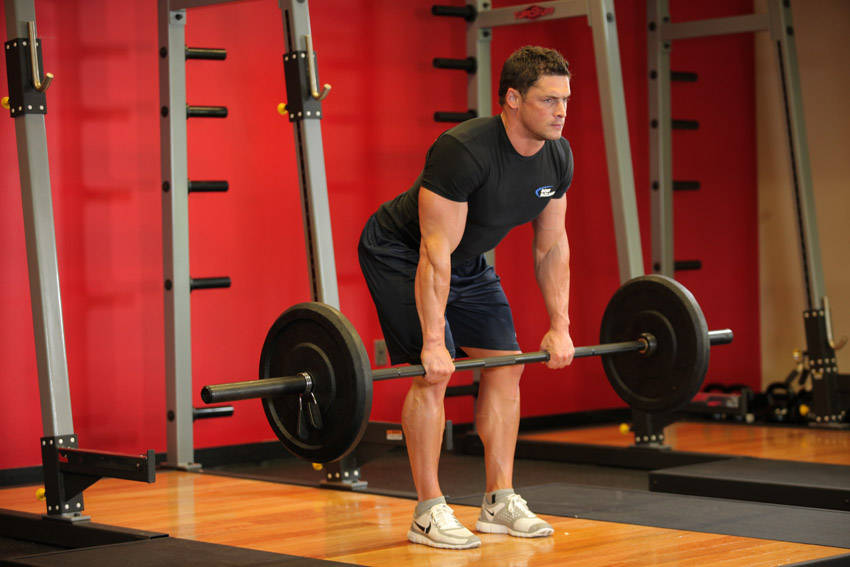
2. Bent Over Barbell Row
70.7% MatchHow to perform this exercise
- Holding a barbell with a pronated grip (palms facing down), bend your knees slightly and bring your torso forward, by bending at the waist, while keeping the back straight until it is almost parallel to the floor. Tip: Make sure that you keep the head up. The barbell should hang directly in front of you as your arms hang perpendicular to the floor and your torso. This is your starting position.
- Now, while keeping the torso stationary, breathe out and lift the barbell to you. Keep the elbows close to the body and only use the forearms to hold the weight. At the top contracted position, squeeze the back muscles and hold for a brief pause.
- Then inhale and slowly lower the barbell back to the starting position.
- Repeat for the recommended amount of repetitions.
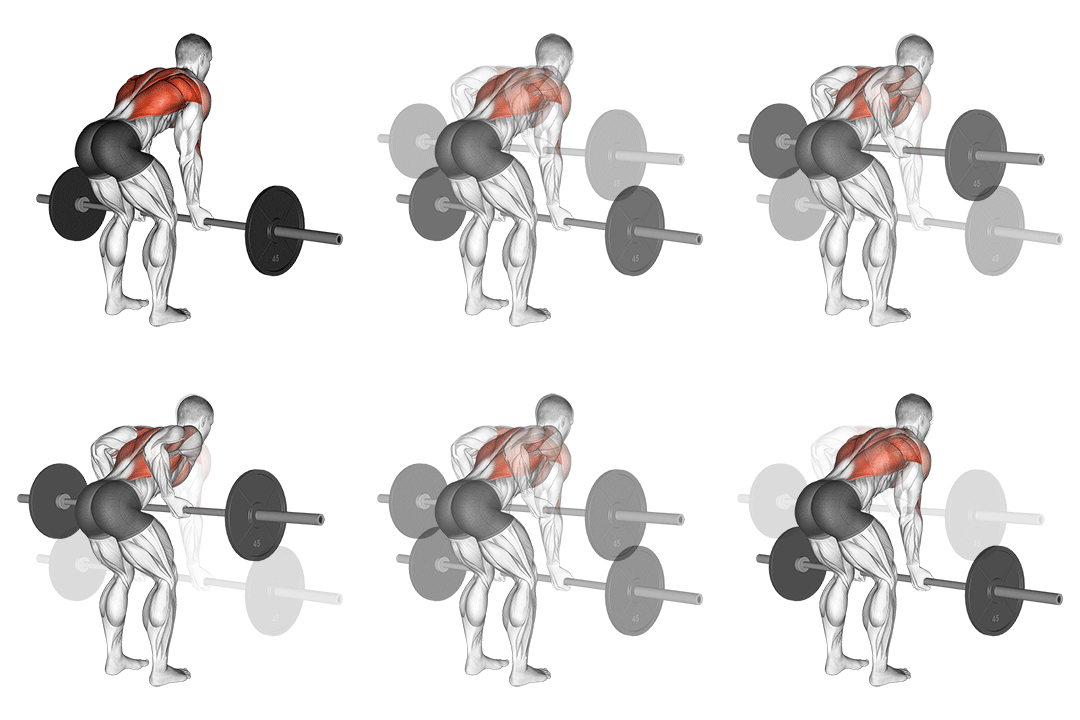
3. Barbell Reverse Grip Bent Over Row
70.7% MatchHow to perform this exercise
- Stand with your feet shoulder-width apart and knees slightly bent.
- Hold a barbell with an overhand grip, palms facing down, and hands slightly wider than shoulder-width apart.
- Bend forward at the hips, keeping your back straight and chest up, until your torso is almost parallel to the floor.
- Pull the barbell towards your lower chest, squeezing your shoulder blades together.
- Pause for a moment at the top, then slowly lower the barbell back to the starting position.
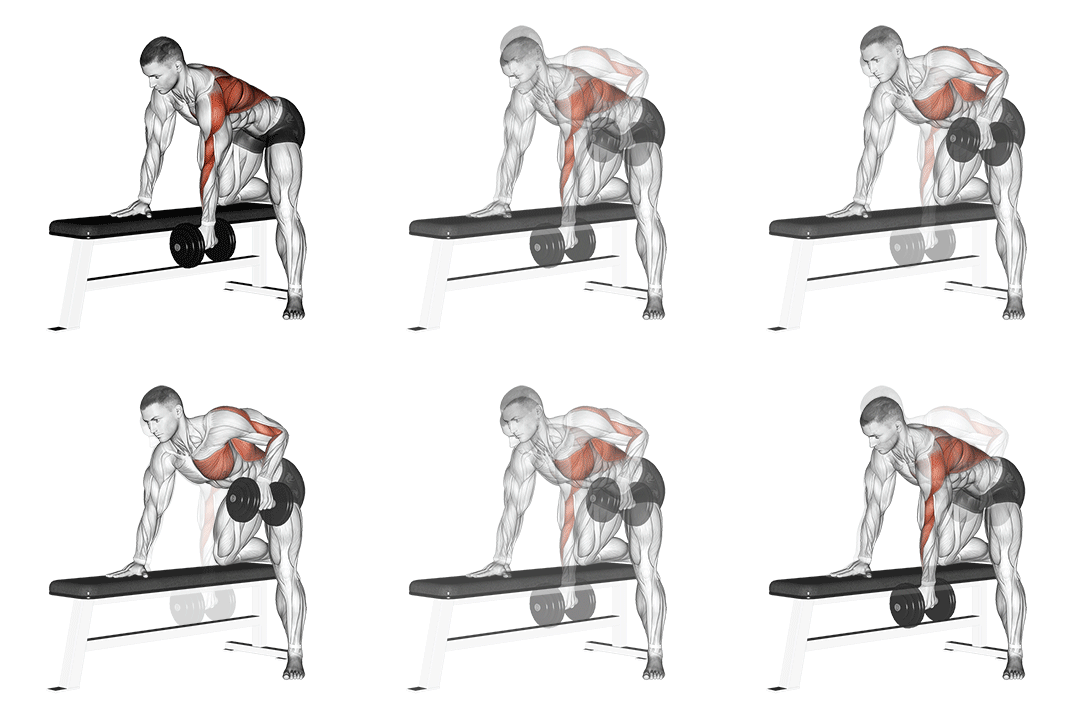
4. Dumbbell One Arm Bent-over Row
65.6% MatchHow to perform this exercise
- Stand with your feet shoulder-width apart, holding a dumbbell in one hand with your palm facing your body.
- Bend your knees slightly and hinge forward at the hips, keeping your back straight and your core engaged.
- Let the dumbbell hang straight down towards the floor, with your arm fully extended.
- Pull the dumbbell up towards your chest, keeping your elbow close to your body and squeezing your shoulder blades together.
- Pause for a moment at the top, then slowly lower the dumbbell back down to the starting position.
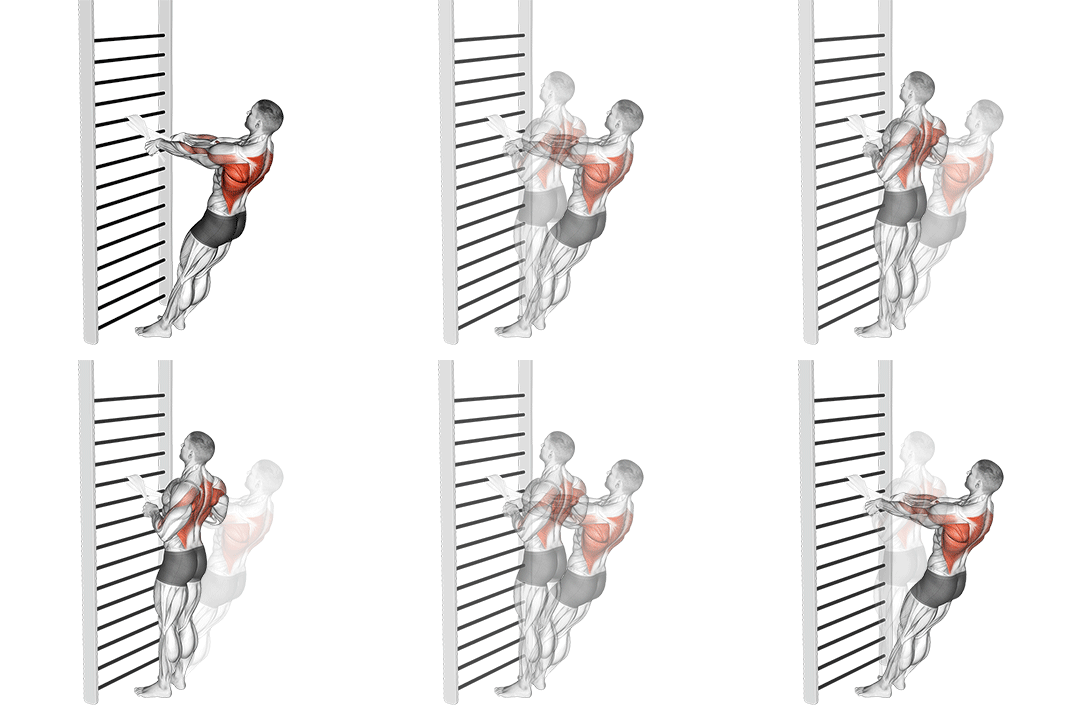
5. Bodyweight Standing Row (with Towel)
64.7% MatchHow to perform this exercise
- Stand with your feet shoulder-width apart and hold a towel in front of you with both hands.
- Bend your knees slightly and hinge forward at the hips, keeping your back straight.
- Pull the towel towards your chest, squeezing your shoulder blades together.
- Pause for a moment at the top, then slowly release the tension and return to the starting position.
- Repeat for the desired number of repetitions.
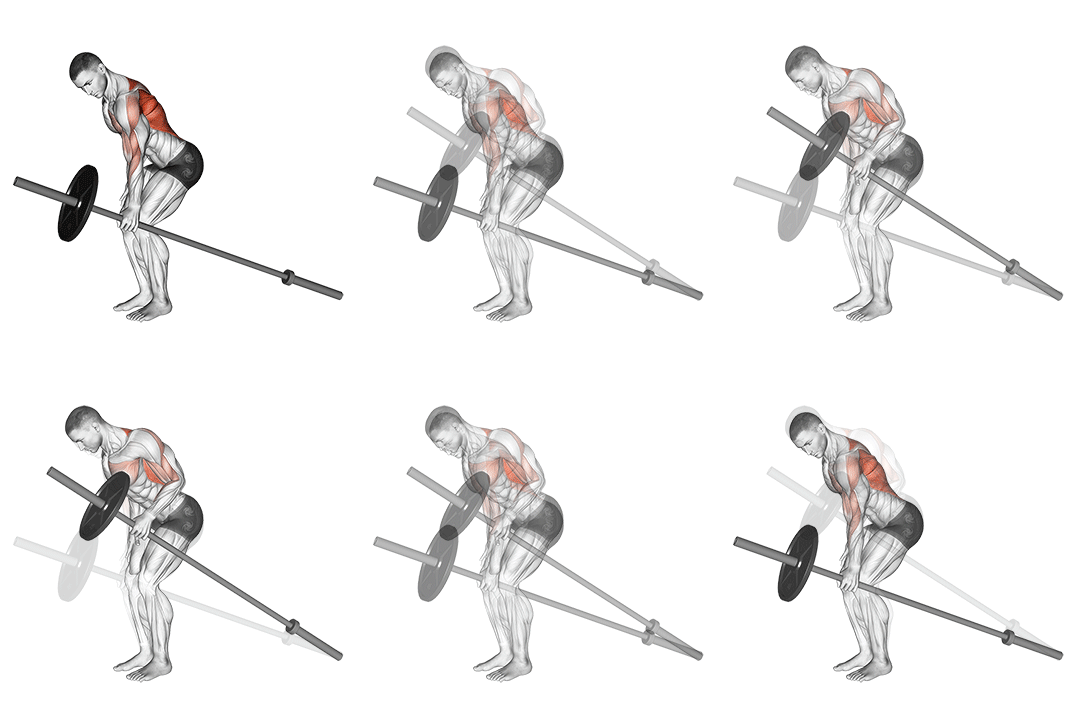
6. Barbell One Arm Bent Over Row
64.4% MatchHow to perform this exercise
- Stand with your feet shoulder-width apart, knees slightly bent, and hold a barbell with one hand using an overhand grip.
- Bend forward at the hips, keeping your back straight and your head in a neutral position.
- Pull the barbell up towards your chest, keeping your elbow close to your body and squeezing your shoulder blades together.
- Lower the barbell back down to the starting position in a controlled manner.
- Repeat for the desired number of repetitions, then switch to the other arm.
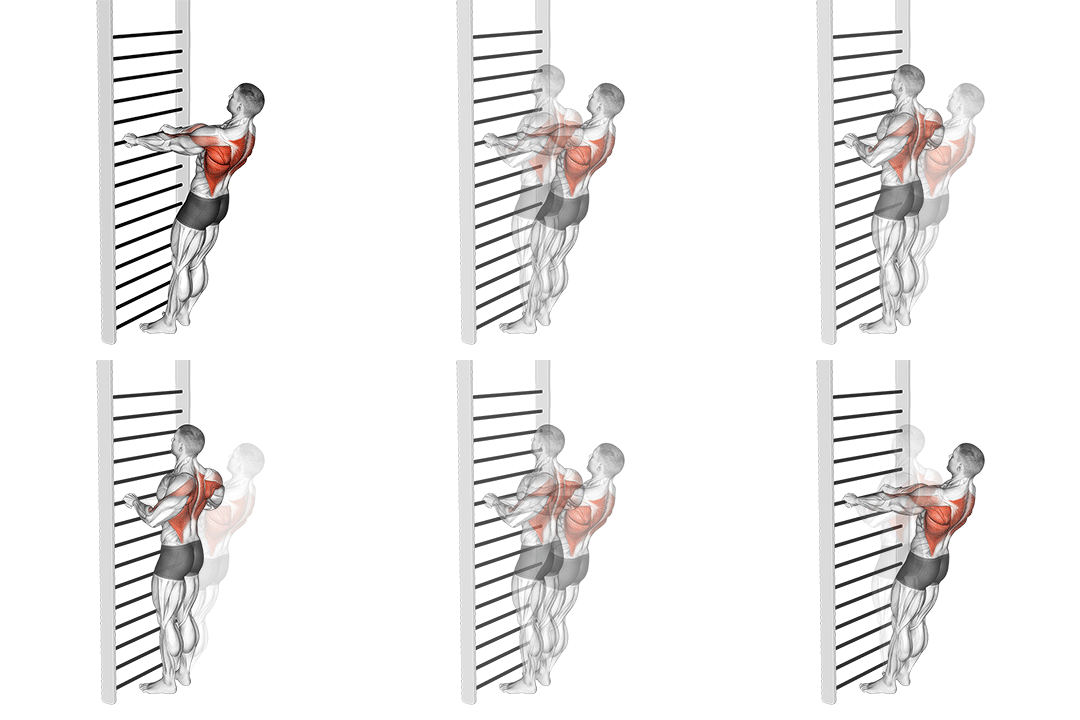
7. Bodyweight Standing Row
61.4% MatchHow to perform this exercise
- Stand with your feet shoulder-width apart and knees slightly bent.
- Grasp a bar or handles with an overhand grip, palms facing down.
- Keep your back straight and core engaged.
- Pull the bar or handles towards your body, squeezing your shoulder blades together.
- Pause for a moment at the top of the movement.
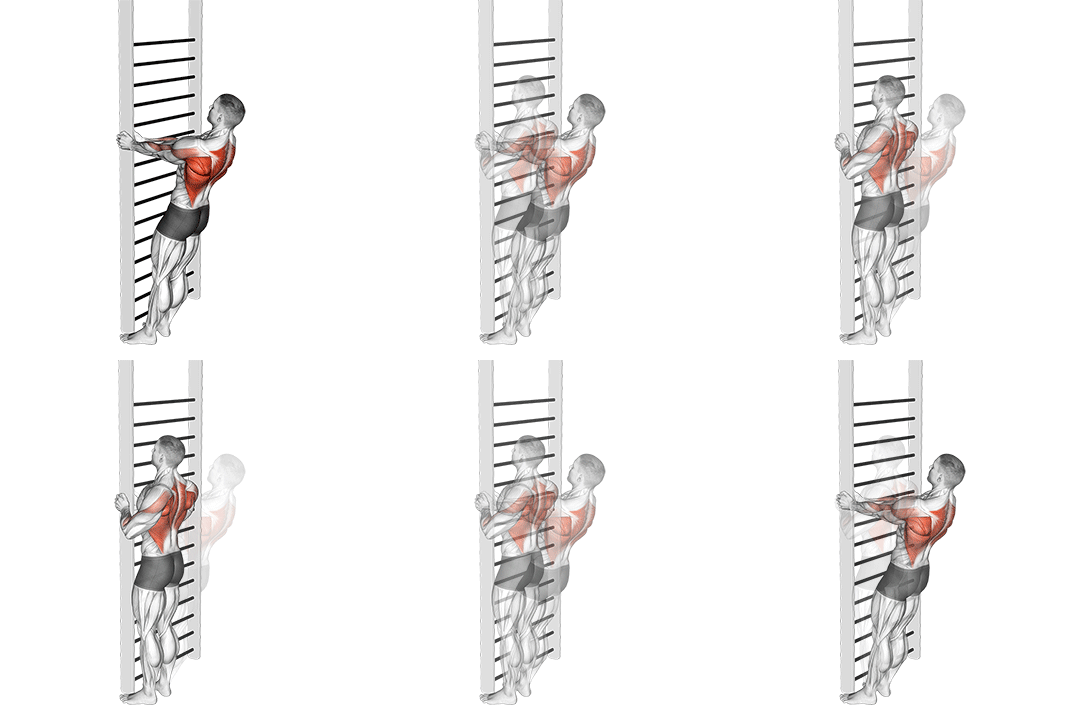
8. Bodyweight Standing Close-grip Row
61.4% MatchHow to perform this exercise
- Stand with your feet shoulder-width apart and knees slightly bent.
- Bend forward at the waist, keeping your back straight and your core engaged.
- Extend your arms straight in front of you, gripping the bar or handles with a close grip.
- Pull the bar or handles towards your body, squeezing your shoulder blades together.
- Pause for a moment at the top of the movement, then slowly release and return to the starting position.
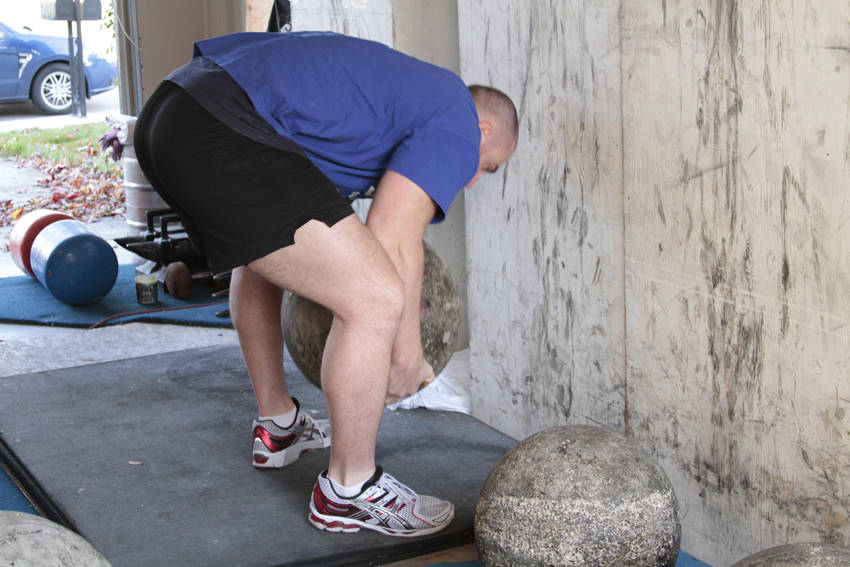
9. Atlas Stones
60.2% MatchHow to perform this exercise
- Begin with the atlas stone between your feet. Bend at the hips to wrap your arms vertically around the Atlas Stone, attempting to get your fingers underneath the stone. Many stones will have a small flat portion on the bottom, which will make the stone easier to hold.
- Pulling the stone into your torso, drive through the back half of your feet to pull the stone from the ground.
- As the stone passes the knees, lap it by sitting backward, pulling the stone on top of your thighs.
- Sit low, getting the stone high onto your chest as you change your grip to reach over the stone. Stand, driving through with your hips. Close distance to the loading platform, and lean back, extending the hips to get the stone as high as possible.
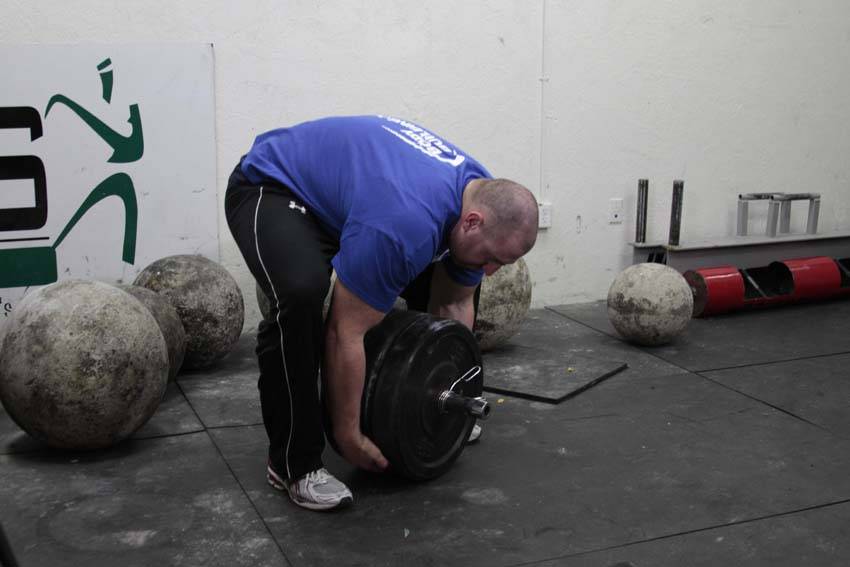
10. Atlas Stone Trainer
60.2% MatchHow to perform this exercise
- This trainer is effective for developing Atlas Stone strength for those who don't have access to stones, and are typically made from bar ends or heavy pipe.
- Begin by loading the desired weight onto the bar. Straddle the weight, wrapping your arms around the implement, bending at the hips.
- Begin by pulling the weight up past the knees, extending through the hips. As the weight clears the knees, it can be lapped by resting it on your thighs and sitting back, hugging it tightly to your chest.
- Finish the movement by extending through your hips and knees to raise the weight as high as possible. The weight can be returned to the lap or to the ground for successive repetitions.
Why You Might Need a Catch And Overhead Throw Alternative
You might substitute the Catch And Overhead Throw due to lack of a medicine ball, shoulder or back pain, or a need for different training adaptations (strength vs. power). Throwing loads require explosive hip extension and coordinated scapulothoracic control; substitutions can reduce compressive shoulder forces while preserving lat recruitment. For rehab choose chest-supported rows to limit lumbar shear—set your torso on the bench, pull through the elbow and keep scapula depressed to maintain lat emphasis.
How to Choose the Right Substitute
Decide based on the primary goal: power, hypertrophy, or rehab. For power use explosive cable or band pulldowns with short ground contact; cue a fast concentric and controlled eccentric to load stretch-shortening. For hypertrophy pick heavy rows or pulldowns and focus on slow eccentrics and full range to maximize lat time under tension. If rehabbing, choose chest-supported or banded variations that limit spinal load and require scapular control—keep shoulders down and lead with the elbow on each rep.
Frequently Asked Questions
What muscles does Catch And Overhead Throw work?
The move primarily targets the latissimus dorsi as the shoulder adductor and extensor. It also recruits teres major, posterior deltoid, rhomboids, lower traps, and the hips/core for power transfer—drive the elbow down and back to maximize lat engagement.
What is the best bodyweight alternative to Catch And Overhead Throw?
The pull-up is the top bodyweight substitute because it loads the lats through shoulder extension and adduction. Initiate each rep by depressing and retracting the scapula, then pull the chest toward the bar while leading with the elbow to prioritize lat activation.
Can I build muscle without doing Catch And Overhead Throw?
Yes—you can build lats with rows, pulldowns, pull-ups, and controlled eccentrics using progressive overload. Emphasize full range of motion, scapular retraction, and slow eccentrics to increase time under tension and stimulate hypertrophy.
More Exercise Alternatives
Find Alternatives for Any Exercise
Use our free tool to discover the best substitute exercises based on your available equipment and goals.
Try the Exercise Substitution Finder →