

10 Best Chair Upper Body Stretch Alternatives for Deskbound Lifters
If you can’t perform the Chair Upper Body Stretch, use targeted standing options like the cross‑body shoulder stretch, doorway anterior deltoid stretch, banded pass‑throughs, sleeper stretch, or seated towel-assisted rear-delt release. Emphasize deltoid lengthening and scapular control—pull the arm across the chest with a long spine and relax the shoulder blade.
Original Exercise: Chair Upper Body Stretch
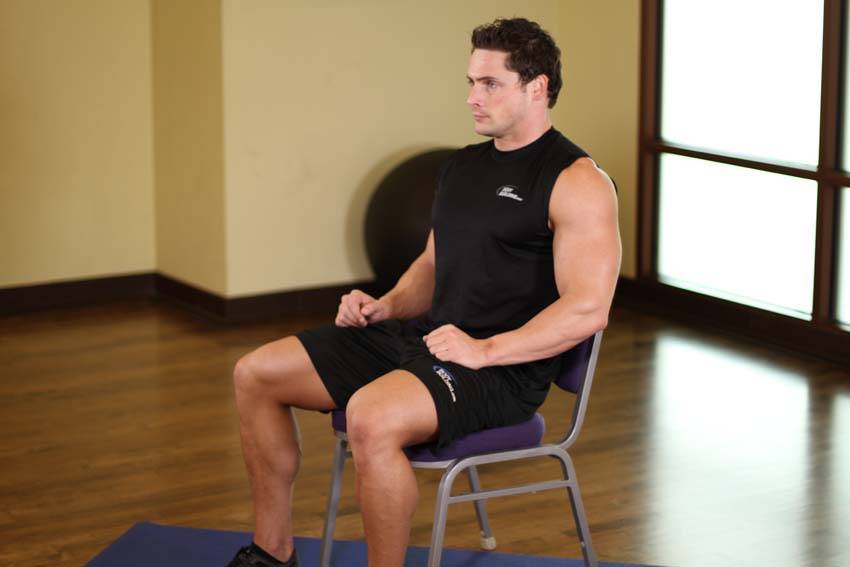
How to Perform Chair Upper Body Stretch
- Sit on the edge of a chair, gripping the back of it.
- Straighten your arms, keeping your back straight, and pull your upper body forward so you feel a stretch. Hold for 20-30 seconds.
Pro Tips
- Category: Stretching
- Force: Static
Best Chair Upper Body Stretch Alternatives
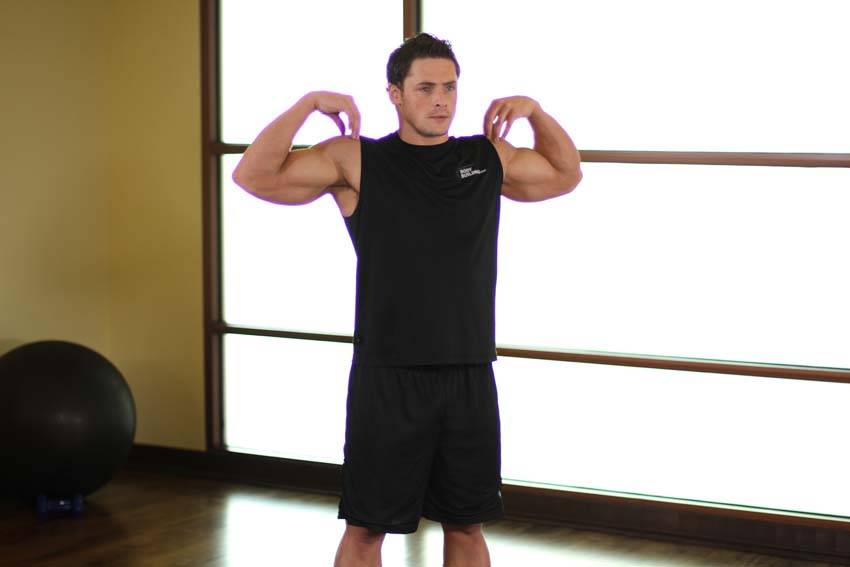
1. Elbow Circles
90% MatchHow to perform this exercise
- Sit or stand with your feet slightly apart.
- Place your hands on your shoulders with your elbows at shoulder level and pointing out.
- Slowly make a circle with your elbows. Breathe out as you start the circle and breathe in as you complete the circle.
2. Chest And Front Of Shoulder Stretch
81% MatchHow to perform this exercise
- Stand tall with your feet shoulder-width apart.
- Extend your arms straight out in front of you at shoulder height.
- Cross your arms in front of your body, with your right arm on top of your left arm.
- Interlace your fingers and press your palms together.
- Gently squeeze your shoulder blades together and push your hands forward, feeling a stretch in your chest and front of your shoulders.
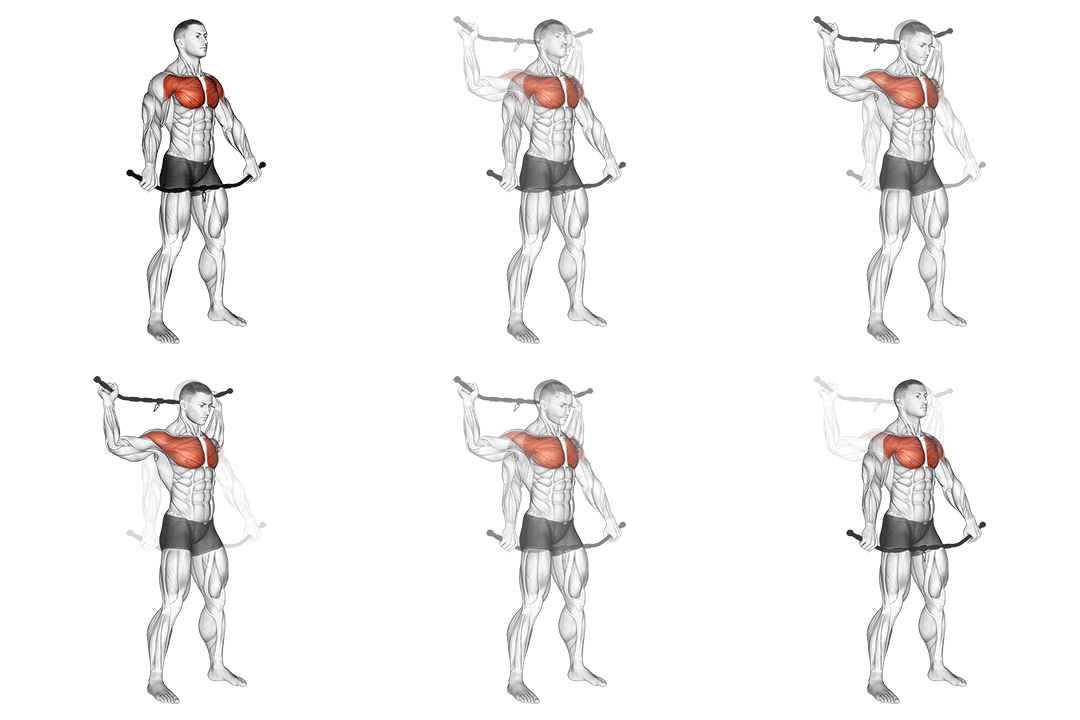
3. Behind Head Chest Stretch
80.2% MatchHow to perform this exercise
- Stand tall with your feet shoulder-width apart.
- Interlace your fingers behind your head with your elbows pointing outwards.
- Slowly squeeze your shoulder blades together and push your chest forward.
- Hold the stretch for 15-30 seconds.
- Release the stretch and repeat as desired.
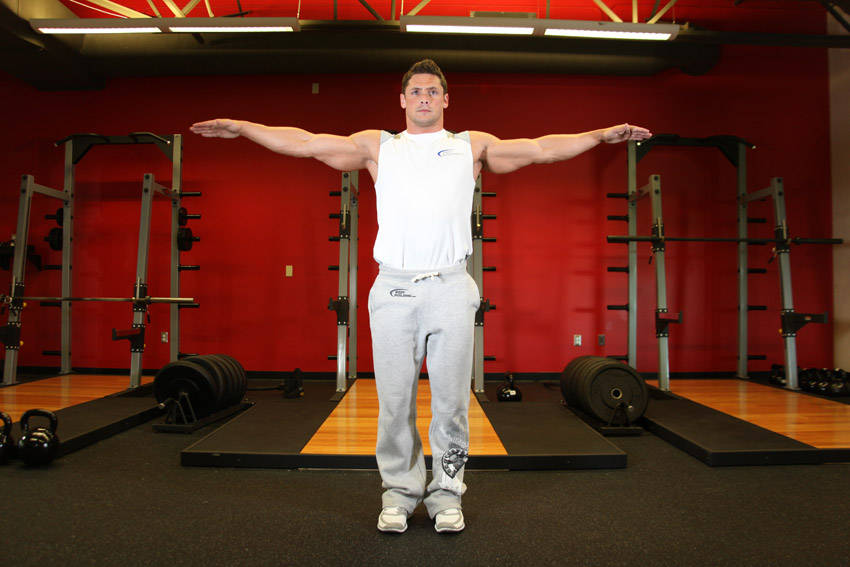
4. Arm Circles
79.2% MatchHow to perform this exercise
- Stand up and extend your arms straight out by the sides. The arms should be parallel to the floor and perpendicular (90-degree angle) to your torso. This will be your starting position.
- Slowly start to make circles of about 1 foot in diameter with each outstretched arm. Breathe normally as you perform the movement.
- Continue the circular motion of the outstretched arms for about ten seconds. Then reverse the movement, going the opposite direction.
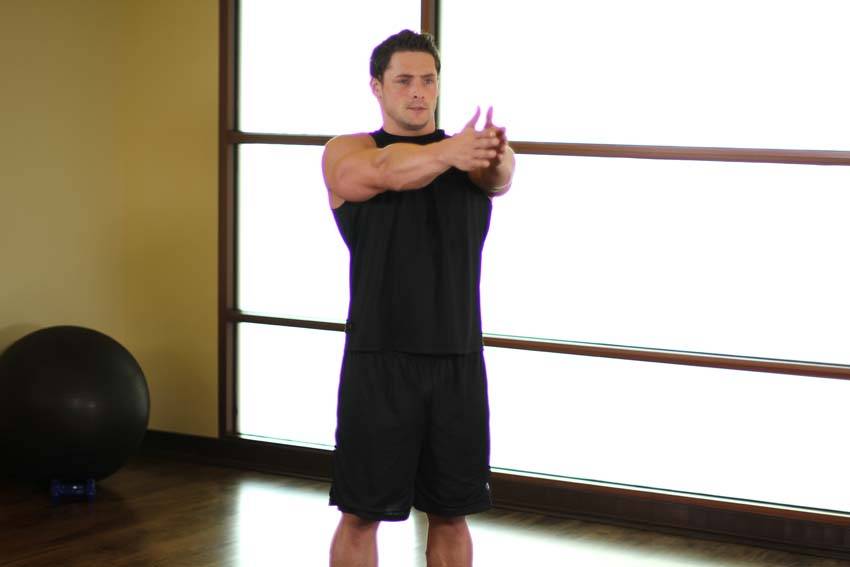
5. Dynamic Chest Stretch
75% MatchHow to perform this exercise
- Stand with your hands together, arms extended directly in front of you. This will be your starting position.
- Keeping your arms straight, quickly move your arms back as far as possible and back in again, similar to an exaggerated clapping motion. Repeat 5-10 times, increasing speed as you do so.
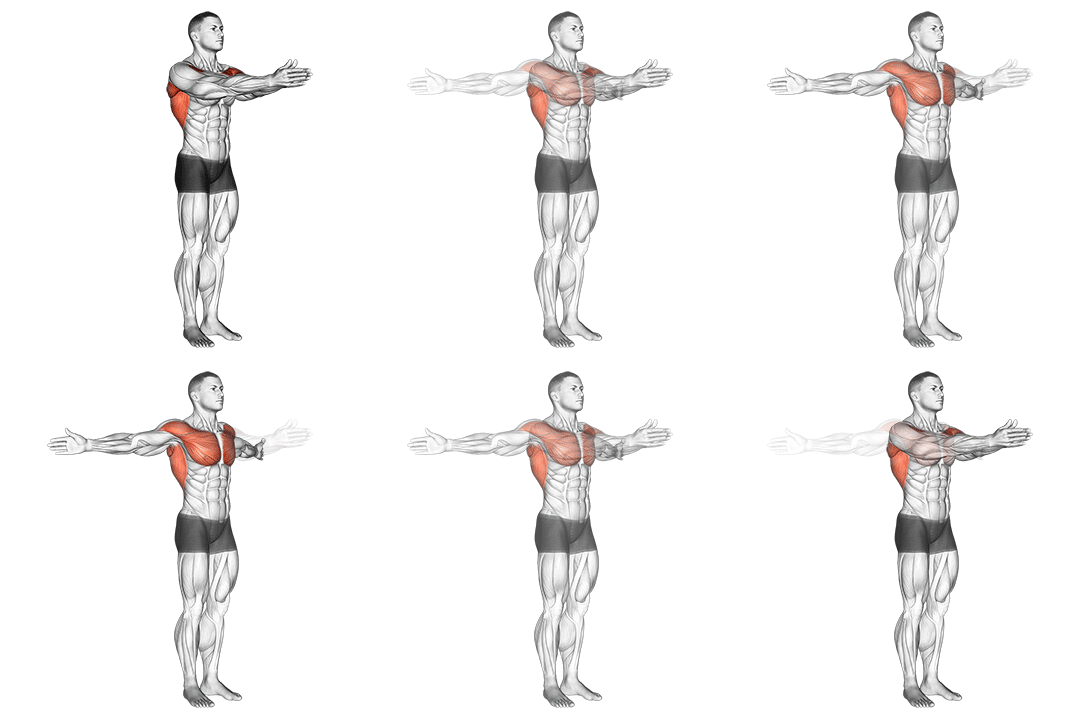
6. Dynamic Chest Stretch (male)
74.2% MatchHow to perform this exercise
- Stand tall with your feet shoulder-width apart.
- Extend your arms straight out to the sides, parallel to the ground.
- Slowly bring your arms forward, crossing them in front of your body.
- Feel the stretch in your chest muscles.
- Hold the stretch for 10-30 seconds.
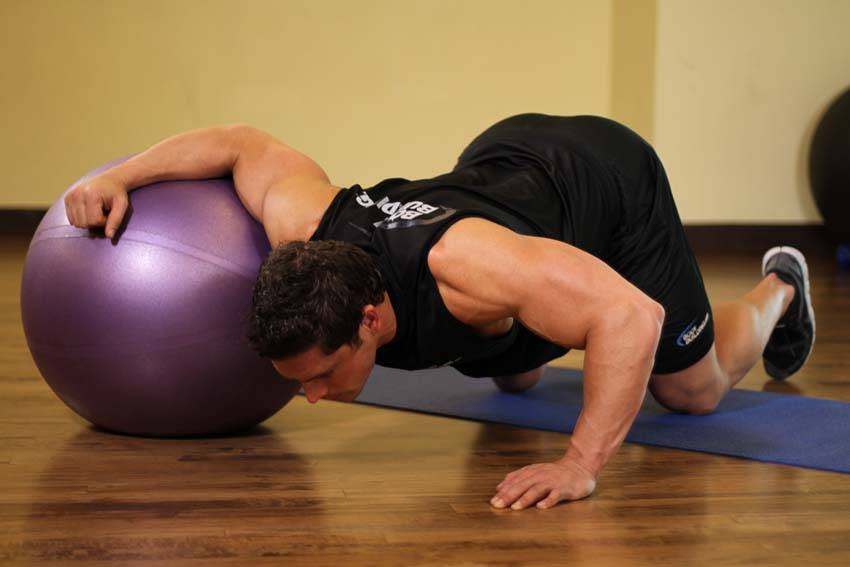
7. Chest Stretch On Stability Ball
74.1% MatchHow to perform this exercise
- Get on your hands and knees next to an exercise ball.
- Place your elbows on top of the ball, keeping your arm out to your side. This will be your starting position.
- Lower your torso towards the floor, keeping your elbow on top of the ball. Hold the stretch for 20-30 seconds, and repeat with the other arm.
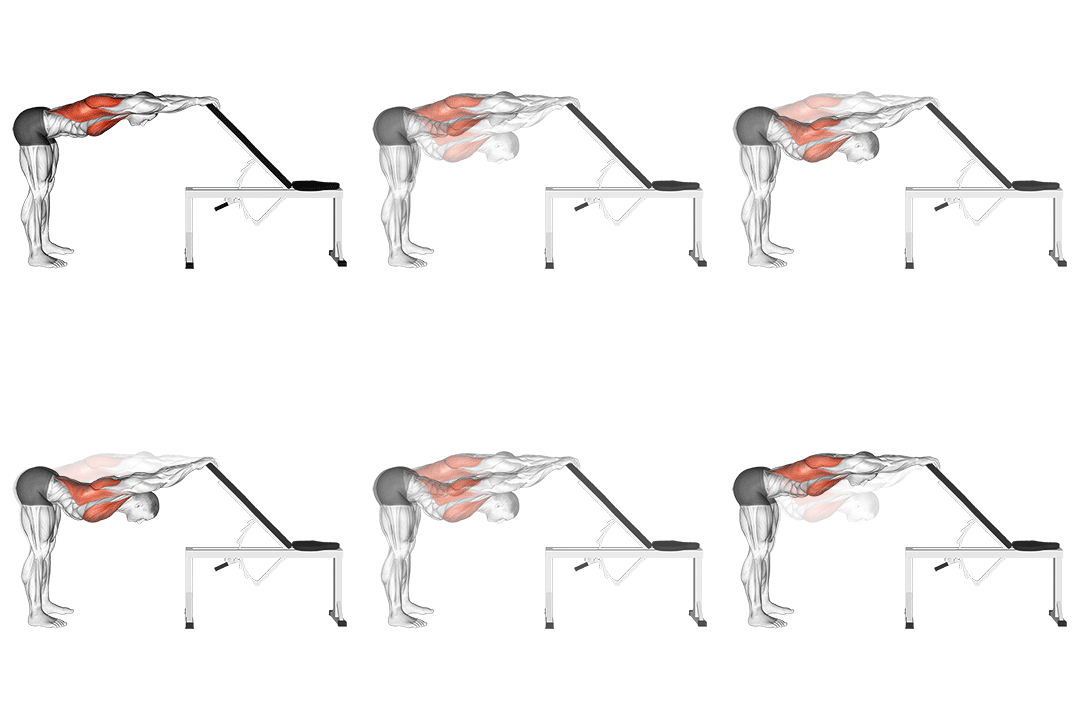
8. Back Pec Stretch
71% MatchHow to perform this exercise
- Stand tall with your feet shoulder-width apart.
- Extend your arms straight out in front of you, parallel to the ground.
- Cross your arms in front of your body, with your right arm over your left arm.
- Interlock your fingers and rotate your palms away from your body.
- Slowly raise your arms up and away from your body, feeling a stretch in your back and chest.
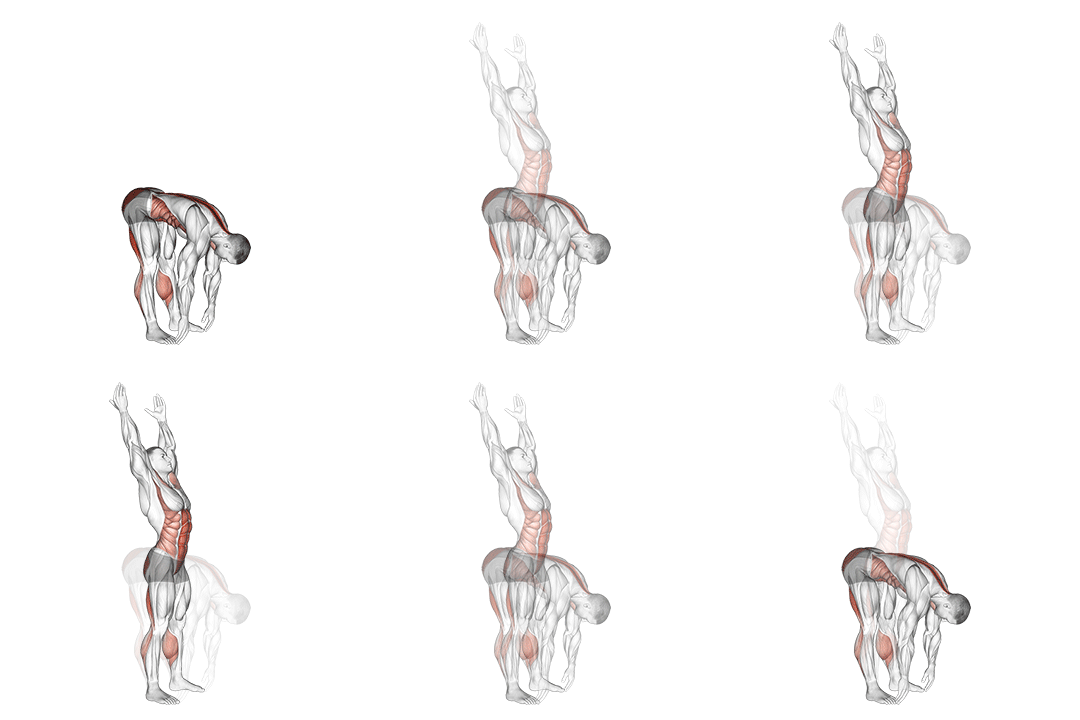
9. Basic Toe Touch (male)
70% MatchHow to perform this exercise
- Stand with your feet shoulder-width apart and your arms by your sides.
- Bend forward at the waist, keeping your back straight and your knees slightly bent.
- Reach down towards your toes with your hands, keeping your legs as straight as possible.
- Pause for a moment at the bottom, then slowly return to the starting position.
- Repeat for the desired number of repetitions.
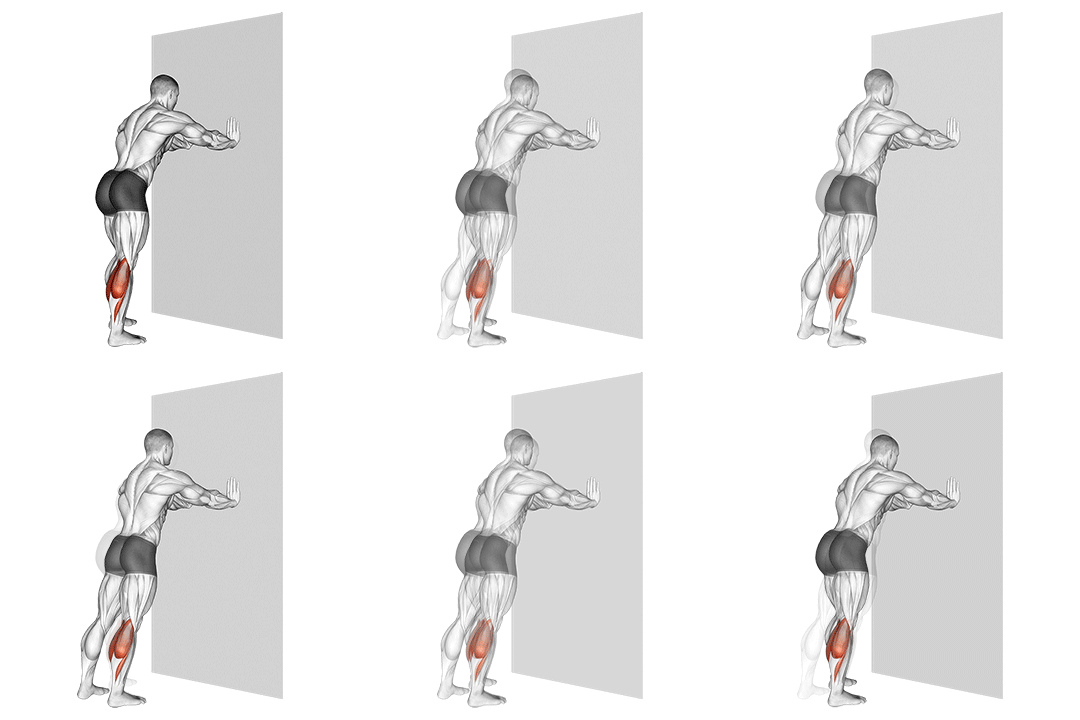
10. Calf Stretch With Hands Against Wall
70% MatchHow to perform this exercise
- Stand facing a wall with your feet hip-width apart.
- Place your hands against the wall at shoulder height.
- Step your right foot back, keeping your heel on the ground and your leg straight.
- Bend your left knee and lean forward, keeping your back leg straight and your heel on the ground.
- Hold the stretch for 20-30 seconds.
Why You Might Need a Chair Upper Body Stretch Alternative
You may need substitutes because of pain, limited mobility, lack of a chair, or post-surgery restrictions. Some people feel impingement when flexing the shoulder while seated; alternatives let you alter shoulder plane and scapular position to reduce superior humeral migration. Choose movements that change loading patterns—posterior cross-body stretches offload the anterior capsule, while banded pass‑throughs improve posterior deltoid activation and external rotation. Cue: initiate motion from the glenohumeral joint, not by twisting the torso, so the deltoid fibers lengthen through their full range.
How to Choose the Right Substitute
Select a substitute based on the deltoid head you need to target, available equipment, and pain response. If anterior deltoid tightness limits overhead reach, use a doorway stretch and keep ribs down while tilting the pelvis to avoid lumbar compensation. For posterior deltoid tightness or rounded shoulders, choose banded pull‑aparts or face pulls to emphasize scapular retraction and posterior deltoid activation. Progress from passive stretches to active-loaded mobility like slow banded pass‑throughs when pain-free. Prioritize exercises that let you monitor scapular movement and joint angle so you maintain clean biomechanics.
Frequently Asked Questions
What muscles does Chair Upper Body Stretch work?
The Chair Upper Body Stretch mainly lengthens the deltoid complex, with emphasis depending on arm position (anterior, lateral, or posterior deltoid). It also affects scapular stabilizers—your levator, rhomboids, and lower trapezius—so cue scapular depression and retraction to isolate deltoid lengthening.
What is the best bodyweight alternative to Chair Upper Body Stretch?
The cross‑body shoulder stretch is the top bodyweight substitute because it isolates the posterior deltoid and posterior capsule. Stand tall, pull the arm across the chest with the opposite hand, keep the elbow slightly bent, and avoid rotating your torso to maintain glenohumeral stretch.
Can I build muscle without doing Chair Upper Body Stretch?
Yes. Strength gains come from progressive overload with targeted resistance work like overhead presses, lateral raises, and banded pull‑aparts that activate deltoid fibers. Use stretches to maintain ROM, then load the deltoids through controlled concentric and eccentric reps for hypertrophy.
More Exercise Alternatives
Find Alternatives for Any Exercise
Use our free tool to discover the best substitute exercises based on your available equipment and goals.
Try the Exercise Substitution Finder →