

10 Best Chest And Front Of Shoulder Stretch Alternatives for Tight Shoulders
Use doorframe or corner pec stretches, a supine foam‑roller pec release, or banded chest openers to target the pectorals and anterior deltoid. For a doorframe stretch, set your forearm at 90° on the frame and step forward while drawing the scapulae together to load the pectoralis major and minor safely.
Original Exercise: Chest And Front Of Shoulder Stretch
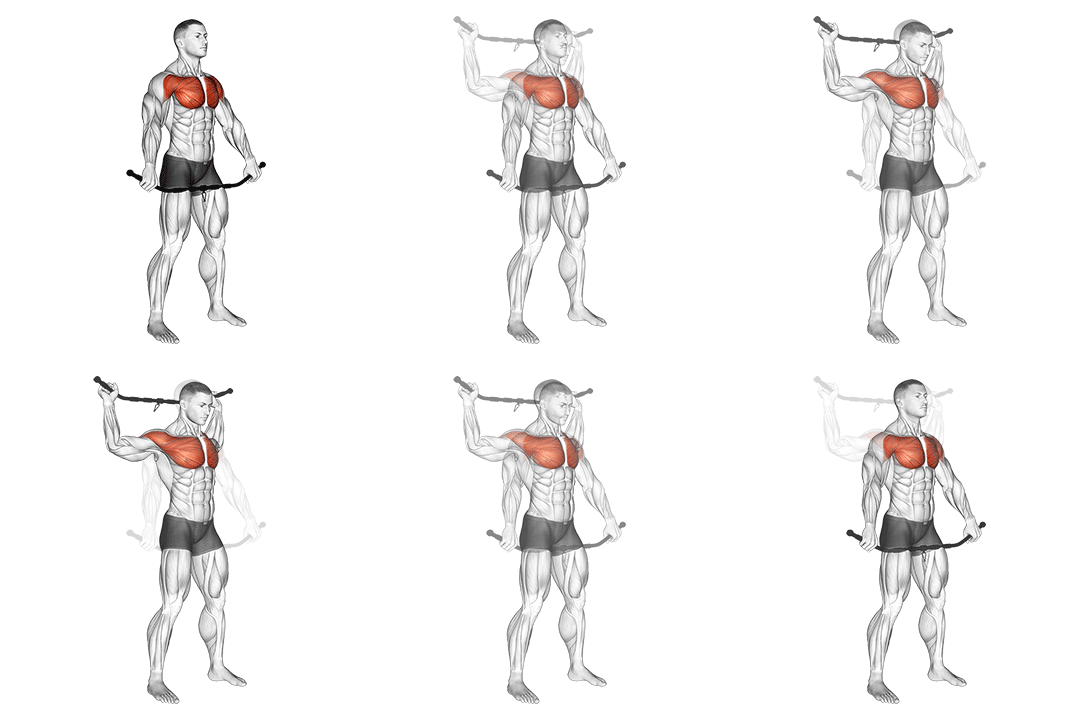
How to Perform Chest And Front Of Shoulder Stretch
- Stand tall with your feet shoulder-width apart.
- Extend your arms straight out in front of you at shoulder height.
- Cross your arms in front of your body, with your right arm on top of your left arm.
- Interlace your fingers and press your palms together.
- Gently squeeze your shoulder blades together and push your hands forward, feeling a stretch in your chest and front of your shoulders.
- Hold the stretch for 20-30 seconds, then release.
- Repeat for the desired number of repetitions.
Best Chest And Front Of Shoulder Stretch Alternatives
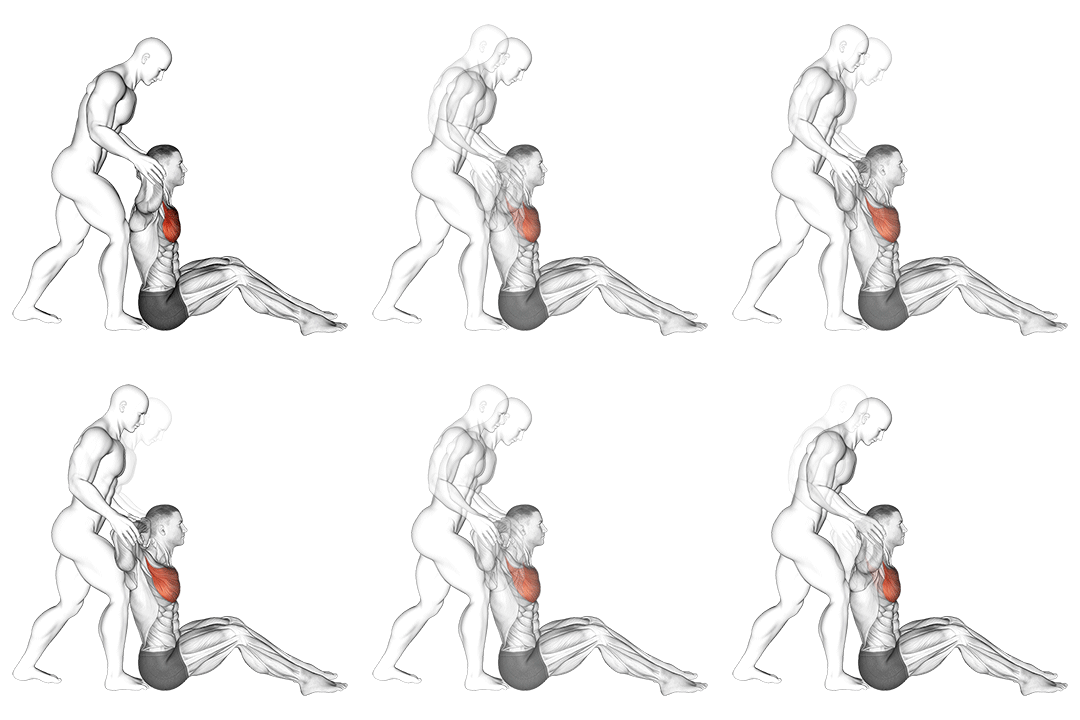
1. Behind Head Chest Stretch
99.2% MatchHow to perform this exercise
- Stand tall with your feet shoulder-width apart.
- Interlace your fingers behind your head with your elbows pointing outwards.
- Slowly squeeze your shoulder blades together and push your chest forward.
- Hold the stretch for 15-30 seconds.
- Release the stretch and repeat as desired.
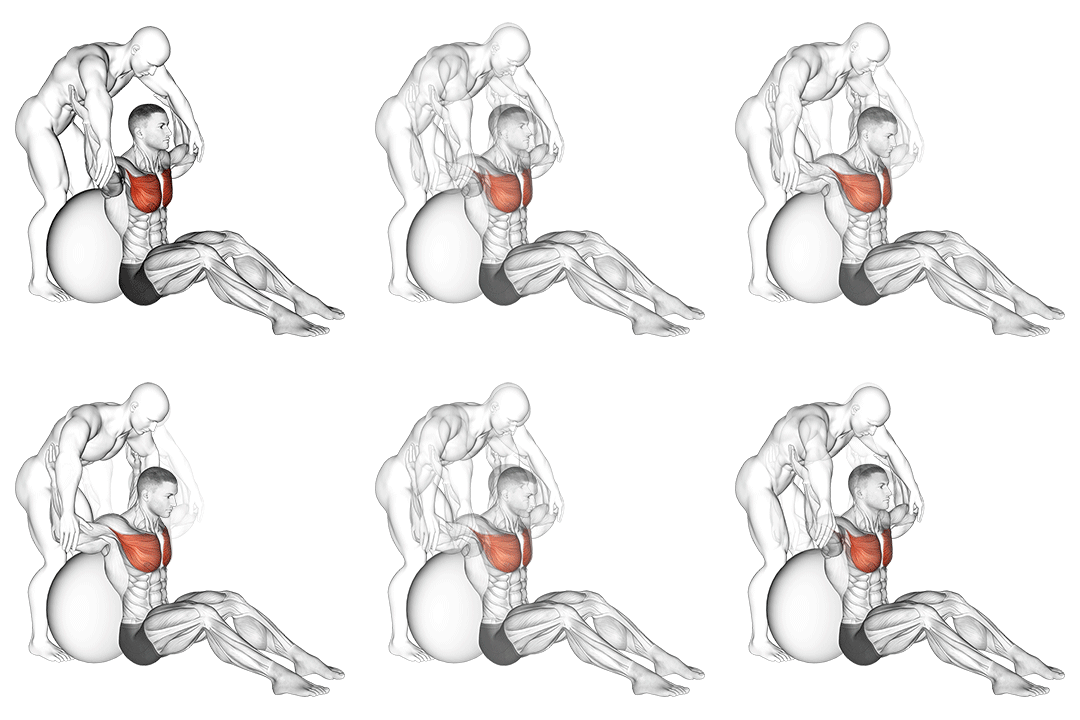
2. Assisted Seated Pectoralis Major Stretch With Stability Ball
87.6% MatchHow to perform this exercise
- Sit on a stability ball with your feet flat on the ground and your back straight.
- Hold a stability ball with both hands and extend your arms straight out in front of you.
- Slowly lower the stability ball towards your chest, feeling a stretch in your pectoral muscles.
- Hold the stretch for a few seconds, then slowly return to the starting position.
- Repeat for the desired number of repetitions.
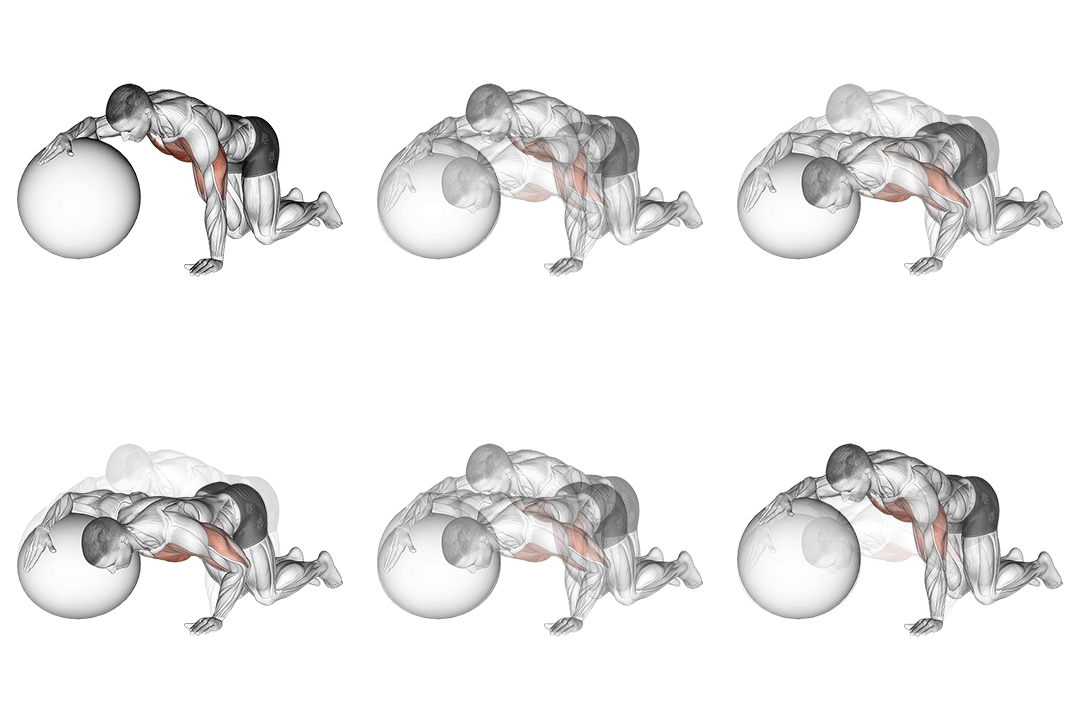
3. Chest Stretch With Exercise Ball
86.8% MatchHow to perform this exercise
- Sit on the stability ball with your feet flat on the ground and your back straight.
- Hold the exercise ball with both hands and extend your arms straight out in front of you.
- Slowly bring the exercise ball towards your chest, feeling a stretch in your chest muscles.
- Hold the stretch for a few seconds, then slowly return to the starting position.
- Repeat for the desired number of repetitions.
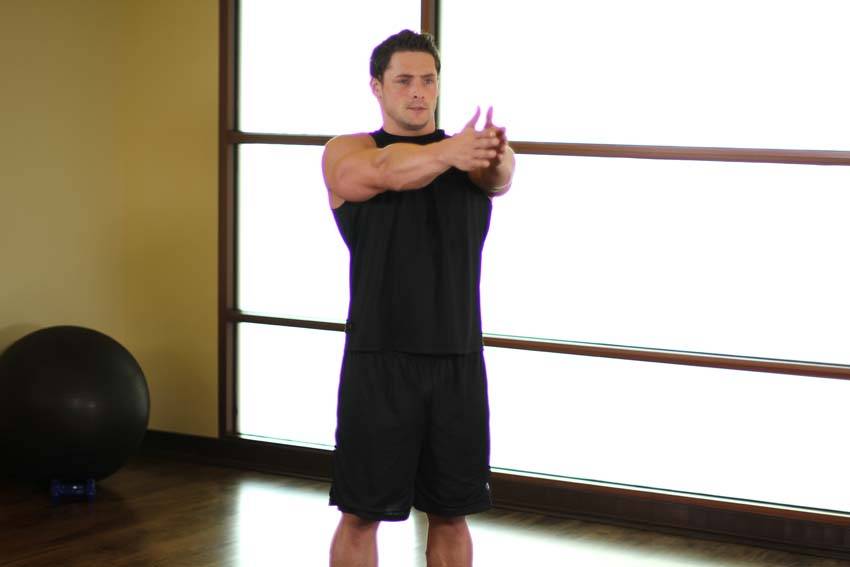
4. Dynamic Chest Stretch
86% MatchHow to perform this exercise
- Stand with your hands together, arms extended directly in front of you. This will be your starting position.
- Keeping your arms straight, quickly move your arms back as far as possible and back in again, similar to an exaggerated clapping motion. Repeat 5-10 times, increasing speed as you do so.
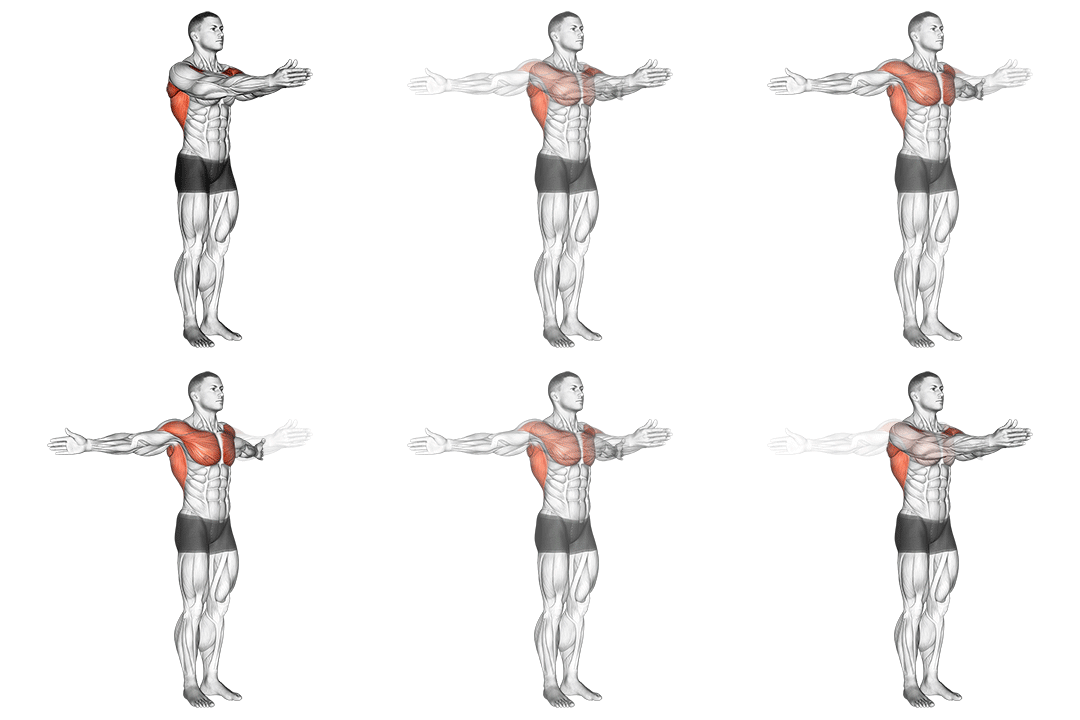
5. Dynamic Chest Stretch (male)
85.2% MatchHow to perform this exercise
- Stand tall with your feet shoulder-width apart.
- Extend your arms straight out to the sides, parallel to the ground.
- Slowly bring your arms forward, crossing them in front of your body.
- Feel the stretch in your chest muscles.
- Hold the stretch for 10-30 seconds.
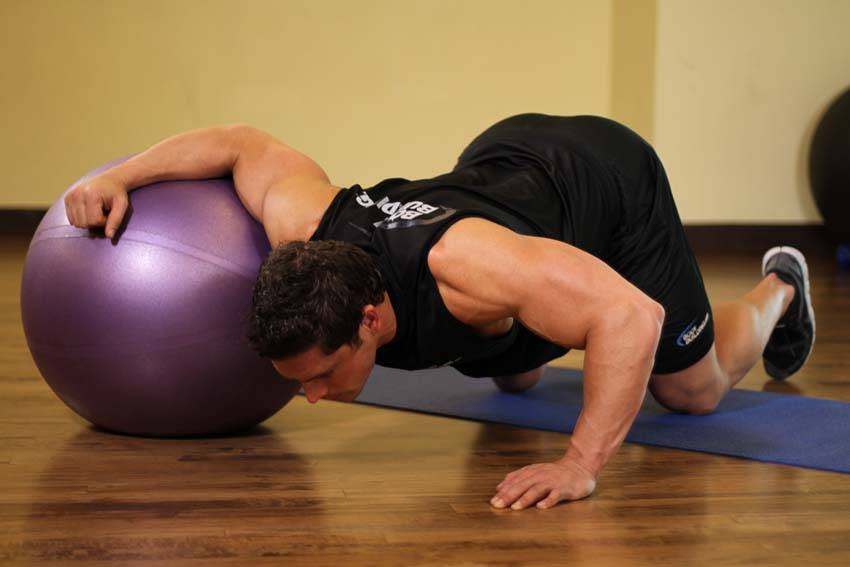
6. Chest Stretch On Stability Ball
85.1% MatchHow to perform this exercise
- Get on your hands and knees next to an exercise ball.
- Place your elbows on top of the ball, keeping your arm out to your side. This will be your starting position.
- Lower your torso towards the floor, keeping your elbow on top of the ball. Hold the stretch for 20-30 seconds, and repeat with the other arm.
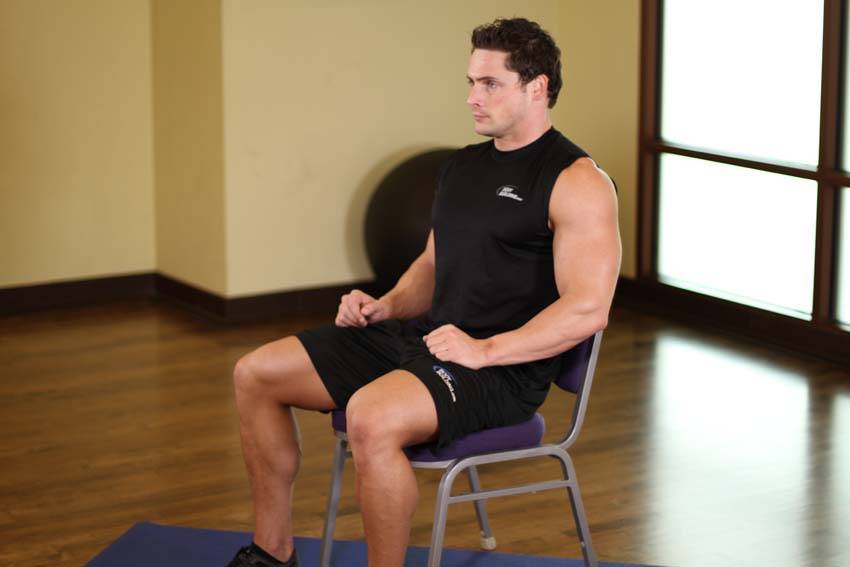
7. Chair Upper Body Stretch
81% MatchHow to perform this exercise
- Sit on the edge of a chair, gripping the back of it.
- Straighten your arms, keeping your back straight, and pull your upper body forward so you feel a stretch. Hold for 20-30 seconds.
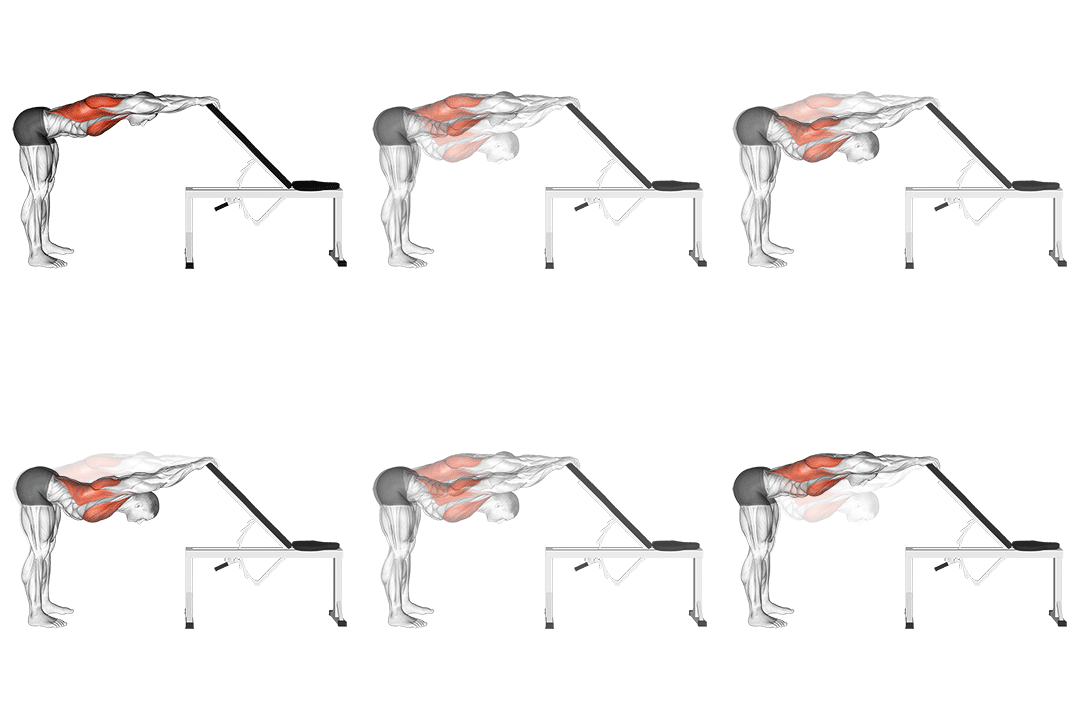
8. Back Pec Stretch
75% MatchHow to perform this exercise
- Stand tall with your feet shoulder-width apart.
- Extend your arms straight out in front of you, parallel to the ground.
- Cross your arms in front of your body, with your right arm over your left arm.
- Interlock your fingers and rotate your palms away from your body.
- Slowly raise your arms up and away from your body, feeling a stretch in your back and chest.
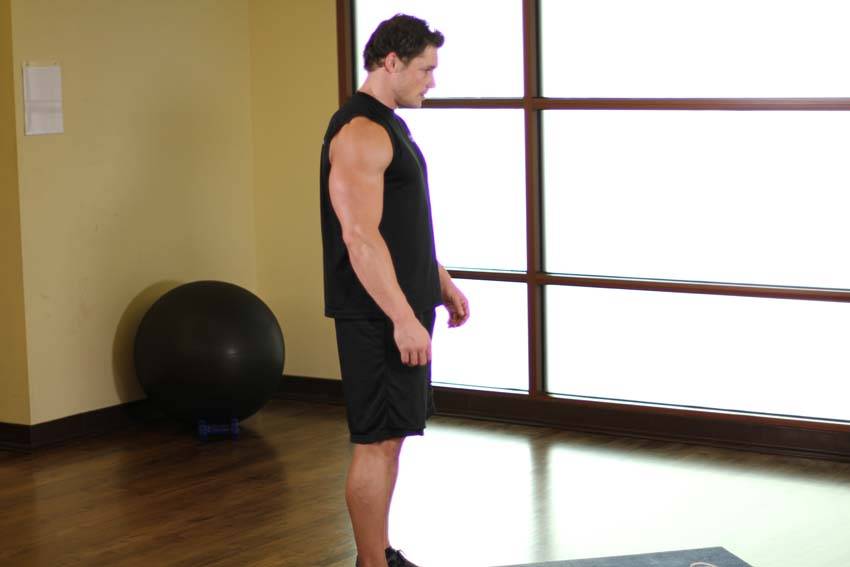
9. Elbows Back
73.9% MatchHow to perform this exercise
- Stand up straight.
- Place both hands on your lower back, fingers pointing downward and elbows out.
- Then gently pull your elbows back aiming to touch them together.
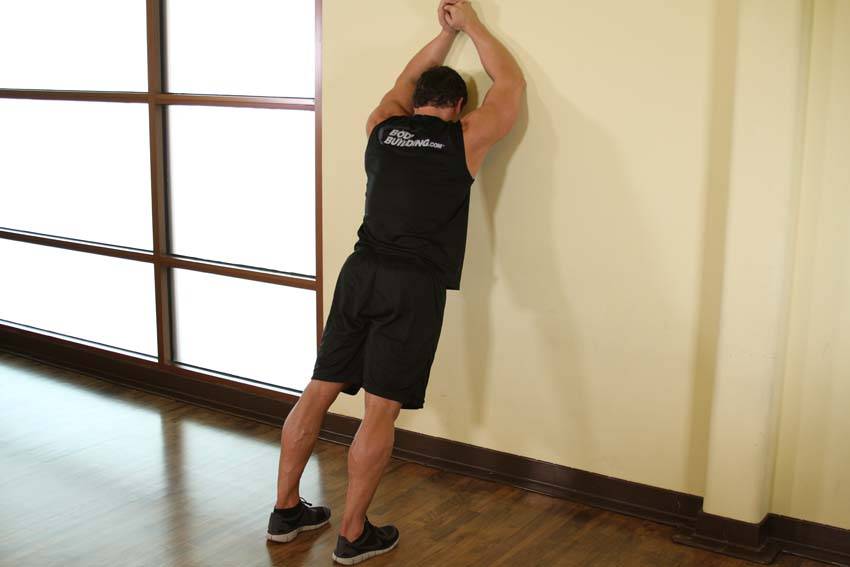
10. Calf Stretch Elbows Against Wall
73.4% MatchHow to perform this exercise
- Stand facing a wall from a couple feet away.
- Lean against the wall, placing your weight on your forearms.
- Attempt to keep your heels on the ground. Hold for 10-20 seconds. You may move further or closer the wall, making it more or less difficult, respectively.
Why You Might Need a Chest And Front Of Shoulder Stretch Alternative
You may need substitutes because of pain, recent surgery, limited range of motion, or simple discomfort getting into the classic stretch position. Passive end‑range chest stretches can stress the anterior capsule or irritate the biceps tendon; alternatives let you control humeral rotation, scapular position, and load. For example, a corner stretch with the scapula retracted biases the sternal fibers of pec major without excessive anterior shear. Supine foam‑roller releases apply targeted pressure to pec fascia to restore thoracic extension and improve scapulohumeral rhythm, reducing compensatory activation of the upper trapezius and subscapularis.
How to Choose the Right Substitute
Decide based on pain level, mobility goals, and whether you need passive tissue release or active motor control. For acute irritation pick low‑load options (supine roller or gentle doorframe holds for 20–30 seconds) with the humerus slightly externally rotated to limit anterior capsule strain. If your goal is to restore active control, use banded chest openers that force scapular retraction and eccentric control—pull the band slowly and keep the scapulae pinned down. Also factor in equipment, space, and whether you must progress from desensitization to loaded movement for long‑term strength and ROM gains.
Frequently Asked Questions
What muscles does Chest And Front Of Shoulder Stretch work?
The stretch primarily lengthens the pectoralis major and minor and the anterior deltoid by placing the humerus into horizontal abduction and external rotation. It also alters scapular position, reducing protraction and stretching the anterior shoulder capsule and pec minor musculature.
What is the best bodyweight alternative to Chest And Front Of Shoulder Stretch?
A doorframe pec stretch is the top bodyweight option: place your forearm at 90° on the frame, step forward, and gently retract the scapulae while keeping the humerus slightly externally rotated. Hold 20–30 seconds and breathe to target the same pectoral fibers without added equipment.
Can I build muscle without doing Chest And Front Of Shoulder Stretch?
Yes — hypertrophy depends on progressive overload and full, controlled range of motion in pressing and fly movements, not on a specific stretch. Maintain adequate pec length and shoulder mobility via alternative stretches so you can achieve full ROM on presses and eccentrics to maximize muscle activation.
More Exercise Alternatives
Find Alternatives for Any Exercise
Use our free tool to discover the best substitute exercises based on your available equipment and goals.
Try the Exercise Substitution Finder →