

10 Best Dumbbell One-arm Triceps Extension Alternatives for Limited Equipment
If you can't do the dumbbell one-arm triceps extension on a bench, pick movements that prioritize elbow extension while minimizing shoulder strain. Try single-arm cable overhead extensions, floor skull crushers, close-grip push-ups, dips, or bent-over kickbacks. Cue: keep your elbow tucked and extend from the triceps to emphasize long-head activation.
Original Exercise: Dumbbell One Arm Triceps Extension (On Bench)
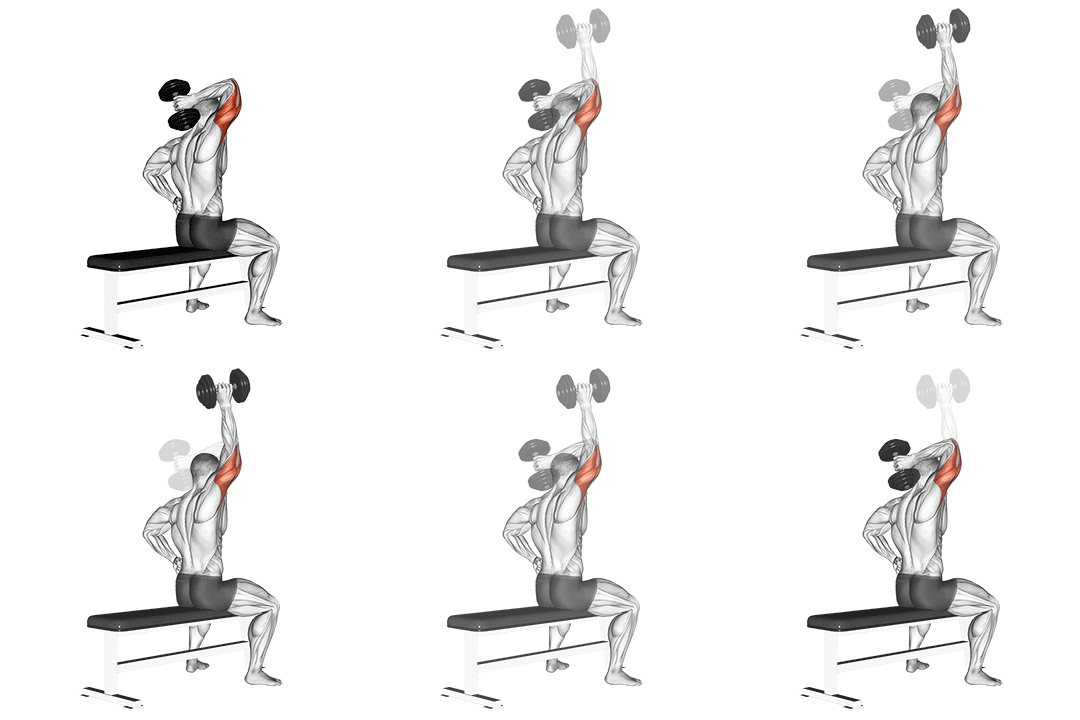
How to Perform Dumbbell One Arm Triceps Extension (On Bench)
- Sit on a bench with your back straight and feet flat on the ground.
- Hold a dumbbell in one hand and place your other hand on the bench for support.
- Raise the dumbbell overhead, keeping your upper arm close to your head and your elbow pointing forward.
- Lower the dumbbell behind your head by bending your elbow, keeping your upper arm stationary.
- Extend your arm back up to the starting position, fully straightening your elbow.
- Repeat for the desired number of repetitions, then switch arms.
Ranked Dumbbell One Arm Triceps Extension (On Bench) Alternatives
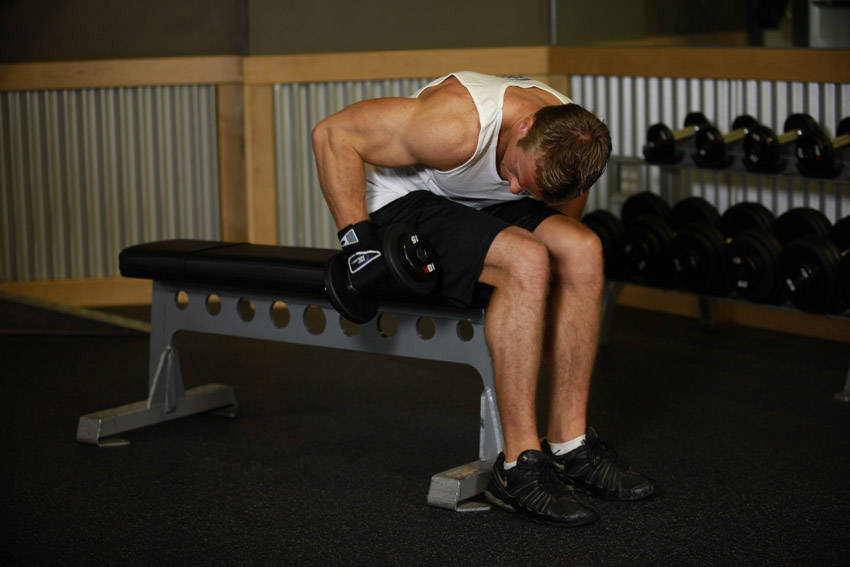
1. Seated Bent-Over One-Arm Dumbbell Triceps Extension
98.4% MatchHow to perform this exercise
- Sit down at the end of a flat bench with a dumbbell in one arm using a neutral grip (palms of the hand facing you).
- Bend your knees slightly and bring your torso forward, by bending at the waist, while keeping the back straight until it is almost parallel to the floor. Make sure that you keep the head up.
- The upper arm with the dumbbell should be close to the torso and aligned with it (lifted up until it is parallel to the floor while the forearms are pointing towards the floor as the hands hold the weights). Tip: There should be a 90-degree angle between the forearms and the upper arm. This is your starting position.
- Keeping the upper arm stationary, use the triceps to lift the weight as you exhale until the forearm is parallel to the floor and the whole arm is extended. Like many other arm exercises, only the forearm moves.
- After a second contraction at the top, slowly lower the dumbbell back to the starting position as you inhale.
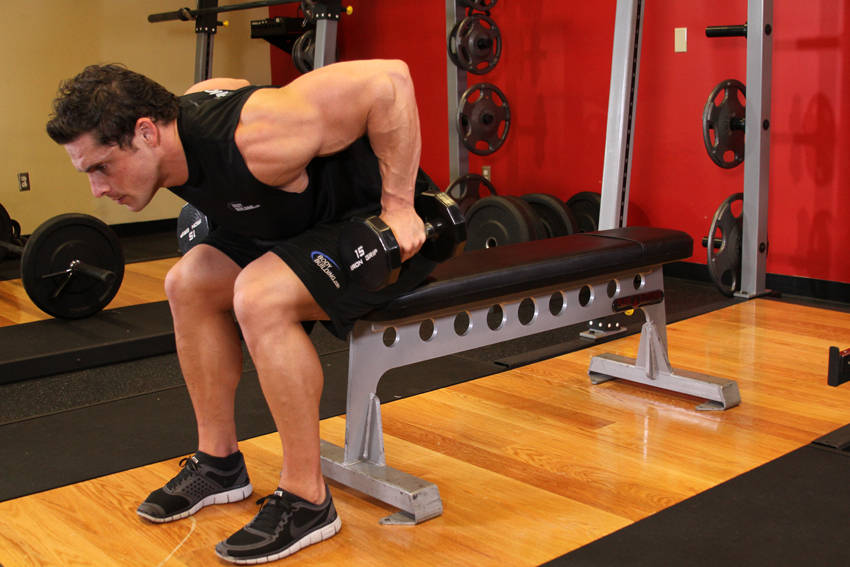
2. Seated Bent-Over Two-Arm Dumbbell Triceps Extension
92.2% MatchHow to perform this exercise
- Sit down at the end of a flat bench with a dumbbell in both arms using a neutral grip (palms of the hand facing you).
- Bend your knees slightly and bring your torso forward, by bending at the waist, while keeping the back straight until it is almost parallel to the floor. Make sure that you keep the head up.
- The upper arms with the dumbbells should be close to the torso and aligned with it (lifted up until they are parallel to the floor while the forearms are pointing towards the floor as the hands hold the weights). Tip: There should be a 90-degree angle between the forearms and the upper arm. This is your starting position.
- Keeping the upper arms stationary, use the triceps to lift the weight as you exhale until the forearms are parallel to the floor and the whole arm is extended. Like many other arm exercises, only the forearm moves.
- After a second contraction at the top, slowly lower the dumbbells back to the starting position as you inhale.
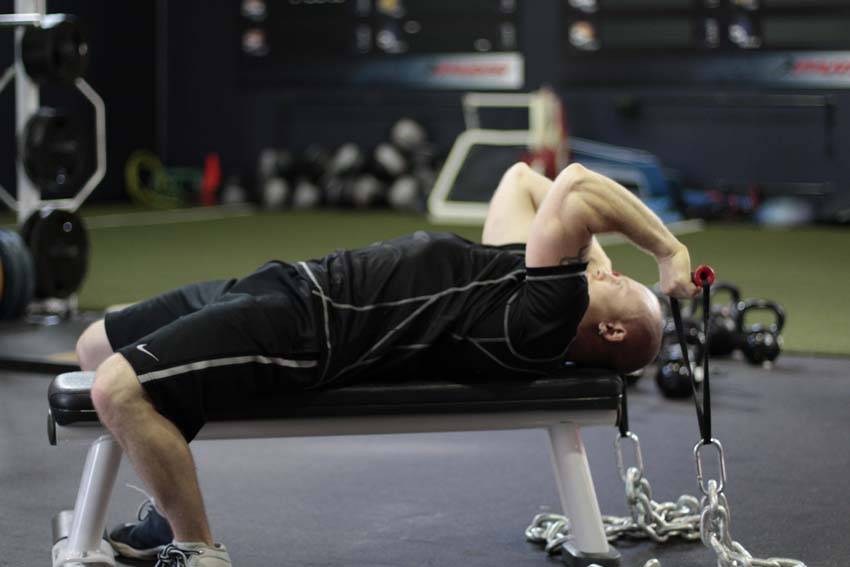
3. Chain Handle Extension
92% MatchHow to perform this exercise
- You will need two cable handle attachments and a flat bench, as well as chains, for this exercise. Clip the middle of the chains to the handles, and position yourself on the flat bench. Your elbows should be pointing straight up.
- Begin by extending through the elbow, keeping your upper arm still, with your wrists pronated.
- Pause at the lockout, and reverse the motion to return to the starting position.
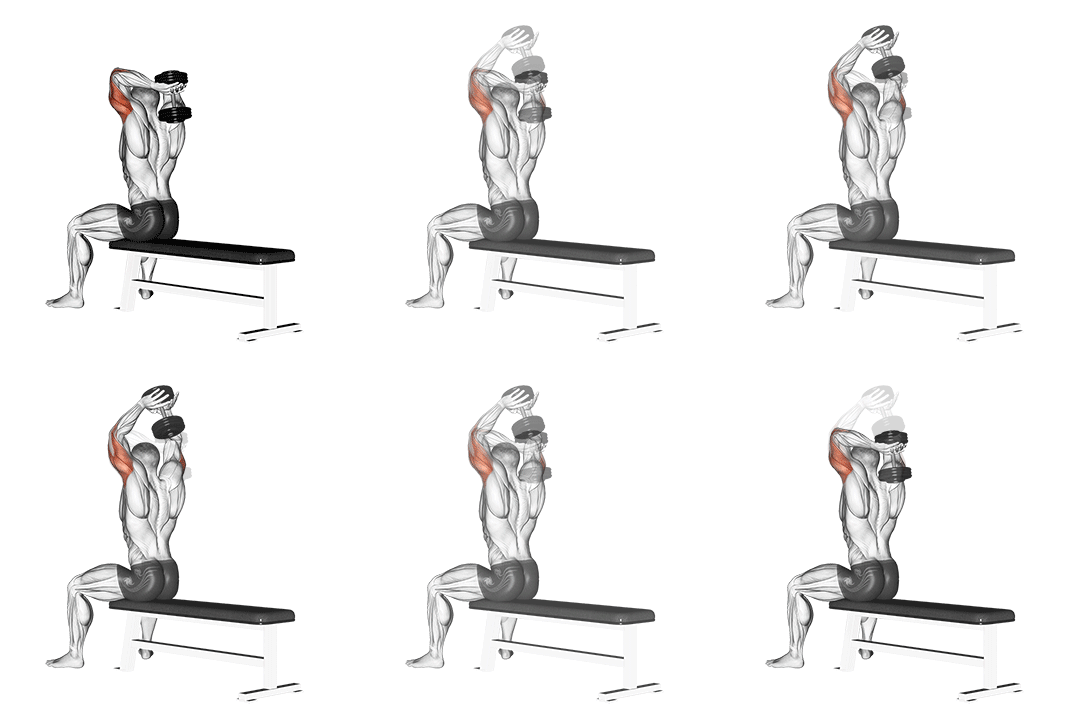
4. Dumbbell Seated Bench Extension
91.7% MatchHow to perform this exercise
- Sit on a bench with your back straight and feet flat on the ground.
- Hold a dumbbell with both hands and extend your arms straight up above your head.
- Slowly lower the dumbbell behind your head, keeping your elbows close to your ears.
- Pause for a moment, then raise the dumbbell back up to the starting position.
- Repeat for the desired number of repetitions.
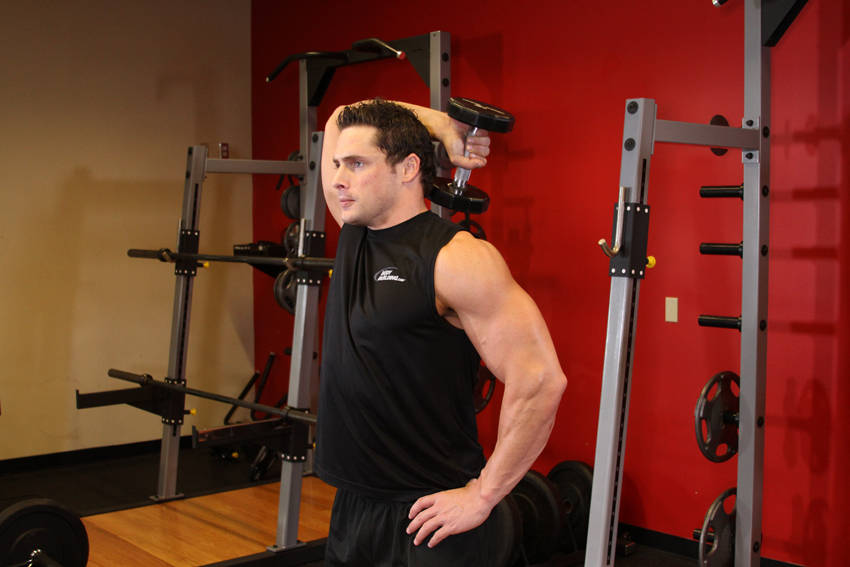
5. Dumbbell One-Arm Triceps Extension
91.4% MatchHow to perform this exercise
- Grab a dumbbell and either sit on a military press bench or a utility bench that has a back support on it as you place the dumbbells upright on top of your thighs or stand up straight.
- Clean the dumbbell up to bring it to shoulder height and then extend the arm over your head so that the whole arm is perpendicular to the floor and next to your head. The dumbbell should be on top of you. The other hand can be kept fully extended to the side, by the waist, supporting the upper arm that has the dumbbell or grabbing a fixed surface.
- Rotate the wrist so that the palm of your hand is facing forward and the pinkie is facing the ceiling. This will be your starting position.
- Slowly lower the dumbbell behind your head as you hold the upper arm stationary. Inhale as you perform this movement and pause when your triceps are fully stretched.
- Return to the starting position by flexing your triceps as you breathe out. Tip: It is imperative that only the forearm moves. The upper arm should remain at all times stationary next to your head.
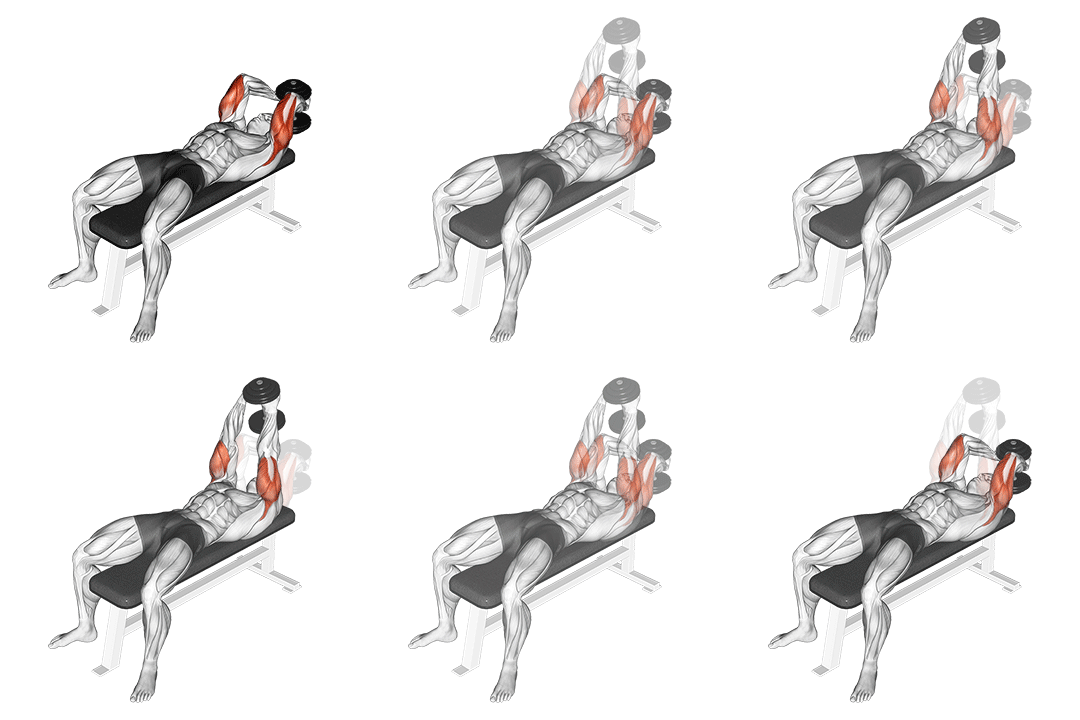
6. Dumbbell Lying Single Extension
90.7% MatchHow to perform this exercise
- Lie flat on a bench with a dumbbell in one hand and your arm fully extended above your chest.
- Lower the dumbbell in a controlled manner towards your forehead, keeping your upper arm stationary.
- Pause briefly at the bottom of the movement, then extend your arm back to the starting position.
- Repeat for the desired number of repetitions, then switch arms.
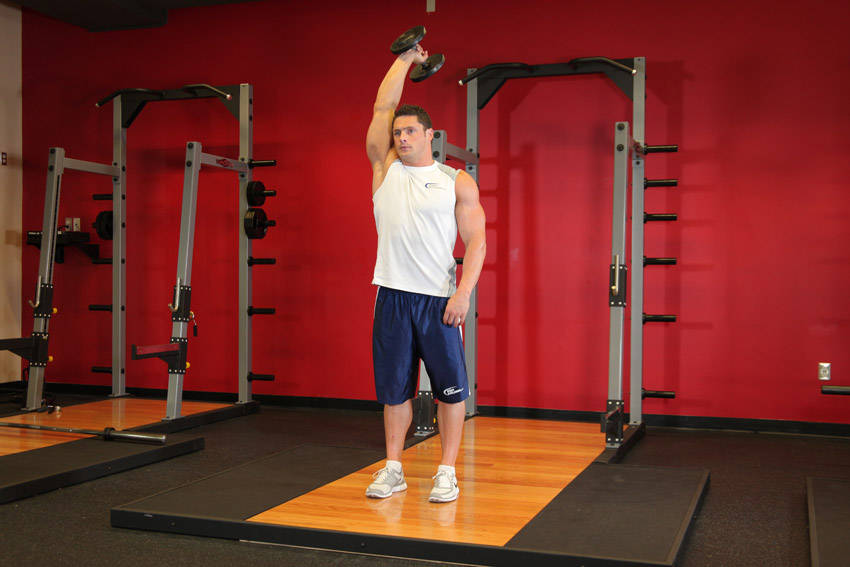
7. Standing One-Arm Dumbbell Triceps Extension
90.4% MatchHow to perform this exercise
- To begin, stand up with a dumbbell held in one hand. Your feet should be about shoulder width apart from each other. Now fully extend the arm with the dumbbell over your head. Tip: The small finger of your hand should be facing the ceiling and the palm of your hand should be facing forward. The dumbbell should be above your head.
- This will be your starting position.
- Keeping your upper arm close to your head (elbows in) and perpendicular to the floor, lower the resistance in a semicircular motion behind your head until your forearm touch your bicep. Tip: The upper arm should remain stationary and only the forearm should move. Breathe in as you perform this step.
- Go back to the starting position by using the triceps to raise the dumbbell. Breathe out as you perform this step.
- Repeat for the recommended amount of repetitions.
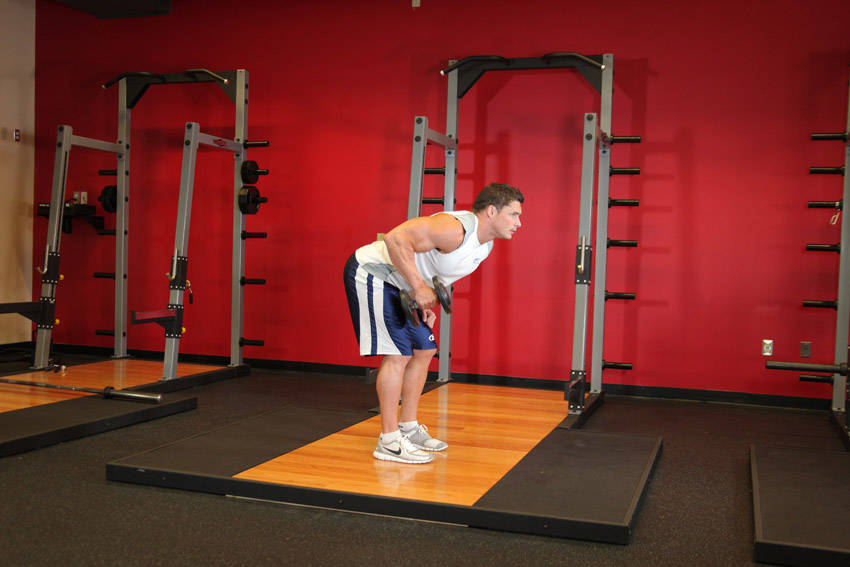
8. Standing Bent-Over One-Arm Dumbbell Triceps Extension
89.7% MatchHow to perform this exercise
- With a dumbbell in one hand and the palm facing your torso, bend your knees slightly and bring your torso forward, by bending at the waist, while keeping the back straight until it is almost parallel to the floor. Make sure that you keep the head up.
- The upper arm should be close to the torso and parallel to the floor while the forearm is pointing towards the floor as the hand holds the weight. Tip: There should be a 90-degree angle between the forearm and the upper arm. This is your starting position.
- Keeping the upper arms stationary, use the triceps to lift the weights as you exhale until the forearms are parallel to the floor and the whole arm is extended. Like many other arm exercises, only the forearm moves.
- After a second contraction at the top, slowly lower the dumbbell back to the starting position as you inhale.
- Repeat the movement for the prescribed amount of repetitions.
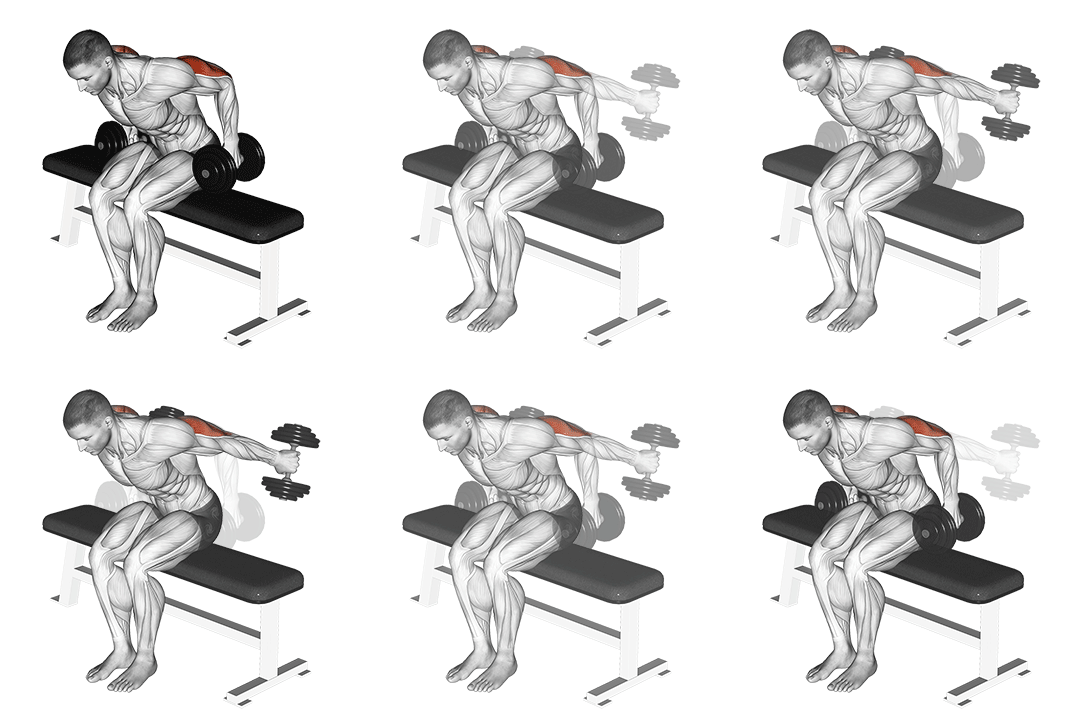
9. Dumbbell Seated Kickback
89.4% MatchHow to perform this exercise
- Sit on a bench with your feet flat on the ground and hold a dumbbell in each hand.
- Bend your knees slightly and lean forward from your hips, keeping your back straight.
- Bring your upper arms close to your sides and keep your elbows bent at a 90-degree angle.
- Extend your arms straight back, squeezing your triceps at the top of the movement.
- Pause for a moment, then slowly lower the dumbbells back to the starting position.
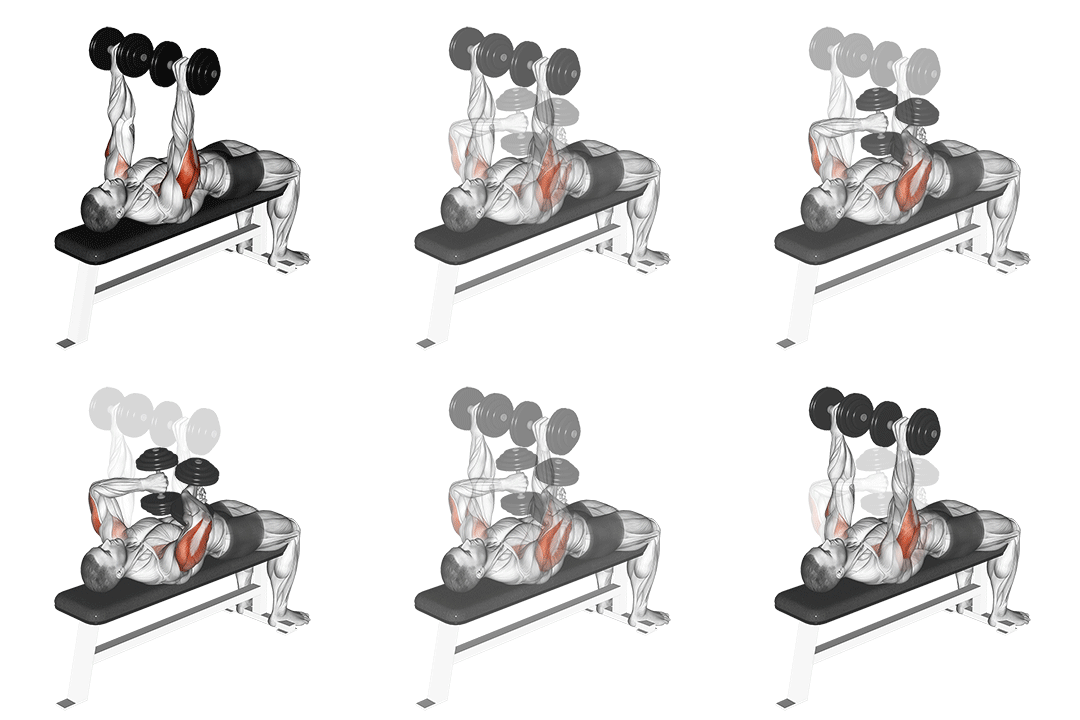
10. Dumbbell Tate Press
88.4% MatchHow to perform this exercise
- Sit on a flat bench with a dumbbell in each hand, palms facing each other.
- Raise the dumbbells to shoulder height, then rotate your wrists so that your palms are facing away from you.
- Press the dumbbells up until your arms are fully extended, then lower them back down to shoulder height.
- Rotate your wrists back to the starting position and repeat for the desired number of repetitions.
Why You Might Need a Dumbbell One Arm Triceps Extension (On Bench) Alternative
You may need substitutes because of shoulder pain, lack of a bench, limited dumbbell weight, or a desire for different loading patterns. The one-arm bench extension stresses the long head when the shoulder is flexed; shoulder impingement or limited overhead mobility can make it uncomfortable. Substitutes let you change arm angle, load distribution, and range of motion to reduce joint torque or shift emphasis between the triceps heads. For example, floor skull crushers shorten lever length to lower elbow torque, while cable overhead extensions maintain constant tension for long-head recruitment. Cue: control the eccentric phase and avoid shrugging the shoulder to protect the rotator cuff.
How to Choose the Right Substitute
Decide by equipment, pain tolerance, and the triceps region you want to target. If you lack a bench but want long-head stimulation, choose an overhead cable or band extension and keep the upper arm vertical. For heavier loading with less shoulder strain, use floor skull crushers and stop just short of full lockout to keep tension on the triceps. If unilateral weakness is the issue, pick single-arm cables or dumbbell kickbacks to equalize load. Cue: shorten the lever (bend the elbow) to reduce torque when rehabbing or use slower eccentrics to increase time under tension for hypertrophy.
Frequently Asked Questions
What muscles does Dumbbell One Arm Triceps Extension (on Bench) work?
It primarily targets the triceps brachii, long, lateral, and medial heads, with the long head emphasized when the arm is overhead. The movement relies on elbow extension while the shoulder stabilizers act isometrically; cue: keep the shoulder packed and extend fully at the elbow without shrugging.
What is the best bodyweight alternative to Dumbbell One Arm Triceps Extension (on Bench)?
A close-grip or diamond push-up is the top bodyweight substitute because it loads elbow extension under a horizontal pressing pattern. Cue: keep hands close, elbows tight to the torso, and drive through the triceps on the concentric to maximize lateral and medial head activation.
Can I build muscle without doing Dumbbell One Arm Triceps Extension (on Bench)?
Yes. You can achieve hypertrophy with progressive overload using substitutes like dips, skull crushers, cables, or weighted push-ups. Cue: increase load, control the eccentric, and use full but safe range of motion to ensure adequate triceps tension and growth.
More Exercise Alternatives
Find Alternatives for Any Exercise
Use the exercise substitution finder to compare ranked alternatives for your available equipment and training preference.
Try the Exercise Substitution Finder →