

10 Best Band Skull Crusher Alternatives for Home & Gym
The Band Skull Crusher is done lying on your back with a band. Ranked closest by our scoring: the Dumbbell Tricep Extension -pronated Grip, the Barbell Lying Back Of The Head Tricep Extension and the Cable Lying Triceps Extension.
Updated Ranked by our 12-factor similarity model How it works
Original Exercise: Band Skull Crusher
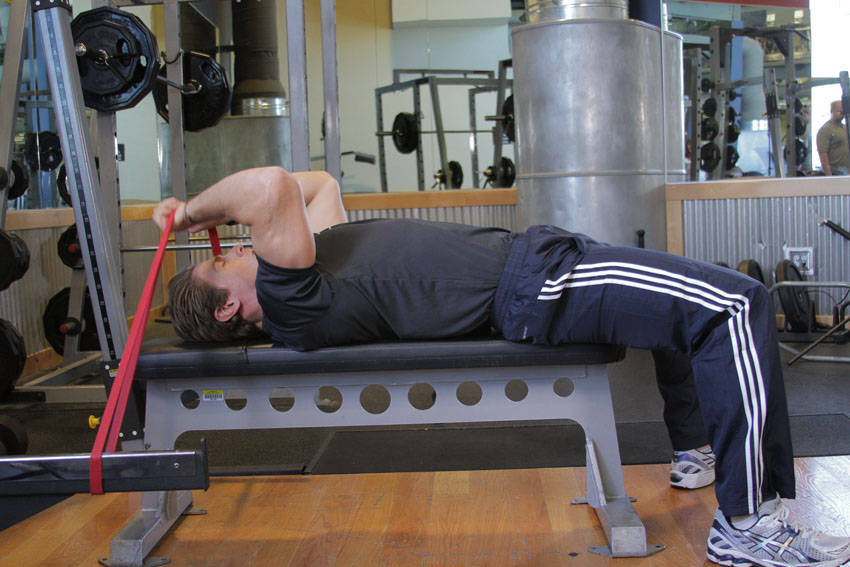
- Primary muscle
- Triceps
- Equipment
- Band
- Difficulty
- Intermediate
- Type
- Isolation
How to perform Band Skull Crusher
- Secure a band to the base of a rack or the bench. Lay on the bench so that the band is lined up with your head.
- Take hold of the band, raising your elbows so that the upper arm is perpendicular to the floor. With the elbow flexed, the band should be above your head. This will be your starting position.
- Extend through the elbow to straighten your arm, keeping your upper arm in place. Pause at the top of the motion, and return to the starting position.
Ranked Band Skull Crusher Alternatives
10 substitutes, ranked by how closely each one matches the Band Skull Crusher on movement pattern, muscles worked, equipment and body position. The higher the score, the less you change. Open "How to perform this exercise" on a card for the steps; every card title links to that exercise's own alternatives page.
Best match 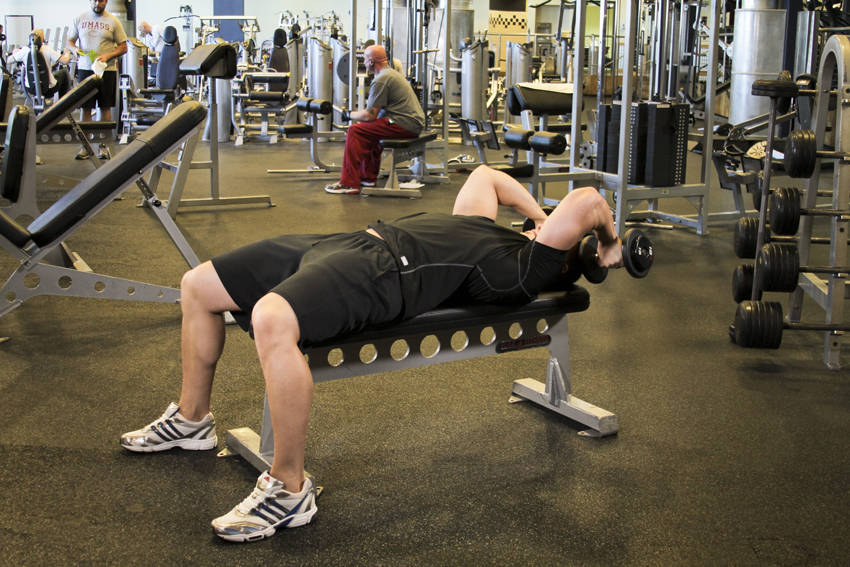
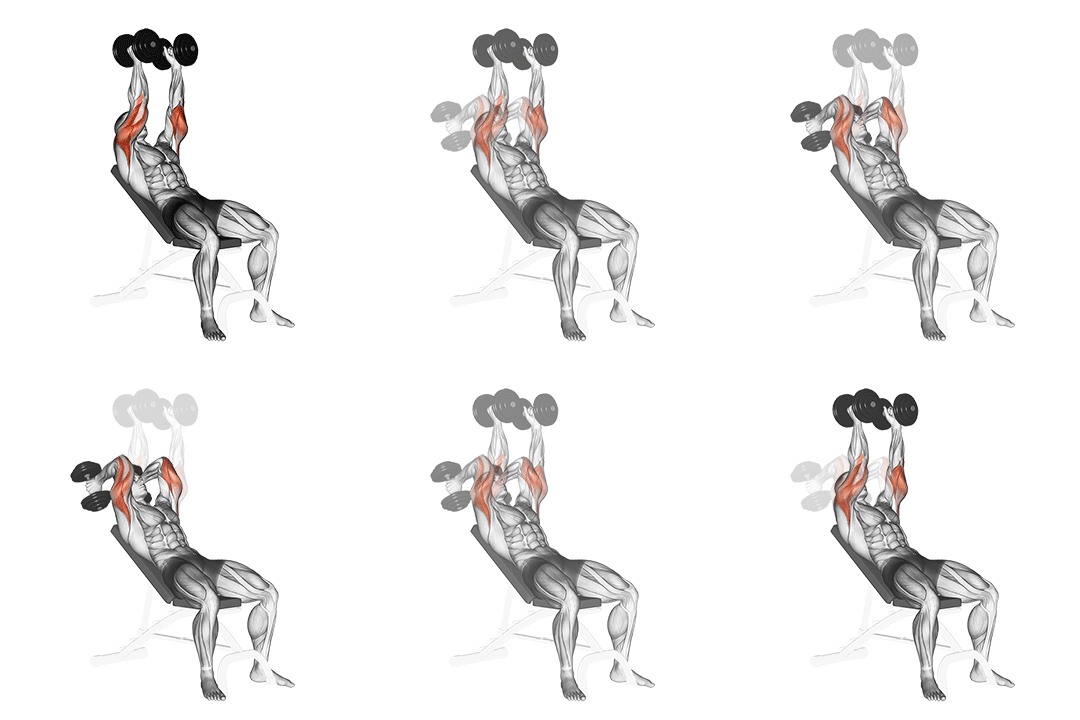
- Triceps
- Dumbbell
- Intermediate
- Isolation
A good swap when you have dumbbells to work with, and it still works the triceps.
How to perform this exercise
- Lie down on a flat bench holding two dumbbells directly above your shoulders. Your arms should be fully extended and form a 90 degree angle from your torso and the floor.
- The palms of your hands should be facing forward, and your elbows should be tucked in. This will be your starting position.
- Now, inhale and slowly lower the dumbbells until they are near your ears. Be sure to keep your upper arms stationary and your elbows tucked in.
- Then, exhale and use your triceps to return the weight to the starting position.
Sets and reps: 3 sets of 10 to 15 reps.
Why this matches
- Primary muscle: triceps, the same as the Band Skull Crusher
- Equipment: free weights, not a band
- Body position: lying on your back, the same as the Band Skull Crusher
- Balance: harder to stay steady on than the Band Skull Crusher
- Triceps
- Barbell
- Intermediate
- Isolation
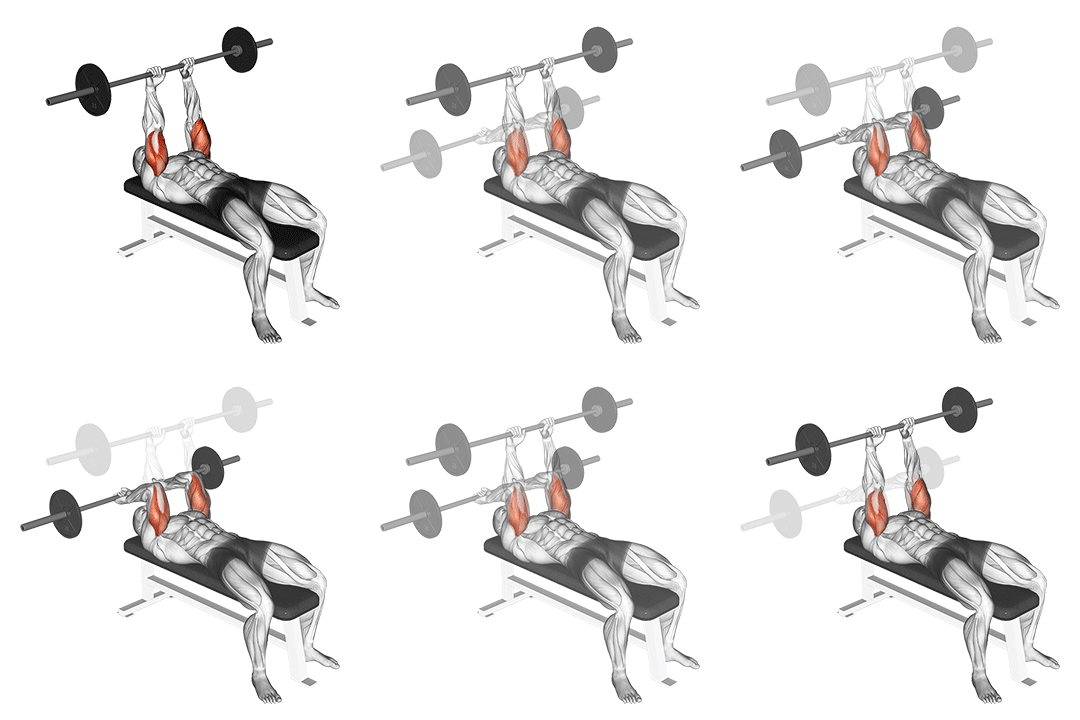
A good swap when you have a barbell to work with, and it still works the triceps.
How to perform this exercise
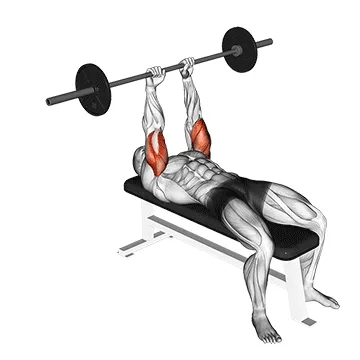
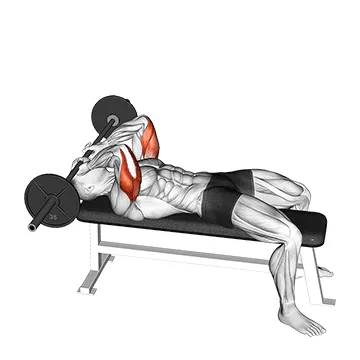
- Lie flat on a bench with your feet flat on the ground and your head at the end of the bench.
- Hold a barbell with an overhand grip, hands shoulder-width apart, and extend your arms straight up over your chest.
- Keeping your upper arms stationary, slowly lower the barbell behind your head by bending your elbows.
- Pause for a moment, then extend your arms back up to the starting position.
- Repeat for the desired number of repetitions.
Sets and reps: 3 sets of 10 to 15 reps.
Why this matches
- Primary muscle: triceps, the same as the Band Skull Crusher
- Equipment: free weights, not a band
- Body position: lying on your back, the same as the Band Skull Crusher
- Balance: harder to stay steady on than the Band Skull Crusher
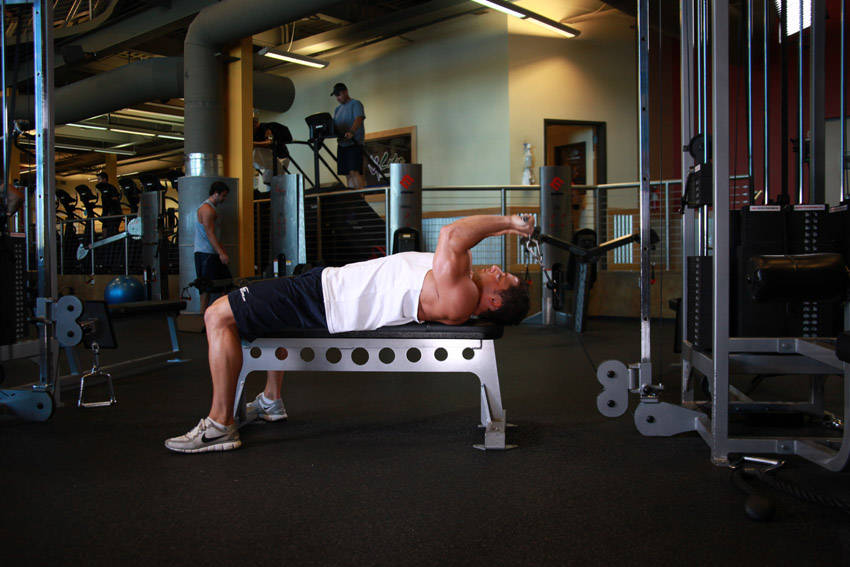
3. Cable Lying Triceps Extension
86% match- Triceps
- Cable
- Intermediate
- Isolation
A good swap when you have a cable machine to work with, and it still works the triceps.
How to perform this exercise
- Lie on a flat bench and grasp the straight bar attachment of a low pulley with a narrow overhand grip. Tip: The easiest way to do this is to have someone hand you the bar as you lay down.
- With your arms extended, position the bar over your torso. Your arms and your torso should create a 90-degree angle. This will be your starting position.
- Lower the bar by bending at the elbow while keeping the upper arms stationary and elbows in. Go down until the bar lightly touches your forehead. Breathe in as you perform this portion of the movement.
- Flex the triceps as you lift the bar back to its starting position. Exhale as you perform this portion of the movement.
- Hold for a second at the contracted position and repeat for the recommended amount of repetitions.
Sets and reps: 3 sets of 10 to 15 reps.
Why this matches
- Primary muscle: triceps, the same as the Band Skull Crusher
- Equipment: a cable, not a band
- Body position: lying on your back, the same as the Band Skull Crusher
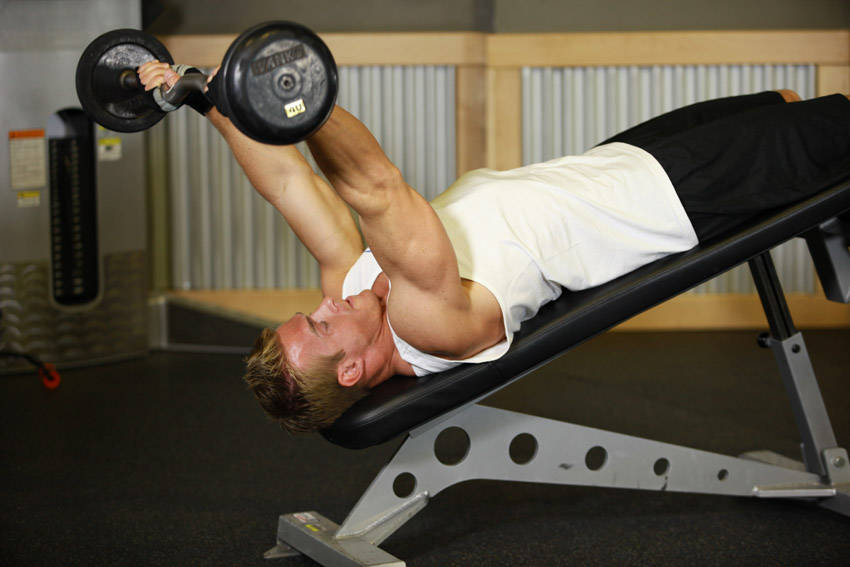
4. Decline EZ Bar Triceps Extension
85% match- Triceps
- Ez-barbell
- Intermediate
- Isolation
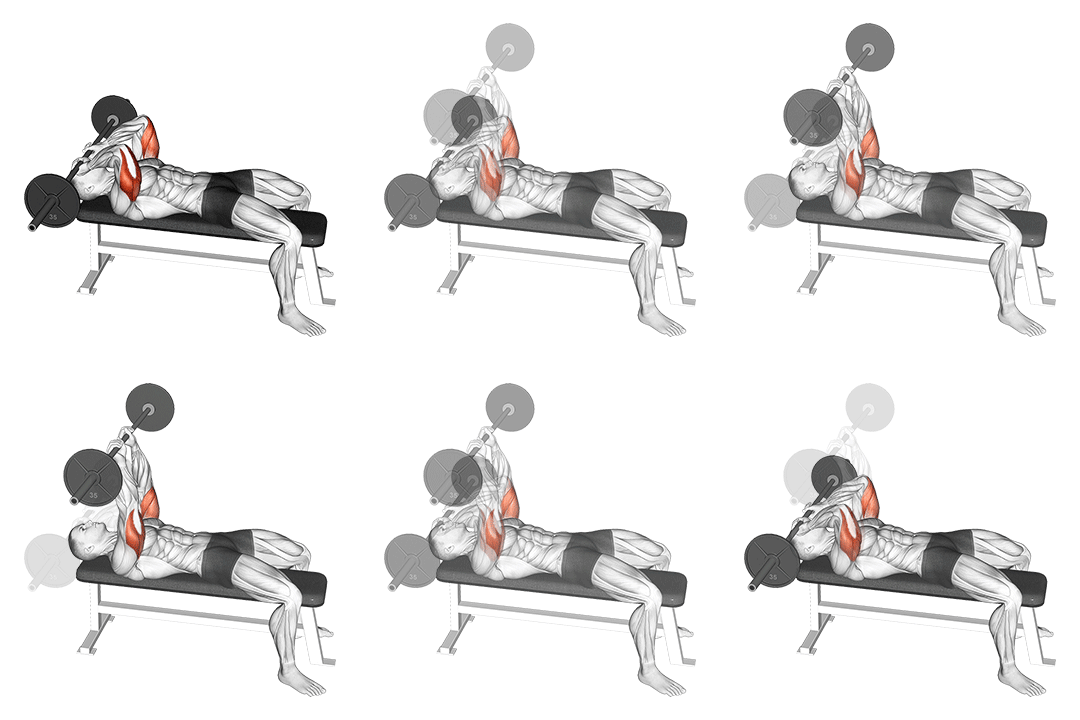
A good swap when you have an EZ bar to work with, and it still works the triceps.
How to perform this exercise
- Secure your legs at the end of the decline bench and slowly lay down on the bench.
- Using a close grip (a grip that is slightly less than shoulder width), lift the EZ bar from the rack and hold it straight over you with your arms locked and elbows in. The arms should be perpendicular to the floor. This will be your starting position. Tip: In order to protect your rotator cuff, it is best if you have a spotter help you lift the barbell off the rack.
- As you breathe in and you keep the upper arms stationary, bring the bar down slowly by moving your forearms in a semicircular motion towards you until you feel the bar slightly touch your forehead. Breathe in as you perform this portion of the movement.
- Lift the bar back to the starting position by contracting the triceps and exhaling.
- Repeat until the recommended amount of repetitions is performed.
Sets and reps: 3 sets of 10 to 15 reps.
Why this matches
- Primary muscle: triceps, the same as the Band Skull Crusher
- Equipment: free weights, not a band
- Body position: lying on your back, the same as the Band Skull Crusher
- Triceps
- Dumbbell
- Intermediate
- Isolation
How to perform this exercise
- Sit on an incline bench with a dumbbell in each hand, palms facing inwards.
- Extend your arms fully overhead, keeping your elbows close to your head.
- Lower the dumbbells behind your head by bending your elbows, keeping your upper arms stationary.
- Pause for a moment, then raise the dumbbells back to the starting position by extending your arms.
- Repeat for the desired number of repetitions.
Sets and reps: 3 sets of 10 to 15 reps.
Why this matches
- Primary muscle: triceps, the same as the Band Skull Crusher
- Equipment: free weights, not a band
- Body position: lying on your back, the same as the Band Skull Crusher
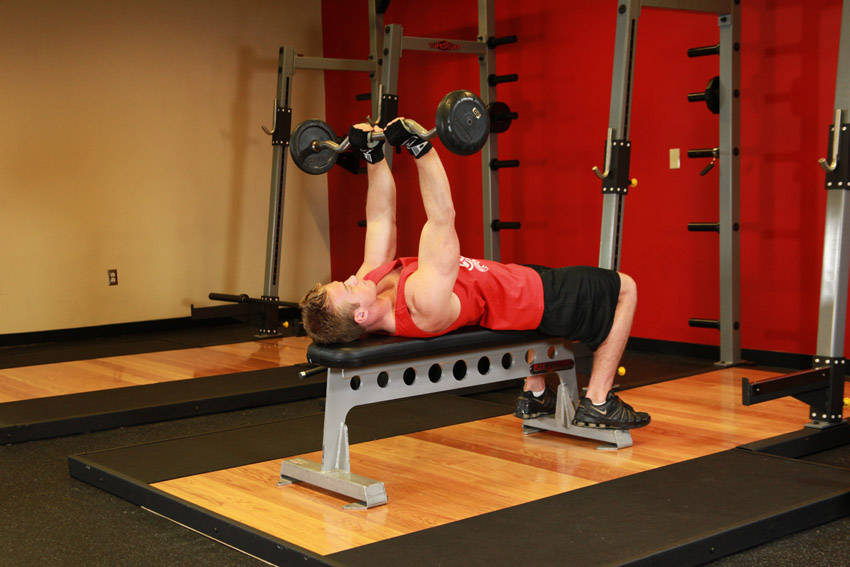
- Triceps
- Ez-barbell
- Intermediate
- Isolation
How to perform this exercise
- While holding a barbell or EZ Curl bar with a pronated grip (palms facing forward), lie on your back on a flat bench with your head off the end of the bench. Tip: If you are holding a barbell grab it using a shoulder-width grip and if you are using an E-Z Bar grab it on the inner handles.
- Extend your arms in front of you as you hold the barbell over your chest. The arms should be perpendicular to your torso (90-degree angle). This will be your starting position.
- As you inhale, lower the bar in a semi-circular motion by bending at the elbows and while keeping the upper arm stationary and elbows in. Keep lowering the bar until it lightly touches your chin.
- As you exhale bring the bar back up to the starting position by pushing the bar up in a semi-circular motion. Contract the triceps hard at the top of the movement for a second. Tip: Again, only the forearms should move. The upper arms should remain stationary at all times.
- Repeat for the recommended amount of repetitions.
Sets and reps: 3 sets of 10 to 15 reps.
Why this matches
- Primary muscle: triceps, the same as the Band Skull Crusher
- Equipment: free weights, not a band
- Body position: lying on your back, the same as the Band Skull Crusher
7. Barbell Lying Triceps Extension
85% match- Triceps
- Barbell
- Intermediate
- Isolation
How to perform this exercise
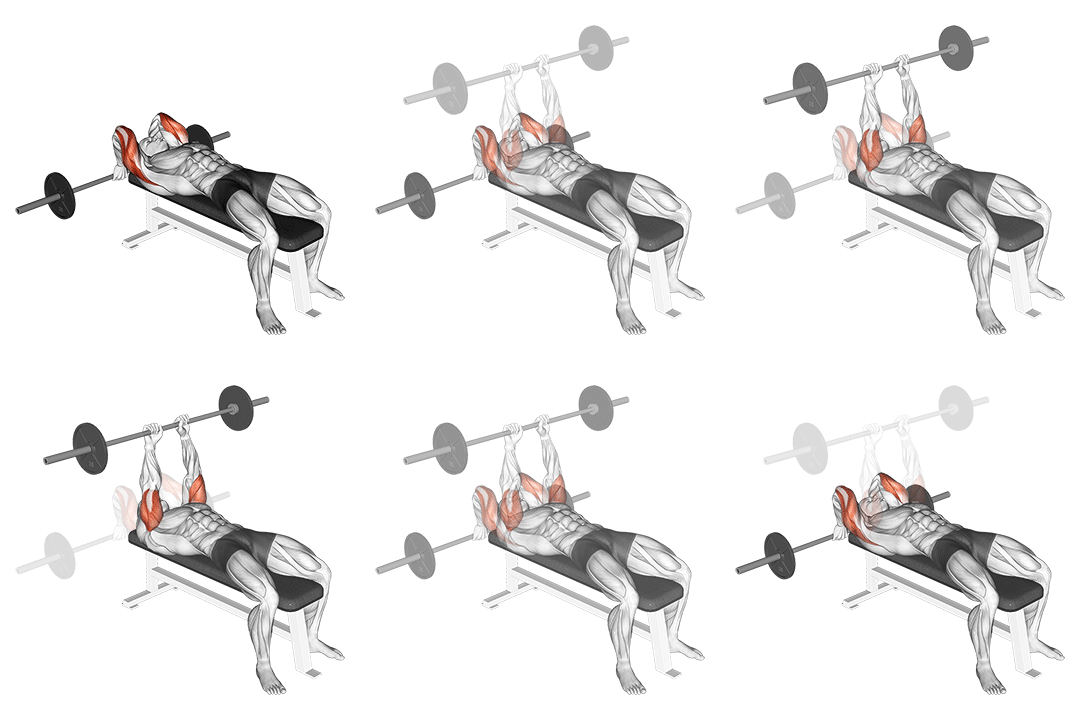
- Lie flat on a bench with your feet flat on the ground and your head at the end of the bench.
- Hold the barbell with an overhand grip, hands shoulder-width apart, and extend your arms straight up over your chest.
- Keeping your upper arms stationary, slowly lower the barbell towards your forehead by bending your elbows.
- Pause for a moment at the bottom, then extend your arms back up to the starting position.
- Repeat for the desired number of repetitions.
Sets and reps: 3 sets of 10 to 15 reps.
Why this matches
- Primary muscle: triceps, the same as the Band Skull Crusher
- Equipment: free weights, not a band
- Body position: lying on your back, the same as the Band Skull Crusher
- Triceps
- Barbell
- Intermediate
- Isolation
How to perform this exercise
- Lie flat on a bench with your feet flat on the ground and your head at the end of the bench.
- Hold the barbell with an overhand grip, hands shoulder-width apart, and extend your arms straight up over your chest.
- Keeping your upper arms stationary, slowly lower the barbell towards your forehead by bending your elbows.
- Pause for a moment when the barbell is just above your forehead, then extend your arms back up to the starting position.
- Repeat for the desired number of repetitions.
Sets and reps: 3 sets of 10 to 15 reps.
Why this matches
- Primary muscle: triceps, the same as the Band Skull Crusher
- Equipment: free weights, not a band
- Body position: lying on your back, the same as the Band Skull Crusher
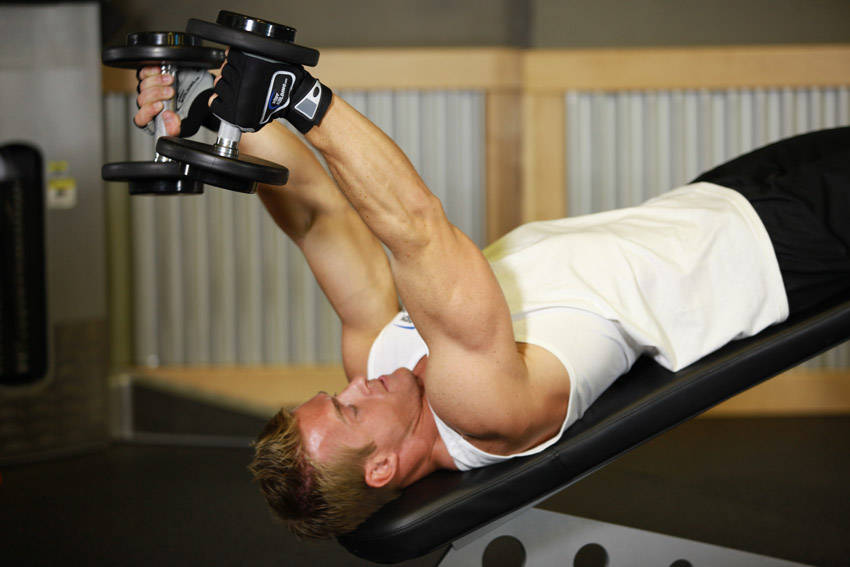
- Triceps
- Dumbbell
- Intermediate
- Isolation
How to perform this exercise
- Secure your legs at the end of the decline bench and lie down with a dumbbell on each hand on top of your thighs. The palms of your hand will be facing each other.
- Once you are laying down, move the dumbbells in front of you at shoulder width. The palms of the hands should be facing each other and the arms should be perpendicular to the floor and fully extended. This will be your starting position.
- As you breathe in and you keep the upper arms stationary (and elbows in), bring the dumbbells down slowly by moving your forearms in a semicircular motion towards you until your thumbs are next to your ears. Breathe in as you perform this portion of the movement.
- Lift the dumbbells back to the starting position by contracting the triceps and exhaling.
- Repeat for the recommended amount of repetitions.
Sets and reps: 3 sets of 10 to 15 reps.
Why this matches
- Primary muscle: triceps, the same as the Band Skull Crusher
- Equipment: free weights, not a band
- Body position: lying on your back, the same as the Band Skull Crusher
- Triceps
- Barbell
- Intermediate
- Isolation
How to perform this exercise
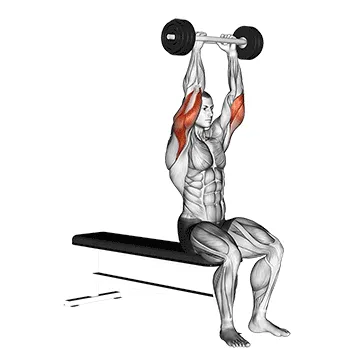
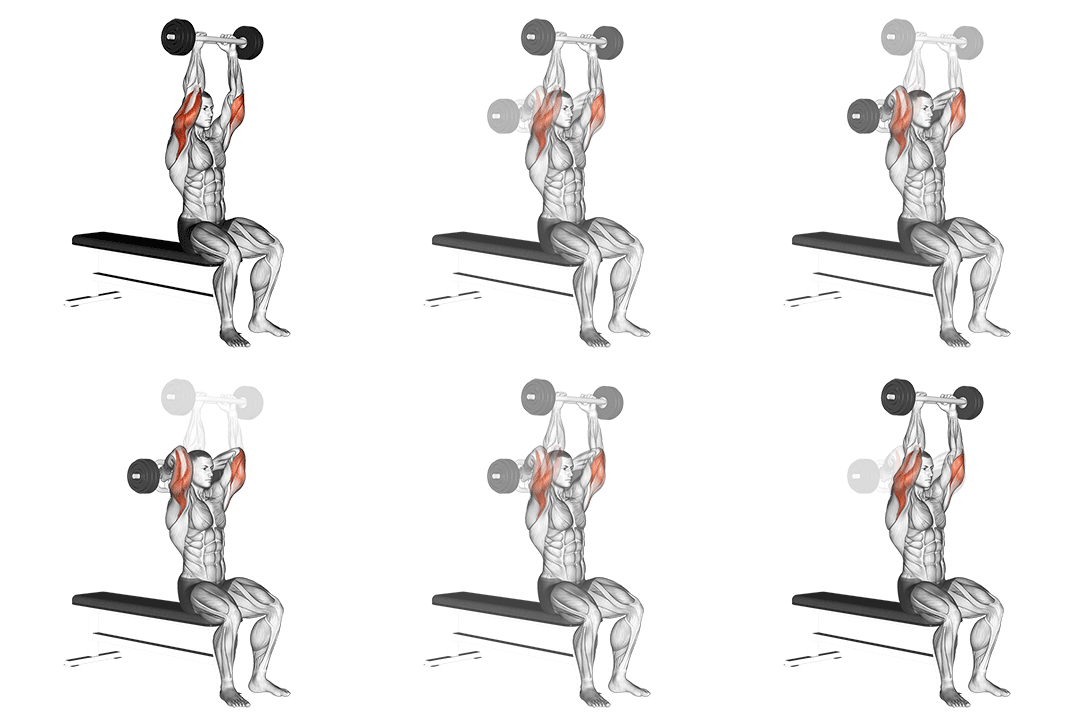
- Start by standing with your feet shoulder-width apart and holding the barbell with an overhand grip.
- Raise the barbell above your head, fully extending your arms.
- Keeping your upper arms close to your head, slowly lower the barbell behind your head by bending your elbows.
- Pause for a moment, then extend your arms back to the starting position.
- Repeat for the desired number of repetitions.
Sets and reps: 3 sets of 10 to 15 reps.
Why this matches
- Primary muscle: triceps, the same as the Band Skull Crusher
- Equipment: free weights, not a band
- Body position: lying on your back, the same as the Band Skull Crusher
- Balance: harder to stay steady on than the Band Skull Crusher
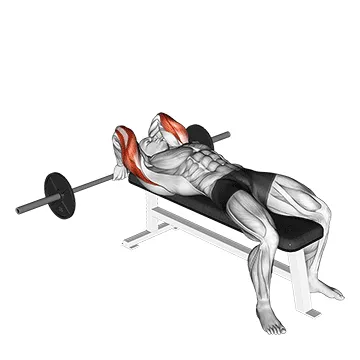
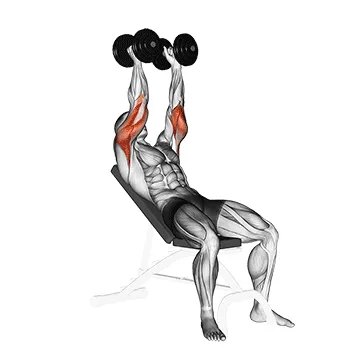
How to Choose the Right Band Skull Crusher Substitute
Choose a substitute by matching resistance profile, joint tolerance, and triceps head emphasis. Bands bias lockout tension and favor the lateral head; cables and dumbbells provide more even loading and allow precise incremental increases. Consider elbow stress, cue: maintain a neutral wrist and halt 10–15 degrees before lockout to reduce shear. Also match body position: supine skull crushers and overhead extensions differ in long‑head stretch, so pick the movement that targets the head you want and lets you progressively overload with strict elbow control.
Band Skull Crusher FAQ
What muscles does Band Skull Crusher work?
Band Skull Crushers primarily work the triceps, lateral, long, and medial heads, through elbow extension. Keep elbows stationary and upper arms vertical to isolate the triceps and minimize shoulder involvement.
Find Alternatives for Any Exercise
Search the exercise database and filter the ranked substitutes by the equipment you own.
Similarity scores compare exercise metadata such as movement pattern, muscles, equipment and body position. They are not a safety rating or a check that you own the equipment. Learn about our methodology