

10 Best Dumbbell Rear Delt Raise Alternatives for Home & Gym
What can I do instead of Dumbbell Rear Delt Raise? Use cable rear-delt flyes, face pulls, band pull-aparts, pec-deck reverse flyes, or incline-supported rear-delt raises. Emphasize scapular retraction and a 90° elbow bend to load the posterior deltoid and limit upper-trap takeover. Technique cue: lead the movement with the elbow, not the hand.
Original Exercise: Dumbbell Rear Delt Raise
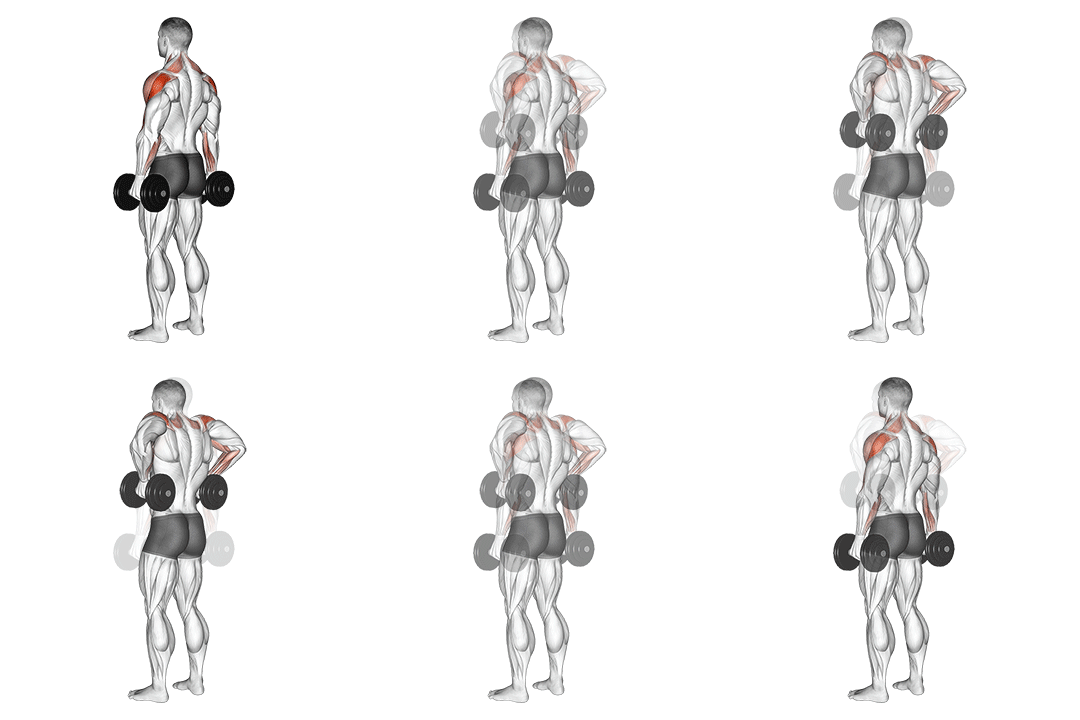
How to Perform Dumbbell Rear Delt Raise
- Stand with your feet shoulder-width apart and hold a dumbbell in each hand, palms facing your body.
- Bend your knees slightly and hinge forward at the hips, keeping your back straight.
- Raise your arms out to the sides, keeping a slight bend in your elbows, until they are parallel to the floor.
- Pause for a moment at the top, then slowly lower your arms back down to the starting position.
- Repeat for the desired number of repetitions.
Best Dumbbell Rear Delt Raise Alternatives
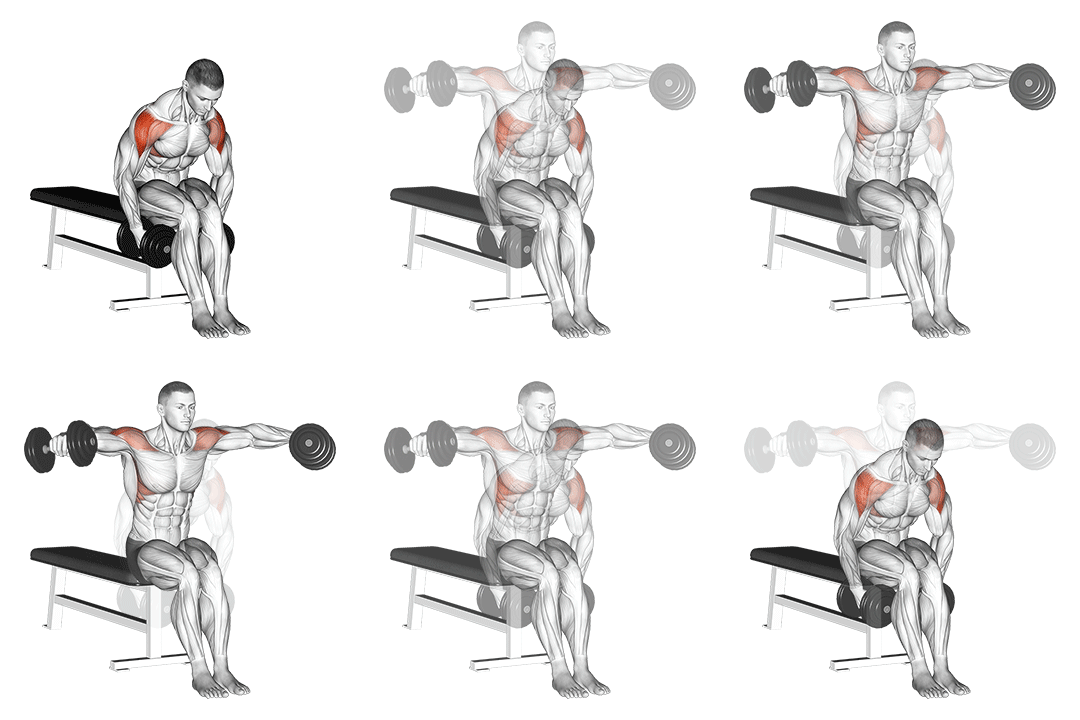
1. Dumbbell Seated Bent Arm Lateral Raise
91.2% MatchHow to perform this exercise
- Sit on a bench with your back straight and feet flat on the ground.
- Hold a dumbbell in each hand with your palms facing your body and your arms bent at a 90-degree angle.
- Keeping your elbows bent, raise your arms out to the sides until they are parallel to the ground.
- Pause for a moment at the top, then slowly lower your arms back down to the starting position.
- Repeat for the desired number of repetitions.
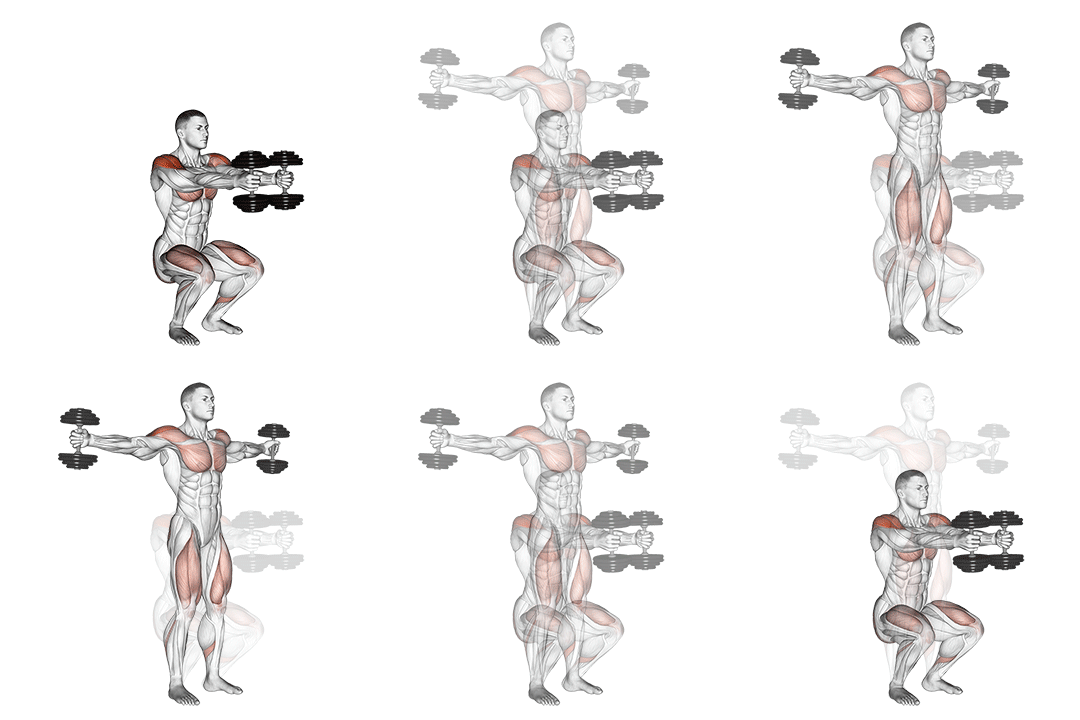
2. Dumbbell Iron Cross
80.6% MatchHow to perform this exercise
- Stand with your feet shoulder-width apart, holding a dumbbell in each hand at your sides.
- Raise your arms out to the sides until they are parallel to the ground, forming a T shape with your body.
- Pause for a moment, then slowly lower your arms back down to the starting position.
- Repeat for the desired number of repetitions.
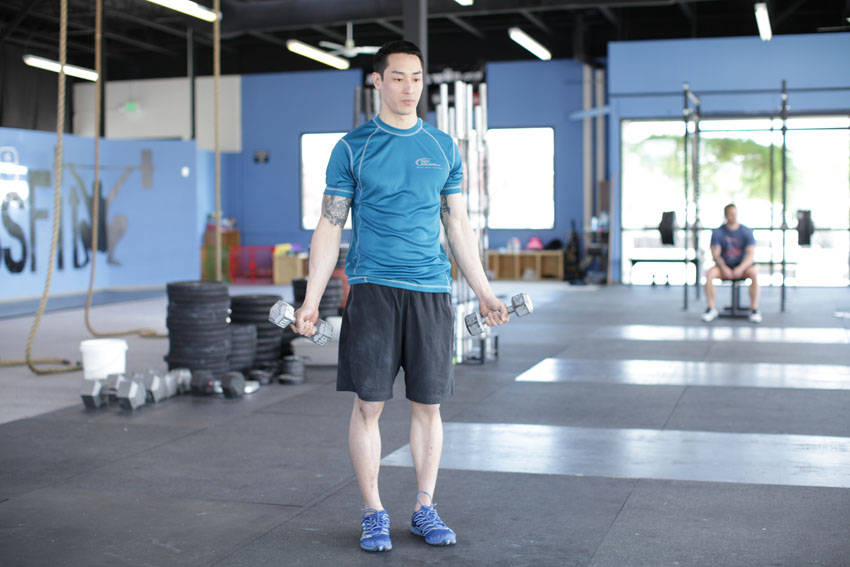
3. Dumbbell Scaption
76% MatchHow to perform this exercise
- This corrective exercise strengthens the muscles that stabilize your shoulder blade. Hold a light weight in each hand, hanging at your sides. Your thumbs should pointing up.
- Begin the movement raising your arms out in front of you, about 30 degrees off center. Your arms should be fully extended as you perform the movement.
- Continue until your arms are parallel to the ground, and then return to the starting position.
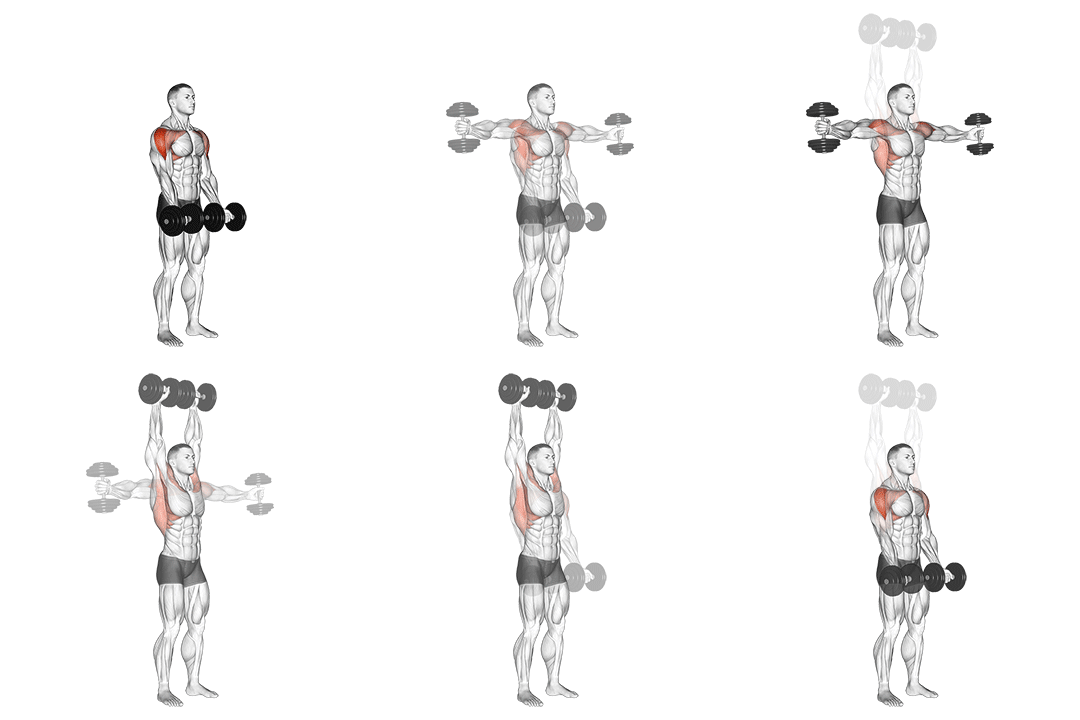
4. Dumbbell Standing Around World
75.4% MatchHow to perform this exercise
- Stand with your feet shoulder-width apart and hold a dumbbell in each hand.
- Extend your arms straight out to the sides at shoulder height, palms facing down.
- Keeping your arms straight, slowly rotate your arms in a circular motion, bringing the dumbbells in front of your body and then overhead.
- Continue the circular motion, bringing the dumbbells back down to the starting position.
- Repeat for the desired number of repetitions.
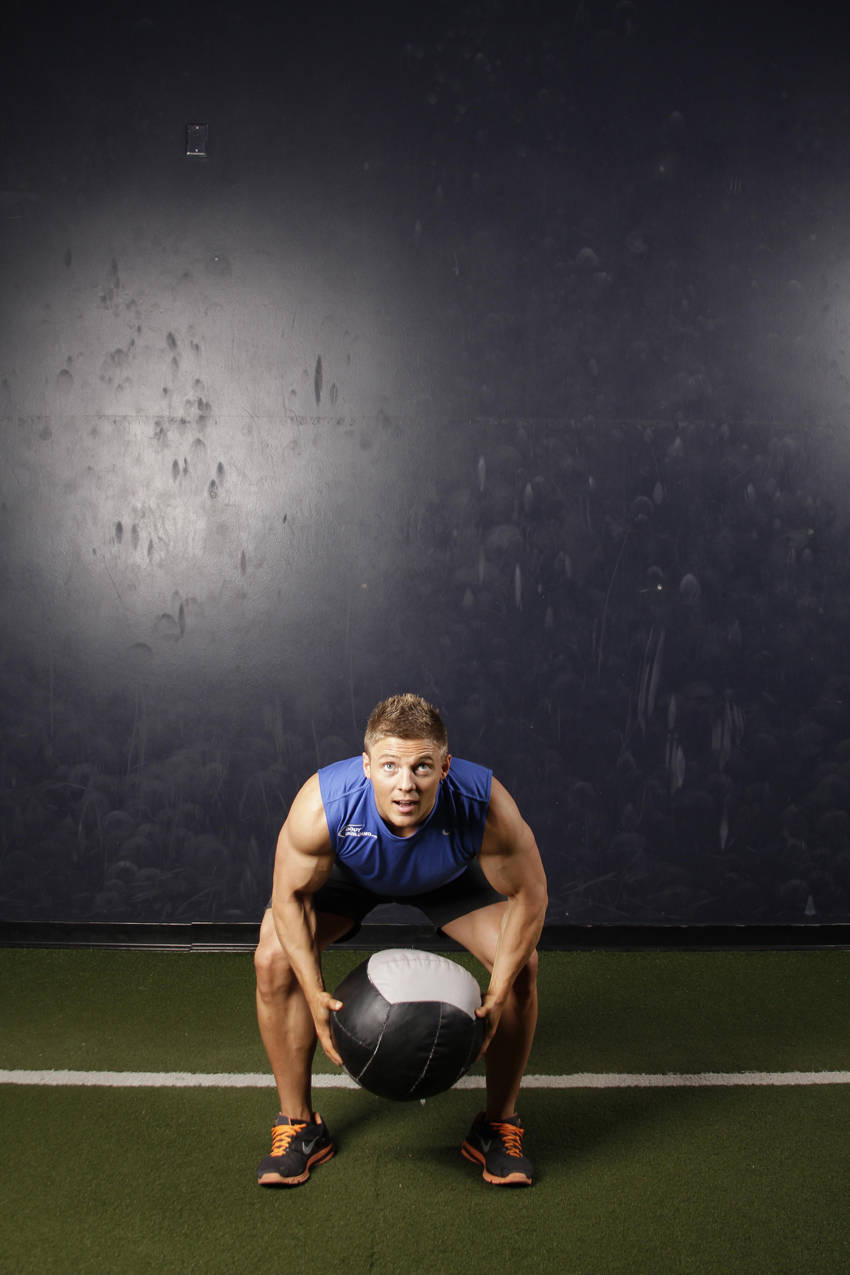
5. Backward Medicine Ball Throw
75.1% MatchHow to perform this exercise
- This exercise is best done with a partner. If you lack a partner, the ball can be thrown and retrieved or thrown against a wall.
- Begin standing a few meters in front of your partner, both facing the same direction. Begin holding the ball between your legs.
- Squat down and then forcefully reverse direction, coming to full extension and you toss the ball over your head to your partner.
- Your partner can then roll the ball back to you. Repeat for the desired number of repetitions.
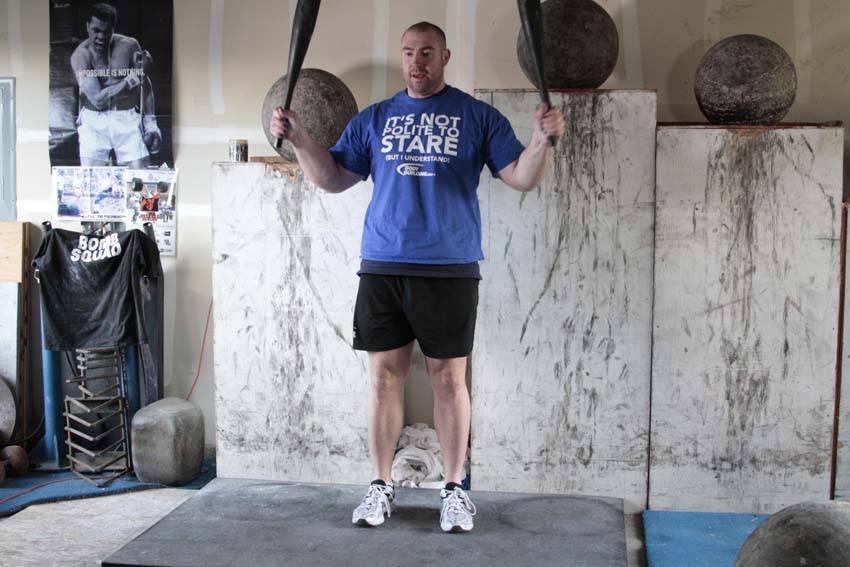
6. Crucifix
74.4% MatchHow to perform this exercise
- In the crucifix, you statically hold weights out to the side for time. While the event can be practiced using dumbbells, it is best to practice with one of the various implements used, such as axes and hammers, as it feels different.
- Begin standing, and raise your arms out to the side holding the implements. Your arms should be parallel to the ground. In competition, judges or sensors are used to let you know when you break parallel. Hold for as long as you can. Typically, the weights should be heavy enough that you fail in 30-60 seconds.
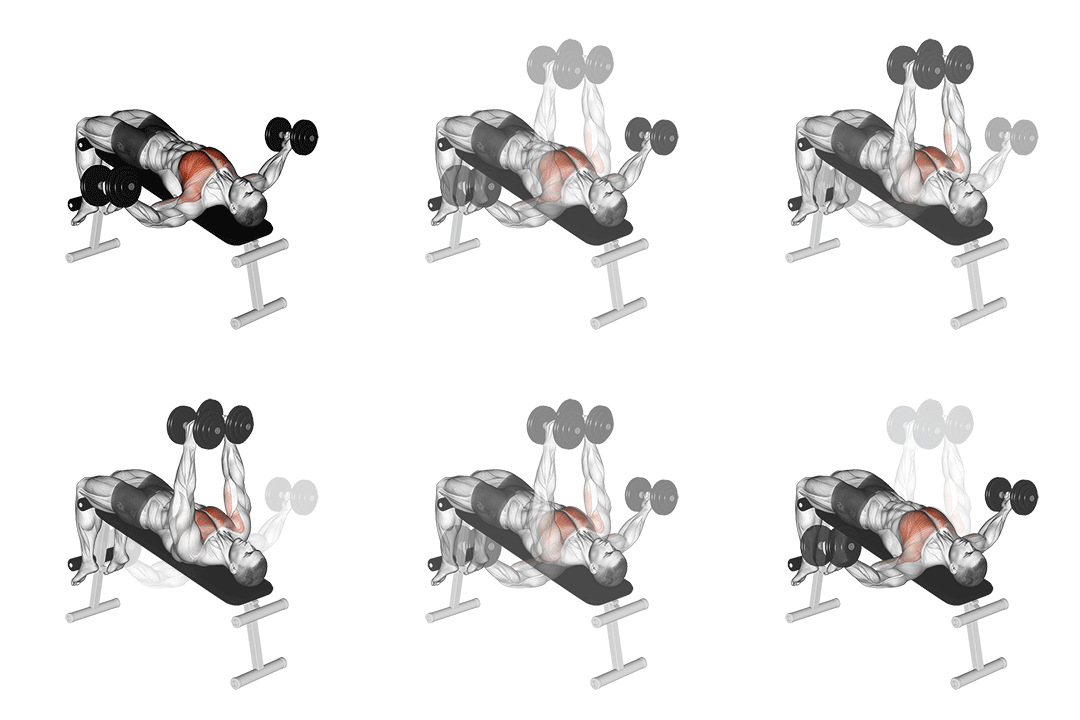
7. Dumbbell Decline Fly
73% MatchHow to perform this exercise
- Lie on a decline bench with your feet secured and your head lower than your hips.
- Hold a dumbbell in each hand with your palms facing each other and your arms extended above your chest.
- Lower the dumbbells out to the sides in a wide arc until you feel a stretch in your chest.
- Pause for a moment, then squeeze your chest muscles to bring the dumbbells back to the starting position.
- Repeat for the desired number of repetitions.
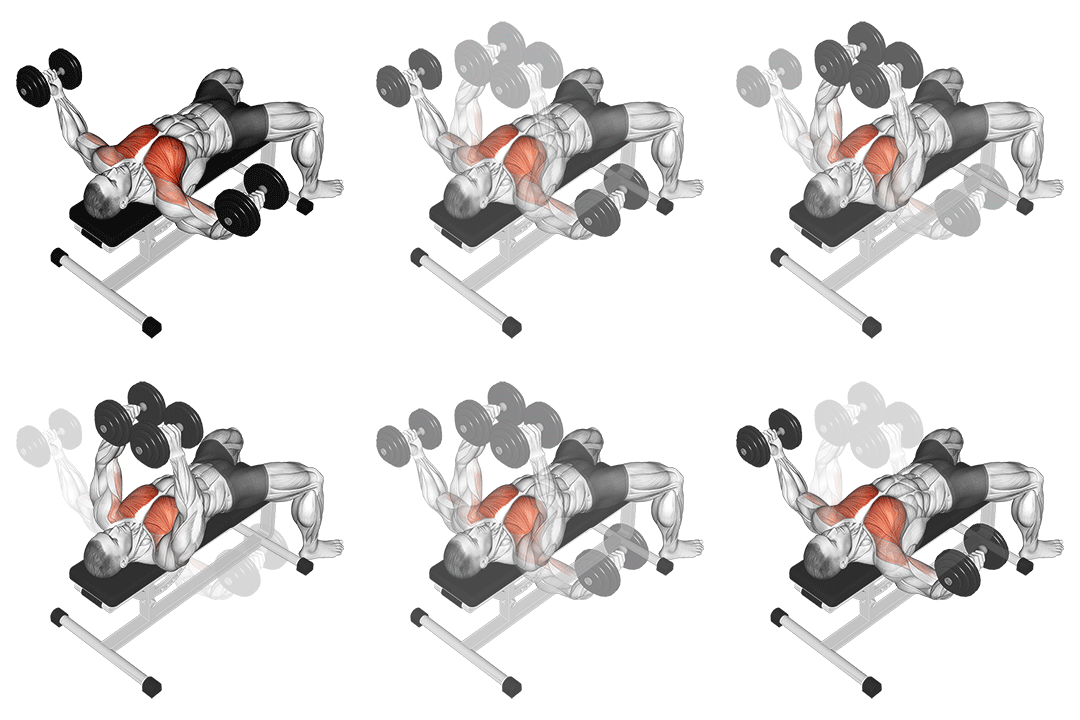
8. Dumbbell Fly
73% MatchHow to perform this exercise
- Lie flat on a bench with a dumbbell in each hand, palms facing each other.
- Extend your arms straight up over your chest, with a slight bend in your elbows.
- Keeping a slight bend in your elbows, lower your arms out to the sides in a wide arc until you feel a stretch in your chest.
- Pause for a moment, then reverse the movement and bring the dumbbells back up to the starting position.
- Repeat for the desired number of repetitions.
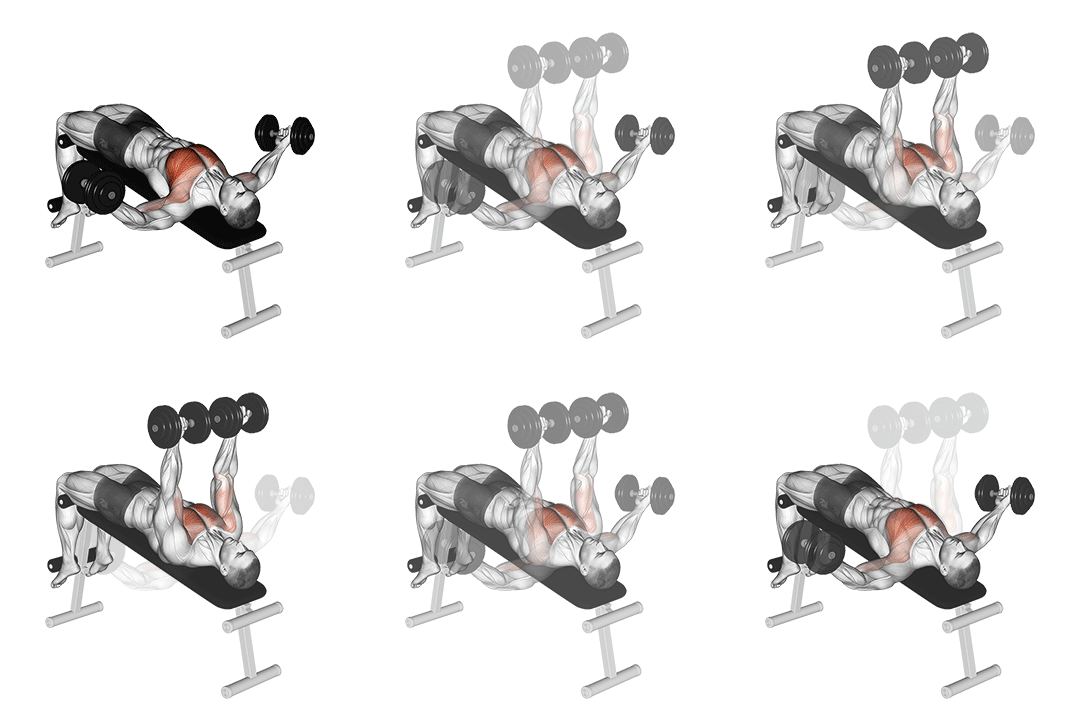
9. Dumbbell Decline Twist Fly
72.4% MatchHow to perform this exercise
- Lie down on a decline bench with your head lower than your hips.
- Hold a dumbbell in each hand with your palms facing each other and your arms extended straight up over your chest.
- Lower the dumbbells out to the sides in a wide arc until you feel a stretch in your chest.
- As you lower the dumbbells, twist your wrists so that your palms face forward at the bottom of the movement.
- Reverse the motion and bring the dumbbells back up to the starting position, squeezing your chest muscles at the top.
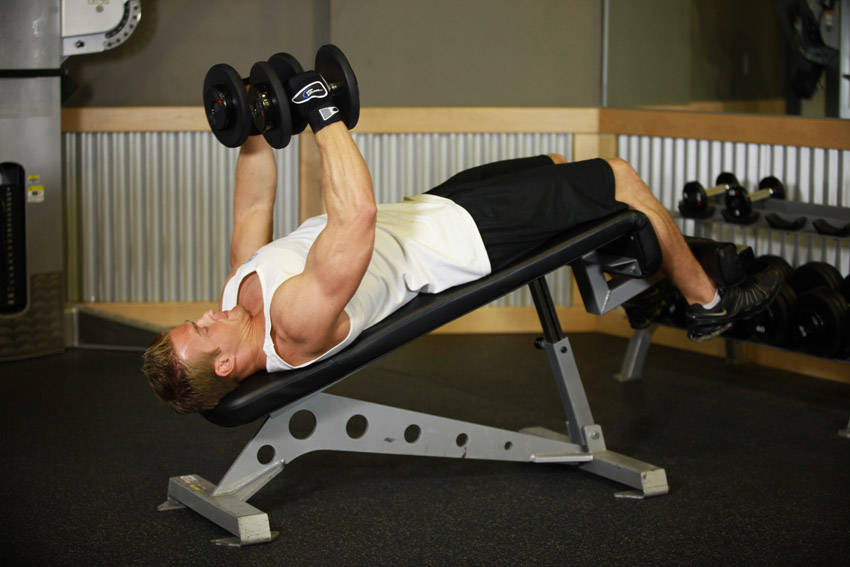
10. Decline Dumbbell Flyes
72.2% MatchHow to perform this exercise
- Secure your legs at the end of the decline bench and lie down with a dumbbell on each hand on top of your thighs. The palms of your hand will be facing each other.
- Once you are laying down, move the dumbbells in front of you at shoulder width. The palms of the hands should be facing each other and the arms should be perpendicular to the floor and fully extended. This will be your starting position.
- With a slight bend on your elbows in order to prevent stress at the biceps tendon, lower your arms out at both sides in a wide arc until you feel a stretch on your chest. Breathe in as you perform this portion of the movement. Tip: Keep in mind that throughout the movement, the arms should remain stationary; the movement should only occur at the shoulder joint.
- Return your arms back to the starting position as you squeeze your chest muscles and breathe out. Tip: Make sure to use the same arc of motion used to lower the weights.
- Hold for a second at the contracted position and repeat the movement for the prescribed amount of repetitions.
Why You Might Need a Dumbbell Rear Delt Raise Alternative
You may need substitutes for pain, lack of equipment, or to address weak scapular control. Shoulder impingement or AC joint irritation can make upright dumbbell raises uncomfortable; switching to chest-supported or cable variations reduces compressive shear and isolates the posterior deltoid via horizontal abduction. If you lack heavy dumbbells, bands or cables maintain constant tension and improve time under tension. For variety, alternate unilateral single-arm cable flies to correct side-to-side activation imbalances. Technique cue: keep a slight external rotation and pull the elbow back to prioritize posterior delt fibers and minimize rhomboid-dominant shrugging.
How to Choose the Right Substitute
Choose a substitute based on pain, equipment, and movement pattern. If you experience anterior shoulder pain, pick chest-supported or incline variations to remove spinal extension and reduce impingement; cue a neutral neck and scapular retraction. If you lack weights, use band pull-aparts or prone bodyweight T/Y raises to train posterior deltoid activation with progressive reps. Use face pulls or high-to-low cable flies when you want combined external rotation and horizontal abduction to reinforce rotator cuff engagement. Track muscle activation by feeling the posterior delt contract during the midpoint of the rep and adjust elbow angle to maintain targeted loading.
Frequently Asked Questions
What muscles does Dumbbell Rear Delt Raise work?
The movement primarily targets the posterior (rear) deltoid through horizontal abduction and slight external rotation. It also recruits the infraspinatus and teres minor for external rotation and the middle trapezius/rhomboids for scapular retraction and stability.
What is the best bodyweight alternative to Dumbbell Rear Delt Raise?
Prone T/Y raises on the floor are the best pure bodyweight option; lie face down and lift your arms into a T or Y while squeezing the scapulae. Cue: keep the chin neutral and lift through the elbows to emphasize posterior deltoid contraction without shoulder compression.
Can I build muscle without doing Dumbbell Rear Delt Raise?
Yes. You can build posterior-delt mass using face pulls, chest-supported rear-delt flyes, reverse pec-deck, and progressive-band resistance while maintaining progressive overload. Ensure full range of motion, slow eccentric control, and a cue to lead with the elbow to maximize posterior deltoid activation.
More Exercise Alternatives
Find Alternatives for Any Exercise
Use our free tool to discover the best substitute exercises based on your available equipment and goals.
Try the Exercise Substitution Finder →