

10 Best Dumbbell Upright Shoulder External Rotation Alternatives for Rehab
If you need an alternative to the Dumbbell Upright Shoulder External Rotation, use band external rotations, cable external rotations, side-lying dumbbell external rotations, prone external rotations, or isometric wall external rotations. Cue: keep the elbow tucked at 90° and rotate from the glenohumeral joint to load infraspinatus, teres minor, and posterior deltoid.
Original Exercise: Dumbbell Upright Shoulder External Rotation
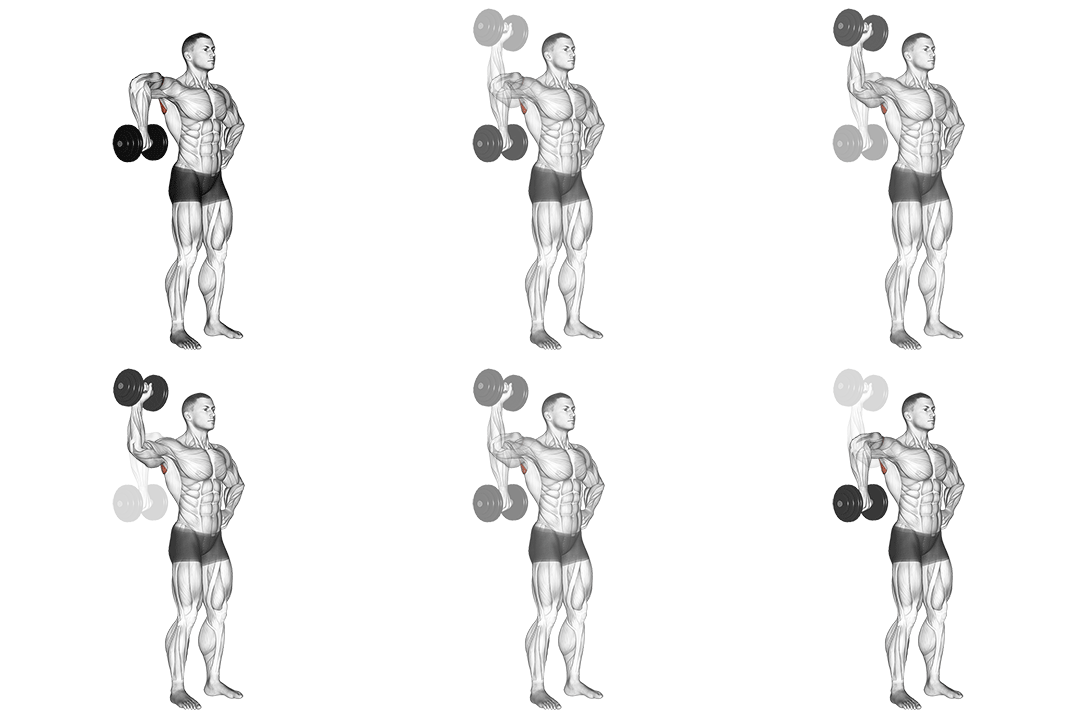
How to Perform Dumbbell Upright Shoulder External Rotation
- Stand with your feet shoulder-width apart and hold a dumbbell in each hand with your palms facing your body.
- Raise your arms out to the sides until they are parallel to the ground, keeping your elbows slightly bent.
- Rotate your arms externally, bringing the dumbbells up towards your head while keeping your elbows in the same position.
- Pause for a moment at the top, then slowly lower the dumbbells back to the starting position.
- Repeat for the desired number of repetitions.
Best Dumbbell Upright Shoulder External Rotation Alternatives
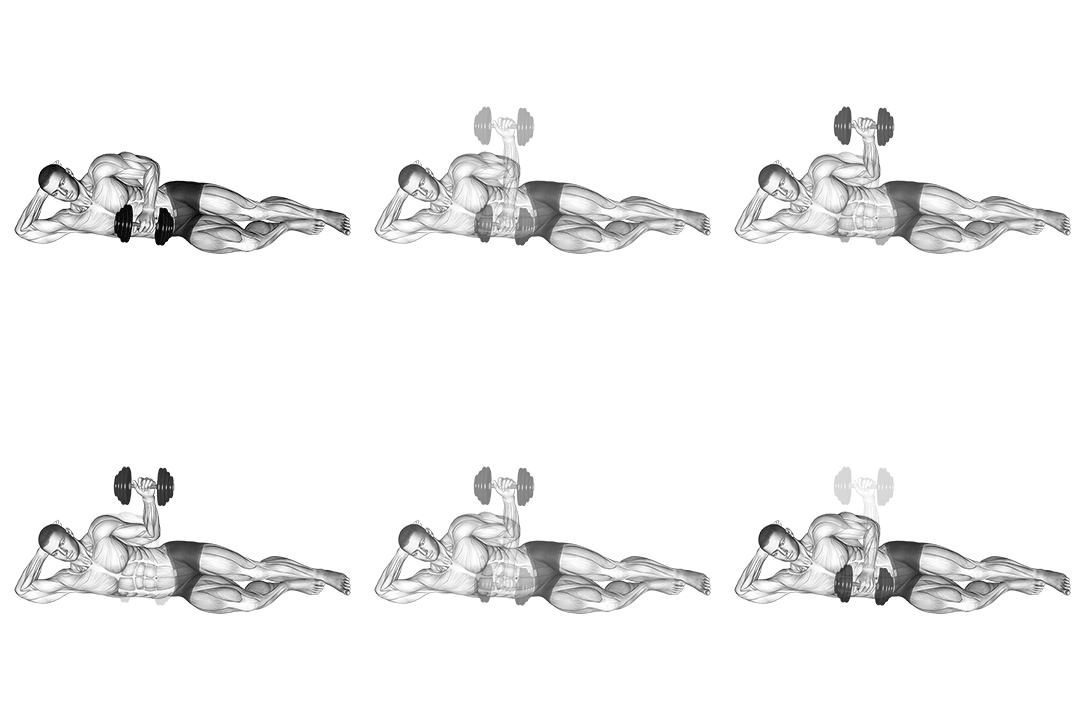
1. Dumbbell Lying External Shoulder Rotation
91.2% MatchHow to perform this exercise
- Lie on your side on a flat bench with your upper arm against your side and your elbow bent 90 degrees.
- Hold a dumbbell in your hand with your palm facing down.
- Keeping your upper arm against your side, slowly rotate your forearm upward as far as possible.
- Pause for a moment at the top, then slowly lower your forearm back down to the starting position.
- Repeat for the desired number of repetitions, then switch sides.
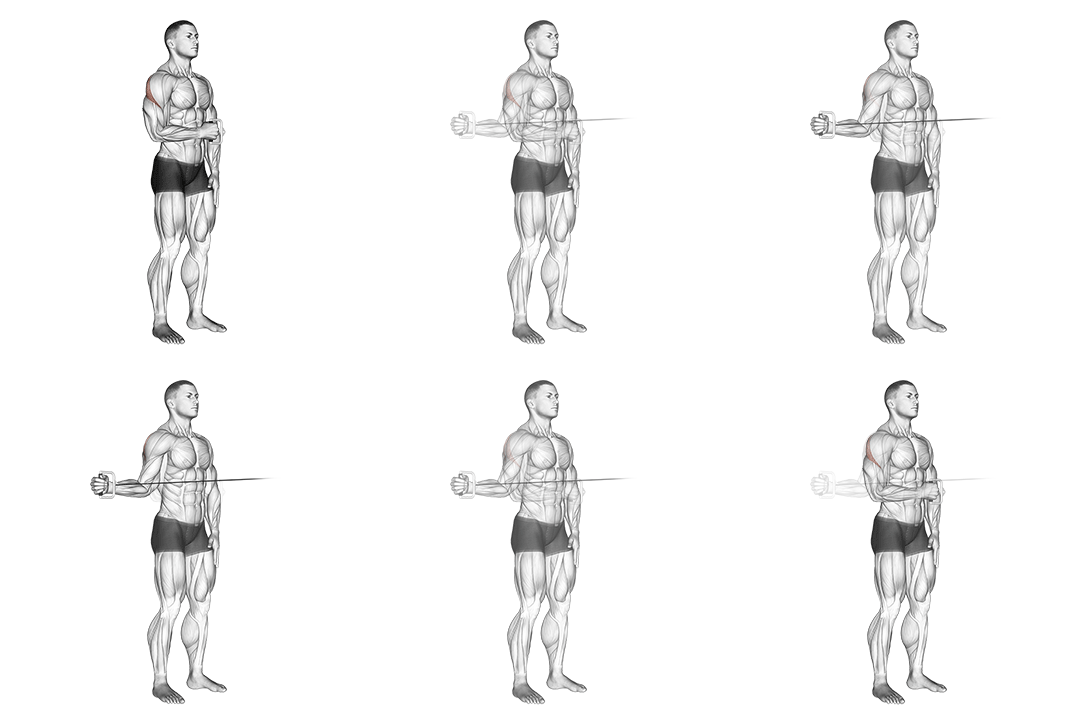
2. Cable Standing Shoulder External Rotation
89.4% MatchHow to perform this exercise
- Stand with your feet shoulder-width apart and your knees slightly bent.
- Hold the cable handle with your arm extended in front of you, parallel to the ground.
- Keep your elbow slightly bent and your shoulder blades pulled back.
- Slowly rotate your arm outward, away from your body, while keeping your elbow in the same position.
- Pause for a moment at the end of the movement, then slowly return to the starting position.
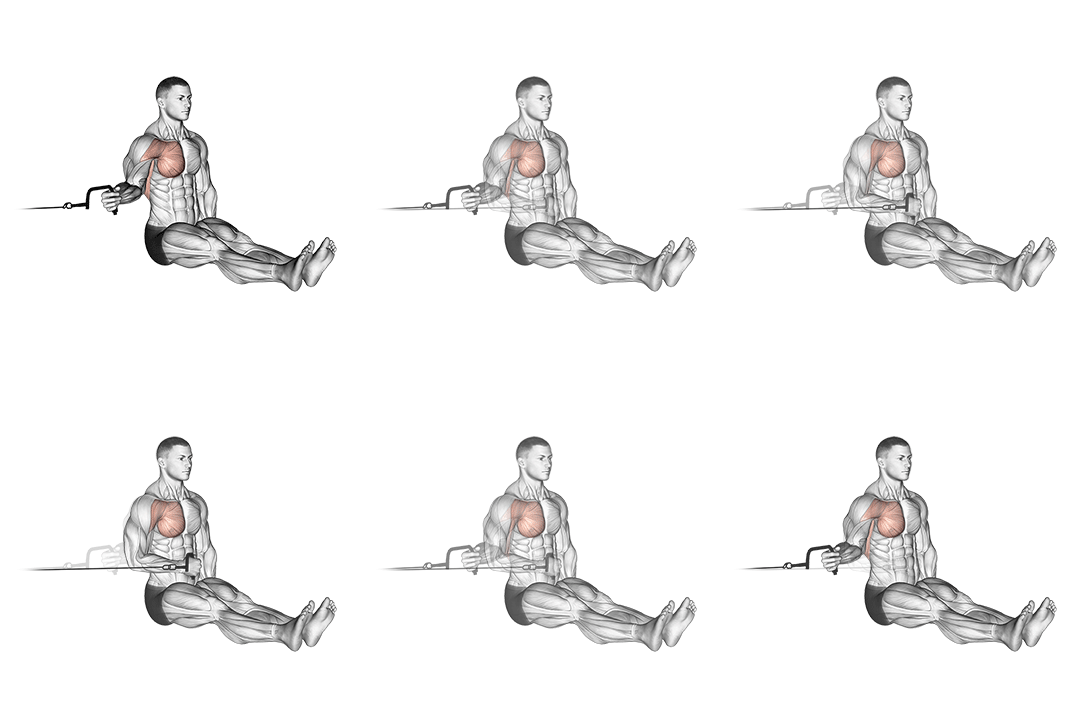
3. Cable Seated Shoulder Internal Rotation
80.7% MatchHow to perform this exercise
- Sit on a bench or chair facing the cable machine with your feet flat on the ground.
- Hold the cable handle with your arm extended straight out in front of you, parallel to the ground.
- Keep your elbow slightly bent and your shoulder blades pulled back and down.
- Slowly rotate your arm inward, bringing the cable handle towards the center of your body.
- Pause for a moment at the end of the movement, then slowly return to the starting position.
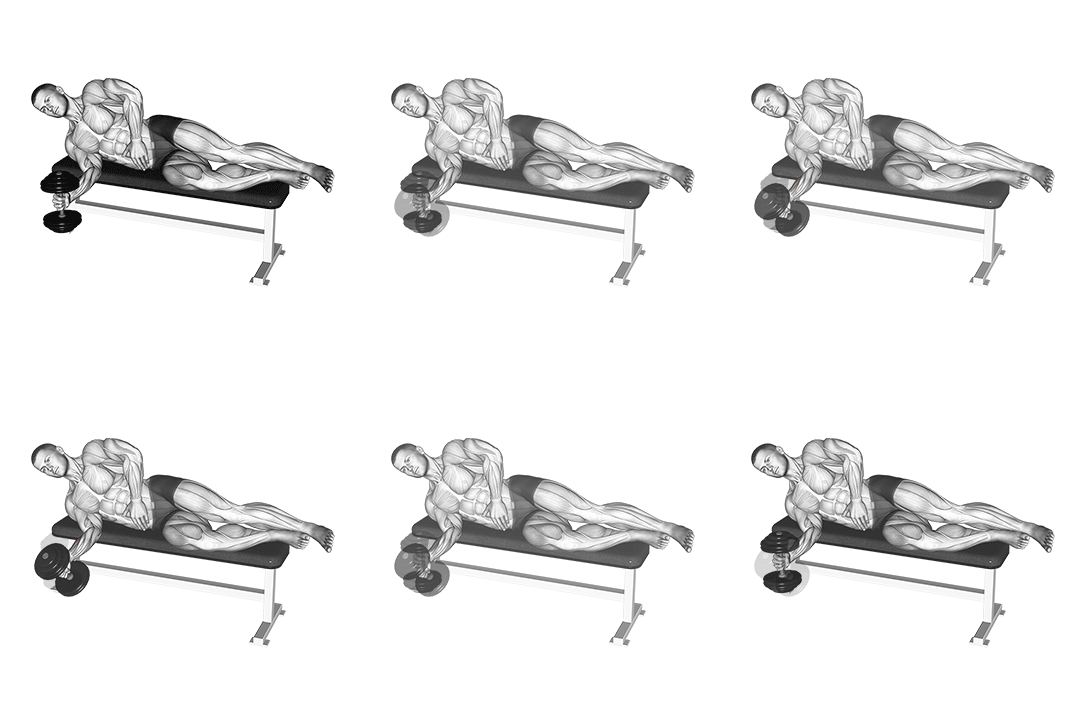
4. Dumbbell Lying Supination
75.7% MatchHow to perform this exercise
- Lie flat on a bench with your feet flat on the ground.
- Hold a dumbbell in each hand with your palms facing up and your arms fully extended.
- Keeping your upper arms stationary, curl the dumbbells towards your shoulders by contracting your forearms.
- Pause for a moment at the top, then slowly lower the dumbbells back to the starting position.
- Repeat for the desired number of repetitions.
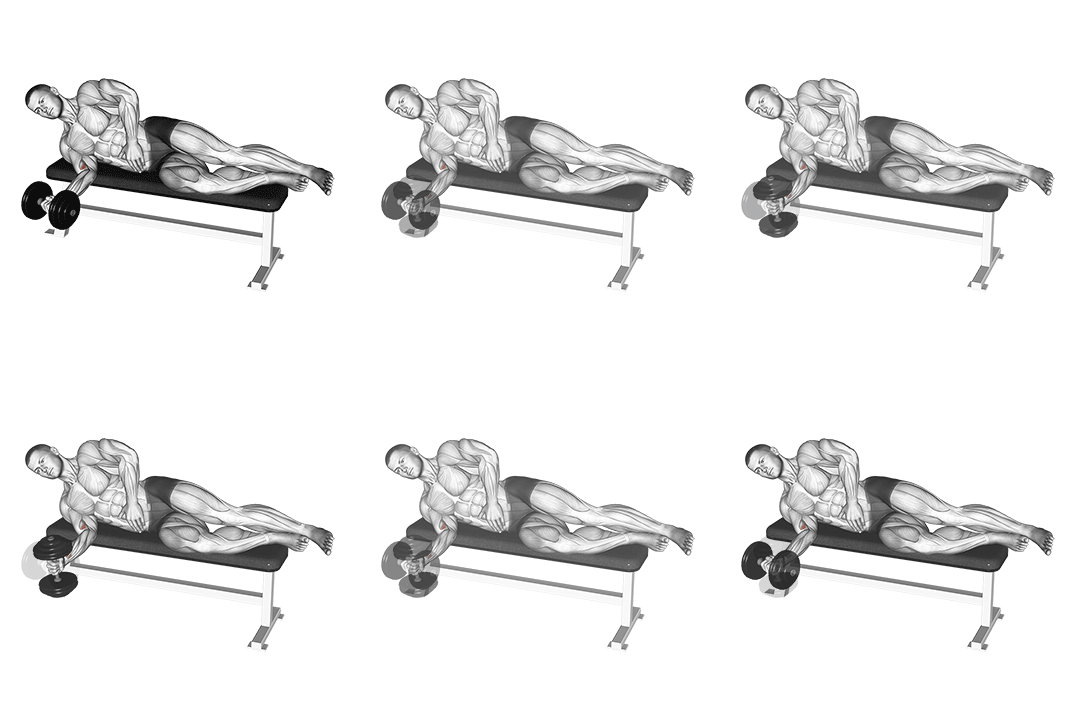
5. Dumbbell Lying Pronation
75.7% MatchHow to perform this exercise
- Lie flat on a bench with your chest facing down and your arms extended straight down, holding a dumbbell in each hand.
- Rotate your palms so they are facing up.
- Keeping your upper arms stationary, exhale and curl the dumbbells as you rotate your palms to face down.
- Inhale and slowly lower the dumbbells back to the starting position.
- Repeat for the desired number of repetitions.
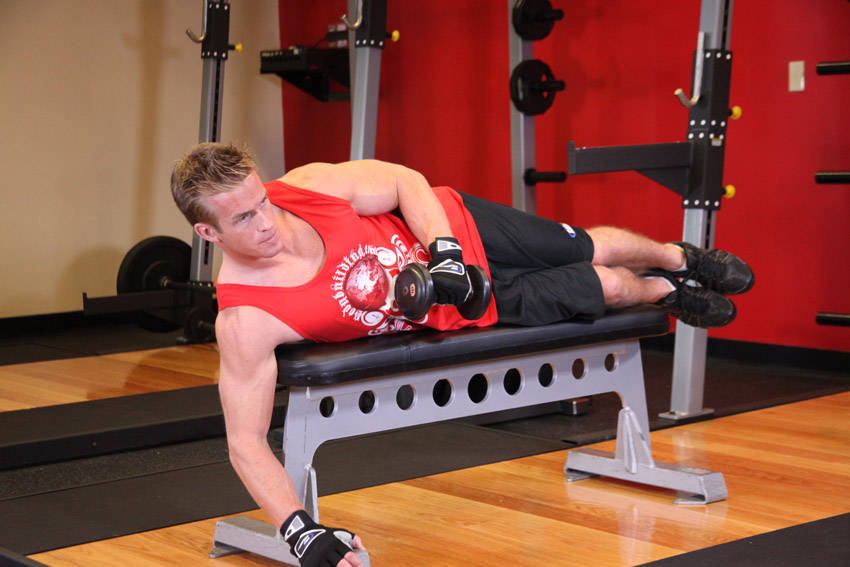
6. External Rotation
75.7% MatchHow to perform this exercise
- Lie sideways on a flat bench with one arm holding a dumbbell and the other hand on top of the bench folded so that you can rest your head on it.
- Bend the elbows of the arm holding the dumbbell so that it creates a 90-degree angle between the upper arm and the forearm. Tip: Keep the arm parallel to your torso.
- Now bend the elbow while keeping the upper arm stationary. In this manner, the forearm will be parallel to the floor and perpendicular to your torso (Tip: So the forearm will be directly in front of you). The upper arm will be stationary by your torso and should be parallel to the floor (aligned with your torso at all times). This will be your starting position.
- As you breathe out, externally rotate your forearm so that the dumbbell is lifted up in a semicircle motion as you maintain the 90 degree angle bend between the upper arms and the forearm. You will continue this external rotation until the forearm is perpendicular to the floor and the torso pointing towards the ceiling. At this point you will hold the contraction for a second.
- As you breathe in, slowly go back to the starting position.
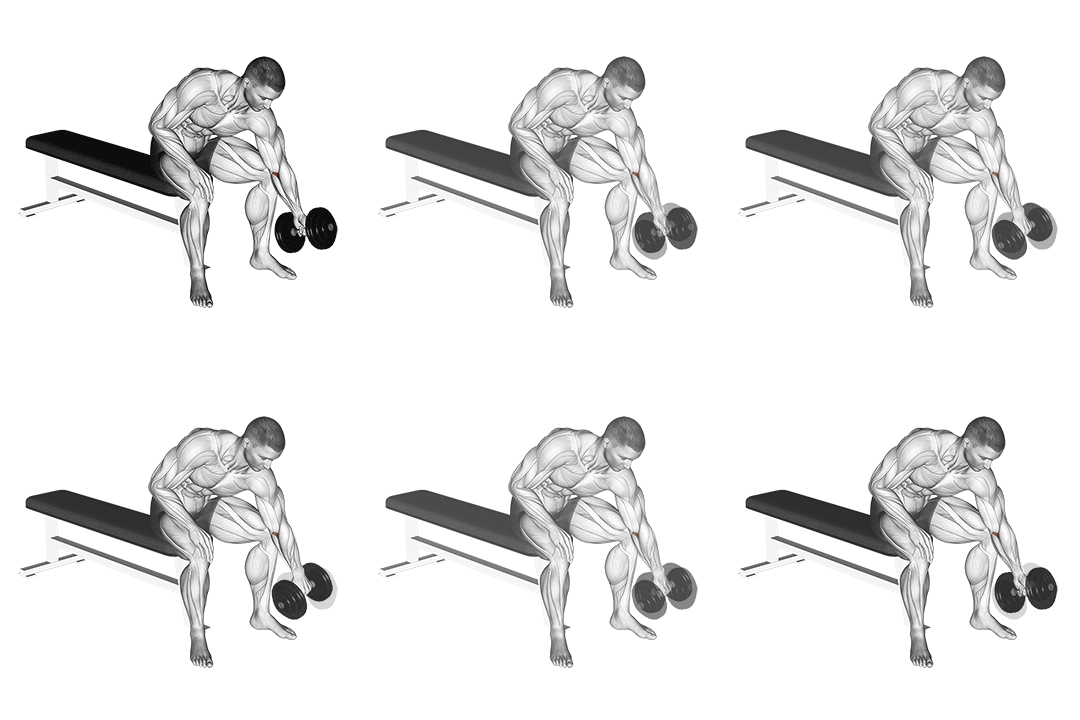
7. Dumbbell Seated One Arm Rotate
75.7% MatchHow to perform this exercise
- Sit on a bench with your back straight and hold a dumbbell in one hand, resting it on your thigh.
- Raise the dumbbell up to shoulder height, keeping your elbow close to your body.
- Rotate your forearm outward, away from your body, while keeping your upper arm stationary.
- Pause for a moment at the top, then slowly rotate your forearm back to the starting position.
- Repeat for the desired number of repetitions, then switch to the other arm.
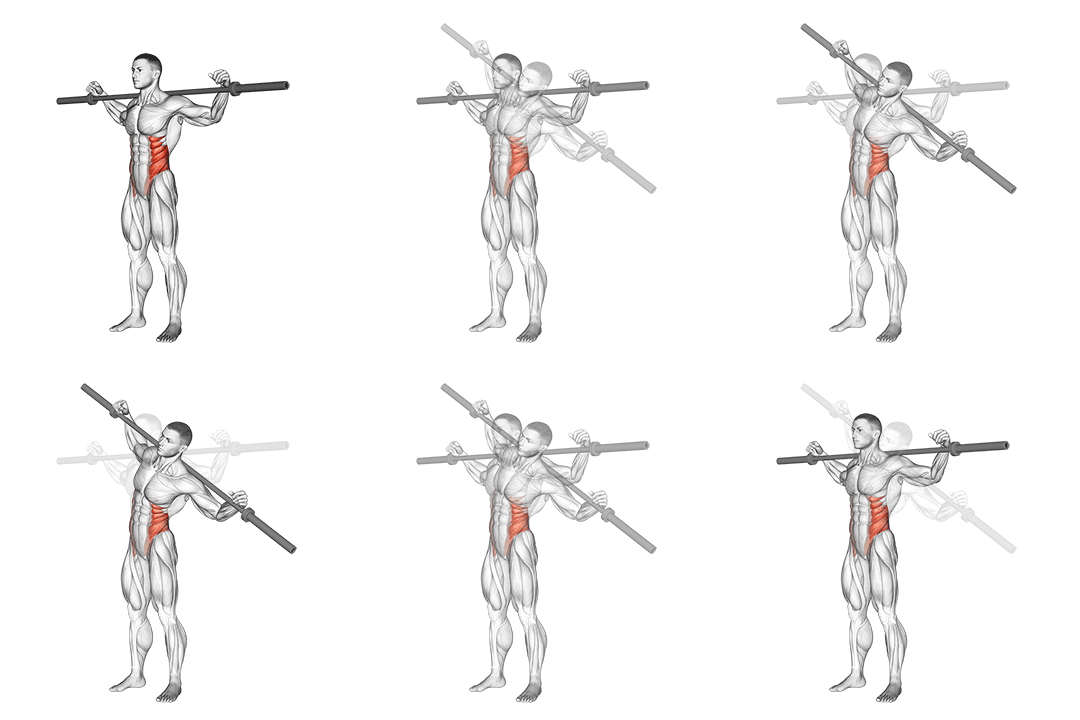
8. Barbell Side Bent V. 2
74.7% MatchHow to perform this exercise
- Stand with your feet shoulder-width apart and hold a barbell with both hands, palms facing down.
- Keep your back straight and core engaged throughout the exercise.
- Slowly bend your torso to the right side, lowering the barbell towards your right knee.
- Pause for a moment, then return to the starting position.
- Repeat the movement on the left side.
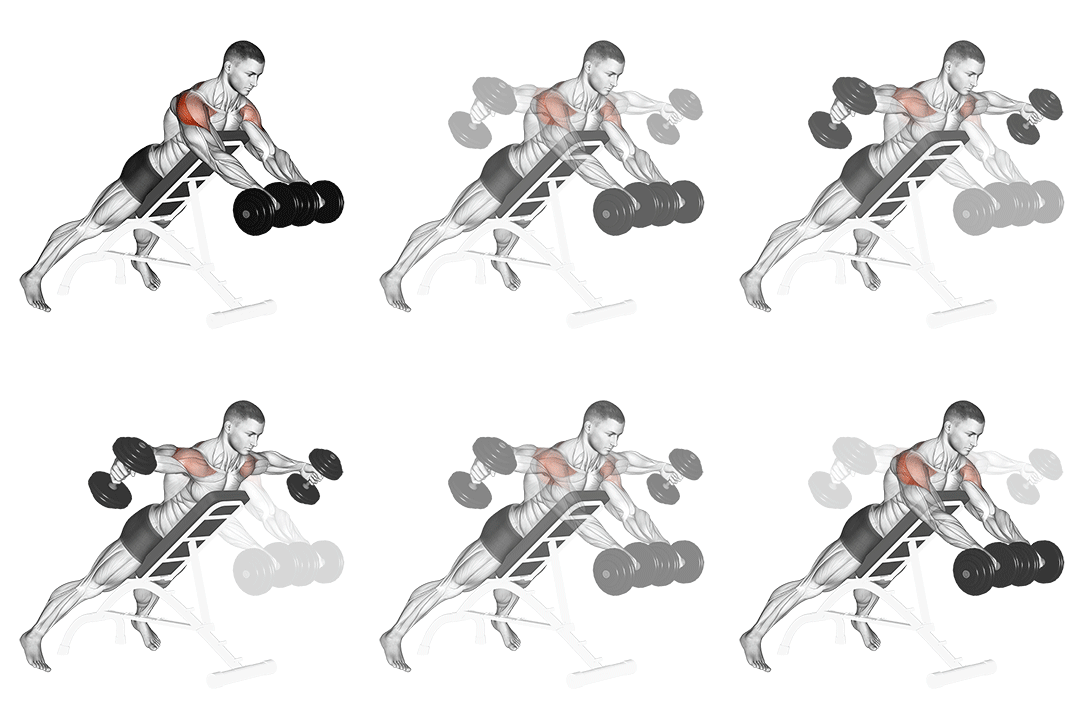
9. Dumbbell Rotation Reverse Fly
74.6% MatchHow to perform this exercise
- Stand with your feet shoulder-width apart and hold a dumbbell in each hand, palms facing inwards.
- Bend your knees slightly and hinge forward at the hips, keeping your back straight and chest up.
- Raise your arms out to the sides, keeping a slight bend in your elbows, until they are parallel to the floor.
- Rotate your arms so that your palms are facing downwards.
- Slowly lower your arms back to the starting position.
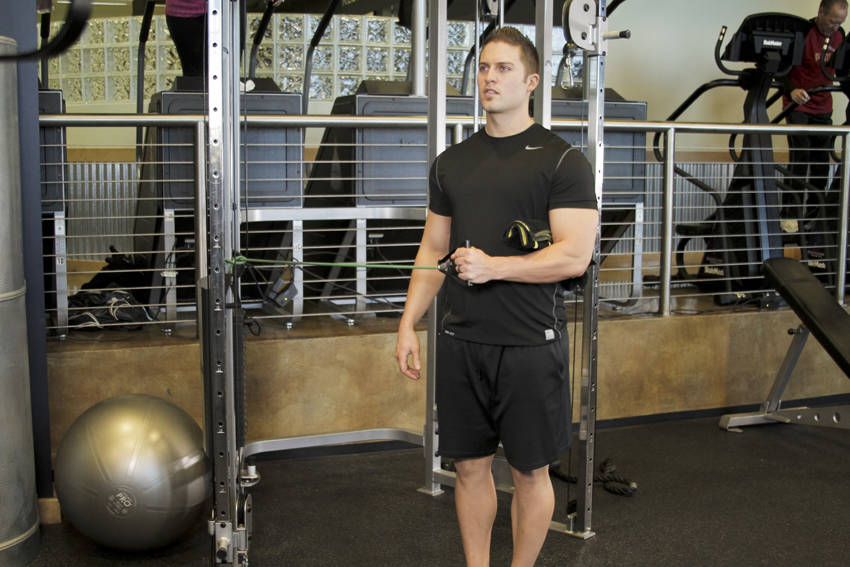
10. External Rotation With Band
73.7% MatchHow to perform this exercise
- Choke the band around a post. The band should be at the same height as your elbow. Stand with your left side to the band a couple of feet away.
- Grasp the end of the band with your right hand, and keep your elbow pressed firmly to your side. We recommend you hold a pad or foam roll in place with your elbow to keep it firmly in position.
- With your upper arm in position, your elbow should be flexed to 90 degrees with your hand reaching across the front of your torso. This will be your starting position.
- Execute the movement by rotating your arm in a backhand motion, keeping your elbow in place.
- Continue as far as you are able, pause, and then return to the starting position.
Why You Might Need a Dumbbell Upright Shoulder External Rotation Alternative
You might swap this exercise because of shoulder pain, limited mobility, lack of dumbbells, or a need for safer rehab progressions. The upright variant can elevate the scapula and recruit upper traps; alternatives like side-lying or band external rotations isolate true external rotators and reduce compensatory elevation. Choose substitutions that preserve the external rotation torque (humerus near the body, elbow fixed at 90°) to maintain infraspinatus and teres minor activation while protecting the glenohumeral joint.
How to Choose the Right Substitute
Pick a substitute based on equipment, pain response, and the movement pattern you need. If you have only bands, use a light-resistance band and perform slow 2-second eccentrics to bias rotator-cuff activation. If you require scapular control, choose side-lying or prone positions to limit trapezius recruitment; cue: keep the scapula depressed and the elbow pinned to the rib cage. For progressive loading, use a cable or dumbbell in a side-lying position so you can increase resistance while preserving external rotation mechanics.
Frequently Asked Questions
What muscles does Dumbbell Upright Shoulder External Rotation work?
It primarily targets the external rotators— infraspinatus and teres minor—while the posterior deltoid assists. If you raise the arm or shrug, upper trapezius and supraspinatus can contribute, so keep the elbow at 90° and the scapula stable to emphasize rotator-cuff activation.
What is the best bodyweight alternative to Dumbbell Upright Shoulder External Rotation?
A practical bodyweight option is an isometric wall external rotation: stand with elbow bent 90° against your side and press the back of your hand into a wall or doorframe, holding tension 6–10 seconds. Cue: keep the humerus against your torso and feel tension across the posterior cuff (infraspinatus/teres minor).
Can I build muscle without doing Dumbbell Upright Shoulder External Rotation?
Yes. You can build the same shoulder and rotator-cuff strength with band external rotations, cable rotations, side-lying dumbbell external rotations, and face pulls—provided you progressively overload and control tempo. Focus on maintaining proper joint position (elbow pinned, humerus stable) to ensure the targeted muscles receive consistent tension.
More Exercise Alternatives
Find Alternatives for Any Exercise
Use our free tool to discover the best substitute exercises based on your available equipment and goals.
Try the Exercise Substitution Finder →