

10 Best Dynamic Back Stretch Alternatives for Limited Equipment
If you can’t perform the Dynamic Back Stretch, use other movements that lengthen and load the lats through scapular depression and shoulder extension. Try kneeling lat slides, doorframe lat hangs, band pulldowns, child’s-pose reaches, and single-arm table slides. Cue: reach the arm overhead, depress the scapula, and keep a long rib-to-hip line.
Original Exercise: Dynamic Back Stretch
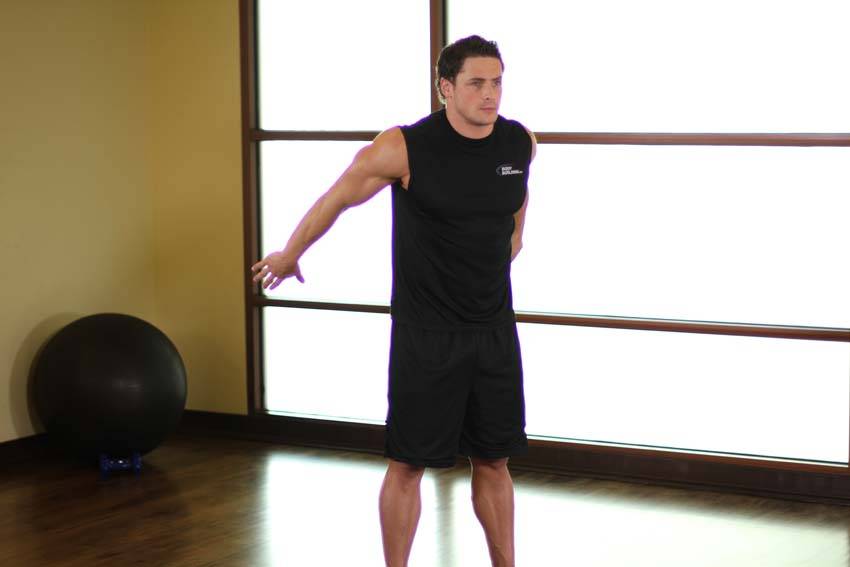
How to Perform Dynamic Back Stretch
- Stand with your feet shoulder width apart. This will be your starting position.
- Keeping your arms straight, swing them straight up in front of you 5-10 times, increasing the range of motion each time until your arms are above your head.
Pro Tips
- Category: Stretching
- Force: Pull
Best Dynamic Back Stretch Alternatives
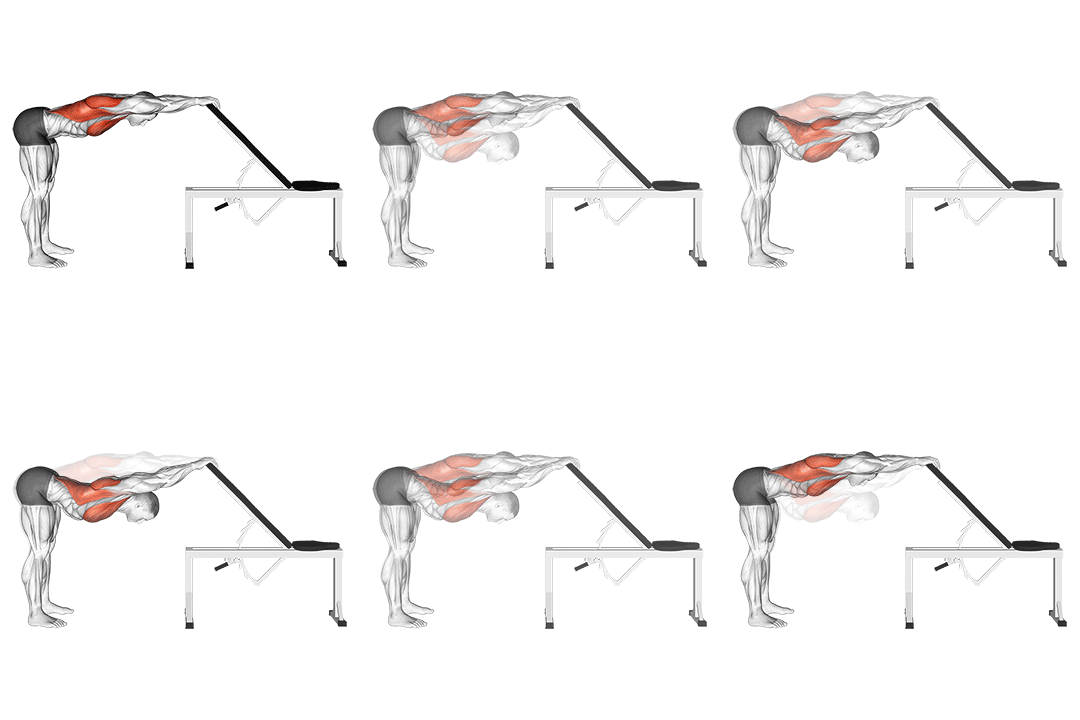
1. Back Pec Stretch
86% MatchHow to perform this exercise
- Stand tall with your feet shoulder-width apart.
- Extend your arms straight out in front of you, parallel to the ground.
- Cross your arms in front of your body, with your right arm over your left arm.
- Interlock your fingers and rotate your palms away from your body.
- Slowly raise your arms up and away from your body, feeling a stretch in your back and chest.
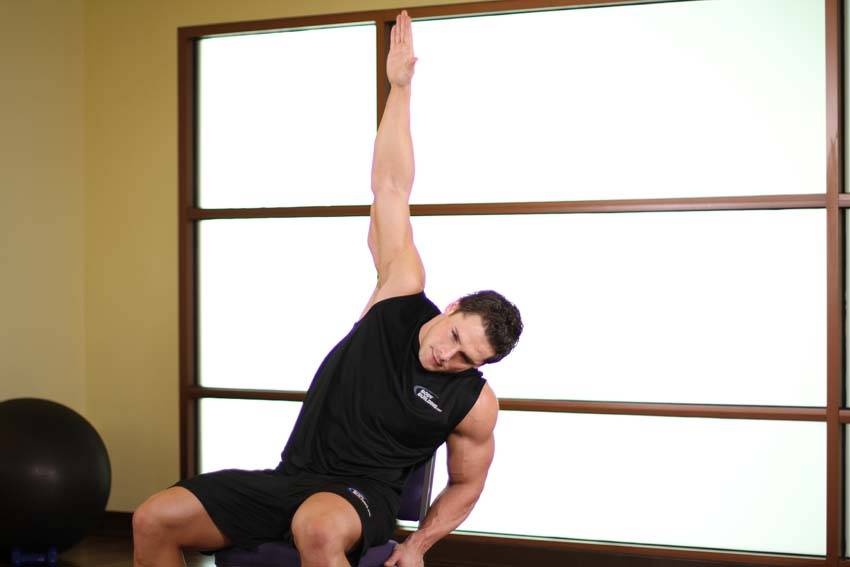
2. Chair Lower Back Stretch
81.2% MatchHow to perform this exercise
- Sit upright on a chair.
- Bend to one side with your arm over your head. You can hold onto the chair with your free hand.
- Hold for 10 seconds, and repeat for your other side.
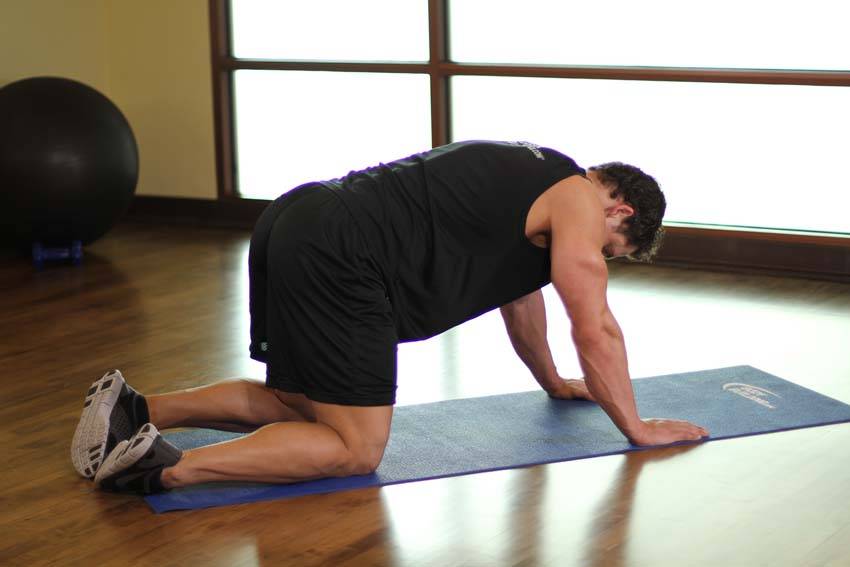
3. Cat Stretch
75.4% MatchHow to perform this exercise
- Position yourself on the floor on your hands and knees.
- Pull your belly in and round your spine, lower back, shoulders, and neck, letting your head drop.
- Hold for 15 seconds.
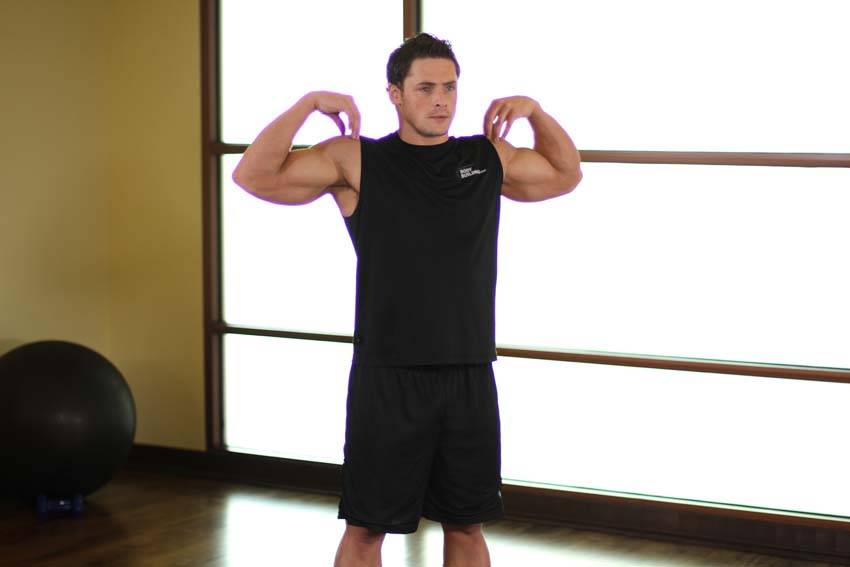
4. Elbow Circles
75% MatchHow to perform this exercise
- Sit or stand with your feet slightly apart.
- Place your hands on your shoulders with your elbows at shoulder level and pointing out.
- Slowly make a circle with your elbows. Breathe out as you start the circle and breathe in as you complete the circle.
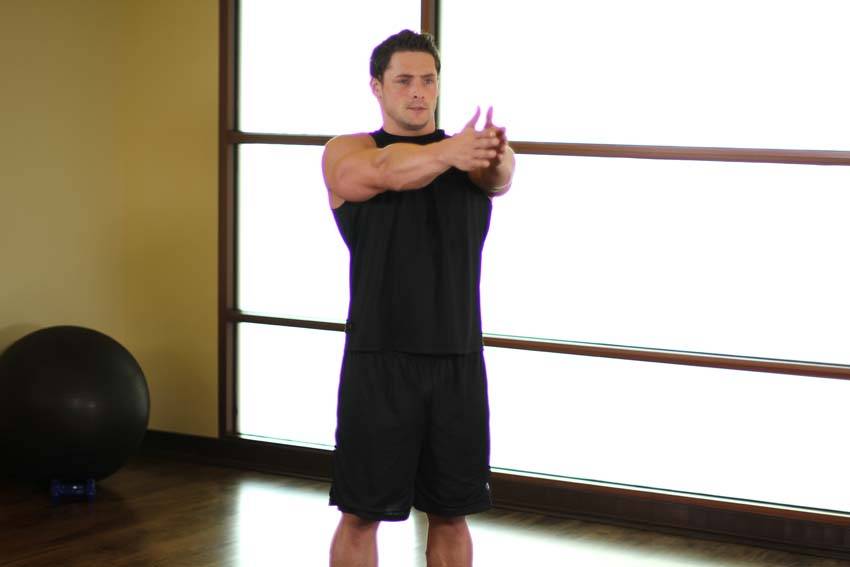
5. Dynamic Chest Stretch
75% MatchHow to perform this exercise
- Stand with your hands together, arms extended directly in front of you. This will be your starting position.
- Keeping your arms straight, quickly move your arms back as far as possible and back in again, similar to an exaggerated clapping motion. Repeat 5-10 times, increasing speed as you do so.
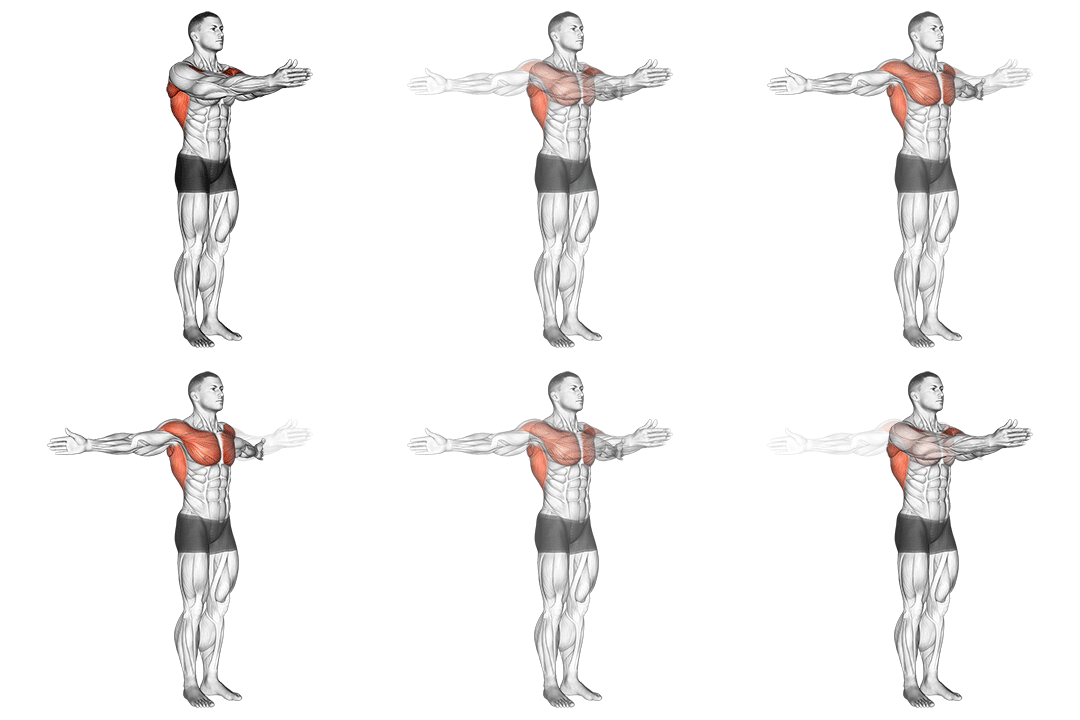
6. Dynamic Chest Stretch (male)
74.2% MatchHow to perform this exercise
- Stand tall with your feet shoulder-width apart.
- Extend your arms straight out to the sides, parallel to the ground.
- Slowly bring your arms forward, crossing them in front of your body.
- Feel the stretch in your chest muscles.
- Hold the stretch for 10-30 seconds.
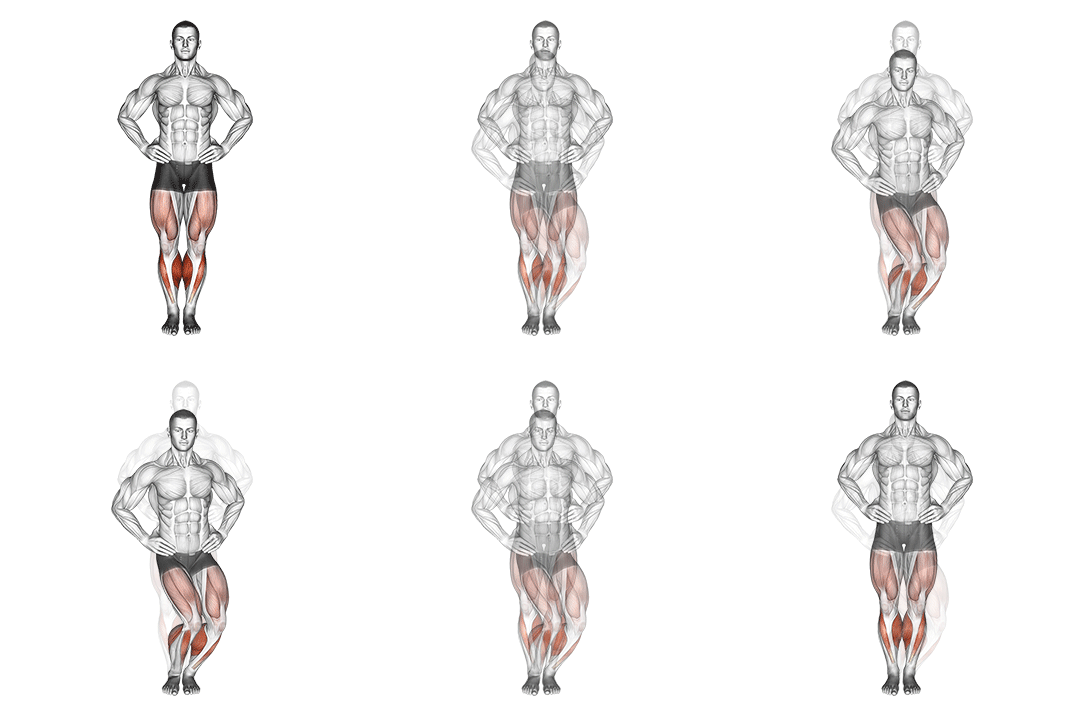
7. Circles Knee Stretch
70% MatchHow to perform this exercise
- Stand with your feet shoulder-width apart and your hands on your hips.
- Bend your knees slightly and lift your heels off the ground, balancing on the balls of your feet.
- Keeping your knees bent, rotate your knees in a circular motion, first clockwise and then counterclockwise.
- Perform the movement for the desired number of repetitions.
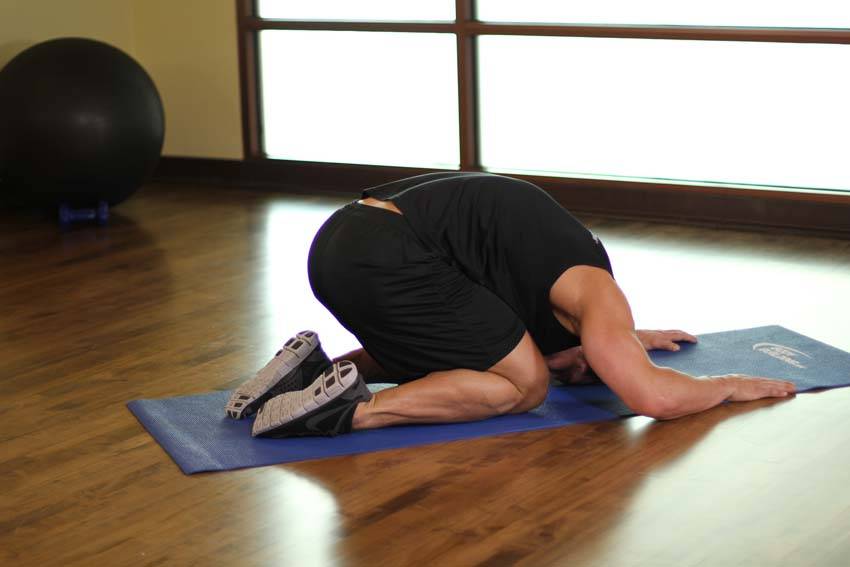
8. Child's Pose
67% MatchHow to perform this exercise
- Get on your hands and knees, walk your hands in front of you.
- Lower your buttocks down to sit on your heels. Let your arms drag along the floor as you sit back to stretch your entire spine.
- Once you settle onto your heels, bring your hands next to your feet and relax. "breathe" into your back. Rest your forehead on the floor. Avoid this position if you have knee problems.
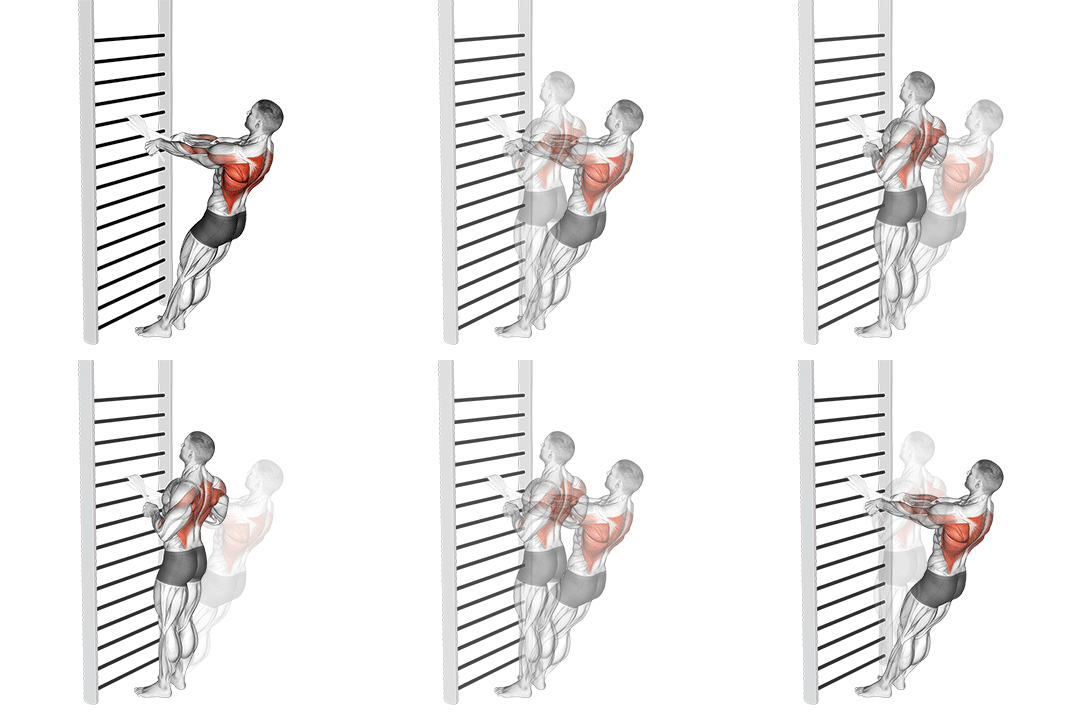
9. Bodyweight Standing Row (with Towel)
66.8% MatchHow to perform this exercise
- Stand with your feet shoulder-width apart and hold a towel in front of you with both hands.
- Bend your knees slightly and hinge forward at the hips, keeping your back straight.
- Pull the towel towards your chest, squeezing your shoulder blades together.
- Pause for a moment at the top, then slowly release the tension and return to the starting position.
- Repeat for the desired number of repetitions.
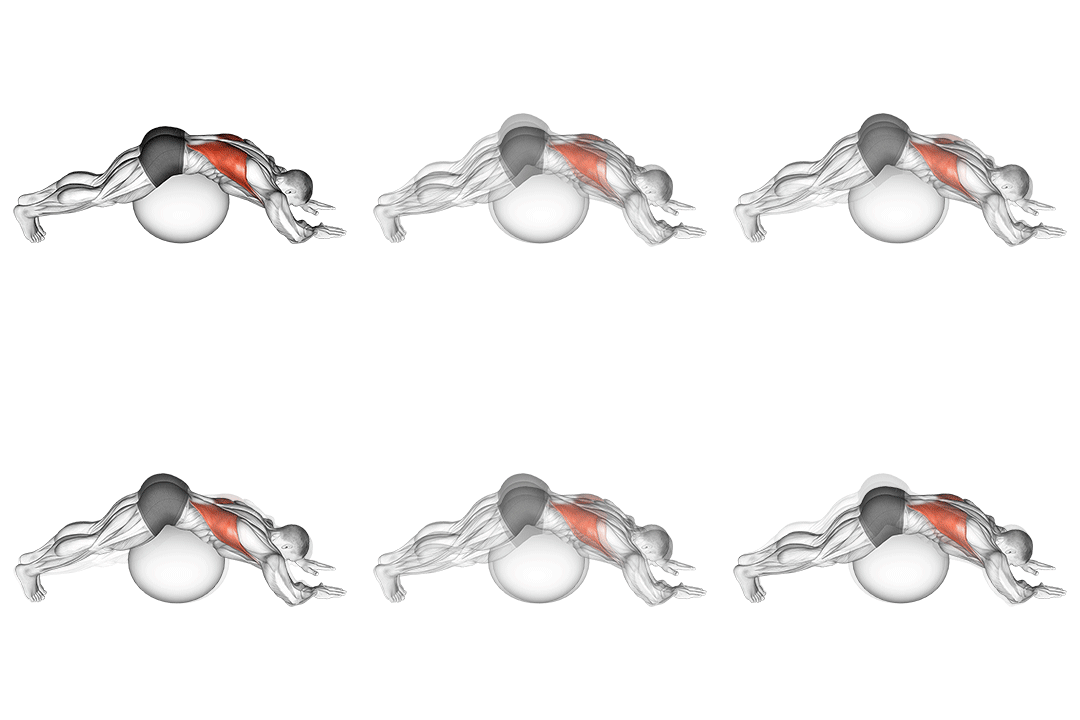
10. Exercise Ball Lower Back Stretch (pyramid)
66.8% MatchHow to perform this exercise
- Sit on the stability ball with your feet flat on the ground and your knees bent at a 90-degree angle.
- Slowly walk your feet forward, rolling the ball down your back until your lower back is resting on the ball.
- Place your hands behind your head or cross them over your chest.
- Engage your core and slowly lower your upper body towards the ground, allowing your lower back to stretch over the ball.
- Hold the stretch for a few seconds, then slowly return to the starting position.
Why You Might Need a Dynamic Back Stretch Alternative
You may substitute the Dynamic Back Stretch for several reasons: shoulder pain with overhead reach, limited hip or thoracic mobility, no partner or space for the original drill, or a training focus on strength rather than mobility. Choose alternatives that preserve the same biomechanics — shoulder flexion with controlled scapular depression and lat lengthening — so the target muscles (latissimus dorsi, teres major, lower traps) remain engaged. Use a technique cue like “tuck ribs, hinge from the hips, depress the scapula” to avoid compensatory lumbar extension and to maintain correct lat activation during each variant.
How to Choose the Right Substitute
Choose a substitute by matching the movement pattern, load, and range of motion to your goal. If you need mobility, prioritize long-duration holds and slow eccentrics (doorframe lat hang, child’s-pose reach) that emphasize lat stretch and thoracic extension. For strength or hypertrophy, pick resisted options (band pulldowns, single-arm rows) that allow progressive overload and full shoulder extension. Account for joint pain: use kneeling or supported positions to reduce lumbar shear and cue scapular depression and shoulder extension to isolate the lats. Finally, select exercises that let you control tempo and maintain a neutral spine.
Frequently Asked Questions
What muscles does Dynamic Back Stretch work?
The Dynamic Back Stretch primarily targets the latissimus dorsi and teres major while recruiting lower trapezius and rhomboids for scapular control. It also engages the posterior shoulder and spinal erectors to maintain posture as the lats lengthen and eccentrically control shoulder flexion.
What is the best bodyweight alternative to Dynamic Back Stretch?
A doorframe lat hang is an effective bodyweight alternative: grip the top of a doorframe, depress your scapula, keep ribs stacked over hips, and let the lats lengthen under tension. Perform timed hangs or small controlled pulses to emphasize scapular depression and eccentric lat control.
Can I build muscle without doing Dynamic Back Stretch?
Yes. You can build lat muscle with other movements that provide shoulder extension and progressive load, such as pull-ups, rows, and resisted pulldowns. Ensure you use full range of motion, controlled eccentrics, and progressive overload while cueing scapular depression to maintain proper lat activation.
More Exercise Alternatives
Find Alternatives for Any Exercise
Use our free tool to discover the best substitute exercises based on your available equipment and goals.
Try the Exercise Substitution Finder →