

10 Best Elbow Circles Alternatives for Shoulder Mobility
If Elbow Circles cause pain or you lack space, choose other deltoid isolation moves that preserve scapular control. Try standing lateral raises with a slight elbow bend, prone Y-raises with thumbs-up to bias posterior delts, or isometric shoulder taps to maintain deltoid activation while minimizing rotational stress.
Original Exercise: Elbow Circles
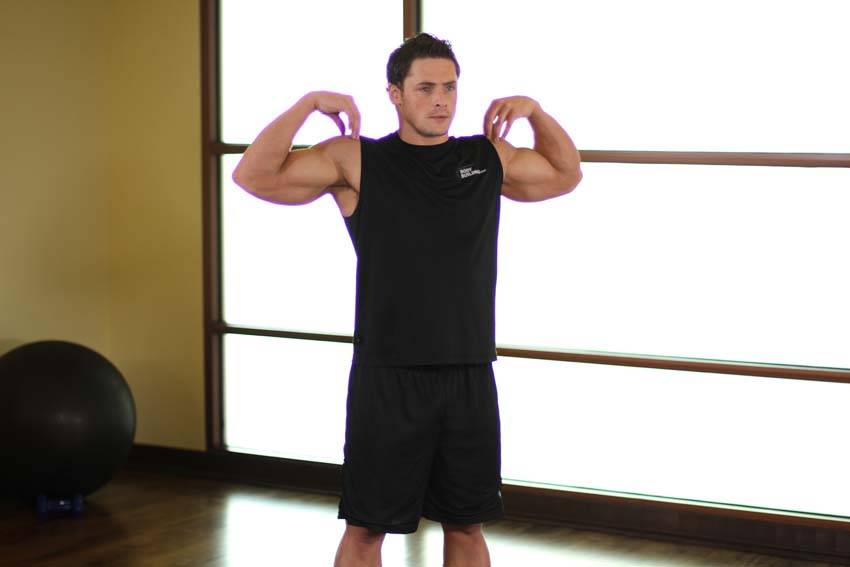
How to Perform Elbow Circles
- Sit or stand with your feet slightly apart.
- Place your hands on your shoulders with your elbows at shoulder level and pointing out.
- Slowly make a circle with your elbows. Breathe out as you start the circle and breathe in as you complete the circle.
Pro Tips
- Category: Stretching
- Force: Pull
- Movement type: Isolation
Best Elbow Circles Alternatives
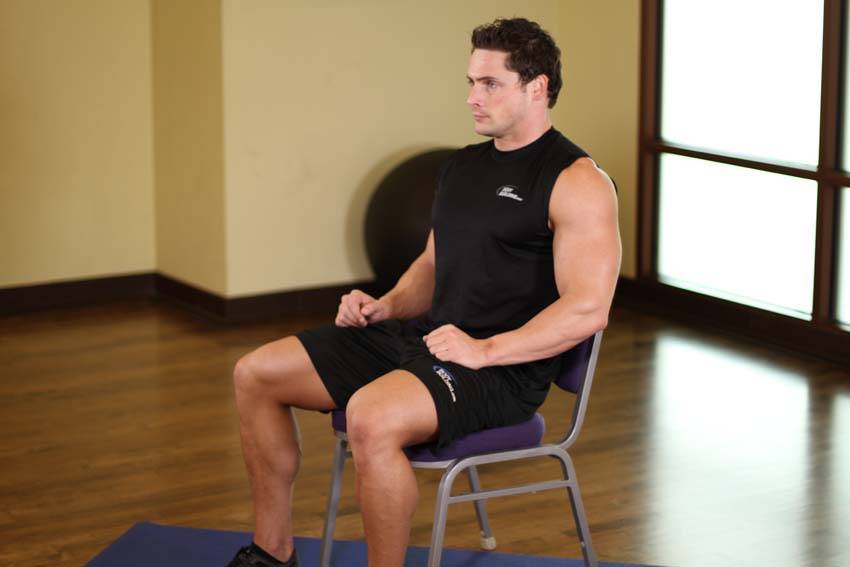
1. Chair Upper Body Stretch
90% MatchHow to perform this exercise
- Sit on the edge of a chair, gripping the back of it.
- Straighten your arms, keeping your back straight, and pull your upper body forward so you feel a stretch. Hold for 20-30 seconds.
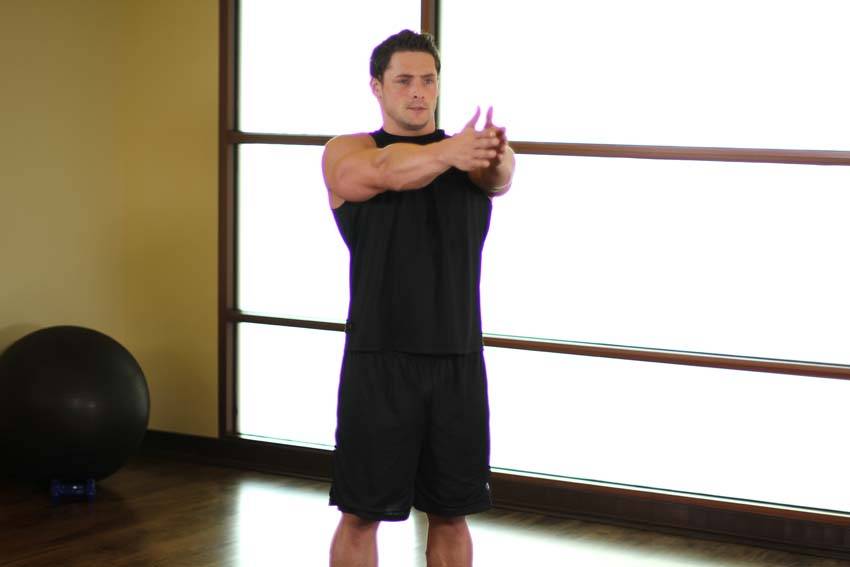
2. Dynamic Chest Stretch
85% MatchHow to perform this exercise
- Stand with your hands together, arms extended directly in front of you. This will be your starting position.
- Keeping your arms straight, quickly move your arms back as far as possible and back in again, similar to an exaggerated clapping motion. Repeat 5-10 times, increasing speed as you do so.
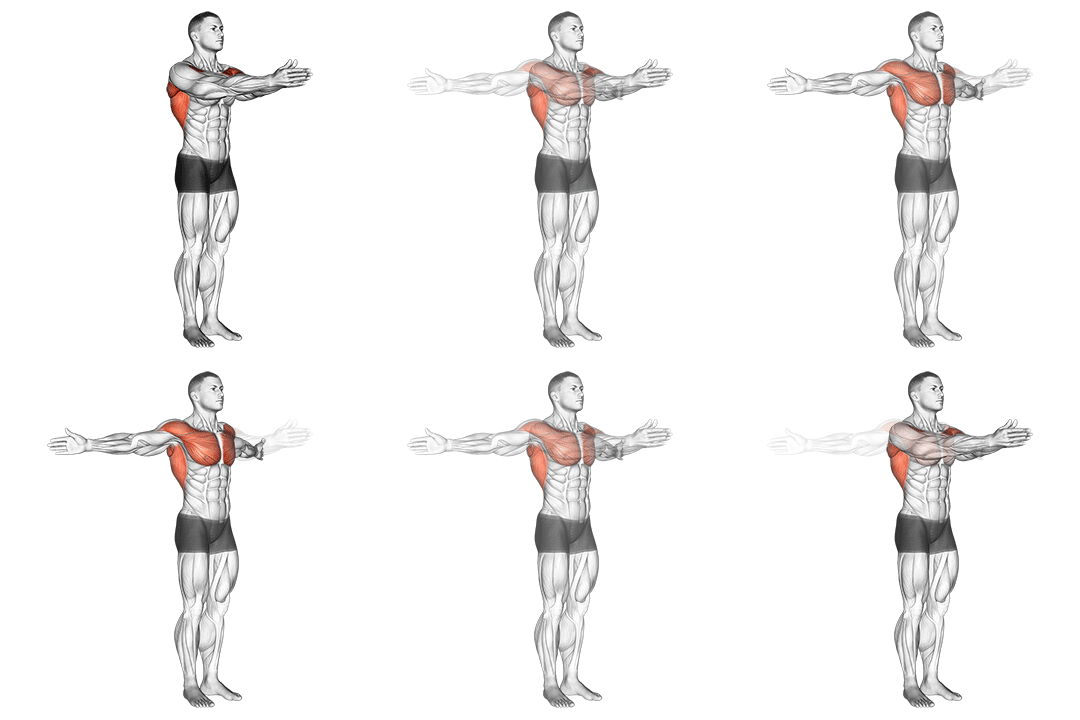
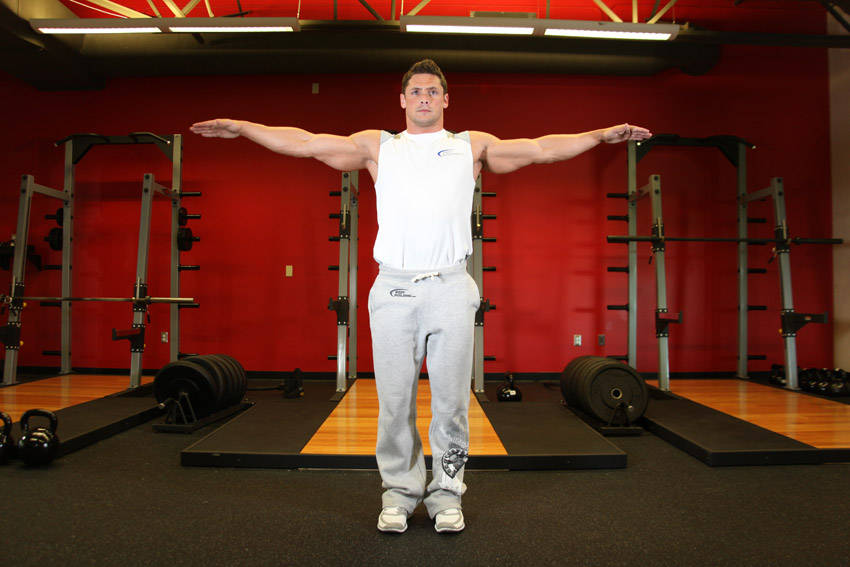
3. Dynamic Chest Stretch (male)
84.2% MatchHow to perform this exercise
- Stand tall with your feet shoulder-width apart.
- Extend your arms straight out to the sides, parallel to the ground.
- Slowly bring your arms forward, crossing them in front of your body.
- Feel the stretch in your chest muscles.
- Hold the stretch for 10-30 seconds.
4. Arm Circles
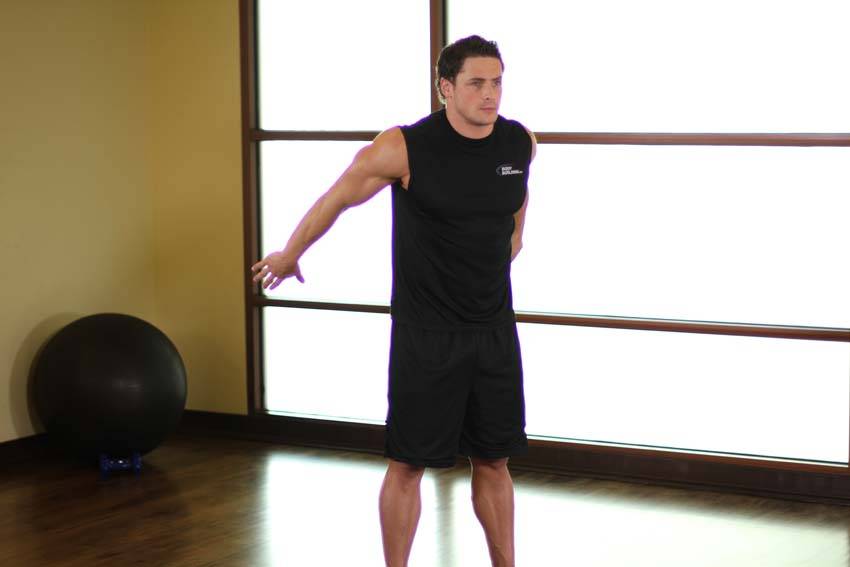
79.2% MatchHow to perform this exercise
- Stand up and extend your arms straight out by the sides. The arms should be parallel to the floor and perpendicular (90-degree angle) to your torso. This will be your starting position.
- Slowly start to make circles of about 1 foot in diameter with each outstretched arm. Breathe normally as you perform the movement.
- Continue the circular motion of the outstretched arms for about ten seconds. Then reverse the movement, going the opposite direction.
5. Dynamic Back Stretch
75% MatchHow to perform this exercise
- Stand with your feet shoulder width apart. This will be your starting position.
- Keeping your arms straight, swing them straight up in front of you 5-10 times, increasing the range of motion each time until your arms are above your head.
6. Chest And Front Of Shoulder Stretch
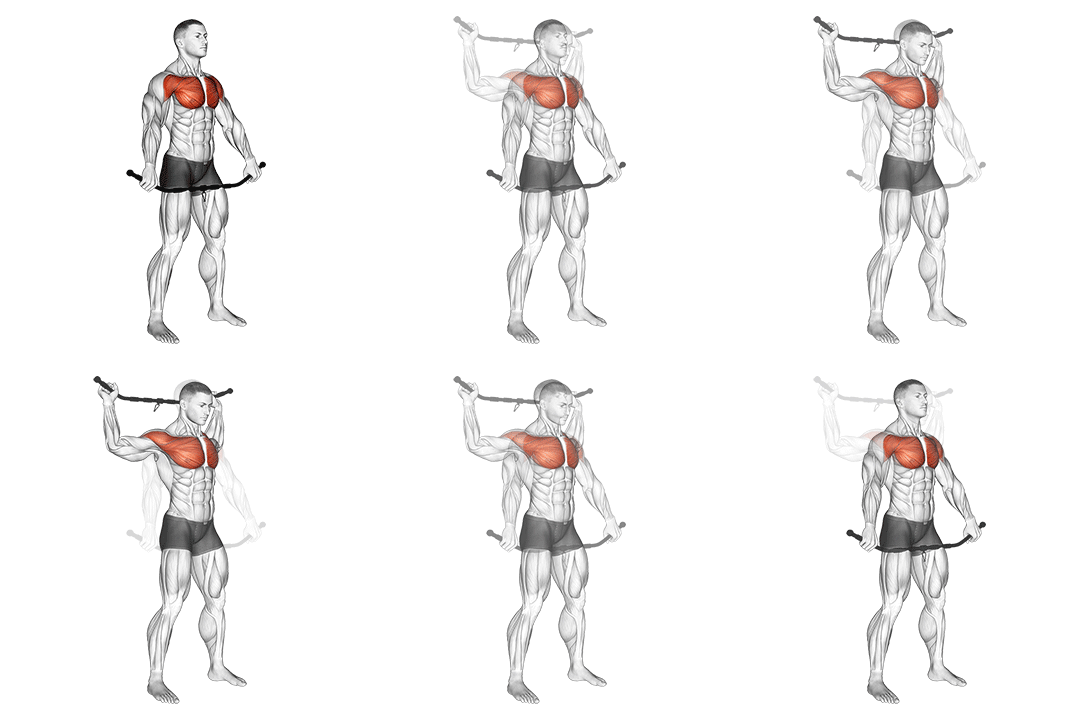
71% MatchHow to perform this exercise
- Stand tall with your feet shoulder-width apart.
- Extend your arms straight out in front of you at shoulder height.
- Cross your arms in front of your body, with your right arm on top of your left arm.
- Interlace your fingers and press your palms together.
- Gently squeeze your shoulder blades together and push your hands forward, feeling a stretch in your chest and front of your shoulders.
7. Behind Head Chest Stretch
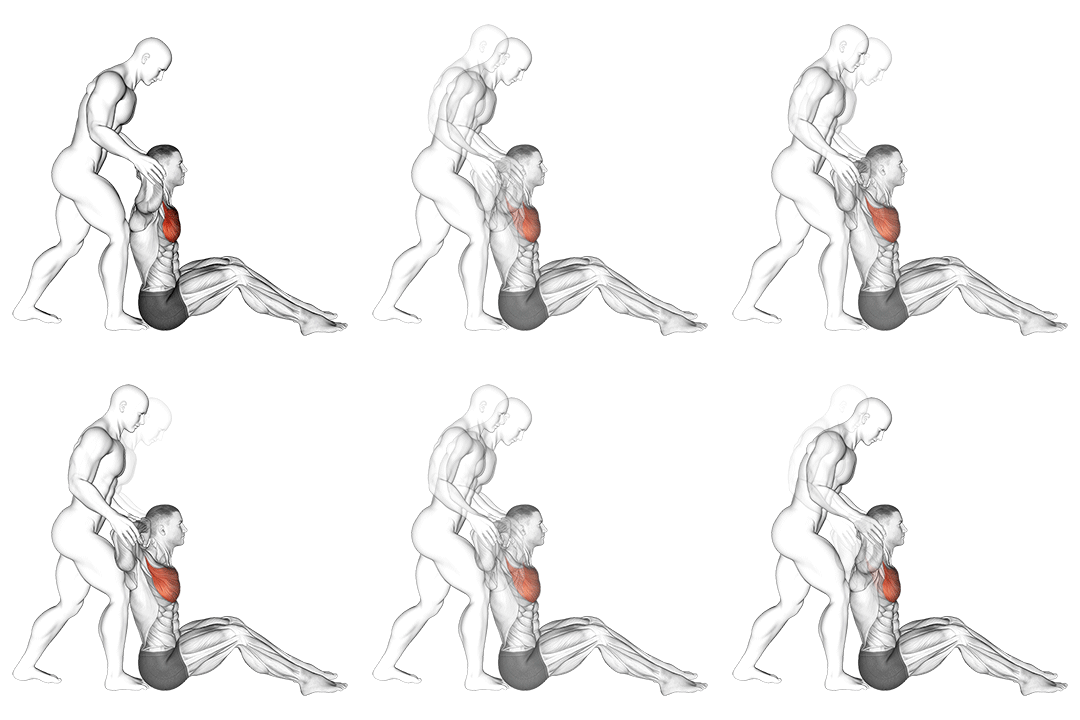
70.2% MatchHow to perform this exercise
- Stand tall with your feet shoulder-width apart.
- Interlace your fingers behind your head with your elbows pointing outwards.
- Slowly squeeze your shoulder blades together and push your chest forward.
- Hold the stretch for 15-30 seconds.
- Release the stretch and repeat as desired.
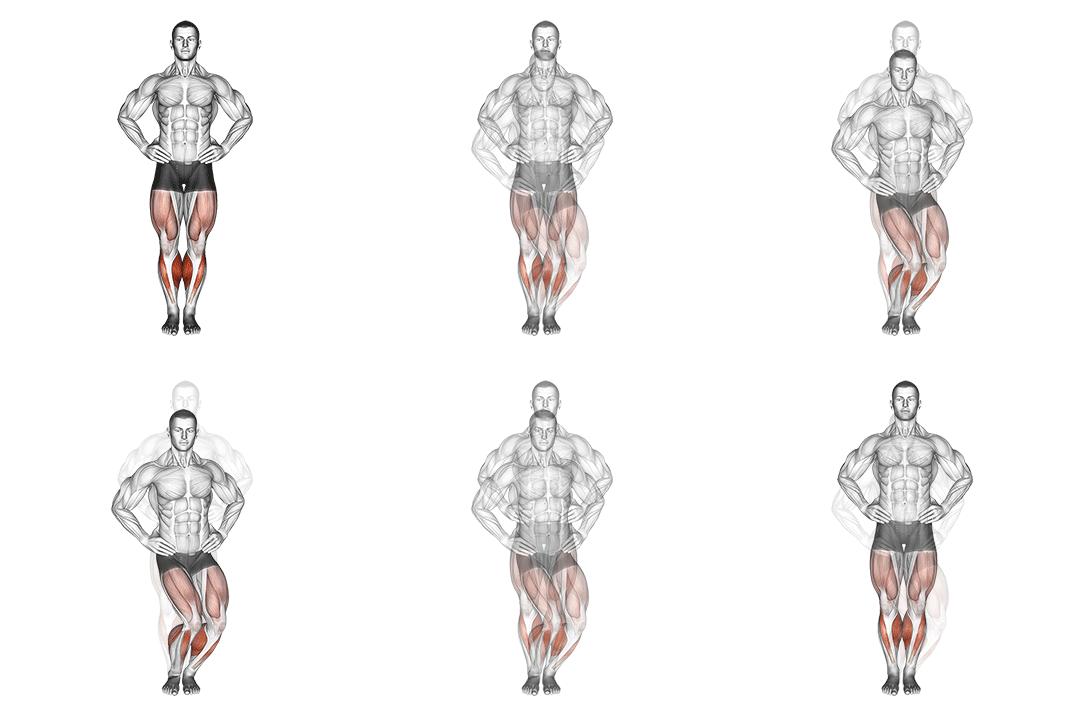
8. Circles Knee Stretch
70% MatchHow to perform this exercise
- Stand with your feet shoulder-width apart and your hands on your hips.
- Bend your knees slightly and lift your heels off the ground, balancing on the balls of your feet.
- Keeping your knees bent, rotate your knees in a circular motion, first clockwise and then counterclockwise.
- Perform the movement for the desired number of repetitions.
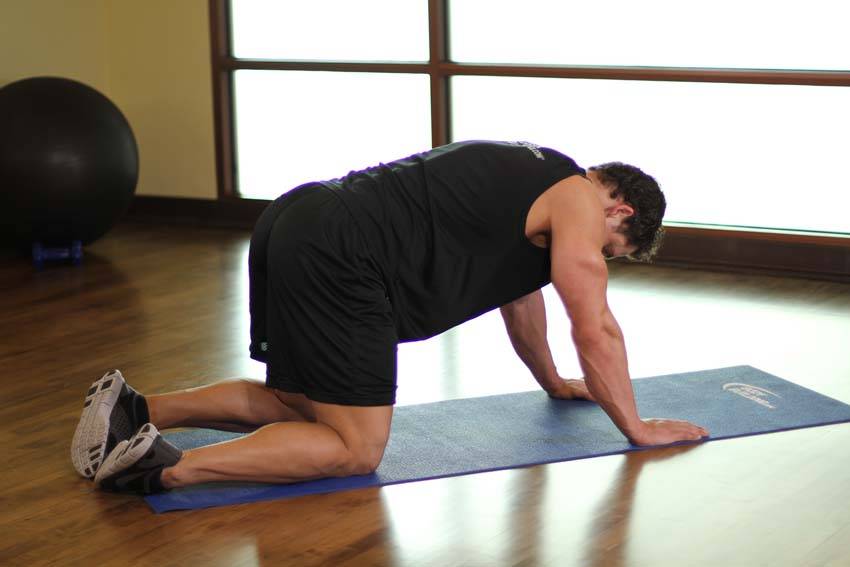
9. Cat Stretch
65.4% MatchHow to perform this exercise
- Position yourself on the floor on your hands and knees.
- Pull your belly in and round your spine, lower back, shoulders, and neck, letting your head drop.
- Hold for 15 seconds.
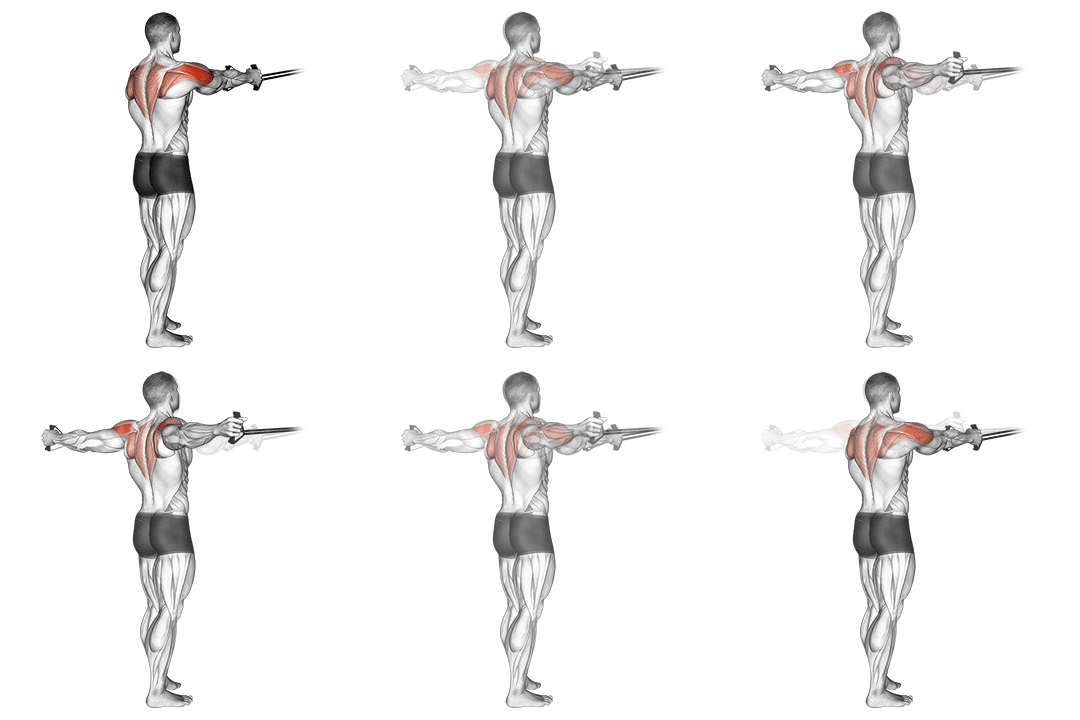
10. Band Reverse Fly
64.4% MatchHow to perform this exercise
- Attach the band to a stationary object at chest height.
- Stand with your feet shoulder-width apart and hold the band with both hands in front of you.
- Keep your arms straight and lift them out to the sides until they are parallel to the ground.
- Squeeze your shoulder blades together at the top of the movement.
- Slowly lower your arms back to the starting position.
Why You Might Need a Elbow Circles Alternative
You may substitute Elbow Circles because of anterior shoulder pain, poor rotator-cuff control, limited load progression, or a need for greater specificity. Elbow Circles use a low-load rotation pattern that stresses transverse mechanics; alternatives can shift the load to the frontal or sagittal plane or shorten range to reduce subacromial shear. For rehab pick isometric holds or small-range lateral raises with a 15–20 degree elbow bend to limit anterior translation and keep middle deltoid tension. For strength or size, swap to loaded lateral raises or single-arm cable raises that allow progressive overload while maintaining scapular upward rotation and rotator-cuff co-activation.
How to Choose the Right Substitute
Select a substitute by matching plane of motion, load capacity, and shoulder control. If you want middle-deltoid emphasis, choose frontal-plane lateral raises and cue "lead with the elbow" to increase middle deltoid activation; for posterior work use prone Y or T-raises with scapular retraction. Prioritize exercises that let you maintain neutral humeral rotation and scapular stabilization—stop if you feel anterior pinching. For rehab start with slow, 3–5 second eccentrics and isometrics at mid-range to reinforce rotator-cuff activation; progress by adding load, range, or unilateral variations once biomechanics stay clean.
Frequently Asked Questions
What muscles does Elbow Circles work?
Elbow Circles primarily target the deltoids—especially the anterior and lateral heads—while the rotator cuff (supraspinatus, infraspinatus, teres minor) stabilizes the humeral head. Cue small, controlled circular motions at the elbow to keep constant deltoid tension and minimize compensatory scapular movement.
What is the best bodyweight alternative to Elbow Circles?
A top bodyweight alternative is the prone Y-raise. Lie face down, thumbs-up, lift your arms 30–45 degrees off the floor while pinching the shoulder blades together to load posterior and lateral deltoids; keep a soft elbow to bias deltoid activation and avoid neck extension.
Can I build muscle without doing Elbow Circles?
Yes. You can hypertrophy the delts with progressive overload via compound presses (overhead press) and targeted isolations like weighted lateral raises. Emphasize increasing load or time under tension, cue "lead with the elbow," and monitor scapular mechanics to maximize middle deltoid recruitment.
More Exercise Alternatives
Find Alternatives for Any Exercise
Use our free tool to discover the best substitute exercises based on your available equipment and goals.
Try the Exercise Substitution Finder →