

10 Best Floor Glute-ham Raise Alternatives for Home or Gym
If you can’t perform the Floor Glute-ham Raise, use exercises that load knee flexion and hip extension: Nordic hamstring curl, Romanian deadlift (RDL), Swiss ball hamstring curl, slider hamstring curl, and reverse hyper. Focus on controlled eccentrics — e.g., for Nordic curls, anchor ankles and lower slowly for a 3–4 second descent to maximize hamstring activation.
Original Exercise: Floor Glute-ham Raise
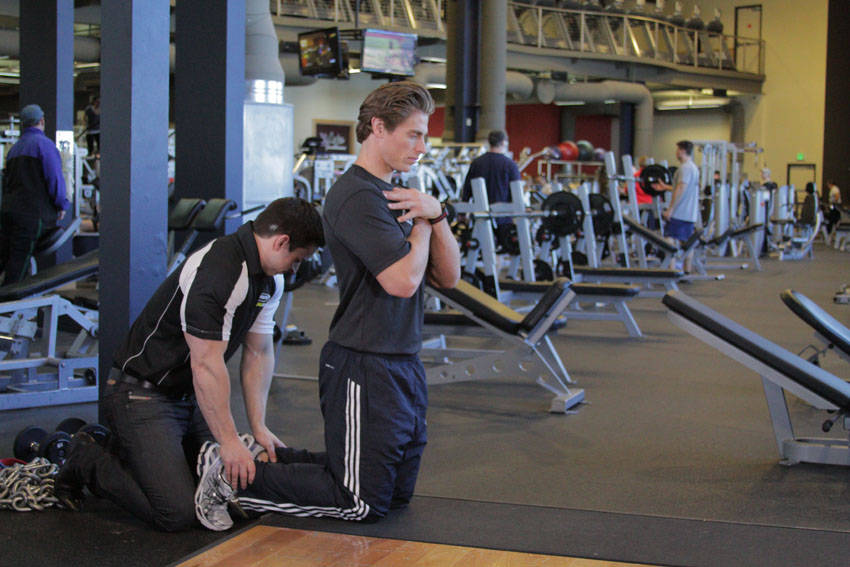
How to Perform Floor Glute-ham Raise
- You can use a partner for this exercise or brace your feet under something stable.
- Begin on your knees with your upper legs and torso upright. If using a partner, they will firmly hold your feet to keep you in position. This will be your starting position.
- Lower yourself by extending at the knee, taking care to NOT flex the hips as you go forward.
- Place your hands in front of you as you reach the floor. This movement is very difficult and you may be unable to do it unaided. Use your arms to lightly push off the floor to aid your return to the starting position.
Pro Tips
- Category: Strength
- Force: Pull
- Movement type: Isolation
Best Floor Glute-ham Raise Alternatives
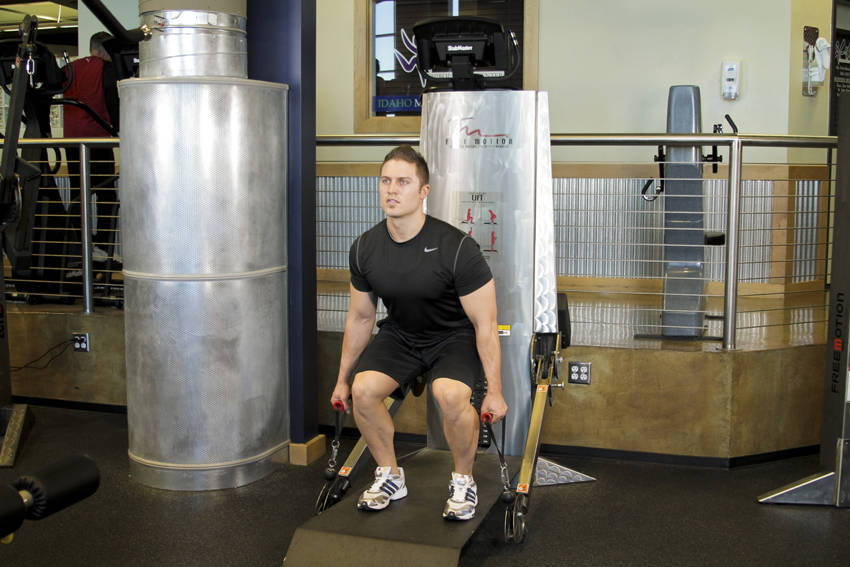
1. Cable Deadlifts
80.1% MatchHow to perform this exercise
- Move the cables to the bottom of the towers and select an appropriate weight. Stand directly in between the uprights.
- To begin, squat down be flexing your hips and knees until you can reach the handles.
- After grasping them, begin your ascent. Driving through your heels extend your hips and knees keeping your hands hanging at your side. Keep your head and chest up throughout the movement.
- After reaching a full standing position, Return to the starting position and repeat.
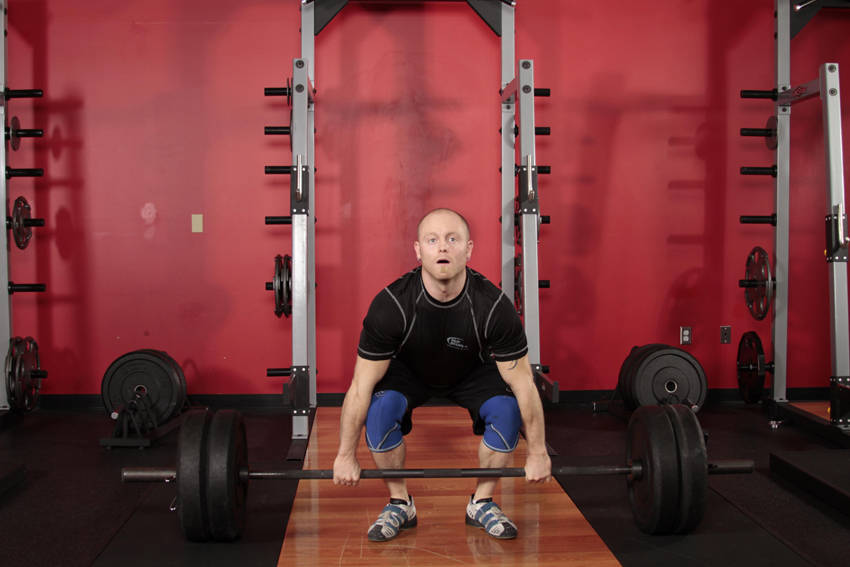
2. Clean Deadlift
77.4% MatchHow to perform this exercise
- Begin standing with a barbell close to your shins. Your feet should be directly under your hips with your feet turned out slightly. Grip the bar with a double overhand grip or hook grip, about shoulder width apart. Squat down to the bar. Your spine should be in full extension, with a back angle that places your shoulders in front of the bar and your back as vertical as possible.
- Begin by driving through the floor through the front of your heels. As the bar travels upward, maintain a constant back angle. Flare your knees out to the side to help keep them out of the bar's path.
- After the bar crosses the knees, complete the lift by driving the hips into the bar until your hips and knees are extended.
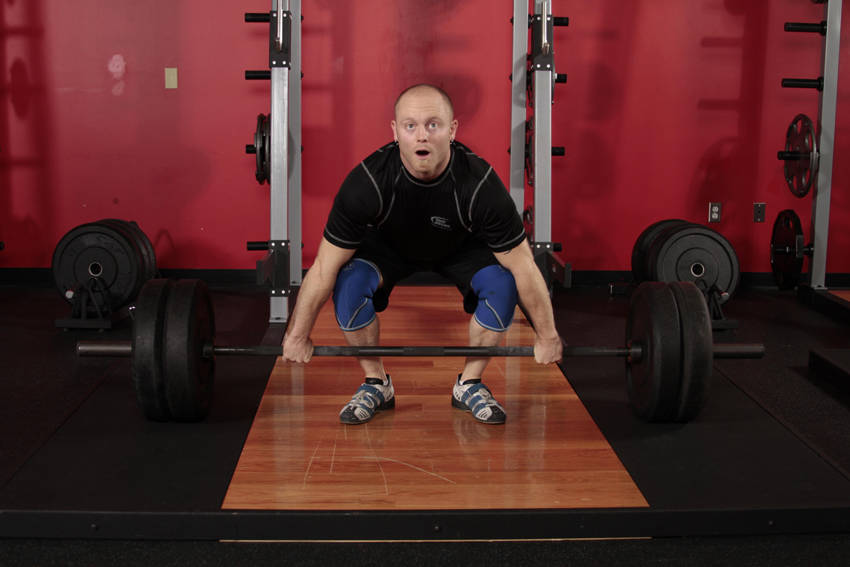
3. Clean
71.1% MatchHow to perform this exercise
- With a barbell on the floor close to the shins, take an overhand (or hook) grip just outside the legs. Lower your hips with the weight focused on the heels, back straight, head facing forward, chest up, with your shoulders just in front of the bar. This will be your starting position.
- Begin the first pull by driving through the heels, extending your knees. Your back angle should stay the same, and your arms should remain straight. Move the weight with control as you continue to above the knees.
- Next comes the second pull, the main source of acceleration for the clean. As the bar approaches the mid-thigh position, begin extending through the hips. In a jumping motion, accelerate by extending the hips, knees, and ankles, using speed to move the bar upward. There should be no need to actively pull through the arms to accelerate the weight; at the end of the second pull, the body should be fully extended, leaning slightly back, with the arms still extended.
- As full extension is achieved, transition into the third pull by aggressively shrugging and flexing the arms with the elbows up and out. At peak extension, aggressively pull yourself down, rotating your elbows under the bar as you do so. Receive the bar in a front squat position, the depth of which is dependent upon the height of the bar at the end of the third pull. The bar should be racked onto the protracted shoulders, lightly touching the throat with the hands relaxed. Continue to descend to the bottom squat position, which will help in the recovery.
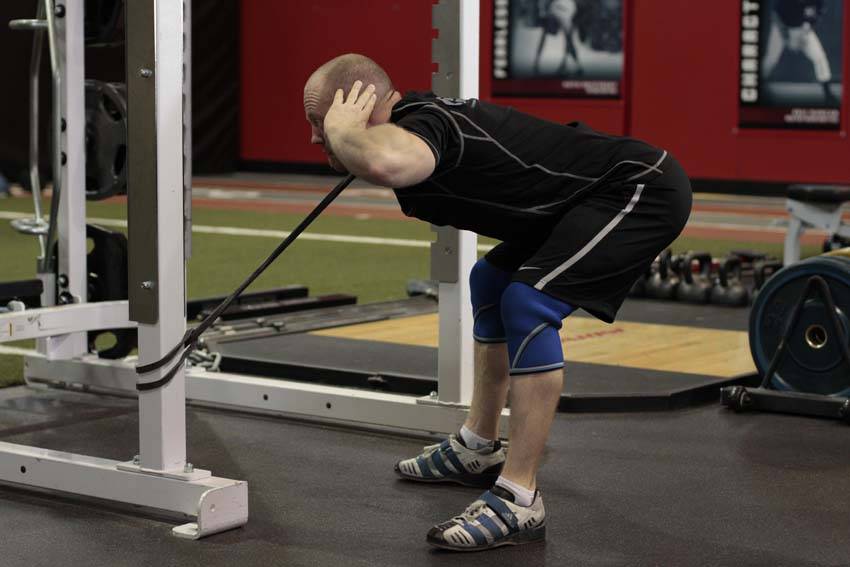
4. Band Good Morning (Pull Through)
70.9% MatchHow to perform this exercise
- Loop the band around a post. Standing a little ways away, loop the opposite end around the neck. Your hands can help hold the band in position.
- Begin by bending at the hips, getting your butt back as far as possible. Keep your back flat and bend forward to about 90 degrees. Your knees should be only slightly bent.
- Return to the starting position be driving through with the hips to come back to a standing position.
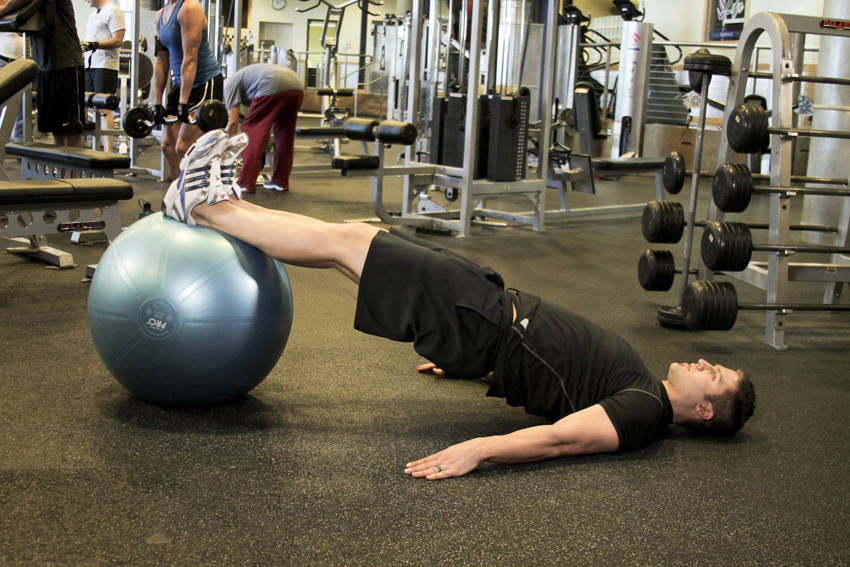
5. Ball Leg Curl
69.1% MatchHow to perform this exercise
- Begin on the floor laying on your back with your feet on top of the ball.
- Position the ball so that when your legs are extended your ankles are on top of the ball. This will be your starting position.
- Raise your hips off of the ground, keeping your weight on the shoulder blades and your feet.
- Flex the knees, pulling the ball as close to you as you can, contracting the hamstrings.
- After a brief pause, return to the starting position.
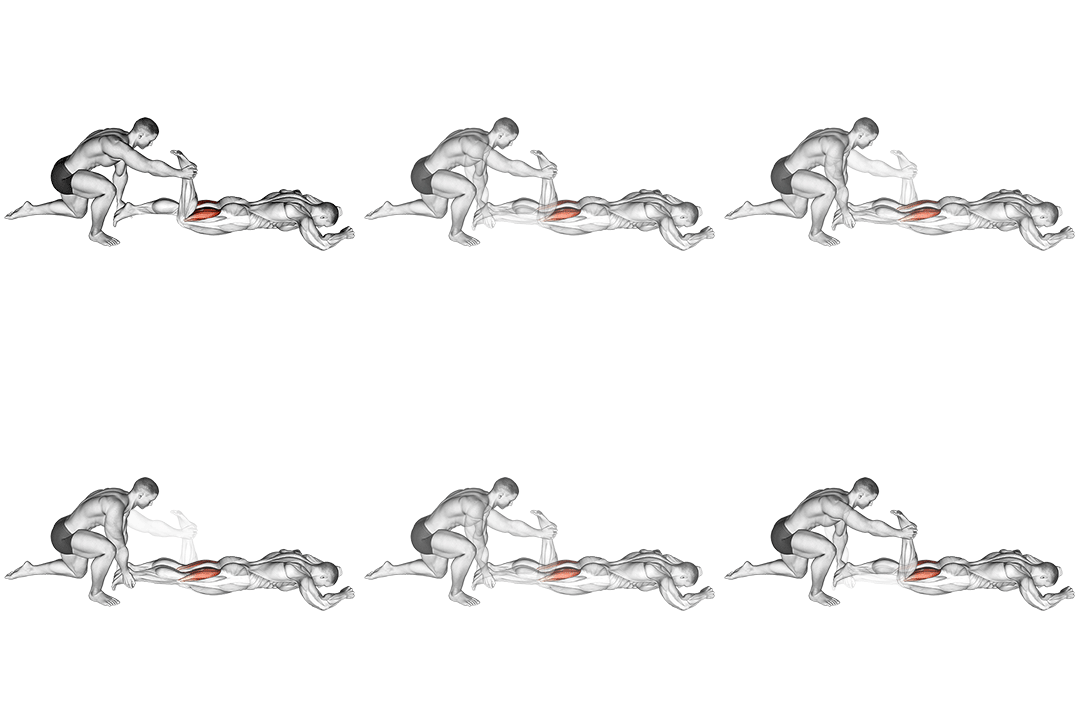
6. Assisted Prone Hamstring
68.4% MatchHow to perform this exercise
- Lie face down on a mat or bench with your legs fully extended.
- Have a partner or use a resistance band to secure your ankles.
- Engage your hamstrings and lift your legs towards your glutes, keeping your knees straight.
- Pause for a moment at the top, then slowly lower your legs back down to the starting position.
- Repeat for the desired number of repetitions.
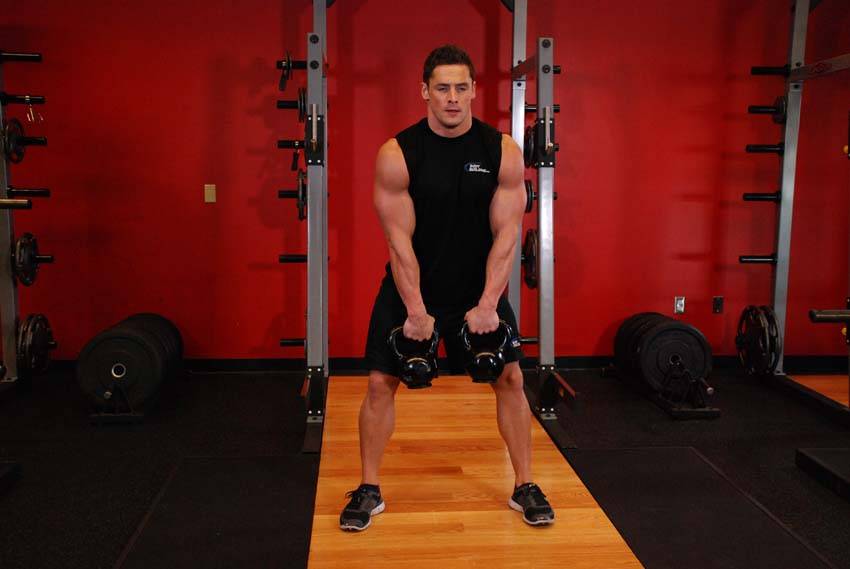
7. Double Kettlebell Alternating Hang Clean
67.1% MatchHow to perform this exercise
- Place two kettlebells between your feet. To get in the starting position, push your butt back and look straight ahead.
- Clean one kettlebell to your shoulder and hold on to the other kettlebell.
- With a fluid motion, lower the top kettlebell while driving the bottom kettlebell up.
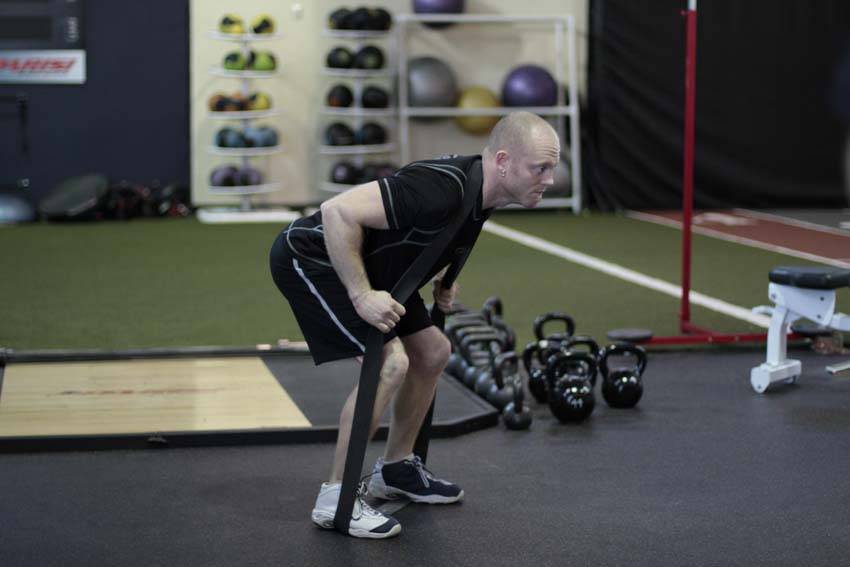
8. Band Good Morning
65.6% MatchHow to perform this exercise
- Using a 41 inch band, stand on one end, spreading your feet a small amount. Bend at the hips to loop the end of the band behind your neck. This will be your starting position.
- Keeping your legs straight, extend through the hips to come to a near vertical position.
- Ensure that you do not round your back as you go down back to the starting position.
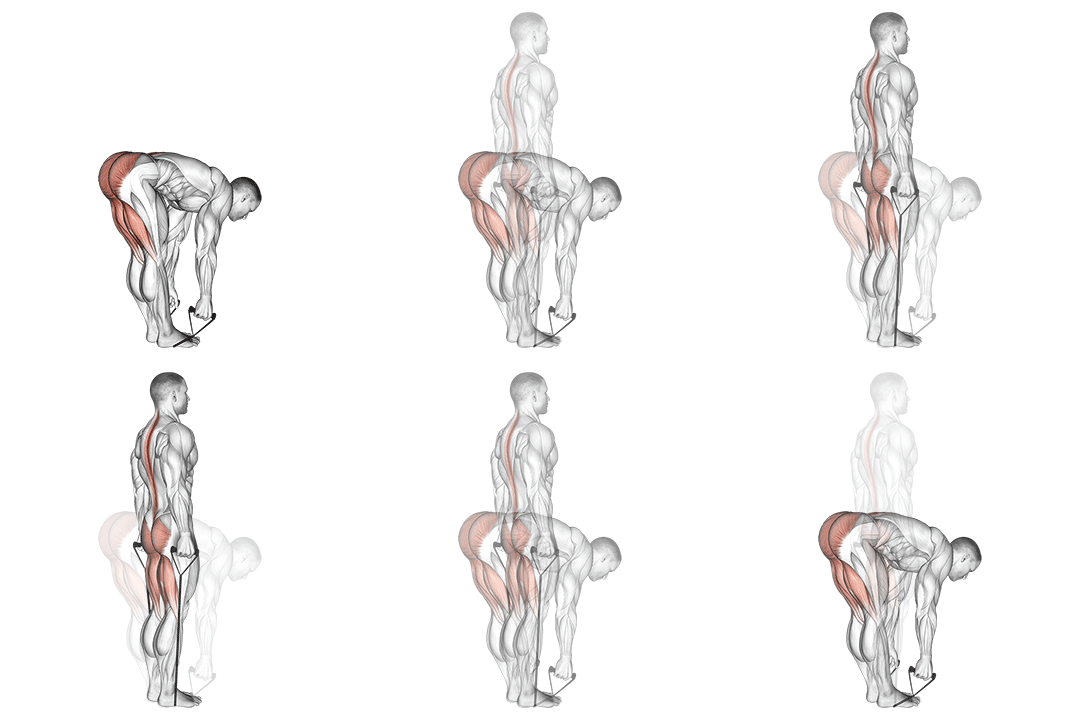
9. Band Straight Leg Deadlift
63.4% MatchHow to perform this exercise
- Stand with your feet shoulder-width apart and place the band around your feet.
- Hold the band with both hands, palms facing your body, and keep your arms straight.
- Engage your core and maintain a slight bend in your knees.
- Slowly hinge forward at your hips, keeping your back straight and chest lifted.
- Lower the band towards the ground while keeping your legs straight.
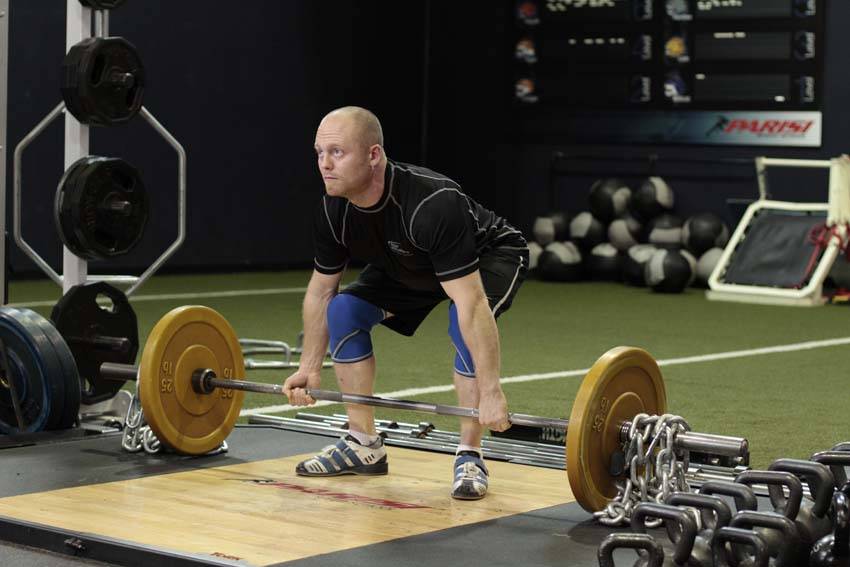
10. Deadlift With Chains
62.2% MatchHow to perform this exercise
- You can attach the chains to the sleeves of the bar, or just drape the middle over the bar so there is a greater weight increase as you lift.
- Approach the bar so that it is centered over your feet. You feet should be about hip width apart. Bend at the hip to grip the bar at shoulder width, allowing your shoulder blades to protract. Typically, you would use an overhand grip or an over/under grip on heavier sets. With your feet, and your grip set, take a big breath and then lower your hips and bend the knees until your shins contact the bar.
- Look forward with your head, keep your chest up and your back arched, and begin driving through the heels to move the weight upward. After the bar passes the knees, aggressively pull the bar back, pulling your shoulder blades together as you drive your hips forward into the bar.
- Lower the bar by bending at the hips and guiding it to the floor.
Why You Might Need a Floor Glute-ham Raise Alternative
You may substitute the Floor Glute-ham Raise for several reasons: no access to a glute-ham machine, rehab restrictions, or a need for different loading patterns. Alternatives let you emphasize eccentric control (Nordic curl), hip-dominant strength (RDL), or isolation (Swiss ball curl). Choose an option that preserves neutral spine and allows progressive overload; for example, perform RDLs with a hip hinge cue — push hips back and keep a soft knee — to preferentially recruit the hamstring long head and glute max.
How to Choose the Right Substitute
Match the substitute to the movement pattern you need. If you want knee-flexion emphasis choose Nordic or slider curls; if you want hip-extension strength pick RDLs or reverse hypers. Consider equipment, required range of motion, and whether you need unilateral work for imbalances. Use objective cues: maintain a neutral spine, hinge at the hips, and control the eccentric 2–4 seconds. Prioritize exercises that allow progressive loading and preserve hamstring length-tension by not letting the lumbar curve.
Frequently Asked Questions
What muscles does Floor Glute-ham Raise work?
The exercise primarily targets the hamstrings (biceps femoris, semitendinosus, semimembranosus) for knee flexion and the gluteus maximus for hip extension, with secondary activation of the spinal erectors and adductors. Cue yourself to drive the hips into extension and control the knee bend to maximize posterior chain activation.
What is the best bodyweight alternative to Floor Glute-ham Raise?
The Nordic hamstring curl is the best bodyweight alternative: anchor the ankles, keep a braced trunk, and lower with a slow eccentric for 3–4 seconds before catching yourself with the hands. That eccentric demand closely replicates the hamstring loading profile of the GHR and drives high hamstring activation.
Can I build muscle without doing Floor Glute-ham Raise?
Yes. You can hypertrophy hamstrings using RDLs, Nordic curls, Swiss ball or slider curls, and reverse hypers by applying progressive overload. Use slow eccentrics, increase loading or volume, and emphasize full hip hinge or controlled knee flexion to stress the hamstrings effectively.
More Exercise Alternatives
Find Alternatives for Any Exercise
Use our free tool to discover the best substitute exercises based on your available equipment and goals.
Try the Exercise Substitution Finder →