

10 Best Full Maltese Alternatives for Core Strength
If you can't perform the Full Maltese, use dragon flags, hanging leg raises, front lever progressions, ab wheel rollouts, or hollow body holds to target the same abs and waist control. Brace your core, maintain a posterior pelvic tilt, and keep ribs down on each rep to simulate the Maltese's long-lever demand.
Original Exercise: Full Maltese
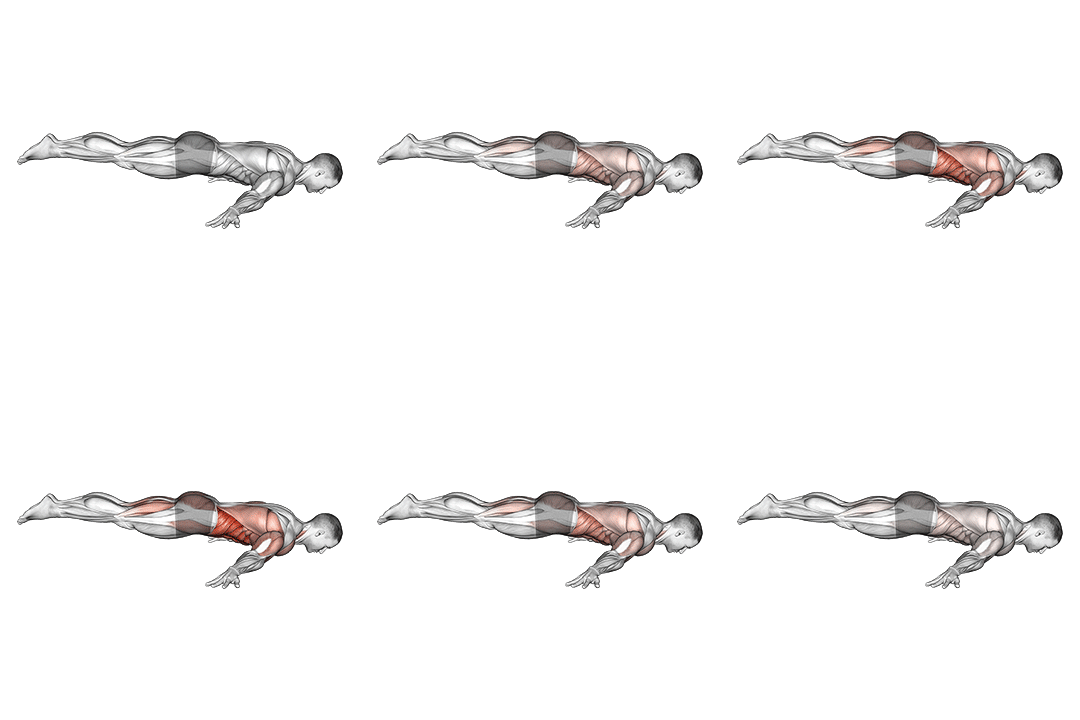
How to Perform Full Maltese
- Start by standing with your feet shoulder-width apart and your arms extended straight out to the sides.
- Slowly lean forward, keeping your arms straight, until your upper body is parallel to the ground.
- Engage your core and hold this position for a few seconds.
- Return to the starting position by pushing through your feet and standing back up.
- Repeat for the desired number of repetitions.
Best Full Maltese Alternatives
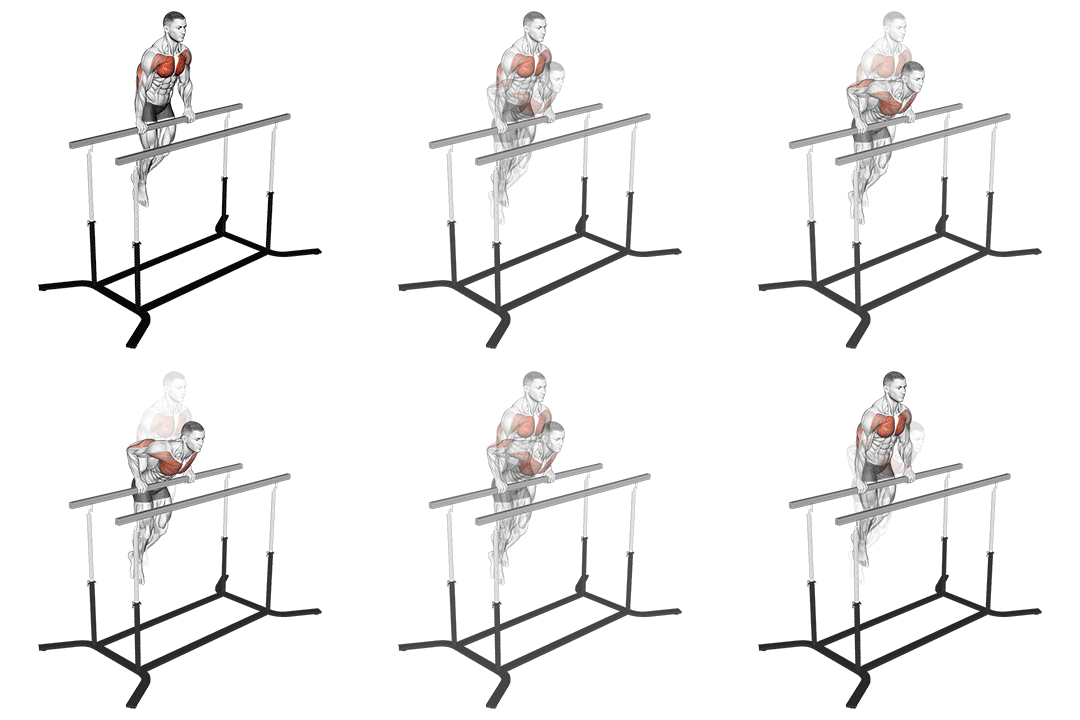
1. Chest Dip On Straight Bar
66.7% MatchHow to perform this exercise
- Grab the parallel bars with your palms facing down and your arms fully extended.
- Bend your knees and cross your ankles.
- Lower your body by bending your arms until your shoulders are below your elbows.
- Push yourself back up to the starting position by straightening your arms.
- Repeat for the desired number of repetitions.
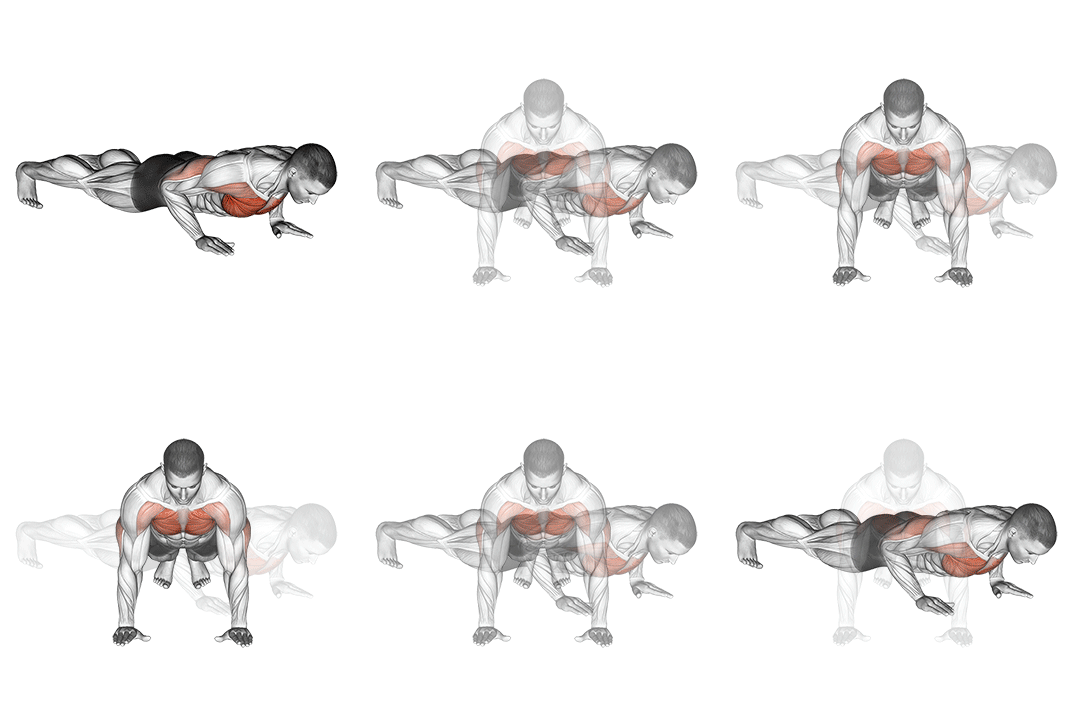
2. Clock Push-up
63.7% MatchHow to perform this exercise
- Start in a high plank position with your hands directly under your shoulders and your body in a straight line.
- Lower your body towards the ground by bending your elbows, keeping them close to your sides.
- As you lower, rotate your body to the left, extending your left arm straight out to the side.
- Push back up to the starting position, while rotating your body to the center.
- Repeat the push-up, this time rotating your body to the right and extending your right arm out to the side.
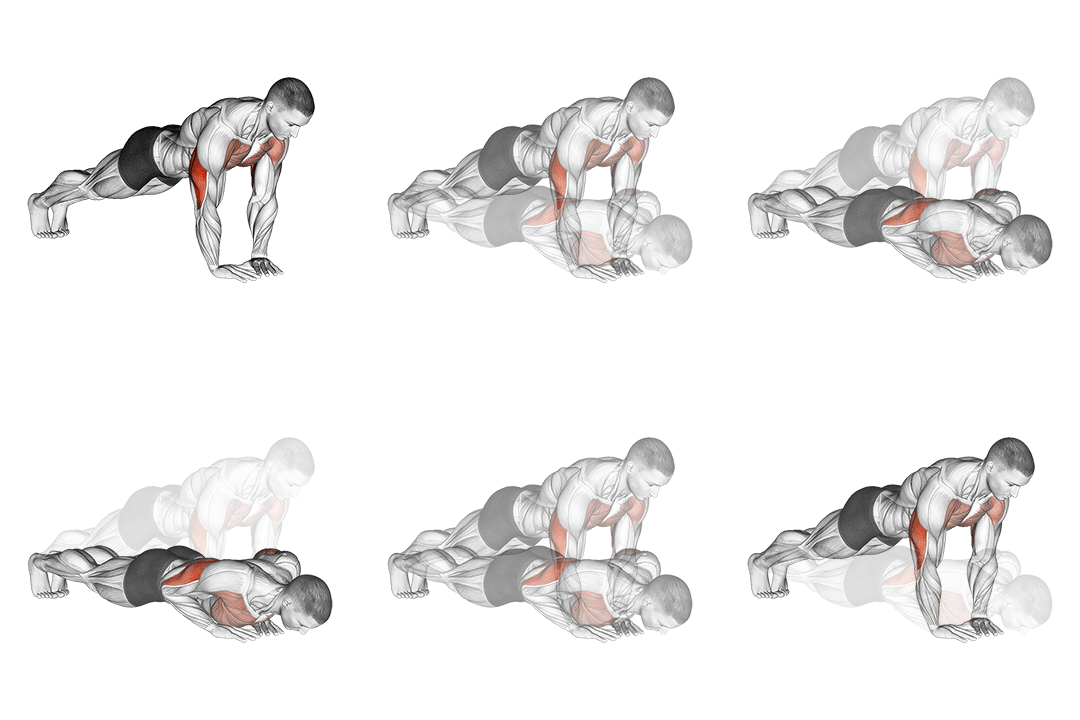
3. Diamond Push-up
63.1% MatchHow to perform this exercise
- Start in a high plank position with your hands close together, forming a diamond shape with your thumbs and index fingers.
- Keep your body in a straight line from head to toe, engaging your core and glutes.
- Lower your chest towards the diamond shape formed by your hands, keeping your elbows close to your body.
- Pause for a moment at the bottom, then push yourself back up to the starting position.
- Repeat for the desired number of repetitions.
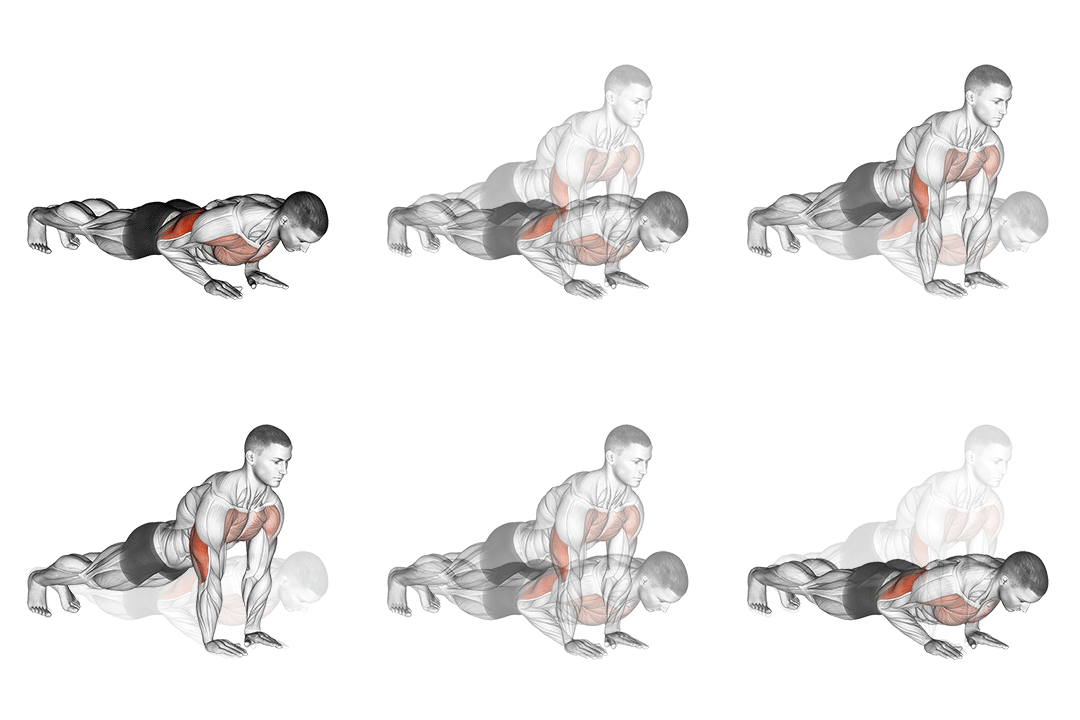
4. Close-grip Push-up
62.6% MatchHow to perform this exercise
- Start in a high plank position with your hands placed close together, directly under your shoulders.
- Engage your core and lower your body towards the ground, keeping your elbows close to your sides.
- Push through your palms to extend your arms and return to the starting position.
- Repeat for the desired number of repetitions.
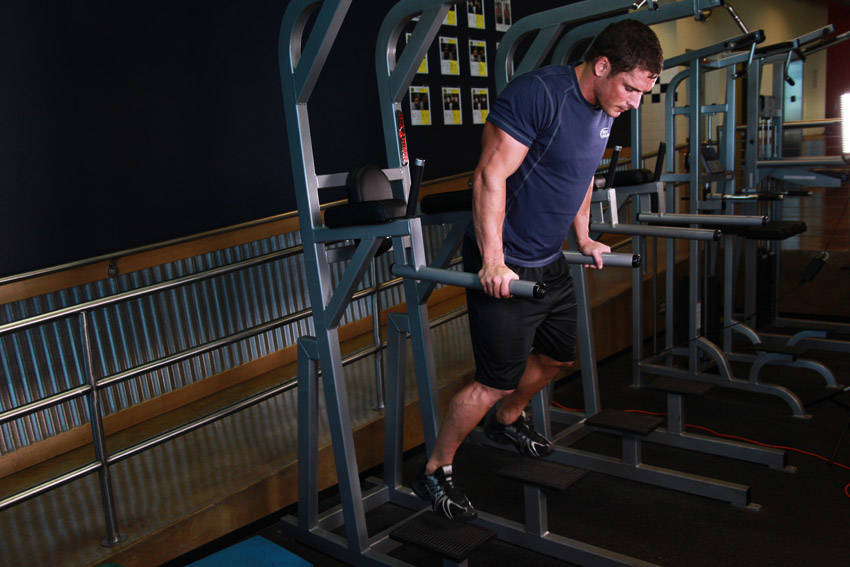
5. Dips - Chest Version
61.4% MatchHow to perform this exercise
- For this exercise you will need access to parallel bars. To get yourself into the starting position, hold your body at arms length (arms locked) above the bars.
- While breathing in, lower yourself slowly with your torso leaning forward around 30 degrees or so and your elbows flared out slightly until you feel a slight stretch in the chest.
- Once you feel the stretch, use your chest to bring your body back to the starting position as you breathe out. Tip: Remember to squeeze the chest at the top of the movement for a second.
- Repeat the movement for the prescribed amount of repetitions.
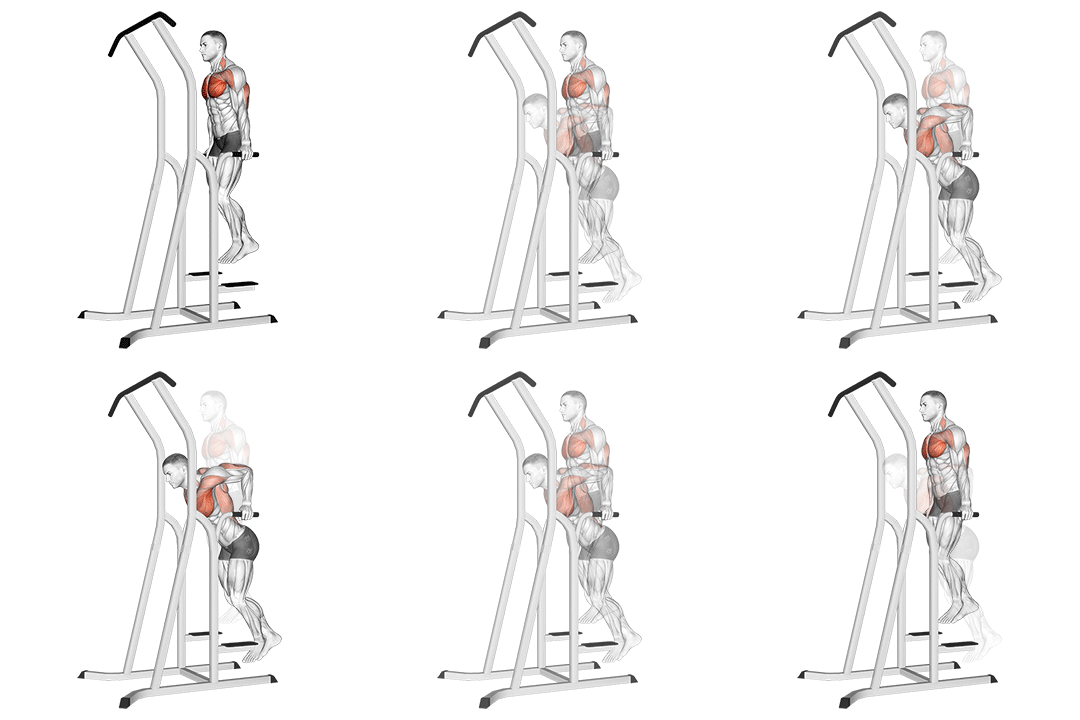
6. Chest Dip (on Dip-pull-up Cage)
61.4% MatchHow to perform this exercise
- Adjust the dip bars to a height that allows you to comfortably grip them.
- Stand between the bars and place your hands on each bar, slightly wider than shoulder-width apart.
- Jump up and straighten your arms, supporting your body weight on the bars.
- Bend your knees and cross your ankles behind you.
- Lower your body by bending your elbows, keeping your chest up and your shoulders down.
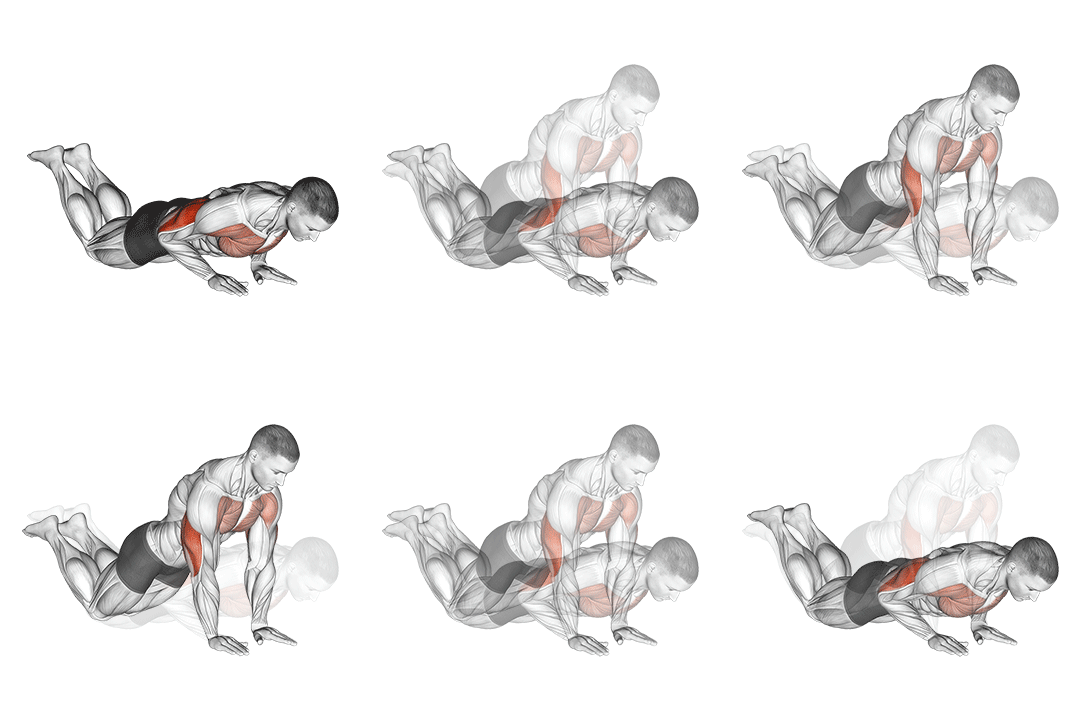
7. Close-grip Push-up (on Knees)
61.2% MatchHow to perform this exercise
- Start by getting on your hands and knees, with your hands shoulder-width apart and your knees hip-width apart.
- Lower your upper body towards the ground by bending your elbows, keeping them close to your sides.
- Pause for a moment when your chest is just above the ground.
- Push through your palms to straighten your arms and return to the starting position.
- Repeat for the desired number of repetitions.
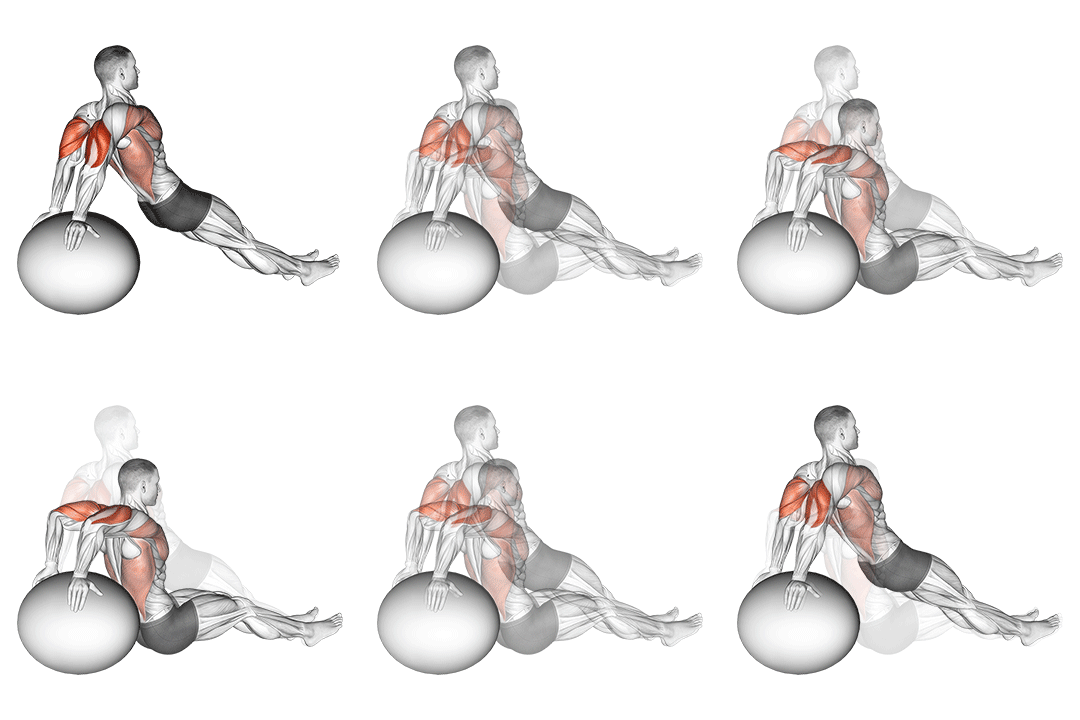
8. Exercise Ball Dip
61% MatchHow to perform this exercise
- Sit on the stability ball with your feet flat on the ground and your knees bent at a 90-degree angle.
- Place your hands on the ball beside your hips, fingers pointing forward.
- Engage your triceps and push through your hands to lift your body off the ball, straightening your arms.
- Lower your body back down by bending your elbows, keeping them close to your sides.
- Repeat for the desired number of repetitions.
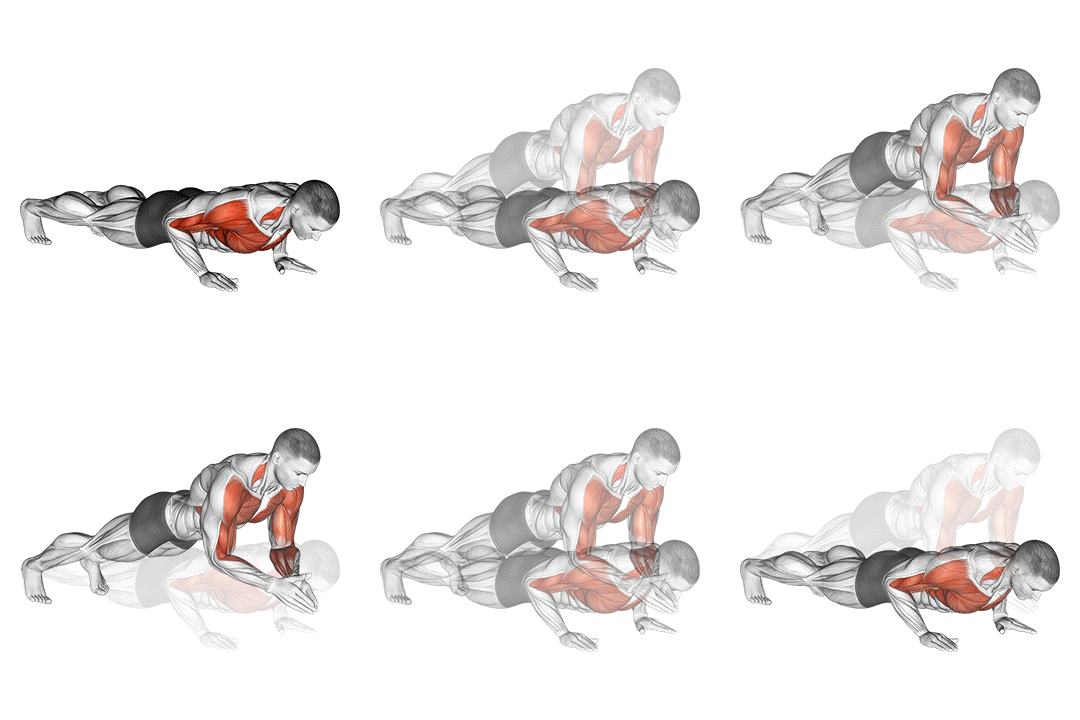
9. Clap Push Up
60% MatchHow to perform this exercise
- Start in a high plank position with your hands slightly wider than shoulder-width apart.
- Lower your body towards the ground by bending your elbows, keeping your core engaged.
- Push through your palms explosively to propel your body off the ground.
- While in mid-air, clap your hands together before landing back in the starting position.
- Repeat for the desired number of repetitions.
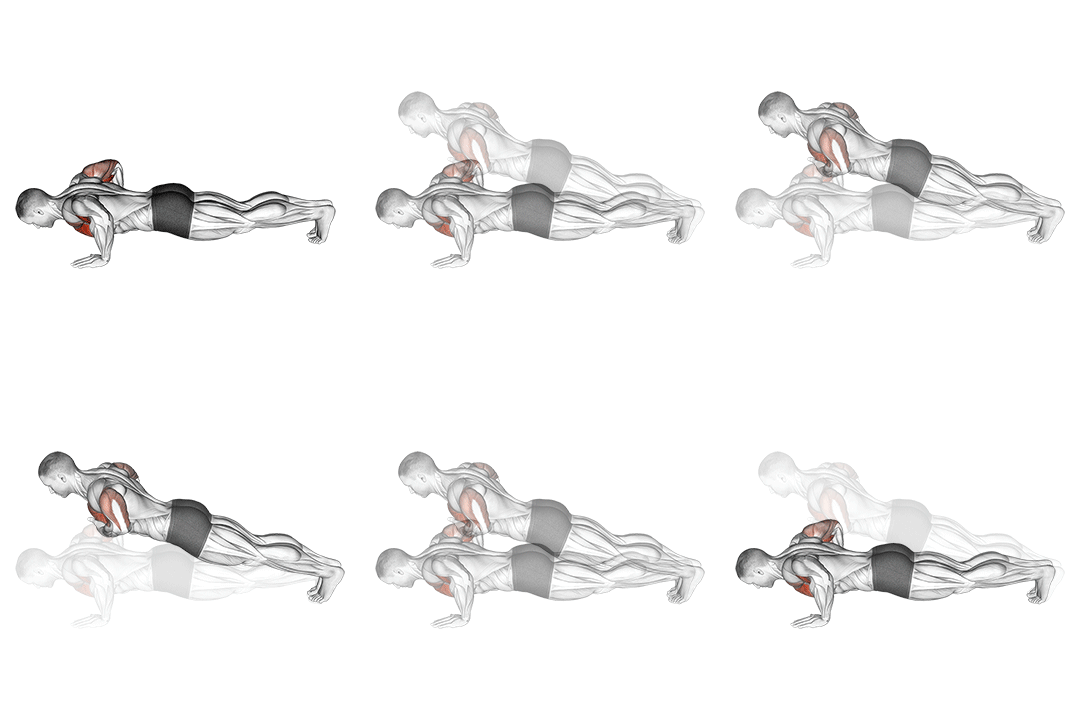
10. Chest Tap Push-up (male)
59.4% MatchHow to perform this exercise
- Start in a high plank position with your hands slightly wider than shoulder-width apart and your body in a straight line.
- Lower your body towards the ground by bending your elbows, keeping them close to your sides.
- As you lower yourself, tap your chest with your right hand.
- Push yourself back up to the starting position.
- Repeat the movement, this time tapping your chest with your left hand.
Why You Might Need a Full Maltese Alternative
You might substitute the Full Maltese for shoulder pain, limited ring access, or insufficient strength and coordination. The Maltese demands extreme shoulder horizontal adduction and full-body tension; alternatives let you isolate the anti-extension and anti-rotation challenge without maximal shoulder loading. Choose movements that recreate the long-lever torque on the rectus abdominis and obliques while allowing easier progressions—use shorter lever lengths or bent-knee regressions, keep the transverse abdominis braced, and emphasize controlled eccentric phases to build the same core stiffness safely.
How to Choose the Right Substitute
Pick a substitute based on the primary biomechanical demand you need: anti-extension (ab wheel, hollow body), long-lever core strength (dragon flag, front lever), or vertical hip flexion and anti-rotation (hanging leg raises). Consider your shoulder and scapular tolerance, grip endurance, and current lever length capacity. Start with a regressed cue—tuck hips, shorten lever, and exhale on the hard phase—then increase lever length or tempo. Prioritize exercises that load the rectus abdominis and obliques under tension while letting you maintain a neutral spine and posterior pelvic tilt.
Frequently Asked Questions
What muscles does Full Maltese work?
The Full Maltese heavily taxes the rectus abdominis, obliques, and deep core stabilizers for anti-extension, plus shoulder horizontal adductors and lats for support. Maintain posterior pelvic tilt and TVA bracing to maximize abdominal torque during the hold.
What is the best bodyweight alternative to Full Maltese?
The dragon flag is the closest bodyweight substitute for long-lever anti-extension, engaging the rectus abdominis and obliques under high load. Cue a tight hollow shape, control the descent, and stop short of lumbar collapse to progress safely.
Can I build muscle without doing Full Maltese?
Yes. You can hypertrophy and strengthen the same abdominal and waist muscles with progressions like weighted hanging leg raises, ab wheel rollouts, and front lever progressions. Focus on increasing time under tension, controlled eccentrics, and progressive lever length while maintaining braced core mechanics.
More Exercise Alternatives
Find Alternatives for Any Exercise
Use our free tool to discover the best substitute exercises based on your available equipment and goals.
Try the Exercise Substitution Finder →