

10 Best Incline Leg Hip Raise (leg Straight) Alternatives for Limited Equipment
If you can’t perform the incline straight-leg hip raise, use other straight-leg or knee-bent hip-raise variations that stress the lower rectus abdominis. Try hanging straight-leg raises or floor leg raises, cueing a posterior pelvic tilt and controlled lumbar flattening to limit hip-flexor dominance while you lift.
Original Exercise: Incline Leg Hip Raise (leg Straight)
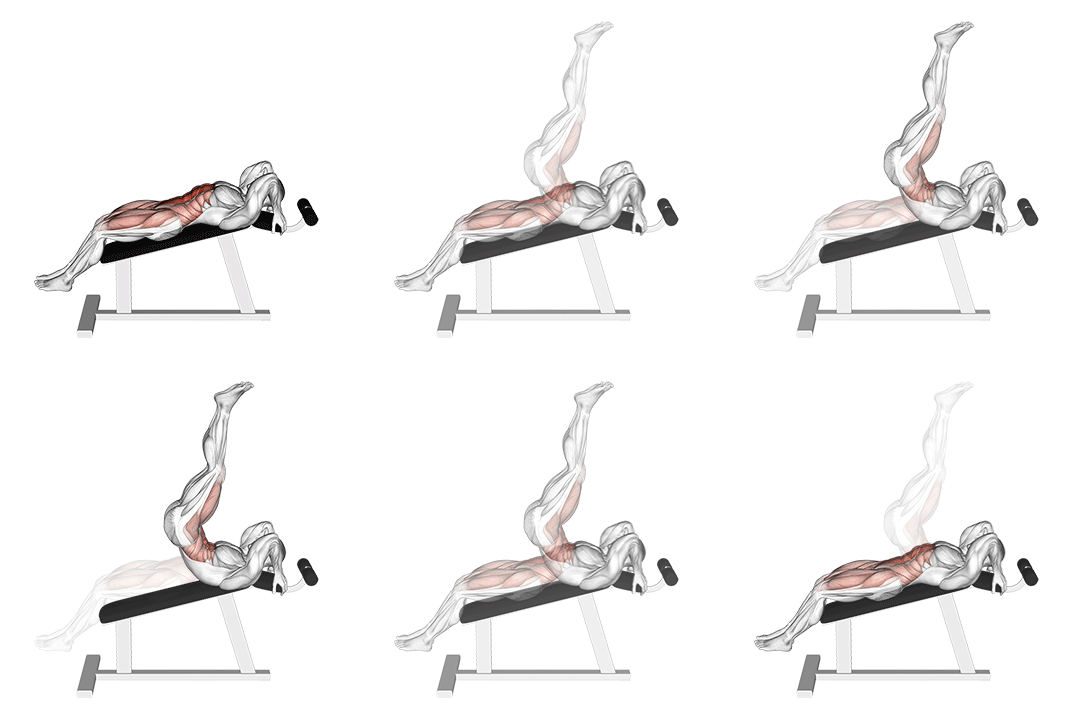
How to Perform Incline Leg Hip Raise (leg Straight)
- Lie on an incline bench with your back flat against the bench and your legs extended straight out in front of you.
- Place your hands on the sides of the bench for support.
- Engaging your abs, lift your legs off the bench, raising them as high as you can while keeping them straight.
- Pause for a moment at the top, then slowly lower your legs back down to the starting position.
- Repeat for the desired number of repetitions.
Best Incline Leg Hip Raise (leg Straight) Alternatives
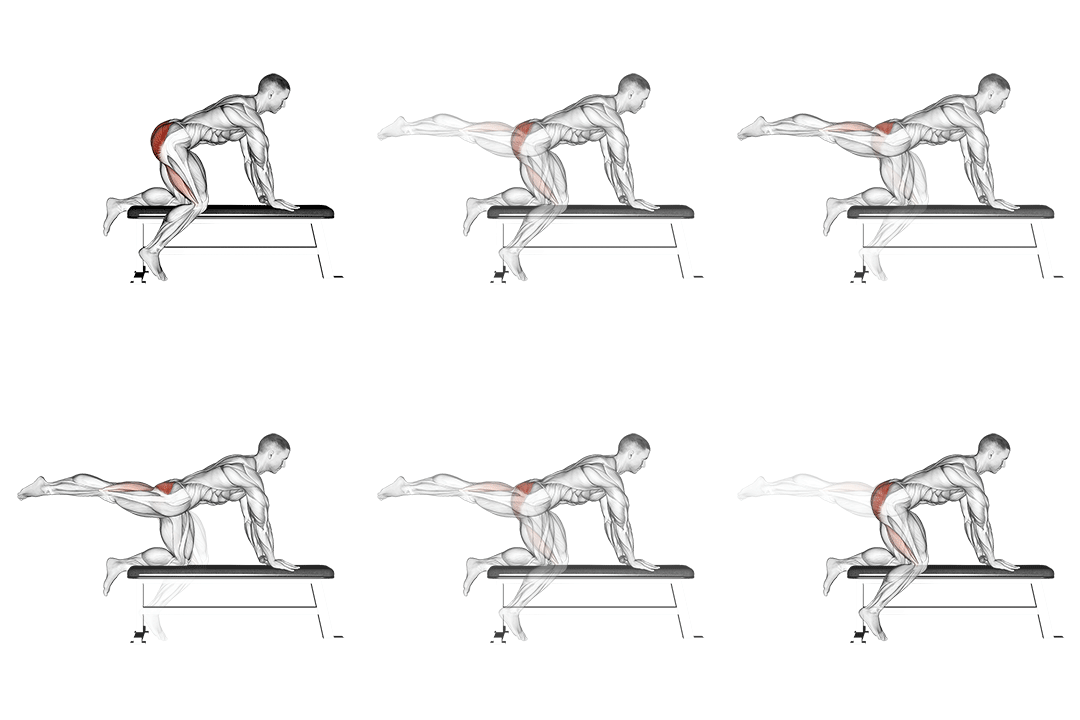
1. Bench Hip Extension
78.7% MatchHow to perform this exercise
- Sit on a bench with your back against the bench and your feet flat on the ground.
- Place your hands on the bench for support.
- Engage your glutes and hamstrings, then lift your hips off the bench until your body forms a straight line from your knees to your shoulders.
- Pause for a moment at the top, then slowly lower your hips back down to the starting position.
- Repeat for the desired number of repetitions.
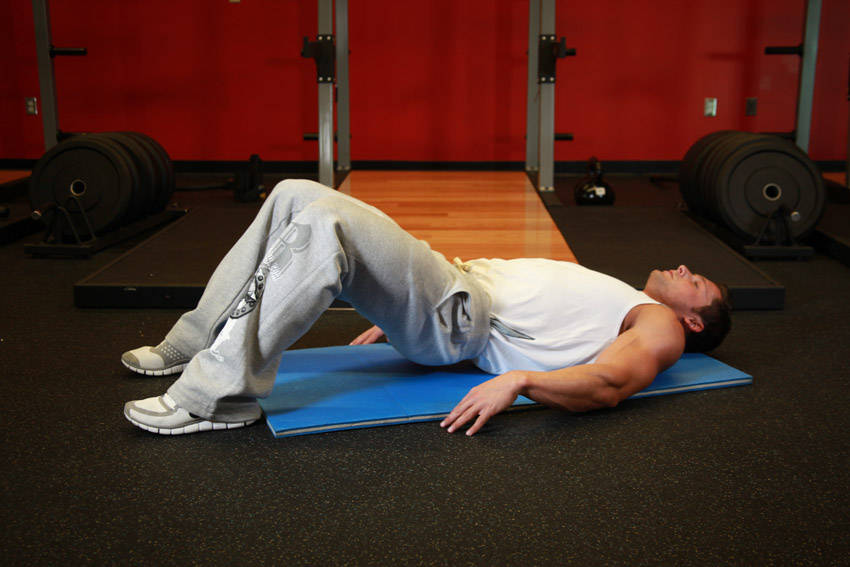
2. Butt Lift (Bridge)
78.7% MatchHow to perform this exercise
- Lie flat on the floor on your back with the hands by your side and your knees bent. Your feet should be placed around shoulder width. This will be your starting position.
- Pushing mainly with your heels, lift your hips off the floor while keeping your back straight. Breathe out as you perform this part of the motion and hold at the top for a second.
- Slowly go back to the starting position as you breathe in.
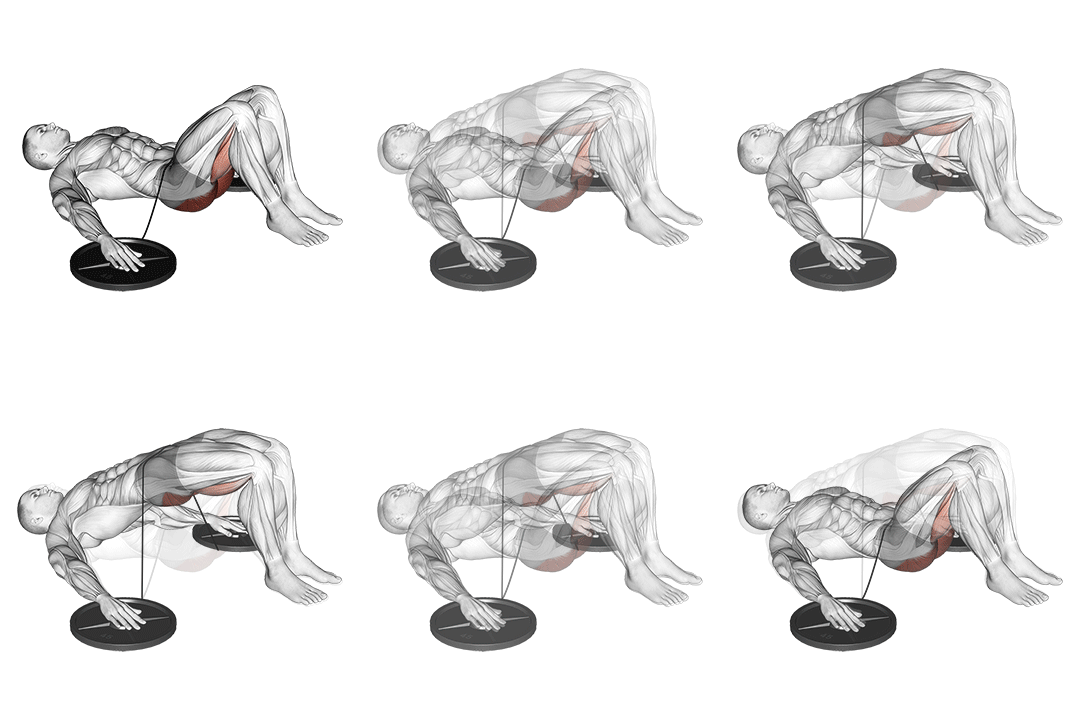
3. Band Hip Lift
66% MatchHow to perform this exercise
- Lie on your back with your knees bent and feet flat on the ground.
- Place a resistance band just above your knees.
- Engage your glutes and core muscles.
- Press your heels into the ground and lift your hips off the floor, squeezing your glutes at the top.
- Pause for a moment at the top, then slowly lower your hips back down to the starting position.
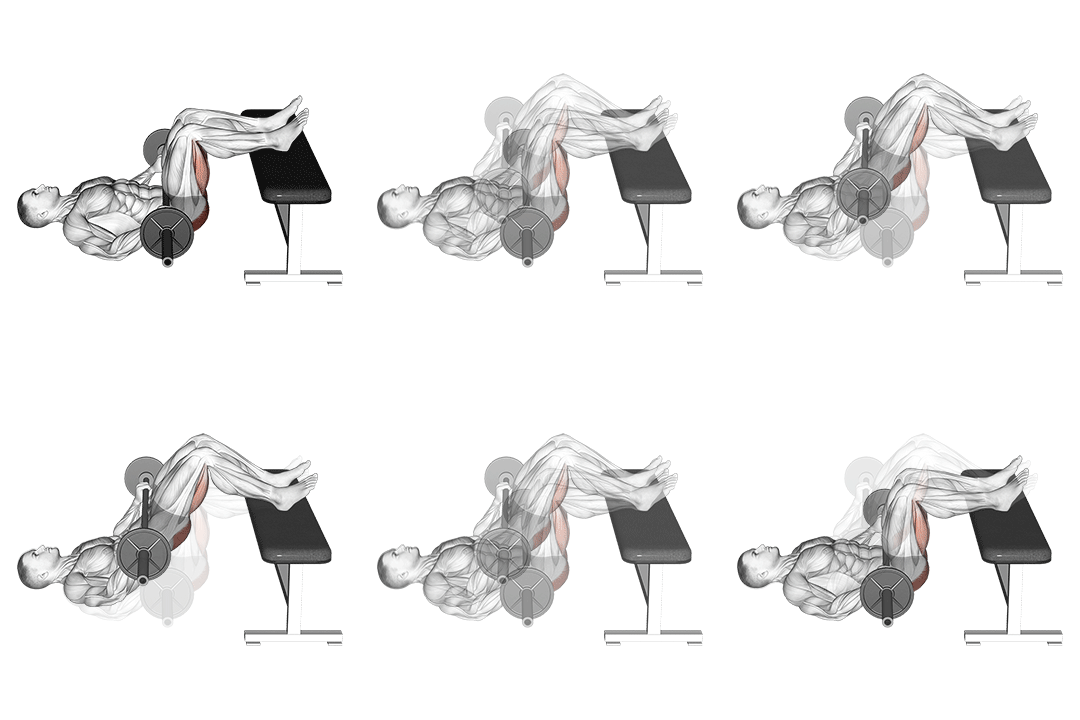
4. Barbell Glute Bridge Two Legs On Bench (male)
64.7% MatchHow to perform this exercise
- Start by sitting on the edge of a bench with your upper back resting against it and your feet flat on the ground, hip-width apart.
- Place a barbell across your hips, holding it securely with both hands.
- Engage your glutes and core muscles, then press through your heels to lift your hips off the bench, creating a straight line from your knees to your shoulders.
- Pause for a moment at the top, squeezing your glutes.
- Slowly lower your hips back down to the starting position.
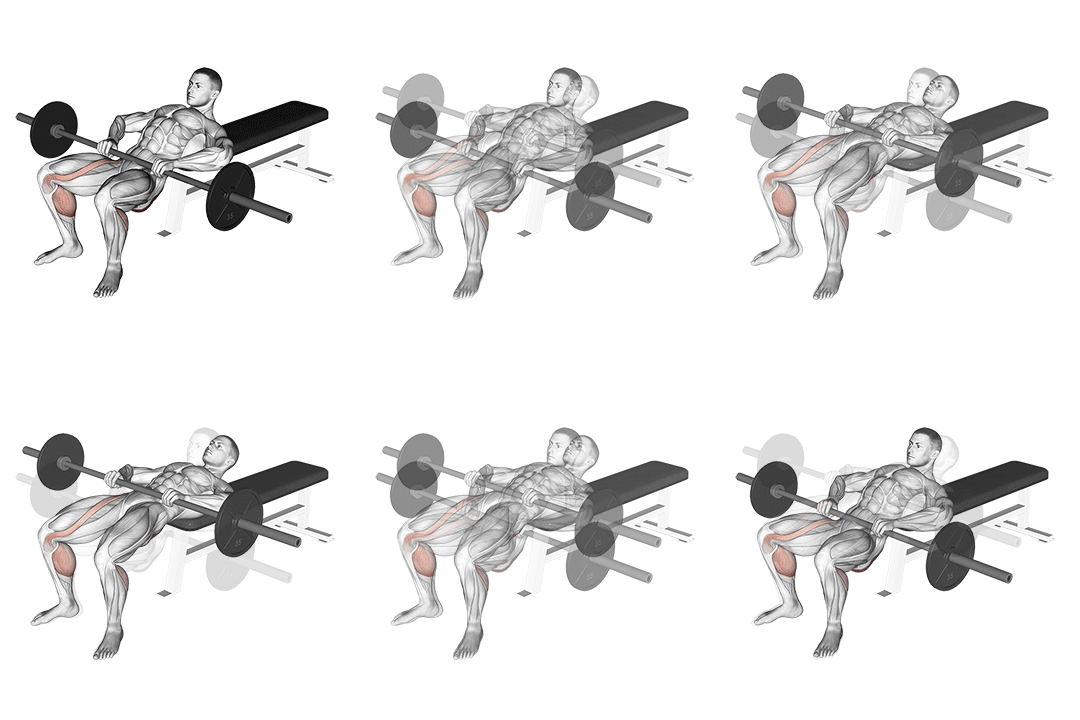
5. Barbell Lying Lifting (on Hip)
64.7% MatchHow to perform this exercise
- Lie flat on your back on a bench with your feet flat on the ground and your knees bent.
- Hold the barbell with an overhand grip and position it on your hips.
- Engaging your glutes, lift your hips off the bench until your body forms a straight line from your knees to your shoulders.
- Pause for a moment at the top, then slowly lower your hips back down to the starting position.
- Repeat for the desired number of repetitions.
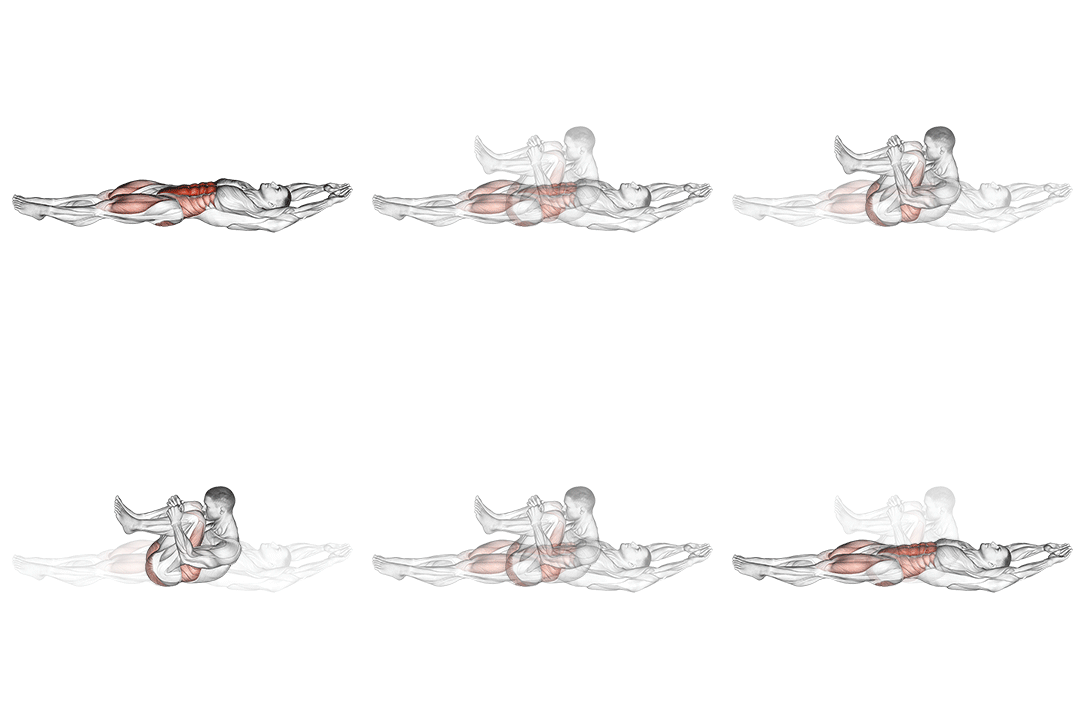
6. Cocoons
64.2% MatchHow to perform this exercise
- Lie flat on your back with your knees bent and feet flat on the ground.
- Place your hands behind your head with your elbows pointing outwards.
- Engaging your abs, slowly lift your upper body off the ground, curling forward until your torso is at a 45-degree angle.
- Pause for a moment at the top, then slowly lower your upper body back down to the starting position.
- Repeat for the desired number of repetitions.
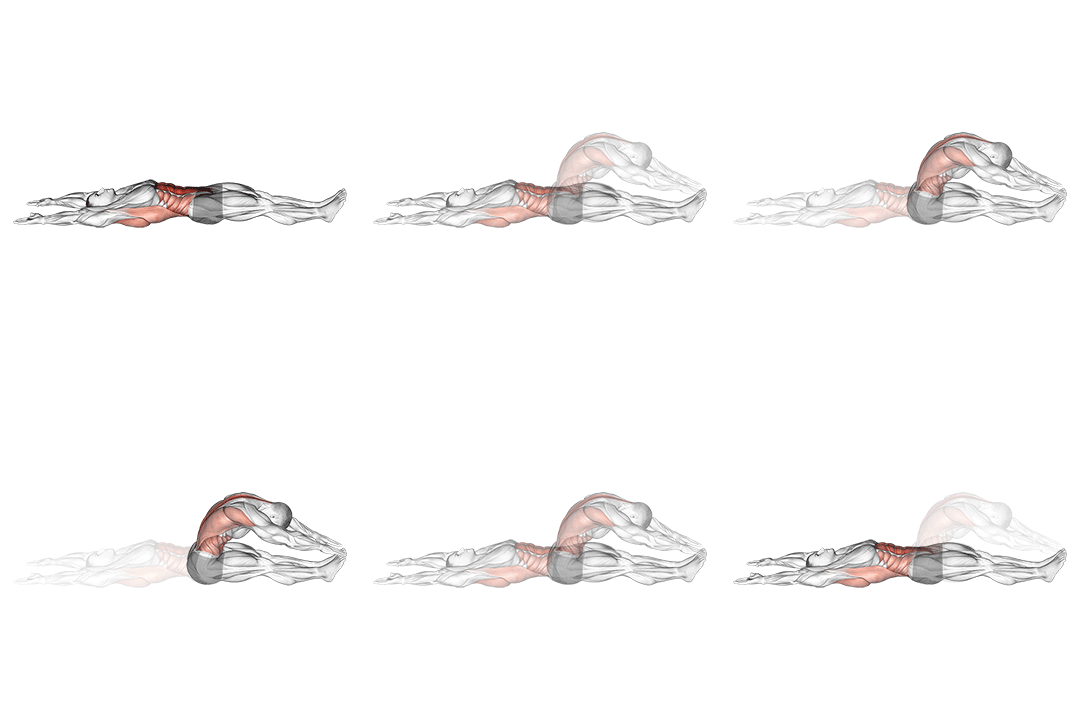
7. Arms Overhead Full Sit-up (male)
62.9% MatchHow to perform this exercise
- Lie flat on your back with your knees bent and feet flat on the ground.
- Extend your arms overhead, keeping them straight.
- Engaging your abs, slowly lift your upper body off the ground, curling forward until your torso is upright.
- Pause for a moment at the top, then slowly lower your upper body back down to the starting position.
- Repeat for the desired number of repetitions.
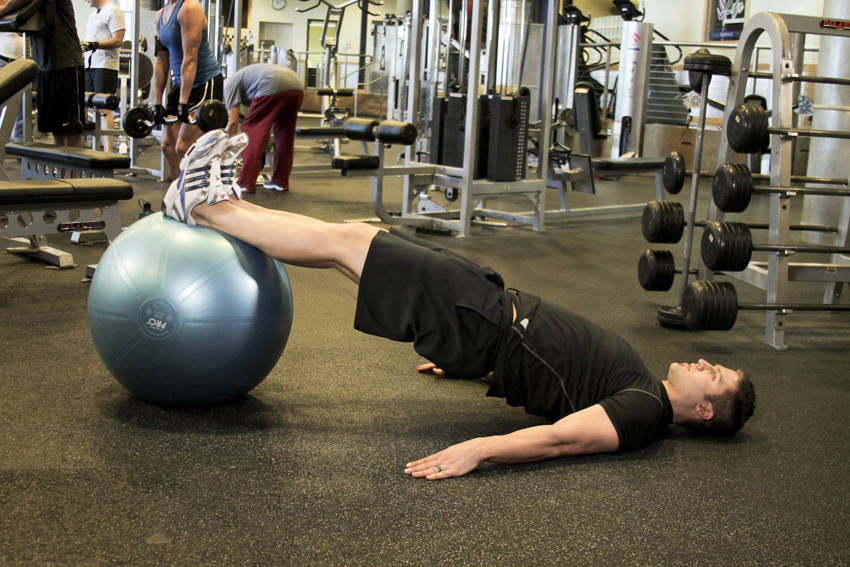
8. Ball Leg Curl
60.8% MatchHow to perform this exercise
- Begin on the floor laying on your back with your feet on top of the ball.
- Position the ball so that when your legs are extended your ankles are on top of the ball. This will be your starting position.
- Raise your hips off of the ground, keeping your weight on the shoulder blades and your feet.
- Flex the knees, pulling the ball as close to you as you can, contracting the hamstrings.
- After a brief pause, return to the starting position.
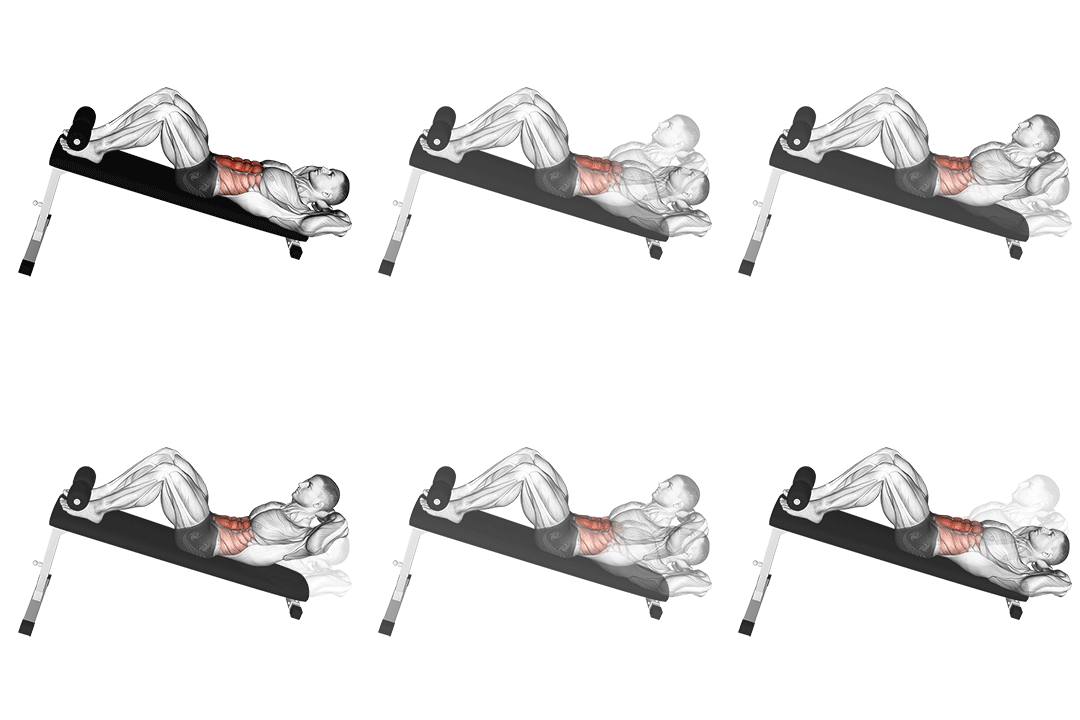
9. Decline Crunch
60.4% MatchHow to perform this exercise
- Lie on a decline bench with your feet secured and your knees bent at a 90-degree angle.
- Place your hands behind your head or across your chest.
- Engage your abs and lift your upper body towards your knees, curling your torso.
- Pause for a moment at the top, then slowly lower your upper body back down to the starting position.
- Repeat for the desired number of repetitions.
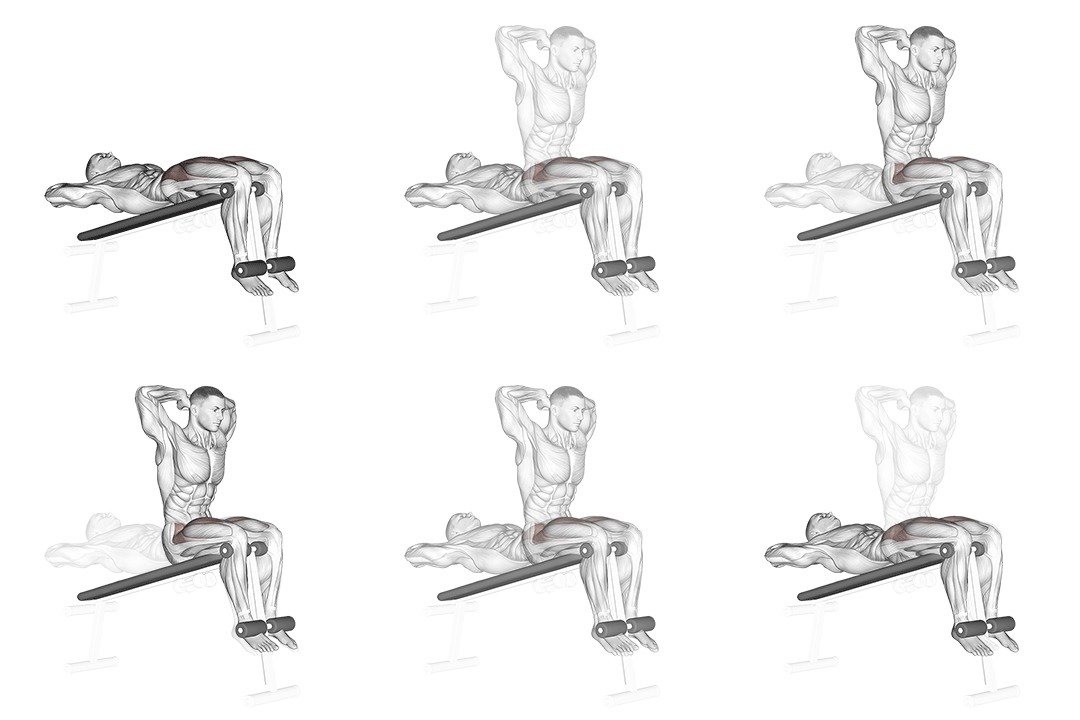
10. Decline Sit-up
60% MatchHow to perform this exercise
- Lie on a decline bench with your feet secured and your knees bent.
- Place your hands behind your head or across your chest.
- Engage your abs and lift your upper body off the bench, curling forward towards your knees.
- Pause for a moment at the top, then slowly lower your upper body back down to the starting position.
- Repeat for the desired number of repetitions.
Why You Might Need a Incline Leg Hip Raise (leg Straight) Alternative
You may substitute the incline straight-leg hip raise for several reasons: limited access to an incline bench, hip-flexor irritation, lower-back pain, or the need for a simpler progression. Straight legs lengthen the lever arm and increase torque at the lumbar spine and hip flexors; swapping to a knees-bent or hanging variation reduces lever length and shifts load to the rectus abdominis. Use cues such as “draw the ribcage down, posteriorly tilt the pelvis, and pause at peak contraction” to protect the lumbar spine and prioritize abdominal activation.
How to Choose the Right Substitute
Choose a substitute based on equipment, spinal tolerance, and training goal. If you lack a bench, select lying straight-leg raises or reverse crunches; cue a slow 2–3 second lift and maintain a flattened lumbar spine to emphasize abs. If hip-flexor dominance is an issue, use knee-bent reverse crunches or tuck-hang raises to shorten the lever and increase rectus abdominis activation. For progressive overload pick hanging straight-leg raises or toes-to-bar and add reps or tempo changes while maintaining posterior pelvic tilt.
Frequently Asked Questions
What muscles does Incline Leg Hip Raise (leg Straight) work?
The exercise primarily targets the rectus abdominis, especially the lower segment, and recruits hip flexors (iliopsoas) as stabilizers. Because the legs remain straight, the long lever increases torque at the hips, so you must posteriorly tilt the pelvis to maximize abdominal activation and limit lumbar extension.
What is the best bodyweight alternative to Incline Leg Hip Raise (leg Straight)?
Hanging straight-leg raises are the closest bodyweight alternative because they preserve the straight-leg lever and demand similar pelvic control. Cue a posterior pelvic tilt, a slow 2-second lift, and stop when you can no longer keep the lumbar spine flat to avoid hip-flexor takeover.
Can I build muscle without doing Incline Leg Hip Raise (leg Straight)?
Yes. You can hypertrophy the rectus abdominis with other progressions like hanging raises, decline leg raises, and weighted reverse crunches. Focus on progressive overload, tempo control, and maintaining posterior pelvic tilt to ensure the abs—not the hip flexors—carry the load.
More Exercise Alternatives
Find Alternatives for Any Exercise
Use our free tool to discover the best substitute exercises based on your available equipment and goals.
Try the Exercise Substitution Finder →