

10 Best Iron Cross Alternatives for Shoulder Strength
If you can’t perform the Iron Cross, use targeted shoulder moves that recreate its lateral and transverse load on the delts. Try dumbbell lateral raises, seated overhead presses, incline rear-delt flies, cable lateral raises, or Arnold presses. Cue: keep a slight elbow bend and raise to shoulder height to maximize middle delt activation and reduce compensatory traps.
Original Exercise: Iron Cross
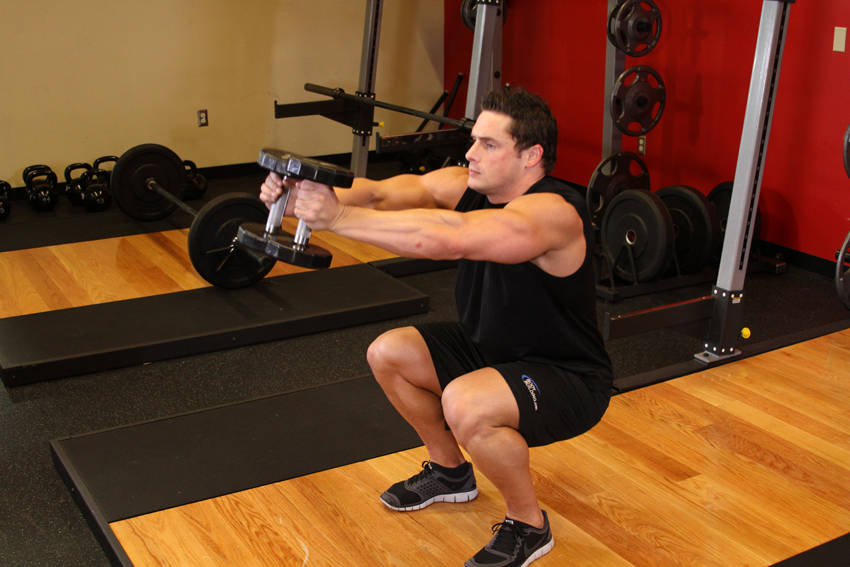
Pro Tips
- Category: Strength
- Force: Push
- Movement type: Compound
Best Iron Cross Alternatives
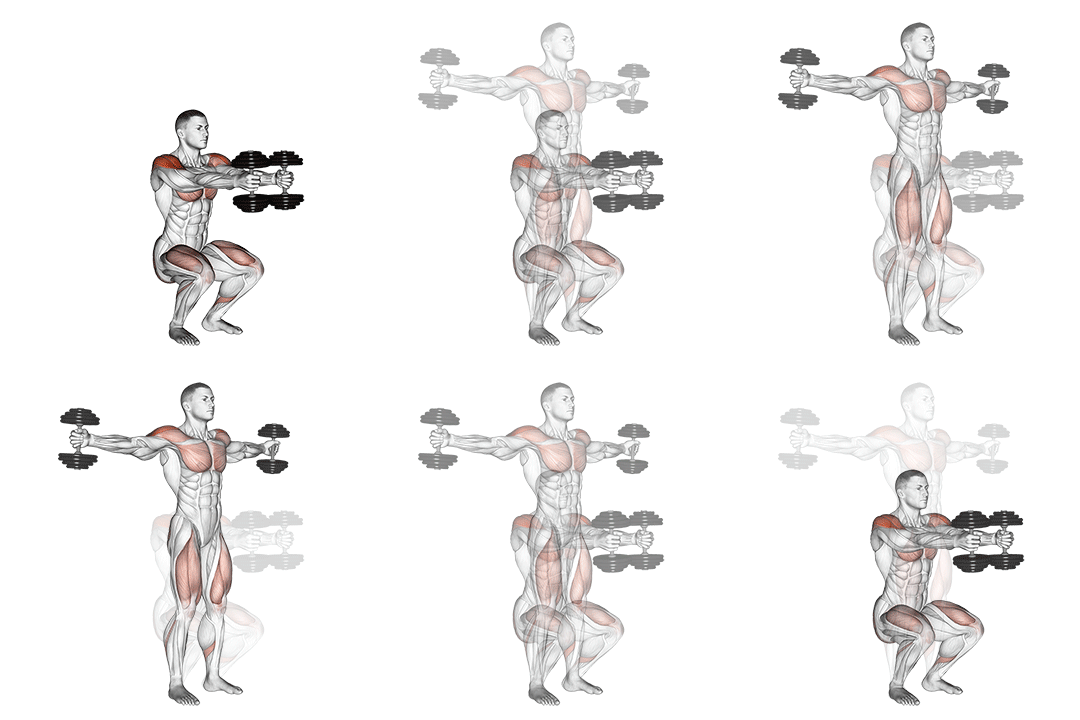
1. Dumbbell Iron Cross
84.7% MatchHow to perform this exercise
- Stand with your feet shoulder-width apart, holding a dumbbell in each hand at your sides.
- Raise your arms out to the sides until they are parallel to the ground, forming a T shape with your body.
- Pause for a moment, then slowly lower your arms back down to the starting position.
- Repeat for the desired number of repetitions.
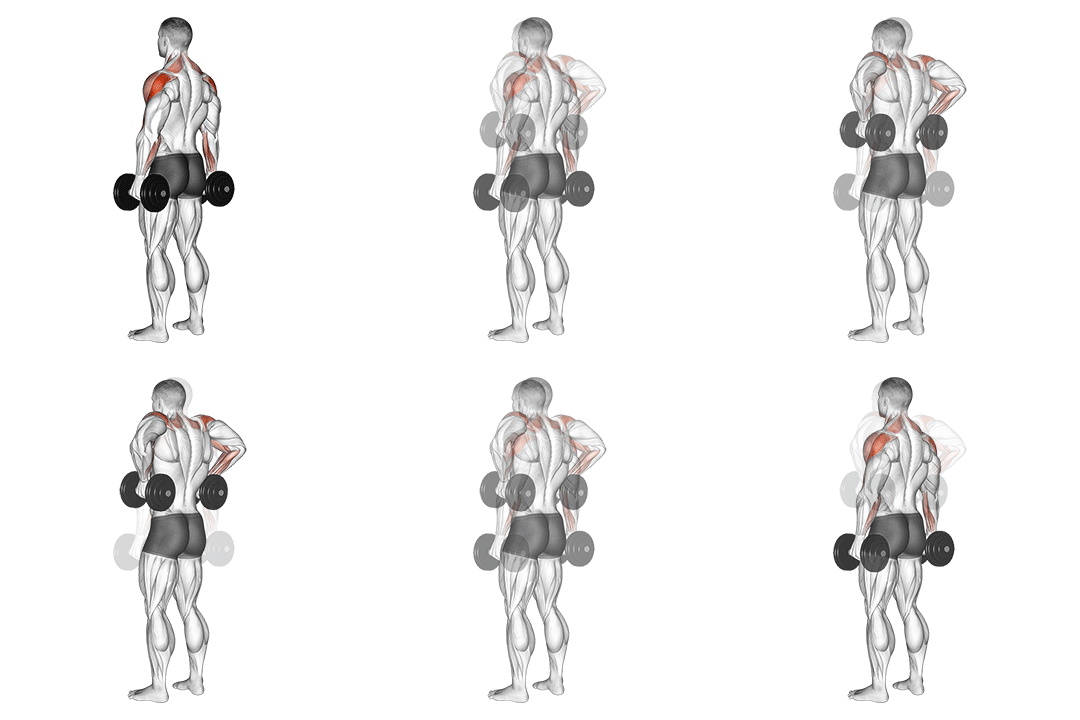
2. Dumbbell Rear Delt Raise
81.9% MatchHow to perform this exercise
- Stand with your feet shoulder-width apart and hold a dumbbell in each hand, palms facing your body.
- Bend your knees slightly and hinge forward at the hips, keeping your back straight.
- Raise your arms out to the sides, keeping a slight bend in your elbows, until they are parallel to the floor.
- Pause for a moment at the top, then slowly lower your arms back down to the starting position.
- Repeat for the desired number of repetitions.
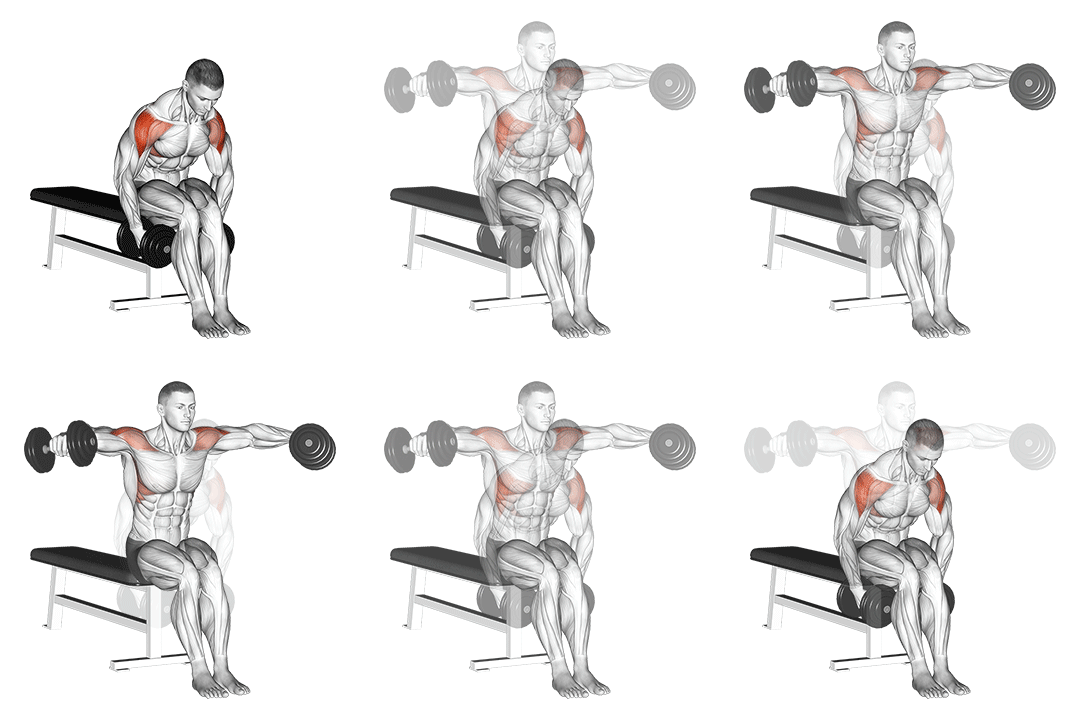
3. Dumbbell Seated Bent Arm Lateral Raise
81.1% MatchHow to perform this exercise
- Sit on a bench with your back straight and feet flat on the ground.
- Hold a dumbbell in each hand with your palms facing your body and your arms bent at a 90-degree angle.
- Keeping your elbows bent, raise your arms out to the sides until they are parallel to the ground.
- Pause for a moment at the top, then slowly lower your arms back down to the starting position.
- Repeat for the desired number of repetitions.
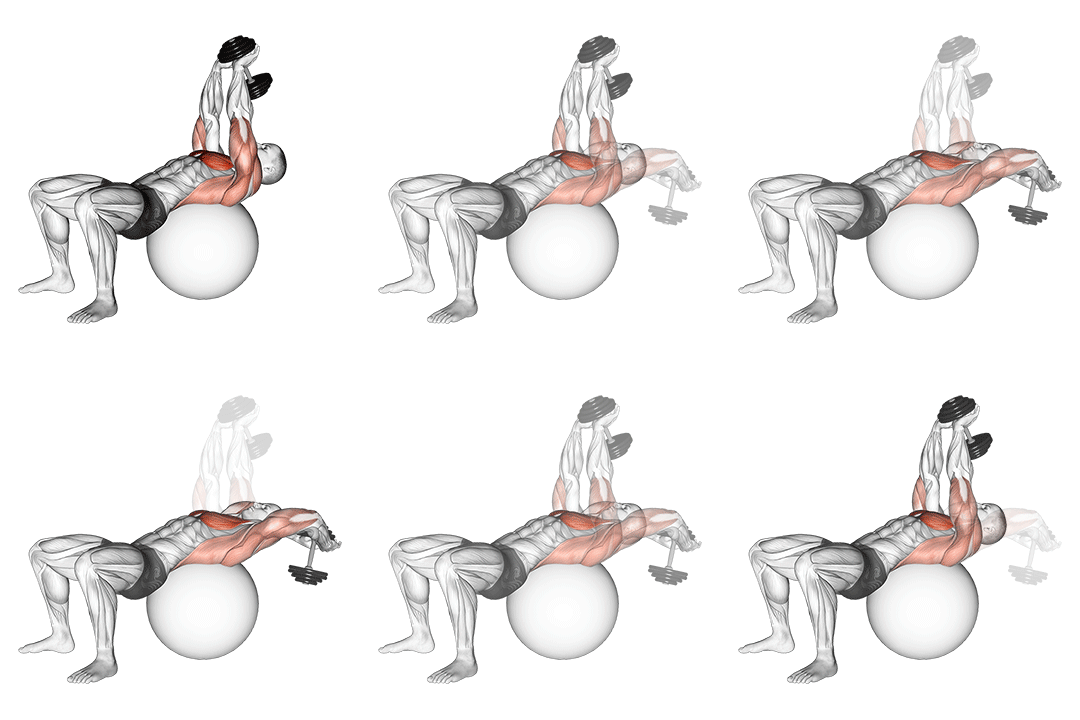
4. Dumbbell Pullover On Exercise Ball
80.2% MatchHow to perform this exercise
- Sit on an exercise ball and hold a dumbbell with both hands above your chest, arms extended.
- Slowly lower the dumbbell behind your head while keeping your arms straight.
- Pause for a moment, then raise the dumbbell back to the starting position.
- Repeat for the desired number of repetitions.
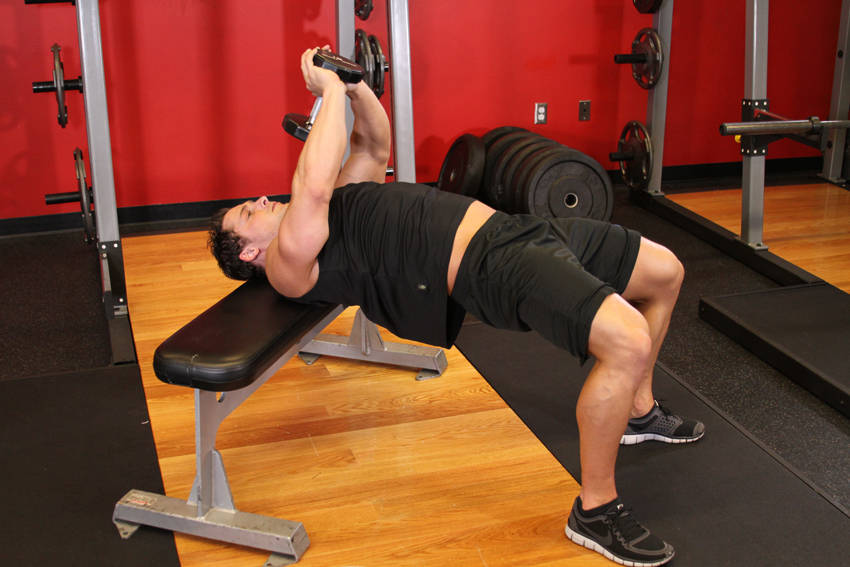
5. Bent-Arm Dumbbell Pullover
77.6% MatchHow to perform this exercise
- Place a dumbbell standing up on a flat bench.
- Ensuring that the dumbbell stays securely placed at the top of the bench, lie perpendicular to the bench (torso across it as in forming a cross) with only your shoulders lying on the surface. Hips should be below the bench and legs bent with feet firmly on the floor. The head will be off the bench as well.
- Grasp the dumbbell with both hands and hold it straight over your chest with a bend in your arms. Both palms should be pressing against the underside one of the sides of the dumbbell. This will be your starting position. Caution: Always ensure that the dumbbell used for this exercise is secure. Using a dumbbell with loose plates can result in the dumbbell falling apart and falling on your face.
- While keeping your arms locked in the bent arm position, lower the weight slowly in an arc behind your head while breathing in until you feel a stretch on the chest.
- At that point, bring the dumbbell back to the starting position using the arc through which the weight was lowered and exhale as you perform this movement.
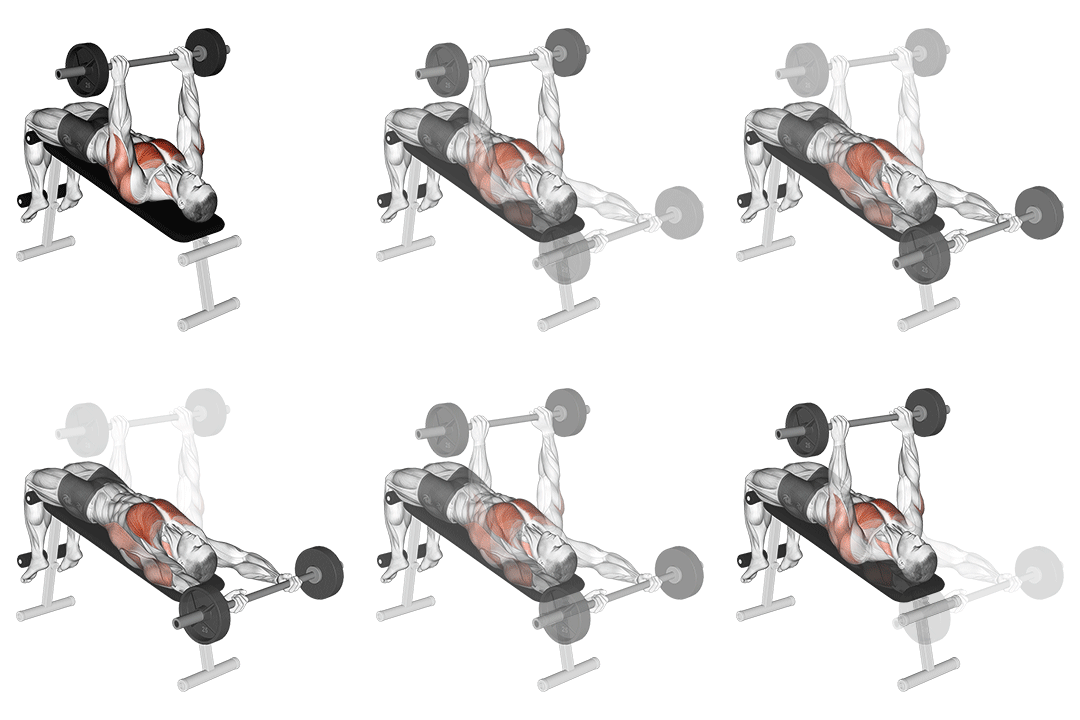
6. Barbell Decline Pullover
76.2% MatchHow to perform this exercise
- Lie down on a decline bench with your head lower than your hips and your feet secured.
- Hold the barbell with a pronated grip (palms facing away from you) and your hands slightly wider than shoulder-width apart.
- Extend your arms above your chest, keeping a slight bend in your elbows.
- Lower the barbell in an arc motion behind your head, feeling a stretch in your chest and shoulders.
- Pause for a moment, then return the barbell to the starting position by reversing the motion.
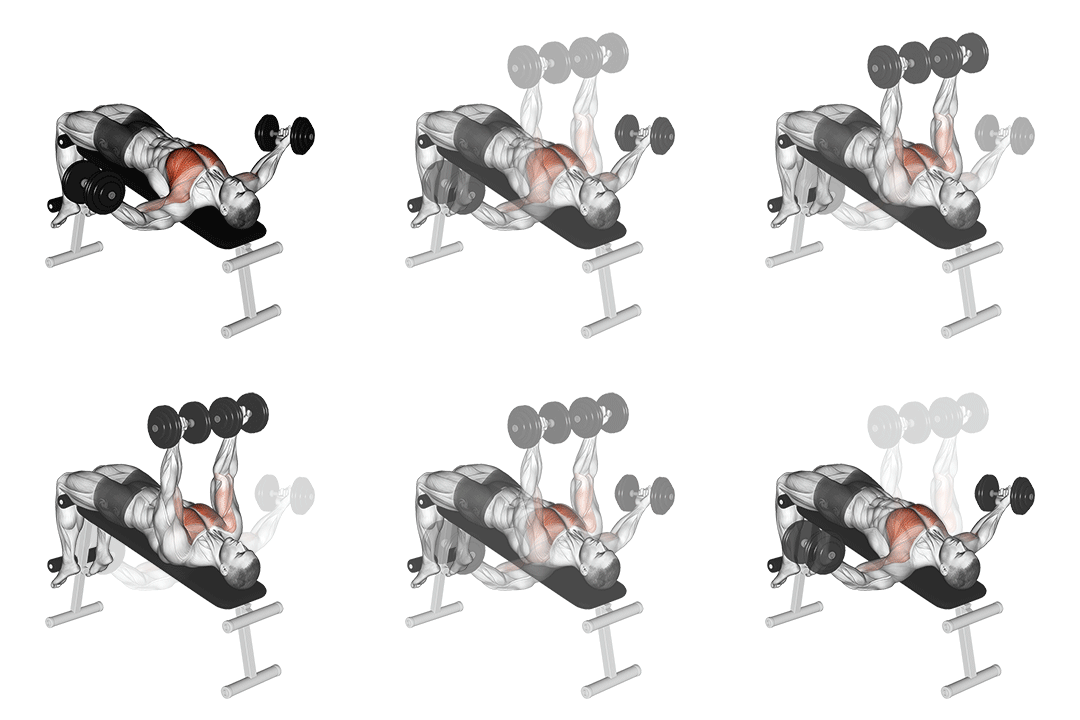
7. Dumbbell Decline Twist Fly
75.4% MatchHow to perform this exercise
- Lie down on a decline bench with your head lower than your hips.
- Hold a dumbbell in each hand with your palms facing each other and your arms extended straight up over your chest.
- Lower the dumbbells out to the sides in a wide arc until you feel a stretch in your chest.
- As you lower the dumbbells, twist your wrists so that your palms face forward at the bottom of the movement.
- Reverse the motion and bring the dumbbells back up to the starting position, squeezing your chest muscles at the top.
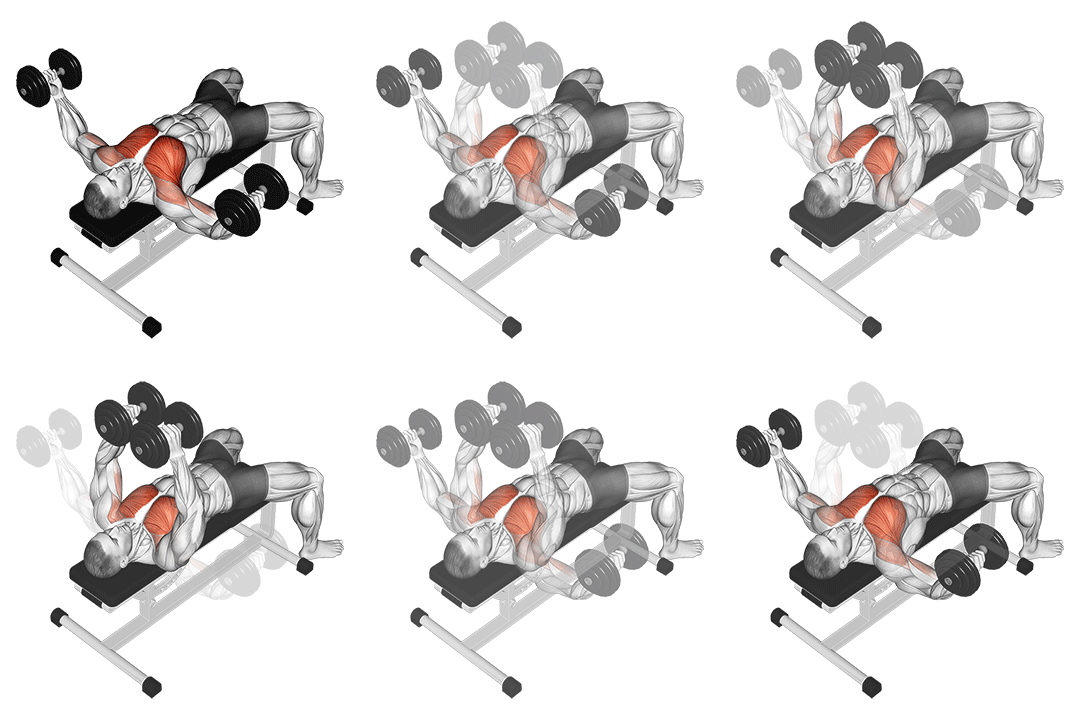
8. Dumbbell Fly
74.9% MatchHow to perform this exercise
- Lie flat on a bench with a dumbbell in each hand, palms facing each other.
- Extend your arms straight up over your chest, with a slight bend in your elbows.
- Keeping a slight bend in your elbows, lower your arms out to the sides in a wide arc until you feel a stretch in your chest.
- Pause for a moment, then reverse the movement and bring the dumbbells back up to the starting position.
- Repeat for the desired number of repetitions.
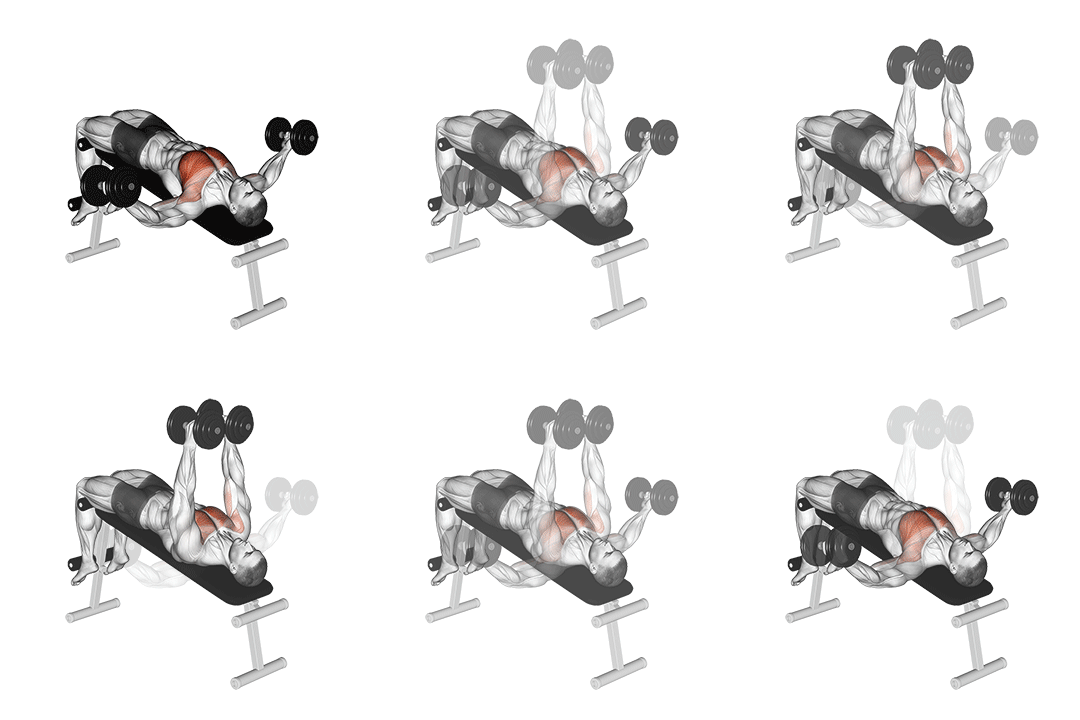
9. Dumbbell Decline Fly
74.9% MatchHow to perform this exercise
- Lie on a decline bench with your feet secured and your head lower than your hips.
- Hold a dumbbell in each hand with your palms facing each other and your arms extended above your chest.
- Lower the dumbbells out to the sides in a wide arc until you feel a stretch in your chest.
- Pause for a moment, then squeeze your chest muscles to bring the dumbbells back to the starting position.
- Repeat for the desired number of repetitions.
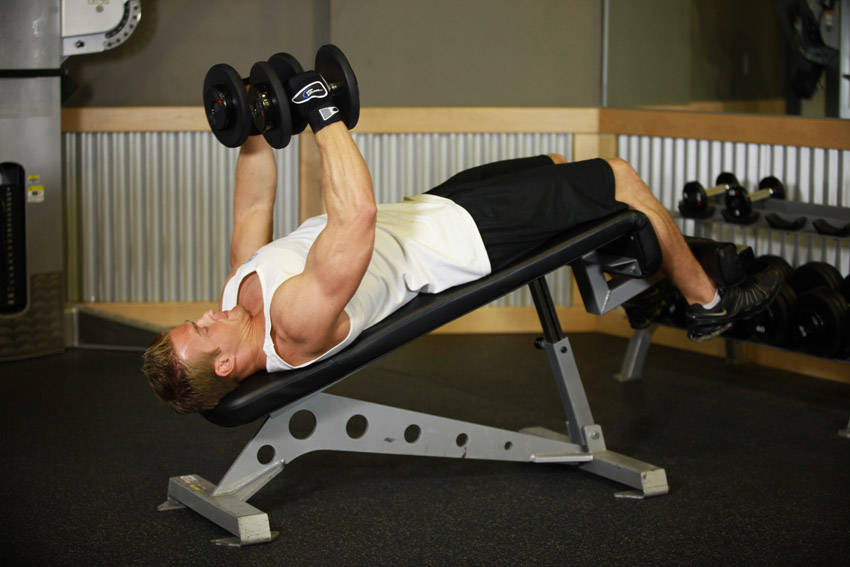
10. Decline Dumbbell Flyes
74.1% MatchHow to perform this exercise
- Secure your legs at the end of the decline bench and lie down with a dumbbell on each hand on top of your thighs. The palms of your hand will be facing each other.
- Once you are laying down, move the dumbbells in front of you at shoulder width. The palms of the hands should be facing each other and the arms should be perpendicular to the floor and fully extended. This will be your starting position.
- With a slight bend on your elbows in order to prevent stress at the biceps tendon, lower your arms out at both sides in a wide arc until you feel a stretch on your chest. Breathe in as you perform this portion of the movement. Tip: Keep in mind that throughout the movement, the arms should remain stationary; the movement should only occur at the shoulder joint.
- Return your arms back to the starting position as you squeeze your chest muscles and breathe out. Tip: Make sure to use the same arc of motion used to lower the weights.
- Hold for a second at the contracted position and repeat the movement for the prescribed amount of repetitions.
Why You Might Need a Iron Cross Alternative
You may need substitutes because of limited shoulder mobility, existing rotator cuff issues, lack of spotters or specific equipment, or programming needs that demand progressive overload. Substitutes let you isolate the medial deltoid or shift load to anterior/posterior fibers while controlling joint stress. For example, a strict lateral raise biases glenohumeral abduction and isolates the middle deltoid, while a seated dumbbell press produces compressive axial load that increases overall delt hypertrophy. Use technique cues—externally rotate slightly on raises and avoid scapular shrug—to protect the cuff and preserve targeted activation.
How to Choose the Right Substitute
Select a substitute based on your goal, joint health, and load capacity. For hypertrophy prioritize controlled time under tension (2–3 second eccentric) and exercises that isolate the middle deltoid, like the dumbbell lateral raise with a slight elbow bend. For strength or compound transfer choose seated dumbbell or Arnold presses to load delts under axial compression; brace your core and drive the bar path overhead rather than shrugging. If posterior delts are the limiting factor, pick incline rear-delt flies and cue scapular retraction to improve transverse plane activation and reduce anterior dominance.
Frequently Asked Questions
What muscles does Iron Cross work?
The Iron Cross primarily targets the deltoids—especially the middle fibers—through shoulder abduction, with secondary loading of the anterior and posterior delts depending on arm angle. It also recruits the rotator cuff and scapular stabilizers to hold the humerus in place; keep the scapula depressed to reduce trap domination.
What is the best bodyweight alternative to Iron Cross?
Pike push-ups or elevated pike push-ups are the best bodyweight substitutes because they load the delts with vertical compression and shoulder abduction. Cue a tight core, pike hip angle, and drive the crown of your head toward the ground to emphasize anterior and medial delt activation.
Can I build muscle without doing Iron Cross?
Yes. You can achieve equal or better delt hypertrophy using compound presses and isolation raises with progressive overload. Prioritize clean technique—slight elbow bend, full but controlled range of motion, and tempo control—to maximize deltoid activation while protecting the shoulder joint.
More Exercise Alternatives
Find Alternatives for Any Exercise
Use our free tool to discover the best substitute exercises based on your available equipment and goals.
Try the Exercise Substitution Finder →