

10 Best Leg-up Hamstring Stretch Alternatives for Tight Hamstrings
If the Leg-up Hamstring Stretch causes pain or is impractical, use other moves that load the same posterior chain. Try standing single-leg hamstring reaches, supine banded leg pulls, seated one-leg forward folds, single-leg Romanian deadlifts, or controlled Nordic lowers. Cue: hinge at the hips and keep a neutral spine to isolate the hamstrings.
Original Exercise: Leg-up Hamstring Stretch
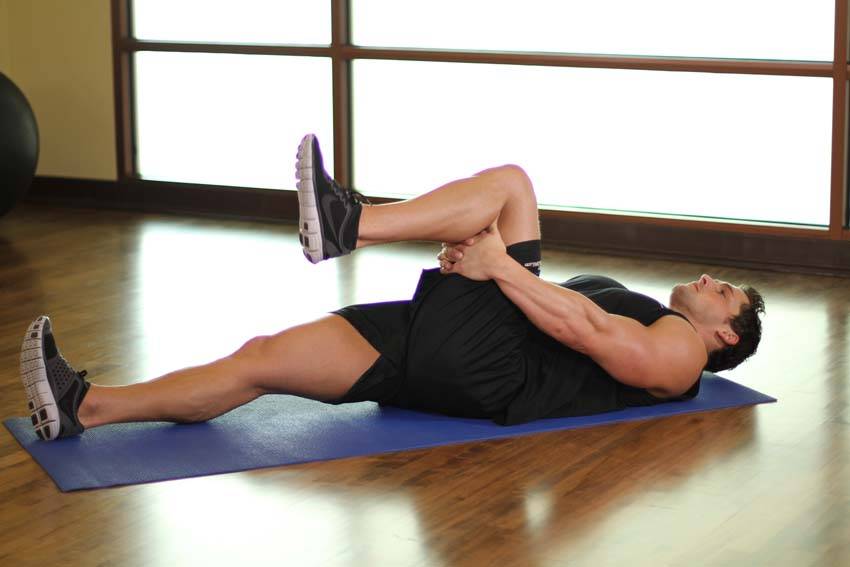
How to Perform Leg-up Hamstring Stretch
- Lie flat on your back, bend one knee, and put that foot flat on the floor to stabilize your spine.
- Extend the other leg in the air. If you're tight, you wont be able to straighten it. That's okay. Extend the knee so that the sole of the lifted foot faces the ceiling (or as close as you can get it).
- Slowly straighten the legs as much as possible and then pull the leg toward your nose. Switch sides.
Pro Tips
- Category: Stretching
- Force: Push
- Movement type: Isolation
Best Leg-up Hamstring Stretch Alternatives
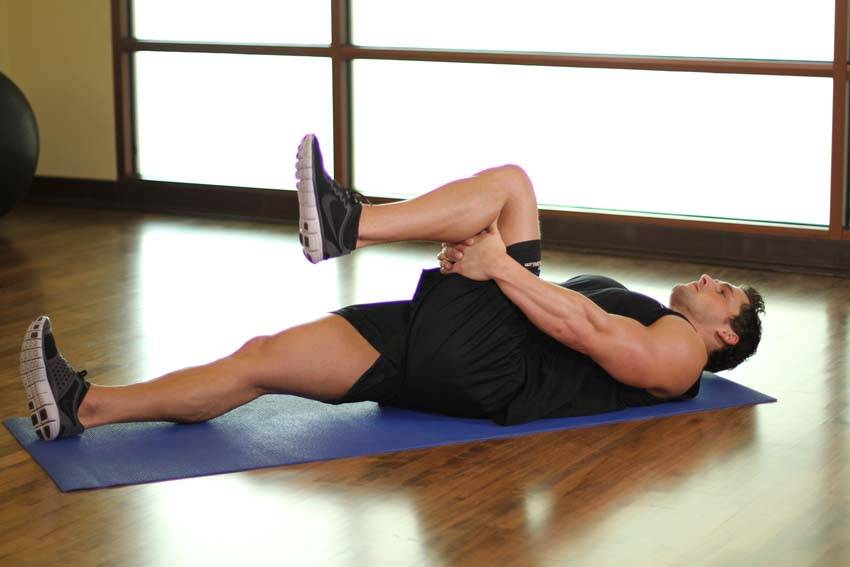
1. 90/90 Hamstring
90.7% MatchHow to perform this exercise
- Lie on your back, with one leg extended straight out.
- With the other leg, bend the hip and knee to 90 degrees. You may brace your leg with your hands if necessary. This will be your starting position.
- Extend your leg straight into the air, pausing briefly at the top. Return the leg to the starting position.
- Repeat for 10-20 repetitions, and then switch to the other leg.
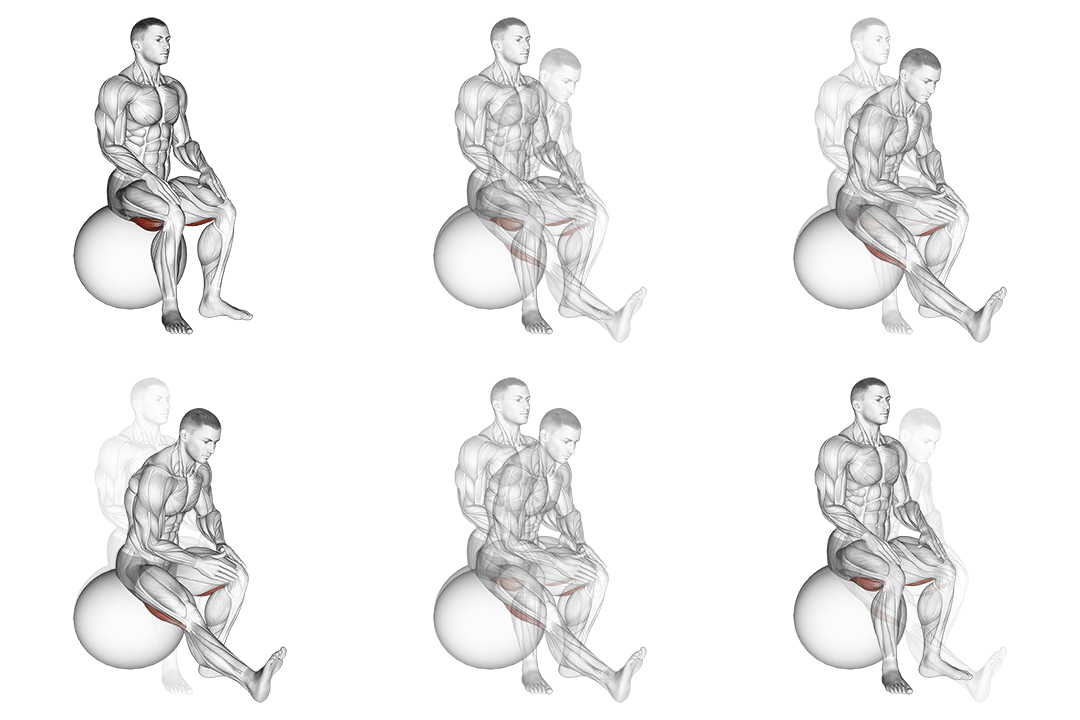
2. Exercise Ball Seated Hamstring Stretch
82.9% MatchHow to perform this exercise
- Sit on the stability ball with your feet flat on the ground and your knees bent at a 90-degree angle.
- Slowly roll the ball forward, walking your feet out until your upper back is resting on the ball and your legs are extended straight in front of you.
- Place your hands on your hips for support.
- Engage your core and slowly lower your upper body towards the ground, keeping your back straight and your chest lifted.
- Stop when you feel a stretch in your hamstrings, and hold the position for 20-30 seconds.
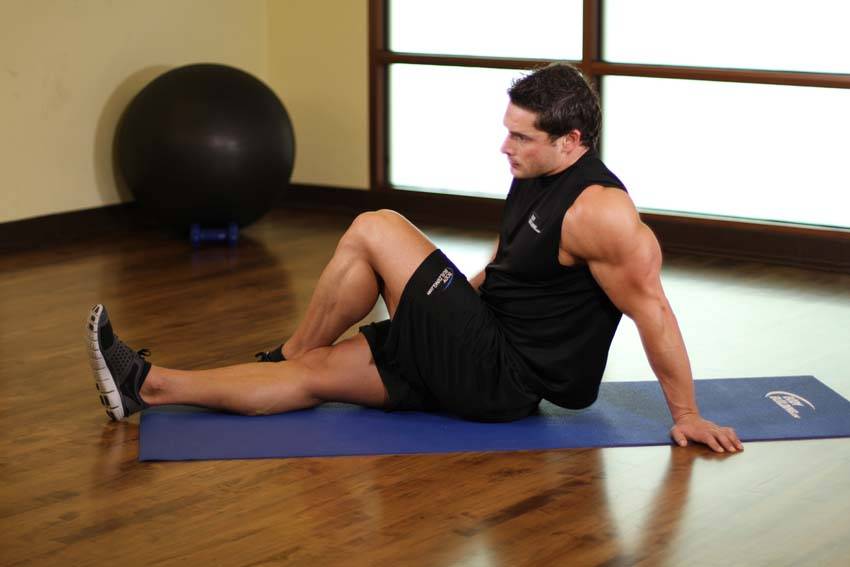
3. Dancer's Stretch
76.2% MatchHow to perform this exercise
- Sit up on the floor.
- Cross your right leg over your left, keeping the knee bent. Your left leg is straight and down on the floor.
- Place your left arm on your right leg and your right hand on the floor.
- Rotate your upper body to the right, and hold for 10-20 seconds. Switch sides.
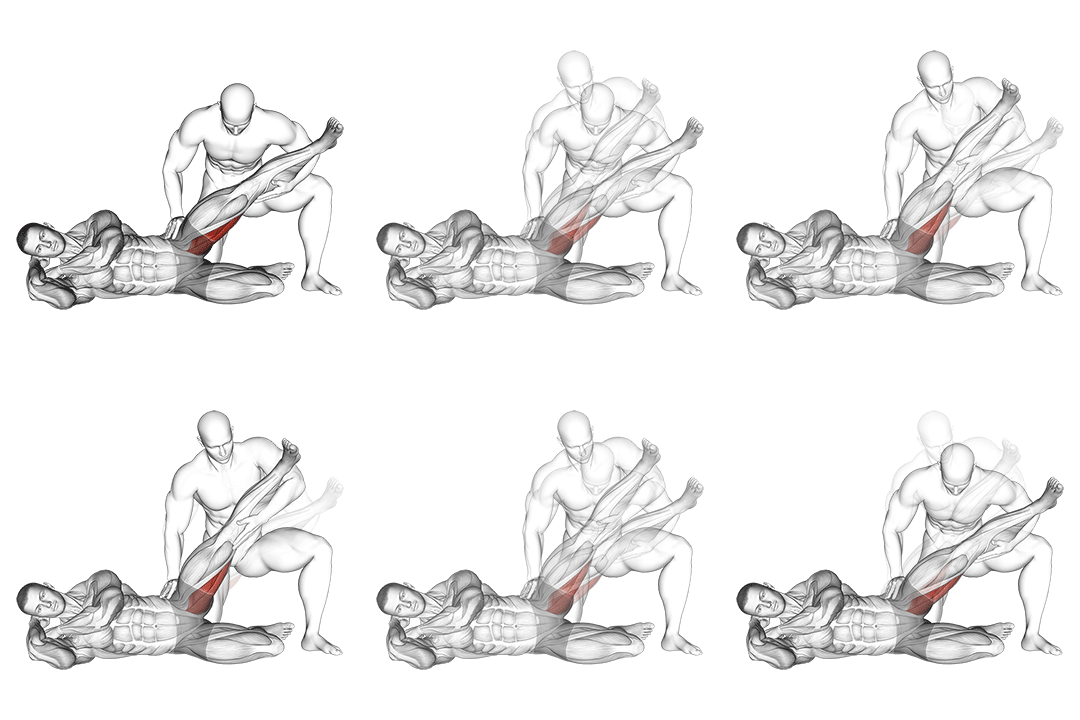
4. Assisted Side Lying Adductor Stretch
75.2% MatchHow to perform this exercise
- Lie on your side with your legs straight and stacked on top of each other.
- Bend your bottom leg slightly for stability.
- Place your top foot on a stable surface, such as a bench or step.
- Keeping your top leg straight, slowly lower it towards the ground, feeling a stretch in your inner thigh.
- Hold the stretch for 20-30 seconds.
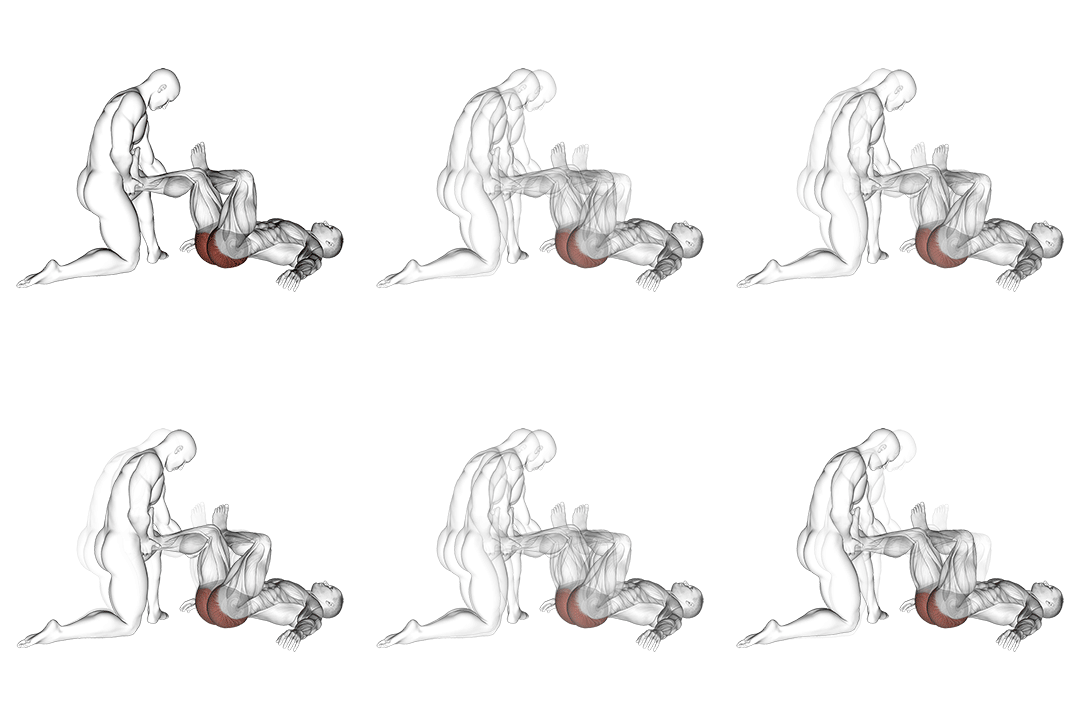
5. Assisted Lying Gluteus And Piriformis Stretch
75.2% MatchHow to perform this exercise
- Lie on your back with your legs extended.
- Bend your right knee and place your right ankle on your left thigh, just above the knee.
- Grasp your left thigh with both hands and gently pull it towards your chest.
- Hold the stretch for 20-30 seconds.
- Release the stretch and repeat on the other side.
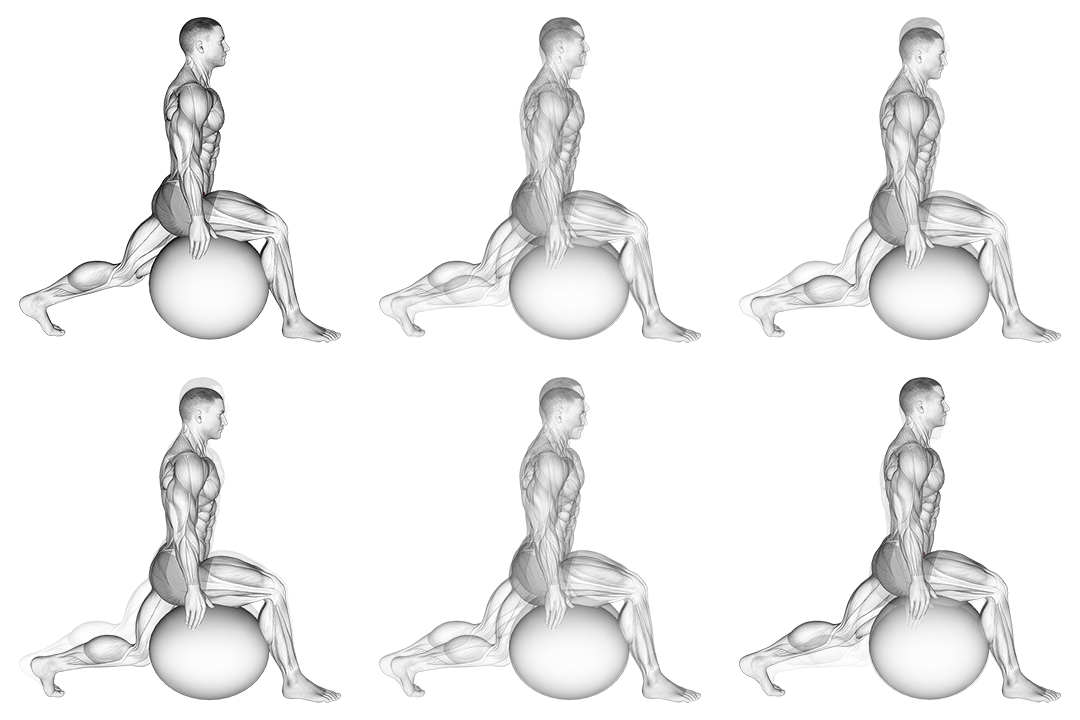
6. Exercise Ball Hip Flexor Stretch
74.9% MatchHow to perform this exercise
- Place the stability ball on the ground and kneel in front of it.
- Place your right foot on top of the stability ball, with your knee bent at a 90-degree angle.
- Extend your left leg behind you, keeping it straight.
- Lean forward, pushing your hips towards the stability ball, until you feel a stretch in your right hip flexor.
- Hold the stretch for 20-30 seconds, then switch sides and repeat.
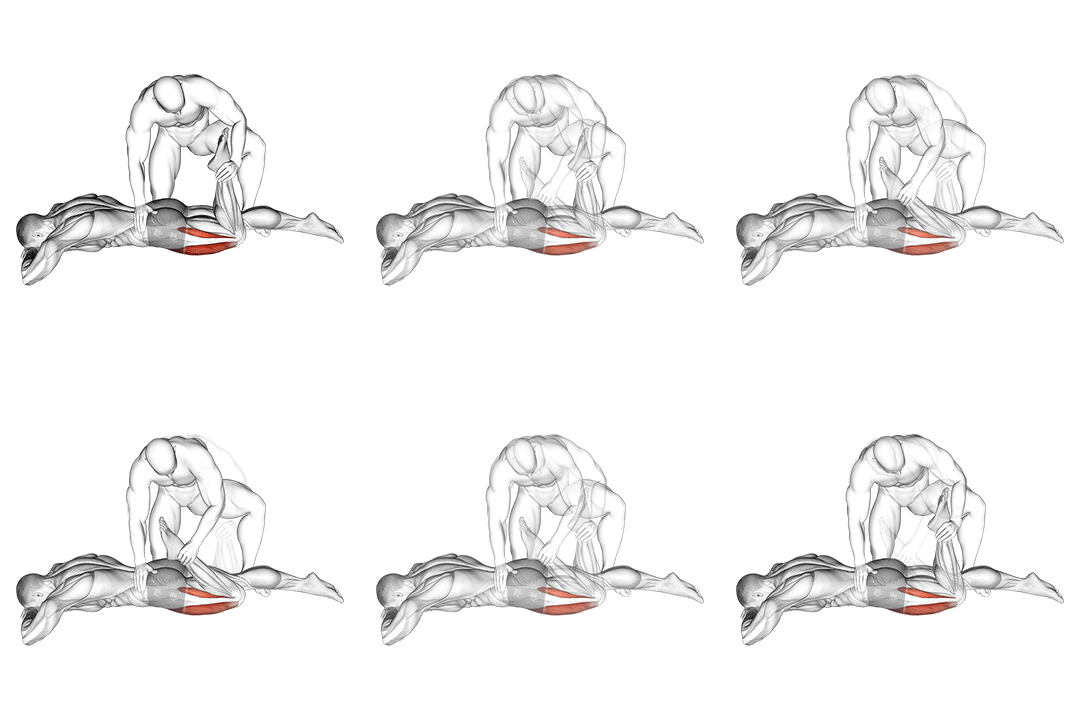
7. Assisted Prone Lying Quads Stretch
72.2% MatchHow to perform this exercise
- Lie face down on the ground with your legs extended.
- Bend your left knee and reach back with your left hand to grab your left foot or ankle.
- Gently pull your left foot towards your glutes, feeling a stretch in your left quad.
- Hold the stretch for 20-30 seconds, then release.
- Repeat with your right leg.
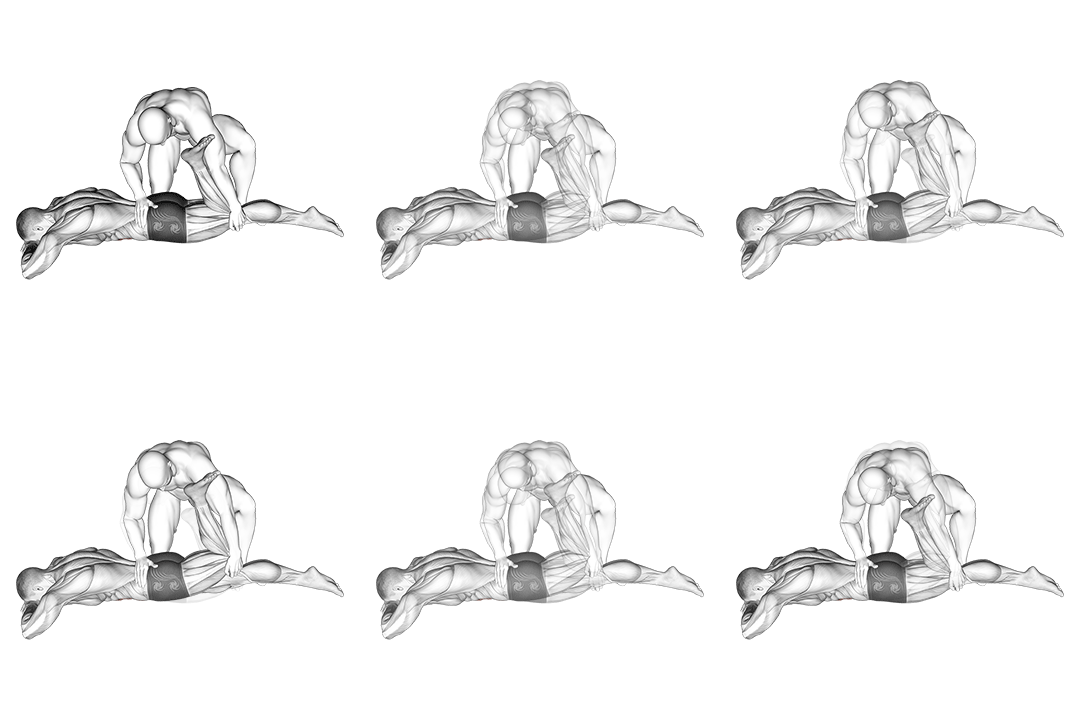
8. Assisted Prone Rectus Femoris Stretch
72.2% MatchHow to perform this exercise
- Lie face down on the ground with your legs straight.
- Bend your right knee and reach back with your right hand to grab your right foot or ankle.
- Gently pull your right foot or ankle towards your glutes, feeling a stretch in the front of your right thigh.
- Hold the stretch for 20-30 seconds.
- Release and repeat on the other side.
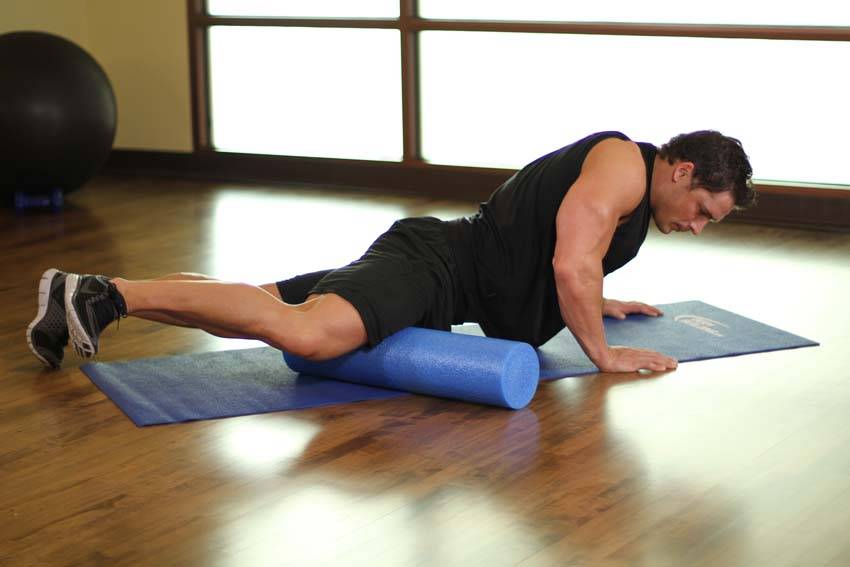
9. Adductor
71.2% MatchHow to perform this exercise
- Lie face down with one leg on a foam roll.
- Rotate the leg so that the foam roll contacts against your inner thigh. Shift as much weight onto the foam roll as can be tolerated.
- While trying to relax the muscles if the inner thigh, roll over the foam between your hip and knee, holding points of tension for 10-30 seconds. Repeat with the other leg.
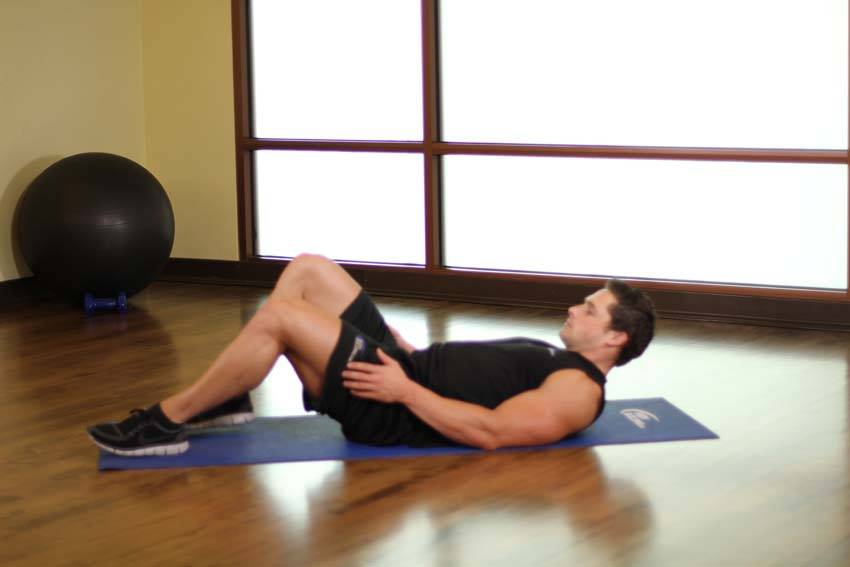
10. Ankle On The Knee
71.2% MatchHow to perform this exercise
- From a lying position, bend your knees and keep your feet on the floor.
- Place your ankle of one foot on your opposite knee.
- Grasp the thigh or knee of the bottom leg and pull both of your legs into the chest. Relax your neck and shoulders. Hold for 10-20 seconds and then switch sides.
Why You Might Need a Leg-up Hamstring Stretch Alternative
You may need substitutes because of lower-back sensitivity, limited equipment, poor balance, or an active recovery goal. Some people feel lumbar flexion when the knee is extended during the leg-up variation; alternatives let you shift emphasis between hip hinge and knee extension to reduce spinal load. For example, a banded supine stretch maintains pelvic neutrality and isolates the semimembranosus and biceps femoris, while a single-leg RDL recruits eccentric hamstring control and glute stabilization. Use cues such as “pull ribs down, hinge from the hips” to protect the lumbar spine and increase hamstring tension without compensatory lumbar flexion.
How to Choose the Right Substitute
Pick a substitute based on your objective: passive lengthening, active control, or strength-focused mobility. If you want flexibility without spine stress, choose supine banded leg pulls and cue a posterior pelvic tilt to lengthen the hamstrings. For neuromuscular control and load tolerance, pick single-leg RDLs and emphasize slow eccentric descent to train hamstring strength. If balance is limited, use a supported standing hamstring reach with the heel elevated and a soft knee. Always prioritize neutral spine, controlled breath, and a clear hip-hinge to target the hamstrings rather than the lumbar erectors.
Frequently Asked Questions
What muscles does Leg-up Hamstring Stretch work?
The stretch primarily targets the hamstrings (biceps femoris, semitendinosus, semimembranosus) and secondarily lengthens the gastrocnemius when the ankle is dorsiflexed. Biomechanically it loads the hamstrings via knee extension and hip flexion, so pelvic position strongly affects how much the posterior chain is stretched.
What is the best bodyweight alternative to Leg-up Hamstring Stretch?
A bodyweight single-leg Romanian deadlift is the best all-around alternative for strength and lengthening: hinge at the hips, keep a slight knee bend, and lower the torso until you feel controlled tension in the hamstring. Cue: keep the pelvis level and pull through the standing heel to activate the posterior chain.
Can I build muscle without doing Leg-up Hamstring Stretch?
Yes — building hamstring muscle depends on progressive eccentric and concentric loading, not a specific stretch. Use exercises like single-leg RDLs, Nordic hamstring lowers, and glute-ham raises with deliberate tempo to stimulate hypertrophy while preserving flexibility.
More Exercise Alternatives
Find Alternatives for Any Exercise
Use our free tool to discover the best substitute exercises based on your available equipment and goals.
Try the Exercise Substitution Finder →