

10 Best Lever Incline Chest Press Alternatives for Gym or Home
If you can't use the lever incline chest press, pick presses that load the upper pecs at a 30–45° incline and preserve scapular retraction. Top options include incline dumbbell press, incline barbell press, landmine incline press, decline (feet-elevated) push-ups, and single-arm cable incline presses. Cue: lower until elbows reach ~90° and press through the palms.
Original Exercise: Lever Incline Chest Press
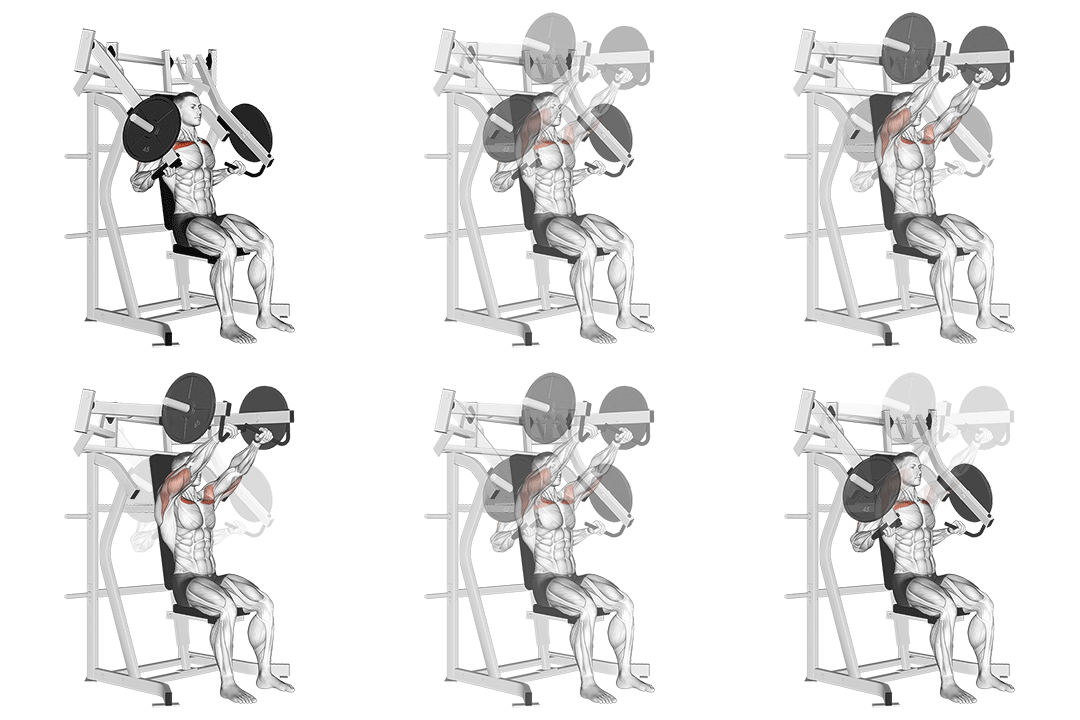
How to Perform Lever Incline Chest Press
- Adjust the seat and backrest of the leverage machine to a comfortable position.
- Sit on the machine with your back against the backrest and your feet flat on the floor.
- Grasp the handles with an overhand grip and position your hands slightly wider than shoulder-width apart.
- Push the handles forward and away from your body until your arms are fully extended.
- Pause for a moment, then slowly bend your elbows and lower the handles back towards your chest.
- Repeat for the desired number of repetitions.
Best Lever Incline Chest Press Alternatives
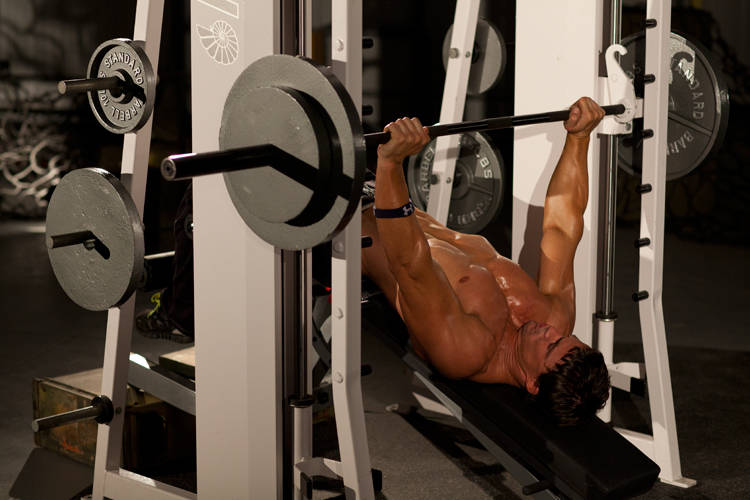
1. Decline Smith Press
80.7% MatchHow to perform this exercise
- Place a decline bench underneath the Smith machine. Now place the barbell at a height that you can reach when lying down and your arms are almost fully extended. Using a pronated grip that is wider than shoulder width, unlock the bar from the rack and hold it straight over you with your arms extended. This will be your starting position.
- As you inhale, lower the bar under control by allowing the elbows to flex, lightly contacting the torso.
- After a brief pause, bring the bar back to the starting position by extending the elbows, exhaling as you do so.
- Repeat the movement for the prescribed amount of repetitions.
- When the set is complete, lock the bar back in the rack.
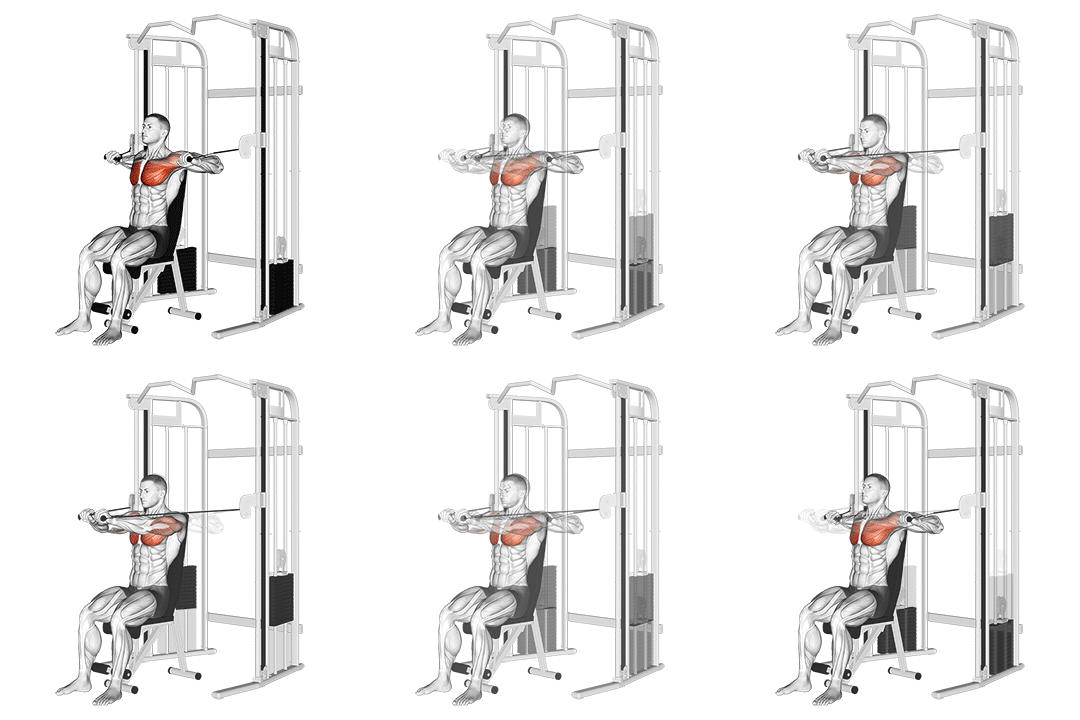
2. Cable Seated Chest Press
74.7% MatchHow to perform this exercise
- Adjust the seat height and cable handles to a comfortable position.
- Sit on the bench with your back straight and feet flat on the floor.
- Grasp the cable handles with an overhand grip at shoulder height.
- Push the handles forward and away from your body, extending your arms fully.
- Pause for a moment, then slowly bring the handles back to the starting position.
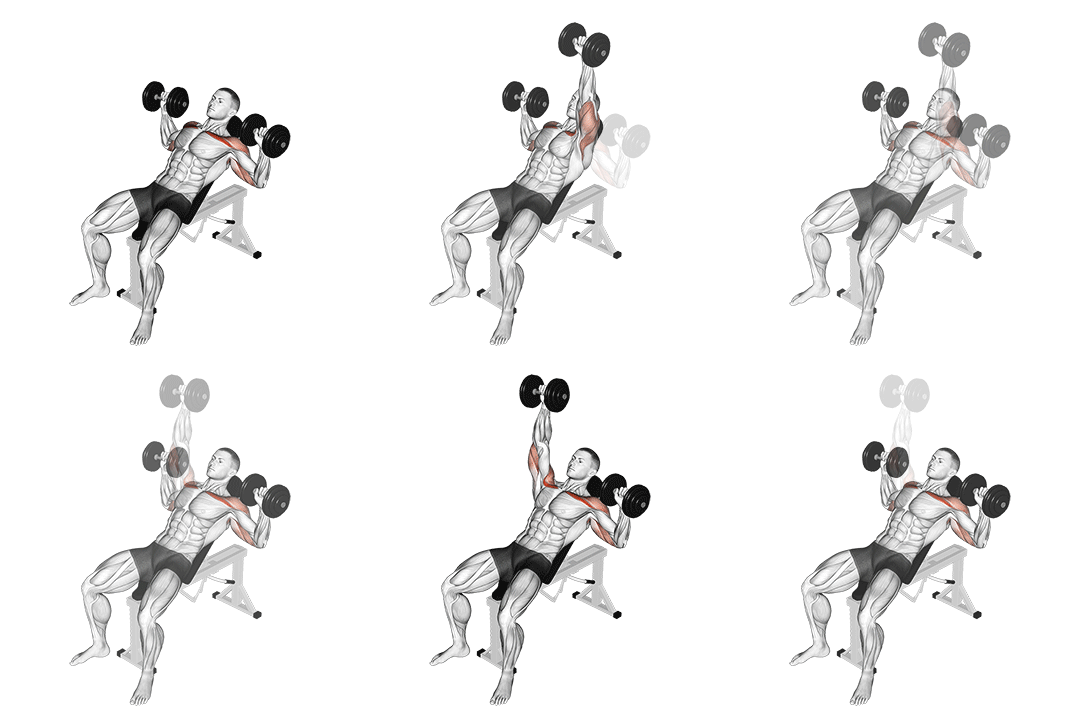
3. Dumbbell Incline Alternate Press
72.3% MatchHow to perform this exercise
- Sit on an incline bench with a dumbbell in each hand, resting on your thighs.
- Lean back on the bench and use your thighs to help raise the dumbbells to shoulder height, palms facing forward.
- Once at shoulder height, rotate your wrists so that the palms of your hands are facing forward.
- Push the dumbbells up with your chest and shoulders, extending your arms fully.
- Lower the dumbbells back down to the starting position, keeping your elbows slightly bent.
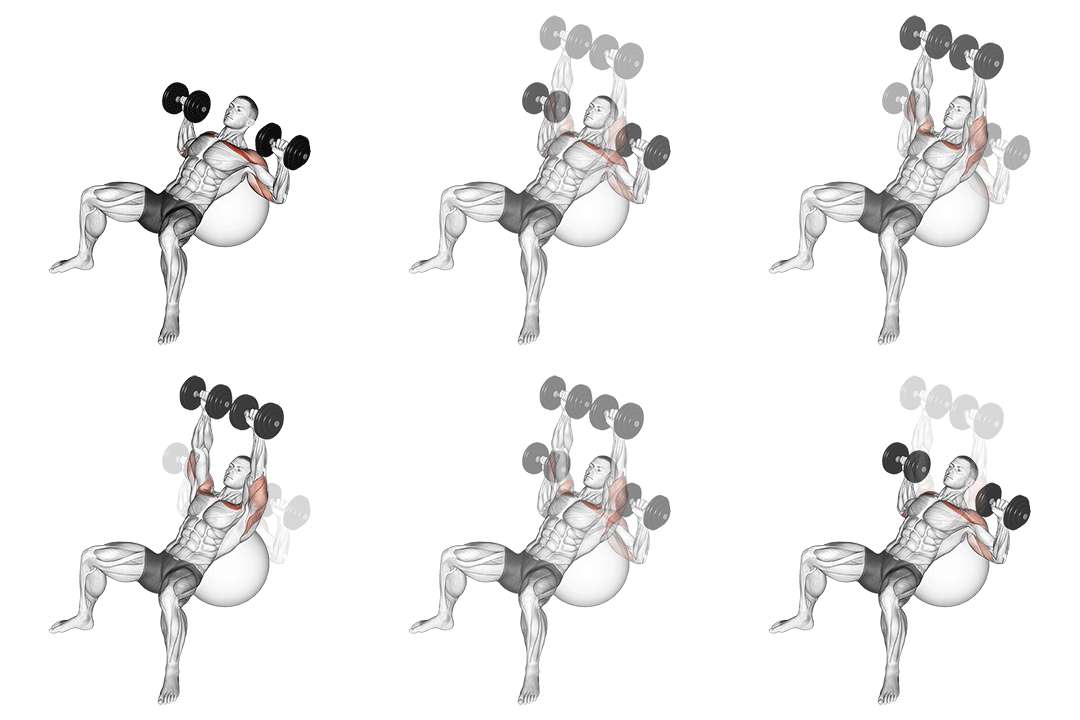
4. Dumbbell Incline Press On Exercise Ball
71.1% MatchHow to perform this exercise
- Sit on an exercise ball with a dumbbell in each hand, palms facing forward.
- Slowly walk your feet forward, rolling your body down the ball until your head, neck, and upper back are supported on the ball.
- Hold the dumbbells at shoulder level, elbows bent and pointing out to the sides.
- Press the dumbbells upward, extending your arms fully.
- Pause for a moment at the top, then slowly lower the dumbbells back to the starting position.
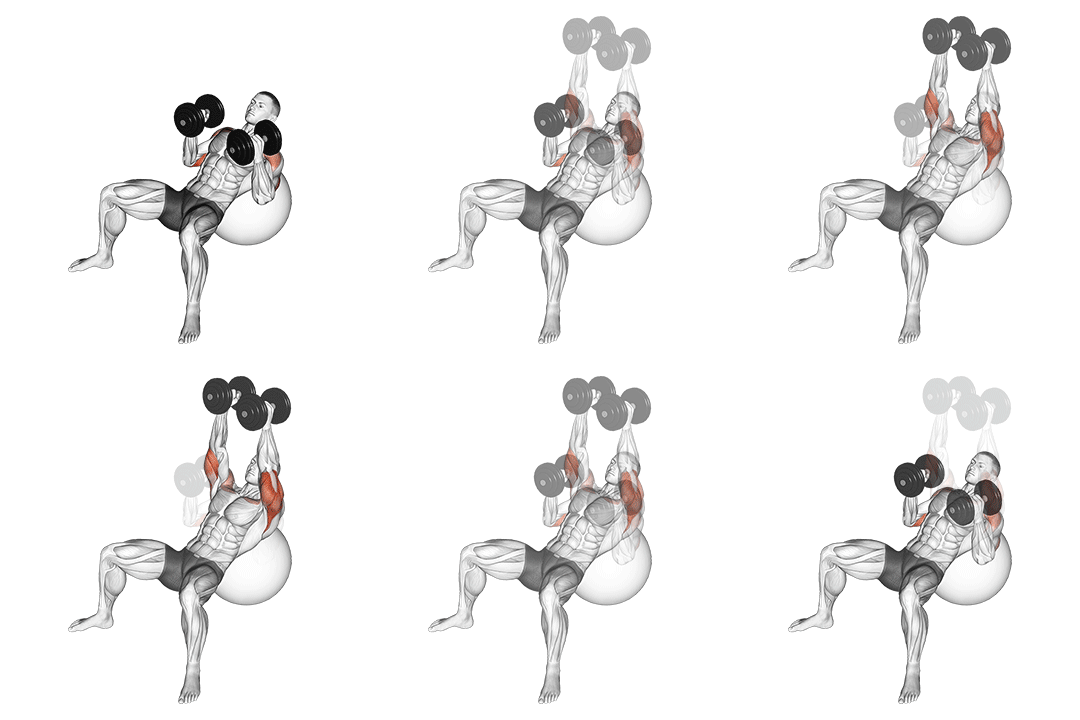
5. Dumbbell Incline Hammer Press On Exercise Ball
71.1% MatchHow to perform this exercise
- Sit on an exercise ball with a dumbbell in each hand, palms facing each other.
- Walk your feet forward and roll your body down the ball until your head, neck, and upper back are supported on the ball.
- Hold the dumbbells at shoulder level, elbows bent and pointing out to the sides.
- Press the dumbbells up and slightly inward, keeping your palms facing each other.
- Extend your arms fully, squeezing your triceps at the top of the movement.
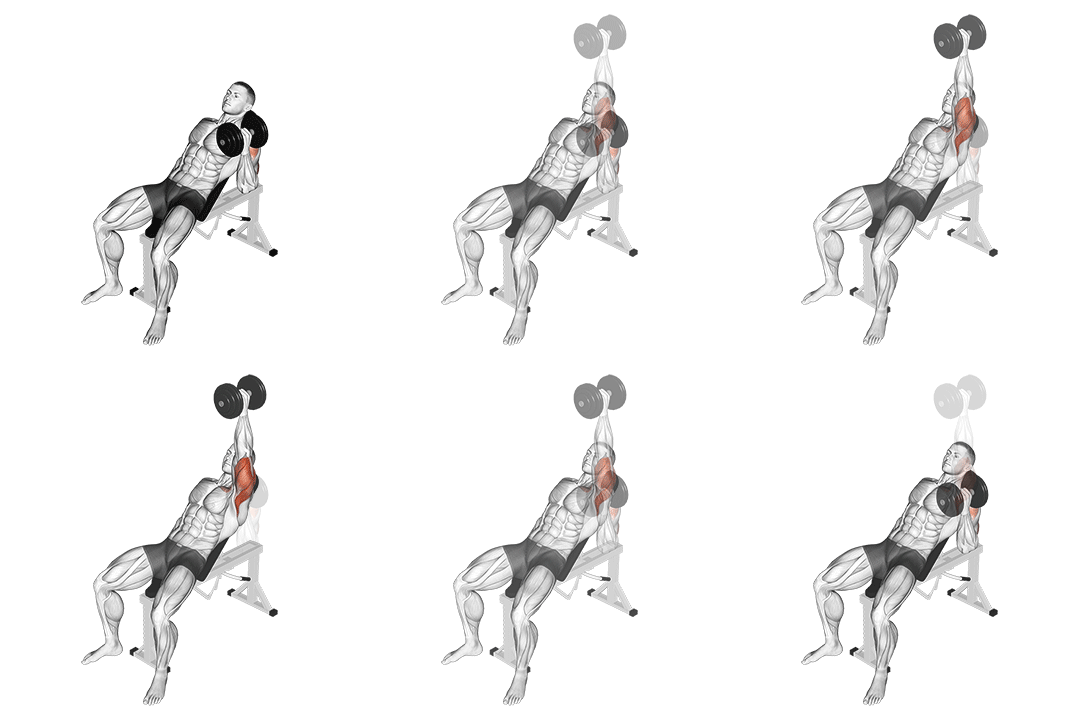
6. Dumbbell Incline One Arm Hammer Press
66.2% MatchHow to perform this exercise
- Sit on an incline bench with a dumbbell in one hand, resting on your thigh.
- Lean back on the bench and use your thigh to help raise the dumbbell to shoulder height.
- Rotate your wrist so that your palm is facing inward, towards your body.
- Press the dumbbell up and away from your body, extending your arm fully.
- Pause for a moment at the top, then slowly lower the dumbbell back down to the starting position.
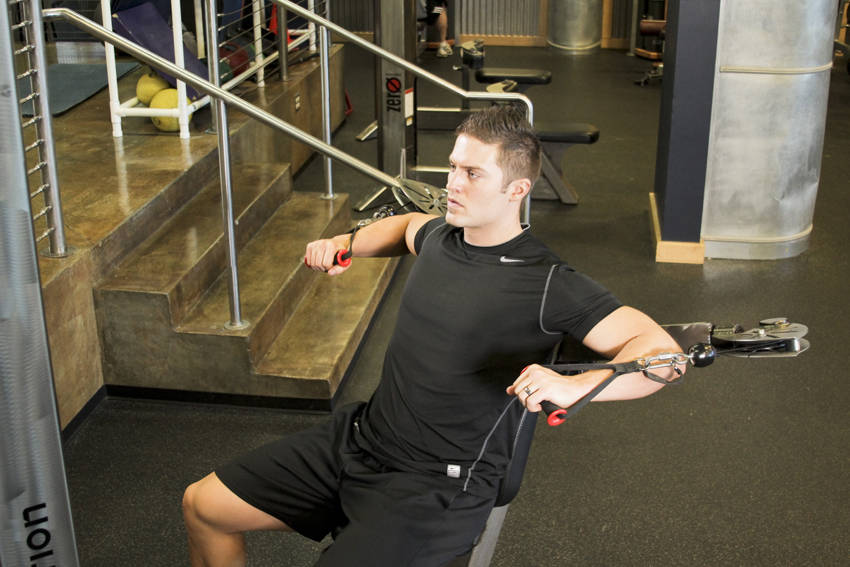
7. Cable Chest Press
65.9% MatchHow to perform this exercise
- Adjust the weight to an appropriate amount and be seated, grasping the handles. Your upper arms should be about 45 degrees to the body, with your head and chest up. The elbows should be bent to about 90 degrees. This will be your starting position.
- Begin by extending through the elbow, pressing the handles together straight in front of you. Keep your shoulder blades retracted as you execute the movement.
- After pausing at full extension, return to th starting position, keeping tension on the cables.
- You can also execute this movement with your back off the pad, at an incline or decline, or alternate hands.
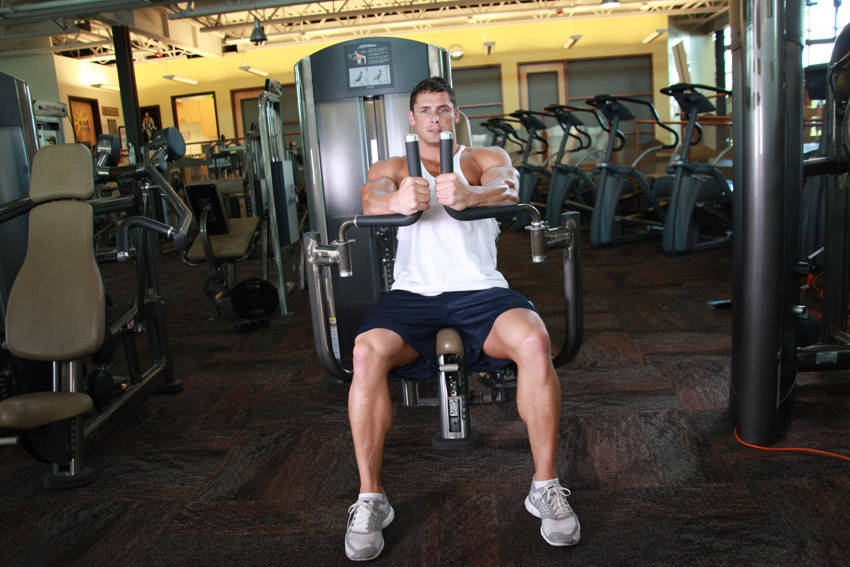
8. Butterfly
65.3% MatchHow to perform this exercise
- Sit on the machine with your back flat on the pad.
- Take hold of the handles. Tip: Your upper arms should be positioned parallel to the floor; adjust the machine accordingly. This will be your starting position.
- Push the handles together slowly as you squeeze your chest in the middle. Breathe out during this part of the motion and hold the contraction for a second.
- Return back to the starting position slowly as you inhale until your chest muscles are fully stretched.
- Repeat for the recommended amount of repetitions.
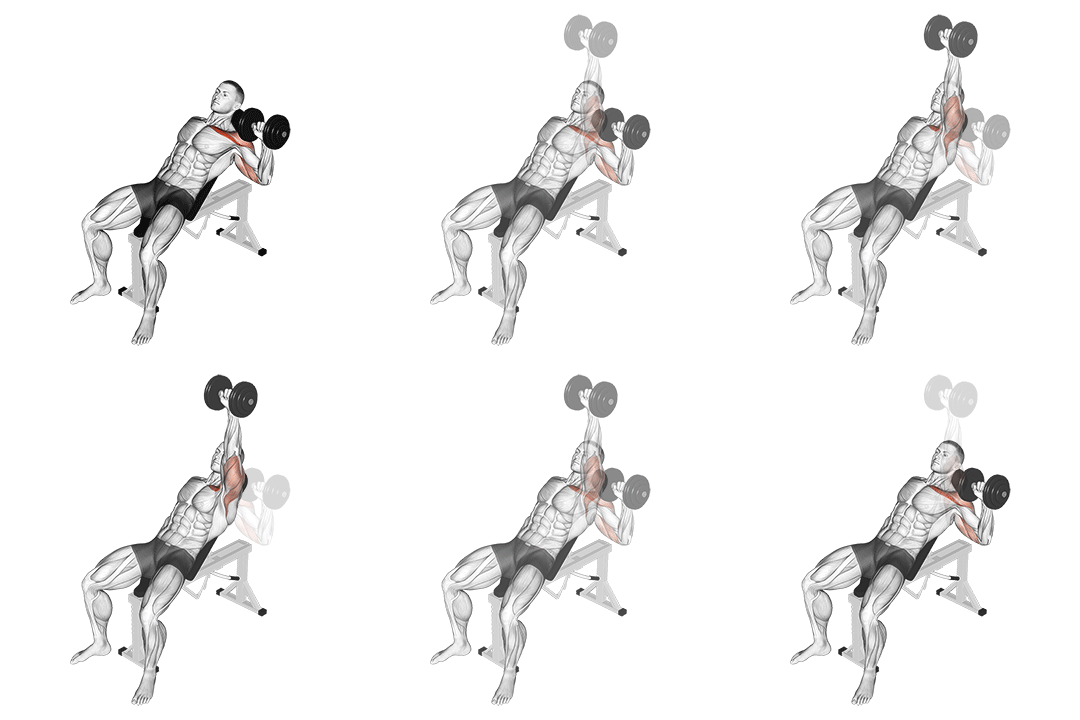
9. Dumbbell Incline One Arm Press
64.3% MatchHow to perform this exercise
- Sit on an incline bench with a dumbbell in one hand, resting on your thigh.
- Lie back on the bench and position the dumbbell at shoulder level, palm facing forward.
- Press the dumbbell upward and slightly inward, extending your arm fully.
- Pause for a moment at the top, then slowly lower the dumbbell back to the starting position.
- Repeat for the desired number of repetitions, then switch to the other arm.
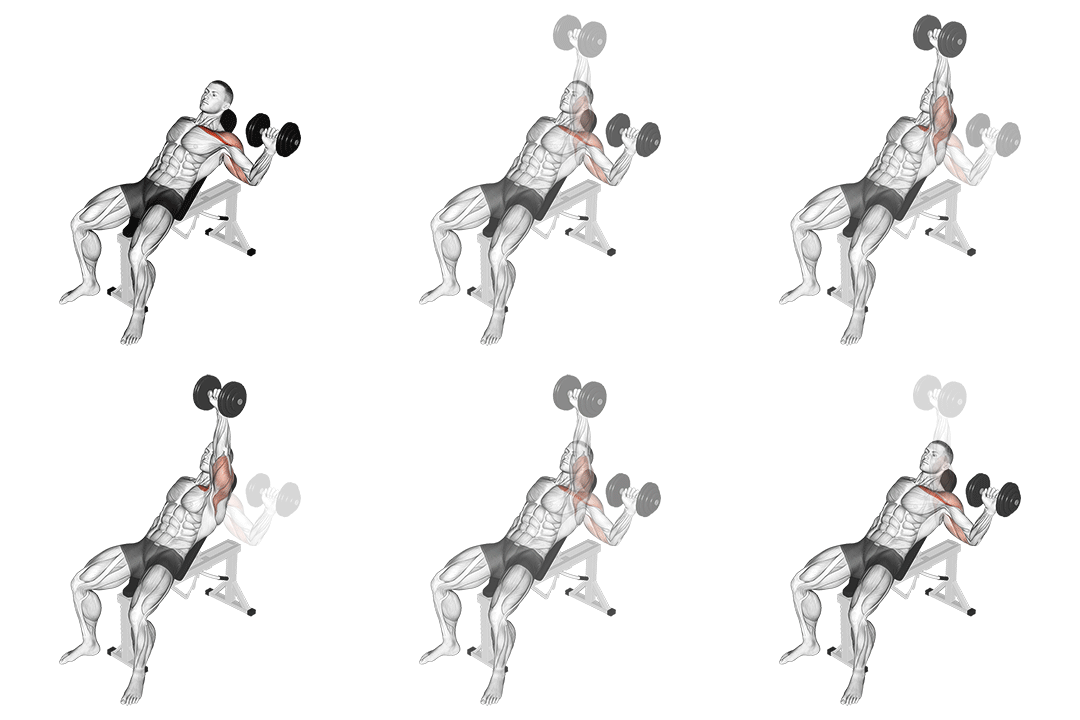
10. Dumbbell One Arm Incline Chest Press
64.3% MatchHow to perform this exercise
- Adjust the incline bench to a 45-degree angle.
- Sit on the bench with your back against the pad and feet flat on the ground.
- Hold a dumbbell in one hand with an overhand grip, resting it on your shoulder.
- Push the dumbbell up and away from your body, extending your arm fully.
- Pause for a moment at the top, then slowly lower the dumbbell back down to the starting position.
Why You Might Need a Lever Incline Chest Press Alternative
You might substitute the lever incline chest press for several practical reasons: the machine could be unavailable, you may have shoulder pain, or you want greater unilateral control and ROM. Different substitutes change stability demand and muscle activation — dumbbells increase scapular mobility while cables provide constant tension on the clavicular head. When shoulder pain is the limit, reduce the incline and keep elbows tucked 30–45° to minimize impingement. For rehab or hypertrophy, choose an option that lets you maintain controlled eccentrics and full pectoral contraction without compensatory scapular protraction.
How to Choose the Right Substitute
Choose a substitute based on the muscle emphasis, equipment, and stability you need. If you want maximal upper-pec loading, use a 30–45° incline with dumbbells to allow greater humeral adduction and chest stretch. For constant tension and angle control, pick the cable incline press and set the pulley to chest height. If you lack equipment, use feet-elevated (decline) push-ups with a slow 3–1–1 tempo to increase time under tension. Always cue scapular retraction, keep the elbows tucked slightly, and stop short of painful ranges to preserve shoulder mechanics.
Frequently Asked Questions
What muscles does Lever Incline Chest Press work?
The lever incline chest press primarily targets the clavicular head of the pectoralis major (upper pecs), with secondary loading of the anterior deltoid and triceps brachii. Scapular stabilizers like the serratus anterior and lower traps activate to maintain a retracted, stable shoulder girdle during the press.
What is the best bodyweight alternative to Lever Incline Chest Press?
A feet-elevated push-up (decline push-up) best mimics the upward pressing angle and emphasizes the upper pecs. Cue a rigid plank, retract the scapula, lower until elbows are ~90°, then drive through the palms while keeping the torso aligned.
Can I build muscle without doing Lever Incline Chest Press?
Yes — you can build upper-pectoral mass with a mix of incline barbell or dumbbell presses, landmine incline presses, cable inclines, and progressive overload. Focus on progressive load, controlled eccentrics, and full contraction of the clavicular head while maintaining proper scapular position.
More Exercise Alternatives
Find Alternatives for Any Exercise
Use our free tool to discover the best substitute exercises based on your available equipment and goals.
Try the Exercise Substitution Finder →