

10 Best Lunge Sprint Alternatives for Limited Equipment
If you can't perform the Lunge Sprint, pick alternatives that preserve quad-dominant knee extension and sprint-style power. Use hack squats, Bulgarian split squats, front-loaded step-ups, sled pushes, or barbell walking lunges. Cue: keep an upright torso, drive through the front heel, and control the eccentric to maximize quadriceps activation.
Original Exercise: Lunge Sprint
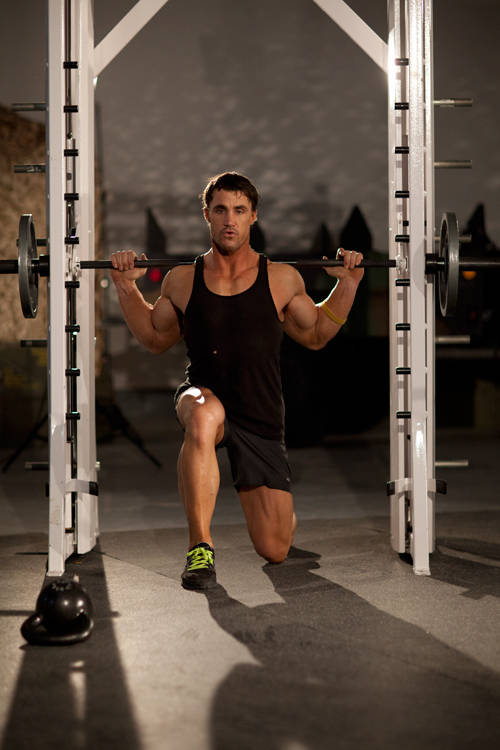
How to Perform Lunge Sprint
- Adjust a bar in a Smith machine to an appropriate height. Position yourself under the bar, racking it across the back of your shoulders. Unrack the bar, and then split your feet, moving one foot forward and one foot back. This will be your starting position.
- Lower your back knee nearly to the ground, flexing the knees and lowering your hips as you do so.
- At the bottom of the descent, immediately reverse direction. Explosively drive through the heel of your front foot with light pressure from your back foot. Jump up and reverse the position of your legs.
- Repeat for the recommended amount of repetitions.
Pro Tips
- Category: Strength
- Force: Push
- Movement type: Compound
Best Lunge Sprint Alternatives
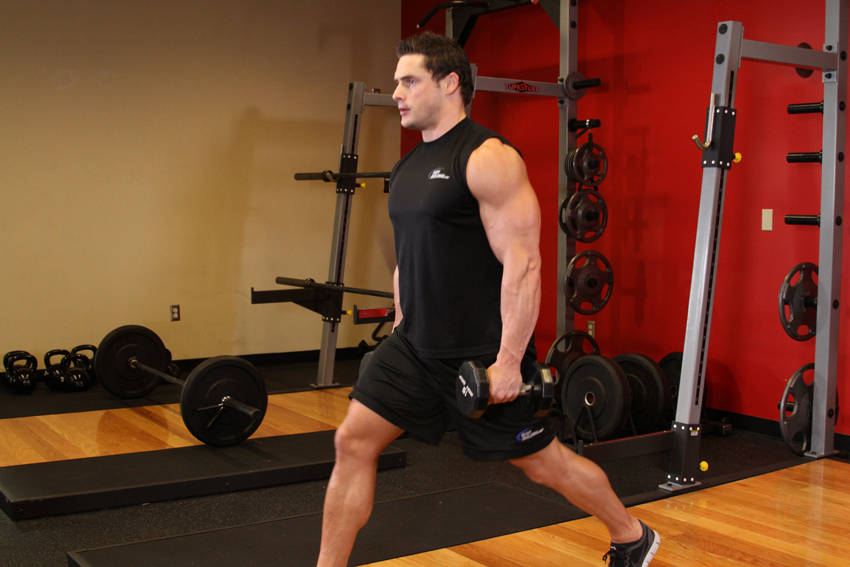
1. Dumbbell Lunges
74.4% MatchHow to perform this exercise
- Stand with your torso upright holding two dumbbells in your hands by your sides. This will be your starting position.
- Step forward with your right leg around 2 feet or so from the foot being left stationary behind and lower your upper body down, while keeping the torso upright and maintaining balance. Inhale as you go down. Note: As in the other exercises, do not allow your knee to go forward beyond your toes as you come down, as this will put undue stress on the knee joint. Make sure that you keep your front shin perpendicular to the ground.
- Using mainly the heel of your foot, push up and go back to the starting position as you exhale.
- Repeat the movement for the recommended amount of repetitions and then perform with the left leg.
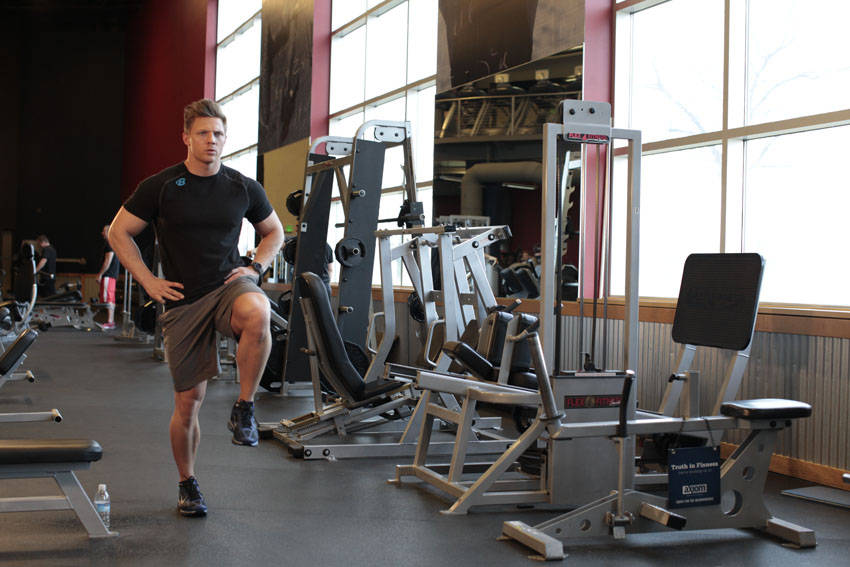
2. Bodyweight Walking Lunge
74.2% MatchHow to perform this exercise
- Begin standing with your feet shoulder width apart and your hands on your hips.
- Step forward with one leg, flexing the knees to drop your hips. Descend until your rear knee nearly touches the ground. Your posture should remain upright, and your front knee should stay above the front foot.
- Drive through the heel of your lead foot and extend both knees to raise yourself back up.
- Step forward with your rear foot, repeating the lunge on the opposite leg.
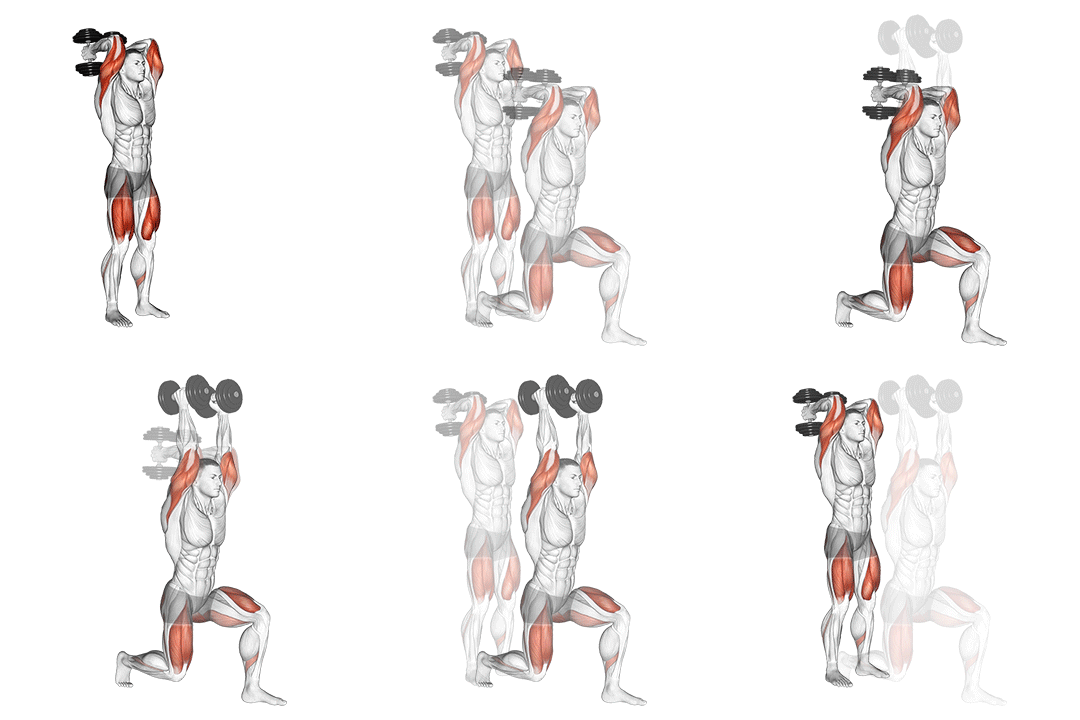
3. Dumbbell Forward Lunge Triceps Extension
73.7% MatchHow to perform this exercise
- Stand with your feet shoulder-width apart, holding a dumbbell in each hand.
- Take a step forward with your right foot, lowering your body into a lunge position.
- Keep your back straight and your chest up.
- Extend your arms straight overhead, keeping your elbows close to your ears.
- Lower the dumbbells behind your head by bending your elbows.
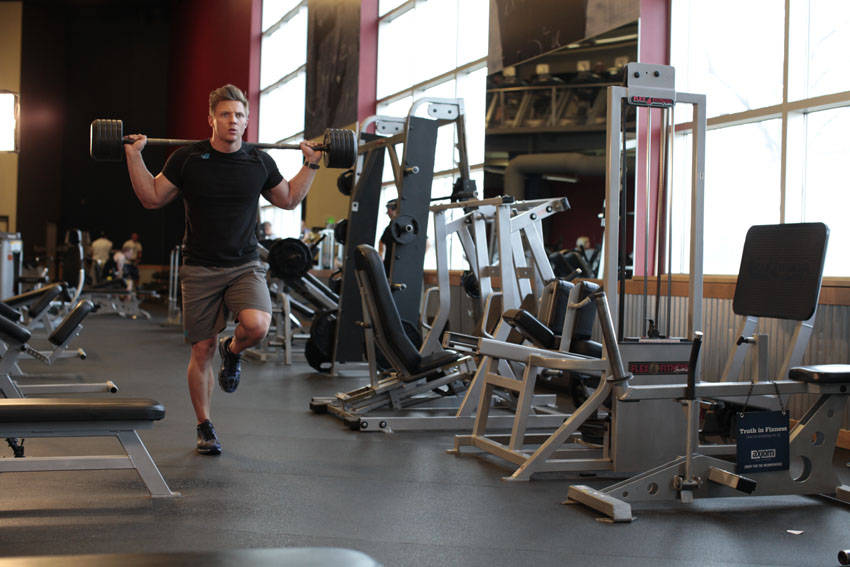
4. Barbell Walking Lunge
70.2% MatchHow to perform this exercise
- Begin standing with your feet shoulder width apart and a barbell across your upper back.
- Step forward with one leg, flexing the knees to drop your hips. Descend until your rear knee nearly touches the ground. Your posture should remain upright, and your front knee should stay above the front foot.
- Drive through the heel of your lead foot and extend both knees to raise yourself back up.
- Step forward with your rear foot, repeating the lunge on the opposite leg.
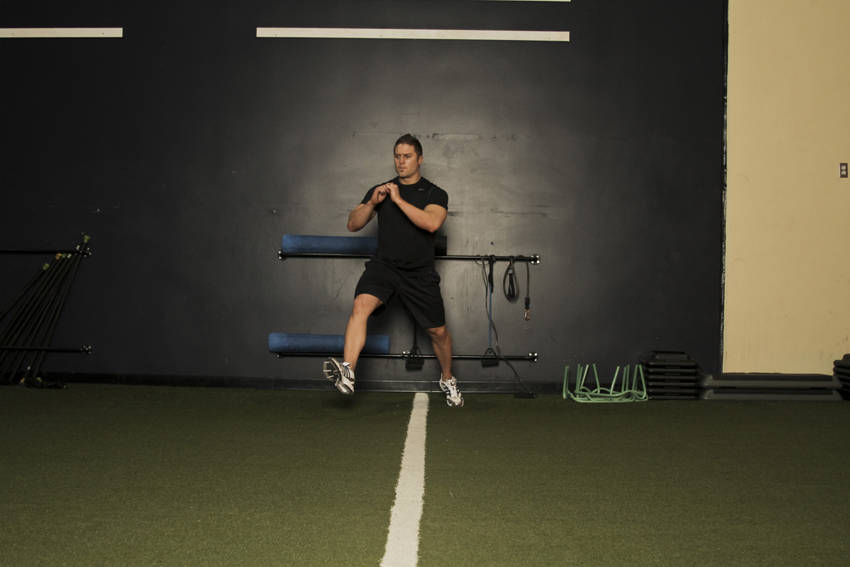
5. Alternate Leg Diagonal Bound
69.7% MatchHow to perform this exercise
- Assume a comfortable stance with one foot slightly in front of the other.
- Begin by pushing off with the front leg, driving the opposite knee forward and as high as possible before landing. Attempt to cover as much distance to each side with each bound.
- It may help to use a line on the ground to guage distance from side to side.
- Repeat the sequence with the other leg.
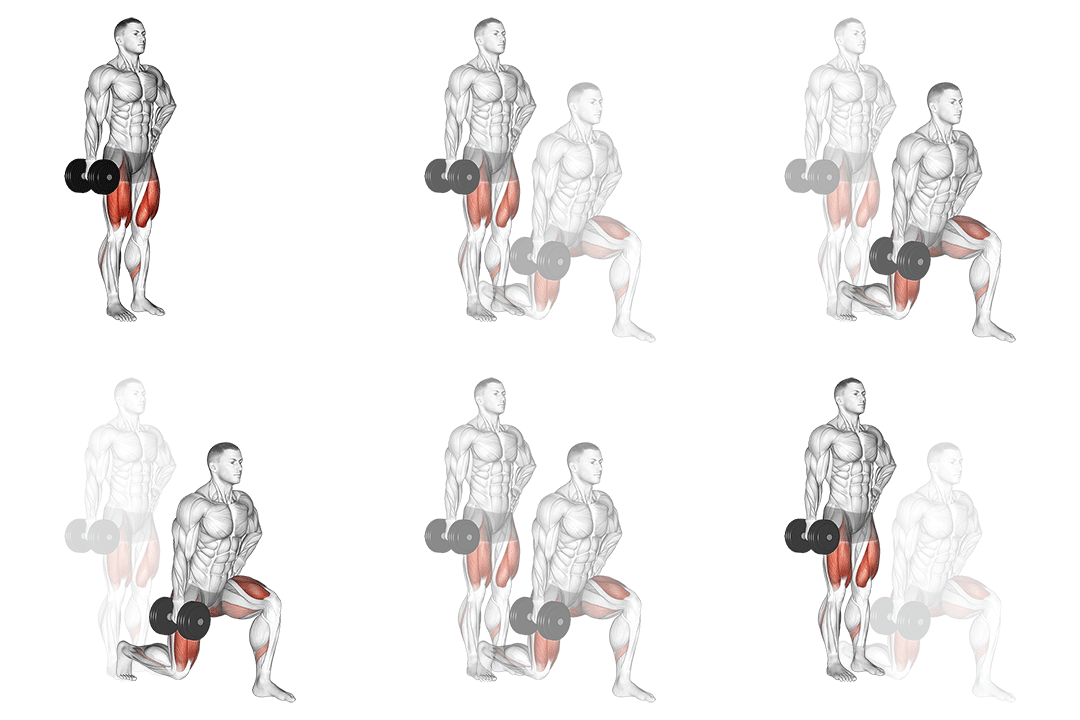
6. Dumbbell Contralateral Forward Lunge
68% MatchHow to perform this exercise
- Stand with your feet shoulder-width apart, holding a dumbbell in each hand.
- Take a step forward with your right foot, keeping your back straight and core engaged.
- Lower your body by bending both knees until your right thigh is parallel to the ground.
- Push through your right heel to return to the starting position.
- Repeat with your left leg.
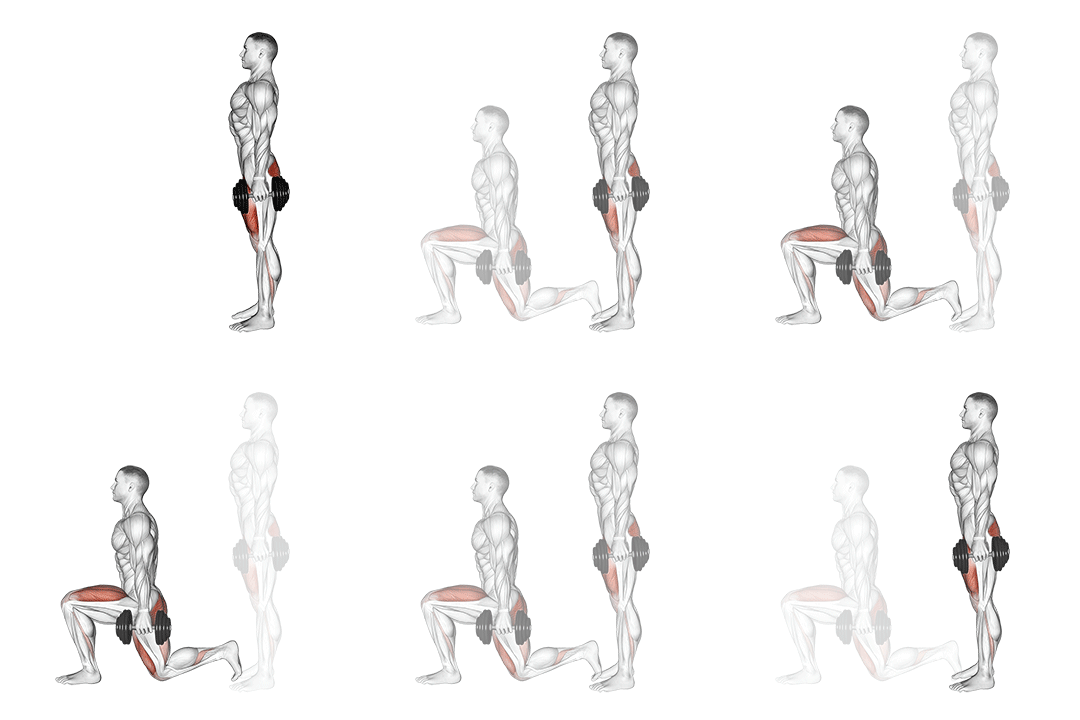
7. Dumbbell Lunge
68% MatchHow to perform this exercise
- Stand with your feet shoulder-width apart, holding a dumbbell in each hand.
- Take a step forward with your right foot, lowering your body into a lunge position.
- Keep your back straight and your chest up as you lower your body.
- Push through your right heel to return to the starting position.
- Repeat with your left leg.
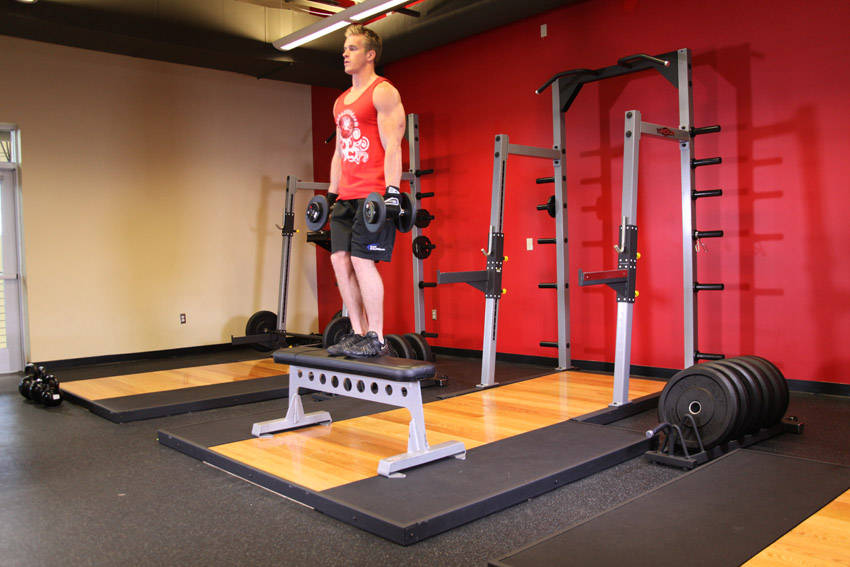
8. Dumbbell Step Ups
68% MatchHow to perform this exercise
- Stand up straight while holding a dumbbell on each hand (palms facing the side of your legs).
- Place the right foot on the elevated platform. Step on the platform by extending the hip and the knee of your right leg. Use the heel mainly to lift the rest of your body up and place the foot of the left leg on the platform as well. Breathe out as you execute the force required to come up.
- Step down with the left leg by flexing the hip and knee of the right leg as you inhale. Return to the original standing position by placing the right foot of to next to the left foot on the initial position.
- Repeat with the right leg for the recommended amount of repetitions and then perform with the left leg.
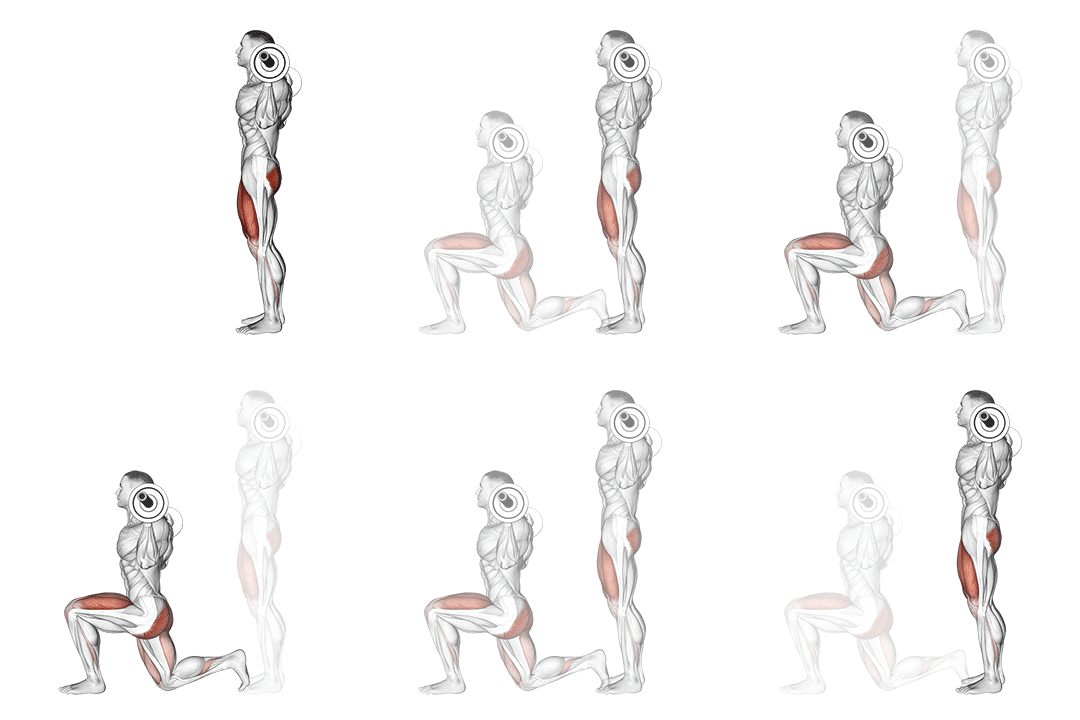
9. Barbell Lunge
65.2% MatchHow to perform this exercise
- Start by standing with your feet shoulder-width apart and a barbell resting on your upper back.
- Take a step forward with your right foot, keeping your torso upright.
- Lower your body by bending your right knee until your thigh is parallel to the ground.
- Push through your right heel to return to the starting position.
- Repeat with your left leg, alternating legs for the desired number of repetitions.
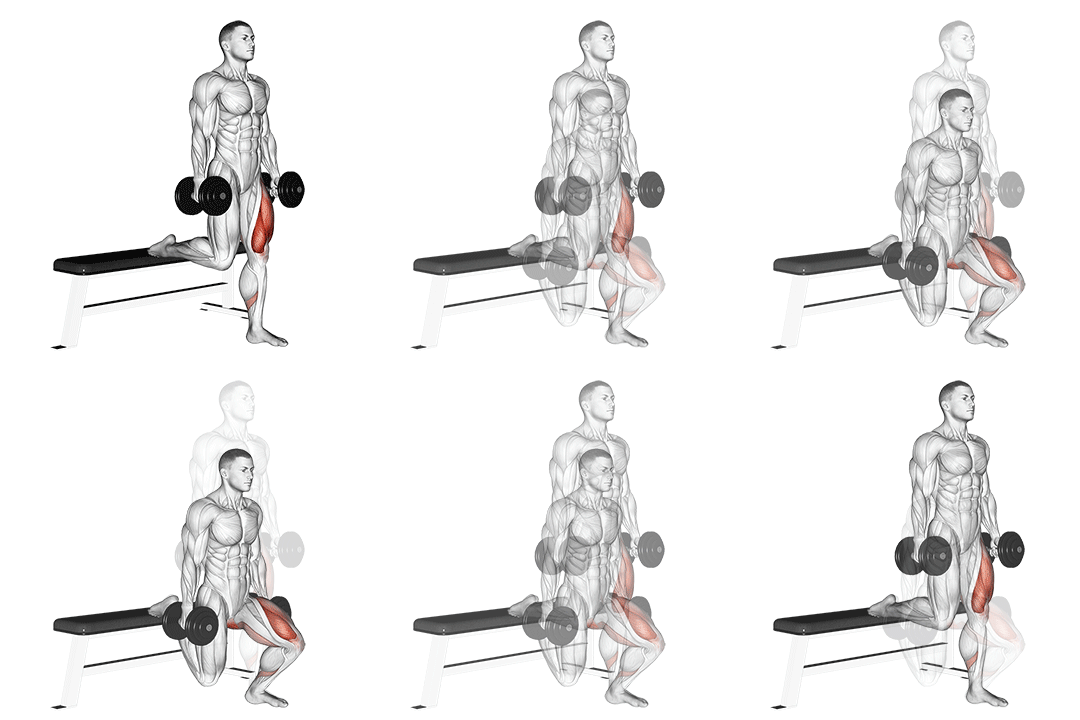
10. Dumbbell Single Leg Split Squat
62.2% MatchHow to perform this exercise
- Stand with your feet shoulder-width apart, holding a dumbbell in each hand.
- Take a step forward with one foot and position your feet so that your front foot is flat on the ground and your back foot is elevated on a bench or step.
- Lower your body by bending your front knee and hip, keeping your back knee slightly bent and your back heel off the ground.
- Continue lowering until your front thigh is parallel to the ground, then push through your front heel to return to the starting position.
- Repeat for the desired number of repetitions, then switch legs and repeat.
Why You Might Need a Lunge Sprint Alternative
You may need substitutes because the machine is unavailable, you experience knee or hip discomfort, or you want greater carryover to sport-specific sprinting. Alternatives let you vary the knee-extension moment and hip extension demand to protect injured tissue while still loading the quads. For example, choose a hack squat to isolate knee extension and reduce balance demands, or a sled push to emphasize horizontal force production. Cue: on hack squats set your stance and foot position to keep the knees tracking over toes and stop at a 90-degree knee angle to hit the rectus femoris and vasti effectively.
How to Choose the Right Substitute
Match the substitute to the primary mechanics you need: knee-extension load, unilateral stability, or horizontal power. Prioritize exercises that reproduce the Lunge Sprint's quad emphasis if your goal is hypertrophy and strength — e.g., hack squat or front step-up for a high knee moment. If you need sprint-transfer, pick sled pushes or loaded step-ups to train horizontal force and short ground contact. Consider joint tolerance, equipment, and progressive-overload options. Cue: when selecting a unilateral movement, keep your torso vertical and drive through the heel to increase quad activation and limit hip-dominant compensation.
Frequently Asked Questions
What muscles does Lunge Sprint work?
Lunge Sprint primarily targets the quadriceps (rectus femoris and vasti) through knee extension, while also engaging gluteus maximus and hamstrings for hip extension and propulsion. The calves and core assist with push-off and trunk stability; cue: drive through the ball and heel of the front foot to recruit quads and hip extensors.
What is the best bodyweight alternative to Lunge Sprint?
A bodyweight Bulgarian split squat is the best single-leg substitute because it maintains high unilateral knee-extension demand and balance training. Cue: elevate the rear foot, keep the chest upright, descend until the front thigh is about parallel, and drive through the front heel to emphasize quadriceps activation.
Can I build muscle without doing Lunge Sprint?
Yes—you can build quad muscle with alternatives that match intensity, volume, and range of motion. Use hack squats, heavy step-ups, or slow eccentrics in split squats to increase time under tension; cue: control the lowering phase and stop near 90 degrees knee flexion to maximize hypertrophy.
More Exercise Alternatives
Find Alternatives for Any Exercise
Use our free tool to discover the best substitute exercises based on your available equipment and goals.
Try the Exercise Substitution Finder →