

10 Best Machine Triceps Extension Alternatives for Any Gym Setup
Use close-grip bench press, cable pressdowns, skull crushers, dumbbell kickbacks, or dips to replace the machine triceps extension. These moves produce elbow extension under load and hit the long, lateral, and medial heads differently. Brace your core, keep the upper arm stable, and extend through the elbow for strong triceps activation.
Original Exercise: Machine Triceps Extension
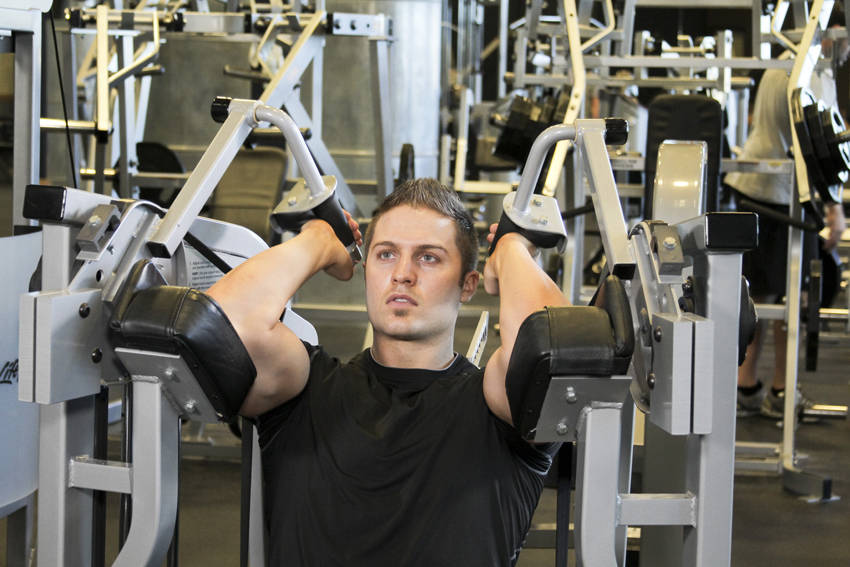
How to Perform Machine Triceps Extension
- Adjust the seat to the appropriate height and make your weight selection. Place your upper arms against the pads and grasp the handles. This will be your starting position.
- Perform the movement by extending the elbow, pulling your lower arm away from your upper arm.
- Pause at the completion of the movement, and then slowly return the weight to the starting position.
- Avoid returning the weight all the way to the stops until the set is complete to keep tension on the muscles being worked.
Pro Tips
- Category: Strength
- Force: Push
- Movement type: Isolation
Best Machine Triceps Extension Alternatives
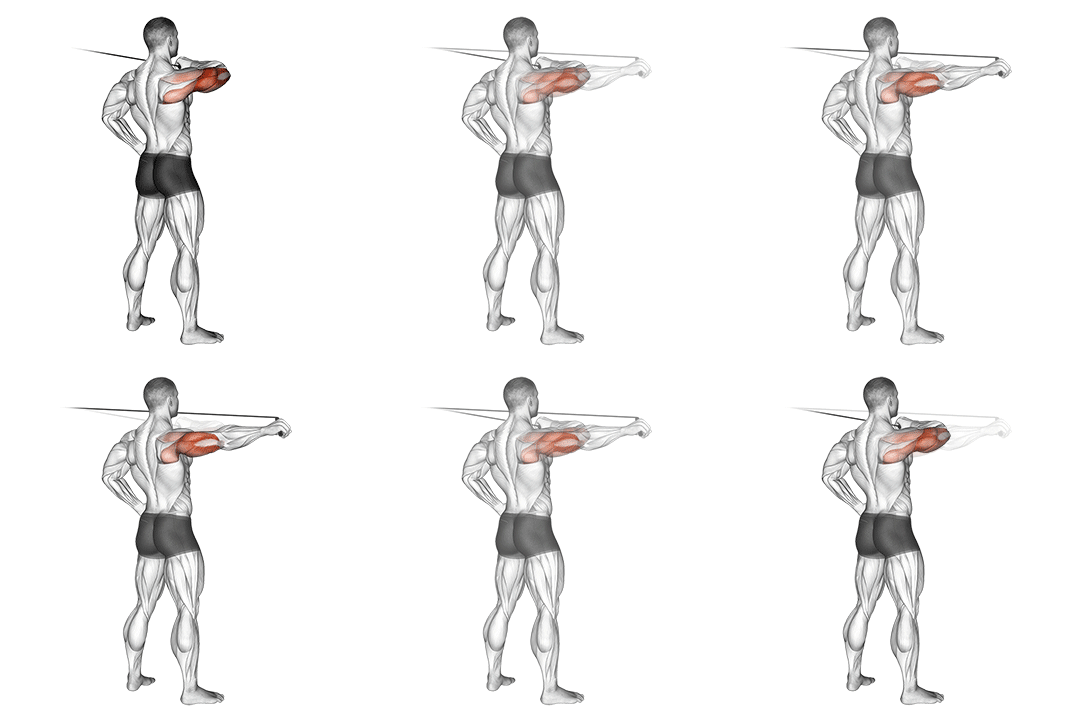
1. Cable Rear Drive
83.3% MatchHow to perform this exercise
- Attach a handle to a low pulley cable machine and stand facing away from the machine.
- Grasp the handle with an overhand grip and extend your arms straight out in front of you.
- Keeping your elbows stationary, pull the handle back towards your body, squeezing your triceps at the end of the movement.
- Slowly return the handle to the starting position and repeat for the desired number of repetitions.
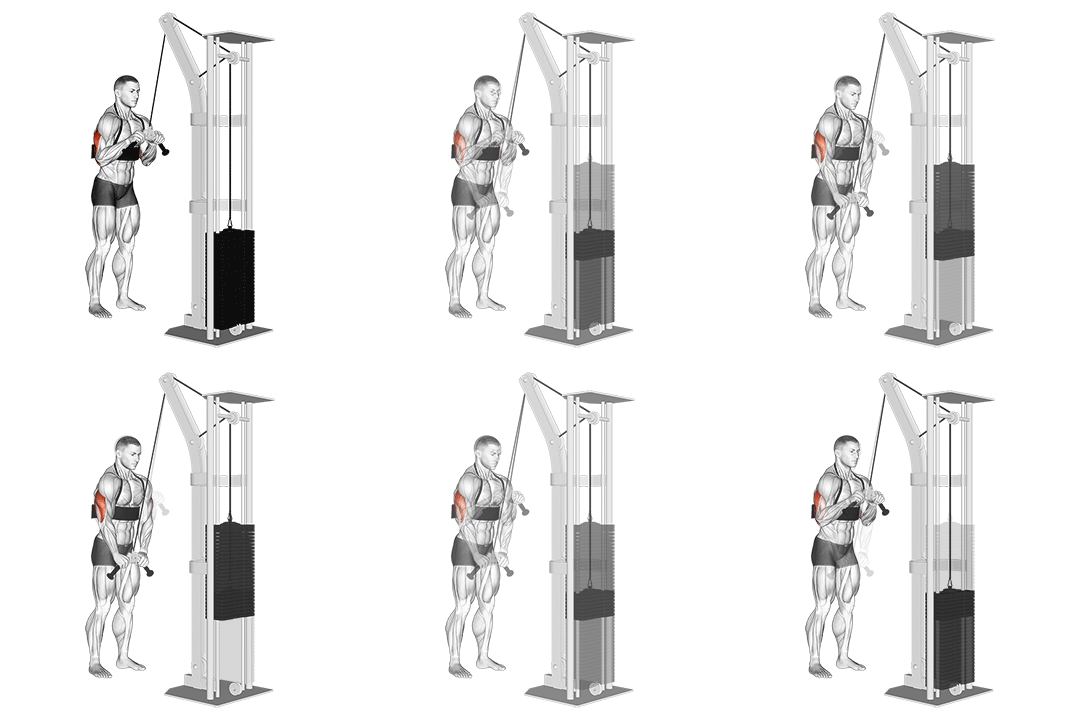
2. Cable Triceps Pushdown (v-bar) (with Arm Blaster)
79.7% MatchHow to perform this exercise
- Attach a v-bar attachment to the cable machine at the highest setting.
- Stand facing the cable machine with your feet shoulder-width apart.
- Grasp the v-bar with an overhand grip, palms facing down, and your hands shoulder-width apart.
- Keep your elbows close to your sides and your upper arms stationary throughout the exercise.
- Engage your triceps and exhale as you push the v-bar down until your arms are fully extended.
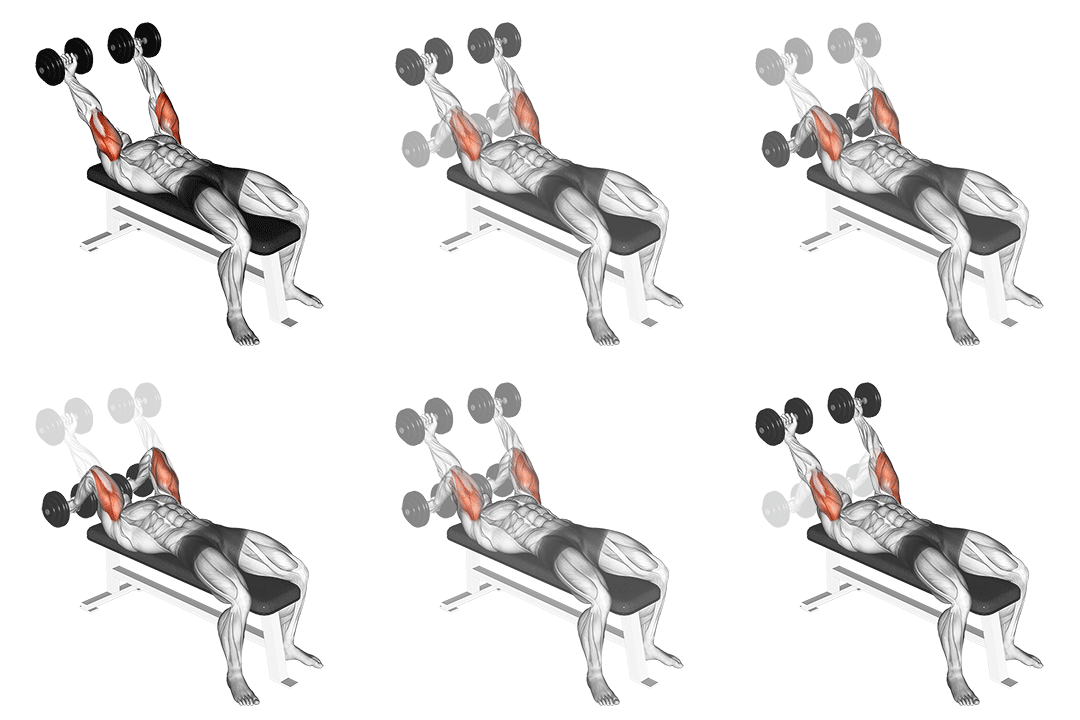
3. Dumbbell Pronate-grip Triceps Extension
77.6% MatchHow to perform this exercise
- Sit on a bench or chair with your back straight and feet flat on the ground.
- Hold a dumbbell with both hands, palms facing down, and extend your arms straight up overhead.
- Keeping your upper arms close to your head and elbows pointing forward, slowly lower the dumbbell behind your head by bending your elbows.
- Pause for a moment, then extend your arms back up to the starting position.
- Repeat for the desired number of repetitions.
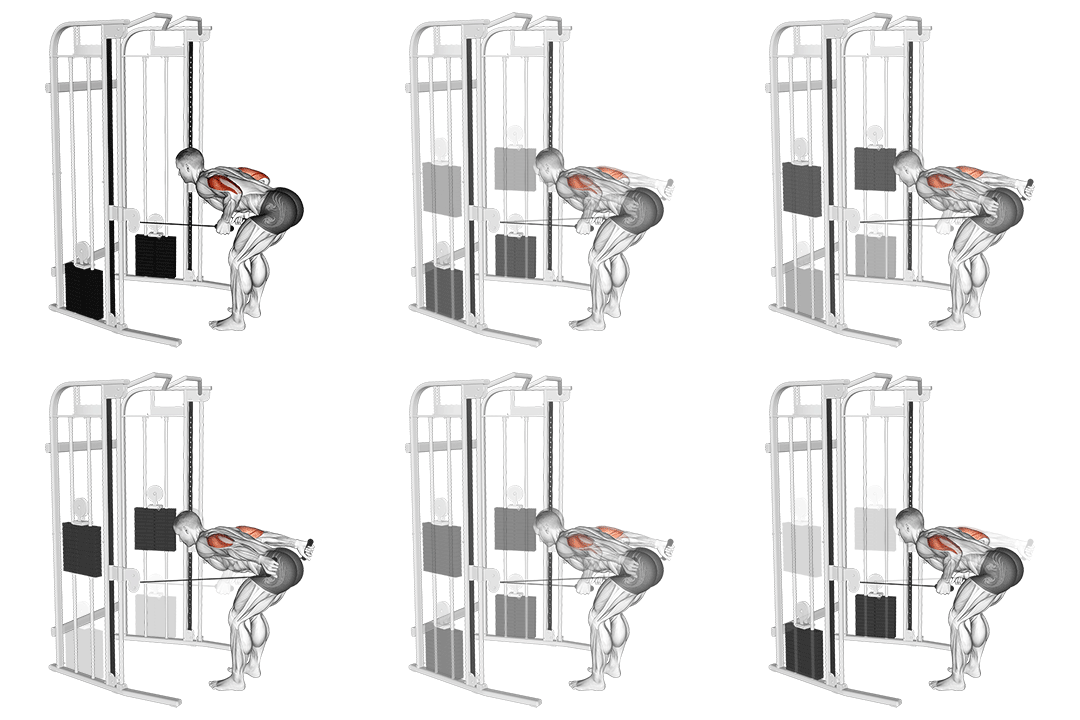
4. Cable Two Arm Tricep Kickback
77.3% MatchHow to perform this exercise
- Stand with your feet shoulder-width apart and knees slightly bent.
- Hold the cable handle in each hand with your palms facing inwards and your arms bent at a 90-degree angle.
- Keeping your upper arms stationary, extend your forearms backwards until your arms are fully extended.
- Pause for a moment, then slowly return to the starting position.
- Repeat for the desired number of repetitions.
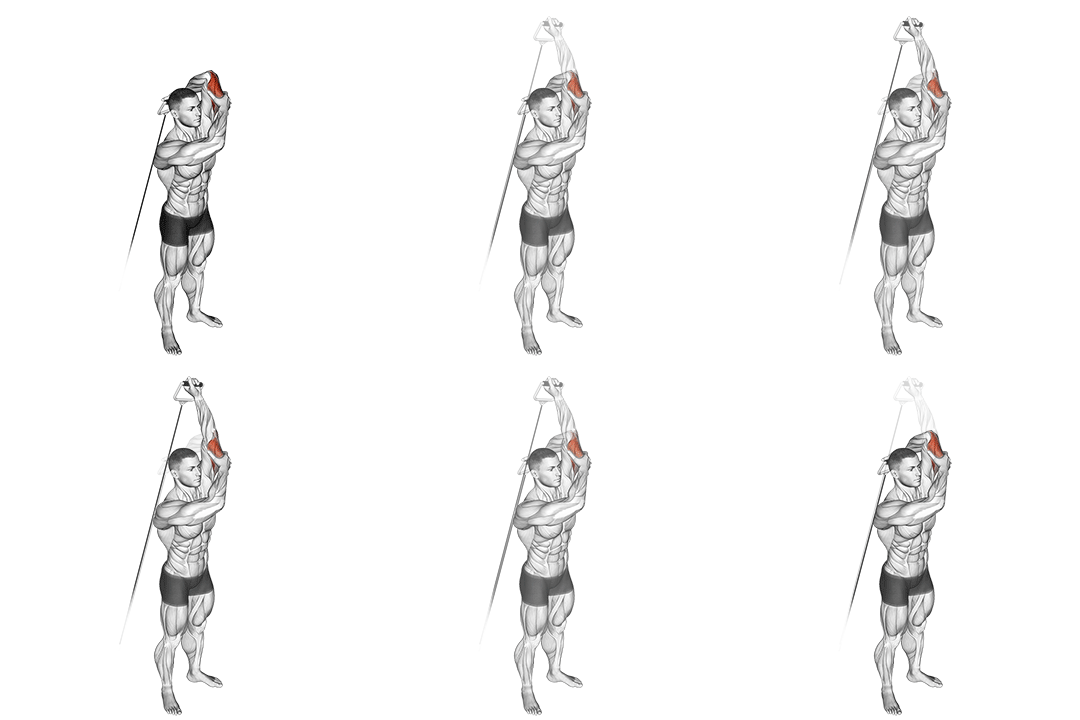
5. Cable Alternate Triceps Extension
76.7% MatchHow to perform this exercise
- Stand facing the cable machine with your feet shoulder-width apart.
- Hold the cable handle with your right hand and bring your arm up so that your upper arm is parallel to the ground and your elbow is bent at a 90-degree angle.
- Keep your upper arm stationary and extend your forearm backward, fully straightening your arm.
- Pause for a moment, then slowly return to the starting position.
- Repeat with your left arm.
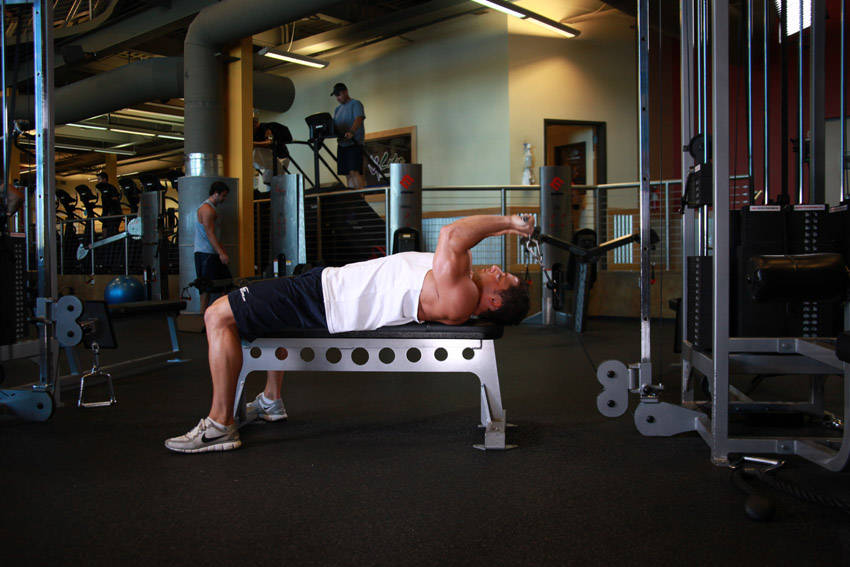
6. Cable Lying Triceps Extension
75.7% MatchHow to perform this exercise
- Lie on a flat bench and grasp the straight bar attachment of a low pulley with a narrow overhand grip. Tip: The easiest way to do this is to have someone hand you the bar as you lay down.
- With your arms extended, position the bar over your torso. Your arms and your torso should create a 90-degree angle. This will be your starting position.
- Lower the bar by bending at the elbow while keeping the upper arms stationary and elbows in. Go down until the bar lightly touches your forehead. Breathe in as you perform this portion of the movement.
- Flex the triceps as you lift the bar back to its starting position. Exhale as you perform this portion of the movement.
- Hold for a second at the contracted position and repeat for the recommended amount of repetitions.
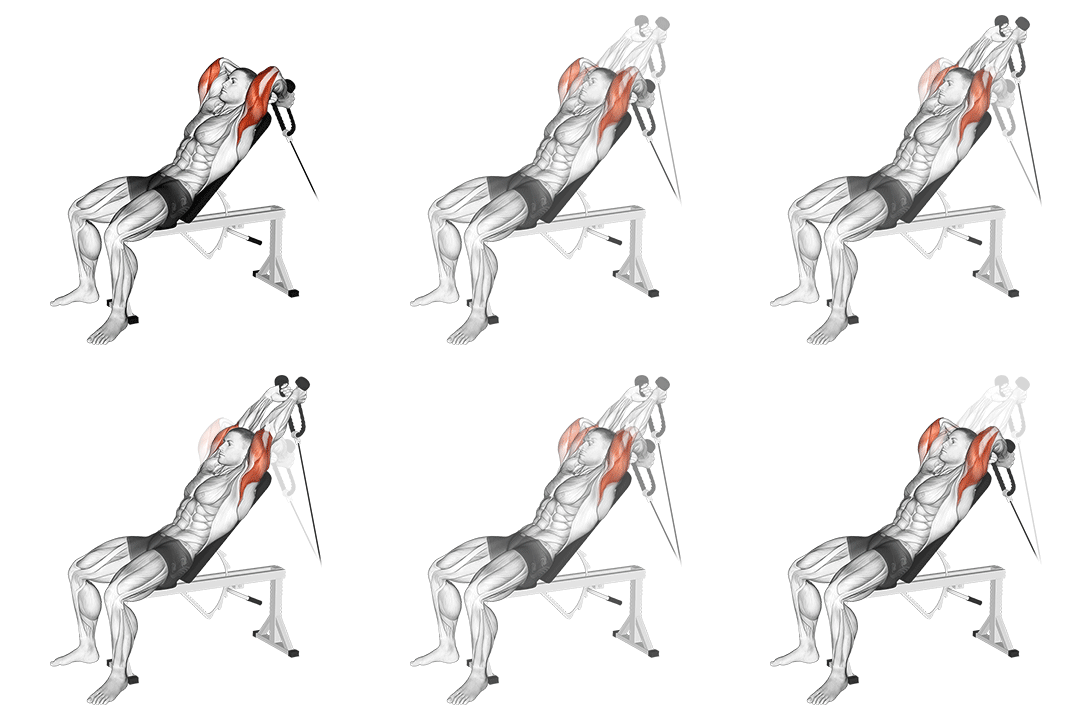
7. Cable Rope Incline Tricep Extension
73.8% MatchHow to perform this exercise
- Attach a rope to a high pulley and adjust the incline bench to a comfortable angle.
- Stand facing away from the pulley with your feet shoulder-width apart.
- Grasp the rope with an overhand grip and extend your arms straight overhead.
- Keep your elbows close to your head and your upper arms stationary throughout the exercise.
- Lower the rope behind your head by bending your elbows until your forearms touch your biceps.
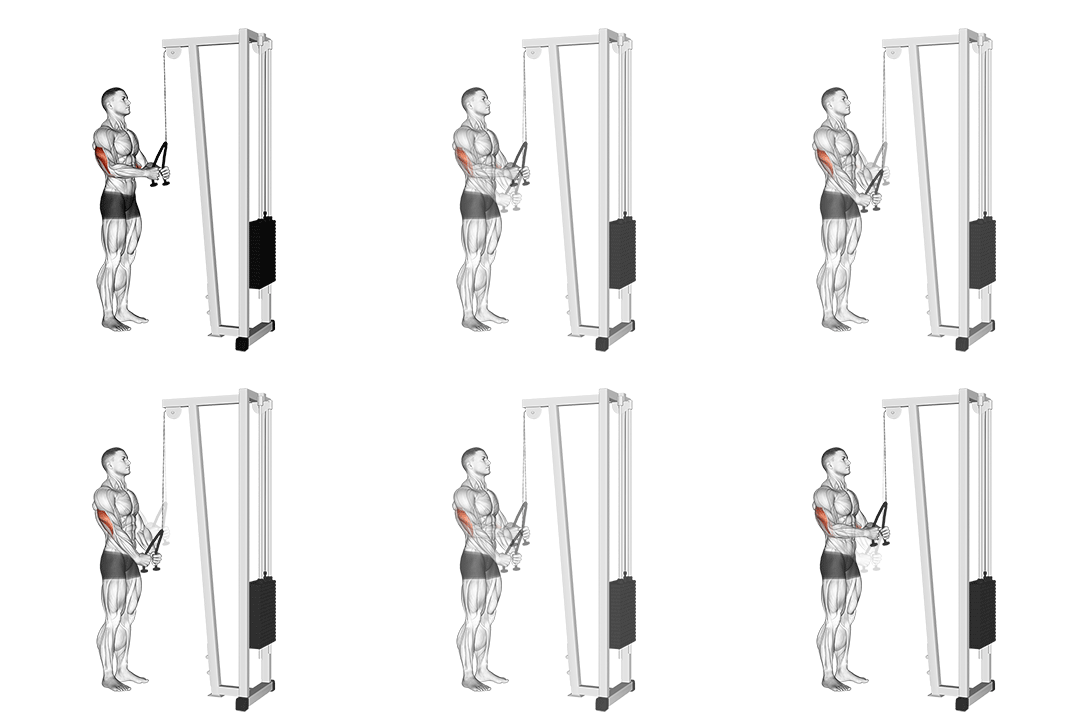
8. Cable Pushdown (with Rope Attachment)
73.7% MatchHow to perform this exercise
- Attach a rope attachment to a high pulley on a cable machine.
- Stand facing the machine with your feet shoulder-width apart and a slight bend in your knees.
- Grasp the rope with an overhand grip, palms facing each other.
- Keep your elbows close to your sides and your upper arms stationary throughout the exercise.
- Exhale and push the rope downward by extending your elbows until your arms are fully extended.
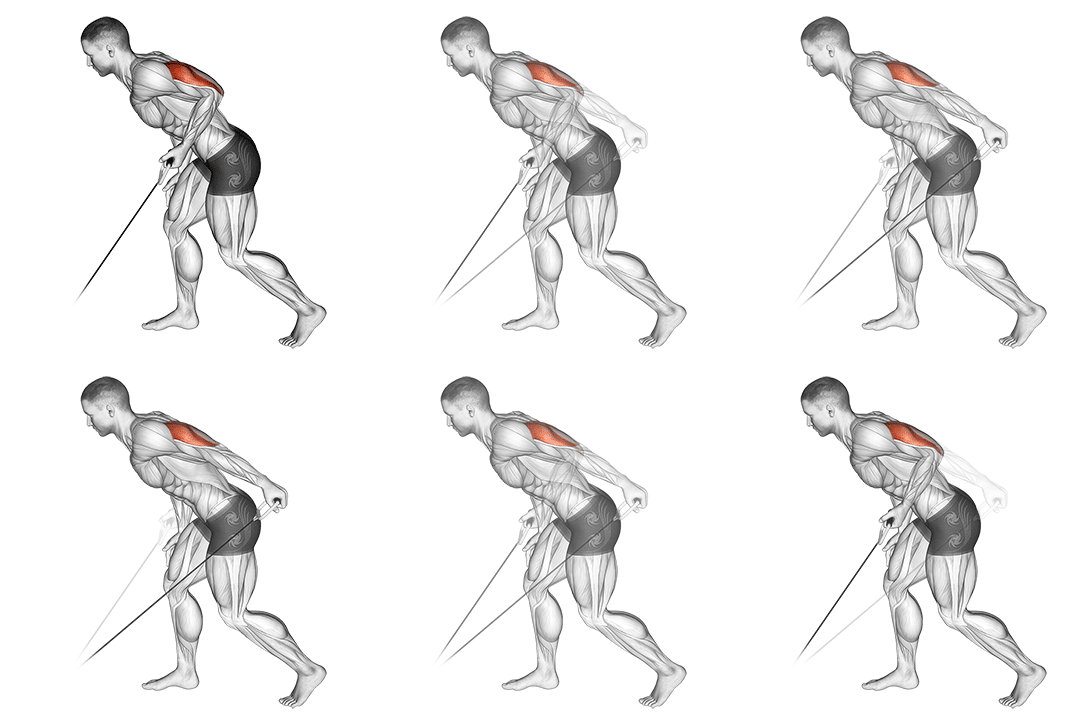
9. Cable Kickback
72.9% MatchHow to perform this exercise
- Stand facing a cable machine with your feet shoulder-width apart.
- Hold the cable handle with your right hand and step back to create tension in the cable.
- Bend your knees slightly and hinge forward at the hips, keeping your back straight.
- Keep your upper arm close to your body and your elbow bent at a 90-degree angle.
- Extend your forearm backward, straightening your arm fully.
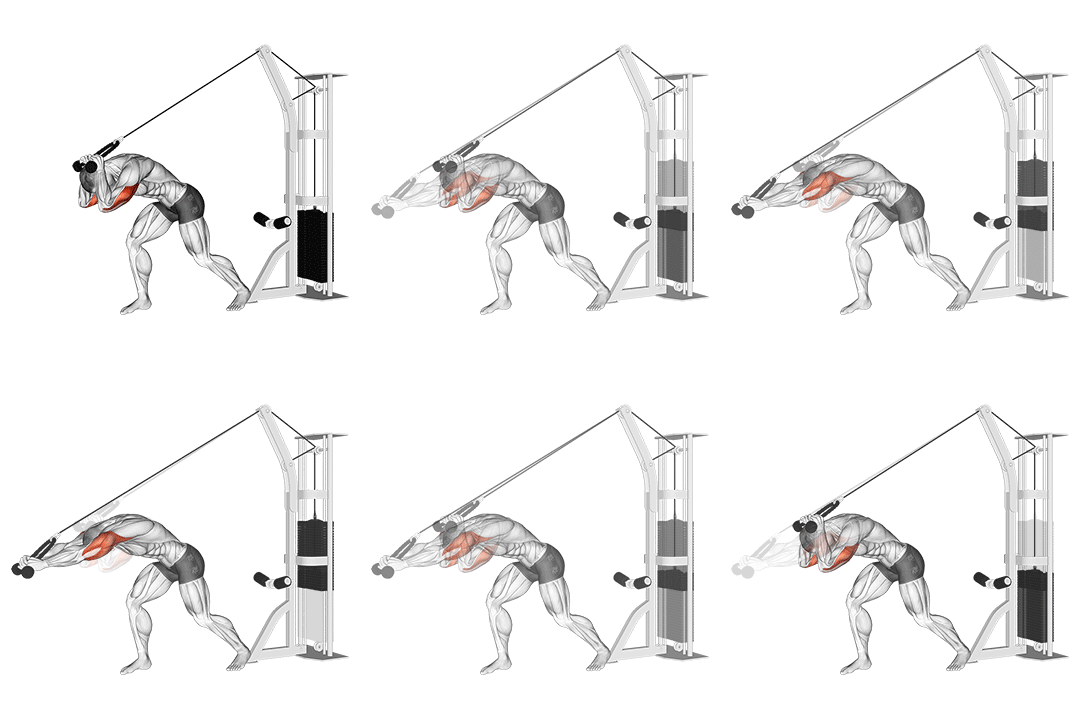
10. Cable Rope High Pulley Overhead Tricep Extension
72.3% MatchHow to perform this exercise
- Attach a rope to a high pulley and adjust the weight accordingly.
- Stand facing away from the pulley machine with your feet shoulder-width apart.
- Grasp the rope with both hands, palms facing down, and bring your hands above your head.
- Keep your upper arms close to your head and perpendicular to the floor.
- Slowly lower the rope behind your head by bending your elbows.
Why You Might Need a Machine Triceps Extension Alternative
You might substitute the machine triceps extension because of equipment limits, shoulder or elbow pain, or a preference for different loading patterns. Machines guide a fixed path and reduce stabilizer demand; free weights and cables change torque, require more eccentric control, and allow varied joint angles. Overhead variations increase long-head stretch and activation through shoulder flexion, while pressdowns and kickbacks bias lateral and medial heads by altering elbow-extension torque. If you have joint irritation, choose low-compression cable options and keep a neutral wrist. Cue: keep the upper arm stationary and drive force through elbow extension to isolate the triceps and avoid shoulder compensation.
How to Choose the Right Substitute
Match the substitute to your goal, equipment, and joint tolerance. For steady isolation use cable pressdowns — set the pulley at chest height, pin elbows to your sides, and extend fully through the elbow. For heavier loading pick close-grip bench press or floor press to recruit triceps plus pecs and delts. To target the long head, use overhead dumbbell extensions with a controlled stretch at the shoulder. If you have shoulder pain, avoid deep dips and instead perform skull crushers with a shortened range. Cue: prioritize full controlled eccentrics and progressive overload (load, reps, or tempo) to maximize triceps recruitment.
Frequently Asked Questions
What muscles does Machine Triceps Extension work?
The machine triceps extension primarily targets the triceps brachii: the long, lateral, and medial heads, which act as the main elbow extensors. Biomechanically it isolates elbow extension with minimal shoulder movement, so activation peaks when you keep the upper arm stable and focus on controlled concentric and eccentric phases.
What is the best bodyweight alternative to Machine Triceps Extension?
Close-grip (diamond) push-ups are the best bodyweight substitute because they force elbow-driven extension while requiring core tension and scapular stability. Cue: place hands beneath the sternum, keep elbows tight to the torso, and lower with control to emphasize triceps activation through the full range.
Can I build muscle without doing Machine Triceps Extension?
Yes — you can build triceps mass using other compound and isolation lifts that apply progressive overload. Use close-grip presses, dips, skull crushers, and cable pressdowns, and focus on full elbow extension and controlled eccentrics to maximize mechanical tension and hypertrophy.
More Exercise Alternatives
Find Alternatives for Any Exercise
Use our free tool to discover the best substitute exercises based on your available equipment and goals.
Try the Exercise Substitution Finder →