

10 Best Medicine Ball Chest Pass Alternatives for Explosive Chest Power
The Medicine Ball Chest Pass has you push a ball away from your chest with force, then catch it as it rebounds off a wall or partner and go again. The Medicine Ball Chest Push Multiple Response is the closest of these: same standing push, but you hold the ball, pause, and bring it back slowly instead of throwing it into a wall. With no medicine ball but a heavy bag on hand, the Heavy Bag Thrust has you stand beside it, twist at the waist, and shove it away hard before catching it back.
Original Exercise: Medicine Ball Chest Pass
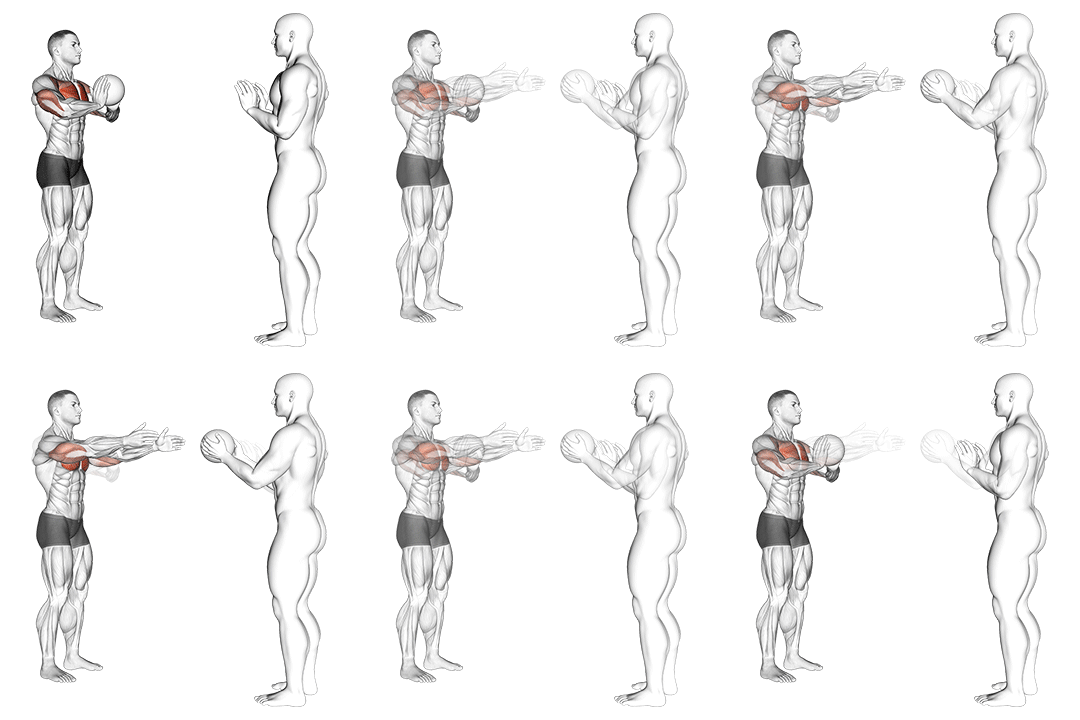
How to Perform Medicine Ball Chest Pass
- Stand with your feet shoulder-width apart, holding the medicine ball at chest level.
- Extend your arms forward, pushing the medicine ball away from your chest with force.
- As you release the ball, follow through with your arms and torso, transferring your weight from your back foot to your front foot.
- Catch the ball as it rebounds off the wall or partner, and immediately repeat the movement.
- Continue for the desired number of repetitions.
Ranked Medicine Ball Chest Pass Alternatives
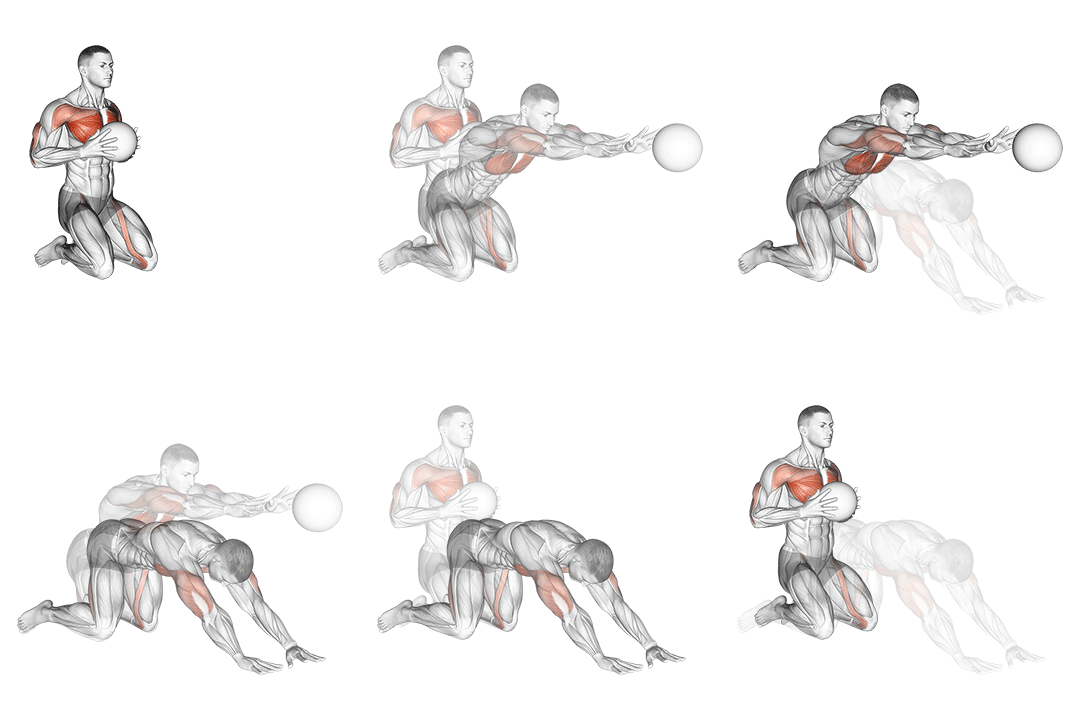
1. Medicine Ball Chest Push Multiple Response
99.9% MatchHow to perform this exercise
- Stand with your feet shoulder-width apart, holding a medicine ball at chest level.
- Extend your arms forward, pushing the medicine ball away from your chest.
- Pause for a moment, then slowly bring the medicine ball back to your chest.
- Repeat for the desired number of repetitions.
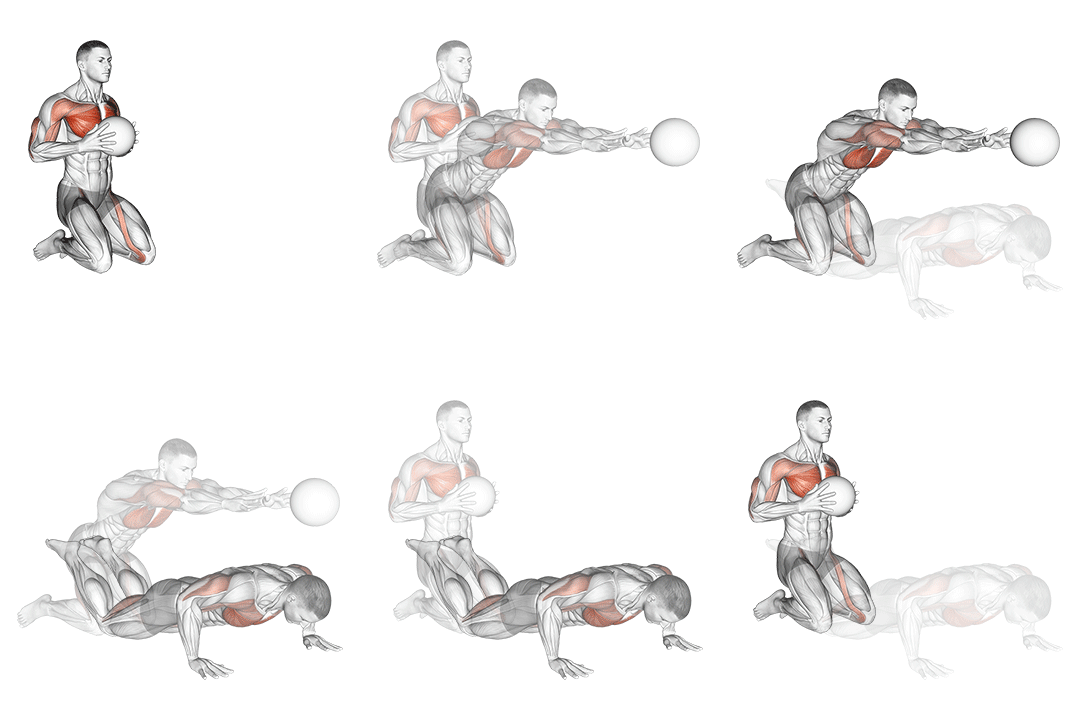
2. Medicine Ball Chest Push Single Response
99.9% MatchHow to perform this exercise
- Stand with your feet shoulder-width apart, holding the medicine ball at chest level.
- Extend your arms forward, pushing the medicine ball away from your chest.
- Pause for a moment, then slowly bring the medicine ball back to your chest.
- Repeat for the desired number of repetitions.
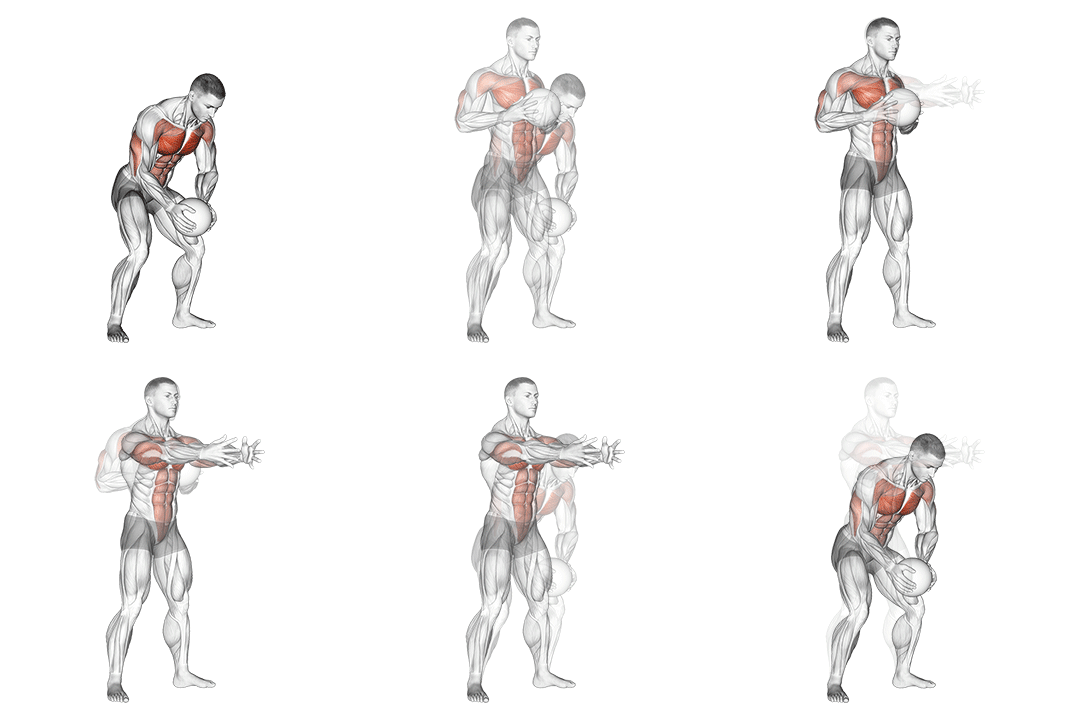
3. Medicine Ball Chest Push With Run Release
99.4% MatchHow to perform this exercise
- Stand with your feet shoulder-width apart, holding a medicine ball at chest level.
- Step forward with your right foot and simultaneously push the medicine ball forward, extending your arms fully.
- As you push the ball forward, release it and let it roll forward.
- Quickly run forward and catch the ball before it hits the ground.
- Once you catch the ball, bring it back to your chest and repeat the movement with your left foot forward.
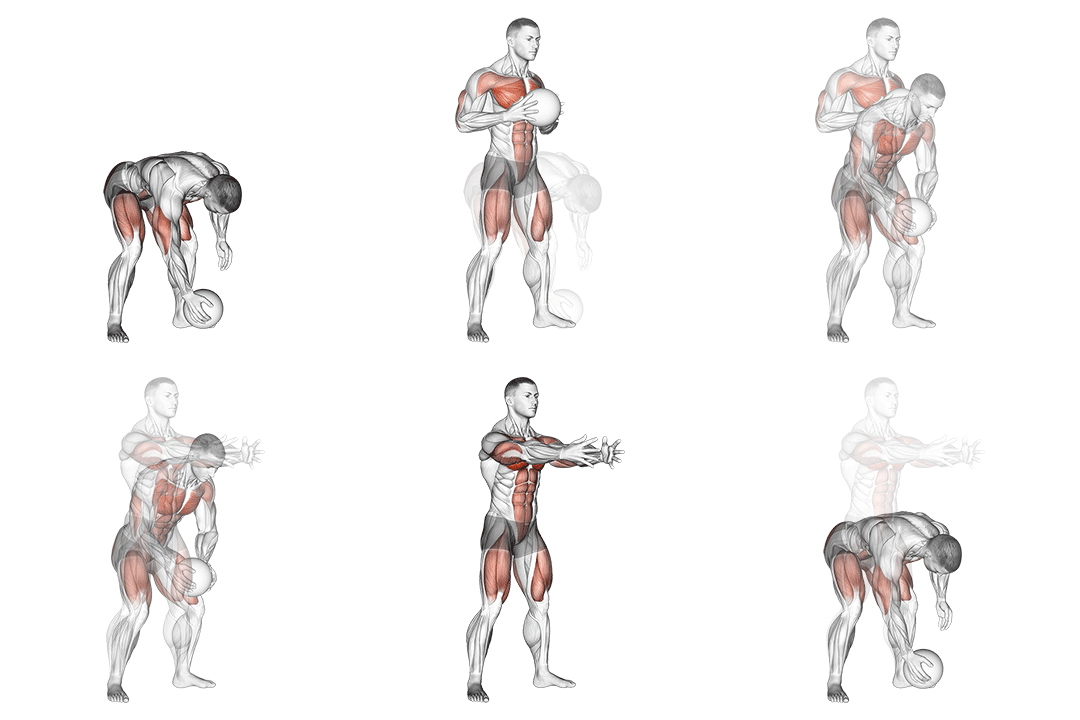
4. Medicine Ball Chest Push From 3 Point Stance
97.9% MatchHow to perform this exercise
- Start in a 3 point stance with one hand on the medicine ball and the other hand on the ground.
- Extend your legs and position your body in a straight line.
- Lower your chest towards the ground while keeping your back straight.
- Push the medicine ball away from your body, extending your arm fully.
- Return to the starting position and repeat for the desired number of repetitions.
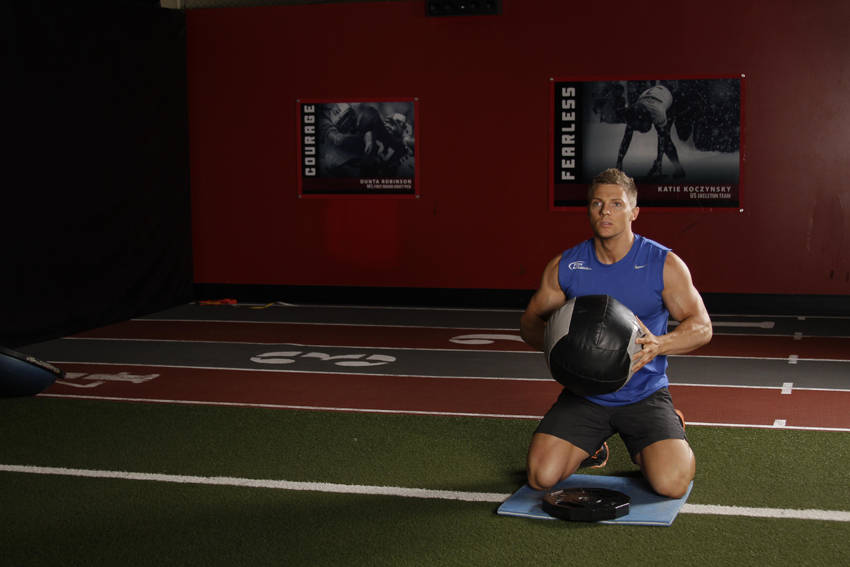
5. Chest Push (single Response)
93.6% MatchHow to perform this exercise
- Begin in a kneeling position holding the medicine ball with both hands tightly into the chest.
- Execute the pass by exploding forward and outward with the hips while pushing the ball as far as possible.
- Follow through by falling forward, catching yourself with your hands.
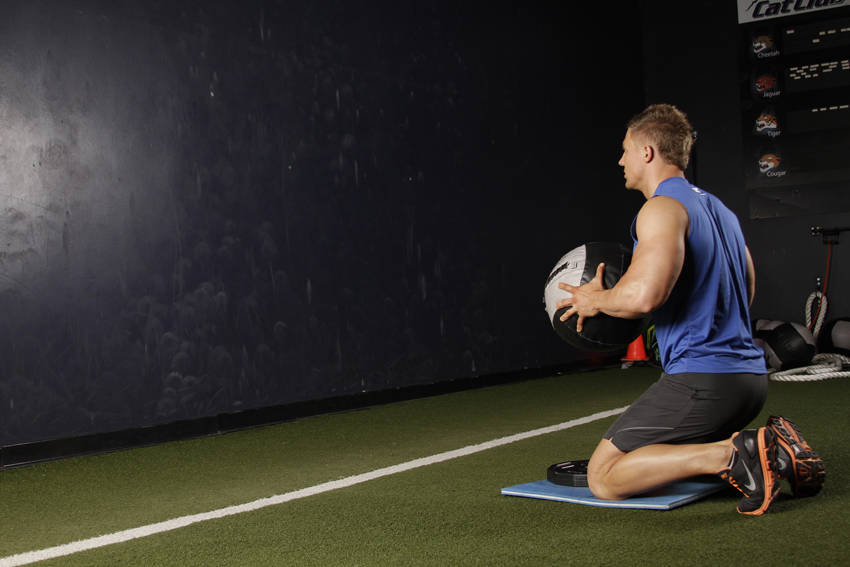
6. Chest Push (multiple Response)
92.9% MatchHow to perform this exercise
- Begin in a kneeling position facing a wall or utilize a partner. Hold the ball with both hands tight into the chest.
- Execute the pass by exploding forward and outward with the hips while pushing the ball as hard as possible.
- Follow through by falling forward, catching yourself with your hands.
- Immediately return to an upright position. Repeat for the desired number of repetitions.
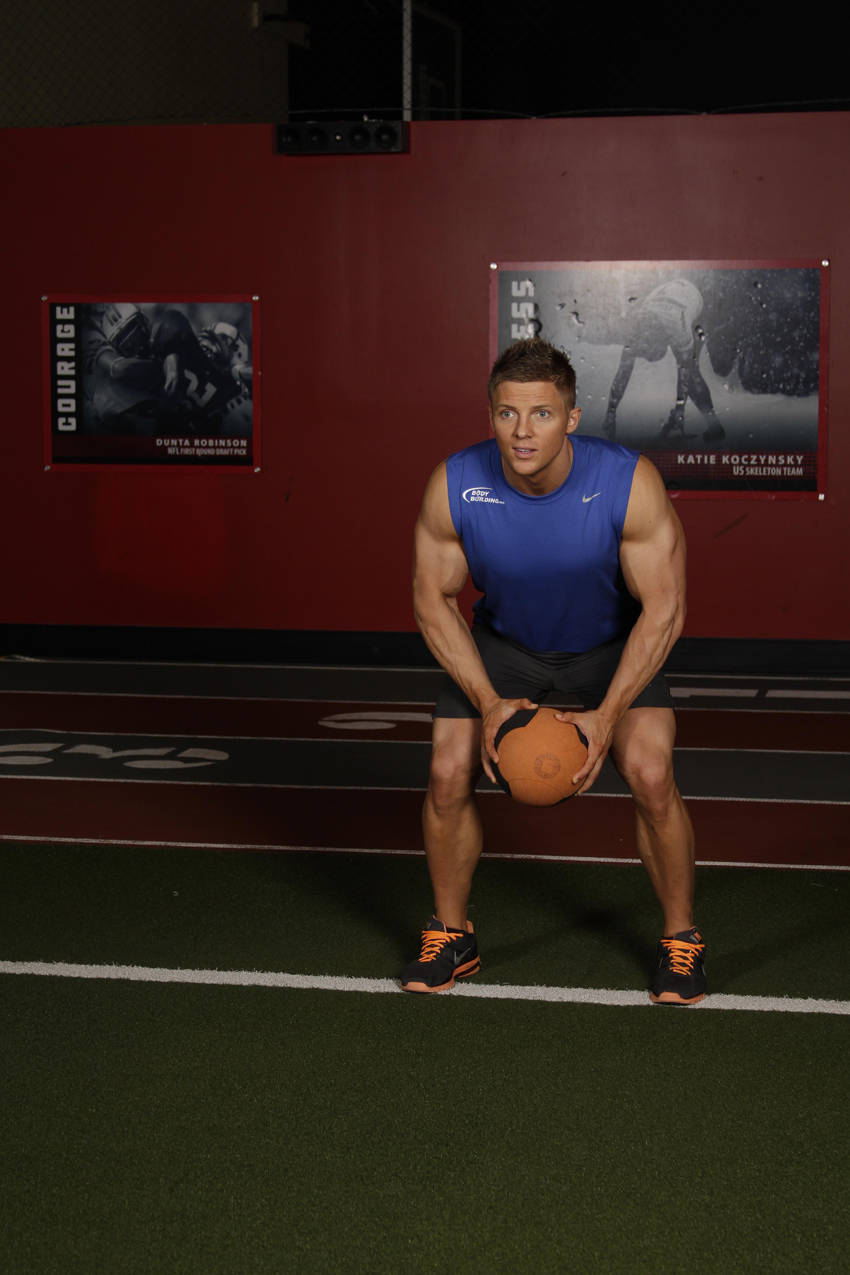
7. Chest Push With Run Release
91.6% MatchHow to perform this exercise
- Begin in an athletic stance with the knees bent, hips back, and back flat. Hold the medicine ball near your legs. This will be your starting position.
- While taking your first step draw the medicine ball into your chest.
- As you take the second step, explosively push the ball forward, immediately sprinting for 10 yards after the release. If you are really fast, you can catch your own pass!
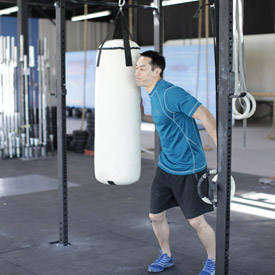
8. Heavy Bag Thrust
91.2% MatchHow to perform this exercise
- Utilize a heavy bag for this exercise. Assume an upright stance next to the bag, with your feet staggered, fairly wide apart. Place your hand on the bag at about chest height. This will be your starting position.
- Begin by twisting at the waist, pushing the bag forward as hard as possible. Perform this move quickly, pushing the bag away from your body.
- Receive the bag as it swings back by reversing these steps.
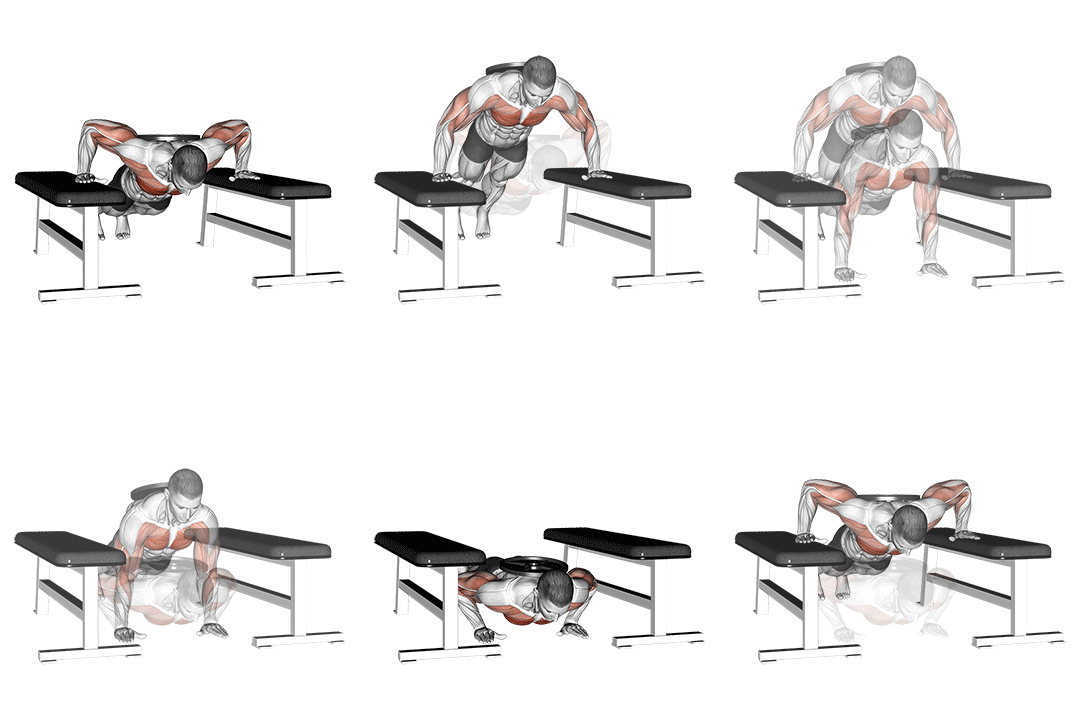
9. Weighted Drop Push Up
86.1% MatchHow to perform this exercise
- Start in a high plank position with your hands slightly wider than shoulder-width apart and your feet together.
- Lower your chest towards the ground, keeping your elbows close to your body.
- Once your chest is just above the ground, explosively push yourself up, lifting your hands off the ground.
- As you push up, quickly move your hands out to the sides and slightly forward, allowing your body to drop down towards the ground.
- Catch yourself with your hands in the wider position and immediately lower your chest towards the ground again.
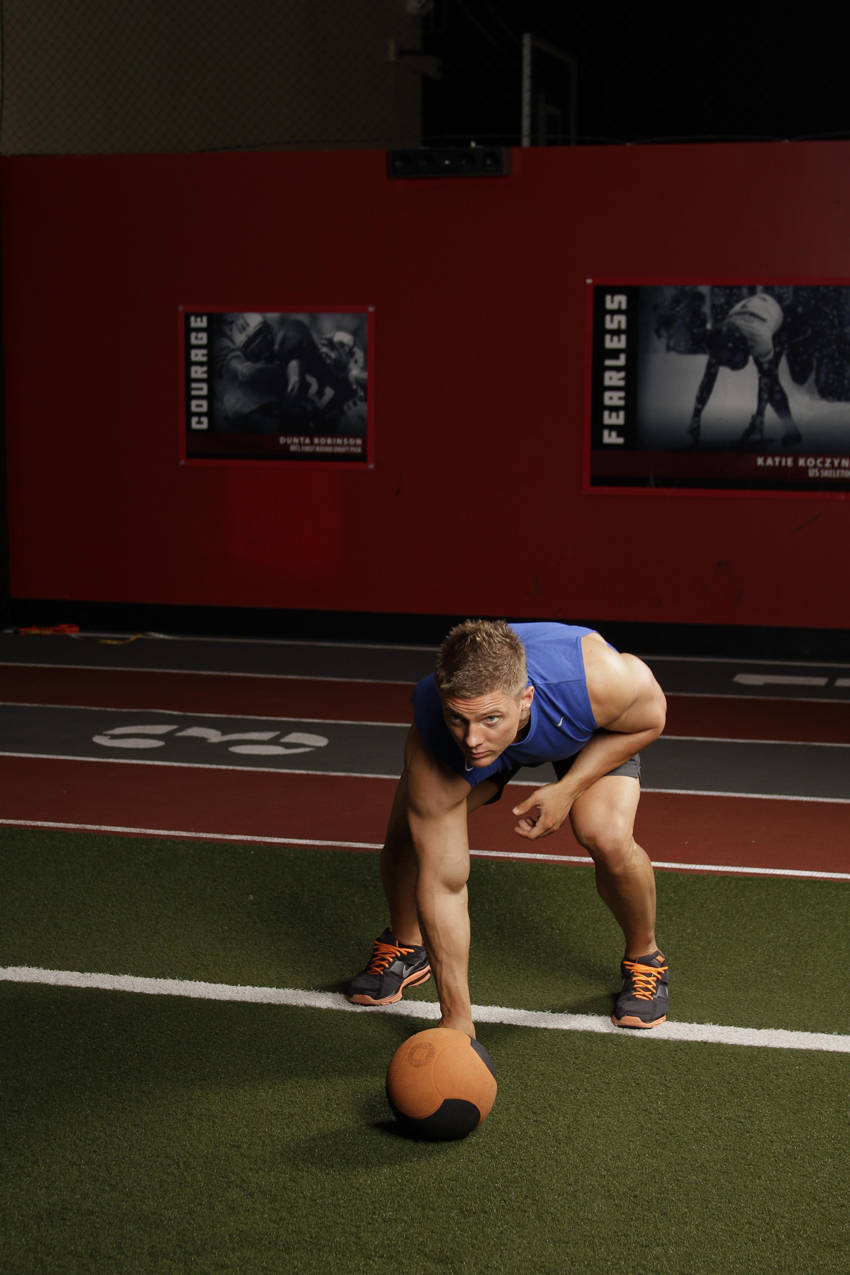
10. Chest Push From 3 Point Stance
85.6% MatchHow to perform this exercise
- Begin in a three point stance, squatted down with your back flat and one hand on the ground. Place the medicine ball directly in front of you.
- To begin, take your first step as you pull the ball to your chest, positioning both hands to prepare for the throw.
- As you execute the second step, explosively release the ball forward as hard as possible.
Why You Might Need a Medicine Ball Chest Pass Alternative
You reach for a substitute here for plain reasons: no wall or partner to catch a rebound off, no medicine ball on hand, or you want a different pace than a repeated throw and catch. Some of these keep the ball in your hands throughout: the Medicine Ball Chest Push Multiple Response and the Medicine Ball Chest Push Single Response have you push it away and draw it back rather than release it. The Medicine Ball Chest Push With Run Release lets the ball go and has you run it down before it stops. Away from a medicine ball entirely, the Heavy Bag Thrust gives you a hung bag to shove and receive, and the Weighted Drop Push Up swaps the throw for an explosive floor drive, hands leaving the ground each rep.
How to Choose the Right Substitute
Start with the Medicine Ball Chest Push Multiple Response for the same standing push: hold the ball, push it out, pause, and draw it back instead of catching a rebound. The Medicine Ball Chest Push Single Response uses the same hold, push, pause and slow return; pick it if you would rather reset between reps than run them back to back. Once that feels easy, the Medicine Ball Chest Push With Run Release adds a step forward, lets the ball roll, and has you run it down, asking more of your legs than the Medicine Ball Chest Pass did. With no medicine ball, the Heavy Bag Thrust gives you something heavy to shove and receive, though you stand beside the bag and drive it with a twist from the waist rather than a two-hand push from the chest.
Frequently Asked Questions
What if I do not have a medicine ball at all?
The Heavy Bag Thrust and the Weighted Drop Push Up both replace the ball. The Heavy Bag Thrust has you shove a hung bag away with a twist from the waist and take it as it swings back, and the Weighted Drop Push Up turns the push into an explosive drive off the floor where your hands leave the ground and land wider before you drop into the next rep.
What is the single-rep version of the Medicine Ball Chest Pass?
Two candidates carry the single-response name. The Chest Push (Single Response) is the one whose steps actually end after one throw: you kneel, drive the ball forward explosively with your hips, then fall forward and catch yourself on your hands, so you reset before the next rep. The Medicine Ball Chest Push Single Response is written the same as its Multiple Response sibling, a standing push, pause and slow return.
Can I do the Medicine Ball Chest Pass at home?
You need a medicine ball and a wall or a partner to catch the rebound, so a home setup works only if you have both. Without a rebound surface, the Heavy Bag Thrust gives you a bag to shove away hard and receive on the swing back, one hand on it from a staggered stance beside the bag, driven by a twist from the waist.
How do I make the swap harder?
The Medicine Ball Chest Push With Run Release steps forward, lets the ball roll instead of rebound, and has you run it down before it stops, which is the most demanding of these to execute cleanly. The Weighted Drop Push Up trades the throw for an explosive drive off the floor: drive hard enough for your hands to leave the ground, land wider, drop into the next rep, and keep switching between wide and narrow hand positions.
More Exercise Alternatives
Find Alternatives for Any Exercise
Use the exercise substitution finder to compare ranked alternatives for your available equipment and training preference.
Try the Exercise Substitution Finder →