

10 Best Medicine Ball Supine Chest Throw Alternatives for Gyms & Home
If you can't perform the Medicine Ball Supine Chest Throw, use close-grip bench presses, floor presses, skull crushers, explosive push-ups, or overhead triceps extensions. Cue: keep elbows tucked 20-30° and accelerate through lockout to load the triceps. These options reproduce the horizontal press mechanics and emphasize triceps force output.
Original Exercise: Medicine Ball Supine Chest Throw
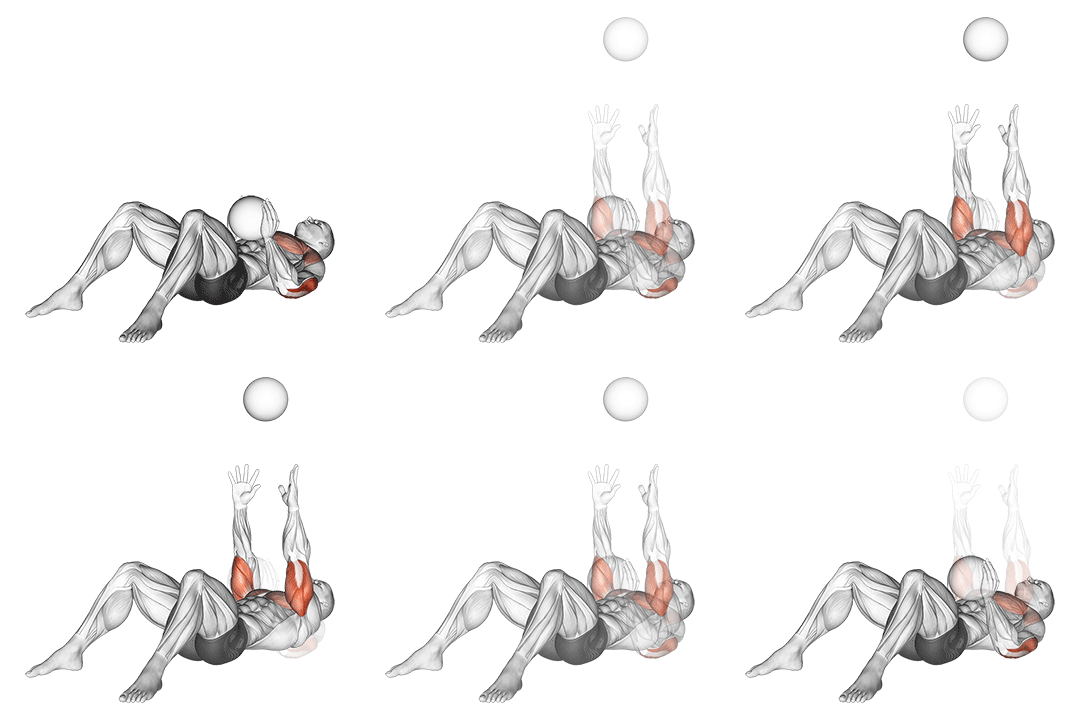
How to Perform Medicine Ball Supine Chest Throw
- Lie flat on your back on a bench with your knees bent and feet flat on the ground.
- Hold the medicine ball with both hands, extending your arms straight up above your chest.
- Lower the medicine ball towards your chest, keeping your elbows close to your body.
- Explosively push the medicine ball upwards, extending your arms fully and throwing the ball as high as possible.
- Catch the medicine ball and repeat for the desired number of repetitions.
Best Medicine Ball Supine Chest Throw Alternatives
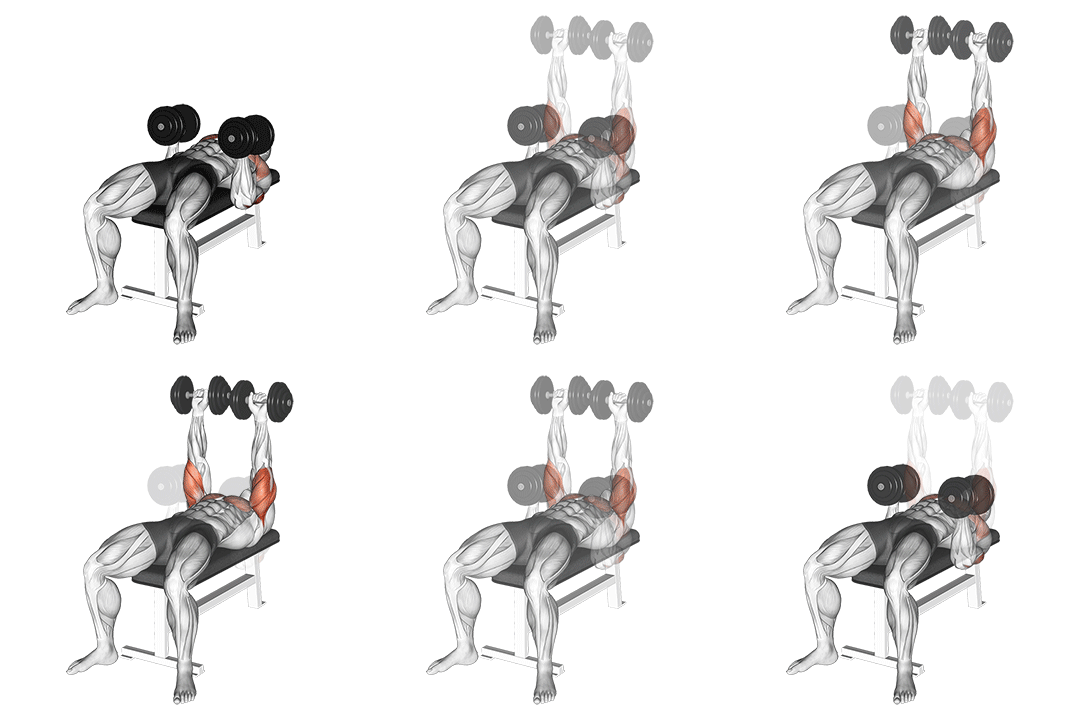
1. Dumbbell Twisting Bench Press
95.2% MatchHow to perform this exercise
- Lie flat on a bench with your feet flat on the ground and your back pressed against the bench.
- Hold a dumbbell in each hand with an overhand grip, palms facing away from you.
- Extend your arms straight up over your chest, keeping a slight bend in your elbows.
- Lower the dumbbells down towards your chest, keeping your elbows close to your body.
- As you lower the dumbbells, twist your wrists so that your palms face towards you at the bottom of the movement.
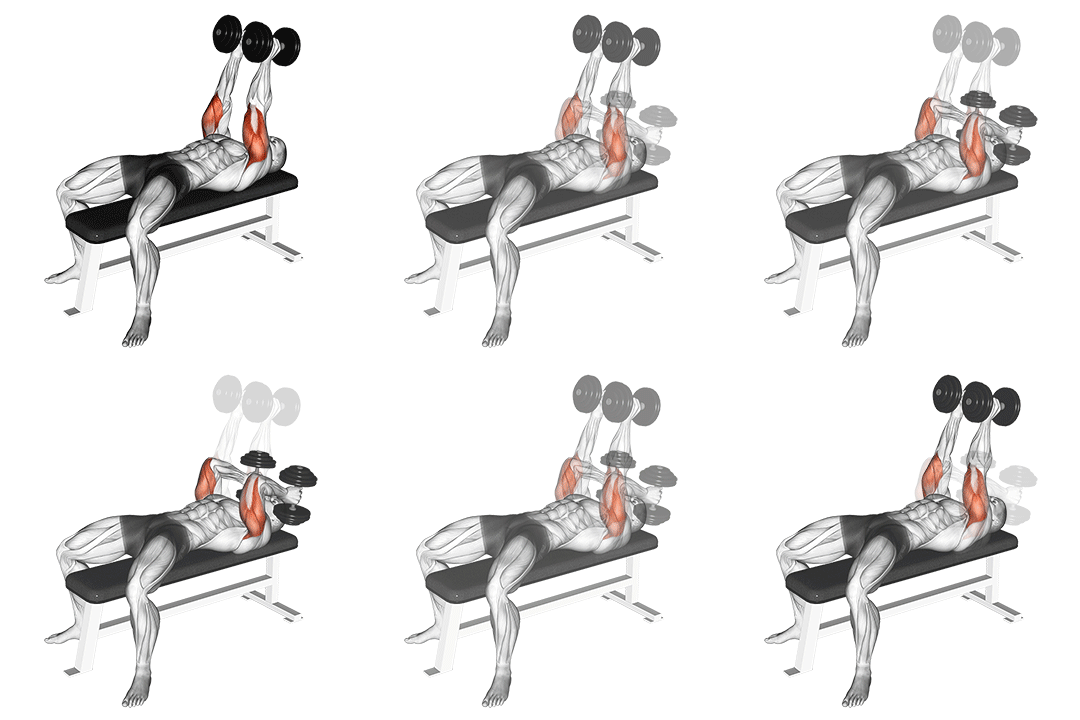
2. Dumbbell Neutral Grip Bench Press
94.7% MatchHow to perform this exercise
- Lie flat on a bench with your feet flat on the ground and your back pressed against the bench.
- Hold a dumbbell in each hand with a neutral grip (palms facing each other) and your arms extended straight up over your chest.
- Slowly lower the dumbbells down towards your chest, keeping your elbows close to your body.
- Pause for a moment at the bottom, then push the dumbbells back up to the starting position, fully extending your arms.
- Repeat for the desired number of repetitions.
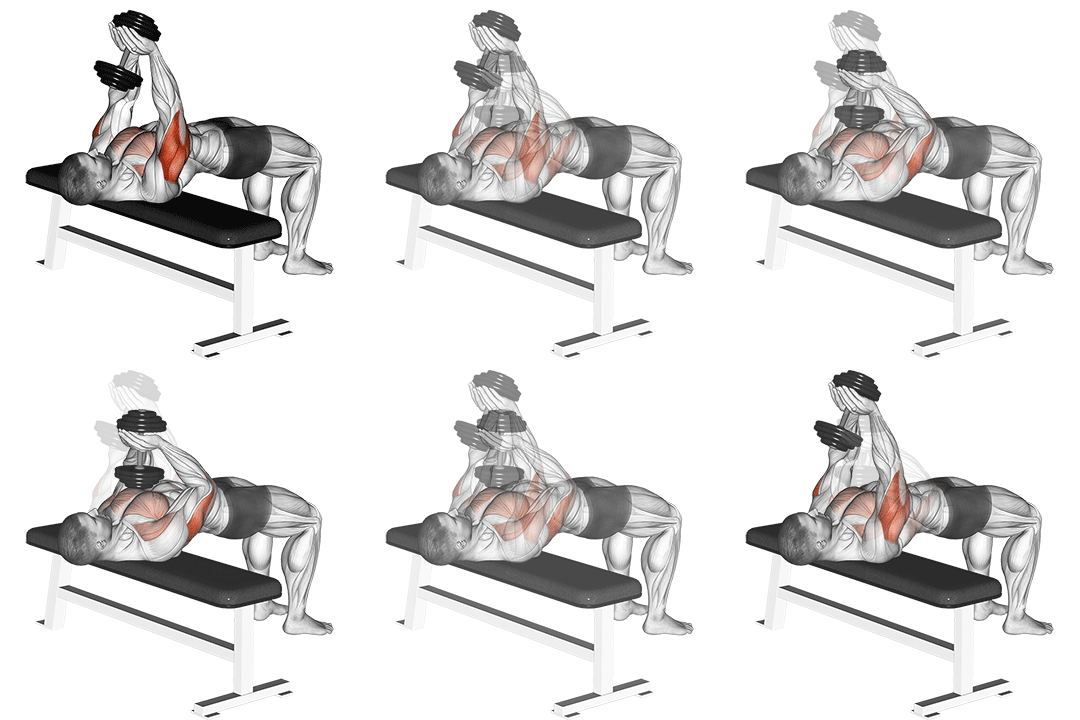
3. Dumbbell Close-grip Press
94.7% MatchHow to perform this exercise
- Sit on a flat bench with a dumbbell in each hand, resting on your thighs.
- Using your thighs to help raise the dumbbells, lift the dumbbells one at a time so that you can hold them in front of you at shoulder width.
- Once at shoulder width, rotate your wrists forward so that the palms of your hands are facing away from you. This will be your starting position.
- As you breathe in, slowly lower the dumbbells to your side until they are about level with your chest.
- As you exhale, use your triceps to lift the dumbbells back to the starting position.
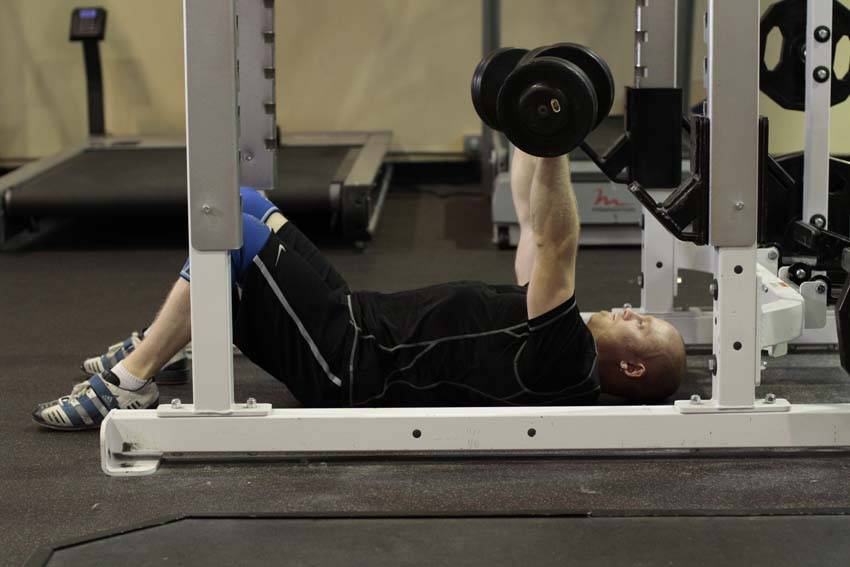
4. Dumbbell Floor Press
94.1% MatchHow to perform this exercise
- Lay on the floor holding dumbbells in your hands. Your knees can be bent. Begin with the weights fully extended above you.
- Lower the weights until your upper arm comes in contact with the floor. You can tuck your elbows to emphasize triceps size and strength, or to focus on your chest angle your arms to the side.
- Pause at the bottom, and then bring the weight together at the top by extending through the elbows.
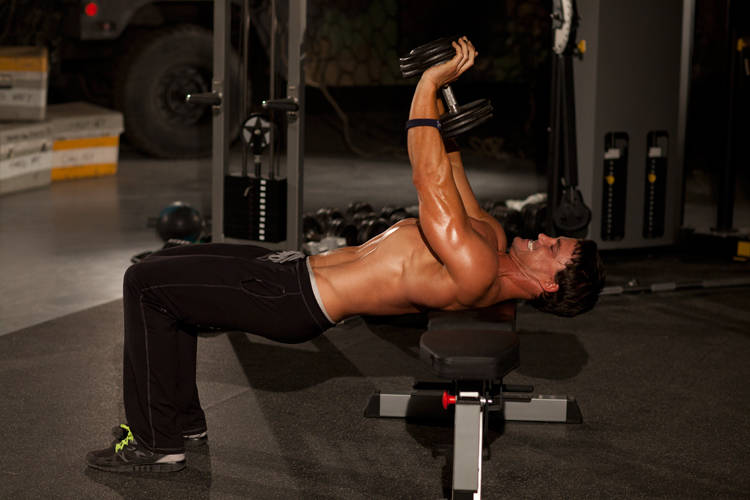
5. Close-Grip Dumbbell Press
93.9% MatchHow to perform this exercise
- Place a dumbbell standing up on a flat bench.
- Ensuring that the dumbbell stays securely placed at the top of the bench, lie perpendicular to the bench with only your shoulders lying on the surface. Hips should be below the bench and your legs bent with your feet firmly on the floor.
- Grasp the dumbbell with both hands and hold it straight over your chest at arm's length. Both palms should be pressing against the underside of the sides of the dumbbell. This will be your starting position.
- Initiate the movement by lowering the dumbbell to your chest.
- Return to the starting position by extending the elbows.
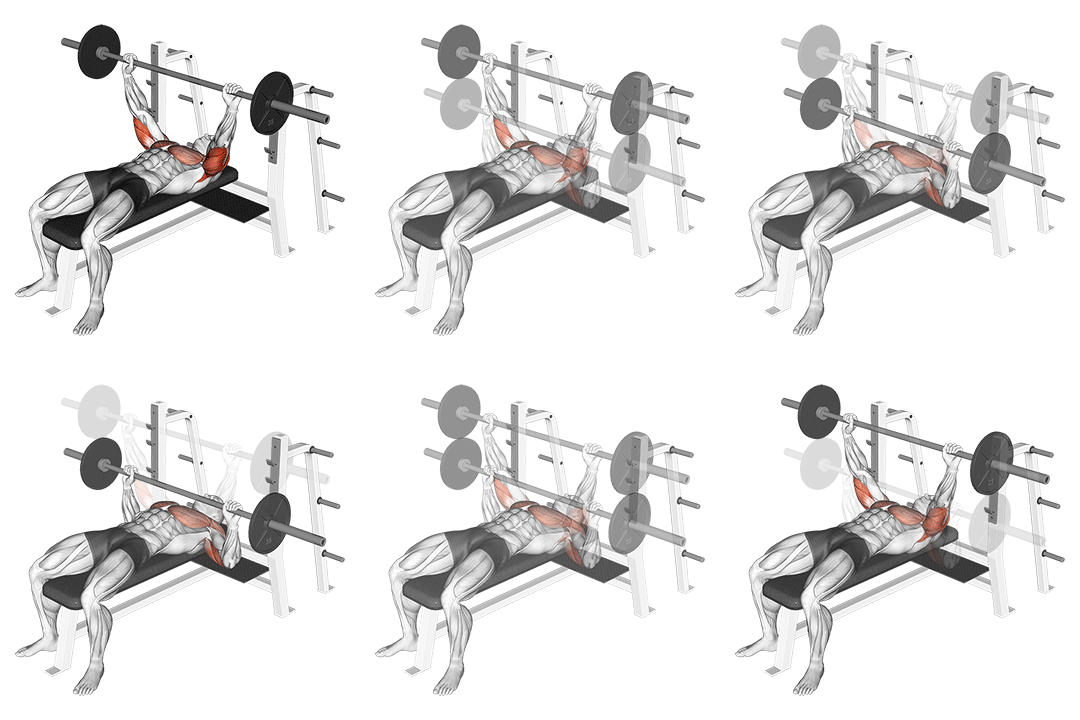
6. Barbell Pin Presses
92% MatchHow to perform this exercise
- Set up a barbell on a power rack at chest height.
- Stand facing the barbell and position yourself underneath it, with your feet shoulder-width apart.
- Grip the barbell with an overhand grip, slightly wider than shoulder-width apart.
- Lift the barbell off the rack and hold it directly above your chest, with your arms fully extended.
- Lower the barbell down towards your chest, keeping your elbows tucked in close to your body.
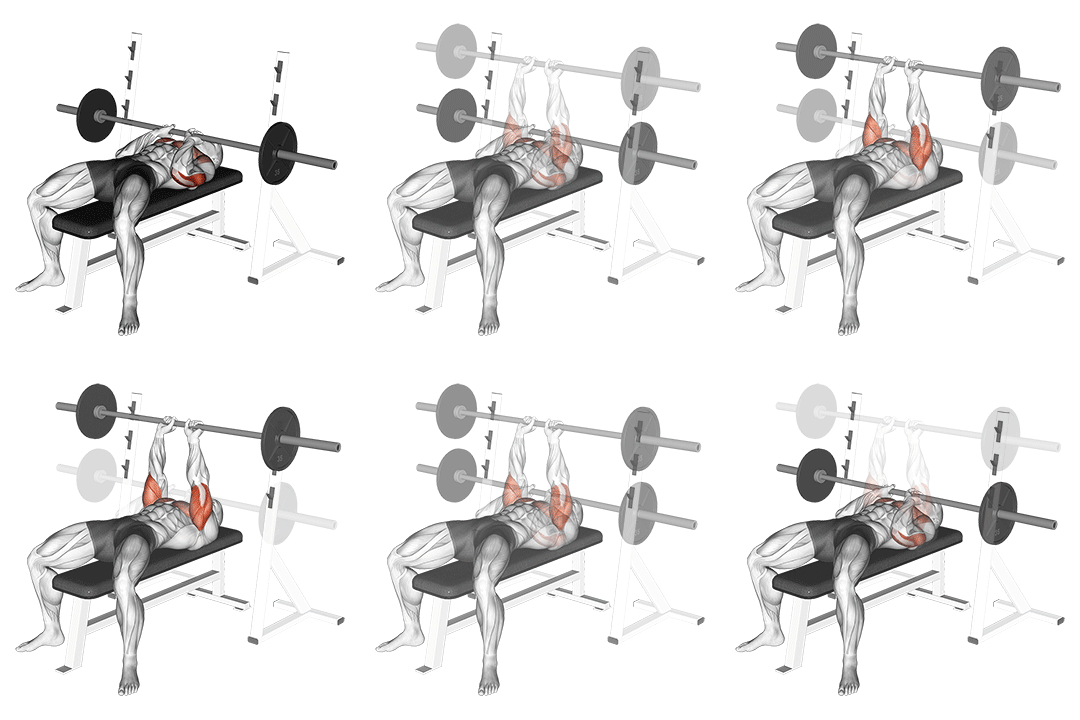
7. Barbell Close-grip Bench Press
91.4% MatchHow to perform this exercise
- Lie flat on a bench with your feet flat on the ground and your back pressed against the bench.
- Grasp the barbell with a close grip, slightly narrower than shoulder-width apart.
- Unrack the barbell and lower it slowly towards your chest, keeping your elbows close to your body.
- Pause for a moment when the barbell touches your chest.
- Push the barbell back up to the starting position, fully extending your arms.
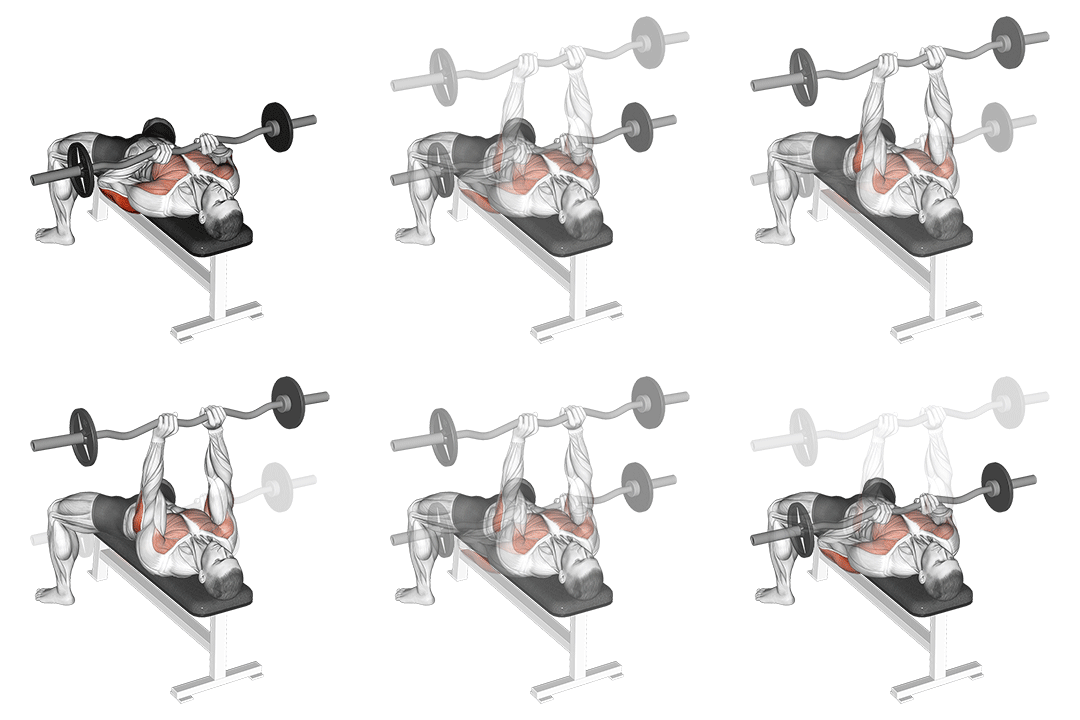
8. Ez-bar Close-grip Bench Press
91.4% MatchHow to perform this exercise
- Lie flat on a bench with your feet flat on the ground and your back pressed against the bench.
- Grasp the ez barbell with a close grip, hands shoulder-width apart, palms facing forward.
- Lift the barbell off the rack and hold it directly above your chest with your arms fully extended.
- Slowly lower the barbell towards your chest, keeping your elbows close to your body.
- Pause for a moment when the barbell touches your chest.
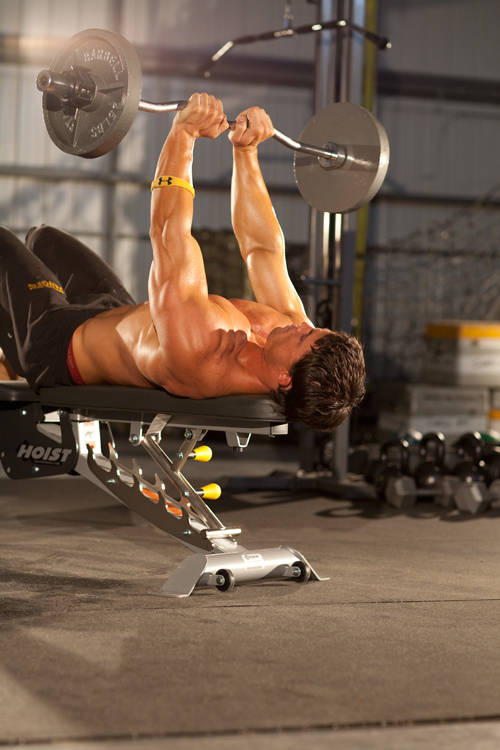
9. Close-Grip EZ-Bar Press
91.4% MatchHow to perform this exercise
- Lie on a flat bench with an EZ bar loaded to an appropriate weight.
- Using a narrow grip lift the bar and hold it straight over your torso with your elbows in. The arms should be perpendicular to the floor. This will be your starting position.
- Now lower the bar down to your lower chest as you breathe in. Keep the elbows in as you perform this movement.
- Using the triceps to push the bar back up, press it back to the starting position by extending the elbows as you exhale.
- Repeat.
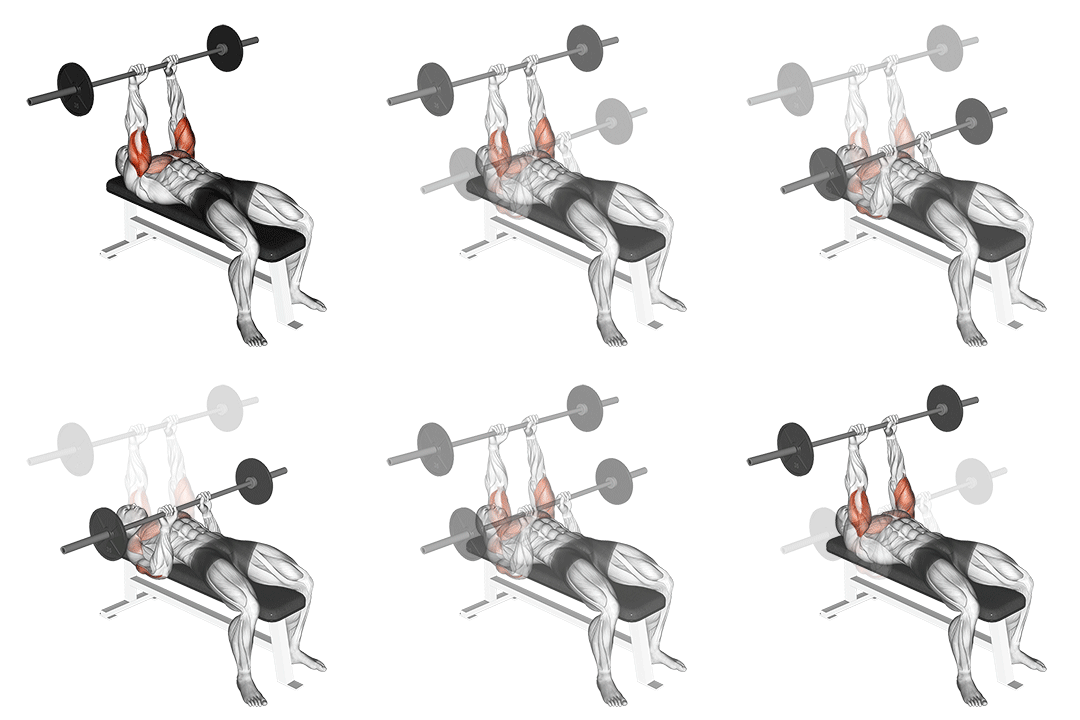
10. Barbell Jm Bench Press
91.2% MatchHow to perform this exercise
- Lie flat on a bench with your feet flat on the ground and your back pressed against the bench.
- Grasp the barbell with an overhand grip, slightly wider than shoulder-width apart.
- Lower the barbell to your chest, keeping your elbows tucked in close to your body.
- Push the barbell back up to the starting position, fully extending your arms.
- Repeat for the desired number of repetitions.
Why You Might Need a Medicine Ball Supine Chest Throw Alternative
You may substitute the supine chest throw for several practical reasons: shoulder pain during ballistic overhead throws, lack of a medicine ball, or a goal shift from power to hypertrophy. Injuries that limit end-range shoulder flexion often respond better to floor presses or skull crushers because they reduce eccentric stress; cue: stop the descent when the triceps contact the floor to limit ROM. Equipment limits push you toward barbell or dumbbell close-grip benching, which lets you load heavier and target triceps peaks. For power work, choose explosive push-ups to preserve rate of force development while maintaining scapular stability and triceps-driven acceleration.
How to Choose the Right Substitute
Select a substitute based on equipment, joint tolerance, and training objective. If you need raw load for hypertrophy or strength, pick close-grip bench or floor press—cue: keep wrists stacked over elbows at the bottom to bias triceps and reduce shoulder shear. For power and rate-of-force development, choose explosive push-ups or band-assisted plyo presses and focus on rapid elbow extension. If you have shoulder issues or limited ROM, use skull crushers or seated overhead triceps extensions to isolate the long head while controlling eccentric tempo; cue: lower with a 2-3s eccentric to emphasize muscle tension.
Frequently Asked Questions
What muscles does Medicine Ball Supine Chest Throw work?
The supine chest throw primarily recruits the triceps (long and lateral heads), with secondary activation of the pectoralis major and anterior deltoid, plus core stabilization. Cue your movement: drive force through elbow extension to accentuate triceps contribution and minimize shoulder-first mechanics.
What is the best bodyweight alternative to Medicine Ball Supine Chest Throw?
Explosive (plyo) push-ups are the top bodyweight substitute because they reproduce horizontal ballistic force and rapid elbow extension. Cue: compress the chest and extend the elbows explosively while keeping the scapula stabilized to maximize triceps and chest power.
Can I build muscle without doing Medicine Ball Supine Chest Throw?
Yes. Progressive overload through close-grip bench presses, floor presses, and skull crushers will hypertrophy the triceps without ballistic throws. Cue: increase load or time under tension (2-3s eccentrics) and ensure full elbow extension to target triceps fibers effectively.
More Exercise Alternatives
Find Alternatives for Any Exercise
Use our free tool to discover the best substitute exercises based on your available equipment and goals.
Try the Exercise Substitution Finder →