

10 Best One-arm Dumbbell Row Alternatives for Home or Gym
If you can’t perform the one-arm dumbbell row, use movements that reproduce its elbow-driven lat pull and trunk stabilization. Top choices are single-arm cable row, chest-supported dumbbell row, barbell bent-over row, inverted row, and lat pulldown. Cue: lead the pull with your elbow, retract the scapula, and pause to squeeze the lats at the top.
Original Exercise: One-arm Dumbbell Row
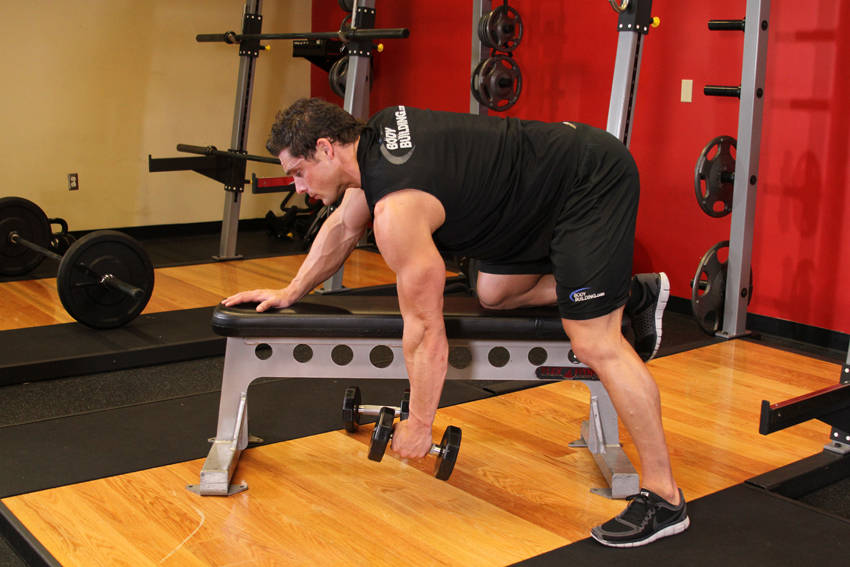
How to Perform One-arm Dumbbell Row
- Choose a flat bench and place a dumbbell on each side of it.
- Place the right leg on top of the end of the bench, bend your torso forward from the waist until your upper body is parallel to the floor, and place your right hand on the other end of the bench for support.
- Use the left hand to pick up the dumbbell on the floor and hold the weight while keeping your lower back straight. The palm of the hand should be facing your torso. This will be your starting position.
- Pull the resistance straight up to the side of your chest, keeping your upper arm close to your side and keeping the torso stationary. Breathe out as you perform this step. Tip: Concentrate on squeezing the back muscles once you reach the full contracted position. Also, make sure that the force is performed with the back muscles and not the arms. Finally, the upper torso should remain stationary and only the arms should move. The forearms should do no other work except for holding the dumbbell; therefore do not try to pull the dumbbell up using the forearms.
- Lower the resistance straight down to the starting position. Breathe in as you perform this step.
- Repeat the movement for the specified amount of repetitions.
- Switch sides and repeat again with the other arm.
Pro Tips
- Category: Strength
- Force: Pull
- Movement type: Compound
Best One-arm Dumbbell Row Alternatives
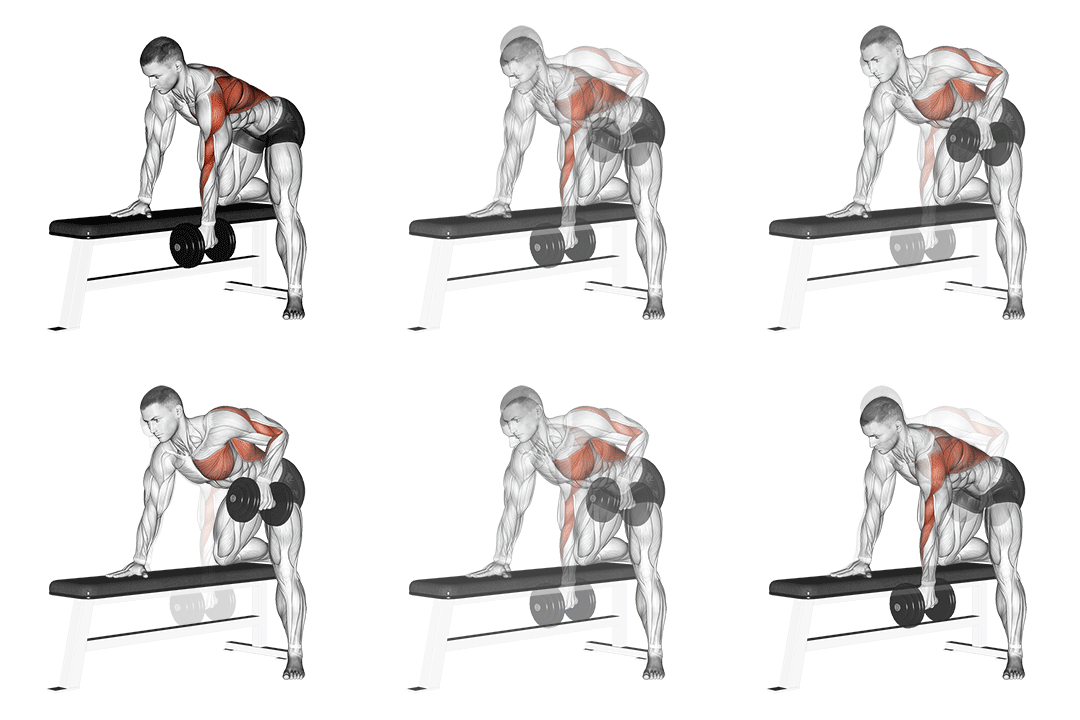
1. Dumbbell One Arm Bent-over Row
97.7% MatchHow to perform this exercise
- Stand with your feet shoulder-width apart, holding a dumbbell in one hand with your palm facing your body.
- Bend your knees slightly and hinge forward at the hips, keeping your back straight and your core engaged.
- Let the dumbbell hang straight down towards the floor, with your arm fully extended.
- Pull the dumbbell up towards your chest, keeping your elbow close to your body and squeezing your shoulder blades together.
- Pause for a moment at the top, then slowly lower the dumbbell back down to the starting position.
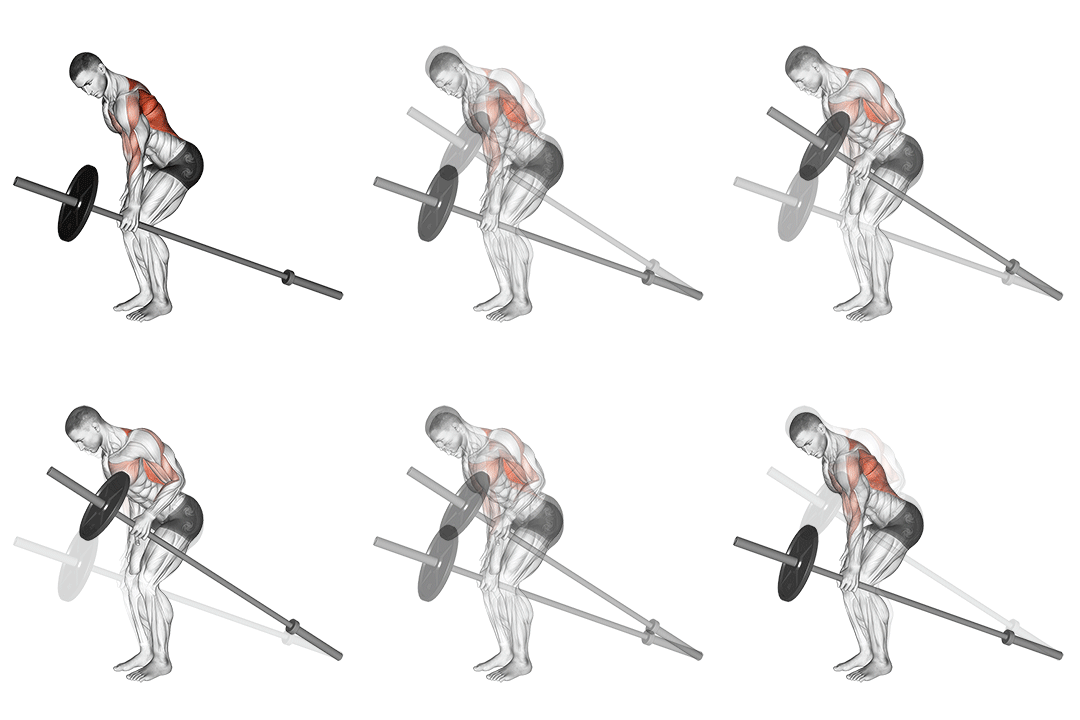
2. Barbell One Arm Bent Over Row
95.4% MatchHow to perform this exercise
- Stand with your feet shoulder-width apart, knees slightly bent, and hold a barbell with one hand using an overhand grip.
- Bend forward at the hips, keeping your back straight and your head in a neutral position.
- Pull the barbell up towards your chest, keeping your elbow close to your body and squeezing your shoulder blades together.
- Lower the barbell back down to the starting position in a controlled manner.
- Repeat for the desired number of repetitions, then switch to the other arm.
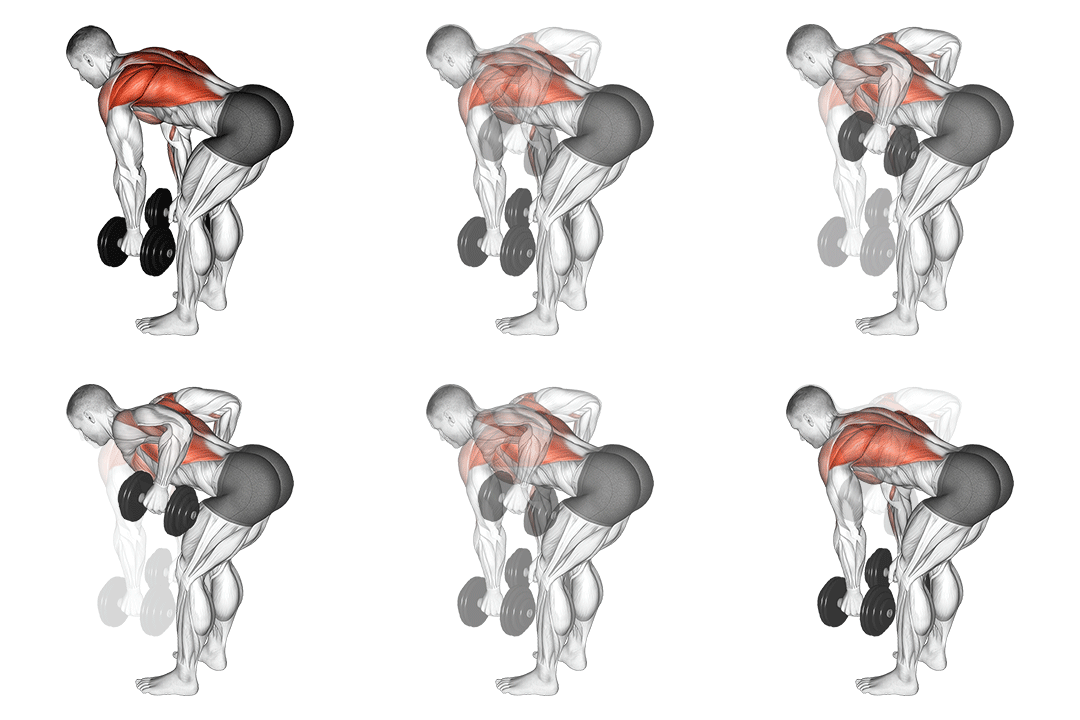
3. Dumbbell Bent Over Row
92.2% MatchHow to perform this exercise
- Stand with your feet shoulder-width apart, knees slightly bent, and hold a dumbbell in each hand with your palms facing your body.
- Bend forward at the hips, keeping your back straight and your core engaged.
- Let your arms hang straight down towards the floor, with your elbows slightly bent.
- Pull the dumbbells up towards your chest, squeezing your shoulder blades together.
- Pause for a moment at the top, then slowly lower the dumbbells back down to the starting position.
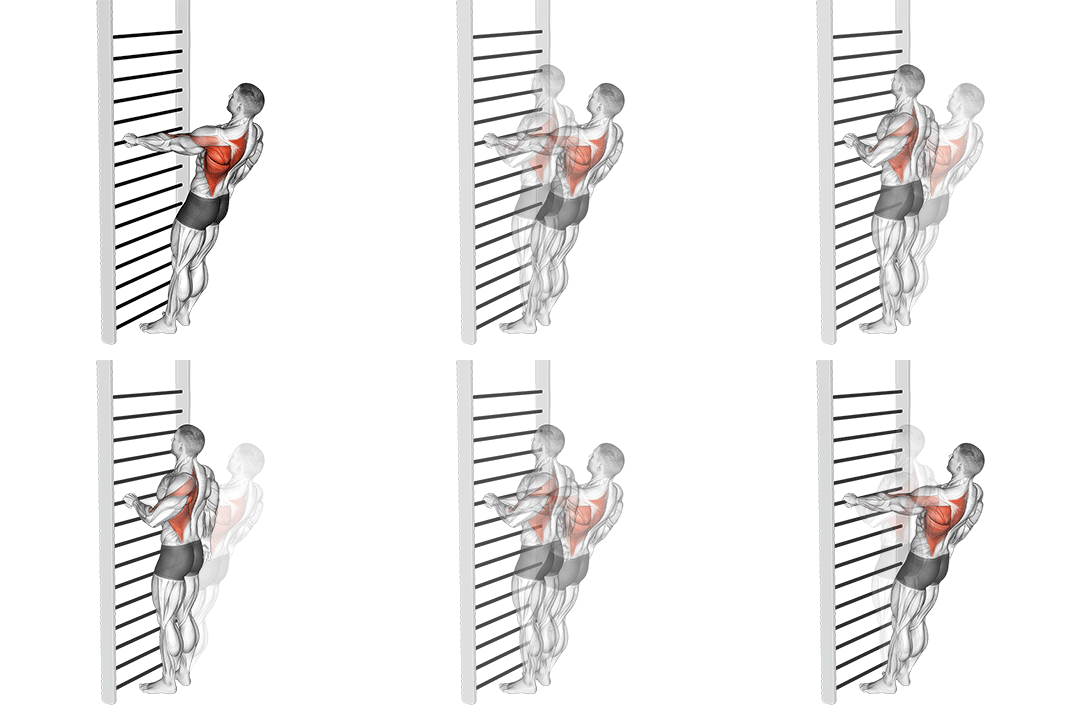
4. Bodyweight Standing One Arm Row
88.1% MatchHow to perform this exercise
- Stand with your feet shoulder-width apart, knees slightly bent, and hold a dumbbell in one hand.
- Bend forward at the hips, keeping your back straight and your core engaged.
- Let the dumbbell hang straight down in front of you, with your arm fully extended.
- Pull the dumbbell up towards your chest, keeping your elbow close to your body.
- Squeeze your shoulder blades together at the top of the movement.
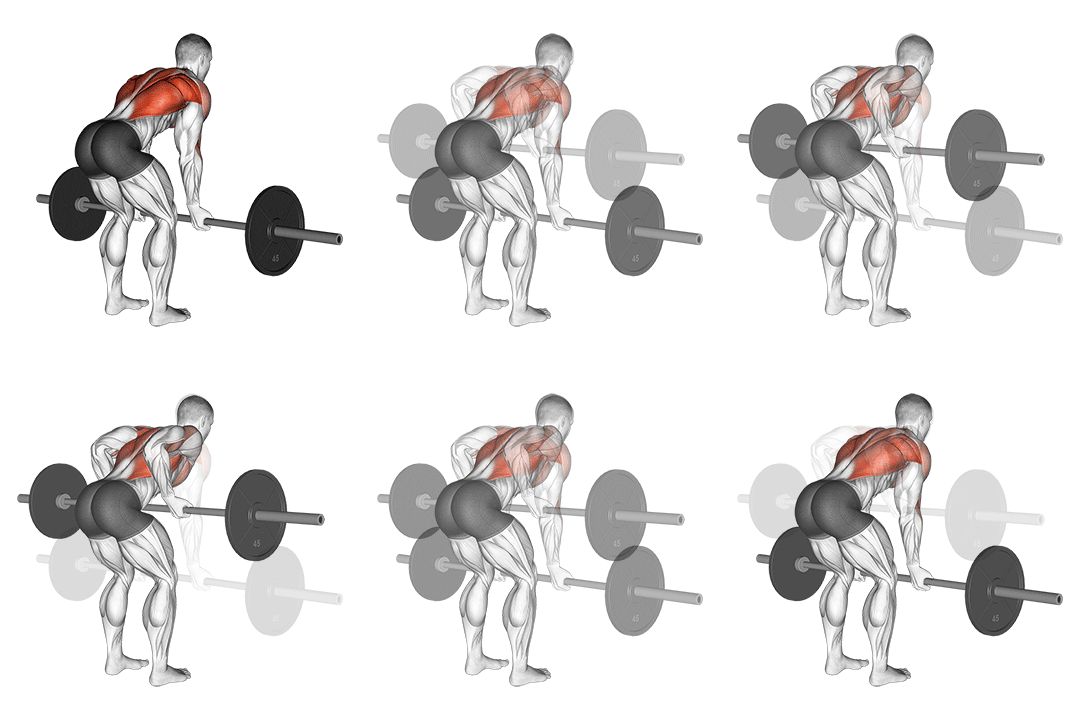
5. Barbell Reverse Grip Bent Over Row
87.7% MatchHow to perform this exercise
- Stand with your feet shoulder-width apart and knees slightly bent.
- Hold a barbell with an overhand grip, palms facing down, and hands slightly wider than shoulder-width apart.
- Bend forward at the hips, keeping your back straight and chest up, until your torso is almost parallel to the floor.
- Pull the barbell towards your lower chest, squeezing your shoulder blades together.
- Pause for a moment at the top, then slowly lower the barbell back to the starting position.
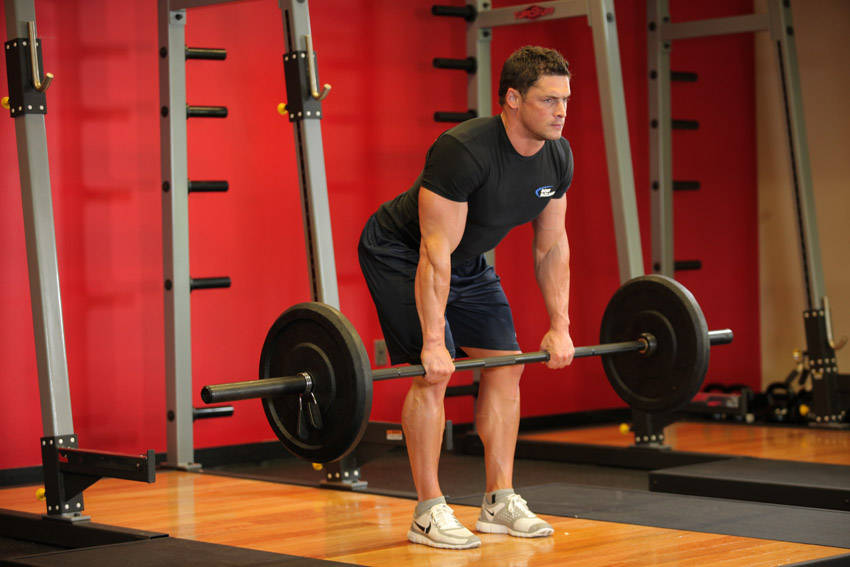
6. Bent Over Barbell Row
87.7% MatchHow to perform this exercise
- Holding a barbell with a pronated grip (palms facing down), bend your knees slightly and bring your torso forward, by bending at the waist, while keeping the back straight until it is almost parallel to the floor. Tip: Make sure that you keep the head up. The barbell should hang directly in front of you as your arms hang perpendicular to the floor and your torso. This is your starting position.
- Now, while keeping the torso stationary, breathe out and lift the barbell to you. Keep the elbows close to the body and only use the forearms to hold the weight. At the top contracted position, squeeze the back muscles and hold for a brief pause.
- Then inhale and slowly lower the barbell back to the starting position.
- Repeat for the recommended amount of repetitions.
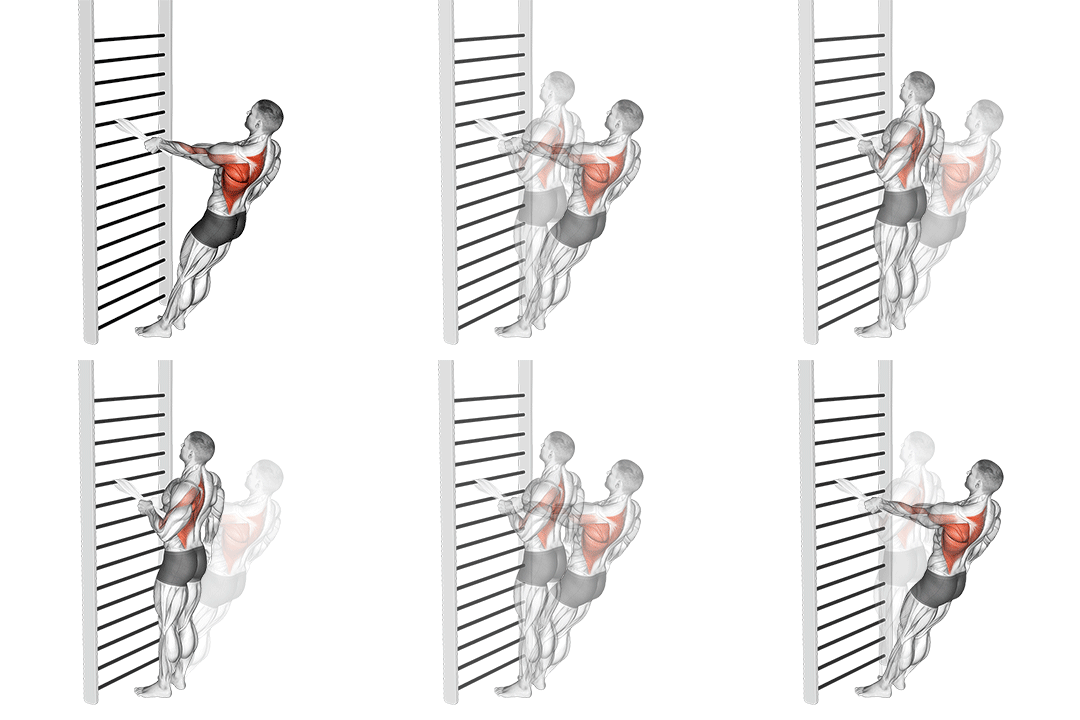
7. Bodyweight Standing One Arm Row (with Towel)
87.3% MatchHow to perform this exercise
- Stand with your feet shoulder-width apart, knees slightly bent, and hold a towel with one hand.
- Bend forward at the hips, keeping your back straight and your core engaged.
- Pull the towel towards your chest, squeezing your shoulder blades together.
- Pause for a moment at the top, then slowly lower the towel back to the starting position.
- Repeat for the desired number of repetitions, then switch to the other arm.
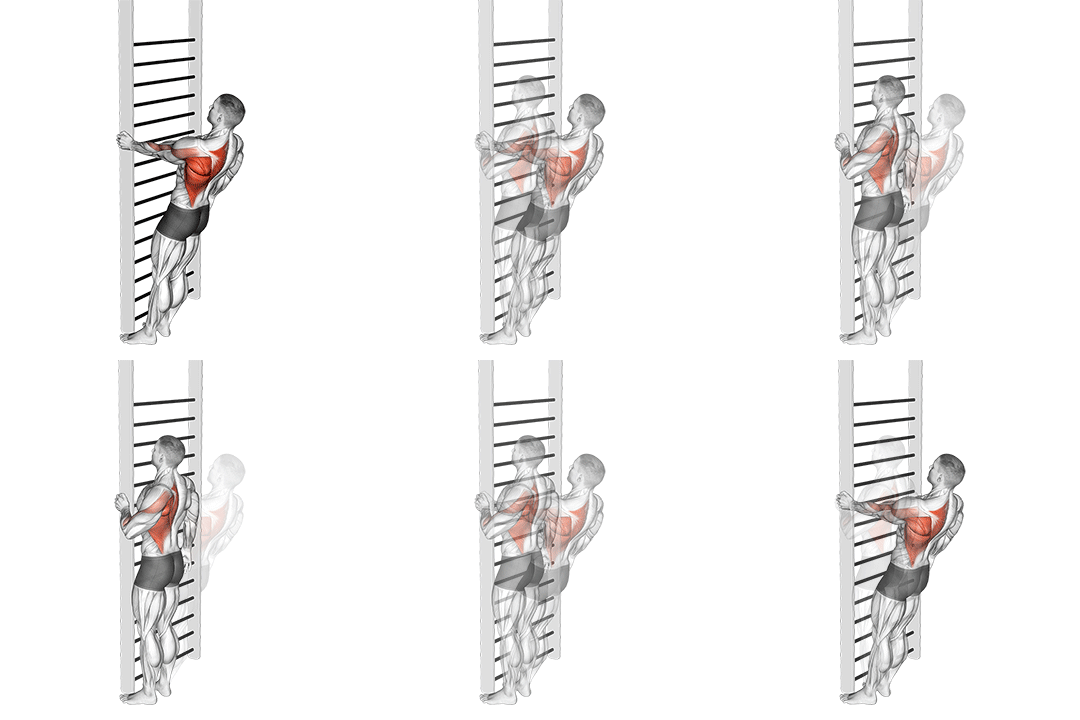
8. Bodyweight Standing Close-grip One Arm Row
84.7% MatchHow to perform this exercise
- Stand with your feet shoulder-width apart, knees slightly bent, and hold a dumbbell in one hand with a neutral grip.
- Bend forward at the hips, keeping your back straight and your core engaged.
- Pull the dumbbell up towards your chest, keeping your elbow close to your body and squeezing your shoulder blades together.
- Pause for a moment at the top, then slowly lower the dumbbell back down to the starting position.
- Repeat for the desired number of repetitions, then switch sides.
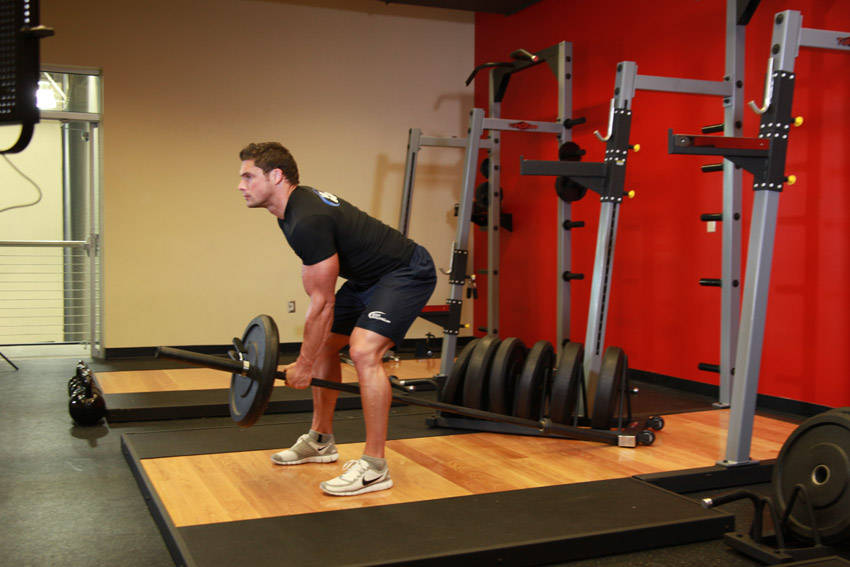
9. Bent Over One-Arm Long Bar Row
84.4% MatchHow to perform this exercise
- Put weight on one of the ends of an Olympic barbell. Make sure that you either place the other end of the barbell in the corner of two walls; or put a heavy object on the ground so the barbell cannot slide backward.
- Bend forward until your torso is as close to parallel with the floor as you can and keep your knees slightly bent.
- Now grab the bar with one arm just behind the plates on the side where the weight was placed and put your other hand on your knee. This will be your starting position.
- Pull the bar straight up with your elbow in (to maximize back stimulation) until the plates touch your lower chest. Squeeze the back muscles as you lift the weight up and hold for a second at the top of the movement. Breathe out as you lift the weight. Tip: Do not allow for any swinging of the torso. Only the arm should move.
- Slowly lower the bar to the starting position getting a nice stretch on the lats. Tip: Do not let the plates touch the floor. To ensure the best range of motion, I recommend using small plates (25-lb ones) as opposed to larger plates (like 35-45lb ones).
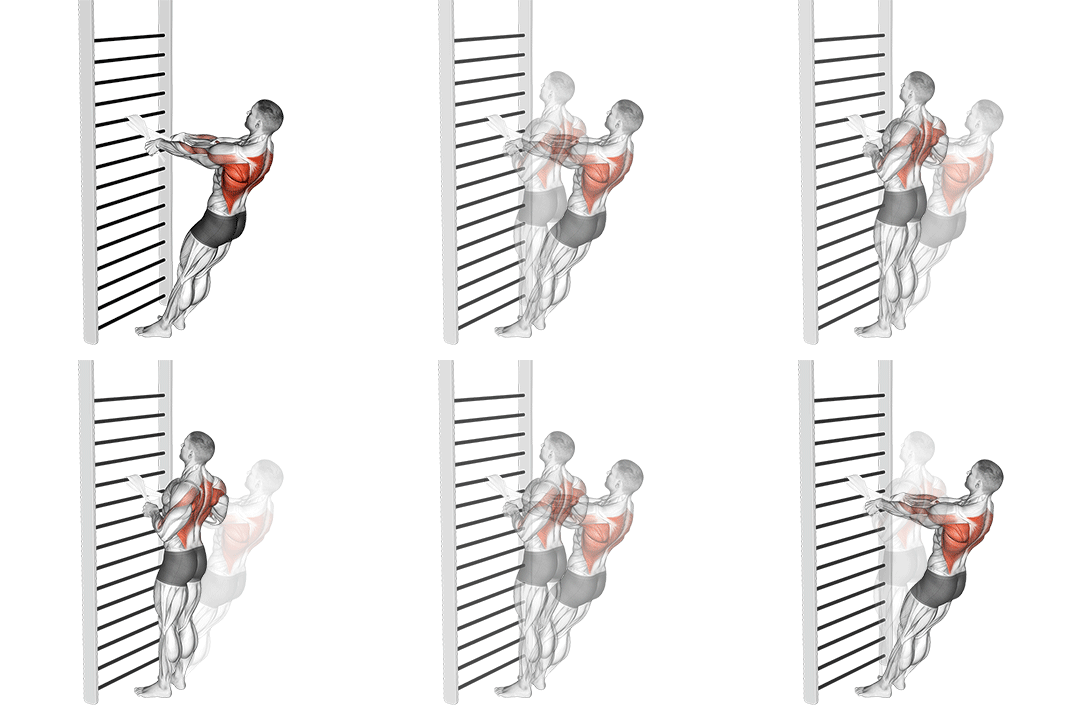
10. Bodyweight Standing Row (with Towel)
81.7% MatchHow to perform this exercise
- Stand with your feet shoulder-width apart and hold a towel in front of you with both hands.
- Bend your knees slightly and hinge forward at the hips, keeping your back straight.
- Pull the towel towards your chest, squeezing your shoulder blades together.
- Pause for a moment at the top, then slowly release the tension and return to the starting position.
- Repeat for the desired number of repetitions.
Why You Might Need a One-arm Dumbbell Row Alternative
You might substitute the one-arm dumbbell row for several reasons: shoulder or lower-back pain, no access to a heavy dumbbell, travel workouts, or a need to change training stimulus. Biomechanically, the row stresses unilateral lat activation and spinal stability; alternatives can reduce lumbar loading (use chest-supported rows) or add continuous tension (use cable rows). If rotator cuff irritation limits weight overhead, pick a movement with a neutral shoulder path or narrower elbow tuck. Technique cue: keep a neutral spine, brace your core, and pull through the elbow to emphasize lat recruitment rather than biceps.
How to Choose the Right Substitute
Match the substitute to your limiting factor and training goal. For reduced low-back demand pick chest-supported rows or inverted rows; for progressive loading and constant tension choose single-arm cable rows or lat pulldowns. Consider unilateral vs bilateral work: single-arm cable rows replicate stabilization demands, while barbell rows allow heavier overload. Watch muscle activation: tuck the elbow to bias the lats, externally rotate slightly to protect the shoulder, and use a controlled 2–3 second eccentric to increase time under tension. Pick the exercise that lets you load safely while maintaining clean technique.
Frequently Asked Questions
What muscles does One-arm Dumbbell Row work?
The one-arm dumbbell row primarily targets the latissimus dorsi and secondarily the rhomboids, posterior deltoid, middle trapezius, and biceps. It also recruits the erector spinae and obliques for trunk stabilization; cue: lead the pull with the elbow and retract the scapula to maximize lat engagement.
What is the best bodyweight alternative to One-arm Dumbbell Row?
The inverted row is the best bodyweight substitute because it reproduces the horizontal pulling pattern and scapular retraction. Set a bar at waist height or use rings, keep a straight plank from head to heels, pull the chest to the bar, and lead with the elbow to emphasize the lats.
Can I build muscle without doing One-arm Dumbbell Row?
Yes. You can build back muscle using alternatives that provide progressive overload and target the same pulling pattern, such as bent-over barbell rows, lat pulldowns, and heavy cable rows. Focus on full range of motion, controlled eccentrics, and pulling with the elbow to prioritize lat activation.
More Exercise Alternatives
Find Alternatives for Any Exercise
Use our free tool to discover the best substitute exercises based on your available equipment and goals.
Try the Exercise Substitution Finder →