

10 Best Alternatives to One-arm Kettlebell Military Press To The Side
If you can’t perform the One-arm Kettlebell Military Press To The Side, use single-arm dumbbell overhead press, landmine press, neutral-grip seated press, dumbbell lateral raise or pike push-ups. Each option targets the delts while altering stability and torque. On presses, keep the scapula packed and wrist neutral to emphasize deltoid activation and protect the rotator cuff.
Original Exercise: One-arm Kettlebell Military Press To The Side
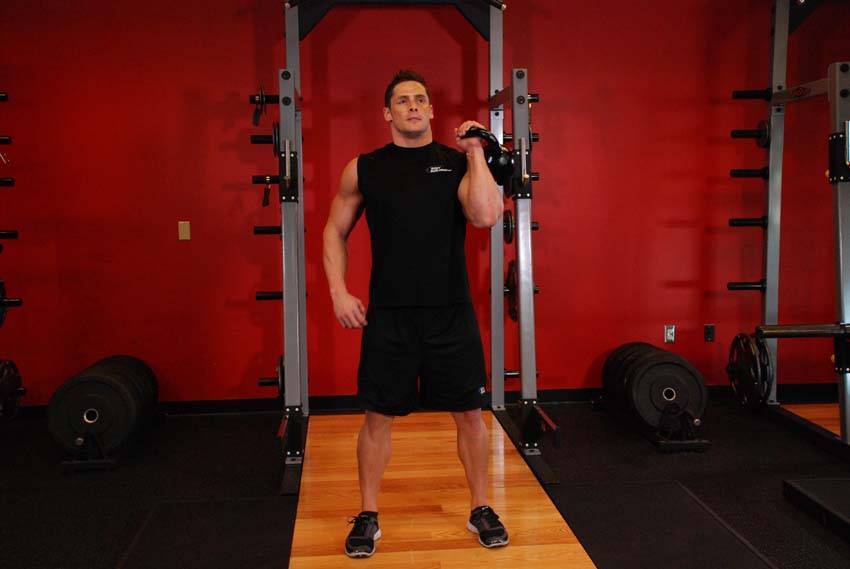
How to Perform One-arm Kettlebell Military Press To The Side
- Clean a kettlebell to your shoulder. Clean the kettlebell to your shoulder by extending through the legs and hips as you pull the kettlebell towards your shoulder. Rotate your wrist as you do so, so that the palm faces inward. This will be your starting position.
- Look at the kettlebell and press it up and out until it is locked out overhead.
- Lower the kettlebell back to your shoulder under control and repeat. Make sure to contract your lat, butt, and stomach forcefully for added stability and strength.
Pro Tips
- Category: Strength
- Force: Push
- Movement type: Compound
Best One-arm Kettlebell Military Press To The Side Alternatives
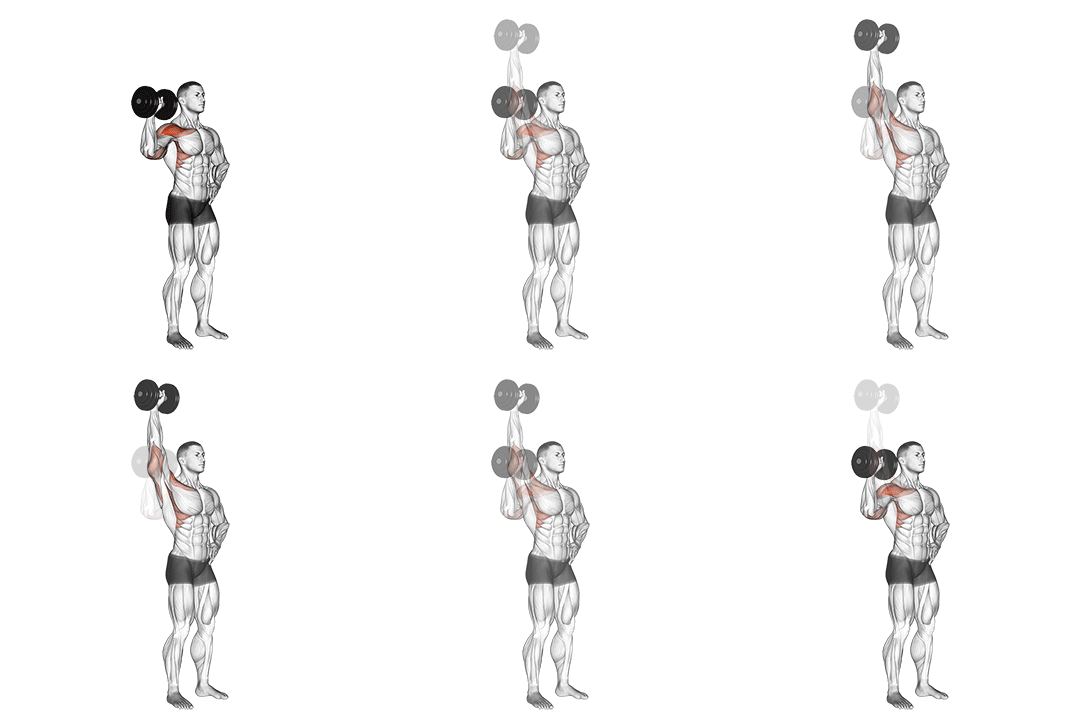
1. Dumbbell One Arm Shoulder Press V. 2
99.2% MatchHow to perform this exercise
- Stand with your feet shoulder-width apart and hold a dumbbell in one hand at shoulder level, palm facing forward.
- Engage your core and press the dumbbell straight up overhead, fully extending your arm.
- Pause for a moment at the top, then slowly lower the dumbbell back to shoulder level.
- Repeat for the desired number of repetitions, then switch to the other arm.
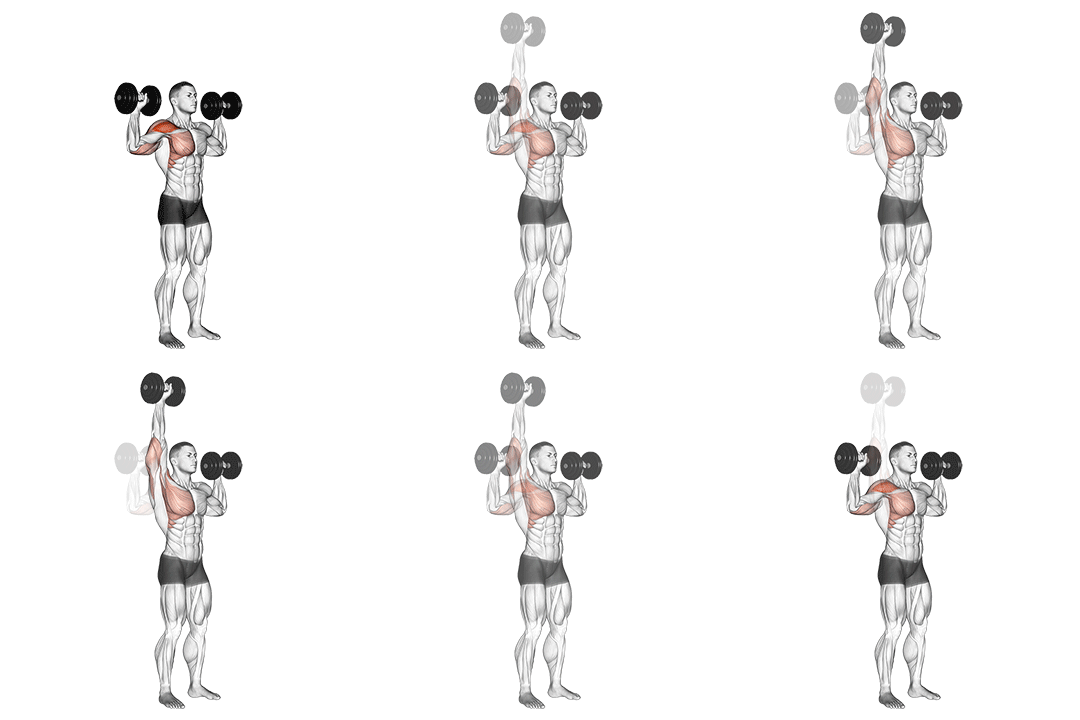
2. Dumbbell One Arm Shoulder Press
98.7% MatchHow to perform this exercise
- Stand with your feet shoulder-width apart and hold a dumbbell in one hand at shoulder level, palm facing forward.
- Press the dumbbell upward until your arm is fully extended overhead.
- Pause for a moment at the top, then slowly lower the dumbbell back to the starting position.
- Repeat for the desired number of repetitions, then switch to the other arm.
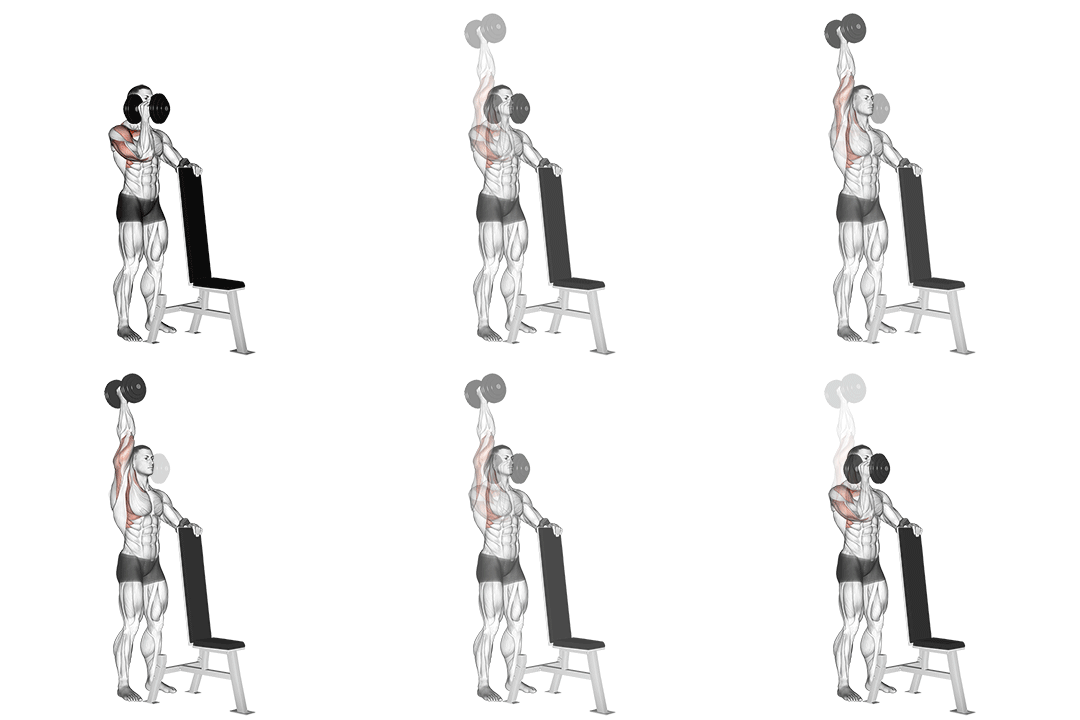
3. Dumbbell Standing One Arm Palm In Press
93.7% MatchHow to perform this exercise
- Stand with your feet shoulder-width apart, holding a dumbbell in one hand at shoulder height with your palm facing inwards.
- Engage your core and keep your back straight.
- Press the dumbbell upwards until your arm is fully extended.
- Pause for a moment at the top, then slowly lower the dumbbell back to the starting position.
- Repeat for the desired number of repetitions, then switch to the other arm.
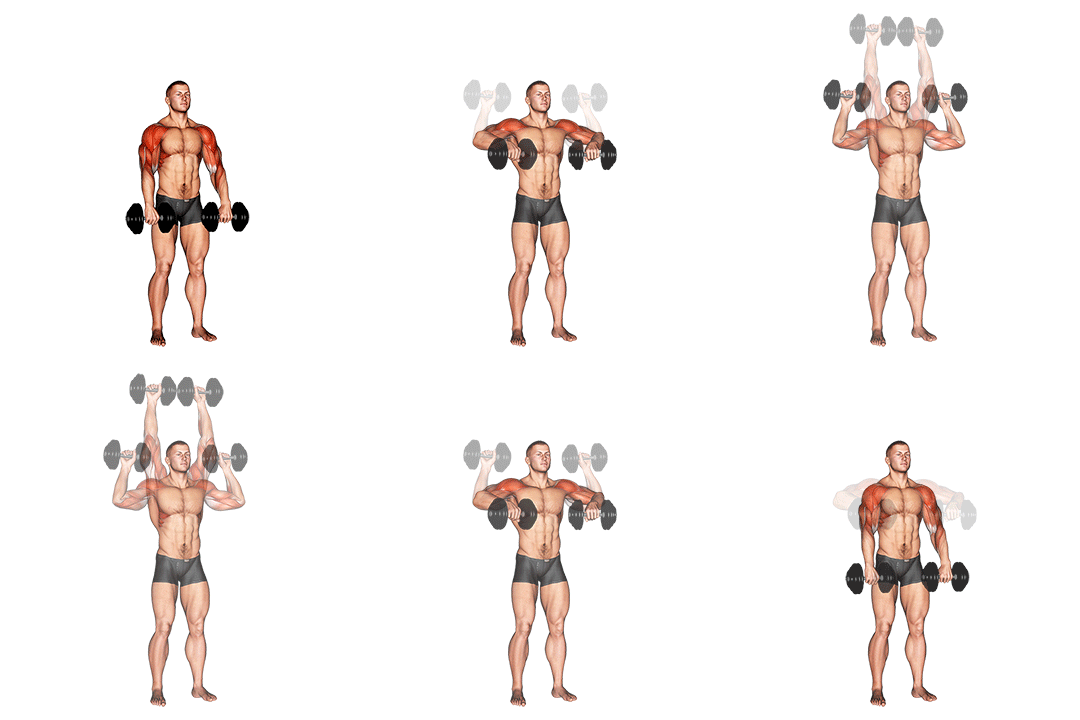
4. Dumbbell Cuban Press V. 2
91.4% MatchHow to perform this exercise
- Stand with your feet shoulder-width apart, holding a dumbbell in each hand at shoulder height with your palms facing down.
- Keeping your core engaged and your back straight, press the dumbbells straight up overhead until your arms are fully extended.
- Rotate your wrists so that your palms are facing forward.
- Lower the dumbbells back down to shoulder height, rotating your wrists back to the starting position.
- Repeat for the desired number of repetitions.
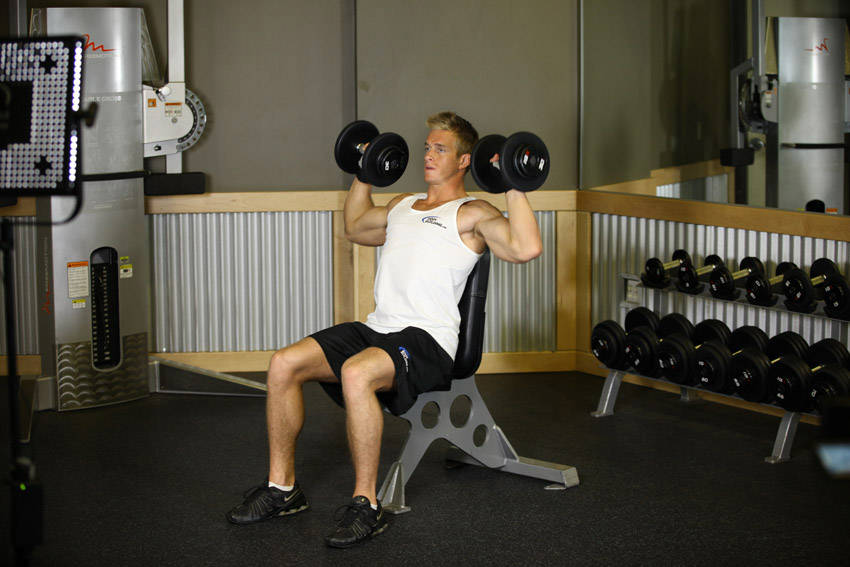
5. Dumbbell Shoulder Press
90.9% MatchHow to perform this exercise
- While holding a dumbbell in each hand, sit on a military press bench or utility bench that has back support. Place the dumbbells upright on top of your thighs.
- Now raise the dumbbells to shoulder height one at a time using your thighs to help propel them up into position.
- Make sure to rotate your wrists so that the palms of your hands are facing forward. This is your starting position.
- Now, exhale and push the dumbbells upward until they touch at the top.
- Then, after a brief pause at the top contracted position, slowly lower the weights back down to the starting position while inhaling.
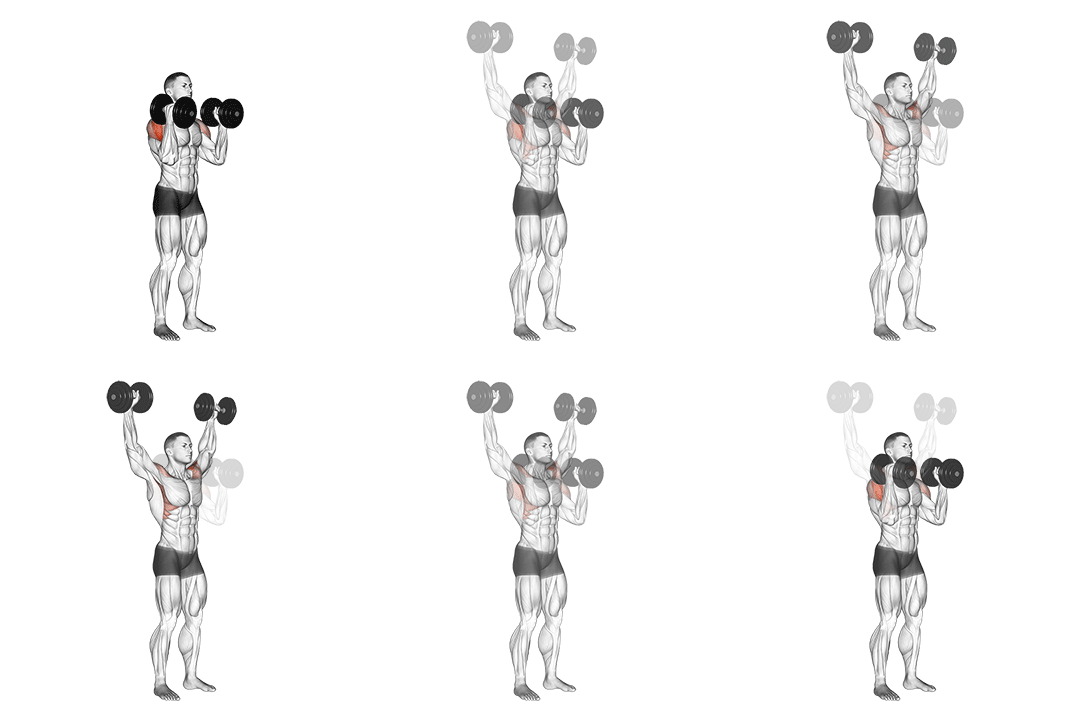
6. Dumbbell W-press
90.9% MatchHow to perform this exercise
- Sit on a bench with a dumbbell in each hand, palms facing forward.
- Raise the dumbbells to shoulder height, elbows bent and palms facing forward.
- Press the dumbbells upward until your arms are fully extended overhead.
- Lower the dumbbells back to shoulder height.
- Repeat for the desired number of repetitions.
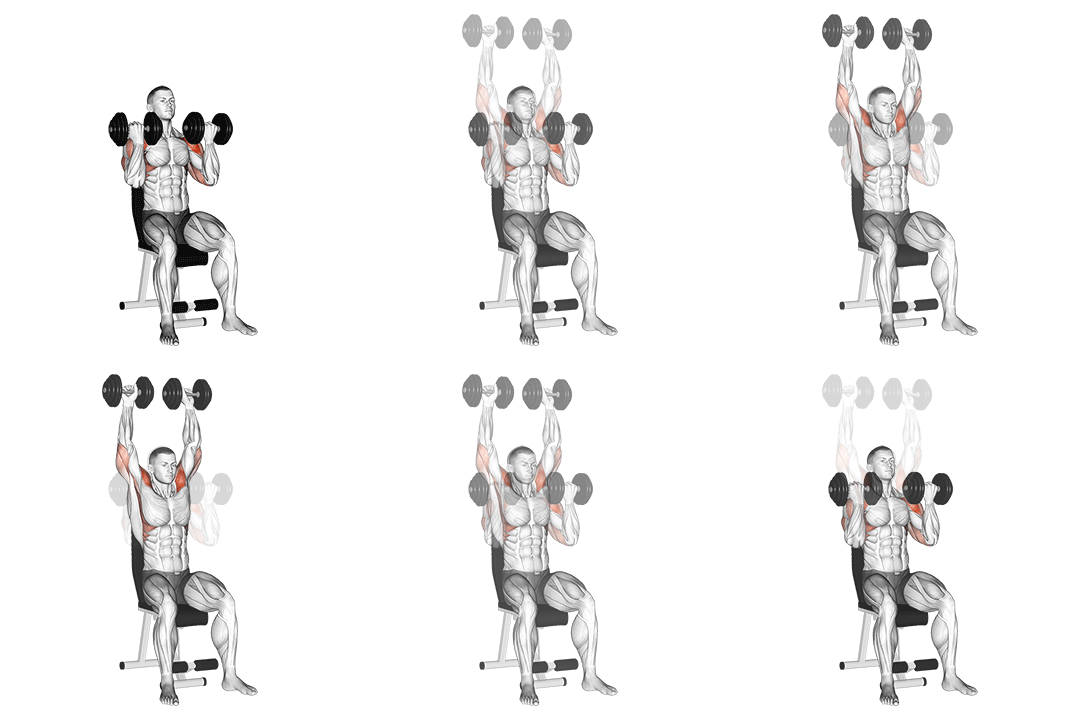
7. Dumbbell Arnold Press
90.9% MatchHow to perform this exercise
- Sit on a bench with back support and hold a dumbbell in each hand at shoulder level, palms facing your body and elbows bent.
- Press the dumbbells upward until your arms are fully extended and your palms are facing forward.
- Rotate your wrists as you lift, so that your palms are facing forward at the top of the movement.
- Pause for a moment at the top, then slowly lower the dumbbells back to the starting position.
- Repeat for the desired number of repetitions.
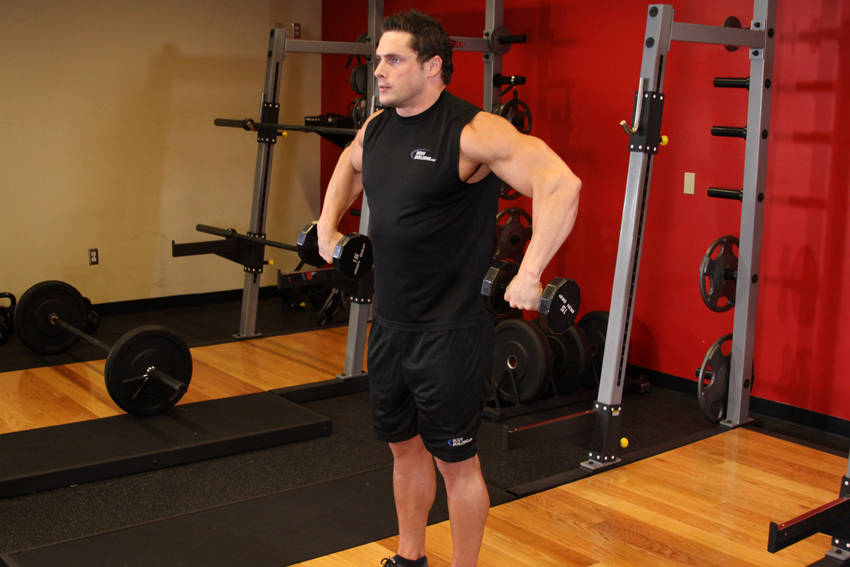
8. Cuban Press
90.1% MatchHow to perform this exercise
- Take a dumbbell in each hand with a pronated grip in a standing position. Raise your upper arms so that they are parallel to the floor, allowing your lower arms to hang in the "scarecrow" position. This will be your starting position.
- To initiate the movement, externally rotate the shoulders to move the upper arm 180 degrees. Keep the upper arms in place, rotating the upper arms until the wrists are directly above the elbows, the forearms perpendicular to the floor.
- Now press the dumbbells by extending at the elbows, straightening your arms overhead.
- Return to the starting position as you breathe in by reversing the steps.
- Repeat for the recommended amount of repetitions.
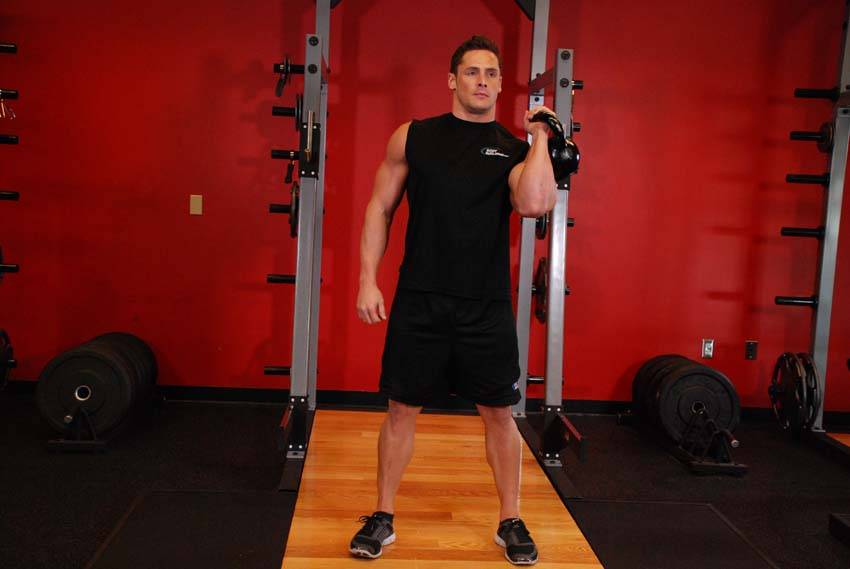
9. Bent Press
89.4% MatchHow to perform this exercise
- Clean a kettlebell to your shoulder. Clean the kettlebell to your shoulders by extending through the legs and hips as you raise the kettlebell towards your shoulder. The wrist should rotate as you do so. This will be your starting position.
- Begin my leaning to the side opposite the kettlebell, continuing until you are able to touch the ground with your free hand, keeping your eyes on the kettlebell. As you do so, press the weight vertically be extending through the elbow, keeping your arm perpendicular to the ground.
- Return to an upright position, with the kettlebell above your head. Return the kettlebell to the shoulder and repeat for the desired number of repetitions.
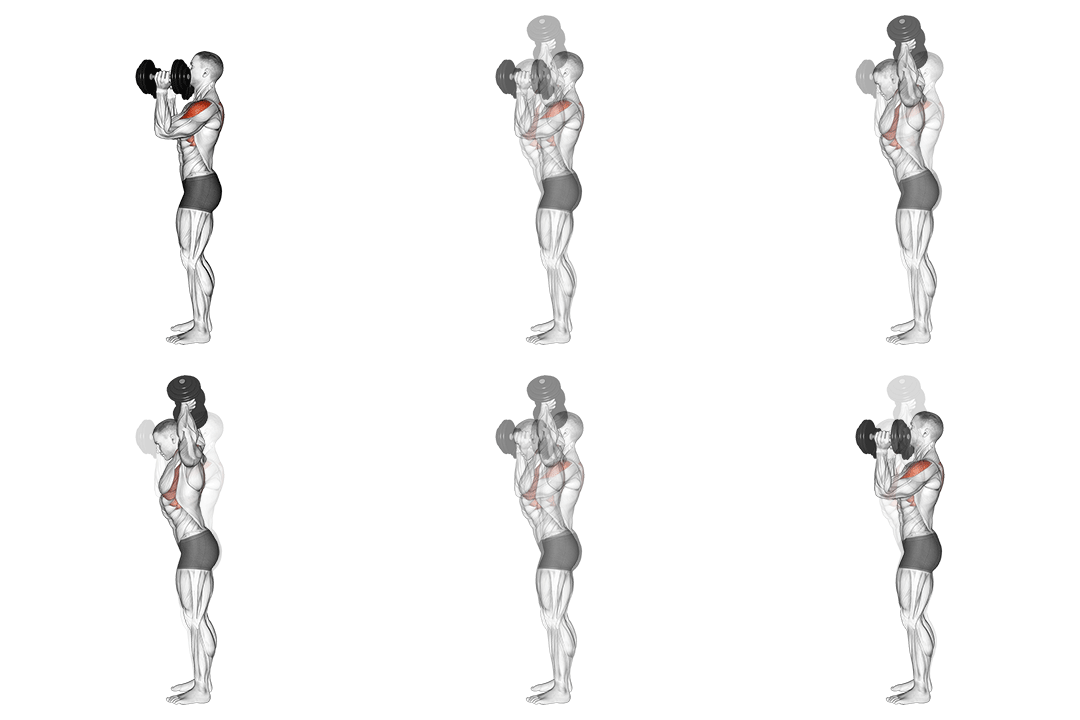
10. Dumbbell Scott Press
86.9% MatchHow to perform this exercise
- Sit on a bench with a dumbbell in each hand, palms facing forward.
- Raise the dumbbells to shoulder height, with your elbows bent and palms facing forward.
- Press the dumbbells upward until your arms are fully extended.
- Pause for a moment at the top, then slowly lower the dumbbells back to the starting position.
- Repeat for the desired number of repetitions.
Why You Might Need a One-arm Kettlebell Military Press To The Side Alternative
You may substitute this lift for several reasons: shoulder pain, lack of a kettlebell, poor shoulder stability, or a need to change loading mechanics. A landmine or dumbbell press reduces horizontal instability and shoulder torque, lowering rotator-cuff stress. Lateral raises isolate the lateral deltoid to improve size, while pike or handstand push-up progressions train vertical pressing without weights. When swapping exercises, preserve the movement pattern (vertical press vs. lateral abduction) so the same deltoid heads receive stimulus. Cue: limit external rotation and keep the elbow in the 30–45° plane to reduce impingement and keep deltoid recruitment high.
How to Choose the Right Substitute
Decide by equipment, pain history, and training goal. If you lack a kettlebell but want similar unilateral challenge, pick a single-arm dumbbell overhead press and use a neutral grip to reduce cuff strain. For limited shoulder stability, choose a landmine press to shorten the moment arm and lower torque. If hypertrophy of the lateral head is the goal, prioritize controlled dumbbell lateral raises with a 2–0–2 tempo and slight elbow bend. Track progression through load, reps, or tempo. Cue: assess scapular control—if you cannot upwardly rotate smoothly, regress to seated presses or isometric scapular work before heavy overhead loading.
Frequently Asked Questions
What muscles does One-arm Kettlebell Military Press To The Side work?
The lift primarily targets the deltoids—especially the anterior and lateral heads—while the triceps extend the elbow and the upper traps and serratus anterior assist scapular upward rotation. The rotator cuff stabilizes the humeral head throughout the vertical press, so maintain a packed scapula and neutral wrist to optimize activation and joint alignment.
What is the best bodyweight alternative to One-arm Kettlebell Military Press To The Side?
A pike push-up or a handstand push-up progression is the best bodyweight substitute because it preserves the vertical pressing pattern and loads the anterior and lateral deltoids and triceps. Cue: drive your head toward the floor with elbows tracking slightly forward and protract the scapula at the top to maximize deltoid recruitment.
Can I build muscle without doing One-arm Kettlebell Military Press To The Side?
Yes. You can build shoulder muscle using alternative vertical presses, targeted lateral raises, and progressive overload principles. Use controlled eccentrics, full range of motion, and incrementally increase load or volume—e.g., 3–5 sets of 6–12 reps on presses or 8–15 reps on lateral raises—to stimulate hypertrophy without that specific kettlebell variation.
More Exercise Alternatives
Find Alternatives for Any Exercise
Use our free tool to discover the best substitute exercises based on your available equipment and goals.
Try the Exercise Substitution Finder →