

10 Best One-arm Kettlebell Split Snatch Alternatives for Shoulder Power
If you can't do the One-arm Kettlebell Split Snatch, choose movements that deliver unilateral overhead power, shoulder abduction, and hip drive. Effective swaps include the single-arm dumbbell snatch, single-arm push press, landmine single-arm press, dumbbell clean-and-press, and kettlebell windmill. Cue: hinge at the hips, keep a neutral spine, and snap the hips to generate force.
Original Exercise: One-arm Kettlebell Split Snatch
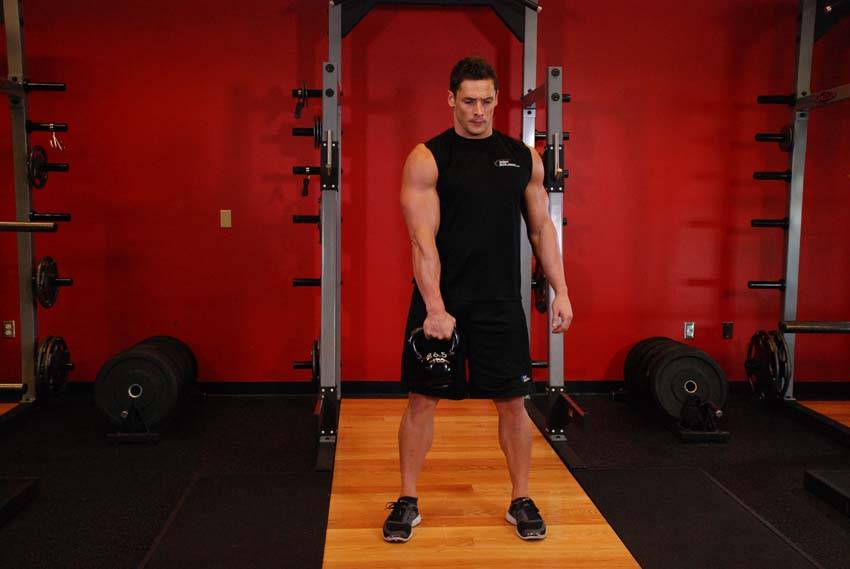
How to Perform One-arm Kettlebell Split Snatch
- Hold a kettlebell in one hand by the handle.
- Squat towards the floor, and then reverse the motion, extending the hips, knees, and finally the ankles, to raise the kettlebell overhead.
- After fully extending the body, descend into a lunge position to receive the weights overhead, one leg forward and one leg back. Ensure you drive through with your hips and lock the ketttlebells overhead in one uninterrupted motion.
- Return to a standing position, holding the weight overhead, and bring the feet together. Lower the weight to return to the starting position.
Pro Tips
- Category: Strength
- Force: Pull
- Movement type: Compound
Best One-arm Kettlebell Split Snatch Alternatives
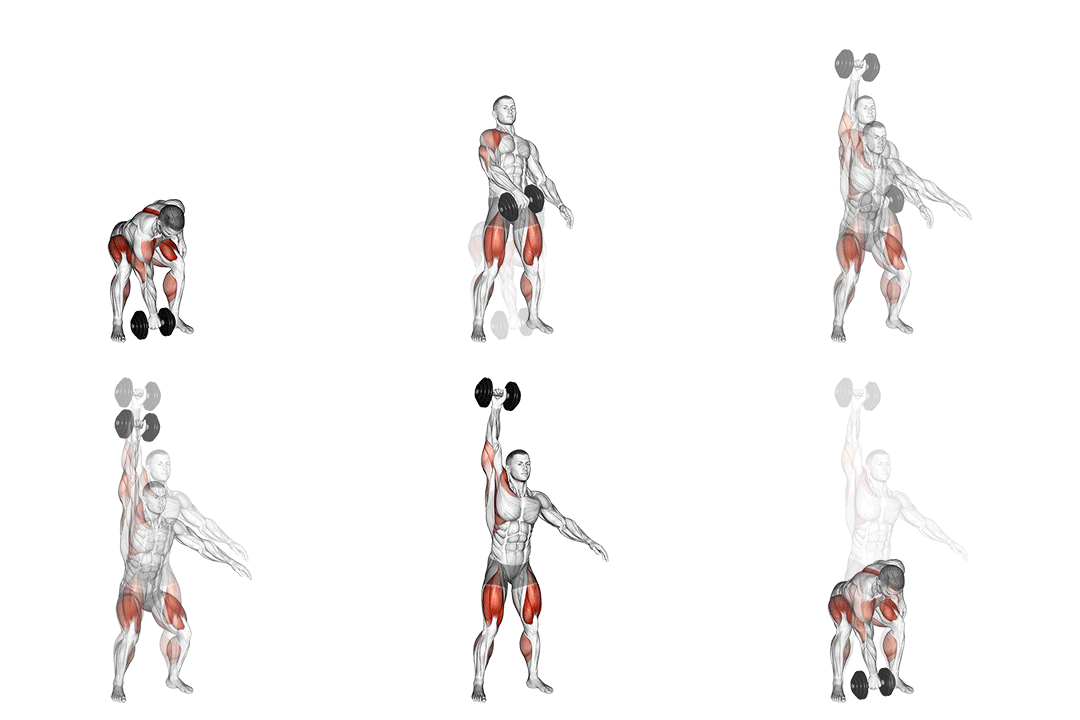
1. Dumbbell One Arm Snatch
89.2% MatchHow to perform this exercise
- Stand with your feet shoulder-width apart, holding a dumbbell in one hand with an overhand grip.
- Bend your knees slightly and hinge forward at the hips, keeping your back straight and chest up.
- Lower the dumbbell towards the ground, keeping it close to your body.
- Explosively extend your hips, knees, and ankles, driving the dumbbell upwards in a straight line.
- As the dumbbell reaches shoulder height, quickly rotate your hand and punch it overhead, fully extending your arm.
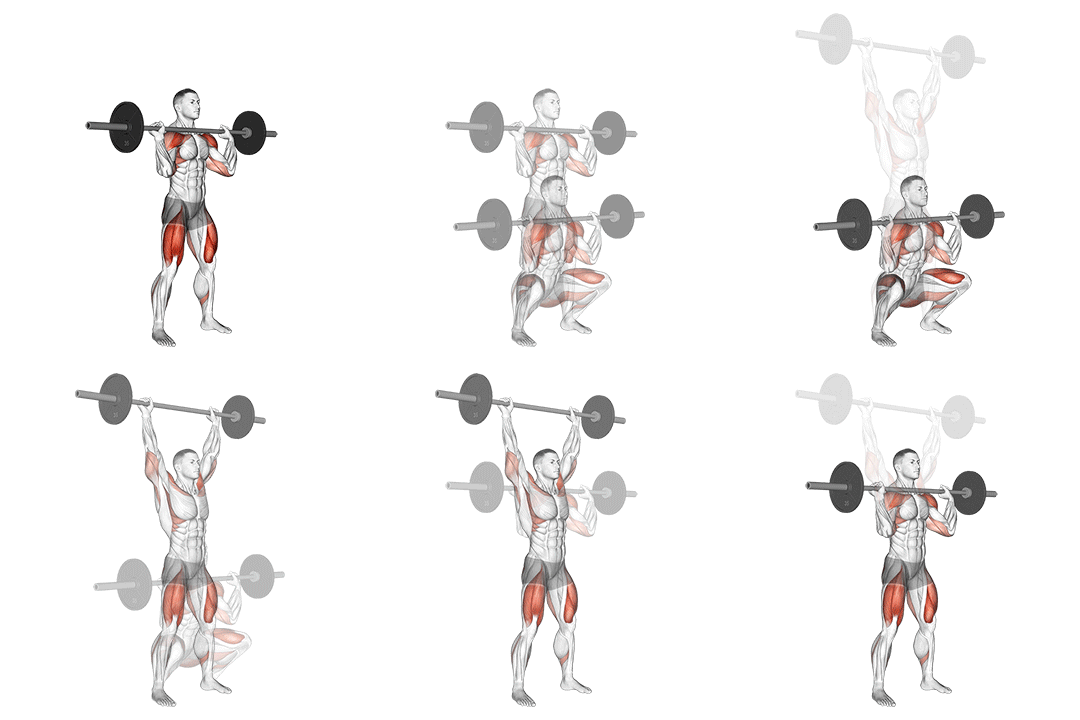
2. Barbell Thruster
85% MatchHow to perform this exercise
- Start by standing with your feet shoulder-width apart, holding a barbell at shoulder height with an overhand grip.
- Lower into a squat position by bending your knees and pushing your hips back.
- As you reach the bottom of the squat, explosively drive through your heels to stand up, simultaneously pressing the barbell overhead.
- Lower the barbell back to shoulder height as you lower back into the squat position.
- Repeat for the desired number of repetitions.
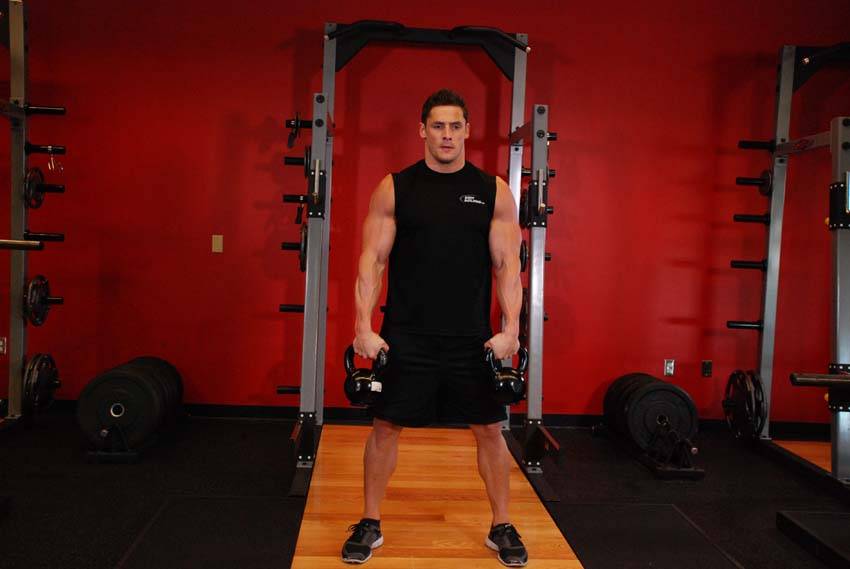
3. Double Kettlebell Snatch
81.7% MatchHow to perform this exercise
- Place two kettlebells behind your feet. Bend your knees and sit back to pick up the kettlebells.
- Swing the kettlebells between your legs forcefully and reverse the direction.
- Drive through with your hips and lock the ketttlebells overhead in one uninterrupted motion.
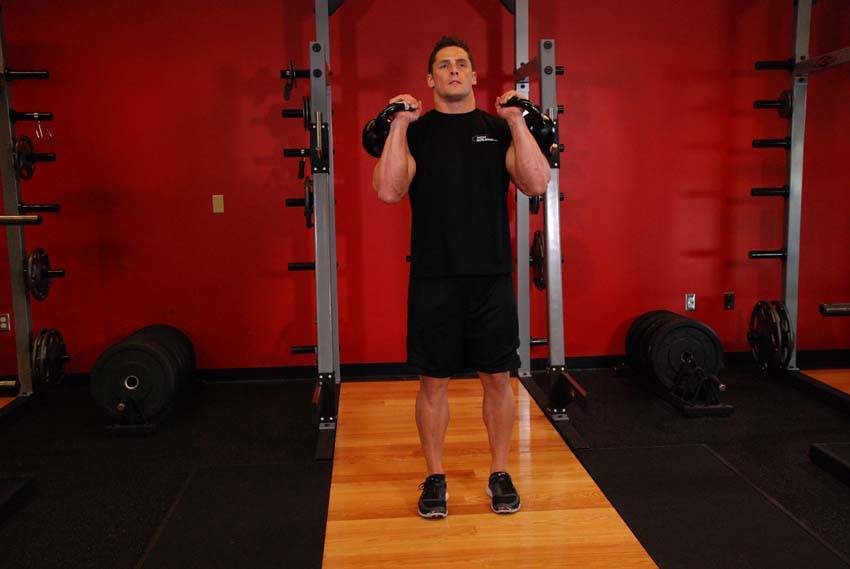
4. Double Kettlebell Jerk
79.6% MatchHow to perform this exercise
- Hold a kettlebell by the handle in each hand.
- Clean the kettlebells to your shoulders by extending through the legs and hips as you pull the kettlebells towards your shoulders. Rotate your wrists as you do so, so that the palms face forward. This will be your starting position.
- Dip your body by bending the knees, keeping your torso upright.
- Immediately reverse direction, driving through the heels, in essence jumping to create momentum.
- As you do so, press the kettlebells overhead to lockout by extending the arms, using your body's momentum to move the weights.
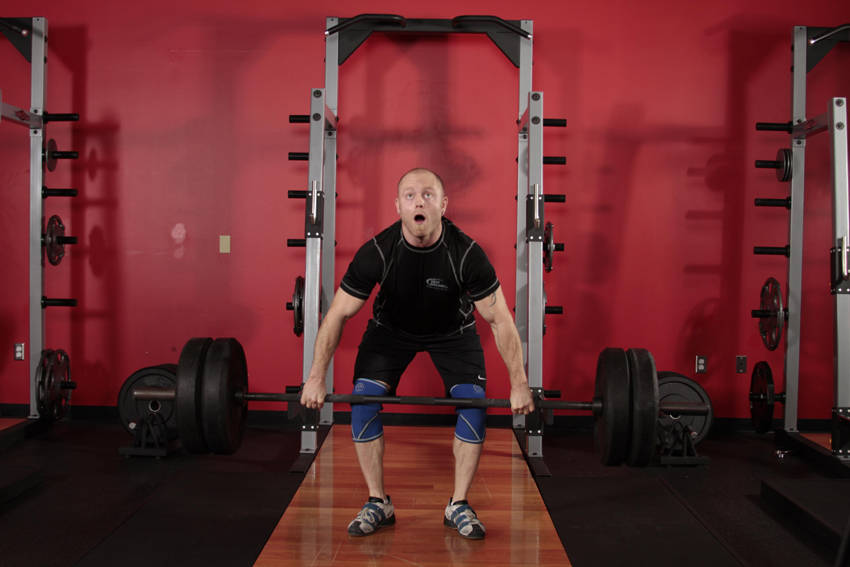
5. Clean And Jerk
77.7% MatchHow to perform this exercise
- With a barbell on the floor close to the shins, take an overhand or hook grip just outside the legs. Lower your hips with the weight focused on the heels, back straight, head facing forward, chest up, with your shoulders just in front of the bar. This will be your starting position.
- Begin the first pull by driving through the heels, extending your knees. Your back angle should stay the same, and your arms should remain straight. Move the weight with control as you continue to above the knees.
- Next comes the second pull, the main source of acceleration for the clean. As the bar approaches the mid-thigh position, begin extending through the hips. In a jumping motion, accelerate by extending the hips, knees, and ankles, using speed to move the bar upward. There should be no need to actively pull through the arms to accelerate the weight; at the end of the second pull, the body should be fully extended, leaning slightly back, with the arms still extended.
- As full extension is achieved, transition into the third pull by aggressively shrugging and flexing the arms with the elbows up and out. At peak extension, aggressively pull yourself down, rotating your elbows under the bar as you do so. Receive the bar in a front squat position, the depth of which is dependent upon the height of the bar at the end of the third pull. The bar should be racked onto the protracted shoulders, lightly touching the throat with the hands relaxed. Continue to descend to the bottom squat position, which will help in the recovery.
- Immediately recover by driving through the heels, keeping the torso upright and elbows up. Continue until you have risen to a standing position.
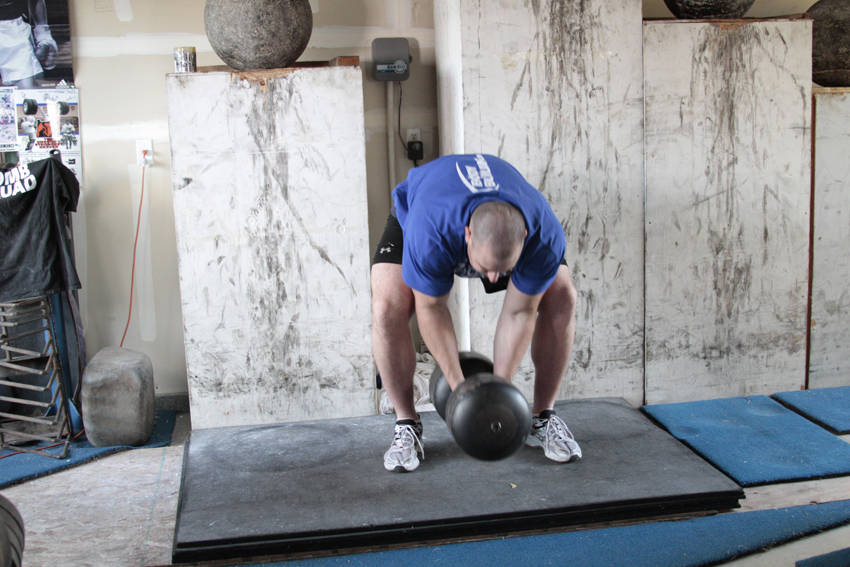
6. Circus Bell
76.8% MatchHow to perform this exercise
- The circus bell is an oversized dumbbell with a thick handle. Begin with the dumbbell between your feet, and grip the handle with both hands.
- Clean the dumbbell by extending through your hips and knees to deliver the implement to the desired shoulder, letting go with the extra hand.
- Ensure that you get one of the dumbbell heads behind the shoulder to keep from being thrown off balance. To raise it overhead, dip by flexing the knees, and the drive upwards as you extend the dumbbell overhead, leaning slightly away from it as you do so.
- Carefully guide the bell back to the floor, keeping it under control as much as possible. It is best to perform this event on a thick rubber mat to prevent damage to the floor.
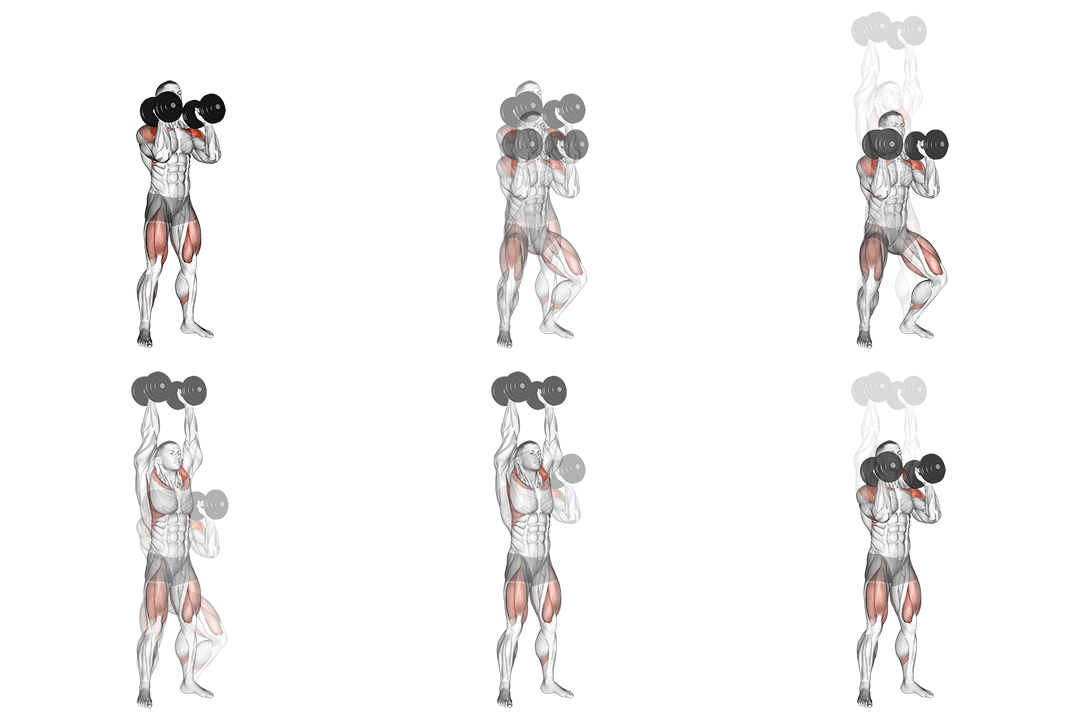
7. Dumbbell Push Press
74.6% MatchHow to perform this exercise
- Stand with your feet shoulder-width apart, holding a dumbbell in each hand at shoulder level.
- Bend your knees slightly and dip your body down, then explosively extend your legs and press the dumbbells overhead.
- Lock out your arms at the top of the movement, then lower the dumbbells back to shoulder level.
- Repeat for the desired number of repetitions.
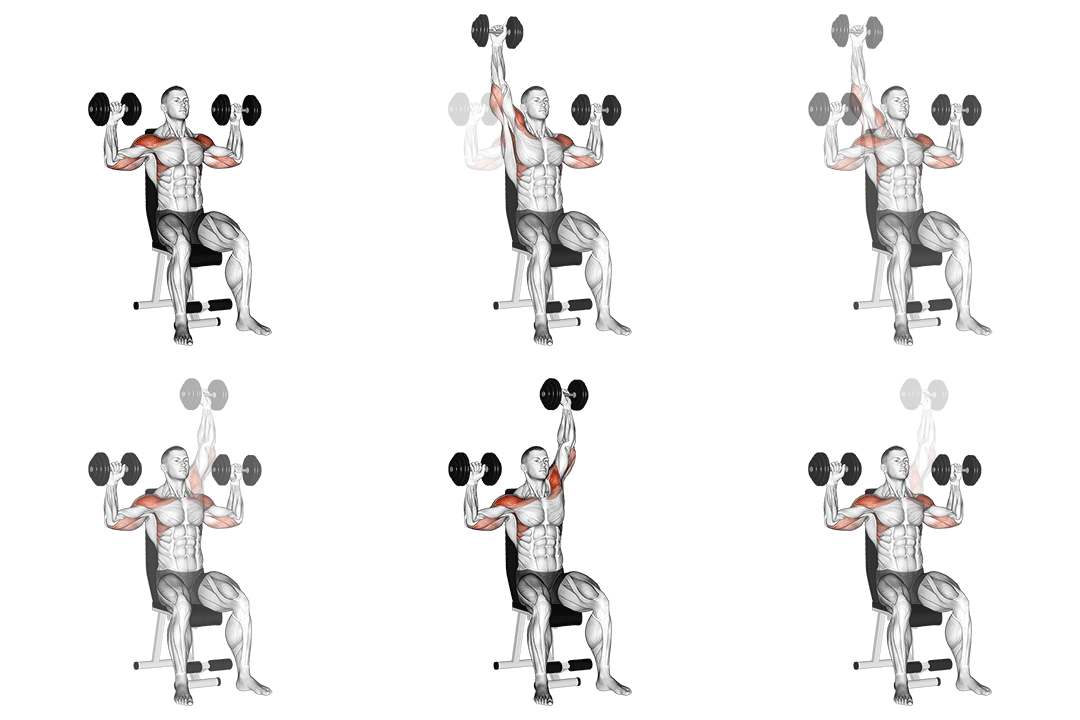
8. Dumbbell Seated Alternate Shoulder
74.3% MatchHow to perform this exercise
- Sit on a bench with your back straight and feet flat on the ground.
- Hold a dumbbell in each hand, palms facing inwards, and raise them to shoulder height.
- Press one dumbbell up overhead while keeping the other dumbbell at shoulder height.
- Lower the raised dumbbell back to shoulder height while simultaneously pressing the other dumbbell up overhead.
- Continue alternating between arms for the desired number of repetitions.
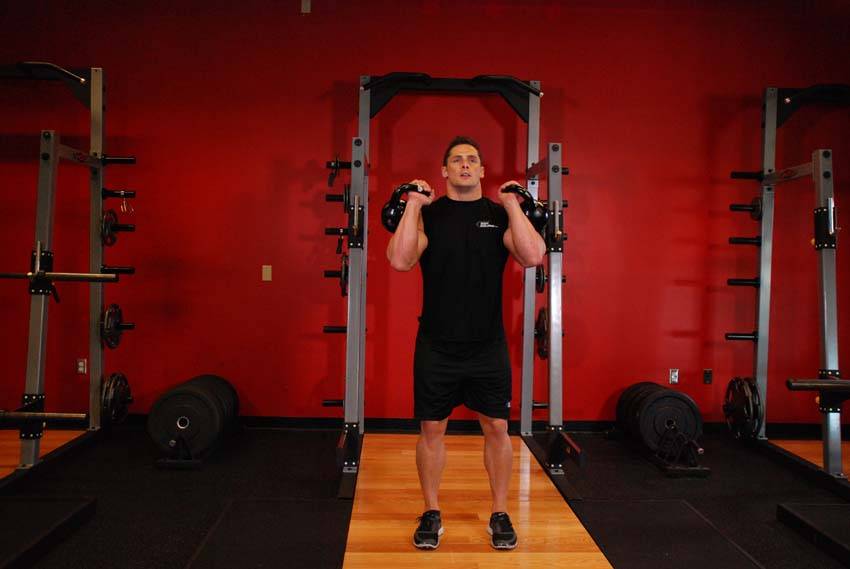
9. Double Kettlebell Push Press
74% MatchHow to perform this exercise
- Clean two kettlebells to your shoulders.
- Squat down a few inches and reverse the motion rapidly. Use the momentum from the legs to drive the kettlebells overhead.
- Once the kettlebells are locked out, lower the kettlebells to your shoulders and repeat.
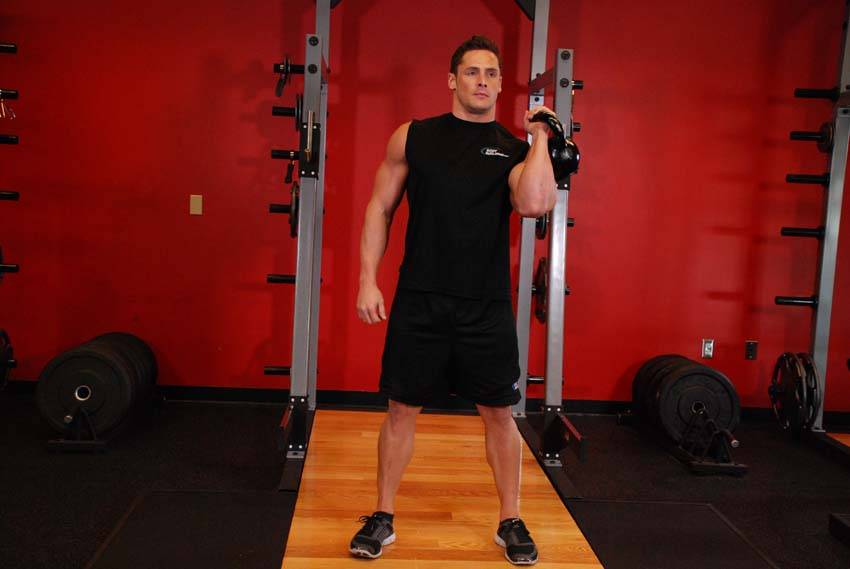
10. Bent Press
73.7% MatchHow to perform this exercise
- Clean a kettlebell to your shoulder. Clean the kettlebell to your shoulders by extending through the legs and hips as you raise the kettlebell towards your shoulder. The wrist should rotate as you do so. This will be your starting position.
- Begin my leaning to the side opposite the kettlebell, continuing until you are able to touch the ground with your free hand, keeping your eyes on the kettlebell. As you do so, press the weight vertically be extending through the elbow, keeping your arm perpendicular to the ground.
- Return to an upright position, with the kettlebell above your head. Return the kettlebell to the shoulder and repeat for the desired number of repetitions.
Why You Might Need a One-arm Kettlebell Split Snatch Alternative
You may substitute the One-arm Kettlebell Split Snatch for several practical reasons: limited kettlebells, reduced shoulder or hip mobility, prior injury, or a training focus on hypertrophy rather than explosive power. Pick alternatives that preserve the same biomechanics — unilateral loading, overhead lockout, and hip-extension drive — so the delts and rotator cuff still shoulder the load. For example, the single-arm push press reduces ballistic shoulder torque while still training deltoid recruitment; cue a packed shoulder and drive through the mid-foot to feel glute and posterior chain activation.
How to Choose the Right Substitute
Match the substitute to the primary demand: explosive hip extension, unilateral overhead stability, or controlled pressing for hypertrophy. If you need power carryover, use single-arm snatches or push presses and emphasize a rapid hip snap. For stability and hypertrophy, use landmine single-arm presses or strict dumbbell presses and slow eccentrics (3-4s) to increase deltoid time under tension. Also consider shoulder ROM, core anti-rotation capacity, and available equipment. Technique cue: keep the scapula stable, lock the elbow overhead with slight protraction, and maintain a neutral spine during each rep.
Frequently Asked Questions
What muscles does One-arm Kettlebell Split Snatch work?
The move primarily targets the deltoids (especially anterior and lateral heads), upper traps, and rotator-cuff stabilizers during the overhead lockout, while hip extensors and glutes produce the explosive drive. Your core and obliques engage for anti-rotation and balance when performing the split stance; cue a tight brace through the midline to maximize transfer.
What is the best bodyweight alternative to One-arm Kettlebell Split Snatch?
A graded pike push-up progressing to a controlled handstand push-up offers a pure shoulder-loading alternative that emphasizes the delts and scapular stabilizers. Cue a vertical torso and protract the scapula at lockout to mimic the overhead position and maximize deltoid activation.
Can I build muscle without doing One-arm Kettlebell Split Snatch?
Yes. Use progressive overload with unilateral presses, controlled eccentrics, and higher volume to hypertrophy the delts and supporting muscles. Implement slow 3-4s eccentrics, keep the shoulder packed, and vary angles (vertical and horizontal) to fully activate the deltoid heads.
More Exercise Alternatives
Find Alternatives for Any Exercise
Use our free tool to discover the best substitute exercises based on your available equipment and goals.
Try the Exercise Substitution Finder →